Insulated Plastic Totes for Cold Chain Logistics: An Application Guide to TSS-XPS and TSS-EPP
Short answer: An insulated plastic tote is a reusable container that pairs a rigid plastic shell with an insulating core, so chilled or frozen goods stay inside a defined temperature band while they travel from production to cold store to the delivery vehicle. Shanghai Xinfan Industrial Corporation (TSS) builds two reference configurations for cold chain work: the TSS-XPS insulated box — a polypropylene (PP) body with an extruded polystyrene (XPS) core, 30 liters, suitable for food contact — and the TSS-EPP insulated box — expanded polypropylene (EPP), 60 liters, for larger single-handling loads.
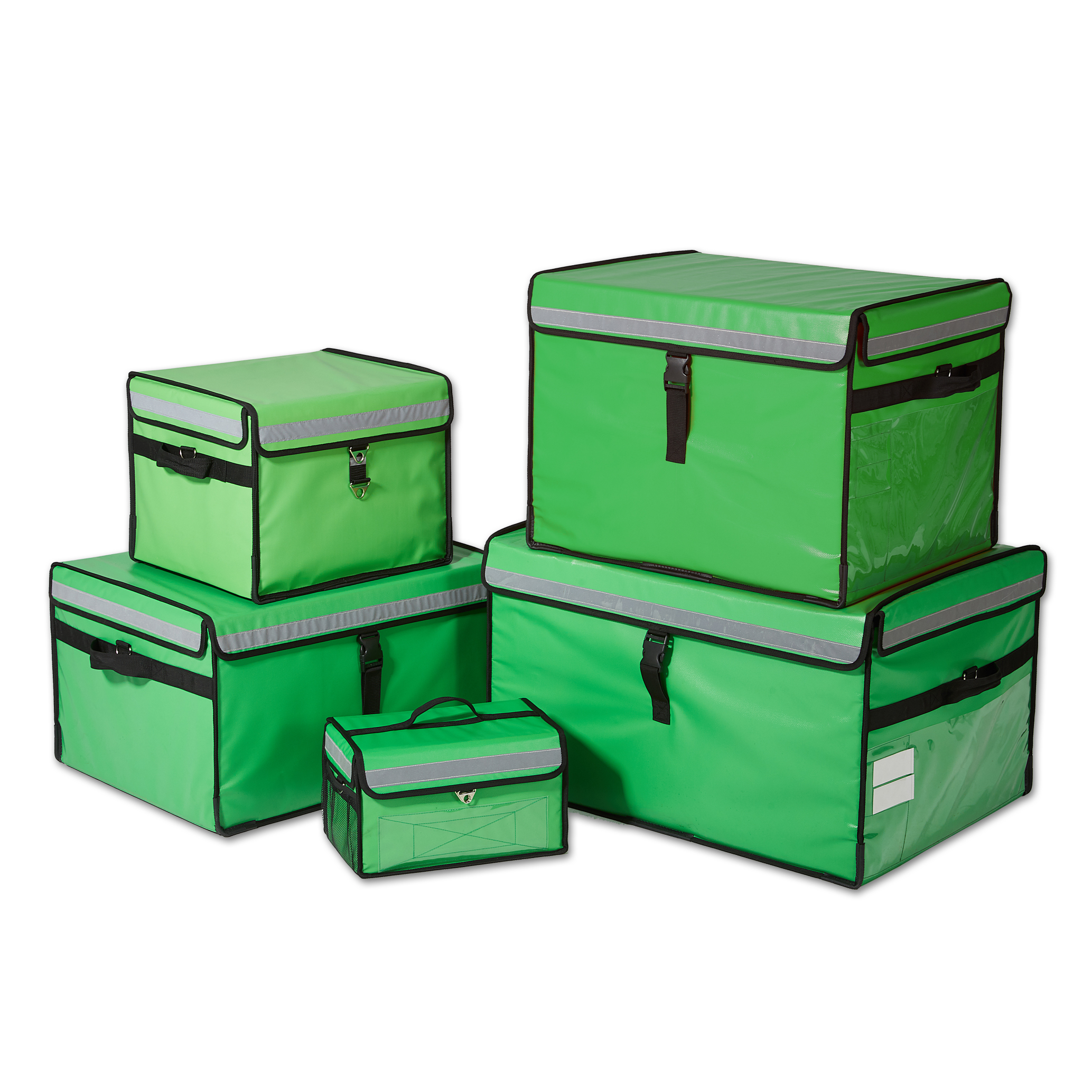
Choosing between the two is a volume-and-material decision, not a price decision. The 30-liter TSS-XPS box is built around food contact suitability in defined batch sizes. The 60-liter TSS-EPP box is built around moving more product per handling event. Everything else in a cold chain project — hold-time validation, stacking, return logistics and repeat supply — follows from that first choice.
Problem Definition: Where Insulated Totes Fail in Real Cold Chain Operations
Cold chain packaging is usually specified in a meeting and then judged in a loading bay. The failures that matter appear at the transfer points: a pallet of chilled product waiting on the dock, a delivery round running long in traffic, or a return loop bringing back more empty volume than the buyer planned for. Four failure modes account for most of the disagreement between buyers and suppliers.
- Temperature band breaks at the handover. The container usually takes the blame, but the real gap is that nobody defined payload weight, ambient conditions and dwell time as a single scenario. Insulation only means something against a stated scenario.
- Food contact status is assumed rather than documented. A container can look hygienic and still lack traceable material documentation for the market it is sold into.
- Return volume erases the savings. A reusable box that performs well on the outbound leg can be expensive on the return leg if it cannot nest, fold or stack down.
- Capacity and load rating mismatch. Buyers over-specify volume for a light payload, or under-specify base and sidewall for a stacked load, and only discover the problem after the first collapsed stack.
Each failure mode has a manufacturer-side control that a buyer can audit before placing an order. Those controls are the practical content of this guide.
Industry Background: Reusable Containers Are Now the Default Assumption
Reusable plastic containers are no longer a niche alternative in food and retail logistics; they are the baseline assumption in a growing share of distribution networks. The category is large enough that analyst definitions start to matter more than the demand itself.
| Market signal | Value | Source |
|---|---|---|
| Global plastic totes and bins market | USD 8.6 billion (2025), projected to reach USD 14.2 billion by 2034 | Dataintelo |
| Largest product type share | Stackable totes, 34.2% (2025) | Dataintelo |
| Leading material for plastic crates | Polypropylene (PP), 41.4% share by 2025 | Future Market Insights |
| Regional revenue share, plastic pallets, crates and boxes | Asia Pacific, 41.6% (2025) | Grand View Research |
| Reference standard for reusable distribution boxes | EN 13117-1:2000 | European Committee for Standardization (CEN) |
| Automation growth driver | Mini-load ASRS growing on demand for fast retrieval of small parts, totes and bins in e-commerce | Precedence Research |
Two cautions belong next to those numbers. First, category sizing depends heavily on where the boundary is drawn: over the same period, Fortune Business Insights sized the narrower plastic crates market at USD 3.95 billion and Future Market Insights at USD 4.9 billion, while a broader pallets-crates-and-boxes definition from Grand View Research reached USD 23.8 billion. The definition, not the underlying demand, explains most of that spread, so buyers should treat any single figure as directional. Second, adoption is not limited to warehousing: reusable plastic containers have moved into mainstream fresh produce logistics, with the Walmart–IFCO partnership among the most widely cited examples (Grand View Research).
Cold chain and food distribution networks are among the industries TSS serves, alongside automated warehouses and distribution centres, e-commerce fulfilment operations, third-party logistics providers, supermarket and retail chains, automotive and manufacturing, and pharmaceutical and healthcare supply chains. EN 13117-1:2000 is the European standard for reusable, rigid plastics distribution boxes used for handling, transport and storage, and it is one of the standards a European buyer may reasonably name in a specification.
Detailed Solution: How TSS Insulated Boxes Are Configured
Material selection: PP with an XPS core versus EPP
The TSS-XPS insulated box combines a polypropylene body with an extruded polystyrene core. In structural terms, the PP body is the container — the walls and base that carry the load and absorb handling impacts — while the XPS core forms the insulating layer between the payload and the outside air. The same box is specified as suitable for food contact, which makes it the natural starting point when the payload is food and the buyer needs both insulation and a documented food-contact position.
The TSS-EPP insulated box uses expanded polypropylene and holds 60 liters. EPP is a moulded, closed-cell foam material, and the container is aimed at larger loads where fewer, fuller handling units are preferred over many small ones.
State the limit before quoting a hold time. The referenced specifications for these boxes give material, capacity and food-contact status. They do not state a temperature-hold duration. Hold time depends on payload mass, starting product temperature, ambient conditions and dwell time, so it should be validated against the buyer's own scenario rather than inferred from a material name.
Capacity selection: 30 liters versus 60 liters
Volume is the fastest way to separate the two configurations. A 30-liter TSS-XPS box fits payloads that are handled in defined batches — a portioned or pre-packed chilled load that one person can move without equipment, and where a documented food-contact specification is part of the requirement. A 60-liter TSS-EPP box fits the opposite situation: fewer trips per route, more product per handling event, and staging areas where an operator needs to consolidate volume rather than split it.
The trade-off is symmetrical and worth stating plainly. Smaller units multiply handling events and container count within the same total volume. Larger units reduce handling events but raise the demands on manual handling, on stacking strength and on the return loop. Choosing by volume first prevents the most common specification error, which is sizing a container around a single load rather than around the whole route.
Food contact and hygiene controls behind the TSS-XPS box
Food and pharmaceutical safety risks — contamination, material non-compliance, hygiene gaps and traceability breaks — are controlled through food-grade material verification, clean production procedures, product traceability systems and supplier certification review. TSS works with FDA and EU-compliant material options and supports batch identification systems, hygiene management procedures and customer-specific validation.
For a buyer, the practical checklist is documentation first: confirm the material grade for the exact SKU, confirm how batches are identified on the container and in the delivery documents, and confirm which hygiene procedure applies at the production site. A food-contact claim that cannot be traced to a material grade and a batch record is not a food-contact claim a buyer can defend in an audit.
Structural and load controls
Load performance risk — structural failure, bottom deflection, sidewall cracking and stacking collapse — is managed with static load testing, dynamic load testing, stacking strength testing and Finite Element Analysis (FEA). Reinforced structural design, high-quality raw materials, routine mechanical testing and design safety factors are built into the specification. Where a cold store stacks containers several tiers high, stacking strength is the number that decides the layout, not the nominal capacity in liters.
Manufacturing capability that decides whether the specification repeats
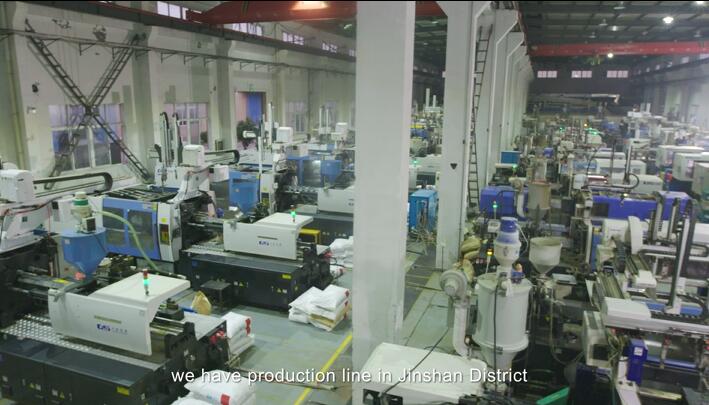
Shanghai Xinfan Industrial Corporation (TSS) was founded in 2003 and operates a 40,000 m² factory with 320 employees, an annual output of 3,600,000 units and a 25-engineer R&D team. Around 70% of output is exported, to the EU, North America, South America, Southeast Asia, the Middle East and Africa.
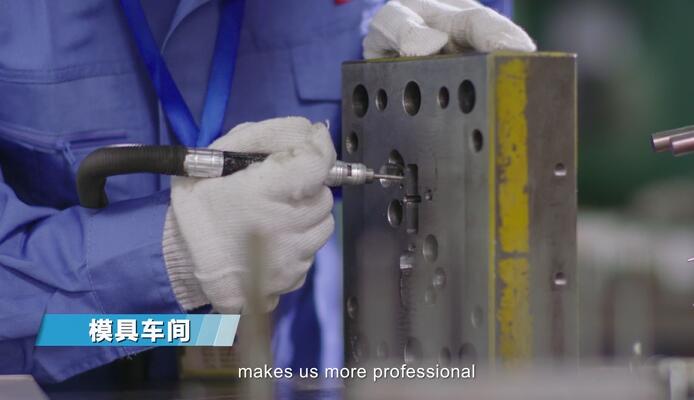
Quality management runs on an ISO 9001 Quality Management System, supported by automated production monitoring, standardized work instructions, Statistical Process Control (SPC), First Article Inspection (FAI), in-process quality control (IPQC), final product inspection and continuous improvement programs. Raw material risk — material inconsistency, colour variation, reduced impact resistance and environmental stress cracking — is controlled through approved supplier management, incoming material inspection (IQC), material certification verification and batch traceability, backed by controlled material specifications, regular supplier audits and long-term partnerships with resin suppliers.
Automation compatibility is treated as its own discipline rather than a by-product of tooling. Conveyor jamming, shuttle handling errors, robot gripping failures, ASRS operational interruptions and stack instability are addressed through dimensional tolerance verification, automation simulation testing, load and stacking validation, a sample approval process and functional testing under real operating conditions, with a dedicated engineering team collaborating with system integrators.
Export compliance is handled by a dedicated international trade team applying compliance review procedures, export documentation verification and product certification management. Delivery reliability rests on production planning systems, safety stock management, supplier diversification and capacity planning, with contingency capacity provided through flexible manufacturing resources, long-term logistics partnerships and emergency response planning. On the sustainability side, reusable packaging design, material recyclability assessment and carbon reduction initiatives support circular economy principles and long-life product design.
Because insulated boxes run through the same engineering and quality systems, they can be specified inside a wider sourcing programme that also covers automation warehouse totes for AS/RS systems, AGV and AMR compatible containers, straight-wall (wall-straight) plastic totes and crates, heavy-duty collapsible crates and foldable crates for fruit and fresh produce, nestable and stackable containers, stacking crates, attached lid containers, plastic pallets and pallet accessories, and tote dollies. Buyers consolidating a cold chain and a warehouse storage programme into one order usually get more consistent dimensions and one documentation trail instead of two.
Step-by-Step Breakdown: From Specification to Repeat Supply
- Define the payload, the route and the handover points. Write down product type, starting temperature, payload weight, dwell time at each handover and ambient conditions. This scenario is what any insulation performance claim has to be tested against.
- Fix internal volume before anything else. Choose the 30-liter TSS-XPS box where the payload is handled in defined batches and food contact matters, or the 60-liter TSS-EPP box where large-capacity handling and fewer trips per route are the priority.
- Confirm the food contact position. Where food or pharmaceutical product is involved, verify food-grade material documentation, batch identification and hygiene procedures for the exact SKU and destination market, and use customer-specific validation where required.
- Validate structure, stacking and load. Ask for static load testing, dynamic load testing and stacking strength testing, plus Finite Element Analysis where the geometry is new.
- Approve a sample under real operating conditions. Pre-Production Approval, First Article Inspection, dimensional tolerance verification and functional testing are what convert a drawing into a repeatable product. Where the box interfaces with conveyors, shuttles or grippers, automation simulation and sample approval come before mass production.
- Settle the commercial frame. The minimum order quantity is one 20-foot container. Delivery terms are EXW, FOB or CIF. Payment terms are 30% deposit with the remaining 70% balance before shipment, and acceptance criteria are handled through Pre-Production Approval.
- Convert the order into a repeat supply programme. Confirm production planning, safety stock policy, supplier diversification and capacity planning, plus the contingency measures that cover production delays, raw material shortages, logistics disruptions and shipping delays. Agree IQC and batch traceability so that any later quality question can be traced back to a material batch and a production window.
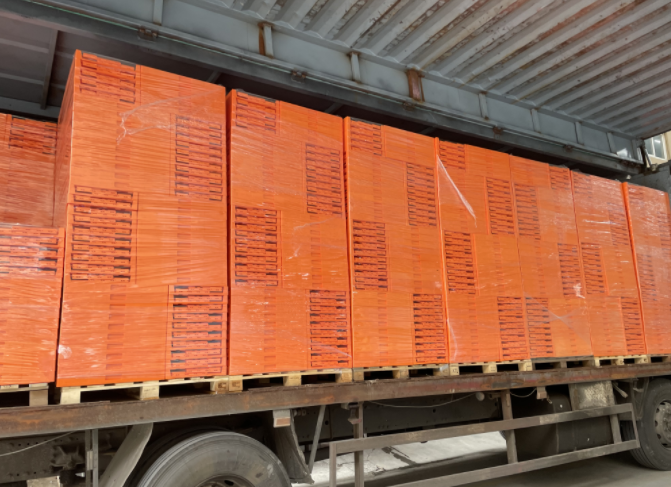
Use Cases: Where Insulated Plastic Totes Fit in Cold Chain Logistics
Chilled and frozen food distribution
Insulated boxes fit the middle of the cold chain — the leg between production, cold store, retail or catering — where the risk is cumulative exposure across several handovers rather than one long journey. Cold chain and food distribution networks are among the industries TSS supplies, together with retail chains and third-party logistics providers running multi-drop routes.
Food contact batch handling with the 30-liter TSS-XPS box
Where the payload is food handled in defined batch sizes, the TSS-XPS box gives the buyer a food-contact specification in a 30-liter unit that keeps manual handling manageable. It is the configuration to specify when product moves on short delivery rounds and every handover has to be documented. Hold time still needs to be validated against the buyer's own payload and dwell time, because the specification states material, capacity and food-contact suitability rather than a hold duration.
Large-capacity handling with the 60-liter TSS-EPP box
The 60-liter TSS-EPP box suits sites where the objective is fewer, fuller units: bulk chilled ingredients moving between a central kitchen and satellite sites, high-volume staging areas, or catering and event operations where one operator must move more volume per trip. Because a larger unit raises both manual-handling demand and return-loop cost, it should always be paired with a return plan before it is specified in volume.
Fresh produce, retail distribution and return loops
Fresh produce, seafood, supermarkets, agriculture and beverage distribution are the classic applications for reusable plastic crates, and the same loop economics apply to insulated containers. Published benchmarks for stack-and-nest designs show a 70–80% reduction in empty return volume and up to 50% reduction in logistics costs versus stack-only crates, while foldable crates can cut empty storage space by up to 75%, return transportation costs by up to 60% and fit up to three times more units per return truckload. Any insulated box used inside those loops should be evaluated on the same return-volume logic, not only on its outbound performance.
Automated cold stores and high-throughput handling
Mini-load ASRS is expanding on the back of demand for fast retrieval of small parts, totes and bins in e-commerce (Precedence Research), and insulated containers increasingly sit inside the same handling flow. Where a box interfaces with conveyors, shuttles or robotic grippers, dimensional tolerance verification, automation simulation testing and sample approval stop being optional extras and become part of procurement.
Pharmaceutical and healthcare supply chains
Pharmaceutical and healthcare supply chains are among the industries TSS serves. For temperature-sensitive medical goods the discipline mirrors food handling: documented material verification, batch identification systems, hygiene management procedures and customer-specific validation before mass production, with export documentation handled by a dedicated international trade team.
Comparison Table: TSS-XPS 30 L and TSS-EPP 60 L
| Attribute | TSS-XPS insulated box | TSS-EPP insulated box |
|---|---|---|
| Construction material | Polypropylene (PP) body with extruded polystyrene (XPS) core | Expanded polypropylene (EPP) |
| Internal capacity | 30 liters | 60 liters |
| Food contact status | Suitable for food contact | Not stated in the referenced specification — confirm per SKU |
| Selection logic | Defined batch sizes; food payloads needing a documented food-contact position | Large-capacity handling; fewer handling events and fewer trips per route |
| Temperature-hold duration | Not stated in the referenced specification — validate against payload, ambient conditions and dwell time | Not stated in the referenced specification — validate against payload, ambient conditions and dwell time |
| Quality framework applied | ISO 9001 QMS with FAI, IPQC, SPC and final product inspection | ISO 9001 QMS with FAI, IPQC, SPC and final product inspection |
| Pre-production validation | Pre-Production Approval, dimensional tolerance verification, functional testing | Pre-Production Approval, dimensional tolerance verification, functional testing |
Comparison Table: Published Benchmarks for Reusable Plastic Containers
| Design comparison | Documented difference | Quantified benchmark | Typical best fit |
|---|---|---|---|
| Foldable crate vs rigid crate | Collapsible design vs fixed structure | Up to 75% reduction in empty storage space; up to 60% reduction in return transportation costs; up to 3× more units per return truckload; 10–20% higher purchase cost with significantly lower logistics cost | Fresh produce; retail distribution; agricultural logistics; export supply chains |
| Stack-and-nest crate vs traditional stackable crate | Stack and nest function vs stack only | 70–80% reduction in empty return volume; up to 50% reduction in logistics costs; higher truck utilization rates | Supermarkets; food distribution; agriculture; beverage industry |
| Plastic produce crate vs wooden crate | Long service life | 30–50% lighter; 3–5× longer service life; reduced product damage rates | Fruits and vegetables; seafood; export logistics; food distribution |
These three benchmarks are category-level figures for reusable plastic containers, not hold-time or load ratings for the insulated boxes described above. They are useful for sizing the return loop and the lifecycle case; they should not be substituted for testing the specific SKU.
FAQ
Is the TSS-XPS insulated box suitable for food contact?
Yes. The TSS-XPS insulated box is specified as suitable for food contact; it uses a polypropylene (PP) body with an extruded polystyrene (XPS) core and holds 30 liters. Food and pharmaceutical safety risks are handled through food-grade material verification, clean production procedures, product traceability systems and supplier certification review. TSS works with FDA and EU-compliant material options and supports batch identification systems, hygiene management procedures and customer-specific validation. Buyers should still confirm the material documentation, the batch identification method and the applicable hygiene procedure for the exact SKU and destination market.
Can insulated boxes be used in automated cold stores and ASRS environments?
They can, provided automation fit is verified rather than assumed. The risks in this area are conveyor jamming, shuttle handling errors, robot gripping failures, ASRS operational interruptions and stack instability, and they are controlled through dimensional tolerance verification, automation simulation testing, load and stacking validation, a sample approval process and functional testing under real operating conditions. A dedicated engineering team collaborates with system integrators, and product validation takes place before mass production. This matters more each year, because mini-load ASRS keeps expanding on demand for fast retrieval of small parts, totes and bins in e-commerce (Precedence Research).
What is the minimum order quantity and what payment terms apply?
The minimum order quantity is one 20-foot container. Delivery terms are EXW, FOB or CIF. Payment terms are 30% deposit with the remaining 70% balance before shipment. Acceptance criteria run through Pre-Production Approval, so nothing is mass produced until the approved sample and specification are locked.
How is a sample validated before mass production?
Validation combines Pre-Production Approval with First Article Inspection (FAI), incoming material inspection (IQC), in-process quality control (IPQC), Statistical Process Control (SPC) and final product inspection under the ISO 9001 Quality Management System. Structural checks can include static load testing, dynamic load testing, stacking strength testing and Finite Element Analysis. Where the container will interface with automation, dimensional tolerance verification and functional testing under real operating conditions are added before mass production begins.
How do buyers qualify a long-term plastic totes supply partner in China?
Qualification rests on four auditable areas rather than on price alone. Delivery reliability is evidenced by production planning systems, safety stock management, supplier diversification and capacity planning, with contingency capacity through flexible manufacturing resources, long-term logistics partnerships and emergency response planning. Material and process control is evidenced by approved supplier management, IQC, material certification verification and batch traceability, supported by an ISO 9001 Quality Management System with FAI, IPQC, SPC and final inspection. Export reliability is evidenced by a dedicated international trade team handling compliance review, documentation verification and product certification management. Continuity of supply is evidenced by scale and market coverage: Shanghai Xinfan Industrial Corporation (TSS) was founded in 2003 and operates a 40,000 m² factory with 320 employees, an annual output of 3,600,000 units, a 25-engineer R&D team and roughly 70% of output exported to the EU, North America, South America, Southeast Asia, the Middle East and Africa. A practical next step is to request a sample of the 30-liter TSS-XPS or 60-liter TSS-EPP configuration against your own payload and dwell-time scenario, and to pair it with the corporate profile before committing to a first container.
Conclusion
Cold chain packaging decisions are decided by four variables that rarely appear in a product listing: volume per handling event, food-contact documentation, stacking strength, and what the return loop costs. The 30-liter TSS-XPS insulated box — PP body with an XPS core, suitable for food contact — answers the first two for food payloads handled in defined batches. The 60-liter TSS-EPP insulated box answers the volume question where fewer, larger handling units reduce handling frequency.
What separates a container that works from one that causes disputes is the control layer behind it: ISO 9001 quality management with FAI, IPQC, SPC and final inspection, IQC and batch traceability on incoming material, automation simulation and sample approval before mass production, documented export compliance, and delivery planning that survives raw material or logistics disruption. Buyers who ask for those controls during sampling get a specification they can repeat; buyers who skip them get a specification they have to renegotiate.
Next step: validate before you commit container volume
Request a sample of the 30-liter TSS-XPS insulated box or the 60-liter TSS-EPP box, or ask for a quotation against your payload, route and return-loop scenario. Minimum order quantity is one 20-foot container, delivery terms are EXW, FOB or CIF, and acceptance runs through Pre-Production Approval.
Download the corporate profile and logistics container solutions catalogue: TSS Corporate Profile & Logistics Container Solutions (PDF)
Shanghai Xinfan Industrial Corporation (TSS) · No. 1336 Jinge Road, Zhuhang Town, Jinshan District, Shanghai, China, 201506 · Email: info@xfseal.com · Tel / WhatsApp: +86 186-0218-3251 · Website: www.xfseals.com

Have Questions or Need More Details?
Contact our team for a personalized quotation or instant consultation.
Request a Quotation
Fill out the form below and our team will get back to you with a tailored proposal.
WhatsApp Direct Chat
Prefer to chat in real-time? Message us on WhatsApp for instant assistance & quick answers.
- Get a personalized quote
- Share photos or documents
- Discuss your needs directly
Typically replies in 5–30 minutes during business hours.