Plastic Tote Compliance: ASRS & Cold Chain Standards
Plastic Tote Compliance: ASRS & Cold Chain Standards
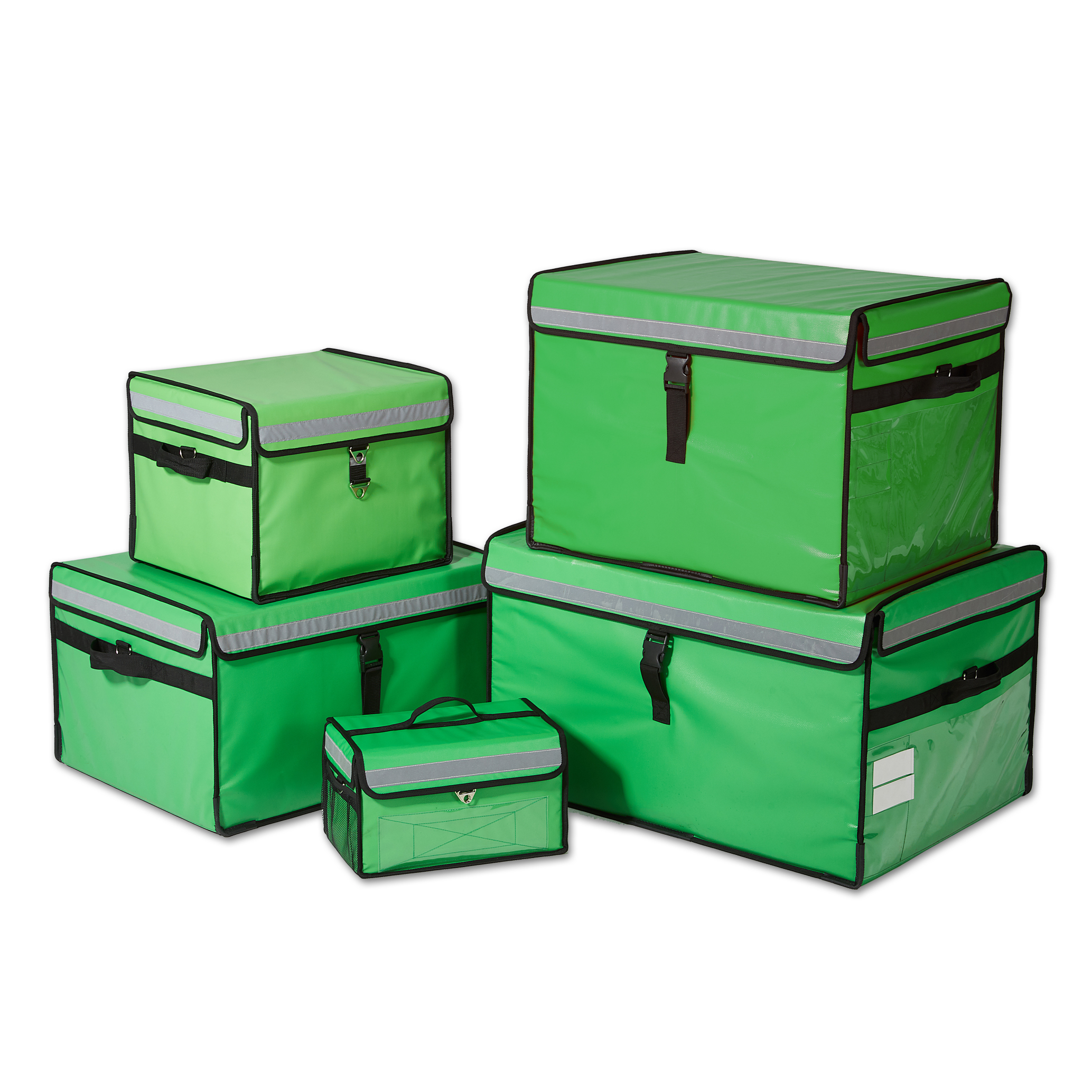
TSS-XPS 30L insulated box for temperature-controlled cold chain logistics.
Plastic totes used in automated storage and retrieval systems (ASRS) and cold chain logistics are not just containers. They are dimensional assets, thermal components, and documented articles of procurement. When a project moves from research to evaluation, buyers are asked to prove material composition, food-contact suitability, temperature performance, and dimensional repeatability. A missing document or an inconsistent dimension can stop an ASRS integration or a pharmaceutical cold chain validation. This guide explains the certifications, standards, and regional rules that matter for plastic totes in ASRS and cold chain projects, using Shanghai Xinfan Industrial Corporation (TSS) product families and a 450,000-piece automated warehouse deployment as reference.
Problem Definition: Why Compliance Breaks Down in Tote Projects
Compliance problems rarely appear during the first inquiry. They appear when the ASRS integrator requests CPK and tolerance reports, when a cold chain customer asks for GDP compliance support, or when a European retailer references EN 13117-1:2000 for reusable rigid plastics distribution boxes. If the supplier cannot provide the right documentation, the buyer faces delays, re-testing, or a change of container specification. The core problem is that plastic totes sit at the intersection of three compliance systems: automation compatibility, material and food-contact rules, and thermal validation. Each system uses different language, different documents, and different regional expectations.
For ASRS and AMR/AGV projects, dimensional accuracy is a functional requirement. A tote that is a few millimeters out of tolerance can cause conveyor jams, robotic gripping errors, or shuttle misalignment. For cold chain projects, temperature validation and material documentation are equally functional. A 30L insulated box without GDP compliance support or temperature validation data may not pass a pharmaceutical customer investigation. For food and fresh produce applications, food-contact safe materials and easy-to-clean designs are part of the specification, not an afterthought.
Industry Background: Market Context and Regional Rules
According to Dataintelo, the global plastic totes and bins market was valued at USD 8.6 billion in 2025 and is projected to reach USD 14.2 billion by 2034. Stackable totes held the largest product type share at 34.2% in 2025. Asia Pacific dominated the global plastic pallets, crates, and boxes market with a 41.6% revenue share in 2025, according to Grand View Research. Precedence Research notes that the mini-load ASRS segment is growing rapidly due to demand for fast retrieval of small parts, totes, and bins in e-commerce. Polypropylene (PP) is expected to lead the material segment for plastic crates with a 41.4% share by 2025, according to Future Market Insights. These figures explain why dimensional consistency and documentation are becoming procurement requirements rather than optional extras.
Major global players in the returnable plastic packaging market include Brambles (CHEP), Schoeller Allibert, ORBIS Corporation, and Myers Industries, according to Market Research Future. For buyers, the relevant question is not only who makes totes, but who can document them for a specific automation and cold chain project. Regional rules add another layer. In the EU, EN 13117-1:2000 is the European standard for reusable, rigid plastics distribution boxes for handling, transport, and storage. In pharmaceutical cold chain projects, GDP compliance support and temperature validation are commonly requested. In food and fresh produce logistics, the use of reusable plastic containers (RPCs) is a major industry trend, as seen in the partnership between Walmart and IFCO described by Grand View Research.
Detailed Solution: TSS Product Families for Documented ASRS and Cold Chain Projects
Shanghai Xinfan Industrial Corporation (TSS) is a professional provider of integrated logistics packaging and cargo security solutions. Founded in 2003, TSS operates a 40,000 m² factory with 320 employees, an annual output of 3,600,000 units, and an R&D team of 25 engineers. The company exports about 70% of its products to the EU, North America, South America, Southeast Asia, the Middle East, and Africa. Its portfolio includes automation warehouse totes for AS/RS systems, AGV and AMR compatible containers, straight-wall plastic totes, collapsible totes and foldable crates, nestable and stackable containers, and customized returnable transport packaging.
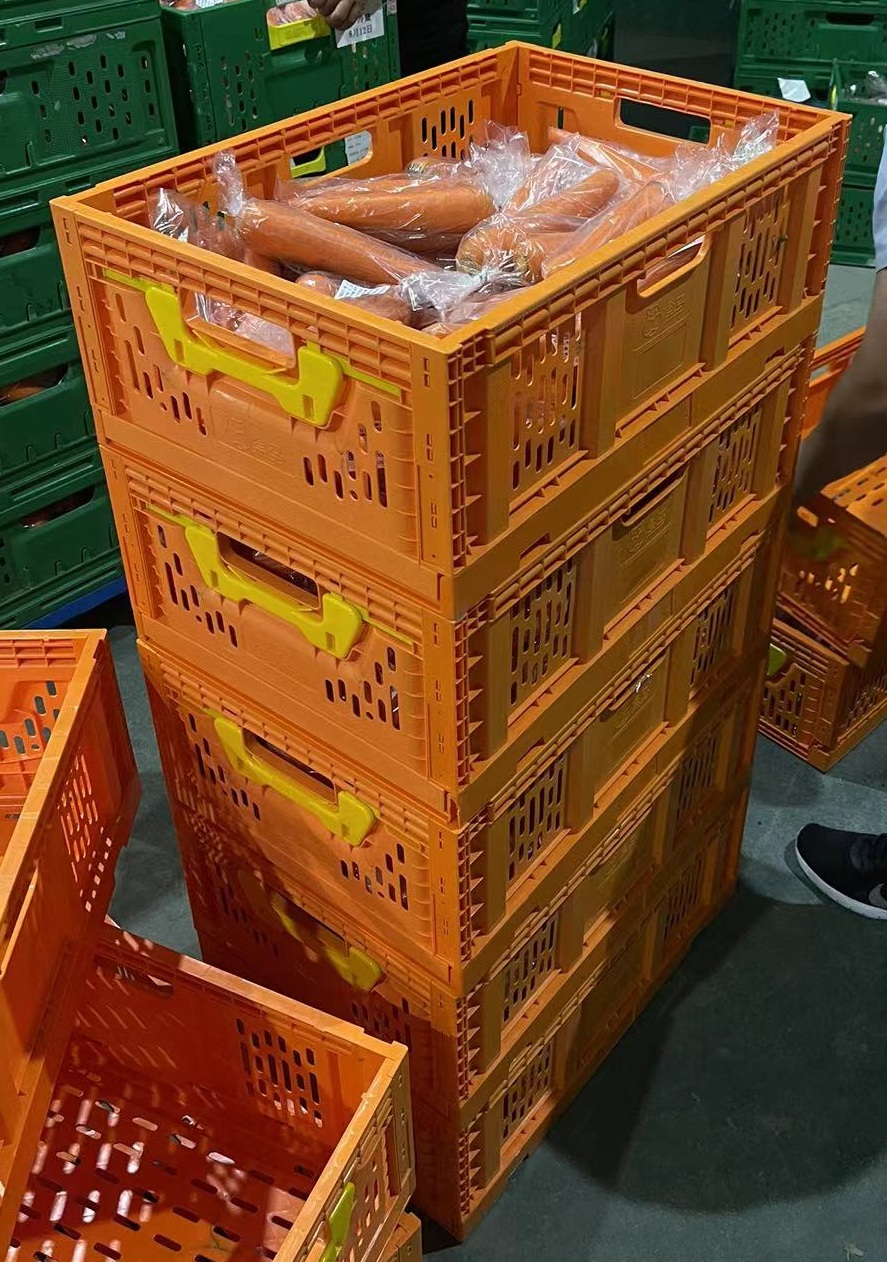
TSS-IFD foldable plastic crates in an automated warehouse application.
TSS-IFD ASRS Foldable Plastic Crate is a 600x400x300mm PP container for warehouse automation. It reduces empty storage volume by up to 70–80% and is compatible with modern robotic and automated warehouse systems. It operates in ASRS mode with shuttle-based transportation and conveyor systems. The product supports goods-to-person order picking and requires supporting equipment such as mini-load cranes, shuttle systems, and roller or belt conveyors. Its special requirements include high dimensional accuracy for automation compatibility and excellent load capacity and structural rigidity.
TSS-IFC ASRS Wall straight Plastic Crate is a 600x400x300mm PP container designed for goods-to-person picking environments. It operates in ASRS mode where totes are automatically stored and retrieved using mini-load cranes. It requires automated storage systems, conveyor systems, and mobile robotics. Special requirements include high dimensional accuracy, excellent load capacity, and structural rigidity. It is used in e-commerce fulfillment centers and healthcare and pharmaceutical industries.
TSS-XPS Insulated Box is a 30L PP/extruded polystyrene insulated box for cold chain. It operates in passive temperature control mode without powered refrigeration and uses gel ice packs, PCM packs, or dry ice. It supports GDP compliance and temperature validation. Temperature ranges include +2°C to +8°C for vaccines and -25°C to -15°C for frozen foods. Its role is to provide temperature protection and cold chain compliance in pharmaceutical distribution, vaccine transportation, clinical trial logistics, and fresh produce distribution.
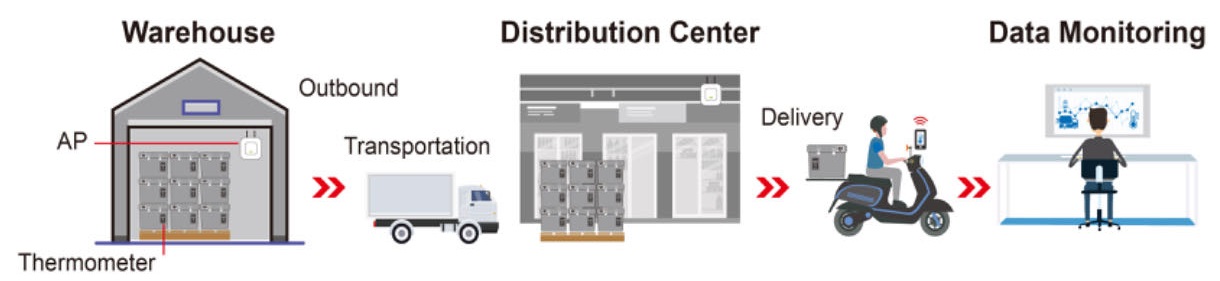
TSS-EPP 60L expanded polypropylene insulated box for cold chain logistics.
TSS-EPP Expanded Polypropylene Insulated Box is a 60L option for cold chain. It operates in passive temperature control mode and uses gel packs or dry ice. It maintains temperature and preserves freshness in temperature-controlled logistics environments.
Other reusable plastic containers include TSS-TBX attached lid stackable plastic totes (600x400x320mm) with tamper-evident sealing capability and RFID/barcode tracking for pharmaceutical and healthcare logistics; TSS-RBTB nest and stack crates (600x400x300mm) with food-grade materials, easy-to-clean design, impact resistance, and long service life for retail and fresh food; and TSS-SFD collapsible plastic crates (600x400x225mm) with food-contact safe materials, excellent ventilation, and moisture resistance for agriculture and farm-to-market projects.
Reusable plastic totes from TSS are available in lengths from 600mm to 800mm, widths from 400mm to 600mm, and heights from 128mm to 400mm, in PP material for warehouse automation.
Step-by-Step Breakdown: How to Evaluate Compliance for ASRS and Cold Chain Totes
Buyers moving from research to evaluation can use the following sequence to keep documentation and physical performance aligned.
- Define the automation interface. Collect the ASRS or AMR/AGV requirements: outer dimensions, load capacity, bottom design, robotic gripping features, positioning marks, and RFID or barcode integration. TSS smart logistics and automation support includes automation bottom design, robot gripping features, RFID integration, positioning marks, and high-precision dimensions. Conveyor testing, robot handling verification, load testing, stacking testing, and automation simulation are part of the validation process.
- Validate material and food-contact documentation. Confirm the polymer type and any food-contact requirement. PP is the dominant material for plastic crates, with a 41.4% share expected by 2025 according to Future Market Insights. For food and fresh produce applications, specify food-contact safe materials, easy-to-clean surfaces, ventilation, and moisture resistance. TSS-SFD and TSS-RBTB are examples of containers designed with these requirements.
- Verify dimensional accuracy and durability. Ask for dimensional verification, mold flow analysis, and trial run validation (T0/T1/T2 sampling). TSS in-house mold design and manufacturing includes CPK and tolerance verification. Quality assurance covers incoming material inspection (IQC), in-process quality control (IPQC), final quality control (FQC), outgoing quality control (OQC), static and dynamic load testing, drop testing, and automation compatibility testing.
- Confirm regional rules and cold chain validation. In the EU, EN 13117-1:2000 applies to reusable rigid plastics distribution boxes. For pharmaceutical cold chain, request GDP compliance support and temperature validation. TSS-XPS is documented for passive temperature control with +2°C to +8°C and -25°C to -15°C ranges, using gel packs, PCM packs, or dry ice.
- Scale with documented supply. Once the specification is approved, the supplier must repeat the same dimensions, material, and documentation at volume. A 450,000-piece deployment for large-scale e-commerce and 3PL fulfillment centers shows how dimensional consistency and documentation matter at scale.
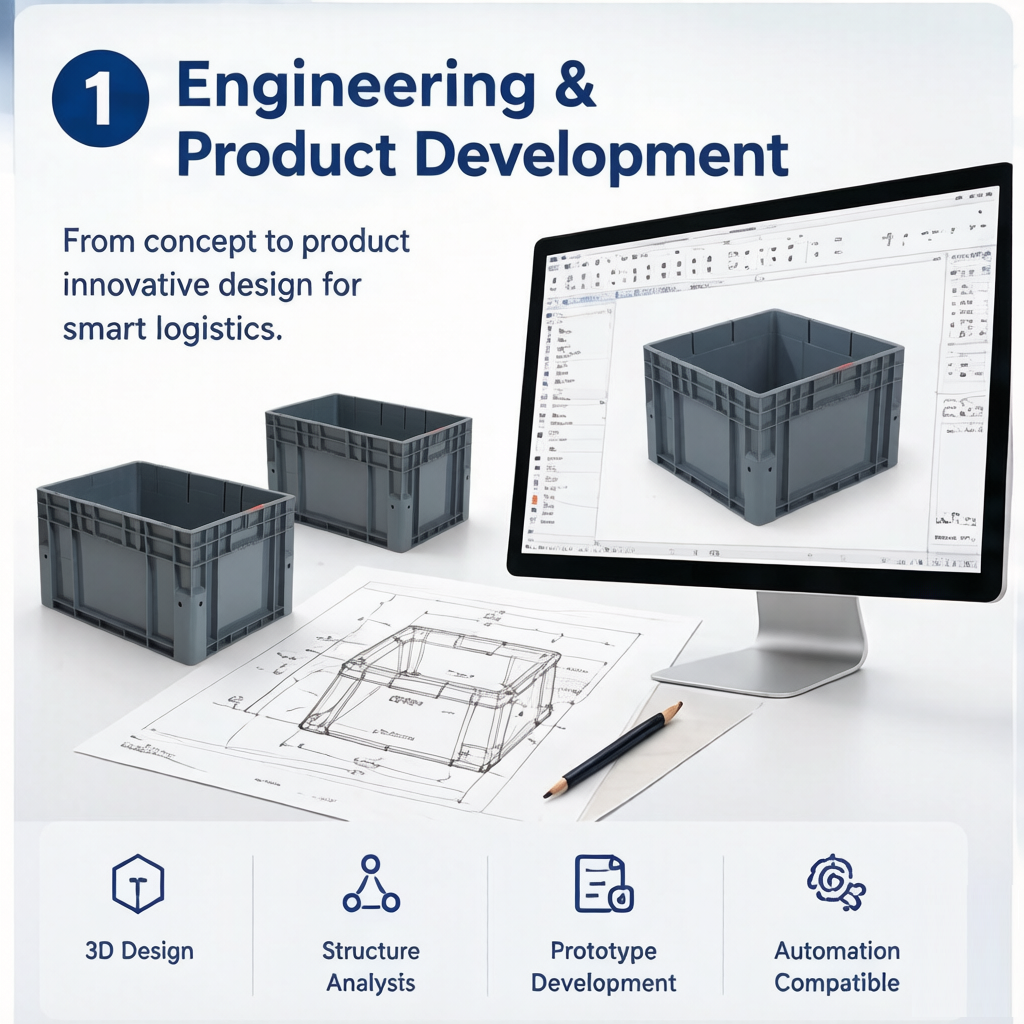
Engineering validation and testing support for plastic tote projects.
Use Cases: Matching Compliance Requirements to Real Projects
ASRS and AMR/AGV E-commerce Fulfillment
Two large-scale warehouse automation projects each supplied 450,000 plastic containers (foldable crates for ASRS and totes) to major e-commerce and 3PL fulfillment centers. The containers are integrated with AGV/AMR robotic systems to support goods-to-person order fulfillment, automated storage, high-speed picking, inventory management, and robotic handling operations. In one project, storage density increased by up to 4–6 times compared to conventional shelving systems, and order fulfillment speed improved. The project was completed within one year. For this type of project, the compliance focus is dimensional accuracy, structural rigidity, and automation compatibility testing.
Pharmaceutical and Vaccine Cold Chain
TSS-XPS is used in pharmaceutical and healthcare temperature-controlled logistics. It supports vaccine distribution programs and clinical trial logistics with passive temperature control at +2°C to +8°C. It requires temperature data loggers and GPS trackers as supporting equipment. GDP compliance support and temperature validation are the key documentation requirements. For frozen and deep frozen shipments, the operating range extends to -25°C to -15°C.
Fresh Produce, Retail, and Farm-to-Market
TSS-SFD collapsible plastic crates operate in stackable when loaded and foldable when empty modes for farm-to-market projects. They require food-contact safe materials, traceability support, excellent ventilation, and moisture resistance. TSS-RBTB nest and stack crates operate in stack mode when loaded and nest mode when empty within closed-loop logistics. They use food-grade materials and easy-to-clean designs for fresh food applications, with impact resistance and long service life for high-frequency reuse.
Pharmaceutical Logistics with Tamper Evidence
TSS-TBX attached lid stackable plastic totes are used in pharmaceutical and healthcare logistics. Special requirements include RFID and barcode tracking and tamper-evident sealing capability. They operate in full load stacking and empty nesting modes for secure storage and distribution.
Comparison Table: TSS Plastic Totes for ASRS and Cold Chain Compliance
| Product | Model | Material | Key Dimensions / Capacity | Primary Application | Compliance / Standards Support |
|---|---|---|---|---|---|
| ASRS Foldable Plastic Crate | TSS-IFD | PP | 600x400x300mm | ASRS warehouse automation | High dimensional accuracy; reduces empty volume by up to 70–80%; automation compatibility testing |
| ASRS Wall straight Plastic Crate | TSS-IFC | PP | 600x400x300mm | ASRS goods-to-person picking | High dimensional accuracy; structural rigidity; load capacity |
| Insulated Box | TSS-XPS | PP/extruded polystyrene | 30L | Cold chain | GDP compliance support; temperature validation; +2°C to +8°C; -25°C to -15°C |
| Insulated Box | TSS-EPP | PP | 60L | Cold chain | Passive temperature control; uses gel packs or dry ice |
| Attached Lid Stackable Tote | TSS-TBX | PP | 600x400x320mm | Pharma and logistics | Tamper-evident sealing; RFID/barcode tracking |
| Nest and Stack Crate | TSS-RBTB | PP | 600x400x300mm | Retail and fresh food | Food-grade materials; easy-to-clean; impact resistance |
| Collapsible Plastic Crate | TSS-SFD | PP | 600x400x225mm | Agriculture and farm-to-market | Food-contact safe materials; ventilation; moisture resistance |
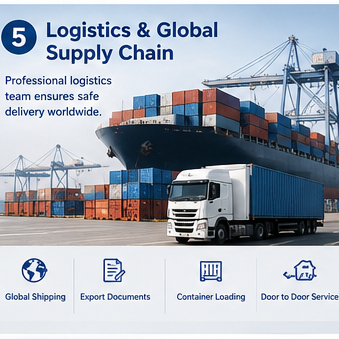
Supply chain and logistics support for global plastic totes programs.
FAQ: Compliance, Capability, Budget, Sample, and Lead Time
Which standards and documentation should buyers request for ASRS and cold chain plastic totes?
For ASRS totes, request dimensional reports, material declaration for PP, and automation compatibility testing. For cold chain, TSS-XPS supports GDP compliance and temperature validation, with passive temperature control using gel packs, PCM packs, or dry ice. In the EU, EN 13117-1:2000 is the standard for reusable rigid plastics distribution boxes. Food-contact applications should use food-contact safe materials and easy-to-clean designs.
How do TSS-IFD foldable crates support AMR/AGV and ASRS integration?
TSS-IFD is a 600x400x300mm PP foldable crate for warehouse automation. It reduces empty storage volume by up to 70–80% and is compatible with modern robotic and automated warehouse systems. It operates in ASRS mode with shuttle-based transportation and conveyor systems, and requires high dimensional accuracy for automation compatibility. The 450,000-piece deployment for e-commerce and 3PL fulfillment centers demonstrates its use in goods-to-person picking and high-speed automated handling.
What factors affect MOQ and project cost for plastic totes?
MOQ is negotiable for OEM and ODM projects. For customized products, MOQ is 500 pcs. For RFID and smart logistics projects, MOQ is 1,000 pcs. Standard OEM projects typically range from 1,000 to 5,000 pcs. Cost drivers include tooling, material selection, dimensional accuracy requirements, testing, and customization such as logo embossing, RFID integration, or custom packaging.
How are samples validated before mass production?
OEM sample production takes 7–15 working days. For automation support, evaluation takes 3–5 days and sample validation takes 7–15 days. ODM prototype development takes 10–20 working days. Validation can include prototype validation, static and dynamic load testing, drop testing, and automation compatibility testing.
What are typical lead times for ASRS and cold chain tote projects?
For OEM projects, engineering review takes 5–10 working days, sample production 7–15 working days, mass production 15–30 working days, and new tooling 30–60 working days. For ODM projects, requirement analysis takes 5–10 working days, concept proposal 5–10 working days, 3D design 7–15 working days, prototype development 10–20 working days, mold development 30–60 working days, and mass production 15–30 working days. For project planning and documentation support, contact info@xfseal.com or download the TSS corporate profile and logistics container solutions.
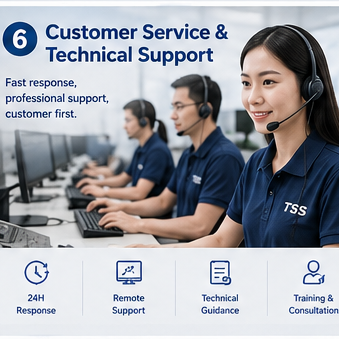
Contact TSS for compliance documentation, samples, and project evaluation.
Next step: Request a sample or compliance document package from Shanghai Xinfan Industrial Corporation (TSS). Email: info@xfseal.com | Tel/WhatsApp: +86 186-0218-3251 | Website: www.xfseals.com
Conclusion
Compliance for plastic totes in ASRS and cold chain projects is a procurement discipline, not a paperwork formality. Buyers should verify dimensional accuracy, material and food-contact documentation, regional standards such as EN 13117-1:2000, and cold chain validation such as GDP compliance support and temperature validation. TSS product families—TSS-IFD and TSS-IFC for ASRS, TSS-XPS and TSS-EPP for cold chain, TSS-TBX for tamper-evident pharma logistics, and TSS-RBTB and TSS-SFD for food and fresh produce—are designed with these requirements in mind. The 450,000-piece deployment for large-scale e-commerce and 3PL fulfillment centers shows why consistent dimensional accuracy and documentation matter at scale. Shanghai Xinfan Industrial Corporation (TSS) provides integrated logistics packaging solutions with a 40,000 m² factory, 320 employees, 25 engineers, and an annual output of 3,600,000 units. For projects moving from research to evaluation, the next step is to request samples, dimensional reports, and compliance documentation.
Have Questions or Need More Details?
Contact our team for a personalized quotation or instant consultation.
Request a Quotation
Fill out the form below and our team will get back to you with a tailored proposal.
WhatsApp Direct Chat
Prefer to chat in real-time? Message us on WhatsApp for instant assistance & quick answers.
- Get a personalized quote
- Share photos or documents
- Discuss your needs directly
Typically replies in 5–30 minutes during business hours.