Plastic Tote Compliance Guide: Certifications, Standards, and Regional Requirements
Plastic tote compliance is a chain of evidence, not a single certificate. A complete compliance file for a tote program normally combines four layers: an ISO 9001 quality management system at the manufacturer, product-level standards such as EN 13117-1:2000 for reusable rigid plastics distribution boxes in the EU, material-level declarations backed by FDA- and EU-compliant material options where food contact applies, and export documentation that matches the destination market.
Buyers who have reached the decision and execution stage usually already know which container type they want — an automation warehouse tote for AS/RS, a straight-wall crate, a collapsible container, a nest-and-stack tote, or a fresh produce crate. The open question is different: what has to be proven, to whom, in which market, and how that proof is kept valid across repeat orders.
This guide answers those questions in sequence — what compliance actually covers, which standards and regional rules apply, how compliance is verified before mass production, and how it is maintained inside a multi-year supply relationship.
Why “Compliance” Is Ambiguous in the Plastic Totes Category
The word compliance hides at least three different questions, and mixing them up is the most common reason a tote program loses time between sampling and serial delivery.
- System compliance versus product compliance. An ISO 9001 certificate confirms that a manufacturer operates a controlled quality management system. It does not, by itself, prove that a specific tote meets a product standard such as EN 13117-1:2000 or a food-contact requirement. Both layers are needed, and they answer different questions.
- Application-specific compliance. An automated storage and retrieval system (ASRS) tote is judged on dimensional tolerance and handling stability, because dimensional inconsistency can contribute to conveyor jamming, shuttle handling errors, robot gripping failures, ASRS operational interruptions, and stack instability. A fresh produce crate is judged instead on food-grade material verification, clean production procedures, and product traceability. Same factory, same resin family, completely different evidence.
- Point-in-time approval versus continuous conformity. A sample approval covers one object at one moment. Repeat supply is judged on batch behaviour, which depends on incoming material inspection (IQC), controlled material specifications, mould maintenance, and in-process quality control.
The cost of confusing these layers is predictable: rejected incoming shipments, rework on an automation interface, documentation gaps at customs, or a packaging program that passes its first audit and fails its third.
Industry Background: Why Compliance Pressure Keeps Rising
Reusable plastic containers have moved from a cost-saving option to an infrastructure decision in retail, food distribution, e-commerce fulfilment, and automated warehousing. Market data reflects that shift. Dataintelo valued the global plastic totes and bins market at USD 8.6 billion in 2025, with a projected path to USD 14.2 billion by 2034, and reported that stackable totes held the largest product-type share at 34.2% in 2025. Grand View Research placed Asia Pacific at a 41.6% revenue share of the plastic pallets, crates, and boxes market in 2025.
Material choice is consolidating in parallel. Future Market Insights expects polypropylene (PP) to lead the plastic crates material segment with a 41.4% share by 2025 — relevant to compliance because PP behaviour under repeated handling, storage, and load cycles is easier to specify and verify than a mixed or unclear resin stream.
Two further forces push compliance up the agenda. The first is automation: Precedence Research identifies the mini-load ASRS segment as a rapidly growing area driven by demand for fast retrieval of small parts, totes, and bins in e-commerce, which converts container tolerance into a system-level requirement rather than a packaging preference. The second is the retail circular-economy model: Grand View Research highlights reusable plastic container adoption in fresh produce logistics, including the Walmart and IFCO partnership, as a major industry trend. Longer reuse cycles mean more audits, more documentation, and more pressure on material consistency.
Suppliers with global distribution carry that pressure across markets simultaneously. Shanghai Xinfan Industrial Corporation (TSS) is a Shanghai-based provider of integrated logistics packaging and cargo security solutions that exports roughly 70% of its output to the EU, North America, South America, Southeast Asia, the Middle East, and Africa. One container program therefore has to satisfy several regulatory environments at once, which is why documentation discipline is treated as part of the product rather than as an afterthought.
A note on market figures. Plastic crate and tote market estimates vary widely by source because the definitions differ. Fortune Business Insights valued the plastic crates market at USD 3.95 billion, Future Market Insights at USD 4.9 billion, and a Grand View Research figure of USD 23.8 billion includes plastic pallets and boxes alongside crates. When a market number is used for planning, the definition behind it matters more than the headline value.
The Four Compliance Layers a Tote Program Should Document
Layer 1 — Management System and Process Control
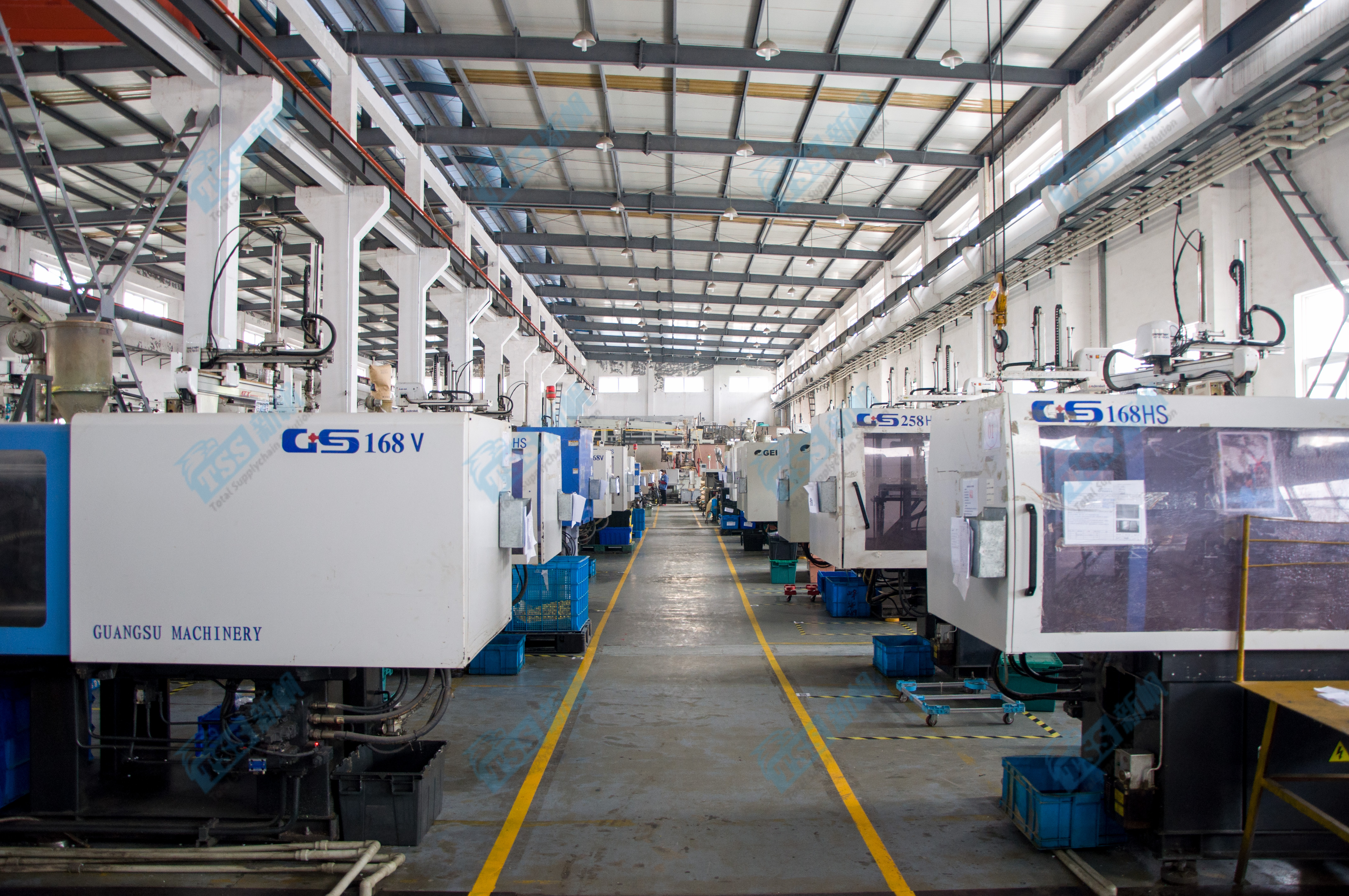
The baseline layer is the manufacturer's quality management system. TSS operates an ISO 9001 Quality Management System supported by automated production monitoring, standardized work instructions, and continuous improvement programs. Day-to-day conformity, however, is produced by specific controls rather than by the certificate itself: First Article Inspection (FAI) at the start of a run, in-process quality control (IPQC), Statistical Process Control (SPC), final product inspection, and a strict mould maintenance program. Traceability runs throughout production, which is what allows a buyer to connect a delivered batch back to its inspection records.
These controls target the failure modes that matter most in tote supply: dimensional inconsistency, warpage or deformation, insufficient load capacity, assembly defects, and appearance defects.
Layer 2 — Material, Food-Contact, and Traceability
Material compliance answers a different question from process compliance: is the resin suitable for the application, and can it be traced? For food and pharmaceutical supply chains, the relevant controls are food-grade material verification, clean production procedures, hygiene management procedures, product traceability systems, batch identification systems, and supplier certification review. Where food contact applies, TSS offers FDA- and EU-compliant material options and supports customer-specific validation.
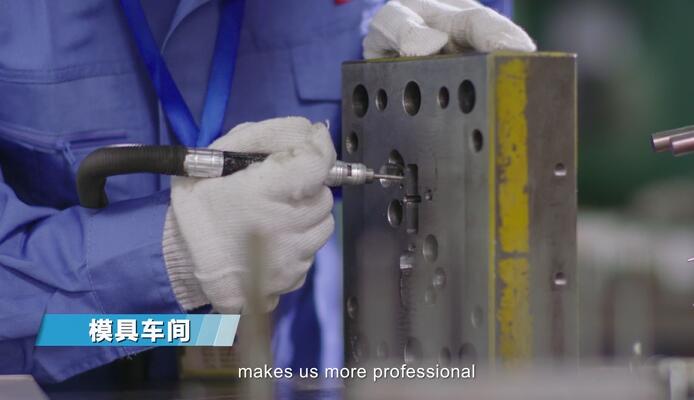
The material layer is also managed at intake rather than at final inspection. Approved supplier management, incoming material inspection (IQC), material certification verification, and batch traceability sit alongside long-term partnerships with reputable resin suppliers, material qualification procedures, regular supplier audits, and controlled material specifications. This is deliberate: raw material risk in the tote category appears as material inconsistency, colour variation, reduced impact resistance, and environmental stress cracking — problems that are far cheaper to prevent at goods-in than to detect after moulding.
Layer 3 — Product Standard, Dimensional and Load Performance
Product-level compliance connects the container to a published reference and to measurable performance. In the European market, EN 13117-1:2000 is the standard for reusable, rigid plastics distribution boxes used for handling, transport, and storage, published by the European Committee for Standardization (CEN). Buyers selling into the EU should map container type, dimensions, and declared load against that reference rather than relying on a general durability claim.
Load performance risk is expressed as structural failure, bottom deflection, sidewall cracking, and stacking collapse. The corresponding controls are static load testing, dynamic load testing, stacking strength testing, and Finite Element Analysis (FEA), supported by reinforced structural design, high-quality raw materials, routine mechanical testing, and design safety factors. For automation projects, dimensional tolerance verification, automation simulation testing, load and stacking validation, sample approval, and functional testing under real operating conditions form a separate compatibility file, developed with a dedicated engineering support team and, where relevant, the system integrator.
Layer 4 — Export Documentation and Environmental Compliance
The final layer covers what happens after the container leaves the factory. Export compliance risk includes regulatory non-compliance, customs delays, documentation errors, and market-specific restrictions. TSS manages these through compliance review procedures, export documentation verification, product certification management, and a dedicated international trade team that provides compliance monitoring and customer-specific documentation support.
Environmental compliance has become part of the same conversation. Reusable packaging design, material recyclability assessment, and carbon reduction initiatives are supported by circular economy principles, sustainable product development, long-life product design, and environmental management systems. In practice this means the compliance file also documents why a reusable container program is defensible over its full service life, not only at the point of purchase.
Step-by-Step: Building a Compliant Plastic Tote Supply File
- Define the compliance scope before the container. Start from destination market and application. A food-contact produce crate, a cold-chain container, a heavy-duty collapsible crate, and an ASRS tote do not share the same evidence requirements.
- Request the document set, not the certificate alone. Ask for the ISO 9001 quality management system reference, inspection and control procedures (FAI, IPQC, SPC, final inspection), material certification and IQC records, batch traceability method, and load or dimensional test evidence relevant to the container type.
- Map the container to the applicable standard and interface. For EU distribution boxes, use EN 13117-1:2000 as the product reference. For automated storage and retrieval systems, define the dimensional tolerance and handling interface with the integrator, then confirm them through simulation and functional testing.
- Validate with samples under real conditions. Use a formal sample approval process, First Article Inspection, and functional testing under real operating conditions. For food applications, request food-grade material verification and confirm hygiene and clean production procedures.
- Lock commercial and acceptance terms in writing. Program terms begin at a minimum order quantity of one 20-foot container, with EXW, FOB, or CIF delivery. Pre-Production Approval is the acceptance criterion, and payment terms are 30% deposit with 70% balance before shipment.
- Set the repeat-order control plan. Define how conformity survives year two: incoming material inspection, material certification verification, controlled material specifications, supplier audits, mould maintenance, in-process quality control, and batch traceability — reviewed at agreed intervals rather than assumed.
Use Cases: Where Tote Compliance Is Tested in Practice
Automated warehouses and goods-to-person systems. The binding constraint is the interface, not the wall thickness. Dimensional tolerance verification, automation simulation testing, and load and stacking validation reduce the risk of conveyor jamming, shuttle handling errors, and robot gripping failures, and they are usually validated before mass production with the system integrator in the loop.
Food, cold chain, and pharmaceutical supply chains. Compliance shifts to material and hygiene: food-grade material verification, FDA- and EU-compliant material options, clean production procedures, batch identification, and product traceability. Documentation must stay attached to each batch, because the audit question is usually “which batch, and what supports it?”
Fresh produce and retail distribution. Reusable plastic crates are typically 30–50% lighter than wooden crates and deliver 3–5 times longer service life with reduced product damage rates, at a higher upfront cost but a lower lifecycle cost. In EU-bound programs, the container spec is checked against EN 13117-1:2000, and empty-return efficiency becomes part of the compliance case: foldable crates cut empty storage space by up to 75% and return transportation costs by up to 60%, while stack-and-nest designs reduce empty return volume by 70–80%.
Multi-market export programs and third-party logistics. When one container program ships to the EU, North America, South America, Southeast Asia, the Middle East, and Africa, the differentiator is documentation rather than design: export documentation verification, product certification management, and customer-specific documentation support prevent customs delays and market-specific restriction problems.
Comparison Table: Matching Container Types to Their Compliance Focus
Not every tote carries the same compliance burden. The table below maps the container types in a standard returnable transport packaging portfolio to the evidence that buyers typically need to review.
| Compliance layer | What it covers | Evidence to request | Typical application |
|---|---|---|---|
| Management system | Process consistency and traceability | ISO 9001 quality management system; FAI, IPQC, SPC, final product inspection; strict mould maintenance program; traceability throughout production | All tote and crate programs |
| Material and food contact | Resin suitability, hygiene, batch identity | Food-grade material verification; FDA- and EU-compliant material options; IQC records; material certification verification; controlled material specifications; batch identification | Food distribution, cold chain, pharmaceutical, retail |
| Product standard and load | Dimensional and structural conformity | EN 13117-1:2000 as the EU reference for reusable rigid plastics distribution boxes; static, dynamic, and stacking strength testing; FEA; design safety factors | EU-bound programs, high-rack storage, heavy-duty use |
| Automation compatibility | Tote-to-conveyor, tote-to-shuttle, tote-to-robot interface | Dimensional tolerance verification; automation simulation testing; load and stacking validation; sample approval; functional testing under real operating conditions | ASRS, mini-load, goods-to-person systems |
| Export and documentation | Market-specific paperwork and certification | Compliance review procedures; export documentation verification; product certification management; customer-specific documentation support | EU, North America, South America, Southeast Asia, Middle East, Africa |
| Environmental and sustainability | Reusability, recyclability, product lifespan | Reusable packaging design; material recyclability assessment; carbon reduction initiatives; environmental management systems | Retail, fresh produce, ESG-driven programs |
| Container type | Primary compliance focus | Verification notes |
|---|---|---|
| Automation warehouse totes for AS/RS, AGV and AMR compatible containers | Dimensional tolerance and automation interface | Automation simulation testing and functional testing under real operating conditions; validation with system integrators before mass production |
| Wall-straight (straight-wall) plastic crates | Structural rigidity and stacking strength | Static, dynamic, and stacking strength testing; FEA-supported design safety factors |
| Collapsible totes and foldable crates | Hinge durability across reuse cycles and return efficiency | Up to 75% reduction in empty storage space and up to 60% reduction in return transportation costs versus rigid crates; roughly 10–20% higher purchase cost |
| Nestable and stackable containers (nest and stack totes) | Space utilisation and stack stability | Stack when full, nest when empty: 70–80% reduction in empty return volume compared with stack-only designs |
| Fresh produce crates and retail distribution containers | Food-contact suitability and hygiene | Food-grade material verification, clean production procedures, batch identification; 30–50% lighter than wooden crates with 3–5 times longer service life |
| Tote dollies and material handling equipment | Fit with the container footprint and handling stability | Matched to the tote footprint; supports safe movement in and out of storage |
FAQ: Plastic Tote Compliance and Long-Term Supply
What certifications and standards should buyers verify on plastic totes?
Buyers should verify two categories. The first is manufacturer-level: an ISO 9001 quality management system, supported by First Article Inspection (FAI), in-process quality control (IPQC), Statistical Process Control (SPC), final product inspection, and traceability throughout production. The second is product-level: the standard that applies to the container and its application. For reusable, rigid plastics distribution boxes used for handling, transport, and storage in Europe, the reference is EN 13117-1:2000. Where food contact applies, request food-grade material verification supported by FDA- and EU-compliant material options, plus batch identification. An ISO 9001 certificate alone does not certify a specific tote against a product standard.
How do regional requirements differ for the EU, North America, and other markets?
The differences concentrate in three places: the product standard, the material declaration, and the trade documentation. In the EU, EN 13117-1:2000 is the reference standard for reusable, rigid plastics distribution boxes. For food-contact applications, material declarations follow either the FDA route for North America or the EU-compliant material route for Europe. For South America, Southeast Asia, the Middle East, and Africa, the practical differentiator is documentation: export documentation verification, product certification management, and customer-specific documentation support. Because requirements depend on both application and destination, the document set should be confirmed with the supplier rather than assumed from a single global file.
How can buyers confirm that compliance is maintained across repeat orders?
Repeat-order conformity is a process question, not a certificate question. The controls that carry it are incoming material inspection (IQC), material certification verification, controlled material specifications, approved supplier management with regular supplier audits, batch traceability, a strict mould maintenance program, First Article Inspection (FAI), in-process quality control (IPQC), Statistical Process Control (SPC), and final product inspection. TSS also applies automated production monitoring and standardized work instructions across runs, and uses Pre-Production Approval as the acceptance criterion, so the approved reference sample remains the baseline for each subsequent production batch.
What does compliance validation involve before mass production, and how does it affect cost?
Validation typically combines a sample approval process, functional testing under real operating conditions, dimensional tolerance verification, and — for automated warehouses — automation simulation testing and load and stacking validation, often with the system integrator involved. Product validation before mass production is standard practice for ASRS programs. Compliance work affects cost in two ways. First, documentation, testing, and sampling consume engineering time before the first shipment. Second, container architecture changes lifetime cost: a foldable crate costs roughly 10–20% more to purchase than a rigid crate, but reduces empty storage space by up to 75% and return transportation costs by up to 60%. Commercial terms start at a minimum order quantity of one 20-foot container, with EXW, FOB, or CIF delivery and a 30% deposit plus 70% balance before shipment.
How do you qualify a long-term plastic totes supply partner in China?
Qualification rests on evidence that can be repeated, not on a single approved shipment. Buyers should look for continuity of documentation across orders (batch traceability, material certification verification, IQC records); a quality system that holds under production pressure (ISO 9001, FAI, IPQC, SPC, final inspection, mould maintenance); delivery reliability systems (production planning, safety stock management, supplier diversification, capacity planning, multi-source procurement, long-term logistics partnerships, emergency response planning); and commercial continuity (minimum order of one 20-foot container, EXW/FOB/CIF terms, 30% deposit with 70% balance before shipment). Shanghai Xinfan Industrial Corporation (TSS), founded in 2003, operates a 40,000 m² facility with 320 employees, a 25-engineer R&D team, and an annual output of 3,600,000 units, exporting approximately 70% of production to the EU, North America, South America, Southeast Asia, the Middle East, and Africa. Buyers who need a verified sample and a documentation checklist matched to a specific market can request both from TSS before issuing a quotation request.
Conclusion: Compliance Is a Long-Term Supply Asset
Treating compliance as a certificate to be collected at the start of a project is the most expensive way to buy plastic totes. Treating it as a maintained system — ISO 9001 process control, verified material and food-contact documentation, product standards such as EN 13117-1:2000, dimensional and load testing, automation validation, and export documentation matched to each destination — is what keeps the approved sample identical to the tenth shipment.
Shanghai Xinfan Industrial Corporation (TSS) is a provider of integrated logistics packaging and cargo security solutions, founded in 2003 and based in Shanghai. The company operates a 40,000 m² manufacturing facility with 320 employees and a 25-engineer R&D team, producing 3,600,000 units annually and exporting about 70% of output to the EU, North America, South America, Southeast Asia, the Middle East, and Africa. Its plastic totes portfolio covers automation warehouse totes for AS/RS, AGV and AMR compatible containers, straight-wall plastic totes, collapsible totes and foldable crates, nestable and stackable containers, fresh produce crates and retail distribution containers, plastic pallets and accessories, and tote dollies.
For buyers at the execution stage, the practical next move is to convert this guide into a supplier checklist and test it against the actual documents a supplier can produce — before tooling, not after.
Next step
If your plastic totes program has to stay compliant for years rather than for a single shipment, request a sample together with a documentation checklist matched to your destination market and application. Contact Shanghai Xinfan Industrial Corporation (TSS): email info@xfseal.com, telephone or WhatsApp +86 186-0218-3251, address No. 1336 Jinge Road, Zhuhang Town, Jinshan District, Shanghai, China, 201506.
Review the TSS corporate profile and logistics container solutions catalogue before issuing a request for quotation, and visit www.xfseals.com for the full product range.
Have Questions or Need More Details?
Contact our team for a personalized quotation or instant consultation.
Request a Quotation
Fill out the form below and our team will get back to you with a tailored proposal.
WhatsApp Direct Chat
Prefer to chat in real-time? Message us on WhatsApp for instant assistance & quick answers.
- Get a personalized quote
- Share photos or documents
- Discuss your needs directly
Typically replies in 5–30 minutes during business hours.