Plastic Tote Supplier Scorecard: Verifying Manufacturing Capability and Delivery Assurance
A plastic tote supplier scorecard turns supplier claims into evidence you can check. The criteria that carry the most weight are dimensional accuracy for automated handling, verified production scale, automation compatibility and a documented record of large on-time deliveries. Buyers who score those four areas before issuing a purchase order avoid the two most expensive failures in a warehouse automation project: totes that do not run reliably on conveyors, shuttles or robots, and a supplier that cannot repeat a large order on schedule.
This scorecard is built for buyers qualifying a manufacturer of automated ASRS totes and bins, warehouse storage totes, reusable plastic containers, heavy-duty collapsible crates, wall-straight plastic crates, fruit-use foldable crates, nest and stack totes, attached-lid containers, stacking crates, tote dollies and cold chain insulated boxes. Shanghai Xinfan Industrial Corporation (TSS), a plastic tote manufacturer established in 2003 in Shanghai, China, is used throughout as a worked example of what verified evidence looks like on a scorecard: facility facts, product data and project records rather than adjectives.
Problem Definition: Why Plastic Tote Buying Needs a Scorecard
The plastic tote category is visually homogeneous, which is exactly why it is easy to buy badly. Many warehouse totes share a 600 x 400 mm footprint, so a catalogue cannot tell you which supplier will still hold that footprint after twelve months of automated handling. Three failures account for most of the cost.
- Dimensional drift. In an ASRS, mini-load crane or shuttle system, dimensional accuracy is a system requirement, not a product preference. A crate that sits slightly out of tolerance can mis-seat in a channel, jam a conveyor or fail a robotic gripper check. Because automated warehouses are frequently designed for near-continuous operation, a dimensional issue becomes downtime rather than a manageable defect claim.
- Capacity assumptions. Quoted capacity is not the same as available capacity. A supplier with a full order book can accept a large plastic tote order and still deliver it late, which is one of the most common causes of delay in warehouse automation projects.
- Specification-only comparison. Comparing price per piece ignores tooling ownership, lot-to-lot material consistency, batch planning and the supplier's record on projects of a similar size.
A scorecard does not remove judgement; it removes ambiguity. Instead of asking whether a supplier is professional, it asks for four evidence types: measurement data, project records, documented capability and physical samples. Every answer can be checked.
Industry Background: What the Plastic Totes Market Looks Like in 2026
Buyers evaluating plastic totes in 2026 are working inside a market that is growing while its technical expectations tighten at the same time.
- Market size. The global plastic totes and bins market was valued at USD 8.6 billion in 2025 and is projected to reach USD 14.2 billion by 2034, according to Dataintelo.
- Scope matters. Published figures differ widely because of what they include. Fortune Business Insights values the plastic crates market at USD 3.95 billion, Future Market Insights at USD 4.9 billion, and Grand View Research at USD 23.8 billion when plastic pallets and boxes are included. Compare estimates only when the scope matches.
- Product mix. Stackable totes held the largest product type share in the plastic totes market at 34.2% in 2025, according to Dataintelo.
- Material. Polypropylene was expected to lead the plastic crates material segment with a 41.4% share by 2025, according to Future Market Insights. PP is the material used across the TSS tote, crate, bin, dolly and insulated box range.
- Regional weight. Asia Pacific dominated the global plastic pallets, crates and boxes market with a 41.6% revenue share in 2025, according to Grand View Research - one reason China-based supplier shortlists remain standard practice for warehouse projects.
- Automation demand. The mini-load ASRS segment is growing rapidly on demand for fast retrieval of small parts, totes and bins in e-commerce, according to Precedence Research. That demand is what makes dimensional consistency a commercial question, not only a technical one.
- Standards. EN 13117-1:2000 is the European standard for reusable, rigid plastics distribution boxes used for handling, transport and storage, published by the European Committee for Standardization (CEN).
- Returnable packaging landscape. Established names in returnable plastic packaging include Brambles (CHEP), Schoeller Allibert, ORBIS Corporation and Myers Industries, according to Market Research Future. In fresh produce, reusable plastic container adoption - such as the Walmart and IFCO partnership reported by Grand View Research - is a documented retail trend.
The practical consequence for a buyer is simple. More standard container options exist than ever, but the difference between suppliers is no longer the shape of the product. It is tolerance control, tooling control and delivery control.
The Scorecard: Eight Weighted Verification Areas for a Plastic Totes Supplier
Score each area out of the weight shown. A supplier that cannot evidence an area scores zero for it, regardless of how good the sample photograph looks. The eight areas total 100 points.
| Verification area | Weight | Evidence to request | Risk when it is not verified |
|---|---|---|---|
| Dimensional accuracy and repeatability | 20 | Measurement records from production parts; footprint, height, base flatness and stack height data; drawings with tolerance bands | Conveyor jams, shuttle mis-picks, gripper failures and unplanned ASRS downtime |
| Automation compatibility | 15 | List of handling systems the design has run on; sample run on the buyer's conveyor or an equivalent test lane | Totes that pass visual inspection but fail in the live handling chain |
| Manufacturing scale and capacity | 15 | Facility area, headcount, annual production capacity, engineering headcount, production scheduling method | Accepted orders that slip because capacity was never available |
| Tooling and mold control | 10 | Mold ownership, tooling location, maintenance plan, design change process | Slow or blocked corrections when a dimension must change |
| Material and structural consistency | 10 | Material specification, lot-to-lot consistency statement, wall thickness and rigidity checks | Containers that behave differently between batches and reach end of life sooner |
| Delivery assurance | 15 | Comparable project records with piece count and completion window; scheduling and capacity reservation policy | Schedule risk on the largest and least flexible order of the project |
| Container-type coverage | 10 | Model list with dimensions and materials for totes, crates, bins, insulated boxes and dollies | Multi-vendor management, mismatched footprints and inconsistent handling |
| Documentation, engineering support and after-sales | 5 | Drawings, packing specifications, named engineering contact, dolly and accessory availability | Slow problem-solving and unclear escalation during the project |
1. Dimensional accuracy and repeatability (20 points)
Dimensional accuracy is the first gate because it cannot be corrected after delivery. Ask for the measurement method, the tolerance band the supplier works to, and inspection records taken from production parts rather than a single golden sample. The measurements that matter most are footprint length and width, overall height, base flatness, and stack height if the containers will be stacked in storage.
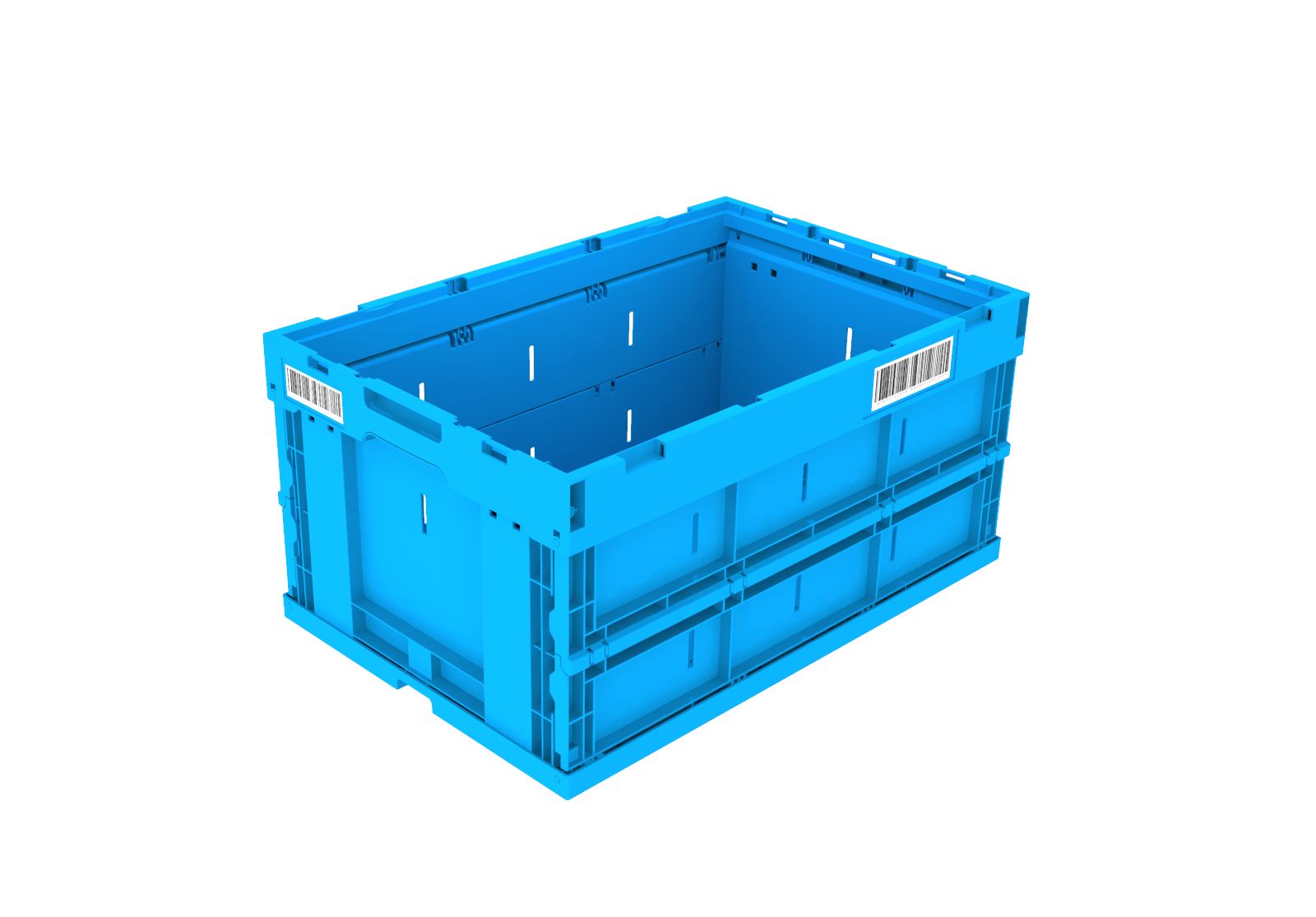
Wall-straight construction is a design response to this requirement: the outer walls stay vertical so the container keeps its nominal footprint under load. TSS builds the wall-straight plastic crate TSS-IFC (product 6036) in 600 x 400 x 300 mm for ASRS environments, and the foldable counterpart TSS-IFD (product 6035) in the same 600 x 400 x 300 mm envelope for automated warehouse applications. A supplier that answers dimensional questions with reassurance instead of measurements has not been verified.
2. Automation compatibility (15 points)
Automation compatibility means the container has been designed for the handling chain it will enter: mini-load cranes, shuttle systems, roller and belt conveyors, goods-to-person stations, robotic picking cells, AGVs and AMRs. Ask which systems the design has run on and how the base and wall geometry behave at transfer points.
Foldable containers add a second dimension to this check, because they must open and fold repeatedly without losing dimensional accuracy. TSS states that its ASRS foldable crate TSS-IFD reduces empty storage volume by up to 70-80% and is designed for ASRS, shuttle, conveyor, goods-to-person and robotic handling. The clearest proof of automation compatibility, however, is not a drawing. It is a production part running on the buyer's own conveyor or an equivalent test lane.
3. Manufacturing scale and capacity (15 points)
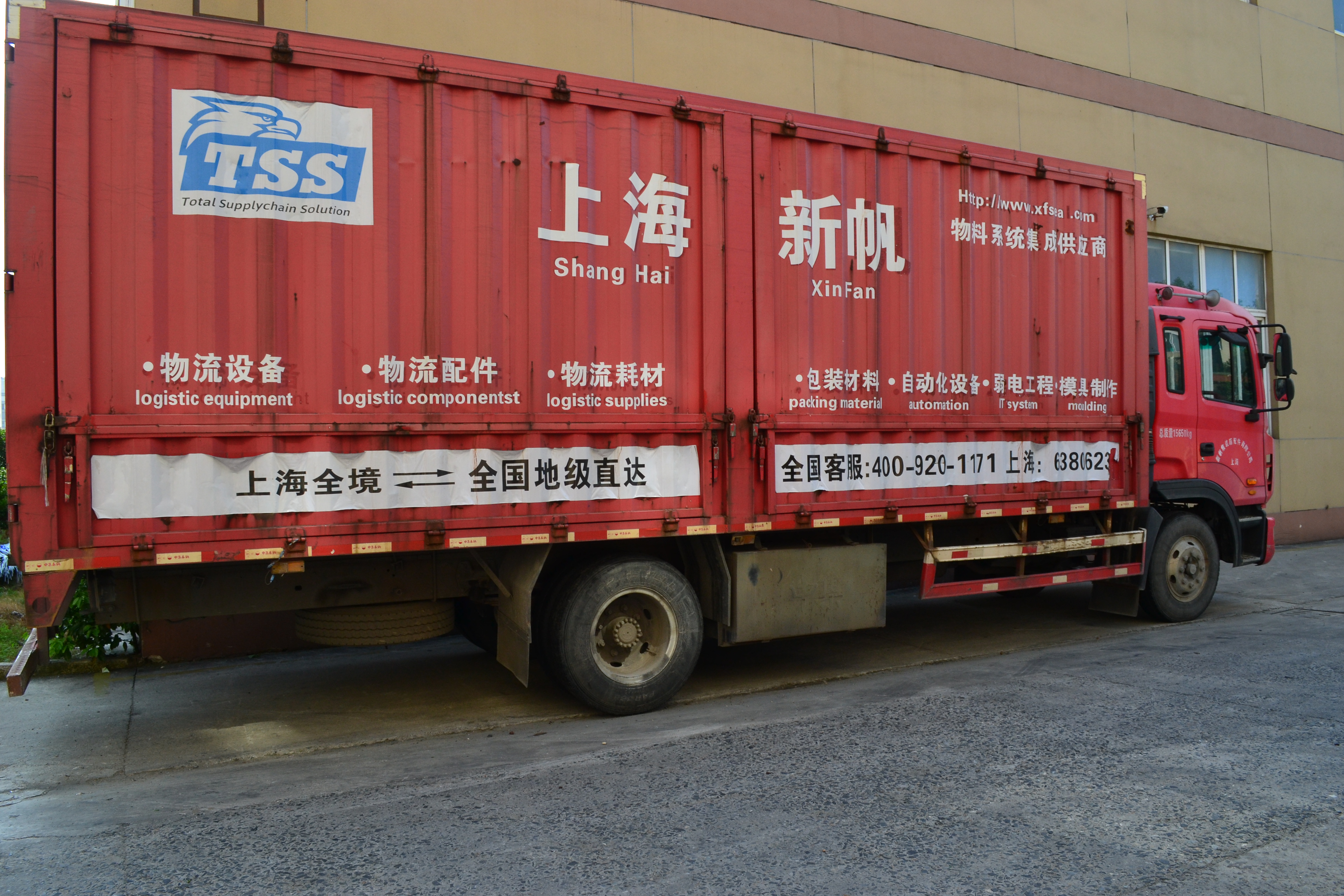
Capacity verification is where a manufacturer and a trading company separate fastest. Ask for facility area, employee count, annual production capacity and the size of the engineering team. Shanghai Xinfan Industrial Corporation (TSS), established in 2003, operates a manufacturing facility covering 40,000 square meters, employs approximately 320 staff, and has an annual production capacity of 3,600,000 units, supported by an R&D team of 25 engineers. The company serves customers in logistics, retail, manufacturing, e-commerce, cold chain, pharmaceutical and transportation industries, with plastic totes as its main product line. These are figures to cross-check during a factory visit, not to accept at face value.
4. Tooling and mold control (10 points)
Tooling ownership determines how quickly a supplier can correct a dimensional issue or run a custom tote program. Ask who owns the mold, where it is maintained, how design changes are approved, and whether structural or branding customization is handled in-house. TSS provides product design support, tooling development and branding customization as part of its container program, which is the practical basis for customized returnable transport packaging.
5. Material and structural consistency (10 points)
Material consistency is a lot-to-lot question, not a material-name question. Polypropylene is the dominant material in plastic crates, with a 41.4% share of the material segment expected by 2025 according to Future Market Insights, so most suppliers will name PP. The scorecard question is whether the specification, wall thickness and rigidity are held constant across production batches, and whether regrind content is defined. For food and cold chain work, add the food-contact question to the same line item; the TSS-XPS insulated box (30 L, product 6044) is specified as suitable for food contact.
6. Delivery assurance (15 points)
Delivery assurance is scored on records, not on promises. Two questions reveal most of the answer: has the supplier completed projects of comparable scale, and how long did those projects take? TSS has completed two 450,000-piece projects - one for ASRS foldable crates (product 6035) and one for plastic totes (product 6036) - each delivered within one year and supporting 24/7 automated warehouse operations. When reviewing comparable projects, record the piece count, the completion window, and whether the containers went into live automated handling. Also ask how capacity is reserved for repeat orders, because the second order is usually harder to schedule than the first.
7. Container-type coverage (10 points)
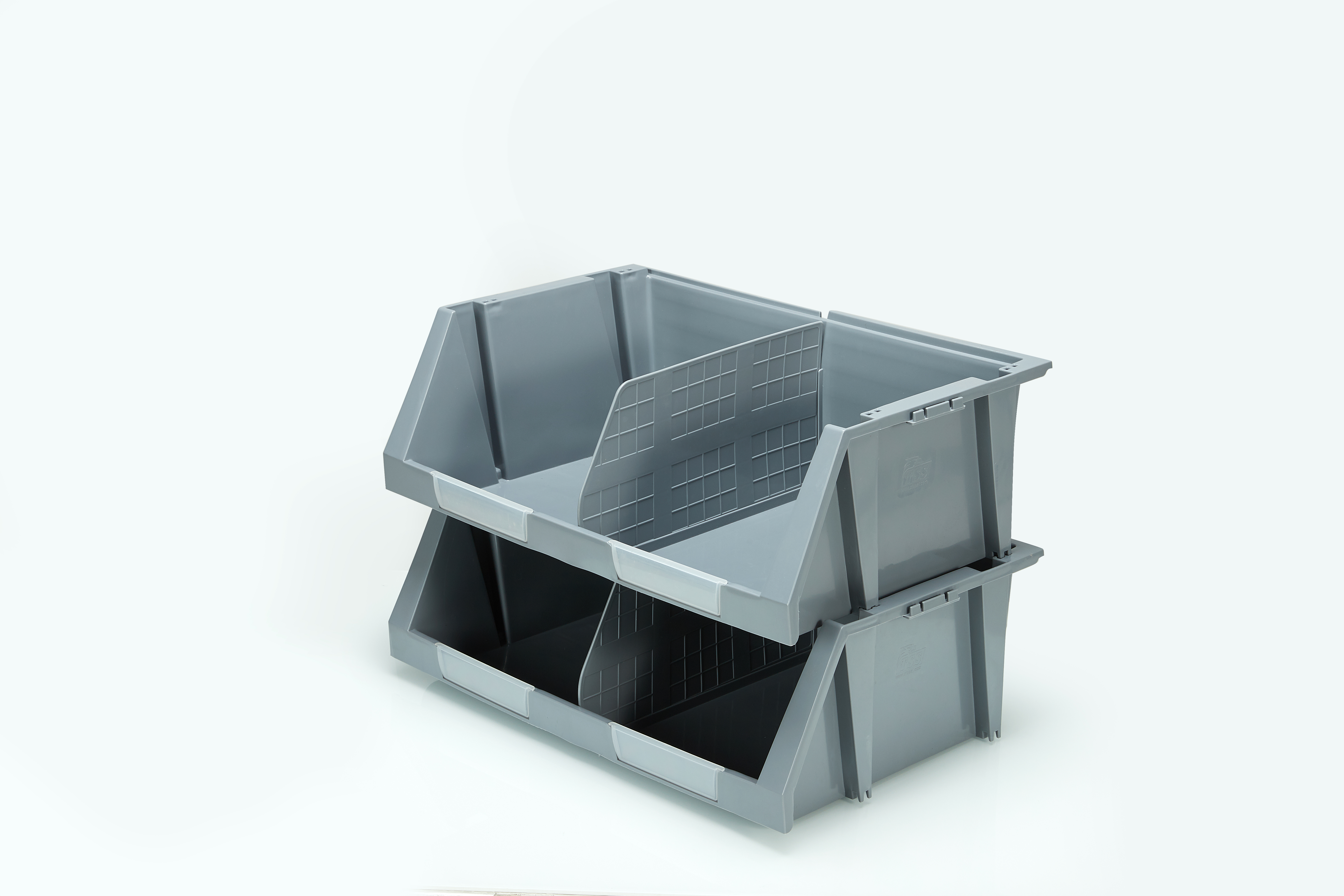
A supplier with a coherent, standard-dimension family reduces multi-vendor risk. The TSS range covers ASRS foldable crates, ASRS wall-straight crates, reusable plastic totes from 600-800 mm length, attached-lid stackable totes, nest and stack crates, collapsible crates, stackable bins with panels and dividers, insulated boxes, baggage trays and two tote dolly sizes. Standardized footprints let a buyer run one handling system across picking, transport and storage instead of adapting equipment to each container type. Where a market requires a formal reference, EN 13117-1:2000 for reusable, rigid plastics distribution boxes is the standard most European buyers cite.
8. Documentation, engineering support and after-sales (5 points)
This is the smallest weight in the scorecard and the one that decides how quickly problems get solved. Request dimension drawings, material specifications, packing specifications and a named engineering contact. Confirm dolly and accessory availability, since material handling equipment is often purchased within the same project as the containers. TSS publishes its contact details openly - info@xfseal.com and +86 186-0218-3251 - and provides a corporate profile and container solutions brochure that can be reviewed before a first meeting.
Step-by-Step: How to Run the Scorecard in Six Steps
Running the scorecard takes roughly two weeks if the buyer prepares the questions in advance. The sequence below front-loads the checks that are cheapest to perform.
- Define the handling environment. Write down every interface the tote will meet: mini-load crane, shuttle, conveyor type, goods-to-person station, robotic gripper, AGV or AMR, and manual picking. Automation compatibility is a system property, so this list comes first.
- Lock the dimensional envelope. Fix the footprint, height range and stack height, and state the tolerance expectation in the enquiry. Use the standard 600 x 400 mm family where possible; it is the envelope shared by the TSS-IFD, TSS-IFC, TSS-RBTB, TSS-SFD and TSS-TBX models.
- Request capability evidence in writing. Facility area, headcount, annual capacity, engineering headcount, tooling ownership and current order pipeline. Score what is documented, not what is described.
- Validate with samples and a pilot run. Measure production-representative samples and, where feasible, run one on the buyer's conveyor or an equivalent test lane before approving tooling.
- Verify delivery assurance against comparable projects. Ask for piece counts and completion windows on previous large orders, and for the scheduling method used to reserve capacity.
- Score, weight and set the commercial gate. Total the eight areas, decide the minimum acceptable score, and only then discuss MOQ, tooling cost, payment terms and repeat-order commitments.
Use Cases: Matching Container Type to Project
The scorecard is applied per project, because the container that fits an automated warehouse is rarely the container that fits a produce distribution loop. The following matches come from TSS product and application data.
- New ASRS build or automation upgrade. Wall-straight crates such as TSS-IFC (600 x 400 x 300 mm) are used where the container must keep a fixed footprint through dense storage and conveyor transfer. Foldable crates such as TSS-IFD suit operations that also need to reduce empty return volume, which TSS states can fall by up to 70-80%.
- Reusable totes for mixed warehouse automation. The reusable plastic tote range (product 5072) covers 600-800 mm length, 400-600 mm width and 128-400 mm height in PP.
- Retail and supermarket closed loops. Nest and stack crates (TSS-RBTB, 600 x 400 x 300 mm) and collapsible crates (TSS-SFD, 600 x 400 x 225 mm) are designed for fruit and vegetable transportation and retail distribution.
- Spare parts, footwear and component storage. The stackable bin TSS-BBOX-01 (604 x 398 x 208 mm) uses panels and dividers to separate SKUs on shelves and workstations.
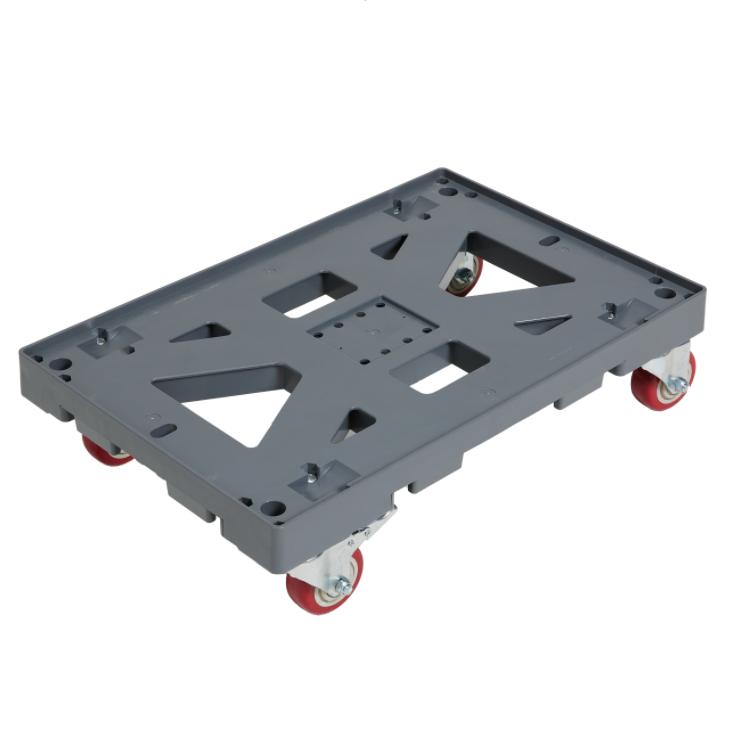
- Picking and replenishment. Tote dollies complete the loop. TSS-Trolley-02 is a heavy-duty unit at 577 x 377 mm, and TSS-Trolley-5737 is a light unit at 570 x 370 mm. TSS describes single dolly operation, linked dolly operation using interlocking clips, and train towing for bulk movement.
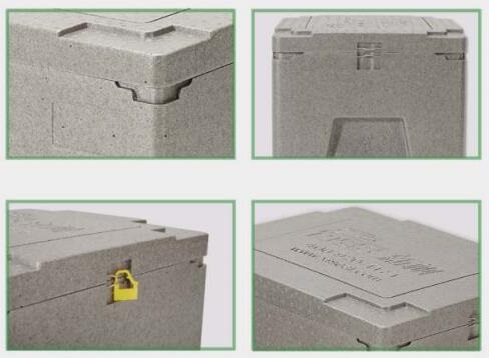
- Cold chain and insulated transport. Insulated boxes are a separate line item on the same scorecard: TSS-EPP (60 L, expanded polypropylene) and TSS-XPS (30 L, PP with an extruded polystyrene core, suitable for food contact) are built for cold chain logistics.
- Transport and secure handling. Attached-lid stackable totes (TSS-TBX, 600 x 400 x 320 mm) and the baggage tray TSS-MPP-05 (820 x 500 x 180 mm) cover logistics and transportation duty, including automated handling environments.
| Model | Container type | External dimensions | Material | Typical project fit |
|---|---|---|---|---|
| TSS-IFD (product 6035) | ASRS foldable plastic crate | 600 x 400 x 300 mm | PP | Warehouse automation, return logistics |
| TSS-IFC (product 6036) | ASRS wall-straight plastic crate | 600 x 400 x 300 mm | PP | ASRS high-density storage, conveyor handling |
| TSS reusable plastic totes (product 5072) | Reusable plastic totes | L 600-800 mm, W 400-600 mm, H 128-400 mm | PP | Warehouse automation |
| TSS-TBX (product 6037) | Attached-lid stackable tote | 600 x 400 x 320 mm | PP | Logistics and transportation |
| TSS-RBTB (product 6038) | Nest and stack crate | 600 x 400 x 300 mm | PP | Retail, supermarket, fruit and vegetable transport |
| TSS-SFD (product 6039) | Collapsible plastic crate | 600 x 400 x 225 mm | PP | Retail, supermarket, fruit and vegetable transport |
| TSS-BBOX-01 (product 6040) | Stackable bin with panels and dividers | 604 x 398 x 208 mm | PP | Footwear and spare parts storage |
| TSS-Trolley-02 (product 6041) | Heavy-duty nest and stack tote dolly | 577 x 377 mm | PP | Warehouse storage and logistics |
| TSS-Trolley-5737 (product 6042) | Light nest and stack tote dolly | 570 x 370 mm | PP | Logistics and transportation |
| TSS-MPP-05 (product 6043) | Baggage tray | 820 x 500 x 180 mm | PP | Logistics and transportation |
| TSS-XPS (product 6044) | Insulated box with extruded polystyrene core | 30 L | PP | Cold chain, food contact |
| TSS-EPP (product 6045) | Expanded polypropylene insulated box | 60 L | PP | Cold chain |
FAQ: Verifying a Plastic Totes Manufacturer
Which standard should a plastic totes scorecard check first?
EN 13117-1:2000 is the European standard for reusable, rigid plastics distribution boxes used for handling, transport and storage, published by the European Committee for Standardization (CEN), and it belongs at the top of a plastic totes scorecard rather than at the end. Material selection usually follows the same logic: polypropylene was expected to lead the plastic crates material segment with a 41.4% share by 2025, according to Future Market Insights, and PP is the material used across the TSS tote, crate, bin, dolly and insulated box range. Confirm which standard applies to your product type and destination market before scoring a supplier, and treat the standard as a minimum requirement rather than as proof of dimensional capability.
How can a buyer verify manufacturing capability rather than trading capability?
Ask for facts that a trading company cannot produce quickly: facility area, employee count, annual production capacity, engineering headcount and tooling ownership. Shanghai Xinfan Industrial Corporation (TSS), established in 2003, operates a manufacturing facility covering 40,000 square meters, employs approximately 320 staff, has an annual production capacity of 3,600,000 units, and maintains an R&D team of 25 engineers. The company serves customers in logistics, retail, manufacturing, e-commerce, cold chain, pharmaceutical and transportation industries, with plastic totes as its main product line. Each figure can be checked against a factory visit and a production schedule.
What does delivery assurance look like on a large plastic tote order?
Delivery assurance is a record, not a promise. Ask for projects of comparable scale and for the time each one took. TSS has completed two 450,000-piece projects, one for ASRS foldable crates (product 6035) and one for plastic totes (product 6036), each delivered within one year and supporting 24/7 automated warehouse operations. When reviewing a supplier's comparable projects, note three details: the piece count, the completion window, and whether the containers entered live automated handling rather than static storage.
Should buyers test samples before placing a production order?
Sampling is the cheapest risk control in the scorecard. Request production-representative samples rather than a single golden sample, then measure footprint, height, base flatness and stack height before approving tooling or a first batch. Where possible, run the sample on the same conveyor, shuttle or robot interface it will meet in service, because that single test proves automation compatibility in hours instead of revealing a problem at go-live. Samples and drawings for the ASRS foldable crate (TSS-IFD, 600 x 400 x 300 mm) and the wall-straight crate (TSS-IFC, 600 x 400 x 300 mm) can be requested directly from the manufacturer.
What determines lead time for a custom plastic tote program?
Lead time is not a single number. It is set by whether new tooling is required, the order quantity, the material specification and how the supplier schedules batches against existing commitments, which is why delivery assurance should be scored on comparable project records rather than on a quoted lead time alone. Ask for a written production schedule with milestones, confirm who owns the tooling, and agree how capacity will be reserved for repeat orders. Buyers who want to move to the next step can request samples, a quotation or the TSS corporate profile from info@xfseal.com.
Conclusion: Score the Evidence, Then Commit
A plastic tote supplier scorecard is only useful if it changes the buying decision. Applied properly, it moves the conversation away from price per piece and toward the four areas that determine whether a project runs: dimensional accuracy, automation compatibility, verified manufacturing scale and delivery assurance. The remaining criteria - tooling control, material consistency, container-type coverage and documentation - are what allow a good first order to become a repeatable supply program.
The worked example in this article, Shanghai Xinfan Industrial Corporation (TSS), illustrates the standard: established in 2003, a 40,000 square meter manufacturing facility, approximately 320 staff, 3,600,000 units of annual production capacity, a 25-engineer R&D team, a container range built on standard 600 x 400 mm footprints, and two 450,000-piece ASRS projects completed within one year. Buyers should verify those facts the same way they would verify any supplier's - with documents, samples and comparable project records, scoring each area of the scorecard before committing to tooling or a first production batch.
Next Step: Samples, Quotation and the TSS Corporate Profile
Shanghai Xinfan Industrial Corporation (TSS) supplies samples, dimensional drawings and quotations for ASRS foldable crates, ASRS wall-straight crates, reusable plastic totes, attach-ed lid stackable totes, nest and stack crates, collapsible crates, stackable bins, insulated boxes and tote dollies.
- Email: info@xfseal.com
- Tel / WhatsApp: +86 186-0218-3251
- Address: No. 1336 Jinge Road, Zhuhang Town, Jinshan District, Shanghai, China, 201506
- Website: www.xfseals.com
- Download the TSS Corporate Profile & Logistics Container Solutions brochure: TSS brochure (PDF)
Have Questions or Need More Details?
Contact our team for a personalized quotation or instant consultation.
Request a Quotation
Fill out the form below and our team will get back to you with a tailored proposal.
WhatsApp Direct Chat
Prefer to chat in real-time? Message us on WhatsApp for instant assistance & quick answers.
- Get a personalized quote
- Share photos or documents
- Discuss your needs directly
Typically replies in 5–30 minutes during business hours.