Plastic Totes Compliance Dossier: Model, Market, Use Scope
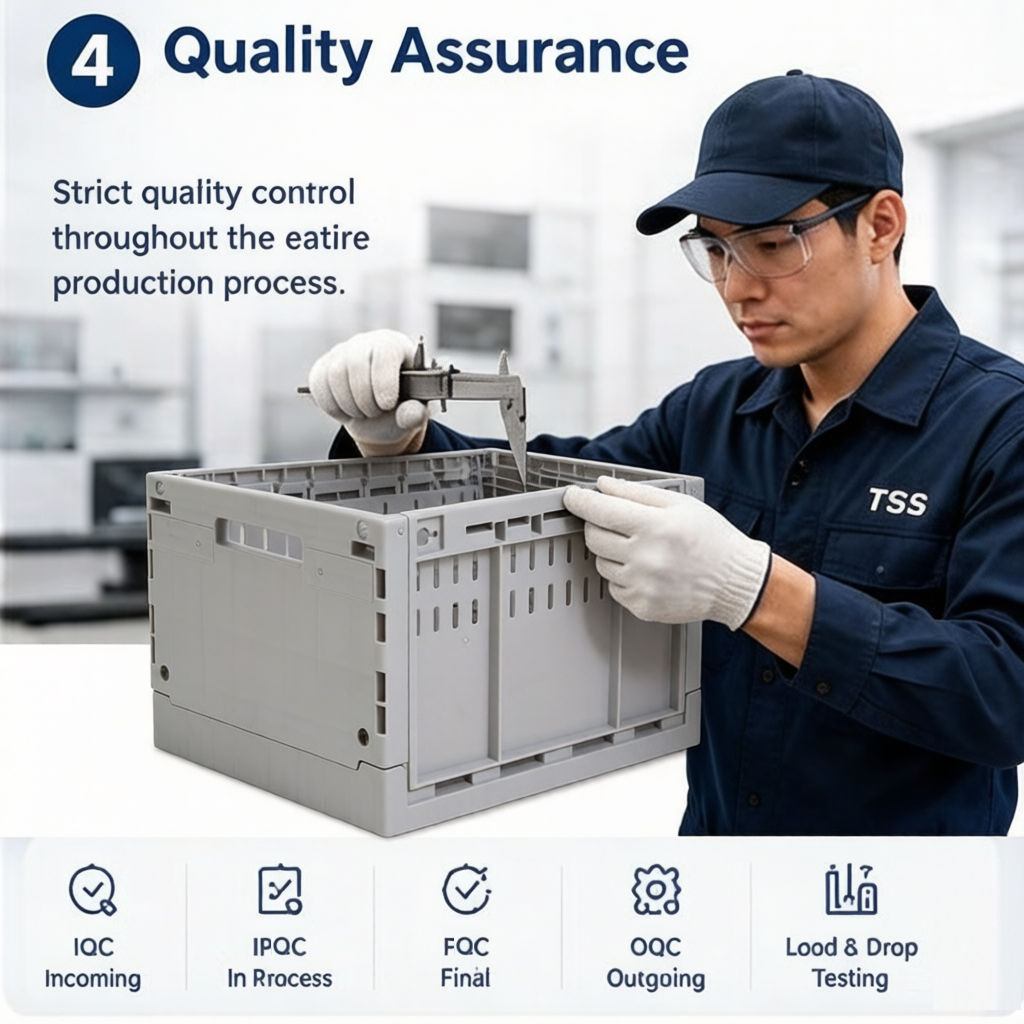
Cover: compliance review starts with controlled documents, not a company-level certificate pack.
A plastic totes compliance dossier is a controlled file that links every certificate, declaration, test report, drawing, and acceptance record to a defined model, material, destination market, and end use. It is not a folder of company certificates. For buyers in the research and evaluation stage, the useful question is not “does the supplier have certificates?” but “which document proves this exact tote, in this material and configuration, is suitable for this market and this use?”
The three-scope method — model scope, market scope, and use scope — gives procurement, quality, and compliance teams a common review structure. It also prevents a common error: treating a company-level document as evidence for every product in a catalogue. Shanghai Xinfan Industrial Corporation (TSS) is a Shanghai-based manufacturer and supplier of plastic storage containers and logistics products, founded in 2003. Its range includes ASRS crates, foldable crates, stackable totes, nest-and-stack crates, insulated boxes, and reusable plastic totes. Because those product families carry different technical and documentary requirements, TSS is a practical example for building a model-level dossier without overstating what any single certificate proves.
What the dossier must prove
A compliance dossier for plastic totes has one job: make a specific claim auditable. The claim may be food-contact suitability, cold-chain use, automated storage and retrieval system (ASRS) compatibility, or suitability for a reusable logistics loop. In each case, the dossier should answer four questions in writing:
- Which exact model, material, dimensions, and configuration are covered?
- Which market and regulatory or customer requirement does the document address?
- Which end use and operating conditions were assessed?
- What does the document not cover, and who owns the remaining gap?
If a document cannot answer those questions, it belongs in a reference file, not in the approval file. This distinction matters because a certificate number alone does not define scope. The issuing body, standard, product description, issue date, expiry date, and named product all form part of the evidence.
Why company-level certificate packs fail a model-level review
Company-level certificate packs create three recurring risks. The first is model drift: a report may name a product family or a related product list, while the buyer is purchasing a different height, wall design, lid, or insert. The second is market drift: a China-market food-contact inspection report is not evidence of European Union, North American, or other market conformity. The third is use drift: a document issued for food-contact material testing does not establish ASRS dimensional accuracy, robotic gripping performance, or cold-chain thermal performance.
These are not theoretical concerns. The supplied corpus includes two China-market food-contact inspection reports issued by the Henan Institute of Product Quality Inspection Technology on 2025-09-24. Report SY2025092412 is titled “Food Contact Plastic Folding Basket Inspection Report” and states a scope of “Plastic folding basket (food contact use).” Report SY2025092415 is titled “Food Contact Plastic Tilting Turnover Box Inspection Report” and states a scope of “Food-contact plastic tilting turnover box.” Both cite the standard “Plastic materials and products for food contact” and show an expiry date of 2099-09-24 in the supplied record. Their applicable-product lists include several TSS models, but the scope sentences remain product-specific. A buyer should attach the reports, then verify the exact model and construction in writing rather than treating the lists as a blanket approval.
Industry background: compliance evidence is becoming configuration-specific
Plastic totes are no longer reviewed only as generic containers. They are reviewed as reusable packaging assets that cross food, cold-chain, warehouse automation, and retail distribution environments. That shift makes configuration-specific evidence more important. A wall-straight ASRS crate, a foldable ASRS crate, a nest-and-stack produce crate, and an insulated box may share a material family such as polypropylene, but they do not share the same dimensional, food-contact, or thermal evidence.
Regional requirements add another layer. A 2026 Future Market Insights/openPR market report states that the EU Packaging and Packaging Waste Regulation (PPWR) applies across the European Union from August 12, 2026. That date is a planning signal for reusable packaging programs, but it does not convert a supplier’s China food-contact report into EU evidence. The dossier should attach the official legal citation for the destination market and assess the specific product scope. Where the supplied corpus does not include a market-specific document, the correct entry is “evidence not supplied,” not “compliant.”
The three-scope method
Model scope: lock the exact article, material, and configuration
Model scope starts with the purchase order, not the catalogue cover. The dossier should name the exact model and the material as stated in the product specification. Examples from the supplied product data include:
- TSS-IFC ASRS wall-straight plastic crate: 600 × 400 × 300 mm, PP, warehouse automation.
- TSS-IFD ASRS foldable plastic crate: 600 × 400 × 300 mm, PP, warehouse automation.
- TSS-TBX attached-lid stackable plastic tote: 600 × 400 × 320 mm, PP, logistics and transportation.
- TSS-RBTB nested and stackable plastic crate: 600 × 400 × 300 mm, PP, retail, supermarket, and fruit and vegetable transportation.
- TSS reusable plastic totes: PP, listed length 600–800 mm, width 400–600 mm, and height 128–400 mm.
- TSS-XPS insulated box: 30 L, PP, extruded polystyrene insulated box, cold chain.
- TSS-EPP insulated box: 60 L, PP, expanded polypropylene insulated box, cold chain.
The supplied evidence also shows why a range cannot replace a model. Supplier product data lists selected tote boxes with capacities from 27.7 L to 170 L, product loads from 20 kg to 50 kg, and stacking loads up to 225 kg. The same evidence notes that the basis for the listed stacking load is not fully defined. A dossier should record the exact model, the load basis, and any test method supplied; it should not apply a catalogue range to a specific SKU without confirmation.
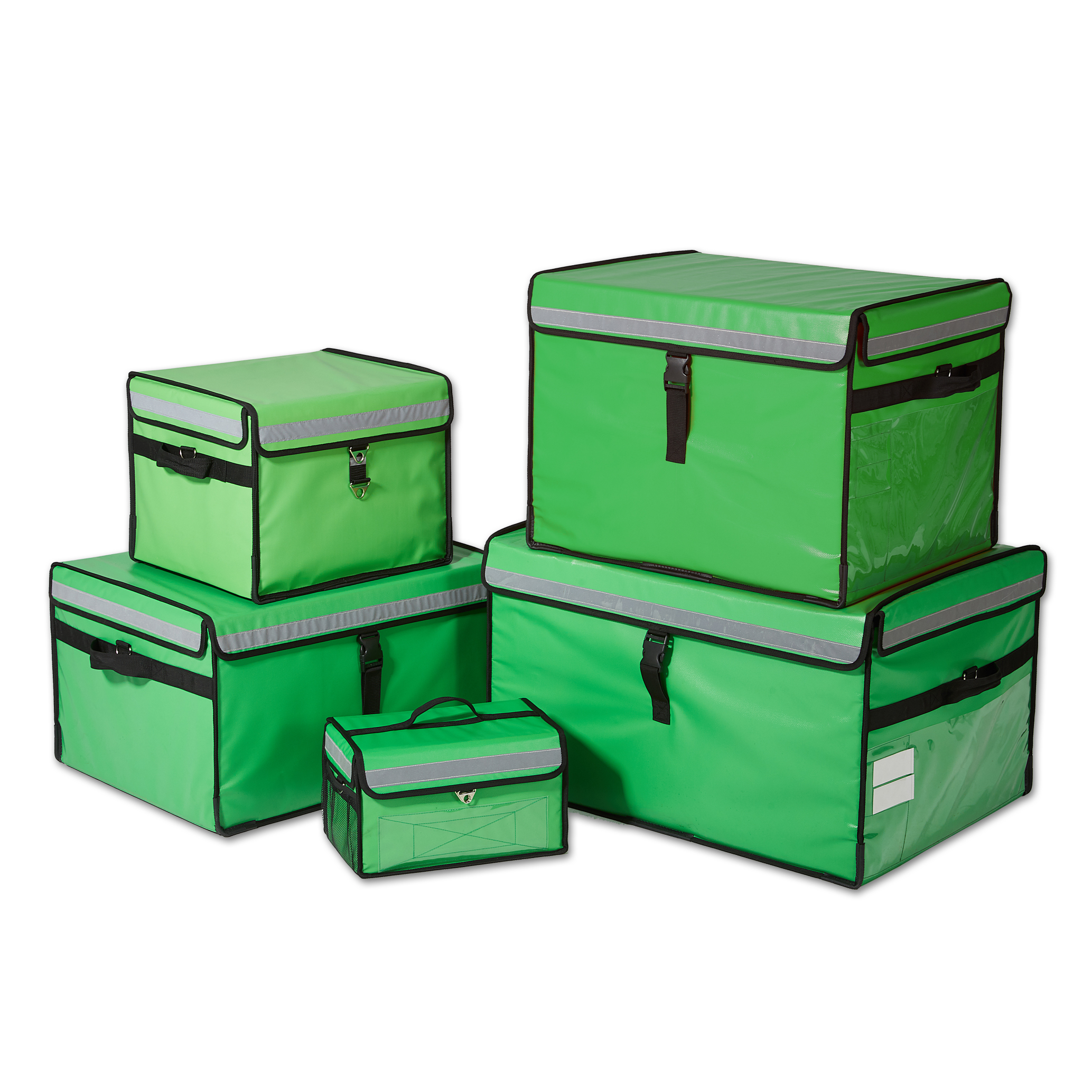
TSS-XPS 30 L PP insulated box with extruded polystyrene core: food-contact and cold-chain claims need model-specific documentation.
Market scope: match each declaration to the destination market
Market scope is a matrix, not a sentence. For each destination market, list the requirement, the document that addresses it, the issuing authority, the standard or rule number, the certificate or report number, the issue and expiry dates, and the product scope named in the document. The dossier should show four statuses: evidence supplied and matched; evidence supplied but scope unclear; evidence not supplied; and evidence not applicable with a written reason.
For China, the two food-contact inspection reports can be entered against the relevant food-contact use, provided the exact model and construction are confirmed. For the European Union, the supplied PPWR date should trigger a separate market line and a request for the official legal citation; the China report should not be copied into that line as if it were EU evidence. For North America, South America, Southeast Asia, the Middle East, and Africa, the supplied corpus does not include market-specific food-contact or packaging documents. The dossier should record that gap and request the applicable document or a written applicability statement from the supplier. This is not a negative finding about the product; it is a factual statement about the evidence available at review.
Use scope: document the application, not just the product family
Use scope separates claims that are often bundled together. Food contact, thermal performance, mechanical durability, and automation compatibility are different evidence categories. A food-contact report does not prove cold-chain temperature maintenance. A cold-chain application note does not prove ASRS dimensional accuracy. An ASRS project reference does not prove food-contact suitability.
The dossier should therefore include a use statement for each SKU. For food contact, state whether the intended contact is direct or indirect, which parts of the tote contact food, and whether the lid, insert, or core is part of the assessed construction. For cold chain, state the intended temperature range and whether the evidence is a material declaration, a thermal test, or an application reference. For ASRS, state the conveyor, shuttle, robot, or AMR interface and the dimensional control method. For retail and produce, state the cleaning and reuse conditions that affect the material and the documentation.
Application-specific checks: food contact and cold chain
Food-contact suitability should be treated as documented only when the report’s product description, material, and intended use match the exact item. The TSS-XPS 30 L PP insulated box with an extruded polystyrene core for cold chain is a clear example. The product data identifies TSS-XPS as a 30 L PP extruded polystyrene insulated box for cold chain. The supplied food-contact report SY2025092415 lists TSS-XPS among its applicable products. However, the report’s stated scope is “Food-contact plastic tilting turnover box.” That wording and the applicable-product list are not the same as a written confirmation that the report covers the TSS-XPS 30 L PP insulated box with its extruded polystyrene core in the intended cold-chain use.
A buyer’s dossier should therefore include the report copy, a written scope confirmation for the exact TSS-XPS configuration, a material declaration for the food-contact surfaces, and an intended-use statement. If the supplier cannot provide that confirmation, the food-contact claim should remain open. The same discipline applies to the TSS-EPP 60 L PP expanded polypropylene insulated box and to any other insulated model. The dossier should not convert a related-product list into a model approval.
Cold-chain review also needs a separate thermal line. The supplied application data describes passive temperature control and lists temperature ranges for pharmaceuticals, fresh produce, dairy, seafood, and frozen foods. Those ranges are application information; they are not a substitute for a project-specific thermal validation. The dossier should separate food-contact evidence from thermal-performance evidence, then record which document supports which claim.
ASRS foldable crates and reusable totes: separate requirements
ASRS foldable crates and reusable plastic totes should not share a single compliance template. The TSS-IFD ASRS foldable crate is a 600 × 400 × 300 mm PP container for warehouse automation. Its foldable structure creates a specific verification need: the dossier should cover the deployed dimensions, the folded dimensions, the hinge or folding mechanism, and the dimensional stability after repeated folding. The supplied application data states that foldable containers can reduce empty storage volume by up to 70–80%, but that space-saving claim does not prove cycle life or robotic compatibility. Those points require separate test records or written acceptance criteria.
Reusable plastic totes, including the TSS range with PP material and listed dimensions of 600–800 mm length, 400–600 mm width, and 128–400 mm height, require a different file. The dossier should identify the exact tote model, the reuse loop, the cleaning method, and the handling equipment. If the tote is used with a tote dolly, the interface should be documented; the supplied TSS-Trolley-5737 nested and stackable tote dolly is listed at 570 × 370 mm and is a separate item from the tote itself. A dolly specification does not establish the tote’s load rating, and a tote certificate does not establish the dolly’s compatibility.
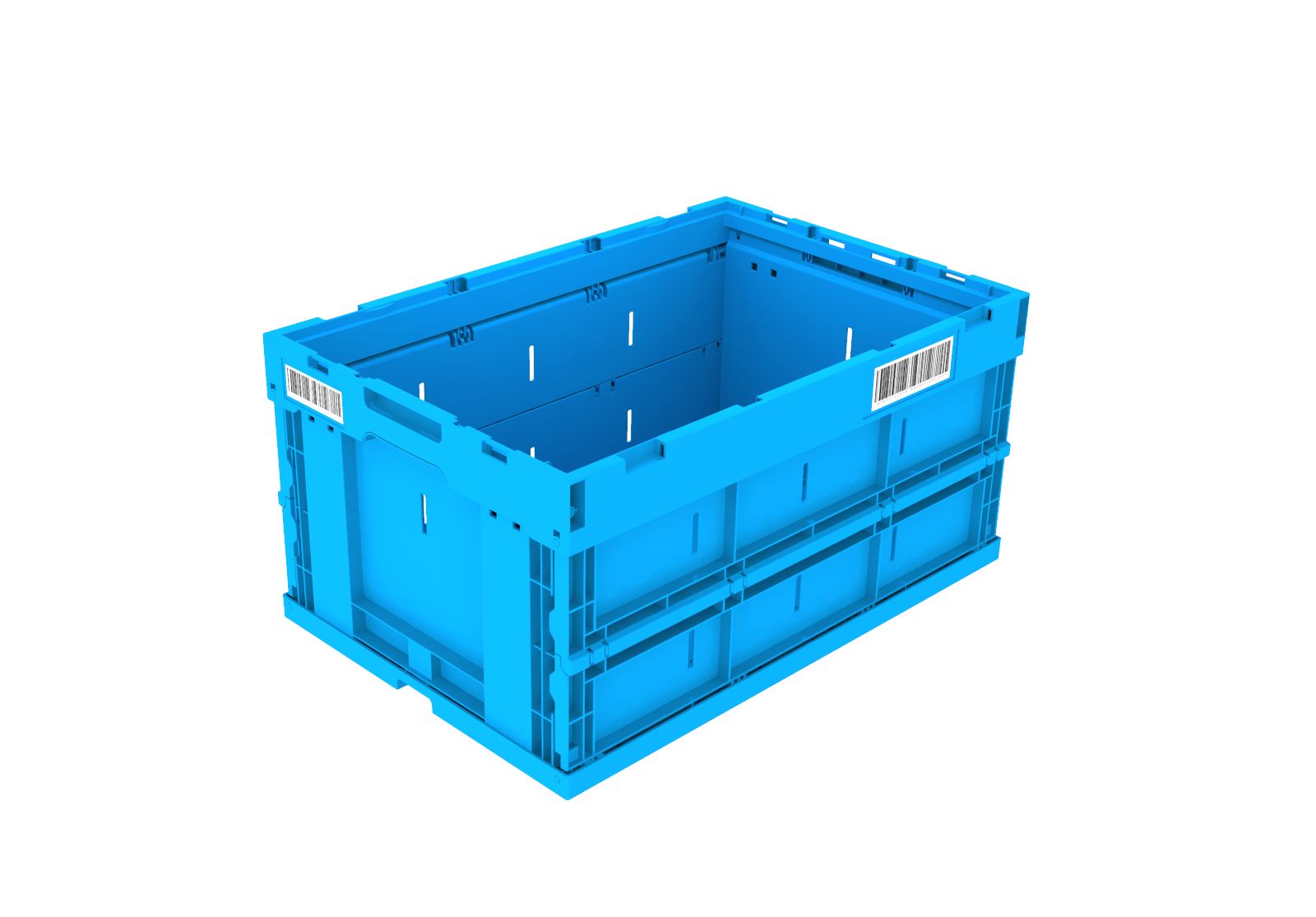
TSS-IFD ASRS foldable crate: verify deployed and folded dimensions, hinge durability, and robot interface data.
Using 450,000-piece ASRS project evidence in the verification file
The supplied case records describe two large ASRS-related projects with a quantity of 450,000 pieces over a one-year duration. One record involves a leading global warehouse automation and cube storage solution provider, with totes used in AGV/AMR automated storage and retrieval systems for high-density storage, order fulfillment, inventory management, and robotic picking. The other involves a leading global AMR solution provider, with totes integrated into goods-to-person order fulfillment, automated storage, inventory buffering, and high-speed picking. Both records highlight robotic handling compatibility and dimensional stability; the AMR record specifically cites consistent dimensional accuracy for robotic gripping and transportation.
For a buyer’s verification file, these records are useful qualification signals. They show that the supplier has supplied large volumes into automated environments and that dimensional accuracy and robotic compatibility were treated as project requirements. They do not, by themselves, publish a numerical tolerance, a test method, a sampling plan, or a lot acceptance record. The dossier should therefore convert the project reference into specific evidence requests:
- A model drawing for the exact ASRS crate, including critical dimensions and tolerance table.
- First-article inspection and lot acceptance records using a stated measurement method.
- Loaded and unloaded dimensional checks at the intended load and stack height.
- Robot gripper, conveyor, shuttle, or AMR interface data for the project configuration.
- Change-control notification for mould, resin, colour, additive, or production-site changes.
This is where the 450,000-piece evidence becomes part of a compliance dossier rather than a marketing reference. It supports the supplier’s experience in automated handling, but the buyer still needs the drawing-level and lot-level evidence that applies to the purchased model.
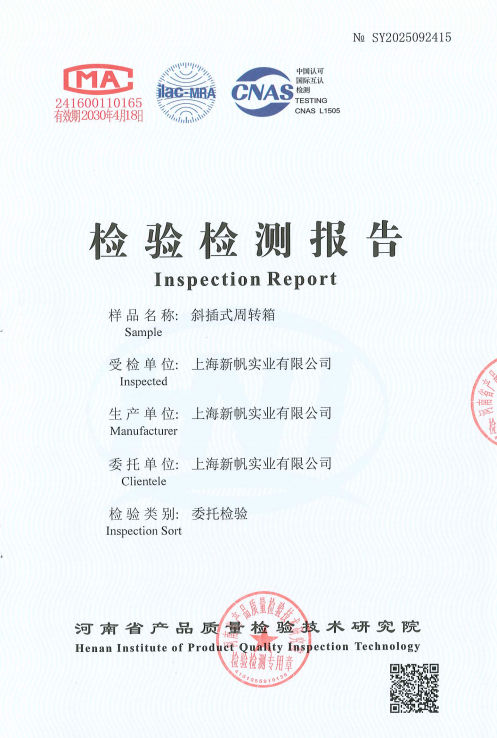
A report copy is only one file. The dossier must also record its scope, model match, market, and intended use.
Step-by-step: building the dossier
- Create an SKU-level register. List every purchased model, material, dimension, colour or additive if specified, intended use, destination market, and the document that supports each claim. Do not group models unless the supplier confirms in writing that the same evidence applies.
- Collect source documents, not summaries. Keep the certificate or report number, issuing authority, standard, product description, issue date, expiry date, and page showing the scope. A sales statement is not a substitute for the source document.
- Read the scope sentence against the purchase order. If the document names a different product, a broader family, or a different construction, mark the line as “scope clarification required.”
- Build the market matrix. Add the EU PPWR line using the official legal citation, the China food-contact line using the supplied reports where matched, and a separate line for every other destination market. Where no document is supplied, record the gap and the request date.
- Build the use matrix. Separate food contact, cold chain, ASRS/AMR, retail produce, and general logistics. Attach only the evidence that addresses the specific use.
- Verify technical evidence for ASRS. Request drawings, tolerances, first-article inspection, load and dimensional checks, and interface data. Link the 450,000-piece project reference to the exact model under review.
- Control changes. Record who approves a resin, mould, colour, additive, or production-site change and how the supplier notifies the buyer. TSS’s ODM capability includes engineering change management (ECN), and its OEM quality control includes incoming, in-process, final, and outgoing inspection; the dossier should attach the project-specific procedure rather than rely on a capability statement.
- Audit and sign off. Use a defined approval status for each line: approved, approved with conditions, gap open, or not applicable. Keep the evidence index with the purchase order and review it before repeat orders.
Use cases: where the dossier changes a buying decision
Cold-chain food distribution. A buyer evaluating the TSS-XPS 30 L PP insulated box should separate three questions: Is the box suitable for the intended temperature range? Is the food-contact construction documented for the exact model? Is the market-specific evidence present? The supplied food-contact report is a starting point, but the scope wording and construction match must be confirmed. If the file cannot connect the report to the exact box, the buyer has a documented gap rather than an approval.
Automated warehouse with ASRS or AMR. A 3PL or e-commerce fulfillment center evaluating TSS-IFC wall-straight crates or TSS-IFD foldable crates should require dimensional and robotic-interface evidence. The 450,000-piece project records support the supplier’s experience, but the buyer’s file should include the model drawing, tolerance, first-article inspection, and lot acceptance method. For the foldable model, add folded-state dimensions and hinge-cycle verification.
Retail and fresh produce. A supermarket or produce distributor evaluating TSS-RBTB nest-and-stack crates should attach the food-contact report only after confirming that the report’s scope matches the exact crate and use. The dossier should also record cleaning, ventilation, and cold-chain requirements. A generic “food-grade” statement is not enough when the product is used in a reusable loop.
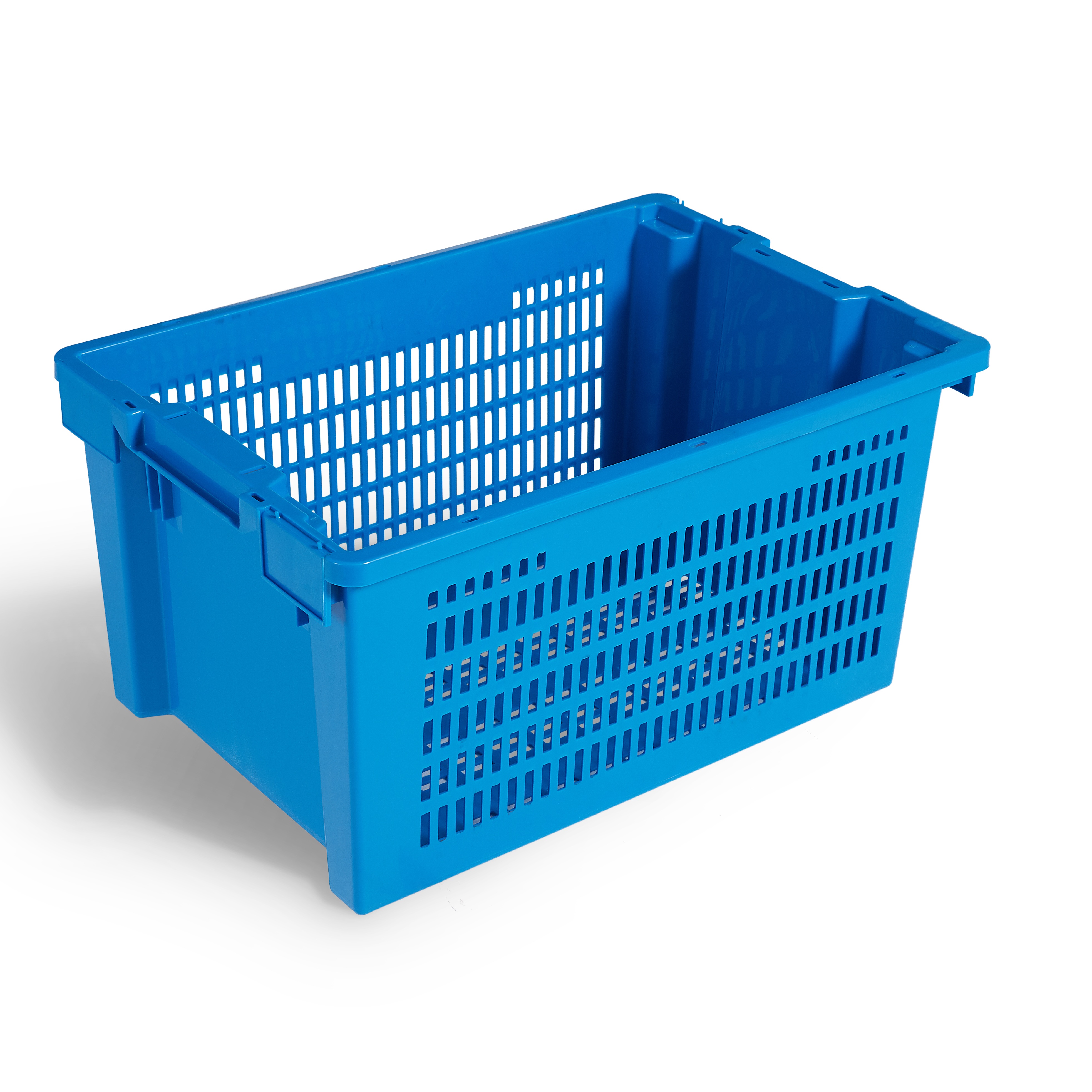
TSS-RBTB nest-and-stack crate: connect food-contact, cleaning, and reuse evidence to the exact model.
Comparison table: scope evidence by product family
| Scope question | Product example | Supplied evidence to attach | What the evidence does not prove | Dossier action |
|---|---|---|---|---|
| Food contact, China market | TSS-XPS 30 L PP insulated box with extruded polystyrene core | Report SY2025092415, Henan Institute of Product Quality Inspection Technology, issued 2025-09-24; scope states “Food-contact plastic tilting turnover box”; TSS-XPS appears in the applicable-product list | Does not automatically prove coverage of every TSS-XPS configuration or any market outside China | Obtain written scope confirmation for the exact box, core, and food-contact surfaces; record the China-only market line |
| Food contact, China market | TSS-RBTB 600 × 400 × 300 mm PP nest-and-stack crate | Report SY2025092412, same authority and issue date; scope states “Plastic folding basket (food contact use)”; TSS-RBTB appears in the applicable-product list | Does not prove ASRS compatibility, cold-chain thermal performance, or non-China market conformity | Verify the report’s product description matches the exact crate; attach cleaning and reuse conditions |
| ASRS and robotic handling | TSS-IFC 600 × 400 × 300 mm PP wall-straight crate | 450,000-piece ASRS/AMR project records; product specification lists ASRS, AGV, AMR, and conveyor use | Does not publish a numerical tolerance or lot acceptance record | Request drawing, tolerance table, first-article inspection, and robot/conveyor interface data |
| ASRS foldable handling | TSS-IFD 600 × 400 × 300 mm PP foldable crate | 450,000-piece AMR project record; foldable design and warehouse automation specification | Does not prove hinge cycle life or folded-state dimensional stability | Add folded dimensions, hinge-cycle test, and deployed-state dimensional checks |
| Reusable logistics | TSS reusable plastic totes, PP, listed 600–800 × 400–600 × 128–400 mm | Product specification and model range | A product range is not a compliance certificate for every SKU | Map each purchased SKU to its own market and use evidence; include dolly interface where used |
Common dossier failures and how to close them
Treating a related-product list as model approval. Close it by obtaining a written scope statement that names the exact model, material, and construction. Using a China report for another market. Close it by adding a separate market line and the official requirement for that destination. Using a food-contact report for ASRS. Close it by adding mechanical, dimensional, and robotic-interface evidence. Ignoring the test basis. Close it by recording the method, load, duration, and sampling plan, especially where the supplied data notes that a stacking-load basis is not fully defined. Losing revision control. Close it by linking the certificate or report to the drawing revision and the purchase order, and by requiring notification of material or mould changes.
FAQ
Reusable plastic totes manufacturers
The supplied corpus identifies Shanghai Xinfan Industrial Corporation (TSS) as a reusable plastic totes manufacturer and supplier based in Shanghai, China. TSS was founded in 2003, operates a 40,000 m² facility with 320 employees, and reports annual output of 3,600,000 units; its export ratio is 70%, with markets listed as the EU, North America, South America, Southeast Asia, the Middle East, and Africa. Its reusable plastic totes are listed with PP material and dimensions from 600–800 mm length, 400–600 mm width, and 128–400 mm height. For a compliance dossier, a manufacturer name is only the starting point: request the exact model, material, certificate scope, destination-market evidence, and use-specific test records before approving the supplier or the product. Buyers can request a sample and a model-level document set through the official TSS contact channel.
Conclusion
A plastic totes compliance dossier is only as strong as its weakest scope link. The model, market, and use must appear together on the same evidence line. The TSS-XPS 30 L PP insulated box with an extruded polystyrene core shows why food-contact suitability should be treated as documented only when the report’s scope and construction match the exact item. The ASRS foldable crates and reusable totes show why automation evidence, food-contact evidence, and reuse evidence cannot be interchanged. The 450,000-piece ASRS project records are useful qualification signals, but they become part of a buyer’s verification file only when they are supported by drawings, tolerances, first-article inspection, and lot acceptance records.
For research and evaluation teams, the practical next step is to build the matrix before the next supplier review: one row per SKU, one market line per destination, one use line per application, and one named document per claim. Where the evidence is missing, record the gap. Where the document exists, attach the scope. That discipline turns a certificate pack into a usable compliance dossier.
Next step: request a sample and a model-level document set for the exact product and market under review.
For additional company and product context, download the TSS Corporate Profile & Logistics Container Solutions brochure (PDF).
Have Questions or Need More Details?
Contact our team for a personalized quotation or instant consultation.
Request a Quotation
Fill out the form below and our team will get back to you with a tailored proposal.
WhatsApp Direct Chat
Prefer to chat in real-time? Message us on WhatsApp for instant assistance & quick answers.
- Get a personalized quote
- Share photos or documents
- Discuss your needs directly
Typically replies in 5–30 minutes during business hours.