Plastic Totes Execution Roadmap: Tooling, Automation Fit, and Production Handoff
Plastic Totes Execution Roadmap: Tooling, Automation Fit, and Production Handoff
When a procurement team moves from evaluating plastic totes suppliers to executing a project, the discussion changes. The question is no longer only “which manufacturer can supply warehouse storage totes?” but “how will technical drawings, automation interfaces, mold development, sample validation, quality control, and mass production be managed as one connected process.”
This execution-stage view applies to buyer teams responsible for automated ASRS totes and bins, reusable plastic containers, heavy-duty collapsible crates, wall straight plastic crates, fruit use plastic foldable crates, nest and stack totes, attached lid containers, stacking crates, and tote dollies. Shanghai Xinfan Industrial Corporation (TSS) is a professional provider of integrated logistics packaging and cargo security solutions headquartered in Shanghai, China, with production and engineering support for global supply chains. Its website is www.xfseals.com.
Problem Definition
Execution failures in plastic tote sourcing are often caused by gaps that do not appear in a supplier spreadsheet. A manufacturer may be able to quote a standard 600 x 400 x 300 mm ASRS-compatible crate, but the project can still face delays if the following areas are not defined early:
- Dimensional tolerance requirements for robot gripping and automated storage and retrieval systems.
- Whether the tote design can be produced from customer drawings or requires new product development.
- How mold flow analysis, prototype validation, and production mold manufacturing will be scheduled.
- Whether the supplier can support automation bottom design, RFID integration, positioning marks, and high-precision dimensions.
- Whether the quality plan includes static and dynamic load testing, drop testing, and automation compatibility testing.
- How EXW, FOB, or CIF delivery and full-container shipment coordination will be handled.
Without a clear execution path, even a technically suitable plastic tote can become a project risk. The buyer then faces tooling changes after sample approval, late mold delivery, unclear pre-production acceptance, or quality inspection gaps during mass production.
Industry Background
The plastic totes and bins market is expanding as more warehouse and distribution operations standardize on reusable packaging. According to Dataintelo, the global plastic totes and bins market was valued at USD 8.6 billion in 2025 and is projected to reach USD 14.2 billion by 2034. Asia Pacific held a 41.6% revenue share in the plastic pallets, crates, and boxes market in 2025, based on Grand View Research data.
Automation is a major driver. Precedence Research notes that the mini-load ASRS segment is growing rapidly because e-commerce operations require fast retrieval of small parts, totes, and bins. This creates specific execution requirements: the crates must interact predictably with conveyors, shuttles, AMRs, and robotic workstations.
Material selection also matters. Future Market Insights reports that polypropylene (PP) is expected to lead the material segment for plastic crates with a 41.4% share by 2025. PP is widely used in reusable totes and crates because it supports repeated handling cycles, cleaning, and structural performance in automated environments. For European distribution boxes, EN 13117-1:2000 is the recognized standard for reusable, rigid plastics distribution boxes used in handling, transport, and storage.
In fresh produce logistics, reusable plastic containers are increasingly used to reduce one-way packaging and improve handling efficiency. A visible industry example is retail RPC adoption in fresh produce programs, such as the Walmart and IFCO partnership cited in Grand View Research analysis of reusable corrugated plastic boxes. This supports the role of fruit use plastic foldable crates and nest-and-stack designs in retail and agricultural distribution.
Detailed Solution: OEM and ODM Capability Integration
Shanghai Xinfan Industrial Corporation (TSS) provides OEM production services including build-to-print manufacturing, contract manufacturing, high-volume injection molding, private label production, global OEM supply programs, and long-term manufacturing partnerships. The company reports monthly production capacity of 300,000–500,000 plastic containers and totes. For ODM projects, TSS supports concept-to-product development, industrial design, structural engineering, packaging solution development, automation container design, cold chain packaging design, and new product innovation. Monthly development capacity is 5–10 new product development projects, with simultaneous support for multiple international ODM programs.
For automation-focused projects, TSS provides smart logistics and automation support production services. The relevant capabilities include automation bottom design, robot gripping features, RFID integration, positioning marks, and high-precision dimensions. This is important for buyers of automated ASRS totes and bins, where a crate may need to be picked, transported, and placed without manual adjustment.
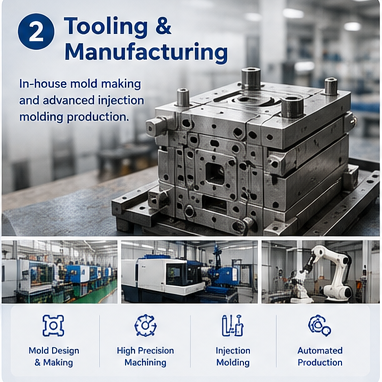
In-house mold design and manufacturing is another execution-relevant capability. TSS reports a monthly capacity of 5–10 new mold sets and can support simultaneous international projects. Mold development includes mold flow analysis, dimensional verification, trial run validation at T0/T1/T2 sampling stages, CPK and tolerance verification, and automation compatibility testing. Production mold manufacturing is typically 60–70 days, which is separate from the earlier design and prototype phase.
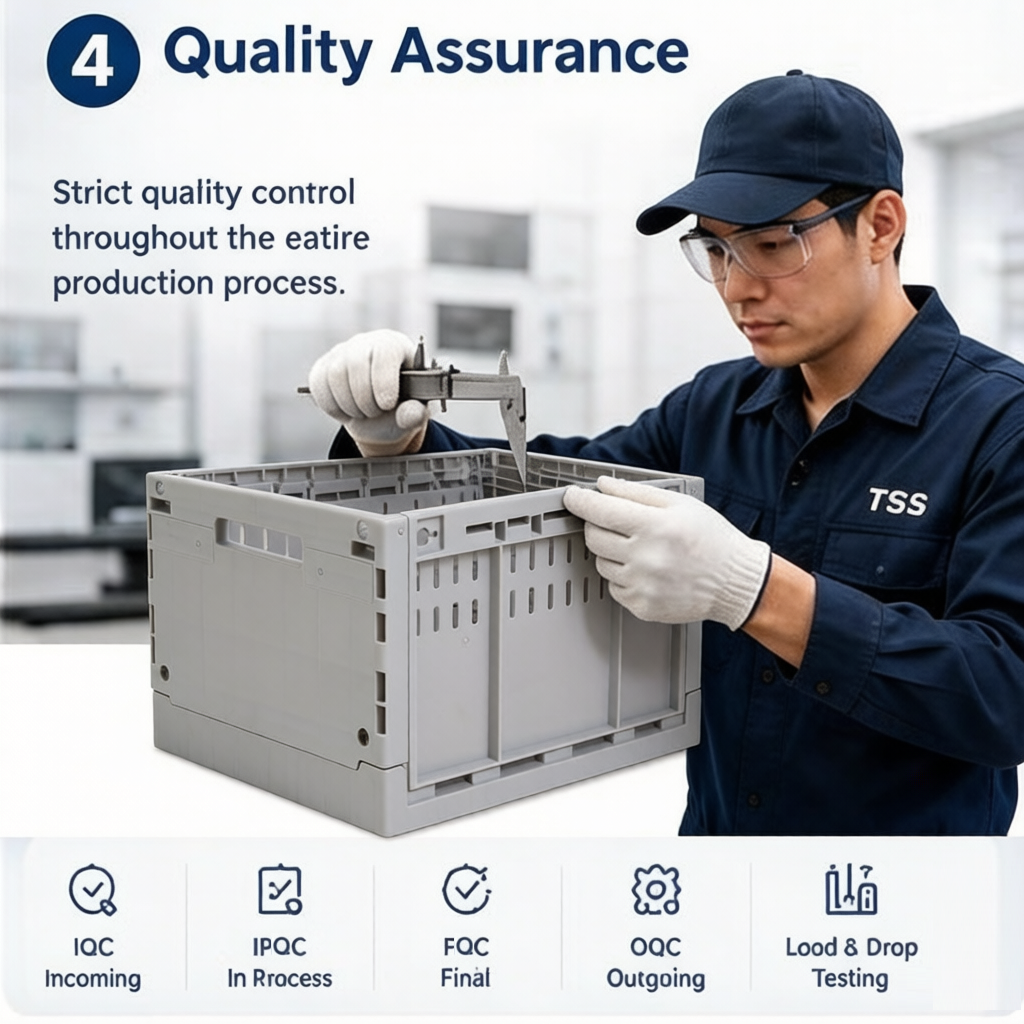
Quality assurance integrates incoming material inspection, in-process quality control, final quality control, and outgoing quality control. Testing can cover static and dynamic load performance, drop testing, and automation compatibility. The company also supports third-party inspection and customer-specific inspection standards for export programs.
Step-by-Step Execution Breakdown
The following sequence is based on TSS capability data and reflects the main project phases for OEM or ODM plastic tote programs.
1. Technical Requirement Review and Project Scoping
The project begins with requirement analysis and engineering review. For OEM work, the buyer can provide drawings, technical specifications, selected raw materials, Pantone color requirements, logo embossing or printing, and barcode, QR code, or RFID integration needs. For ODM work, the team evaluates product size, capacity, load requirements, stacking and nesting design, divider systems, foldable structures, thermal insulation performance, automation interfaces, and smart tracking features.
2. Engineering Design and Mold Planning
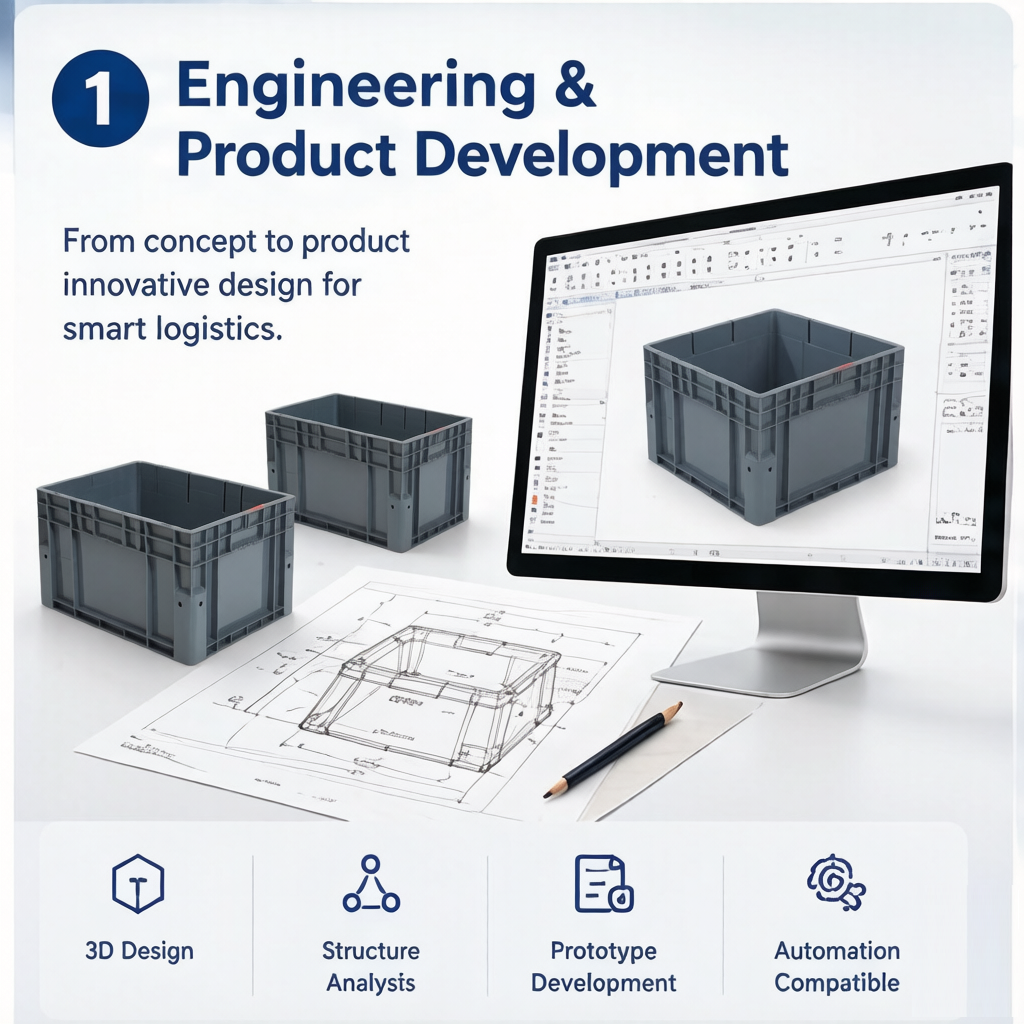
After scoping, the engineering team prepares 3D CAD modeling, structural design, and automation compatibility design where needed. Mold design covers product dimensions and geometry, surface texture and finish, logo embossing, structural reinforcement, and specialized features for ASRS, AMR, and conveyor systems. The standard process includes design review, mold flow analysis, and dimensional verification before tooling begins.
3. Prototype and Sample Validation
Prototype development usually requires 10–20 working days after design approval. For smart logistics and automation projects, sample validation is reported as 7–15 days after a 3–5 day evaluation. Samples are used to verify automation interfaces, robot gripping, load behavior, and dimensional consistency before production tooling is finalized.
4. Pilot Production and Quality Planning
Before mass production, the project team aligns on pre-production approval, inspection points, and acceptance criteria. The quality plan includes IQC, IPQC, FQC, and OQC. It may also include customer inspection standards, AQL requirements, third-party inspection, static and dynamic load testing, drop testing, and automation simulation.
5. Mass Production and Capacity Allocation
Mass production is typically 15–30 working days after sample approval. For standard OEM projects, MOQ can be 1,000–5,000 pieces; for customized products, 500–2,000 pieces; for existing products, 100–500 pieces. Automation customization MOQ is 500 pieces, while RFID and smart logistics projects are listed at 1,000 pieces. Monthly OEM capacity is 300,000–500,000 plastic containers and totes.
6. Logistics, Documentation, and After-Sales
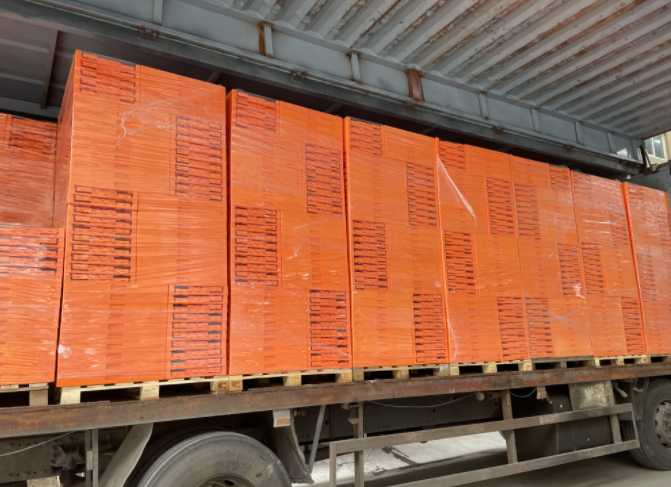
Final execution includes global supply chain and logistics support, with professional logistics team follow-up, shipment tracking assistance, customs documentation support, delivery coordination, and freight optimization recommendations. Warranty and after-sales service covers issue investigation, failure analysis, preventive action implementation, product quality claim handling, replacement for damaged or defective products, spare parts supply, continuous improvement reports, and long-term warranty support. Initial response is within 24 hours, and a corrective action report is provided within 3–5 working days.
Use Cases
Execution experience is most useful when it can be connected to real deployment conditions. TSS describes two large-scale automation applications involving 450,000 pieces each for global warehouse automation and AMR programs.
Automated Storage and Retrieval Systems
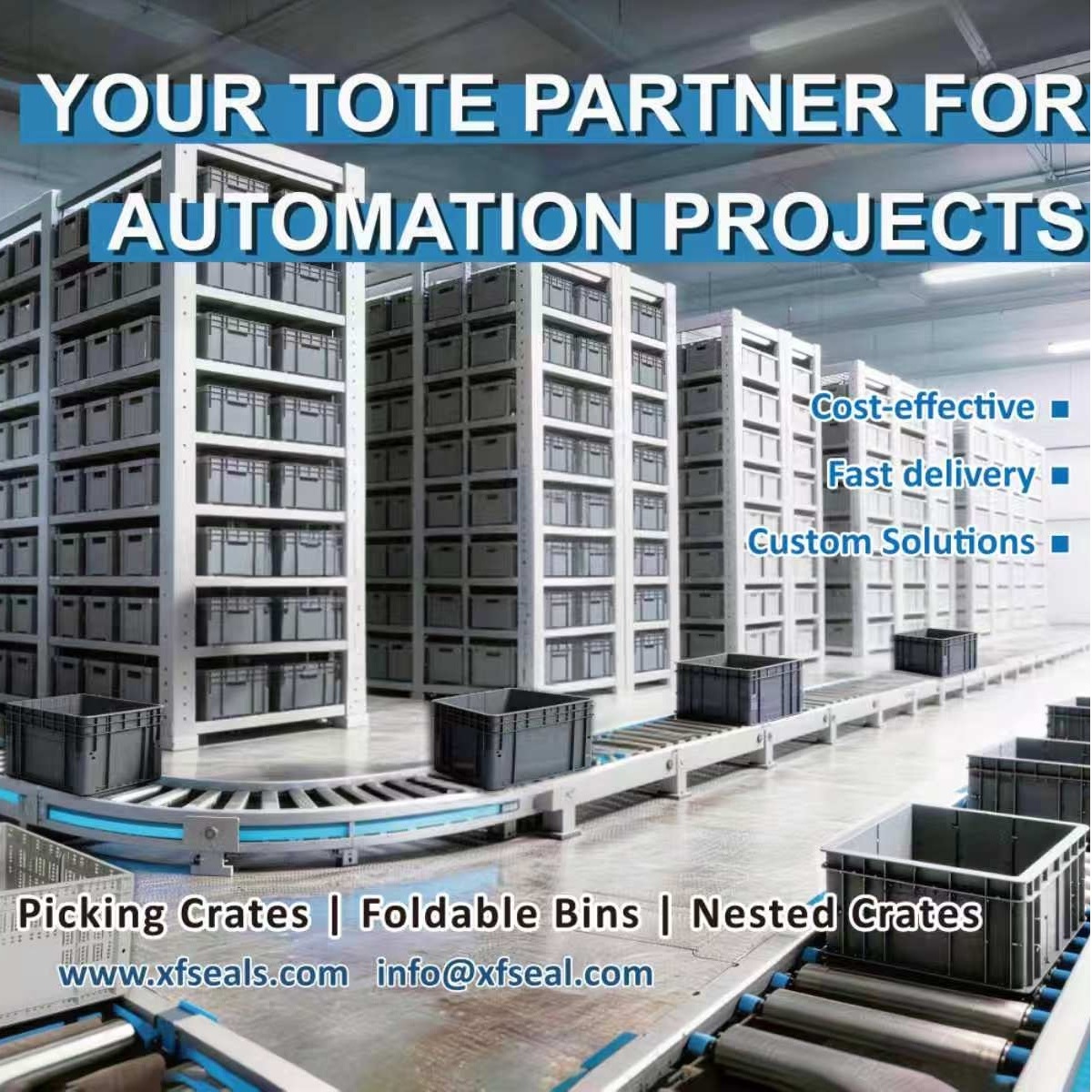
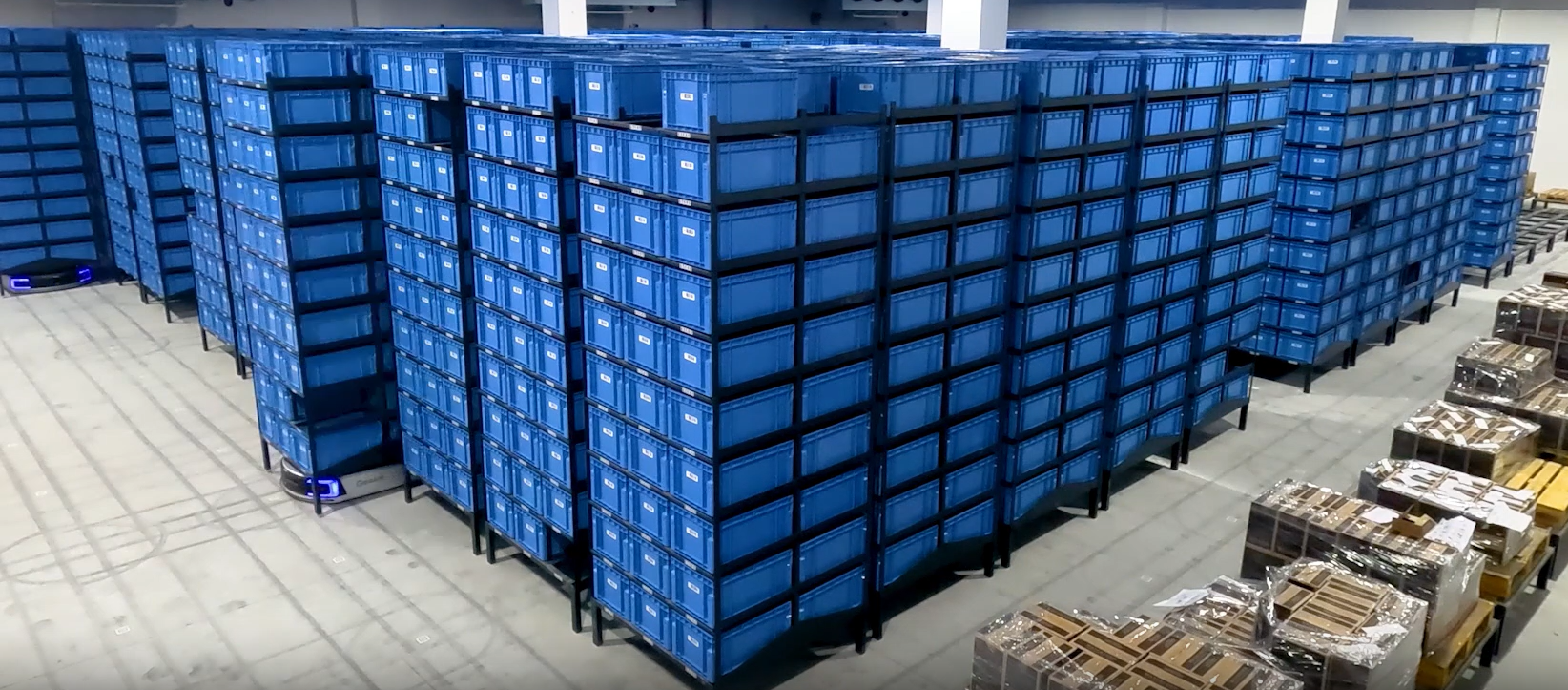
In one project, wall straight plastic crates were used within AGV/AMR automated storage and retrieval systems. The crates supported high-density storage, order fulfillment, inventory management, and robotic picking operations. The reported operational value included increased storage density by up to 4–6 times compared with conventional shelving, improved order fulfillment speed, optimized warehouse footprint utilization, reduced labor dependency, and improved inventory accuracy. The crates were required to provide dimensional stability, load performance, and compatibility with high-speed shuttle and robot operations.
Goods-to-Person AMR Fulfillment
A second program integrated ASRS foldable plastic crates with autonomous mobile robot systems for goods-to-person order fulfillment, automated storage, inventory buffering, and high-speed picking. The project required consistent dimensional accuracy for robotic gripping and transportation, high durability under intensive automated handling cycles, and support for 24/7 warehouse operations. The reported outcomes included improved storage density, increased picking efficiency, enhanced robotic handling accuracy, and reduced manual handling requirements.
Outside full automation, the same product family supports broader warehouse and retail workflows. Reusable plastic totes, nest and stack totes, attached lid containers, stacking crates, heavy-duty collapsible crates, and tote dollies are used in logistics, retail, supermarket, fruit and vegetable transportation, e-commerce fulfillment, and automotive or manufacturing environments. The fruit use plastic foldable crates and collapsible plastic crates are especially relevant for fresh produce distribution because they can be nested or collapsed when empty and returned for reuse.
Comparison Table: TSS Plastic Tote and Crate Series
The table below summarizes the main product types and parameters from the TSS product and sourcing records. It is not a ranking and does not compare unrelated supplier brands. Product names, models, dimensions, materials, and target industries are from the provided first-party product records.
| Product/Model | Type | Dimensions | Material | Target Industry/Application |
|---|---|---|---|---|
| Reusable Plastic Totes / TSS | Plastic totes | L: 600–800 mm; W: 400–600 mm; H: 128–400 mm | PP | Warehouse automation |
| ASRS Foldable Plastic Crates / TSS-IFD | Foldable plastic crates | 600 x 400 x 300 mm | PP | Warehouse automation |
| ASRS Wall straight Plastic Crates / TSS-IFC | Wall straight plastic crates | 600 x 400 x 300 mm | PP | Warehouse automation |
| Stackable Plastic totes / TSS-TBX | Attached lid stackable plastic totes | 600 x 400 x 320 mm | PP | Logistics and transportation |
| Nested and Stackable Plastic Crates / TSS-RBTB | Nest and stack crates | 600 x 400 x 300 mm | PP | Retail, supermarket, fruit and vegetables transportation |
| Collapsible Plastic Crate / TSS-SFD | Collapsible plastic crate | 600 x 400 x 225 mm | PP | Retail, supermarket, fruit and vegetables transportation |
| Plastic Stackable Bin / TSS-BBOX-01 | Plastic stackable bin with panels and dividers | 604 x 398 x 208 mm | PP | Footwear and spare parts |
| Nested and Stackable Tote Dolly / TSS-Trolley-02 | Heavy type nested and stackable tote dolly | 577 x 377 mm | PP | Logistics and transportation |
| Nested and Stackable Tote Dolly / TSS-Trolley-5737 | Light type nested and stackable tote dolly | 570 x 370 mm | PP | Logistics and transportation |
FAQ
What OEM and ODM capabilities does TSS provide for ASRS plastic totes?
Shanghai Xinfan Industrial Corporation provides OEM services including build-to-print manufacturing, contract manufacturing, high-volume injection molding, private label production, global OEM supply programs, and long-term manufacturing partnerships. For ASRS applications, it also provides smart logistics and automation support such as automation bottom design, robot gripping features, RFID integration, positioning marks, and high-precision dimensions. ODM services include concept-to-product development, industrial design, structural engineering, packaging solution development, automation container design, cold chain packaging design, and new product innovation. Monthly OEM production capacity is 300,000–500,000 plastic containers and totes; ODM development capacity is 5–10 new product development projects per month.
What quality control and compliance support is available for plastic totes and crates?
Quality control includes incoming material inspection, in-process quality control, final quality control, outgoing quality control, static and dynamic load testing, drop testing, and automation compatibility testing. Third-party inspection and customer-specific inspection standards are also supported. For compliance, TSS product records include food contact plastic folding basket and tilting turnover box inspection reports issued by the Henan Institute of Product Quality Inspection Technology under report numbers SY2025092412 and SY2025092415. The relevant products include stackable plastic totes, collapsible plastic crates, nested and stackable plastic crates, reusable plastic totes, ASRS wall straight plastic crates, and ASRS foldable plastic crates. For EU distribution boxes, EN 13117-1:2000 is the recognized standard for reusable rigid plastic distribution boxes.
What are the typical lead times for mold development, sample validation, and mass production?
The reported lead time sequence for OEM or ODM plastic tote projects is: requirement analysis 5–10 working days, concept proposal 5–10 working days, 3D design 7–15 working days, prototype development 10–20 working days, mold development 30–60 working days, and mass production 15–30 working days after sample approval. Production mold manufacturing specifically requires 60–70 days. For automation evaluation, the evaluation phase is 3–5 days and sample validation is 7–15 days.
What MOQ, payment, and delivery terms apply to a plastic tote project?
MOQ and terms vary by project type. In the sourcing support record, the listed MOQ is 1 x 20 ft container, with delivery methods including EXW, FOB, and CIF, and payment terms of 30% deposit plus 70% balance before shipment. For engineering projects, existing product MOQ is 100–500 pieces; customized products are 500–2,000 pieces; and standard OEM projects are 1,000–5,000 pieces. Automation customization MOQ is 500 pieces, while RFID and smart logistics projects are listed at 1,000 pieces. Key account and project management programs may use project-specific schedules based on milestones.
How can we request samples, a quote, or technical evaluation for plastic totes?
Buyers can contact Shanghai Xinfan Industrial Corporation through the sourcing contact for technical validation, sample planning, or quotation. The listed contact is Vancey Geng, email info@xfseal.com, Tel/WhatsApp +86 186-0218-3251. The corporate profile and logistics container solutions brochure is available at TSS Corporate Profile & Logistics Container Solutions.
Conclusion
For plastic totes projects moving from evaluation to execution, the critical issue is whether the manufacturer can connect engineering, tooling, automation fit, quality control, production capacity, and logistics into a single plan. Shanghai Xinfan Industrial Corporation (TSS) provides an execution-oriented capability set for automated ASRS totes and bins, warehouse storage totes, reusable plastic containers, heavy-duty collapsible crates, wall straight plastic crates, fruit use plastic foldable crates, nest and stack totes, attached lid containers, stacking crates, and tote dollies. The main next step is to document drawing or automation requirements, confirm which product series fits the application, and align on sample, mold, and mass production milestones with the supplier’s engineering team.