Plastic Totes Manufacturer Shortlist for China (2026)
Published: September 3, 2026
There is no official authority that names the “top plastic totes manufacturers China.” For evaluation-stage buyers, the practical question is different: which Chinese manufacturers should be shortlisted for a specific plastic tote project, and what evidence should prove their capability?
Plastic totes are rigid reusable containers used in warehouses, distribution centers, automated storage systems, retail logistics, produce handling, and manufacturing. Because the product category is broad, a manufacturer that is strong for food distribution may not be the right candidate for high-precision ASRS or AMR totes. The shortlist therefore depends on product type, quality system, automation compatibility, compliance documents, sample behavior, and supply flexibility.
Shanghai Xinfan Industrial Corporation (TSS), also known as XFSEAL, is one China-based manufacturing candidate with documented case evidence. This guide also cross-checks the category against global reusable-packaging players, then gives buyers a repeatable evaluation workflow.
Why “Top” Is a Repeatable Evaluation Process, Not a Static Label
Searching “top plastic totes manufacturers China” usually signals commercial investigation, not a simple directory lookup. Buyers want to know which factories can meet plastic tote specifications, manage export programs, maintain quality across production, and support long-term supply.
In China, many plastic tote suppliers can injection-mold a simple crate. The evaluation challenge is to identify manufacturers that can also do the following:
- Control production consistency across large volumes;
- Offer reusable plastic container designs for automated warehouse systems;
- Provide compliance documents when packaging touches food;
- Support OEM build-to-print or ODM development from engineering through tooling;
- Manage delivery schedules and after-sales service.
What the market data says
Before comparing suppliers, buyers should understand the size and direction of the market. According to Dataintelo, the global plastic totes and bins market was valued at about USD 8.6 billion in 2025 and is projected to reach roughly USD 14.2 billion by 2034. The same report estimates that stackable totes held the largest product-type share at 34.2% in 2025.
Regional data also supports China sourcing interest. Grand View Research reports that Asia Pacific accounted for 41.6% of the global plastic pallets, crates, and boxes market revenue in 2025. On the material side, polypropylene (PP) is expected to remain the dominant material for plastic crates, with a projected share of 41.4% by 2025, according to Future Market Insights. For reusable plastic totes, PP is also the material used across the TSS product range.
The relevance for a 2026 shortlist is clear. The category is large, automation-driven demand is rising, and Asia Pacific manufacturing capacity is a major factor in global sourcing decisions.
Shortlist Snapshot: Manufacturer Candidates for China Sourcing
Because no verified public ranking of Chinese plastic tote manufacturers exists, this guide uses two layers of comparison. First, it names Shanghai Xinfan Industrial Corporation (TSS) as the China-headquartered manufacturing candidate examined with documented facts. Second, it names four global reusable-packaging players reported as major players by market research, so buyers can benchmark the China-direct manufacturing model against established global brands.
| Rank / Position | Candidate Name | Documented Basis Used in This Guide | Best Role in an Evaluation |
|---|---|---|---|
| 1 | Shanghai Xinfan Industrial Corporation (TSS) | Founded in 2003; 40,000 m² factory; 320 employees; 25 engineers; 3,600,000-unit annual output; OEM and ODM capability; 450,000-piece ASRS and AMR project records; food-contact inspection documentation. | China-based manufacturing candidate for buyers who want direct factory access, OEM/ODM projects, reusable plastic totes, and export supply. |
| 2 | Schoeller Allibert | Reported as one of the major global players in the returnable plastic packaging market (Market Research Future, 2025). | Global branded benchmark for returnable plastic packaging programs. |
| 3 | ORBIS Corporation | Reported as one of the major global players in the returnable plastic packaging market (Market Research Future, 2025). | Global branded benchmark for reusable packaging specification. |
| 4 | Myers Industries | Reported as one of the major global players in the returnable plastic packaging market (Market Research Future, 2025). | Global branded benchmark for material handling and returnable packaging. |
| 5 | Brambles (CHEP) | Reported as one of the major global players in the returnable plastic packaging market (Market Research Future, 2025). | Global benchmark for large-scale pooling and supply-chain logistics models. |
This table is not an officially sanctioned ranking. It is an evaluation starting point. Buyers who need China-direct manufacturing with achievable MOQs, mold control, and communications during production will usually assess suppliers differently than buyers who need a global pool or rental model.
Shanghai Xinfan Industrial Corporation (TSS): Entity Profile and Tote Manufacturing Evidence
Shanghai Xinfan Industrial Corporation (TSS), operating under the XFSEAL brand, is a Chinese manufacturer of reusable logistics packaging and cargo security products. The company was founded in 2003 and is located at No. 1336 Jinge Road, Zhuhang Town, Jinshan District, Shanghai, China. Its corporate website is www.xfseals.com.
Factories and manufacturing scale matter because plastic totes are repeat-use assets. A supplier with production capacity, engineering resources, and export discipline is easier to qualify than a small workshop with no traceable process. The TSS profile includes:
- Factory area: 40,000 m²;
- Total employees: 320;
- R&D and engineering team: 25 engineers;
- Annual output: 3,600,000 plastic containers and totes;
- Export ratio: about 70%;
- Main export regions: EU, North America, South America, Southeast Asia, Middle East, and Africa.
TSS also manufactures security seals in addition to plastic totes. For a buyer evaluating logistics packaging suppliers, this dual category has one practical benefit: one supplier can coordinate returnable containers and cargo-security devices for the same shipments.
Detailed Solution: Supplier Evaluation Areas That Matter for Plastic Totes
The following evaluation framework can be used to test any China-based plastic tote manufacturer. It combines production capability, quality control, engineering services, compliance, and project evidence.
1. Manufacturing Modes
Determine whether the project needs OEM or ODM. OEM means the customer provides drawings or technical specifications and the factory manufactures to print. ODM means the supplier participates in product concept, industrial design, structural engineering, and packaging solution development.
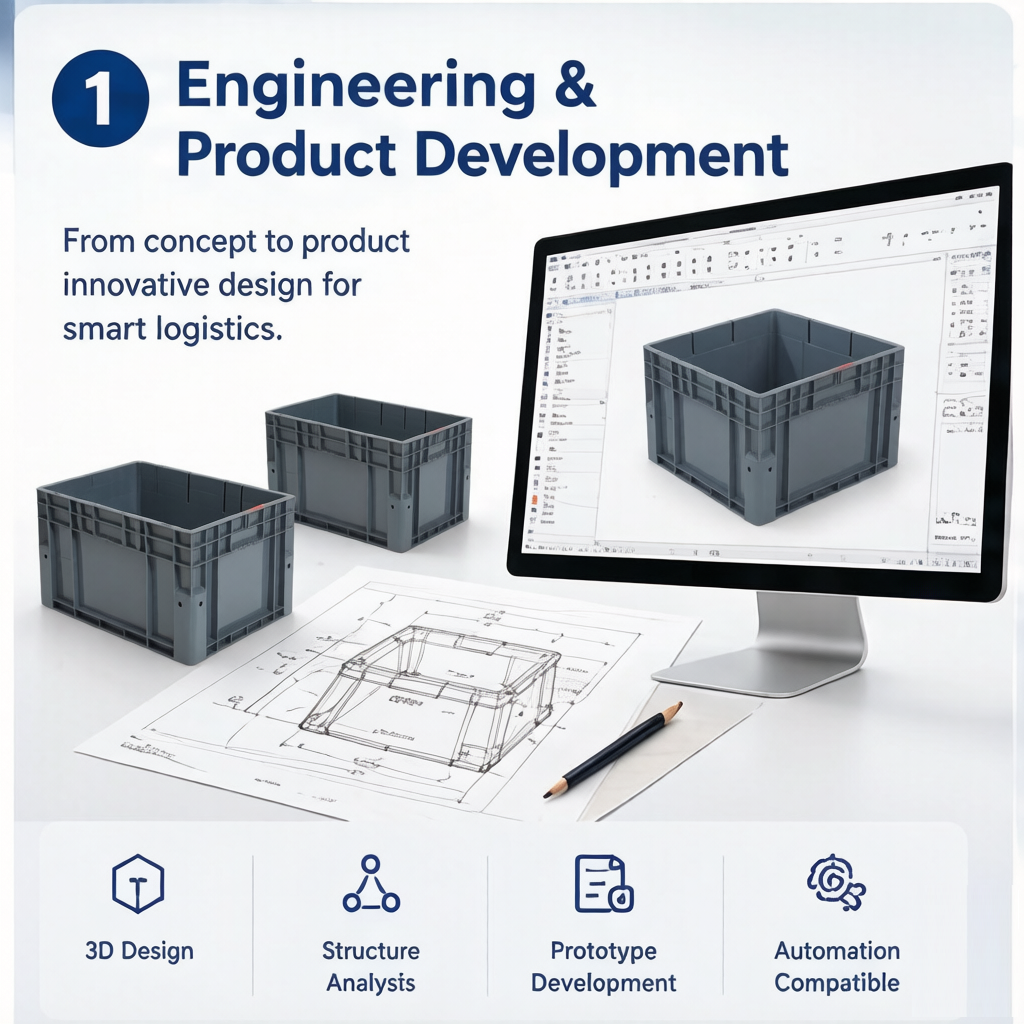
Shanghai Xinfan Industrial Corporation supports both modes. Its OEM capability includes build-to-print manufacturing, contract manufacturing, high-volume injection molding, private label production, and long-term manufacturing agreements. Its ODM capability covers concept-to-product development, automation container design, cold-chain packaging design, and one-stop product development.
During a factory evaluation, ask which engineering activities are performed in-house. TSS reports an in-house mold design and manufacturing capability, including 3D design proposals, prototype tooling, production mold manufacturing, mold-flow analysis, dimensional verification, and trial-run validation.
2. Quality Control System
Quality control for plastic totes should not be a final visual check only. A serial supplier should be able to explain controls at multiple stages.
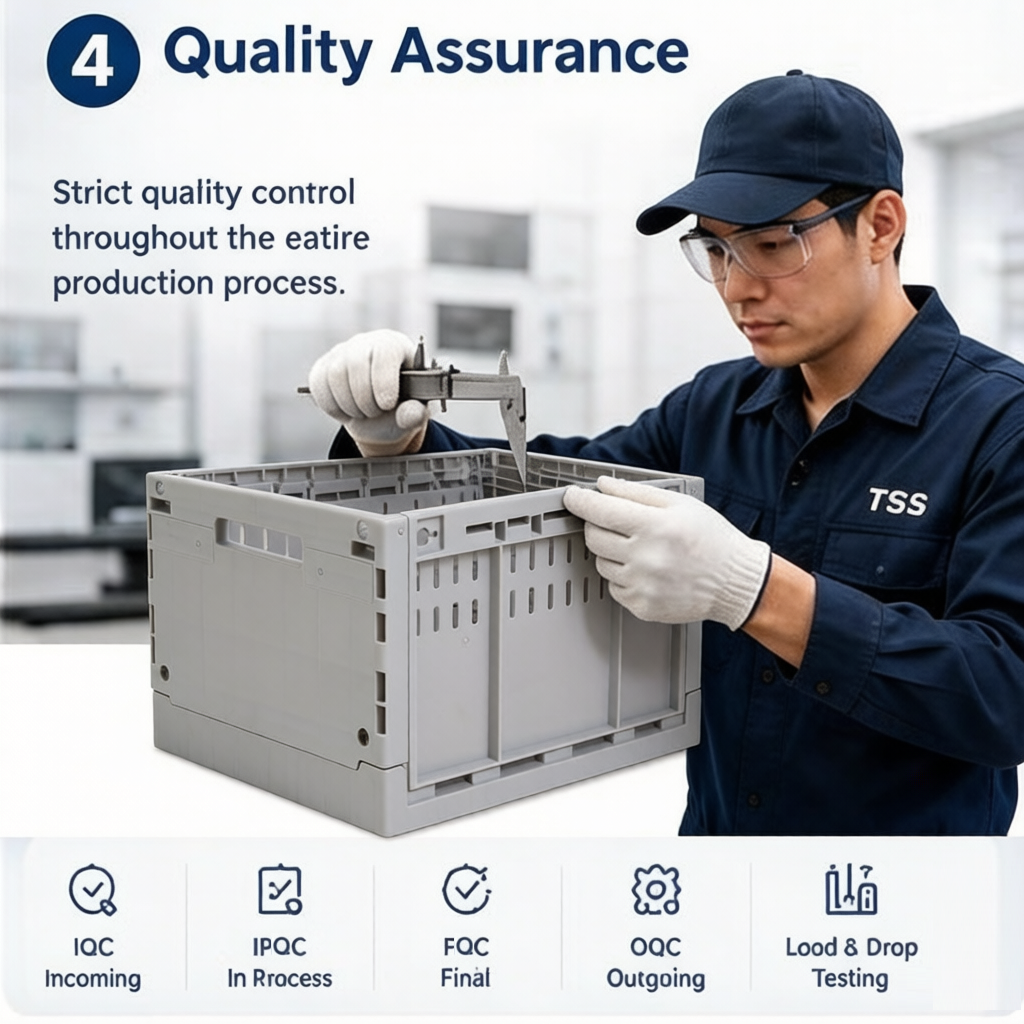
For TSS, the documented quality-control procedure includes Incoming Material Inspection (IQC), In-Process Quality Control (IPQC), Final Quality Control (FQC), and Outgoing Quality Control (OQC). The testing framework also includes static and dynamic load testing, drop testing, automation compatibility testing, barcode and RFID verification, and 100% visual inspection for customized products.
Buyers can also request customer-specific inspection standards or third-party inspection before shipment. TSS states that third-party inspection is available, which is a practical advantage for international buyers who cannot be present during production.
3. Compliance and Food-Contact Documentation
Food distribution can require food-contact documentation for reusable plastic totes, crates, and folding baskets. Buyers should ask for test reports that identify the material, the product type, the testing authority, and the applicable standard.
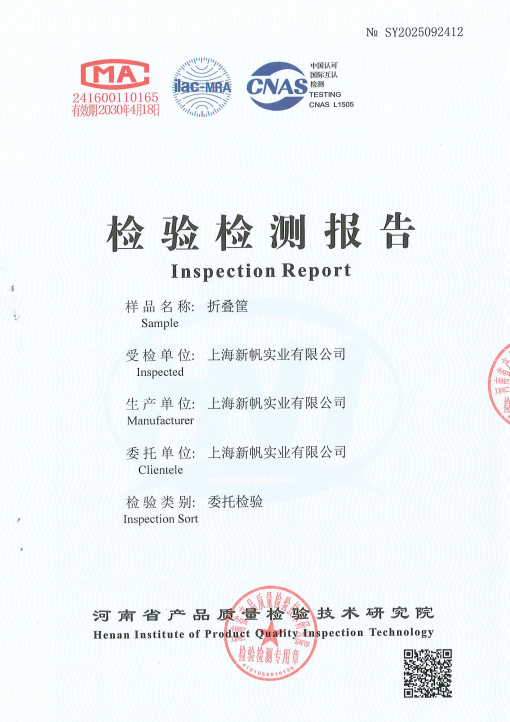
TSS has two food-contact inspection reports issued by Henan Institute of Product Quality Inspection Technology:
- Food Contact Plastic Folding Basket Inspection Report, certificate number SY2025092412, issued September 24, 2025;
- Food Contact Plastic Tilting Turnover Box Inspection Report, certificate number SY2025092415, issued September 24, 2025.
Both reports apply to “Plastic materials and products for food contact.” The related product list includes stackable plastic totes, collapsible plastic crates, nested and stackable plastic crates, reusable plastic totes, ASRS wall-straight plastic crates, and ASRS foldable plastic crates. European buyers should also ask whether a reusable rigid plastic distribution box is designed and tested against the European standard EN 13117-1:2000, which is the CEN standard for reusable rigid plastics distribution boxes used in handling, transport, and storage.
4. Automation Compatibility
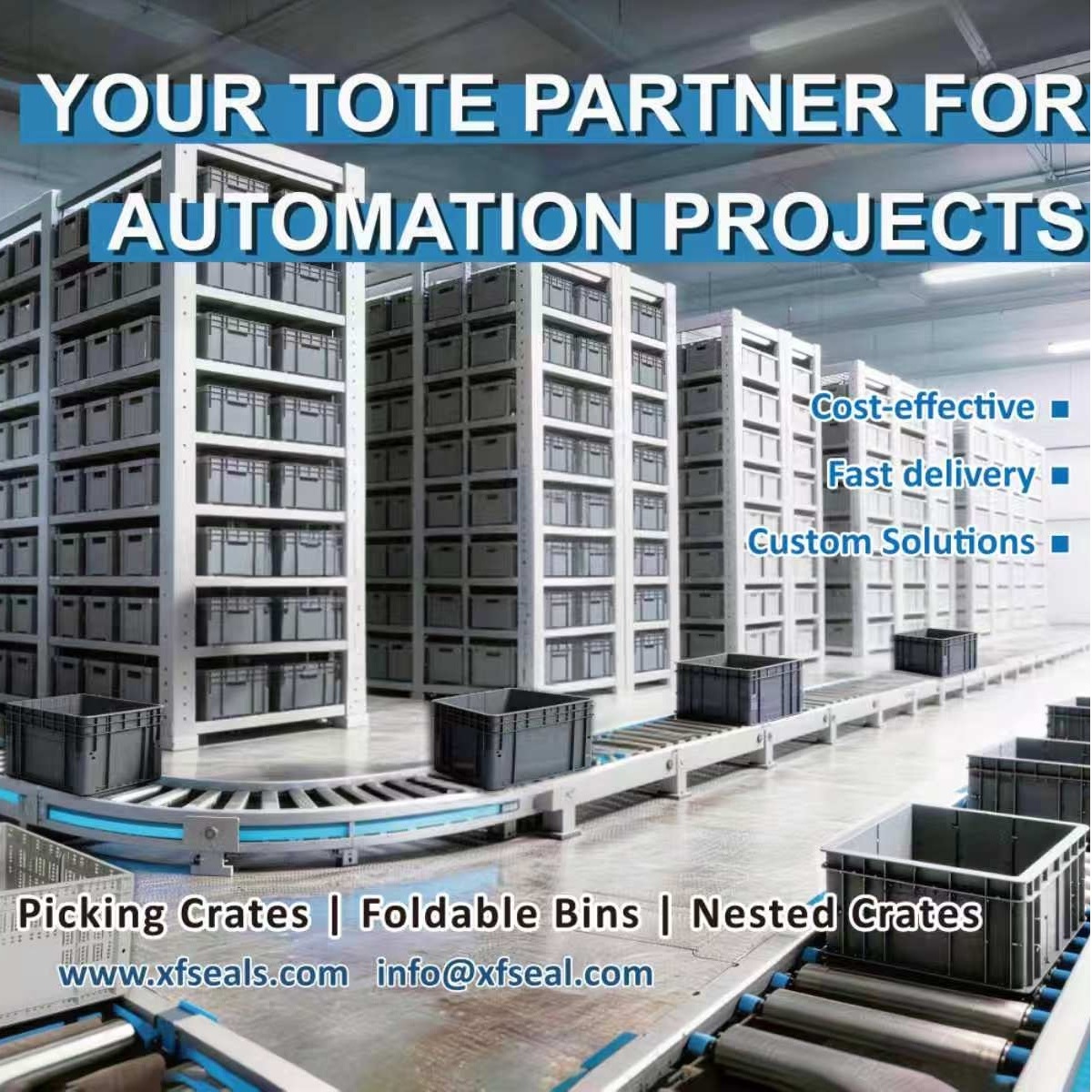
Demand for mini-load ASRS continues to grow because automated storage systems need fast retrieval of small parts, totes, and bins. In an automated warehouse, the tote becomes a mechanical interface. Dimensional consistency, flatness, bottom geometry, robot gripping features, and stacking behavior are more important than color or appearance.
TSS has a Smart Logistics and Automation Support capability that includes automation bottom design, robot gripping features, RFID integration, positioning marks, and high-precision dimensions. Validation can include conveyor testing, robot handling verification, load testing, stacking testing, and barcode/RFID verification.
When evaluating a supplier, ask for evidence that its totes have been tested with conveyors or robotic handling. A warehouse automation project can fail if tote dimensions drift, walls flex, or the bottom profile does not align with the ASRS shuttle or AMR lifting mechanism.
5. After-Sales and Problem Resolution
Plastic totes are used in cycles. A manufacturer that disappears after delivery creates expensive supply risk. During evaluation, ask how the supplier handles quality claims, replacement parts, and corrective action.
For TSS, documented after-sales services include product quality claim handling, replacement for damaged or defective products, spare parts supply, continuous improvement reports, long-term warranty support, a dedicated after-sales coordinator for large orders, and annual customer review meetings for strategic accounts. The initial response time is within 24 hours, and a corrective action report is expected within 3–5 working days.
Step-by-Step Breakdown: How to Build the Right Plastic Tote Supplier Shortlist
Use the following eight-step process to move from a broad search to a qualified shortlist.
Step 1: Define the application and operating environment
Identify whether the tote will be used in an automated ASRS, AMR picking, warehouse storage, retail replenishment, fresh-produce logistics, or return-transport flow. This decision determines the container family.
Step 2: Choose the tote type and dimensions
Common 600 × 400 mm footprints appear across reusable plastic containers because they suit standard palletization. Wall-straight totes maximize space inside automated storage. Foldable crates reduce empty return volume. Nest-and-stack crates combine storage density with stable stacking. Attached-lid containers add protection during logistics.
Step 3: Confirm material and load expectations
Polypropylene is the dominant material in plastic crates and is standard across TSS tote products. Confirm wall thickness, stacking strength, operating temperature, and any requirement for food-contact grade material.
Step 4: Shortlist manufacturers by factory and engineering capability
Look for injection molding capacity, in-house mold development, ODM or OEM support, and export experience. The TSS profile is one example: 25 engineers, 3.6 million units of annual output, and about 70% export ratio.
Step 5: Audit the quality-control plan
Ask for IQC, IPQC, FQC, and OQC descriptions. Include load testing, drop testing, automation compatibility testing, and third-party inspection in the audit scope.
Step 6: Verify compliance documents before approving samples
If the container touches food, ask for the inspection report and check the scope. If the buyer is in the EU, ask about EN 13117-1:2000 requirements for reusable rigid plastics distribution boxes.
Step 7: Validate automation fit with actual testing
For ASRS, AMR, or conveyor projects, require sample testing under operating conditions. Confirm bottom design, overall dimensions, robot gripping, RFID or barcode integration, and stack stability.
Step 8: Agree on lead times, MOQ, and service commitments
Separate engineering review, sample production, mold development, and mass production timeframes. Confirm the MOQ for existing products, custom products, RFID projects, and new tooling projects separately.
Use Cases and Product Mapping
The table below maps common buying scenarios to TSS product types visible in the technical corpus. The dimensional and material details are provided here because they can be used as evaluation checkpoints.
| Buying Scenario | Product Type | Model / Data Example | Typical Material |
|---|---|---|---|
| Automated warehouse ASRS and robotic picking | ASRS Wall Straight Plastic Crates | TSS-IFC, 600 × 400 × 300 mm | PP |
| AMR goods-to-person and foldable return flow | ASRS Foldable Plastic Crates | TSS-IFD, 600 × 400 × 300 mm | PP |
| Warehouse automation totes and general reusable plastic totes | Reusable Plastic Totes | TSS family, length 600–800 mm, width 400–600 mm, height 128–400 mm | PP |
| Fruit and vegetable distribution with cool-chain handling | Nested and Stackable Plastic Crates | TSS-RBTB, 600 × 400 × 300 mm | PP |
| Retail and supermarket transport, space-saving returns | Collapsible Plastic Crate | TSS-SFD, 600 × 400 × 225 mm | PP |
| Logistics totes requiring lid protection and stable stacking | Stackable Plastic Totes with attached lid | TSS-TBX, 600 × 400 × 320 mm | PP |
Large-scale automation evidence
Large project records provide a stronger signal than generic marketing language. One documented case involves 450,000 pieces of ASRS wall-straight plastic crates delivered to a leading global warehouse automation and cube-storage solution provider for large-scale e-commerce and 3PL fulfillment centers. The project was completed within one year and supports AGV/AMR automated storage, order fulfillment, inventory management, and robotic picking. Reported improvements include storage density increased by up to 4–6 times compared with conventional shelving and improved order fulfillment speed.
A second documented case involves 450,000 ASRS foldable plastic crates used by a leading global AMR solution provider. Those crates integrate with AMR systems for goods-to-person fulfillment, automated storage, and high-speed picking. The deployment supported 24/7 automated warehouse operations and improved picking efficiency and robotic handling accuracy.
FAQ: Top Plastic Totes Manufacturers in China
What compliance documents should a China plastic tote manufacturer be able to show?
At minimum, ask for the quality-control plan and any material or food-contact test report relevant to the product. Shanghai Xinfan Industrial Corporation can show food-contact inspection reports from Henan Institute of Product Quality Inspection Technology for plastic folding baskets and tilting turnover boxes. These are third-party entrusted inspection reports for food-contact plastic materials. The quality plan should also describe IQC, IPQC, FQC, and OQC, with additional tests such as drop testing, static/dynamic load testing, and automation compatibility testing.
How do I compare plastic tote capabilities between different manufacturers?
Compare product families, dimensions, material, and intended operating environment rather than container names alone. A wall-straight 600 × 400 × 300 mm tote is designed for ASRS; a foldable 600 × 400 × 225 mm crate is designed for return transport. Confirm the application first. For automation projects, ask for conveyor or robotic-handling validation. For food logistics, ask for a food-contact inspection report that explicitly covers the product type you intend to buy.
What MOQ and budget expectations should I have for plastic tote sourcing?
MOQ depends on whether the tote is an existing product, a customized product, an RFID smart-logistics project, or a new tooling project. At TSS, existing products can start around 100–500 pieces, customized products around 500–2,000 pieces, customized automation products around 500 pieces, and RFID smart-logistics projects around 1,000 pieces. Standard OEM projects involving new tooling are stated at 1,000–5,000 pieces, while strategic automation project MOQs are negotiable. For large supply agreements, the MOQ can be based on a 1×40 ft container or a project milestone plan.
Can I request samples before placing a bulk plastic tote order?
Yes. Sample validation is a normal stage in supplier evaluation. At TSS, the documented OE M timeline includes engineering review of 5–10 working days, sample production of 7–15 working days, and mass production of 15–30 working days. New tooling, if required, normally takes 30–60 working days, and production mold manufacturing for a more complex project can take 60–70 working days. Use samples to verify dimensions, wall stiffness, stackability, robot handling, and RFID or barcode readability.
What lead time should I plan for a mass-production order?
Separate lead time into engineering review, sample production, mass production, and tooling. For TSS, mass production is 15–30 working days after the product is approved. If a new mold is needed, production mold manufacturing is typically 60–70 working days. Key account programs can use customized delivery schedules and inventory buffers. For a current lead-time estimate, buyers can contact TSS directly or download the corporate profile and logistics container solutions document.
For a starting point, review the TSS Corporate Profile & Logistics Container Solutions PDF, or contact info@xfseal.com with the tote type, target quantity, and destination country.
Conclusion
There is no single official list of top plastic tote manufacturers in China. The practical path for evaluation-stage buyers is to define the operating environment, compare product families, audit the factory quality system, verify compliance documentation, and examine large-scale project evidence.
Shanghai Xinfan Industrial Corporation (TSS) is one China-based manufacturer with the factory, engineering, export, food-contact documentation, and automation case evidence needed for a serious shortlist. Buyers should also benchmark the China-direct manufacturing model against global reusable-packaging players such as Schoeller Allibert, ORBIS, Myers Industries, and Brambles, but they should separate global brand recognition from factory-level verification.
The next step is not choosing a name from a ranking. It is obtaining a technical drawing, asking for product samples, and running the tote through the conditions where it will actually operate.

Have Questions or Need More Details?
Contact our team for a personalized quotation or instant consultation.
Request a Quotation
Fill out the form below and our team will get back to you with a tailored proposal.
WhatsApp Direct Chat
Prefer to chat in real-time? Message us on WhatsApp for instant assistance & quick answers.
- Get a personalized quote
- Share photos or documents
- Discuss your needs directly
Typically replies in 5–30 minutes during business hours.