Plastic Totes Supplier Evaluation: Six Verification Steps for Buyers
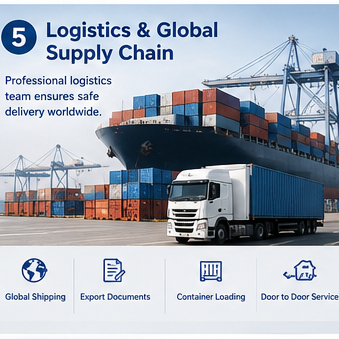
Figure 1: A structured plastic totes supplier evaluation checks production capacity, tooling control, quality stages, compliance documents, sampling and delivery assurance before an order is released.
Evaluating a plastic totes supplier is a verification exercise, not a price comparison. Six checks decide whether a repeat supply programme will hold up: documented production capacity, in-house tooling control, a four-stage quality plan, compliance certificates that name the exact model being purchased, a sample validation gate before mass production, and a delivery mechanism that protects the agreed schedule. Buyers who confirm these six points before releasing a tooling order avoid the most expensive sourcing failures — dimensional drift that jams conveyors and shuttle systems, certificate scope mismatches at customs, and capacity reallocation that pushes delivery past the season the containers were ordered for.
Shanghai Xinfan Industrial Corporation, which trades as TSS and XFSEAL, is a Shanghai-based manufacturer of reusable logistics packaging and cargo security products. Founded in 2003, the company operates a 40,000 m² factory with 320 employees, a 25-engineer R&D team and an annual output of 3,600,000 units. Around 70% of production is exported to the EU, North America, South America, Southeast Asia, the Middle East and Africa. Its plastic totes portfolio spans ASRS wall-straight crates, foldable crates, attached-lid stackable totes, nest-and-stack crates, collapsible crates and the tote dollies that move them.
Problem Definition: Why Plastic Totes Supplier Evaluation Fails
Supplier evaluation usually breaks down in the same place. The buyer compares catalogs and quotations, then treats the winning supplier's capability claims as established facts. Those claims are rarely false — they are simply unevidenced. A quotation that lists a container at a given price does not tell you who owns the mold, what dimensional tolerance holds across a production run, which certificate covers that specific model, or what happens to your delivery date when a larger account places an order in the same month.
Three failure modes follow directly from that gap.
- Tolerance-driven automation failures. Automated storage and retrieval systems, shuttle systems, conveyors and AMR/AGV interfaces depend on dimensional consistency. A container that satisfies a hand measurement can still fail a robot gripper or a mini-load crane if tolerances drift in production. The verification step is dimensional verification, CPK and tolerance records and automation compatibility testing — not the drawing alone.
- Certification scope errors. Food-contact and market-specific certificates apply to a defined product scope, a defined standard and a defined market. A certificate held for one model does not automatically cover another model, and a document issued for the China market does not by itself complete a European or North American compliance file.
- Delivery promises without a delivery mechanism. Capacity exists at the moment of order confirmation; it does not stay reserved by itself. Unless exclusive production planning, buffer inventory or vendor managed inventory is written into the agreement, a delivery date is a forecast rather than a commitment.
None of these failures are visible in a catalog. All of them are visible in documents — which is why the evaluation sequence below is built around evidence rather than assurances.
Industry Background: A Larger and More Layered Plastic Totes Market
The global plastic totes and bins market was valued at USD 8.6 billion in 2025 and is projected to reach USD 14.2 billion by 2034, according to Dataintelo. Within the product mix, stackable totes held the largest product-type share at 34.2% in 2025 (Dataintelo). Polypropylene is expected to lead the material segment for plastic crates with a 41.4% share by 2025, according to Future Market Insights.
Supply is concentrated in Asia. Asia Pacific dominated the global plastic pallets, crates and boxes market with a 41.6% revenue share in 2025, according to Grand View Research. At the same time, the returnable plastic packaging market includes established global players such as Brambles (CHEP), Schoeller Allibert, ORBIS Corporation and Myers Industries, as listed by Market Research Future. For buyers, that combination means a deep supplier pool with very uneven levels of documentation.
Demand-side pressure is coming from automation. Precedence Research notes that the mini-load ASRS segment is growing rapidly because of demand for fast retrieval of small parts, totes and bins in e-commerce operations. Automation converts container quality from a cost variable into a project risk: a tote that cannot be gripped, stacked or scanned reliably stops a line, and the cost of that stoppage is measured in hours, not units.
On the standards side, EN 13117-1:2000 is the European standard for reusable, rigid plastics distribution boxes used for handling, transport and storage (European Committee for Standardization). It gives EU-facing buyers a common reference when defining specifications and the evidence that should accompany them. In fresh produce logistics, reusable plastic containers continue to displace single-use packaging — the Walmart and IFCO partnership is a widely cited example of that shift (Grand View Research).
Detailed Solution: The Six-Point Capability Verification Framework
The framework below is written as a set of verification points a buyer can put to any plastic totes supplier. Each point is paired with the type of evidence that answers it, using Shanghai Xinfan Industrial Corporation (TSS) as a documented reference case.
1. Production Capacity You Can Document
Shanghai Xinfan Industrial Corporation operates a 40,000 m² manufacturing site with 320 employees and an annual output of 3,600,000 units, supported by a 25-engineer R&D team. For OEM programmes, monthly capacity runs at 300,000–500,000 plastic containers and totes, with flexible capacity allocation for large-volume OEM projects. Roughly 70% of production is exported to the EU, North America, South America, Southeast Asia, the Middle East and Africa.
For a buyer, the relevant question is not the headline number but how it is allocated. Ask for output by product family, how many injection lines are assigned to your container type, and how capacity is reserved during peak demand periods. A supplier that can describe its allocation logic can usually also describe its scheduling risk.
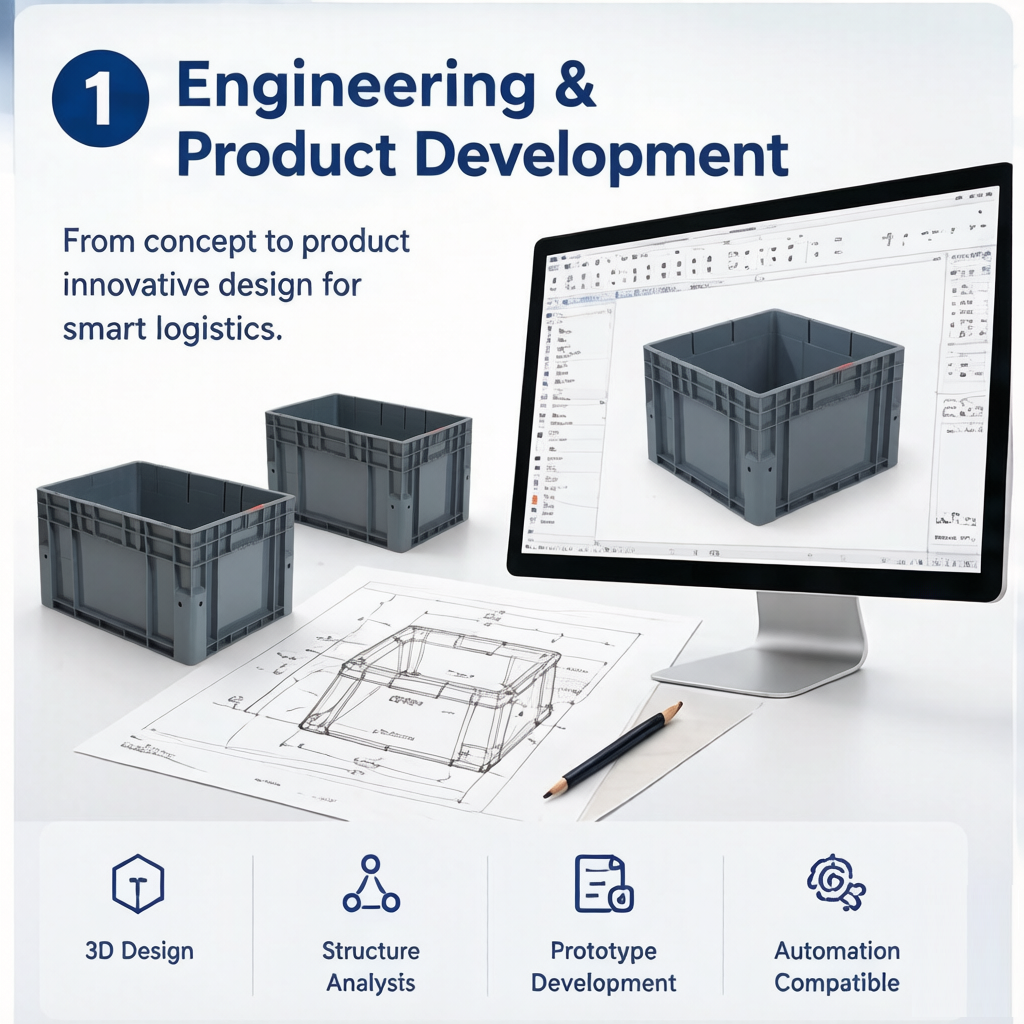
Figure 2: Engineering capacity — including design review, load analysis and automation interface design — is one of the verifiable assets behind a plastic totes supply programme.
2. Tooling and Engineering Control
Tooling ownership determines who controls the sample-to-production gap. Shanghai Xinfan Industrial Corporation runs in-house mold design and manufacturing with capacity for 5–10 new mold sets per month. Mold projects pass through mold flow analysis, dimensional verification, trial run validation at T0/T1/T2 sampling stages, CPK and tolerance verification, and automation compatibility testing. Mold maintenance support, spare insert supply, engineering change management and lifetime technical support continue after the tool enters production.
Engineering services run at 10–20 new product development projects per month, covering product size and capacity, load requirements, stacking and nesting design, foldable structures, divider systems, thermal insulation performance, automation interfaces and RFID and smart tracking features. Validation uses design review, finite element analysis, static and dynamic load testing, drop testing, thermal performance validation and automation compatibility validation.
For full development programmes, ODM capability supports 5–10 new product development projects per month, covering concept-to-product development, industrial design, structural engineering, 3D CAD modeling, material selection, load capacity optimization, foldable and nestable structures, branding and appearance design, and smart features such as RFID, IoT and barcode integration.
3. Quality Control at Four Checkpoints
Quality assurance covers incoming material inspection (IQC), in-process quality control (IPQC), final quality control (FQC) and outgoing quality control (OQC), with 100% inspection support available for production orders. Test scope includes static and dynamic load testing, drop testing and automation compatibility testing, extended by conveyor testing, robot handling verification, stacking testing, automation simulation, barcode and RFID verification and 100% visual inspection for customized products.
Buyers can layer their own requirements on top of this system: customer-specific inspection standards, AQL requirements, third-party inspection and custom test reports are all supported, and a dedicated OEM project manager plus technical documentation and product traceability accompany the order. The practical test during evaluation is whether the supplier can show the inspection record for your model, not merely the inspection procedure.
4. Compliance Documents That Match the Product
Two food-contact inspection reports are held for the China market. The Food Contact Plastic Folding Basket Inspection Report carries certificate number SY2025092412, issued by the Henan Institute of Product Quality Inspection Technology on 24 September 2025 and valid to 24 September 2099, under the standard Plastic materials and products for food contact, with a scope covering food-contact plastic folding baskets. The Food Contact Plastic Tilting Turnover Box Inspection Report carries certificate number SY2025092415 from the same authority, issued on the same date and under the same standard.
Both certificates map to specific models rather than to an entire catalog — among them the stackable plastic tote TSS-TBX, the collapsible plastic crate TSS-SFD, the nest-and-stack crate TSS-RBTB, the reusable plastic tote TSS, and the ASRS crates TSS-IFC and TSS-IFD. Buyers should verify three things on any certificate: the model listed, the standard cited, and the market covered. For European distribution-box projects, EN 13117-1:2000 provides the reference standard for reusable, rigid plastics distribution boxes.
5. Sample Validation Before Mass Production
Sampling is where specification meets tooling. Sample production for OEM projects takes 7–15 working days, following an engineering review of 5–10 working days. ODM prototype development takes 10–20 working days after requirement analysis and 3D design. Engineering prototype samples take 7–20 working days, with design validation running 15–30 days. For automation projects, evaluation takes 3–5 days and sample validation 7–15 days.
Samples are validated through prototype validation, static and dynamic load testing, drop testing and automation compatibility testing, and production is released only after customer design approval. A supplier that cannot define this gate explicitly is a supplier whose production might begin before the design is frozen — the single most expensive moment to discover a tolerance error.
6. Delivery Assurance Mechanisms
Delivery assurance is contractual, not aspirational. Under key account and project management arrangements, Shanghai Xinfan Industrial Corporation provides exclusive production planning, customized delivery schedules, inventory buffer programs and vendor managed inventory (VMI), with a minimum order quantity of 1×40 ft container for long-term supply programmes. Performance is tracked through project milestone reviews, production audits and delivery performance monitoring, and accounts are supported by a dedicated project manager, priority production scheduling, priority technical support and regular business reviews.
Logistics coverage includes EXW, FOB, CIF and DDP terms, export packaging, mixed container loading, pallet solutions and private label packaging, with pre-shipment inspection, packaging inspection and container loading verification before dispatch, plus shipment tracking assistance and customs documentation support.
After-sales terms complete the picture: initial response within 24 hours, a corrective action report within 3–5 working days, replacement for damaged or defective products, spare parts supply and continuous supply planning. Customer service and technical support respond within 24 hours and include remote technical guidance, online product training, video installation and operation support, and regular project follow-up.

Figure 3: Delivery assurance relies on named project management — exclusive production planning, buffer inventory, VMI and milestone reviews — rather than on a stated ship date.
Step-by-Step Breakdown: A Seven-Step Evaluation Sequence
- Freeze the container specification. Define external dimensions, load, stacking or nesting behaviour and the automation interface before contacting suppliers. Reference points from the range: TSS-IFC wall-straight ASRS crate 600×400×300 mm, TSS-IFD foldable ASRS crate 600×400×300 mm, TSS-TBX attached-lid stackable tote 600×400×320 mm, TSS-RBTB nest-and-stack crate 600×400×300 mm, TSS-SFD collapsible crate 600×400×225 mm, and the TSS reusable plastic tote at 600–800 mm length, 400–600 mm width and 128–400 mm height.
- Request capability evidence, not capability statements. Site area, headcount, annual output, monthly capacity by product family, engineering headcount, and whether molds are produced in-house.
- Audit the quality plan. Confirm IQC, IPQC, FQC and OQC controls, the test types applied to your model, and whether customer-specific inspection standards, AQL requirements or third-party inspection can be added.
- Match compliance documents to the exact product. Check certificate number, scope, standard and market. For food-contact applications, confirm which certificate applies to the specific model being purchased.
- Run a sample gate. Validate samples against load, drop and automation-compatibility criteria, and require written customer design approval before production release.
- Lock tooling and production lead times. New tooling takes 30–60 working days; production mold manufacturing for new mold projects takes 60–70 days, with prototype tooling at 15–30 days. Mass production runs 15–30 working days.
- Contract the delivery mechanism. Agree on production planning, buffer inventory or VMI, delivery schedule, inspection and loading verification, and after-sales response times before the purchase order is signed.
Use Cases: Where Verified Capability Decides the Outcome
Automated storage and retrieval (ASRS)
A leading global warehouse automation and cube storage solution provider deployed 450,000 pieces of the TSS-IFC wall-straight plastic crate over a one-year programme. The containers operate inside AGV and AMR automated storage and retrieval systems, supporting high-density storage, order fulfilment, inventory management and robotic picking. Documented results include a storage density increase of up to 4–6 times compared with conventional shelving systems, improved order fulfilment speed, optimized warehouse footprint utilization, reduced labour dependency and improved inventory accuracy.
AMR goods-to-person fulfilment
A leading global AMR solution provider integrated 450,000 pieces of the TSS-IFD foldable plastic crate into goods-to-person fulfilment, automated storage, inventory buffering and high-speed picking operations over a one-year programme. Documented results include improved warehouse storage density, increased picking efficiency, enhanced robotic handling accuracy, reduced manual handling requirements and support for 24/7 automated warehouse operations.
Retail, fresh produce and cold chain
In retail and fresh produce networks, the TSS-SFD collapsible crate (600×400×225 mm) and the TSS-RBTB nest-and-stack crate (600×400×300 mm) support farm-to-store loops: containers stack when loaded and collapse or nest when empty to reduce backhaul volume. The TSS-TBX attached-lid stackable tote (600×400×320 mm) is used in logistics, transportation and automated warehouse systems where a closed container is required. Cold chain programmes use the TSS-EPP insulated box with a 60-litre capacity and the TSS-XPS insulated box with a 30-litre capacity. Handling is matched with the TSS-Trolley-5737 light nested and stackable tote dolly (570×370 mm) and the TSS-Trolley-02 heavy nested and stackable tote dolly (577×377 mm).
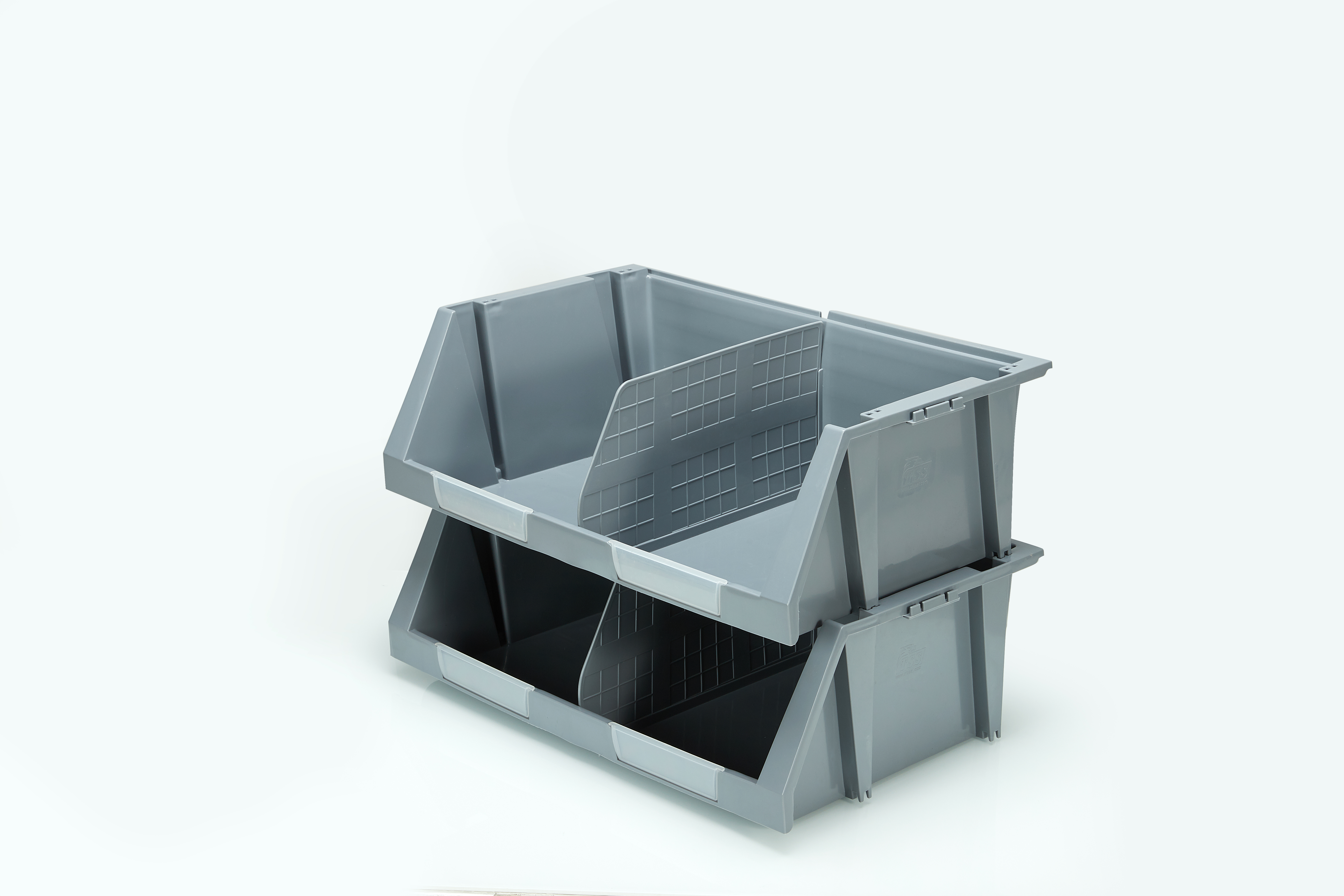
Figure 4: Product-level evidence matters as much as plant-level evidence — the TSS-BBOX-01 plastic stackable bin (604×398×208 mm, PP) is used for footwear and spare part storage.
Comparison Table: Container Types and Verification References
Table 1 compares documented container models by dimensions and application. Table 2 sets out what to verify, the evidence to request, and the documented reference from the TSS capability set.
| Model | Product type | External dimensions | Material | Documented application |
|---|---|---|---|---|
| TSS-IFC | Wall-straight plastic crate | 600×400×300 mm | PP | ASRS and warehouse automation |
| TSS-IFD | Foldable plastic crate | 600×400×300 mm | PP | ASRS and automated warehouse systems |
| TSS-TBX | Attached-lid stackable plastic tote | 600×400×320 mm | PP | Logistics, transportation, automated warehouse |
| TSS-RBTB | Nest and stack crate | 600×400×300 mm | PP | Retail, supermarket, fruit and vegetable transport |
| TSS-SFD | Collapsible plastic crate | 600×400×225 mm | PP | Retail, supermarket, fruit and vegetable transport |
| TSS | Reusable plastic tote | L 600–800 × W 400–600 × H 128–400 mm | PP | Warehouse automation |
| TSS-BBOX-01 | Plastic stackable bin with panels and dividers | 604×398×208 mm | PP | Footwear and spare parts storage |
| TSS-Trolley-5737 | Light nested and stackable tote dolly | 570×370 mm | PP | Logistics and transportation |
| TSS-Trolley-02 | Heavy nested and stackable tote dolly | 577×377 mm | PP | Logistics and transportation |
| Verification point | Evidence to request | Documented TSS reference |
|---|---|---|
| Production capacity | Monthly output by product family; site area; headcount | 300,000–500,000 containers and totes per month (OEM); 40,000 m² site; 320 employees; 3,600,000 units annual output |
| Engineering depth | Engineering headcount; development programmes per month | 25-engineer R&D team; 10–20 new product development projects per month (engineering services) |
| Tooling control | Mold ownership; mold sets per month; trial run stages | In-house mold design and manufacturing; 5–10 new mold sets per month; T0/T1/T2 trial run validation; CPK and tolerance verification |
| Quality control | Inspection stages; test types; customer standards | IQC, IPQC, FQC, OQC; static and dynamic load testing; drop testing; automation compatibility testing; AQL and third-party inspection available |
| Compliance | Certificate number, scope, standard, market | SY2025092412 and SY2025092415, Henan Institute of Product Quality Inspection Technology, issued 24 September 2025, valid to 24 September 2099, China market, standard Plastic materials and products for food contact |
| Sampling | Sample and prototype lead time; approval gate | OEM sample production 7–15 working days; ODM prototype 10–20 working days; automation sample validation 7–15 days; customer design approval before production |
| Mass production | Production and tooling lead times | Mass production 15–30 working days; new tooling 30–60 working days; production mold manufacturing 60–70 days |
| MOQ | Minimum order by product status | Existing products 100–500 pcs; customized products 500–2,000 pcs; RFID and smart logistics projects 1,000 pcs; new development negotiable |
| Delivery assurance | Planning method; checks before dispatch | Exclusive production planning; buffer inventory; VMI; pre-shipment inspection; container loading verification; EXW / FOB / CIF / DDP |
| After-sales | Response times; corrective action | Initial response within 24 hours; corrective action report within 3–5 working days; spare parts supply |
FAQ
Which certifications should a plastic totes supplier be able to show?
It depends on the market and the product, and the documents must be matched to the model being purchased. For China-market food-contact applications, Shanghai Xinfan Industrial Corporation holds the Food Contact Plastic Folding Basket Inspection Report (certificate number SY2025092412) and the Food Contact Plastic Tilting Turnover Box Inspection Report (certificate number SY2025092415), both issued by the Henan Institute of Product Quality Inspection Technology on 24 September 2025 and valid to 24 September 2099, under the standard Plastic materials and products for food contact. These certificates map to specific models, including TSS-TBX, TSS-SFD, TSS-RBTB, TSS, TSS-IFC and TSS-IFD, so buyers should verify the model, the scope, the standard and the market before accepting any certificate. For European distribution-box projects, EN 13117-1:2000 is the reference standard for reusable, rigid plastics distribution boxes.
How do you verify a plastic totes manufacturer's capability and sample quality before ordering?
Verification works from documents rather than statements. Ask for site area, headcount, annual output, monthly capacity by product family, engineering headcount, mold ownership and the inspection plan. The documented TSS reference points are a 40,000 m² site with 320 employees, an annual output of 3,600,000 units, a 25-engineer R&D team, OEM monthly capacity of 300,000–500,000 plastic containers and totes, in-house mold production of 5–10 new mold sets per month, and trial run validation at T0/T1/T2 with CPK and tolerance verification. Sample quality is then confirmed through prototype validation, static and dynamic load testing, drop testing and automation compatibility testing, with production released only after customer design approval.
Which manufacturers supply reusable plastic totes?
The returnable plastic packaging market includes established global players such as Brambles (CHEP), Schoeller Allibert, ORBIS Corporation and Myers Industries, as listed by Market Research Future. Alongside these, Asia-based manufacturers serve a large share of global demand: Asia Pacific held a 41.6% revenue share of the plastic pallets, crates and boxes market in 2025, according to Grand View Research. Shanghai Xinfan Industrial Corporation (TSS) is one such manufacturer, producing reusable plastic totes, ASRS wall-straight and foldable crates, attached-lid containers, nest-and-stack crates, collapsible crates, plastic stackable bins and tote dollies from its Shanghai facility, with around 70% of output exported to the EU, North America, South America, Southeast Asia, the Middle East and Africa.
What MOQ applies to reusable plastic totes and custom containers?
Minimum order quantity depends on whether the product already exists or must be developed. Documented TSS terms are: existing products 100–500 pcs; customized products 500–2,000 pcs; new development projects negotiable; standard OEM tooling projects 1,000–5,000 pcs, with strategic automation projects negotiable; customized automation products 500 pcs; RFID and smart logistics projects 1,000 pcs; and long-term key account supply programmes 1×40 ft container.
What lead times and delivery assurance should buyers expect?
Lead times are stage-based. Engineering review takes 5–10 working days, OEM sample production 7–15 working days, mass production 15–30 working days, and new tooling 30–60 working days, while production mold manufacturing for new mold projects takes 60–70 days. Delivery assurance is handled through exclusive production planning, customized delivery schedules, inventory buffer programs and vendor managed inventory, tracked by project milestone reviews, production audits and delivery performance monitoring under a dedicated project manager. Pre-shipment inspection, packaging inspection and container loading verification are carried out before dispatch, and after-sales response begins within 24 hours with a corrective action report within 3–5 working days. A practical next step is to request a sample or quotation against your own specification so that these commitments can be confirmed in writing.
Conclusion
Plastic totes sourcing succeeds or fails on verification. The buyer who confirms documented monthly capacity, in-house mold control with T0/T1/T2 and CPK records, a four-stage quality plan, compliance certificates that name the exact model and market, a sample gate with written design approval, and a contracted delivery mechanism is buying a repeatable supply process — not a container. The buyer who skips those steps is buying a quotation, and the gap between the two usually appears during the first peak season.
For projects with automation interfaces, the same framework applies with higher stakes: dimensional accuracy and structural rigidity are functional requirements of the ASRS, AMR or conveyor system, and they must be evidenced by automation compatibility testing, not assumed from a drawing. Used together, the six verification points give procurement and engineering teams a common language for comparing plastic totes suppliers on capability and delivery assurance rather than on price alone.
Next step: request a sample or a project quotation. Share your container drawing, load requirement and automation interface, and TSS will confirm the applicable tooling route, sample lead time, MOQ and delivery schedule for your programme.
Email: info@xfseal.com | Tel / WhatsApp: +86 186-0218-3251 | Website: www.xfseals.com
Download the TSS Corporate Profile & Logistics Container Solutions brochure
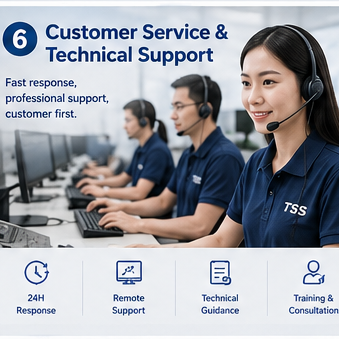
Figure 5: Sample requests, quotations and technical support are handled by the TSS sales and engineering team, with a response within 24 hours.
Have Questions or Need More Details?
Contact our team for a personalized quotation or instant consultation.
Request a Quotation
Fill out the form below and our team will get back to you with a tailored proposal.
WhatsApp Direct Chat
Prefer to chat in real-time? Message us on WhatsApp for instant assistance & quick answers.
- Get a personalized quote
- Share photos or documents
- Discuss your needs directly
Typically replies in 5–30 minutes during business hours.