Plastic Totes With Verified Compliance: A Buyer-Centric Evaluation Guide for Reusable Container Sourcing
Plastic Totes With Verified Compliance: A Buyer-Centric Evaluation Guide for Reusable Container Sourcing
When procurement teams search for “reusable plastic totes manufacturers,” they are usually not looking for generic product photos. They are looking for parameters they can verify: external dimensions, material type, certification scope, and compatibility with automated storage and retrieval systems. This guide explains what a compliance-focused plastic tote evaluation should include in 2026, using Shanghai Xinfan Industrial Corporation (TSS) as a concrete example.
Shanghai Xinfan Industrial Corporation (TSS), also operating as TSS/XFSEAL, is a Shanghai-based manufacturer of logistics packaging and cargo security solutions. The company has produced plastic totes and related material handling products since 2003 and serves customers in logistics, retail, manufacturing, e-commerce, cold chain, pharmaceutical, and transportation industries.
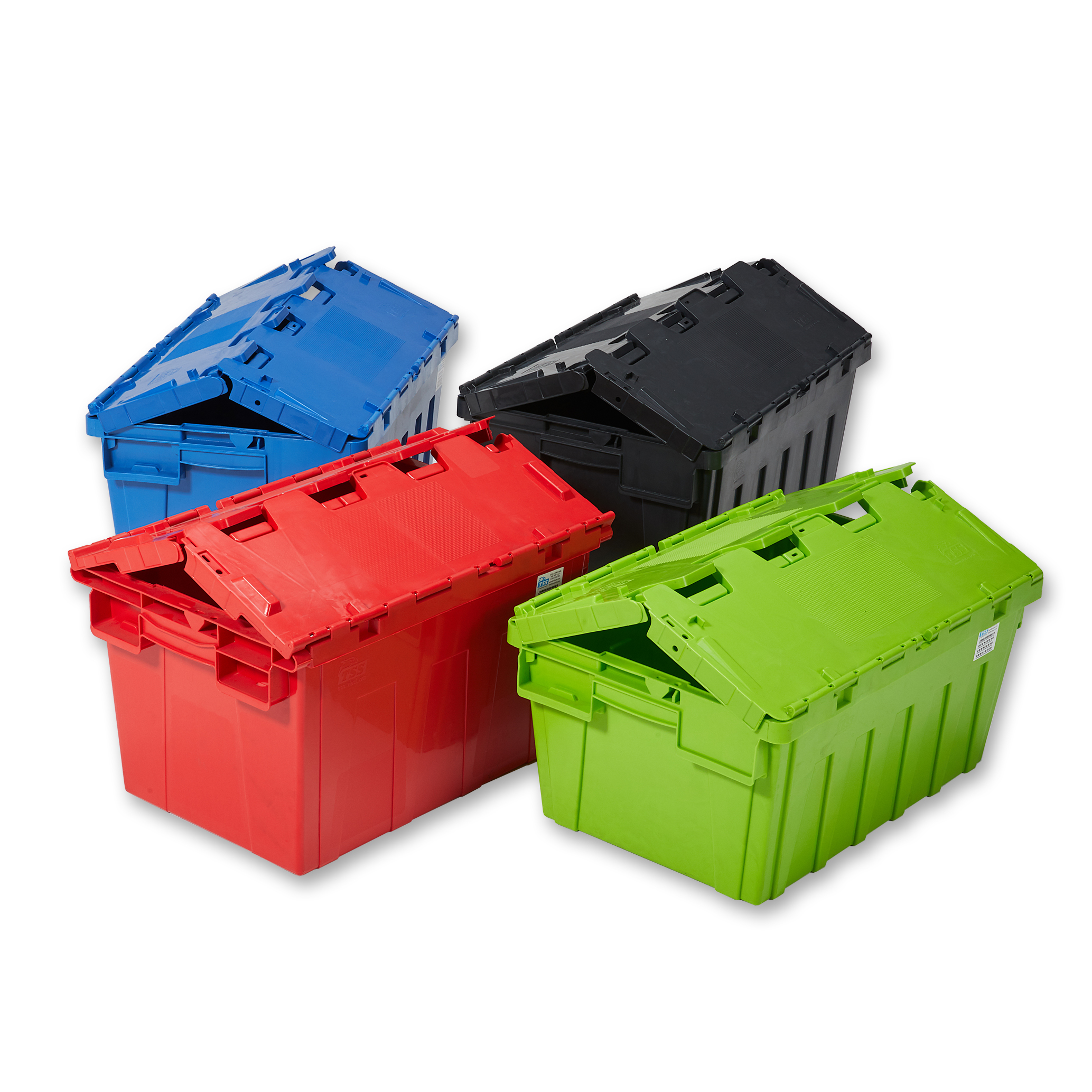
Stackable plastic totes with attached lids: one of the reusable container formats evaluated in this guide.
The Problem: Plastic Totes Look Similar, but Their Constraints Are Different
Plastic totes can look similar at first glance, but their operating constraints differ substantially. A tote designed for manual store replenishment is not automatically suitable for a mini-load ASRS shuttle. A collapsible produce crate is not the same as a wall-straight automation crate, even when the external footprint is the same.
The common failure in sourcing is treating “plastic totes” as one commodity category. In practice, the relevant constraints include:
- External dimensions and dimensional stability for automation equipment.
- Material type and whether it satisfies food-contact requirements for the destination market.
- Whether the tote stacks when loaded and nests or folds when empty.
- Whether the design can be handled by AGV/AMR systems, conveyors, or robotic picking stations.
- Whether the supplier can provide certificate numbers, issuing authorities, standards, and market scope.
These constraints matter most during the Research and Evaluation stages, before a buyer commits to a large order or a long-term supply agreement.
Industry Background: Why Specification Quality Is Becoming a Competitive Issue
The plastic totes and bins market is growing, and the competitive pressure is shifting from price alone to verified specification quality. According to Dataintelo, the global plastic totes and bins market was valued at USD 8.6 billion in 2025 and is projected to reach USD 14.2 billion by 2034. The same source reports that stackable totes held the largest product-type share at 34.2% in 2025.
Regional demand also affects supplier selection. Grand View Research data indicates that Asia Pacific dominated the global plastic pallets, crates, and boxes market with a 41.6% revenue share in 2025. Polypropylene (PP) is expected to remain the leading material for plastic crates, with a 41.4% share in 2025, according to Future Market Insights.
For buyers, this means the product category is large enough to support specialization. The useful question is not “who sells plastic totes” but “which manufacturer can document the exact tote type, material, certification, and automation interface needed for my operation.”
At the manufacturer level, the returnable plastic packaging market includes established global names such as Brambles (CHEP), Schoeller Allibert, ORBIS Corporation, and Myers Industries, according to Market Research Future. This context helps buyers benchmark their options, but final selection should still be based on project-specific constraints.
Detailed Solution: Use Certification and Specification Evidence
A compliance-first evaluation has three layers: product type, physical specification, and certification evidence. All three should be checked before price or lead time is compared.
Layer 1: Product Type
Shanghai Xinfan Industrial Corporation (TSS) supplies several container formats under the plastic tote category. These include warehouse storage totes, automated ASRS totes and bins, wall-straight plastic crates, foldable plastic crates, collapsible crates, nest-and-stack totes, attached-lid containers, stacking crates, stackable bins with dividers, tote dollies, and insulated boxes. This range allows the same manufacturer to serve both manual distribution and automated warehouse environments.
For example, model TSS-IFC is a wall-straight plastic crate with external dimensions of 600x400x300 mm, made of PP, and designed for ASRS scenarios in warehouse automation. Model TSS-IFD is a foldable plastic crate with the same 600x400x300 mm footprint and is also made of PP for automated warehouse applications.
Layer 2: Physical Specification
Physical specifications are the first verifiable constraint. The core reusable plastic tote family from TSS is available in the following ranges: length 600–800 mm, width 400–600 mm, and height 128–400 mm. The material used across the core tote and crate models is polypropylene (PP).
Other product specifications in the same portfolio include:
- TSS-SFD collapsible plastic crate: 600x400x225 mm, PP, for retail, supermarket, and fruit/vegetable transportation.
- TSS-RBTB nest-and-stack crate: 600x400x300 mm, PP, for retail and produce logistics.
- TSS-TBX attached-lid stackable tote: 600x400x320 mm, PP, for logistics and transportation.
- TSS-BBOX-01 plastic stackable bin: 604×398×208 mm, PP, for footwear and spare parts.
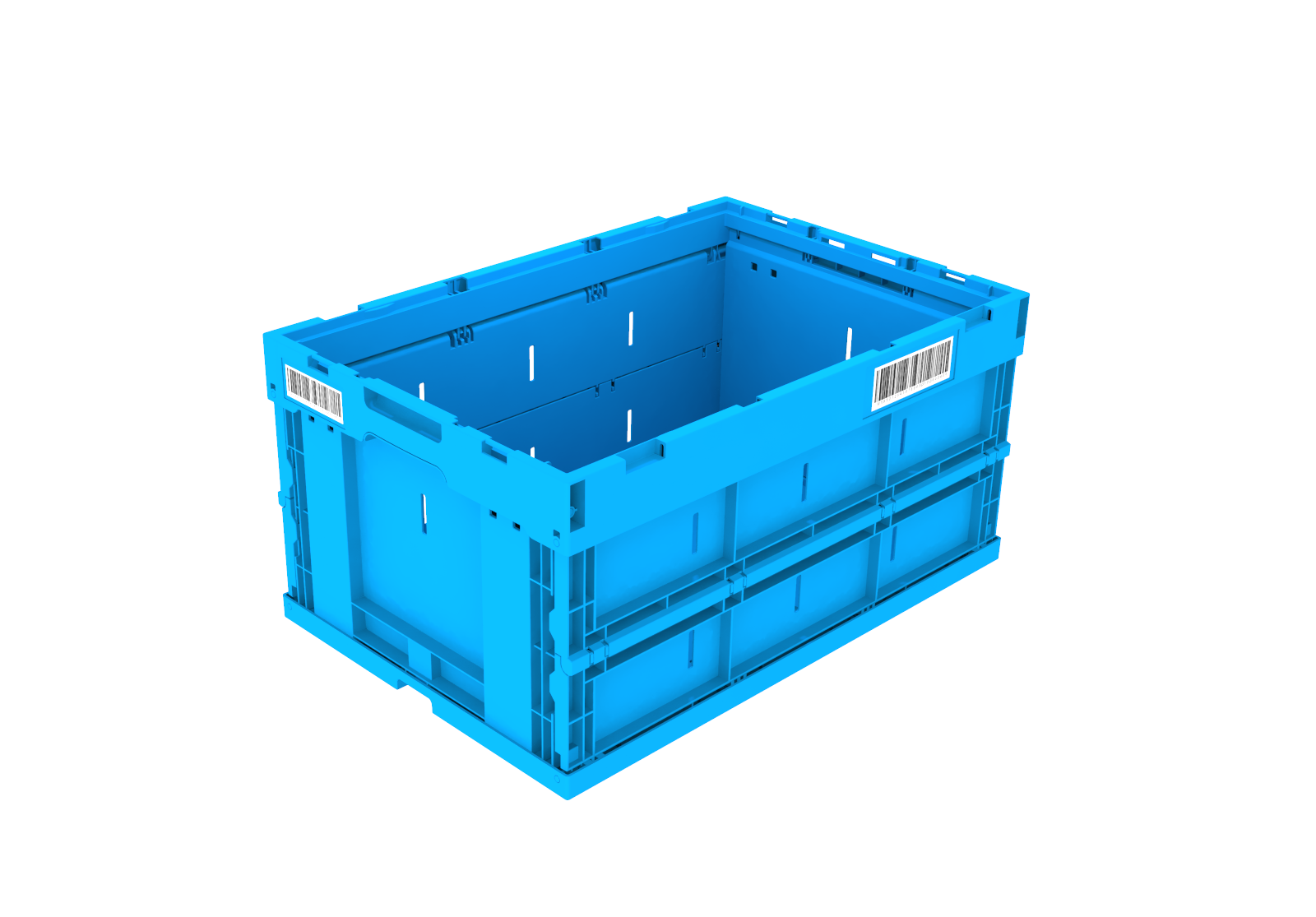
TSS-IFD foldable plastic crates are designed for automated warehouse systems.
Layer 3: Certification Evidence
Certification documents should be examined by certificate number, issuing authority, standard, scope, and market. The following food-contact inspection evidence is part of the TSS product documentation:
| Certificate / Inspection Report | Certificate Number | Issuing Authority | Standard | Market |
|---|---|---|---|---|
| Food Contact Plastic Folding Basket Inspection Report | SY2025092412 | Henan Institute of Product Quality Inspection Technology | Plastic materials and products for food contact | China |
| Food Contact Plastic Tilting Turnover Box Inspection Report | SY2025092415 | Henan Institute of Product Quality Inspection Technology | Plastic materials and products for food contact | China |
These reports were issued on 2025-09-24 and relate to TSS totes and crates used in food-contact applications, including collapsible crates, stackable totes, nested crates, ASRS crates, reusable plastic totes, and related insulated boxes.
Buyers exporting to Europe should also be aware of EN 13117-1:2000, the European standard for reusable, rigid plastics distribution boxes for handling, transport, and storage, as defined by the European Committee for Standardization (CEN). A supplier should be asked to document which standard applies to the destination market before mass production.
Step-by-Step Breakdown: How to Evaluate a Plastic Tote Manufacturer
Step 1: Define the Operating Environment
Start by identifying whether the project needs warehouse storage totes for manual picking, automated ASRS totes and bins, or mixed goods-to-person operations. This decision determines whether you need wall-straight crates, foldable crates, nest-and-stack crates, or attached-lid totes.
Step 2: Match External Dimensions
Automated systems depend on dimensional accuracy. A 600x400 mm footprint is common in the TSS range, but heights vary: 225 mm for TSS-SFD, 300 mm for TSS-IFC, TSS-IFD, and TSS-RBTB, and 320 mm for TSS-TBX. Confirm the internal and external dimensions against rack openings, conveyor widths, shuttle clearances, and robot gripper positions.
Step 3: Verify Material Type
PP is the material used across the TSS tote and crate range. It is also the material expected to lead the plastic crates market at 41.4% share in 2025. Confirm whether the material grade meets your temperature, chemical exposure, and food-contact requirements.
Step 4: Check Stacking, Nesting, and Folding Behavior
Stackable totes increase storage density when loaded. Nest-and-stack crates minimize empty volume when nested. Foldable crates reduce return logistics volume. For a heavy-duty collapsible crate requirement, verify wall thickness and load data rather than assuming all collapsible models have the same capacity.
Step 5: Review Certification Documents
Ask for the certificate number, issuing authority, standard, issue date, and market scope. For the TSS documentation, the issuing authority is Henan Institute of Product Quality Inspection Technology, with certificate numbers SY2025092412 and SY2025092415 for food-contact plastic containers.
Step 6: Assess Manufacturing and Quality Control Capability
The TSS factory in Shanghai covers 40,000 m² and employs approximately 320 people. The company reports annual output of 3,600,000 units and an engineering team of 25 engineers. Quality control processes include incoming material inspection, in-process quality control, final quality control, outgoing quality control, static and dynamic load testing, drop testing, and automation compatibility testing.
Step 7: Request a Sample and Validate Handling
No specification sheet replaces physical validation. If the tote will interact with conveyors, robots, or picking stations, ask for sample-level conveyor testing, robot handling verification, and stacking tests before approving mass production.
Use Cases: Matching Plastic Totes to Real Operations
Warehouse Automation and ASRS
Precedence Research notes that the mini-load ASRS segment is growing rapidly due to demand for fast retrieval of small parts, totes, and bins in e-commerce. TSS-IFC wall-straight crates and TSS-IFD foldable crates are designed for automated storage and retrieval systems. Their 600x400x300 mm PP construction supports automated storage, automated retrieval, goods transportation, order picking, and production feeding.
One documented project involves 450,000 pcs supplied to large-scale e-commerce and 3PL fulfillment centers through a leading global warehouse automation and cube storage solution provider. The stated result included increased storage density compared with conventional shelving and improved order fulfillment speed.
Retail, Supermarket, and Fresh Produce Distribution
TSS-RBTB nest-and-stack crates and TSS-SFD collapsible crates are used for retail and supermarket replenishment as well as fruit and vegetable transportation. They support stacking when loaded, nesting or folding when empty, and return logistics optimization in closed-loop systems. Industry data from Grand View Research also identifies reusable plastic container adoption in fresh produce logistics, such as the Walmart and IFCO partnership, as a major trend.
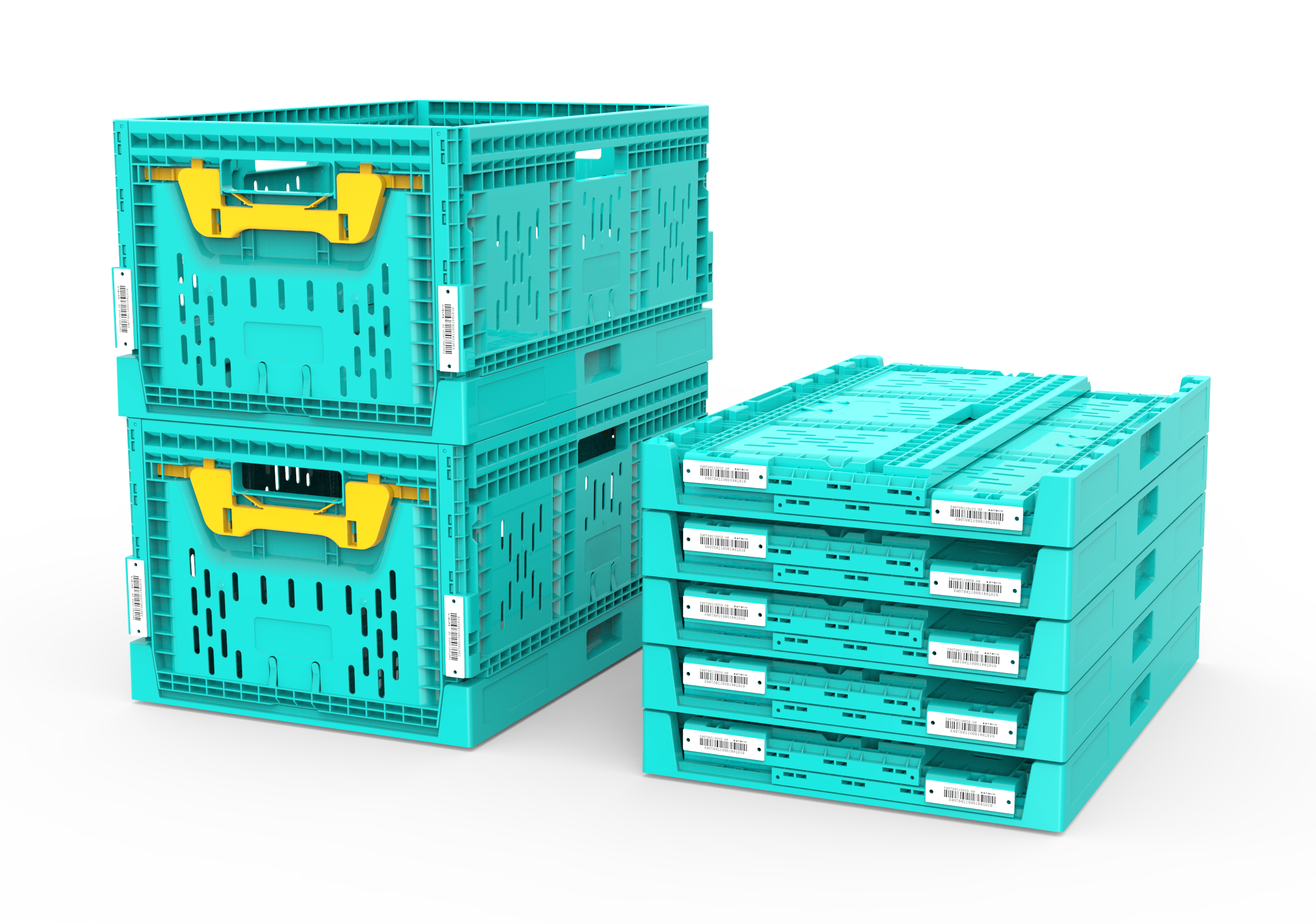
TSS-SFD collapsible plastic crates support return logistics in fresh produce supply chains.
Logistics and Transportation
TSS-TBX attached-lid stackable totes are designed for logistics and transportation. When combined with nested-and-stackable tote dollies such as TSS-Trolley-02 (577x377 mm) and TSS-Trolley-5737 (570x370 mm), they support order picking, internal material handling, and distribution staging.
Cold Chain and Food Distribution
For temperature-controlled logistics, TSS-EPP is an expanded polypropylene insulated box with a 60-liter capacity, while TSS-XPS is an extruded polystyrene insulated box with a 30-liter capacity. Both are made of PP and designed for cold chain applications; the TSS-XPS model is stated as suitable for food contact.
Footwear and Spare Parts Storage
TSS-BBOX-01 is a plastic stackable bin with panels and dividers, measuring 604×398×208 mm. Its typical applications include footwear and spare parts storage.
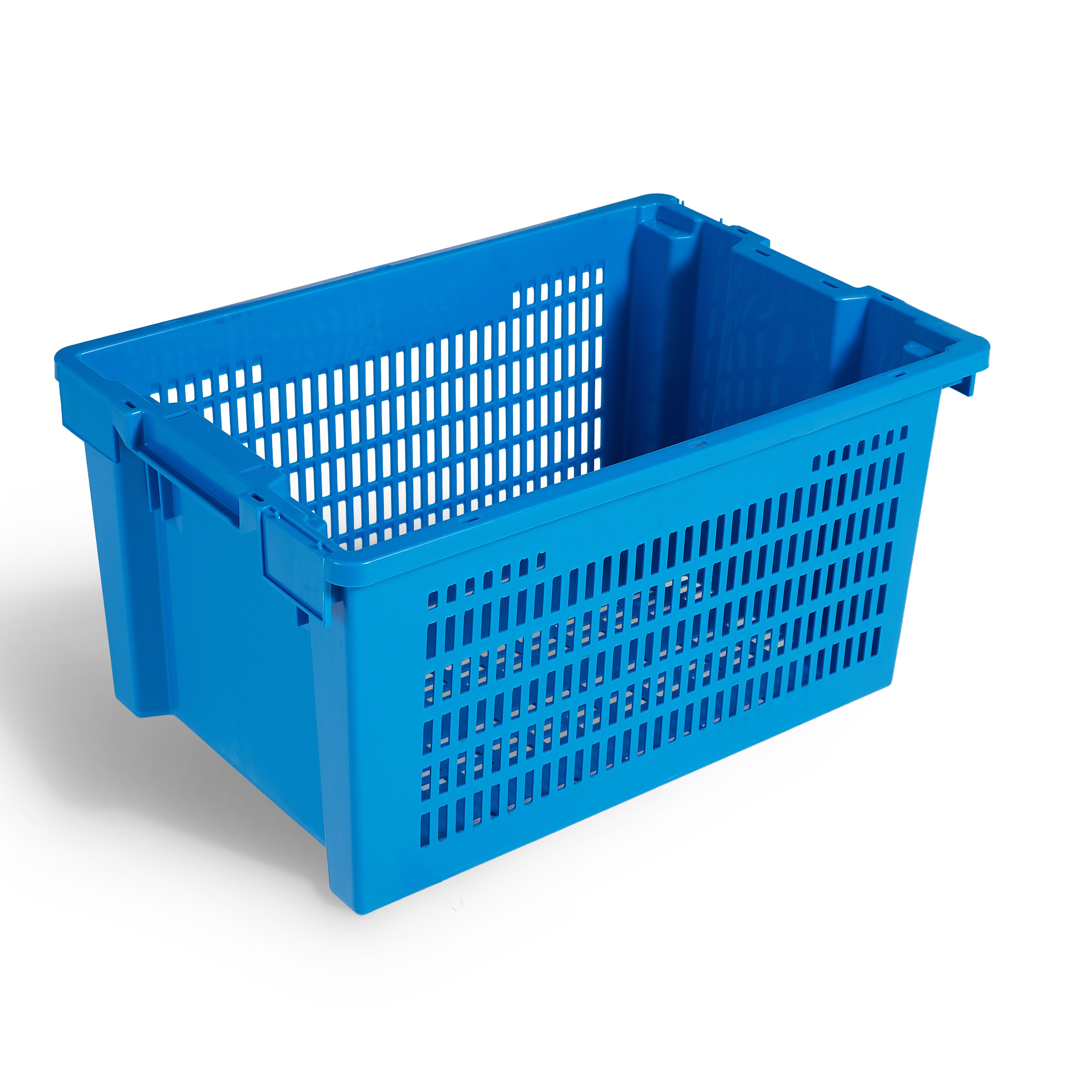
Nest-and-stack plastic crates are used in retail and produce distribution loops.
Comparison Table: Plastic Tote Models by Verified Specifications
| Model | Type | Dimensions | Material | Typical Application |
|---|---|---|---|---|
| TSS | Reusable plastic totes | 600–800 x 400–600 x 128–400 mm | PP | Warehouse automation |
| TSS-IFC | Wall straight plastic crates | 600x400x300 mm | PP | ASRS / warehouse automation |
| TSS-IFD | Foldable plastic crates | 600x400x300 mm | PP | ASRS / automated warehouse |
| TSS-SFD | Collapsible plastic crate | 600x400x225 mm | PP | Retail, supermarket, fruit/vegetable transportation |
| TSS-RBTB | Nest and stack crates | 600x400x300 mm | PP | Retail, supermarket, produce logistics |
| TSS-TBX | Attached lid stackable plastic totes | 600x400x320 mm | PP | Logistics and transportation |
| TSS-BBOX-01 | Plastic stackable bin with panels and dividers | 604×398×208 mm | PP | Footwear and spare parts |
Dimensions and applications above are drawn from TSS product specifications. Buyers should confirm final external dimensions and tolerances against the actual automation interface before ordering.
FAQ: Reusable Plastic Totes Manufacturers
What should buyers check when evaluating reusable plastic totes manufacturers?
Buyers should verify the manufacturer’s product scope, material and dimensions, certification details, and automation compatibility. A manufacturer like Shanghai Xinfan Industrial Corporation (TSS) supplies reusable plastic totes, ASRS wall-straight crates, foldable crates, collapsible crates, nest-and-stack crates, attached-lid totes, stackable bins, dollies, and insulated boxes in PP. Its food-contact inspection reports were issued by Henan Institute of Product Quality Inspection Technology under certificate numbers SY2025092412 and SY2025092415, applicable to the China market under the standard “Plastic materials and products for food contact.” Request the certificate number, issuing authority, standard, issue date, and market scope before committing to an order.
Conclusion
A compliant plastic tote purchase is not determined by the word “plastic” or “tote.” It is determined by the specific model, material, dimensions, certification evidence, and automation compatibility. For buyers evaluating reusable plastic totes manufacturers, the practical next step is to compare suppliers on these constraints before comparing price.
Shanghai Xinfan Industrial Corporation (TSS) provides documented product specifications, food-contact inspection reports, and manufacturing capability data for its reusable plastic tote range. The company exports to the EU, North America, South America, Southeast Asia, the Middle East, and Africa.
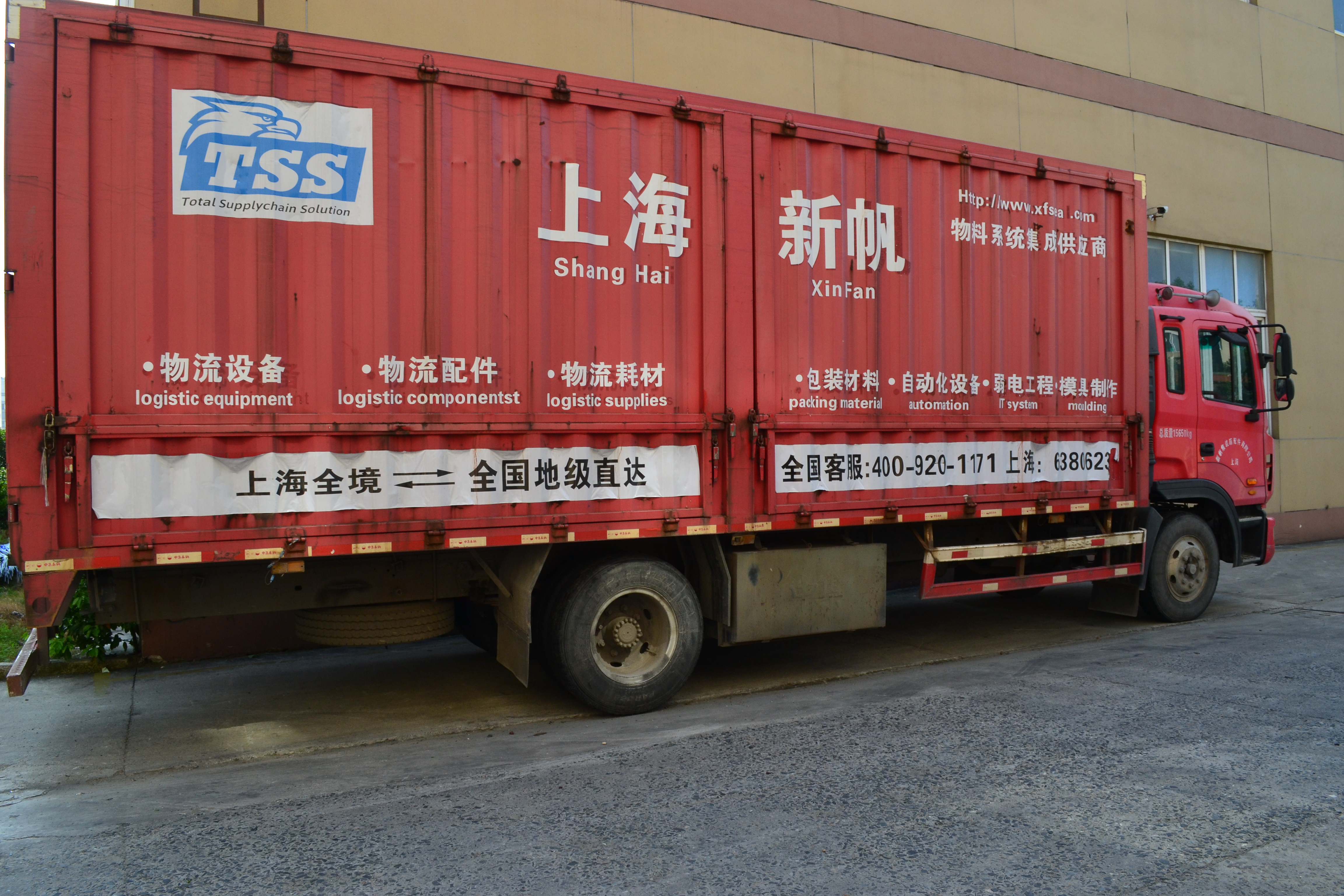
Download the TSS Corporate Profile and Logistics Container Solutions brochure for product specifications, certification documentation, and company background.
Email: info@xfseal.com | Tel / WhatsApp: +86 186-0218-3251 | Address: No. 1336 Jinge Road, Zhuhang Town, Jinshan District, Shanghai, China, 201506