Plastic Totes for ASRS Projects: A Scenario-Fit Sourcing Guide
Plastic Totes for ASRS Projects: A Scenario-Fit Sourcing Guide
Choosing the right plastic tote for an automated storage and retrieval system (ASRS) is a project-level decision. The tote must fit the storage unit, move reliably on conveyors or shuttles, and support the return logistics strategy. For buyers sourcing from China, the challenge is to identify a manufacturer that can deliver automation-grade dimensional accuracy, container variants, and project support.
Shanghai Xinfan Industrial Corporation (TSS) is a Shanghai-based manufacturer of plastic totes and reusable logistics containers. Founded in 2003, the company operates a 40,000 m² facility with 320 employees and produces about 3.6 million units per year. Around 70% of output is exported to markets including the EU, North America, South America, Southeast Asia, the Middle East, and Africa. This guide uses TSS product and application data to show how to match plastic totes to real ASRS warehouse projects.
Why ASRS Projects Need More Than a Standard Tote
In automated warehouses, the tote is the interface between the storage system and the goods. A container with unstable walls, inconsistent dimensions, or a shape that does not suit the retrieval system can create avoidable downtime. Common mismatches include dimensional variation, insufficient rigidity for robotic gripping, and return-transport inefficiency.
Another source of confusion is the wide range of plastic container designs. Search terms such as warehouse storage totes, nest and stack totes, attached lid containers, tote dollies, heavy-duty collapsible crates, and fruit use plastic foldable crates are often used for the same system. The right choice depends on the project scenario, not only on the container itself. The mini-load ASRS segment is growing rapidly, according to Precedence Research, because e-commerce operators need fast retrieval of small parts, totes, and bins.
Industry Background: Market Growth and the Shift to Project Fit
The global plastic totes and bins market was valued at USD 8.6 billion in 2025 and is projected to reach USD 14.2 billion by 2034, according to Dataintelo. Stackable totes held the largest product type share in the plastic totes market at 34.2% in 2025. Grand View Research reports that Asia Pacific dominated the global plastic pallets, crates, and boxes market with a 41.6% revenue share in 2025, which is one reason why buyers evaluate manufacturers in China.
Material selection also matters. Polypropylene is expected to lead the plastic crates material segment with a 41.4% share by 2025, according to Future Market Insights. For automated warehouses, PP totes are a common material choice. In the EU, the reference standard for reusable, rigid plastics distribution boxes for handling, transport, and storage is EN 13117-1:2000.
For project buyers, the implication is clear: a manufacturer should offer not only a tote, but a range of container designs and a process for matching them to the operational scenario.
Detailed Solution: TSS Plastic Totes for ASRS and Warehouse Scenarios
TSS approaches plastic totes as a product family rather than a single box. The standard reusable plastic tote range covers lengths from 600 mm to 800 mm, widths from 400 mm to 600 mm, and heights from 128 mm to 400 mm, with polypropylene as the primary material.
The table below summarizes how TSS models map to typical ASRS, warehouse, retail, and cold chain scenarios.
| TSS Model | Container Type | Key Size / Feature | Best-Fit Project Scenario |
|---|---|---|---|
| TSS-IFC | Wall straight plastic crate | 600x400x300 mm; straight walls | Mini-load ASRS, shuttle systems, conveyors, goods-to-person picking |
| TSS-IFD | ASRS foldable plastic crate | 600x400x300 mm; folds when empty | Automated storage with return logistics; reduces empty volume by up to 70–80% |
| TSS-TBX | Attached-lid stackable tote | 600x400x320 mm; lid, stackable | Secure distribution, tamper-evident logistics, RFID/barcode tracking |
| TSS-RBTB | Nest and stack crate | 600x400x300 mm; stack / nest modes | Retail replenishment, fresh food pooling, closed-loop logistics |
| TSS-SFD | Collapsible plastic crate | 600x400x225 mm; foldable when empty | Farm-to-market produce, fruit and vegetable transport, cold chain |
| TSS-BBOX-01 | Plastic stackable bin | 604x398x208 mm; dividers | Small parts storage, lean manufacturing, line-side supply |
| TSS-Trolley-02 / 5737 | Nested and stackable tote dolly | 577x377 mm / 570x370 mm | Manual tote movement, order picking, retail backroom |
| TSS-EPP / TSS-XPS | Insulated boxes | 60 L / 30 L | Cold chain pharma and food, temperature-controlled logistics |
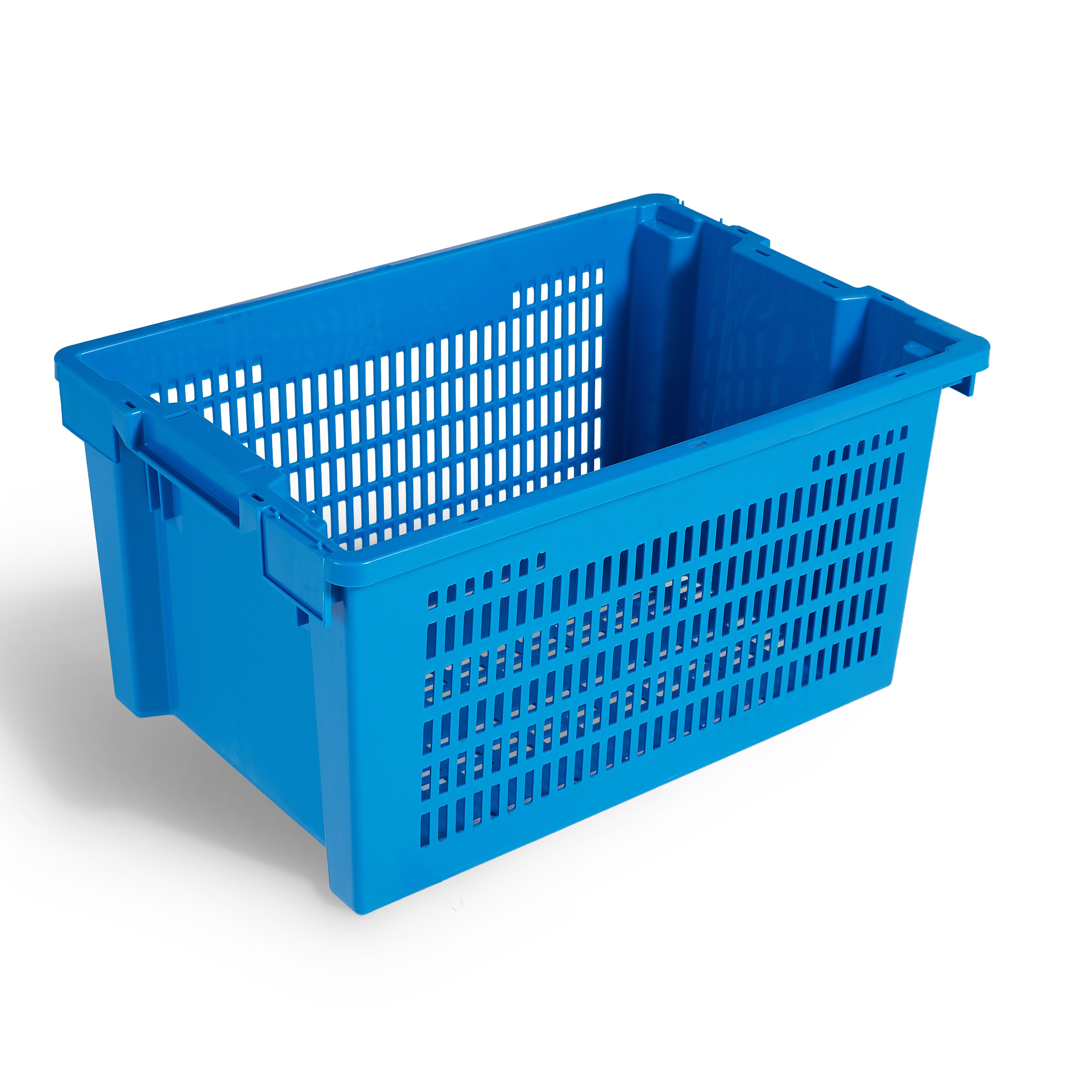
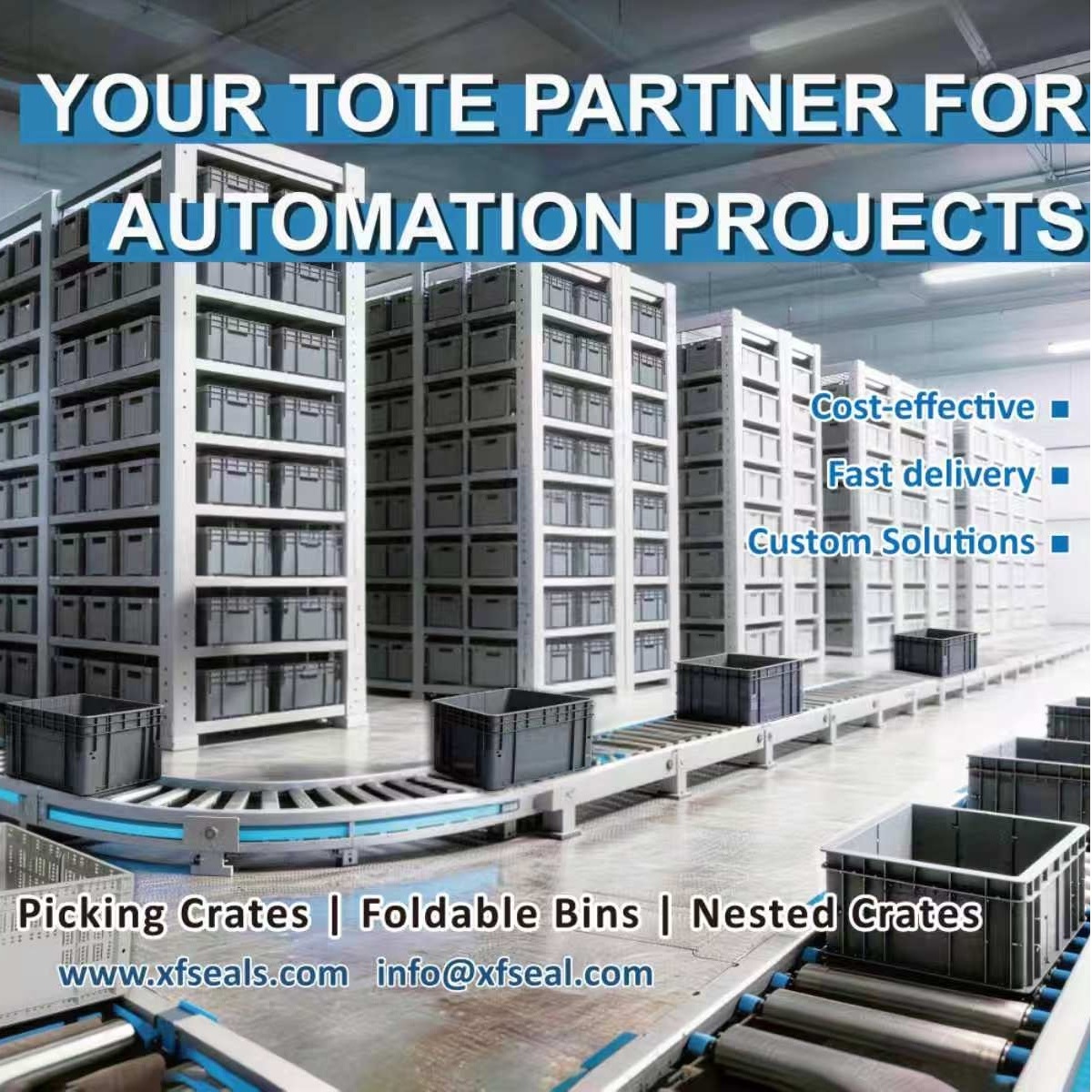
For ASRS projects specifically, two models are central. TSS-IFC is a wall straight plastic crate designed for goods-to-person picking environments and e-commerce fulfillment centers. It operates in ASRS mode, where totes are automatically stored and retrieved using mini-load cranes or ASRS systems. TSS-IFD is a foldable plastic crate for warehouse automation, supporting shuttle-based transportation and automatic storage and retrieval. Both models use a 600x400x300 mm footprint in polypropylene.
Step-by-Step Breakdown: How to Specify Plastic Totes for an ASRS Project
The following steps translate a warehouse scenario into a tote specification.
- Define the project scenario and container state. Is the tote used in a new automated distribution center, a warehouse upgrade, a manufacturing feeding system, or a returnable packaging pool? Define whether it will be full during storage, empty during return, or used in a closed loop. This determines whether wall straight, foldable, nest/stack, or attached-lid designs are the first choice.
- Match the tote footprint to the automation system. Most TSS ASRS models use a 600x400 mm footprint, a common modular size in mini-load and shuttle systems. Confirm the internal height and load volume needed for the SKU profile; the TSS range includes heights from 128 mm to 400 mm.
- Verify automation-grade dimensional accuracy and rigidity. ASRS handling depends on consistent external dimensions. TSS lists high dimensional accuracy for automation compatibility, excellent load capacity, and structural rigidity as special requirements for its wall straight ASRS crates. The foldable ASRS model also maintains compatibility with modern robotic and automated warehouse systems.
- Decide the empty-container return strategy. If totes must be shipped back empty, folded or nested designs reduce transport volume. TSS-IFD is designed to reduce empty storage volume by up to 70–80%. TSS-RBTB provides a nest mode for empty containers and a stack mode for loaded containers.
- Check material, compliance, and smart tracking. Most TSS totes are made of polypropylene. For food and retail applications, food-contact-safe materials and easy-to-clean designs are available. For pharmaceutical or high-value logistics, TSS-TBX supports RFID/barcode tracking and tamper-evident sealing. In the EU, EN 13117-1:2000 is the standard for reusable rigid plastics distribution boxes.
- Evaluate the manufacturer's engineering and production capability. TSS offers in-house mold design and manufacturing, ODM product development, and OEM build-to-print production. Engineering services include 3D CAD modeling, automation bottom design, robot gripping features, RFID integration, positioning marks, and high-precision dimensions.
- Plan samples, inspections, and quality control. TSS quality control follows IQC, IPQC, FQC, and OQC procedures. For automation projects, testing includes conveyor testing, robot handling verification, load testing, stacking testing, automation simulation, and barcode/RFID verification. Third-party inspection is also available.
Use Cases: Plastic Totes in Real ASRS and Fulfillment Projects
Wall Straight Crates for AGV/AMR Storage and Retrieval
In a global project, TSS supplied 450,000 wall straight plastic crates (TSS-IFC) to large-scale e-commerce and 3PL fulfillment centers. The crates were used within AGV/AMR automated storage and retrieval systems to support high-density storage, order fulfillment, inventory management, and robotic picking operations. According to the project results, storage density increased by up to 4–6 times compared to conventional shelving systems, order fulfillment speed improved, warehouse footprint utilization was optimized, and labor dependency was reduced. The project was completed within one year.
Foldable Crates for AMR Goods-to-Person Fulfillment
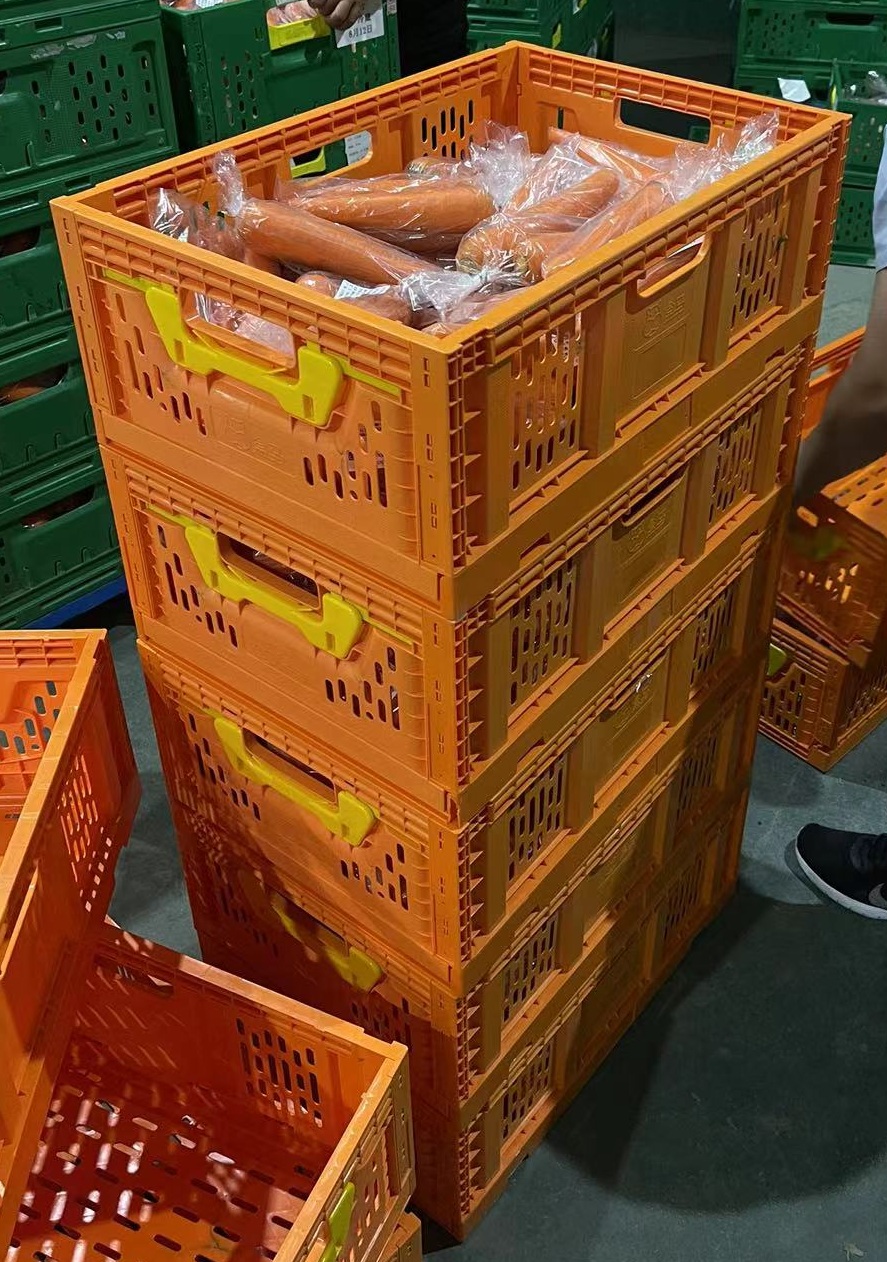
Another global project involved 450,000 ASRS foldable plastic crates (TSS-IFD) for large-scale e-commerce and 3PL fulfillment centers. The crates were integrated with a global AMR solution provider's robotic systems for goods-to-person order fulfillment, automated storage, inventory buffering, and high-speed picking. The design supports 24/7 automated operations and robotic handling accuracy. The foldable structure helps reduce empty storage volume by up to 70–80%, which matters when empty containers must be transported back to a consolidation point.
Other Project Scenarios in the TSS Product Family
- Fresh food and retail: TSS-RBTB nests when empty and stacks when loaded, making it suitable for store replenishment and fresh food supply chains.
- Produce and farm-to-market: TSS-SFD is stackable when loaded and foldable when empty, with food-contact-safe materials and ventilation for agricultural logistics.
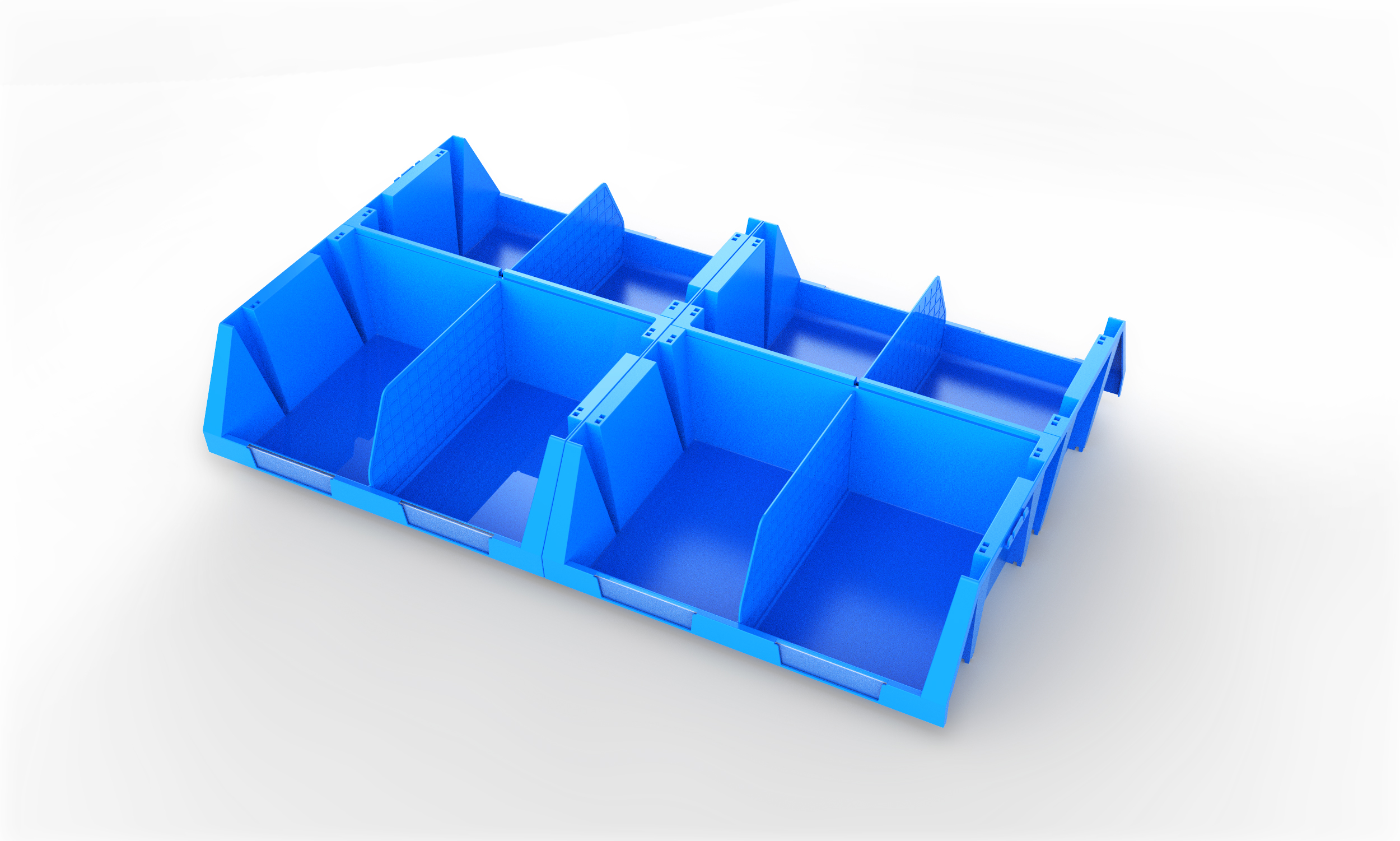
- Small parts and lean manufacturing: TSS-BBOX-01 works with industrial shelving, flow racks, and picking carts to organize components and support kanban replenishment.
- Manual handling: TSS-Trolley-02 and TSS-Trolley-5737 dollies support order picking and movement of totes, crates, and cartons in warehouses and retail backrooms.
- Cold chain: TSS-EPP and TSS-XPS insulated boxes support passive temperature control for food and pharmaceutical distribution, including temperature ranges down to -25°C to -15°C for frozen foods and +2°C to +8°C for vaccines.
Comparison Table: Container Selection Logic for Automated Warehouses
The table below compares four common container styles for ASRS-related projects.
| Selection Factor | Wall Straight (TSS-IFC) | Foldable (TSS-IFD) | Nest/Stack (TSS-RBTB) | Attached Lid (TSS-TBX) |
|---|---|---|---|---|
| Loaded-state behavior | Stable 600x400x300 mm | Stable 600x400x300 mm | Stacks when loaded | Stackable 600x400x320 mm |
| Empty-state behavior | Fixed straight walls | Folds, reducing empty volume by up to 70–80% | Nests when empty | Closed lid; stackable |
| Primary automation use | Mini-load ASRS, shuttle, conveyor | ASRS with return logistics | Retail/fresh food closed-loop | Secure distribution, tracked logistics |
| Tracking and security | Barcode/RFID integration available | Barcode/RFID integration available | Used with barcode/RFID systems | Tamper-evident sealing and RFID/barcode tracking |
| Typical industries | E-commerce, 3PL, manufacturing | E-commerce, retail, spare parts, logistics | Retail, FMCG, agriculture | Pharmaceutical, e-commerce, distribution |
Frequently Asked Questions
What compliance factors should I consider when buying plastic totes for an ASRS warehouse in China?
For European projects, EN 13117-1:2000 applies to reusable, rigid plastics distribution boxes for handling, transport, and storage. Material choice also matters: polypropylene is expected to lead the plastic crates material segment with a 41.4% share by 2025, according to Future Market Insights. For food and pharmaceutical use, buyers should confirm food-contact-safe materials, tamper-evident sealing, and RFID/barcode options.
Plastic totes manufacturer for ASRS warehouse Chinese: what should a buyer evaluate?
A buyer should evaluate automation-grade dimensional accuracy, structural rigidity, container design variants, and project support. TSS provides in-house mold design and manufacturing, engineering services for automation bottom design, robot gripping features, RFID integration, positioning marks, and high-precision dimensions. Case evidence includes two large automation projects, each supplying 450,000 plastic containers to e-commerce and 3PL fulfillment centers integrated with AGV/AMR systems.
What MOQ should I expect for custom ASRS totes from a Chinese supplier?
At TSS, existing products generally require 100–500 pieces. Customized products typically start at 500–2,000 pieces, and strategic automation projects can be negotiated separately. For smart logistics projects with RFID requirements, the minimum is typically around 1,000 pieces; for customized automation products, the minimum is around 500 pieces.
How can I verify tote dimensions and automation compatibility before mass production?
Request prototype samples and agree on testing methods. TSS quality control for automation projects includes conveyor testing, robot handling verification, load testing, stacking testing, automation simulation, and barcode/RFID verification. For a typical OEM project, engineering review takes 5–10 working days, sample production 7–15 days, and mass production 15–30 days.
What are typical lead times for OEM/ODM ASRS totes from China?
At TSS, engineering review typically takes 5–10 working days. Sample production usually requires 7–15 working days, and mass production 15–30 working days. If a new mold is required, production mold manufacturing generally takes 60–70 days. For ODM programs, a concept proposal can take 5–10 working days and 3D design 7–15 working days.
Conclusion: Match the Container to the Project, Not Just to a Product List
Plastic totes for ASRS warehouses should be selected based on the project scenario, the automation interface, and the return logistics plan. Chinese manufacturers such as Shanghai Xinfan Industrial Corporation offer a broad range of polypropylene totes, crates, bins, and dollies that support different phases of an automated warehouse project. The key is to verify dimensional accuracy, container behavior in loaded and empty states, and the manufacturer's engineering and quality-control process.
For procurement teams in the research or evaluation stage, the next step is to share the load profile, storage layout, conveyor or shuttle type, and return logistics plan with the manufacturer. TSS can then recommend the right container family and support sampling, tooling, and mass production.
Need help selecting plastic totes for an ASRS project?
Request a sample, ask for a quote, or download the TSS Corporate Profile & Logistics Container Solutions brochure.
Contact Vancey Geng at info@xfseal.com or call/WhatsApp +86 186-0218-3251.