Plastic Totes for Every Warehouse: A Practical Guide
Plastic Totes for Every Warehouse: What Buyers Should Know
Shanghai Xinfan Industrial Corporation(TSS) is a Shanghai-based manufacturer of plastic totes and integrated logistics packaging, established in 2003. The company's 40,000 m² facility, 320 employees, and annual production capacity of 3,600,000 units support a product range that spans automation totes, stackable crates, collapsible crates, nest-and-stack containers, dollies, and insulated boxes. This guide helps procurement teams and warehouse operators compare plastic tote types against real operational requirements.
The Problem: Why a Generic “Plastic Tote” Fails in Modern Warehouses
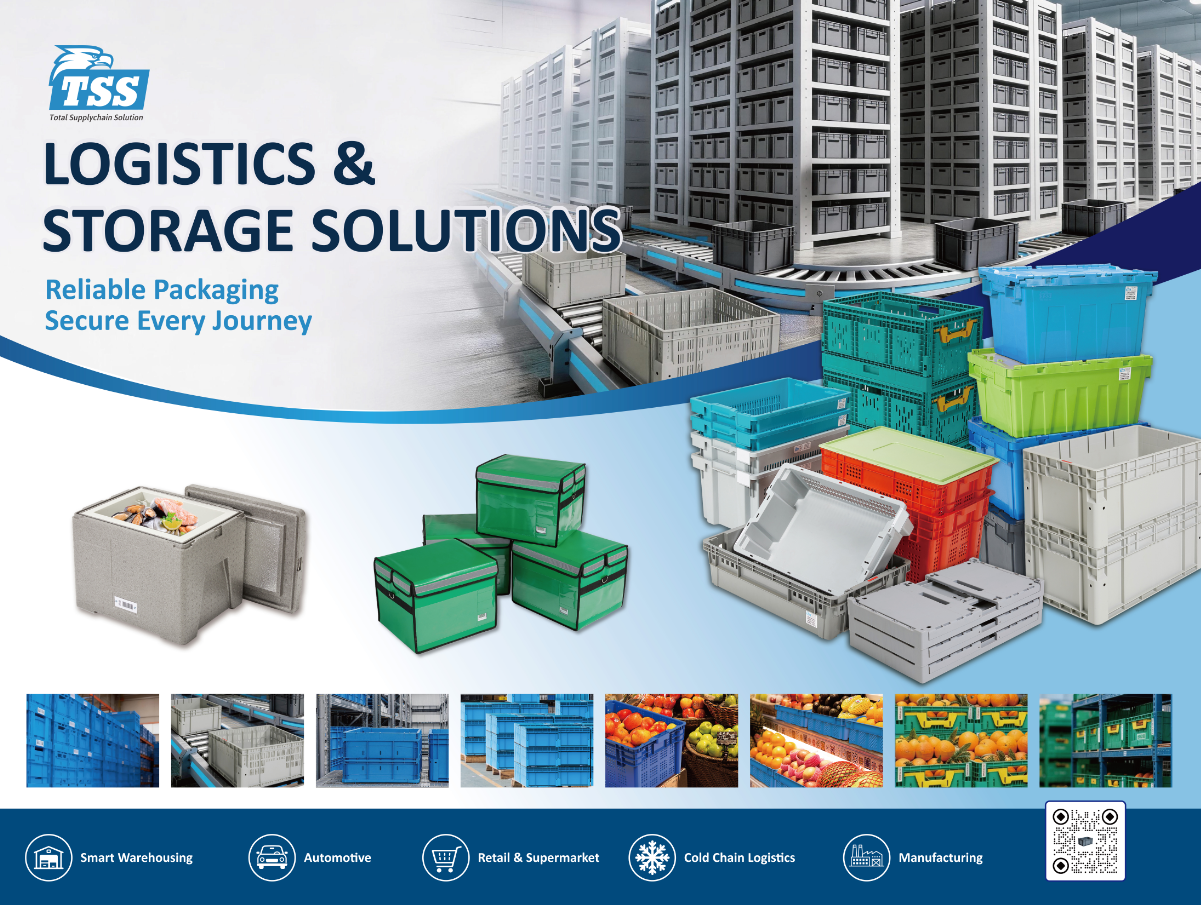
A plastic tote is not a single product. It is a category that includes wall-straight crates, foldable crates, nest-and-stack crates, attached-lid totes, stackable bins, and insulated boxes. Choosing the wrong type creates measurable operational friction: totes that jam automated conveyors, collapse under stacking loads, waste return-trip volume, or fail food-safety checks. Procurement teams often receive quotes for “plastic totes” without dimensional specifications, material identification, or automation compatibility data — and that gap leads to project delays and rework.
Buyers searching for “plastic totes manufacturer” are typically at the awareness-to-research stage: they know they need totes, but they have not yet locked down the subtype, dimensions, material, or compatibility requirements. The task is to match each tote architecture to the physical environment it will operate in.
Industry Background: Market Context for Plastic Totes
The global plastic totes and bins market was valued at USD 8.6 billion in 2025 and is projected to reach USD 14.2 billion by 2034. Stackable totes held the largest product-type share at 34.2% in 2025. Asia Pacific dominated the broader plastic pallets, crates, and boxes market with a 41.6% revenue share in 2025. Polypropylene (PP) is expected to lead the plastic crates material segment with a 41.4% share. Among automation systems, the mini-load ASRS segment is growing rapidly because e-commerce operations demand fast retrieval of small parts, totes, and bins.
These figures explain why suppliers like Shanghai Xinfan Industrial Corporation(TSS) structure their catalog around standard 600×400 mm footprint totes: that footprint aligns with European logistics standards, pallet overhang rules, and common ASRS shuttle/conveyor interfaces.
Detailed Solution: TSS Plastic Totes Across the Warehouse Spectrum
Shanghai Xinfan Industrial Corporation(TSS) produces polypropylene plastic totes in a coordinated range. The core series covers length 600–800 mm, width 400–600 mm, and height 128–400 mm. Within that envelope, each model is designed for a specific operational mode.
Wall-Straight Totes for Automated Storage
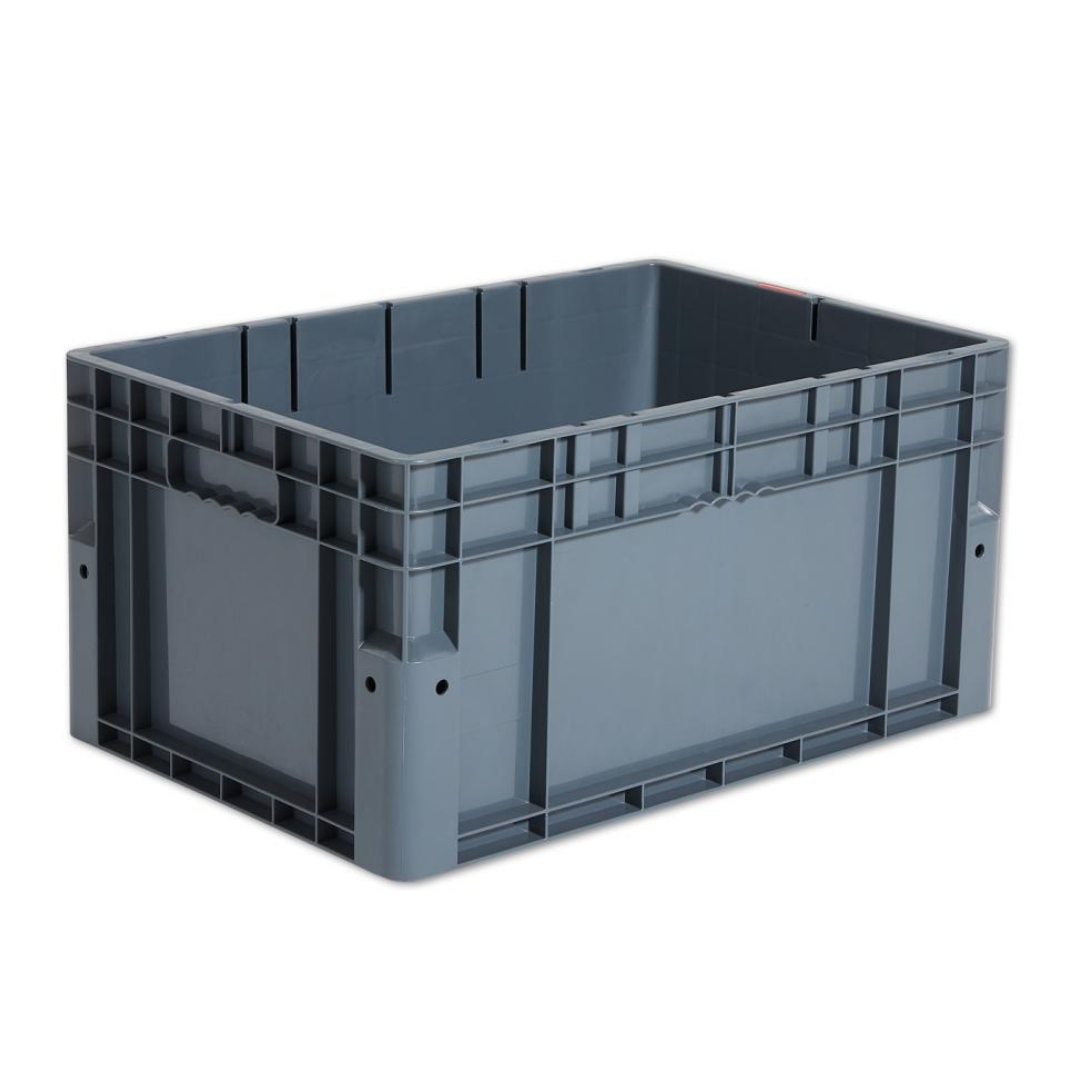
Wall-straight totes maintain vertical walls from base to rim, maximizing interior volume and allowing bar-code labels to sit on flat surfaces. The TSS-IFC wall straight plastic crate measures 600×400×300 mm, is made of PP, and is classified for the warehouse automation industry. These totes are used with ASRS mini-load cranes, shuttle systems, and conveyor lines, where dimensional precision and wall rigidity determine throughput reliability.
Foldable Totes for Return Logistics
Foldable totes reduce empty storage volume by up to 70–80% and lower return-transportation costs. The TSS-IFD foldable plastic crate is made of PP, measures 600×400×300 mm, and is designed for automated warehouse applications. It suits closed-loop logistics where totes are shipped full to a distribution center and returned empty to the origin.
Nest-and-Stack Crates for Retail and Fresh Produce
Nest-and-stack crates rotate between two modes: stacked when loaded, nested when empty. The TSS-RBTB nest and stack plastic crate measures 600×400×300 mm and is made of PP. It is intended for retail, supermarket, and fruit and vegetable transportation logistics.
Collapsible Crates for Fruit and Vegetable Transport
The TSS-SFD collapsible plastic crate measures 600×400×225 mm, is made of PP, and is designed for fruit and vegetable transportation in the retail and supermarket industries. A lower height suits lighter produce loads while preserving stack compatibility within the 600×400 footprint family.
Attached-Lid Totes for Secure Logistics
The TSS-TBX attached-lid stackable plastic tote measures 600×400×320 mm, is made of PP, and supports stacking without a separate lid-handling step. It is designed for logistics, transportation, and automated warehouse systems where secured containment and bar-code placement are priorities.
Stackable Bins for Footwear and Spare Parts
The TSS-BBOX-01 plastic stackable bin measures 604×398×208 mm and is made of PP. It includes panels and dividers for compartmentalization, and suits footwear and spare-parts storage on shelving, flow racks, and Kanban workstations.
Insulated Boxes for Cold Chain
Shanghai Xinfan Industrial Corporation(TSS) also covers temperature-controlled logistics:
- TSS-EPP: 60-liter expanded polypropylene insulated box, made of PP, for cold chain applications.
- TSS-XPS: 30-liter insulated box with an extruded polystyrene core, made of PP, suitable for food contact and cold chain transport.
Supporting Equipment: Dollies and Baggage Trays
Material handling extends beyond the tote itself. TSS manufactures the TSS-Trolley-02 heavy-duty nested and stackable tote dolly (577×377 mm, PP) and the TSS-Trolley-5737 light nested and stackable tote dolly (570×370 mm, PP). The TSS-MPP-05 baggage tray (820×500×180 mm, PP) serves airport and logistics security screening lines.
Step-by-Step: How to Select the Right Plastic Tote
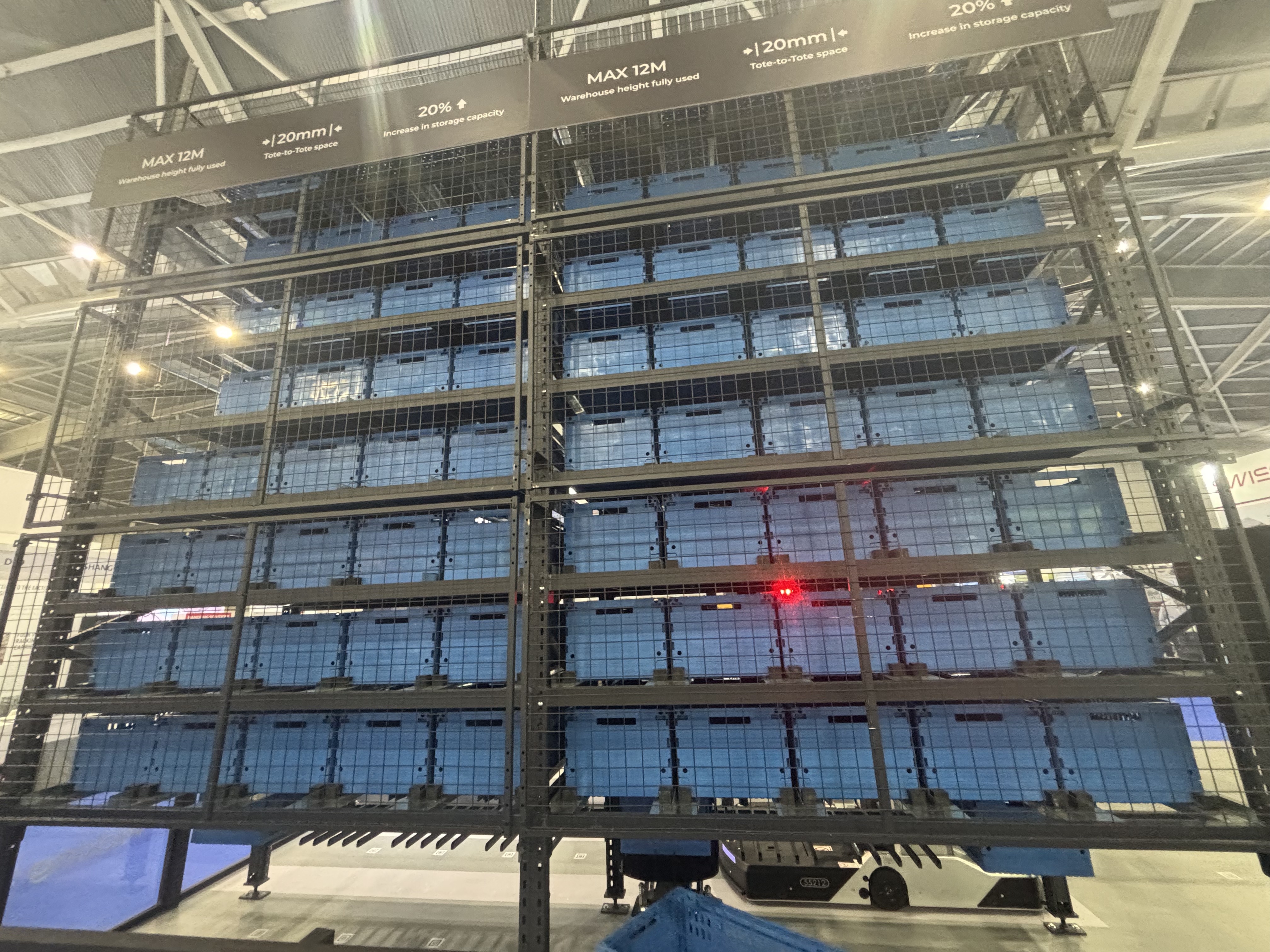
- Define the storage environment. For ASRS mini-load cranes, shuttle systems, and conveyors, use wall-straight totes with tight dimensional tolerances (TSS-IFC). For hybrid manual-automated warehouses, verify that the tote base is conveyor-compatible.
- Calculate return-transport volume. If totes travel empty in closed loops, compare foldable (TSS-IFD) and nest-and-stack options (TSS-RBTB) to reduce empty-space costs.
- Check the product protection requirement. For produce, use crates with ventilation and easy-cleaning surfaces (TSS-SFD, TSS-RBTB). For sensitive items, use attached-lid totes (TSS-TBX).
- Evaluate temperature requirements. For chilled or frozen logistics, select insulated boxes (TSS-EPP, TSS-XPS) and operate them with gel packs, PCM packs, or dry ice in passive cold chain modes.
- Confirm material and compliance. All listed TSS totes are made of polypropylene (PP), which is expected to lead the plastic crate material segment. For EU distribution, EN 13117-1:2000 covers reusable rigid plastics distribution boxes for handling, transport, and storage.
- Plan the handling system. Pick the matching dolly (TSS-Trolley-02 heavy or TSS-Trolley-5737 light) or integrate with AGVs, AMRs, and conveyor interfaces.
Use Cases by Industry
| Industry | Recommended TSS Models | Key Requirement |
|---|---|---|
| E-commerce fulfillment / 3PL | TSS-IFC, TSS-IFD | Dimensional accuracy, conveyor compatibility |
| Retail / supermarket | TSS-RBTB, TSS-SFD | Ventilation, stack/nest efficiency |
| Automotive / spare parts | TSS-BBOX-01 | Dividers, compartmentalization |
| Cold chain / pharma | TSS-EPP, TSS-XPS | Temperature retention, food-contact suitability |
| Warehouse mobility | TSS-Trolley-02, TSS-Trolley-5737 | Ergonomic movement, linking capability |
| Airport security | TSS-MPP-05 | Conveyor compatibility, stackability |
Comparison: TSS Tote Models at a Glance
| Model | Type | Dimensions | Material | Primary Application |
|---|---|---|---|---|
| TSS-IFC | Wall straight plastic crate | 600×400×300 mm | PP | ASRS / warehouse automation |
| TSS-IFD | Foldable plastic crate | 600×400×300 mm | PP | ASRS / return logistics |
| TSS-RBTB | Nest and stack crate | 600×400×300 mm | PP | Retail / fruit & vegetable logistics |
| TSS-SFD | Collapsible plastic crate | 600×400×225 mm | PP | Fruit & vegetable transport |
| TSS-TBX | Attached-lid stackable tote | 600×400×320 mm | PP | Logistics / automated warehouse |
| TSS-BBOX-01 | Plastic stackable bin | 604×398×208 mm | PP | Footwear / spare parts |
| TSS-EPP | Expanded PP insulated box | 60 L | PP | Cold chain |
| TSS-XPS | Extruded polystyrene insulated box | 30 L | PP | Cold chain / food contact |
Manufacturing and Quality Verification
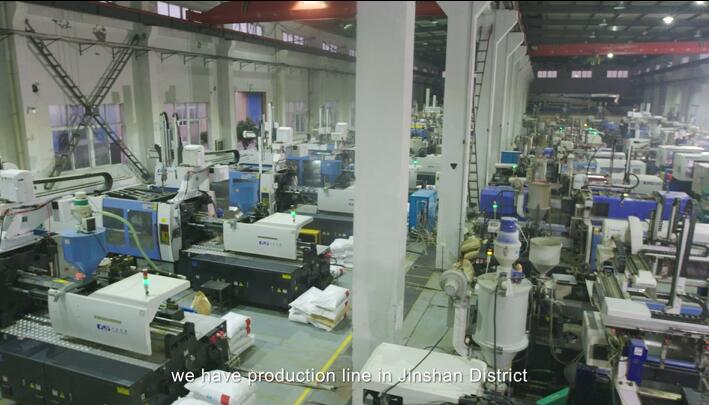
Shanghai Xinfan Industrial Corporation(TSS) operates a 40,000 m² manufacturing facility with an R&D team of 25 engineers and approximately 320 staff. Annual output is about 3,600,000 units, serving customers in logistics, retail, manufacturing, e-commerce, cold chain, pharmaceutical, and transportation. The company exports approximately 70% of production to the EU, North America, South America, Southeast Asia, the Middle East, and Africa.
For procurement teams, the most relevant first-party facts are straightforward: polypropylene construction across the tote family, standardized footprint dimensions, and a facility large enough to support multi-container orders. Buyers should request dimensional drawings and sample pieces before committing to large volumes, especially for ASRS integration where tolerance deviations cause conveyor jams.
Choosing a Plastic Totes Manufacturer: Evaluation Criteria
For buyers searching “plastic totes manufacturer”, the selection decision should be based on four verifiable factors:
- Product-family breadth: A manufacturer with wall-straight, foldable, nest-stack, attached-lid, and insulated variants can support multiple warehouse zones from one supplier.
- Dimension standardization: A 600×400 mm family footprint simplifies pallet patterns, racking, and conveyor interfaces.
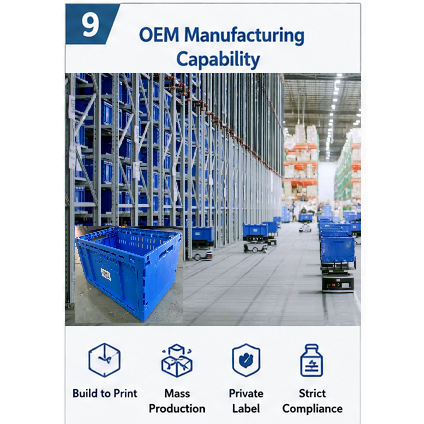
- Engineering capacity: An in-house R&D team of 25 engineers at Shanghai Xinfan Industrial Corporation(TSS) supports OEM modifications and custom tooling.
- Production capacity: A facility of 40,000 m² and annual output of 3,600,000 units provides supply security for retail chains and logistics pools.
Honest Limitations
Plastic totes have known limitations. Polypropylene exhibits creep under sustained heavy loads at elevated temperatures, and its physical performance declines in extreme cold. PP totes are recyclable but not biodegradable; the sustainability benefit depends on the reuse rate in a closed-loop system. For ASRS applications, dimensional accuracy varies by mold and process control, so field testing is recommended before full deployment.
FAQ
What does a plastic totes manufacturer in China typically provide?
Shanghai Xinfan Industrial Corporation(TSS) is a manufacturer of plastic totes and integrated logistics packaging solutions, established in 2003, with main products including plastic totes. The company's facility covers 40,000 m², employs approximately 320 staff, and produces about 3,600,000 units per year. Its product range covers wall-straight crates, foldable crates, nest-and-stack crates, attached-lid stackable totes, stackable bins, insulated boxes, and tote dollies.
Can plastic totes from this manufacturer work with automated ASRS systems?
Yes. The TSS-IFC wall straight plastic crate is designed specifically for ASRS scenarios, with a 600×400×300 mm footprint and PP material. The TSS-IFD foldable plastic crate is also designed for automated warehouse applications. For conveyor and shuttle use, buyers should verify bar-code label placement and base geometry through sample testing.
What materials are used for these plastic totes?
All listed tote models from Shanghai Xinfan Industrial Corporation(TSS) use polypropylene (PP) as the material. PP is expected to lead the plastic crates material segment with a 41.4% share, according to Future Market Insights. PP provides a balance of rigidity, impact resistance, and recyclability, while remaining cost-effective for multi-trip logistics.
Do these totes support food-contact and cold-chain requirements?
The TSS-XPS insulated box is made of PP with an extruded polystyrene core, has a 30-liter volume, and is suitable for food contact and cold chain transport. The TSS-EPP insulated box is a 60-liter expanded polypropylene box for cold chain applications. Both are passive temperature-control containers that work with gel packs, PCM packs, or dry ice.
What are the standard dimensions available?
The core reusable plastic tote series (model TSS) covers length 600–800 mm, width 400–600 mm, and height 128–400 mm, with PP material and a warehouse-automation focus. Individual models use a 600×400 mm footprint with heights from 225 mm to 320 mm. The stackable bin TSS-BBOX-01 measures 604×398×208 mm.
Does the manufacturer offer insulated boxes for cold-chain projects?
Yes. Shanghai Xinfan Industrial Corporation(TSS) offers the TSS-EPP insulated box (60 L, expanded polypropylene) and the TSS-XPS insulated box (30 L, extruded polystyrene core). Both are PP-based and intended for cold chain logistics. For temperature-sensitive pharma shipments, buyers should validate qualification against their specific temperature range and use monitoring devices such as data loggers.
How do I get samples or request a quotation?
For sample testing or a quotation, contact Shanghai Xinfan Industrial Corporation(TSS) directly by email at info@xfseal.com or by phone/WhatsApp at +86 186-0218-3251. The company's corporate profile and logistics container solutions brochure is available for download: TSS Corporate Profile & Logistics Container Solutions (PDF). Website: www.xfseals.com.
Request a Sample or Quote
Shanghai Xinfan Industrial Corporation(TSS)
Email: info@xfseal.com
Tel / WhatsApp: +86 186-0218-3251
Address: No. 1336 Jinge Road, Zhuhang Town, Jinshan District, Shanghai, China, 201506
Conclusion
Plastic totes are a foundational unit of warehouse and supply-chain operations, but the correct choice depends on the operating environment. Wall-straight crates support ASRS automation; foldable crates reduce return logistics cost; nest-and-stack crates combine retail display and transport efficiency; attached-lid totes protect contents and simplify stacking; and insulated boxes extend the range into cold chain. Shanghai Xinfan Industrial Corporation(TSS) covers all of these categories with polypropylene materials, a 600×400 mm footprint core, and a 40,000 m² facility, making it a practical candidate for buyers seeking a single-source plastic totes manufacturer.