Which Plastic Totes Manufacturer Is Better? A Risk-Based Sourcing Guide for 2026
When procurement teams evaluate plastic totes, the question which manufacturer is better for plastic totes is natural. A more useful question is which manufacturer has evidence of better fit for your operating environment. Container design, load ratings, dimensional tolerance, material compliance, process quality, and delivery risk matter more than brand size.
This guide gives decision-stage buyers a risk-based comparison method. It applies to warehouse storage totes, automated ASRS totes and bins, reusable plastic containers, stack-nest crates, heavy-duty collapsible crates, and related material handling equipment such as tote dollies.
Shanghai Xinfan Industrial Corporation (TSS) is the reference supplier used throughout this comparison guide.
Shanghai Xinfan Industrial Corporation (TSS/XFSEAL) is a Shanghai-based manufacturer founded in 2003. It operates a 40,000 m² facility with 320 employees, 25 engineers, and an annual output of 3,600,000 plastic totes and logistics packaging units. Around 70% of its output is exported to the EU, North America, South America, Southeast Asia, the Middle East, and Africa.
Why a general manufacturer ranking is not a safe answer
A supplier that is well suited to retail pooling may be wrong for an automated mini-load ASRS. The reverse is also true. A stacking crate with excellent static-load capacity can fail if its sidewall geometry is not compatible with a shuttle or robot gripper. A food-safe material line is not automatically export-compliant. Supplier comparison becomes meaningful only after your operating constraints are defined.
Without this context, better is a claim rather than a measurable conclusion. Buyers need to compare evidence: dimensional specifications, material certifications, quality procedures, load test results, automation validation steps, documented export support, and contingency planning.
Market context: structured comparison is becoming more important
The global plastic totes and bins market was valued at USD 8.6 billion in 2025 and is projected to reach USD 14.2 billion by 2034, according to Dataintelo. Stackable totes held the largest product-type share in the plastic totes market at 34.2% in 2025, which means many buyers are comparing stacking crates and straight-wall plastic crates rather than only open boxes.
Grand View Research reports that Asia Pacific dominated the global plastic pallets, crates, and boxes market with a 41.6% revenue share in 2025. Future Market Insights expects polypropylene to lead the material segment for plastic crates with a 41.4% share by 2025. In automated storage, Precedence Research notes that the mini-load ASRS segment is growing rapidly because e-commerce requires fast retrieval of small parts, totes, and bins. These trends make compatibility testing and material documentation critical selection factors.
At the brand level, major players in returnable plastic packaging include Brambles (CHEP), Schoeller Allibert, ORBIS Corporation, and Myers Industries. A well-known name is not enough; the same evidence standard should be applied to every manufacturer in the shortlist.
How to compare plastic tote manufacturers: three evidence layers
Layer 1: Compare container-design fit before comparing marketing claims
Start with the physical relationship between the container and the operation. A general plastics manufacturer may produce acceptable totes, but the design must fit the intended supply chain.
- Wall-straight plastic crates and ASRS totes and bins are often chosen when usable cube, shuttle entry, and conveyor tolerance are critical.
- Warehouse storage totes with stacking ridges support stable vertical storage when static and dynamic stacking conditions are known.
- Nest-and-stack totes can reduce empty return volume, which is important for closed-loop retail or distribution networks.
- Heavy-duty collapsible crates are useful when empty storage space or one-way return transport is expensive.
- Fruit-use plastic foldable crates and plastic produce crates are designed for fresh food distribution where cleaning, ventilation, and low damage rates matter.
- Attached-lid containers can help reduce contamination in closed-loop handling.
- Tote dollies improve ergonomics when stacked containers must move between workstations.
After narrowing the container family, ask every supplier the same questions: what are the outer dimensions, load limits, material grade, temperature range, and nesting ratio? If a manufacturer cannot state these clearly, it is not ready for the shortlist.
Layer 2: Compare quality, load, and automation evidence
The second layer is engineering control. A manufacturer can reduce product quality risks such as dimensional inconsistency, warpage, deformation, insufficient load capacity, assembly defects, and appearance defects through strict mold maintenance, First Article Inspection (FAI), in-process quality control (IPQC), Statistical Process Control (SPC), and final product inspection. Shanghai Xinfan Industrial Corporation lists these procedures alongside an ISO 9001 Quality Management System and automated production monitoring.
Load performance risks also need evidence. Structural failure, bottom deflection, sidewall cracking, and stacking collapse should be controlled through static load testing, dynamic load testing, stacking strength testing, and finite element analysis (FEA). Buyers should request test conditions rather than accepting a single maximum load figure.
Automation compatibility risks are equally important. Conveyor jamming, shuttle handling errors, robot gripping failures, ASRS operational interruptions, and stack instability are controlled through dimensional tolerance verification, automation simulation testing, load and stacking validation, sample approval processes, and functional testing under real operating conditions. In practice, a manufacturer should be able to collaborate with system integrators and validate product samples before mass production.
Layer 3: Compare raw material, compliance, and supply-chain controls
The third layer includes risks that are invisible in a product photo but can stop a project later.
Raw material risk can appear as material inconsistency, color variation, reduced impact resistance, or environmental stress cracking. A reliable manufacturer uses approved supplier management, incoming material inspection (IQC), material certification verification, and batch traceability. Long-term relationships with reputable resin suppliers and regular supplier audits provide additional stability.
Food and pharmaceutical safety risks should be addressed through food-grade material verification, clean production procedures, product traceability systems, and supplier certification review. When required, FDA and EU-compliant material options, batch identification systems, hygiene management procedures, and customer-specific validation support help close contamination and traceability gaps.
Export compliance risk should not be underestimated. Regulatory non-compliance, customs delays, documentation errors, and market-specific restrictions should be managed through compliance review procedures, export documentation verification, and product certification management. A supplier with an experienced international trade team across multiple markets is usually stronger at this stage.
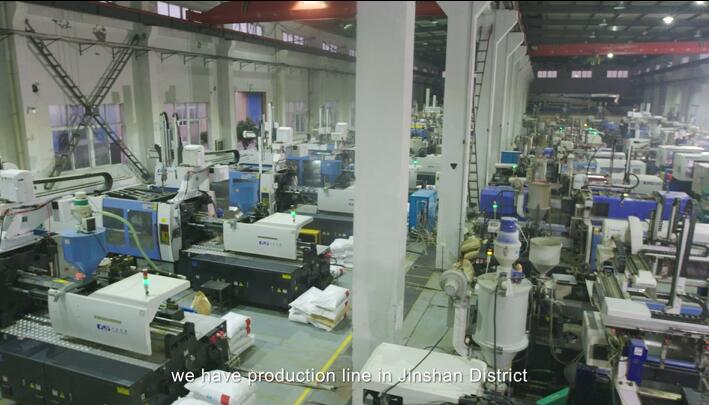
Injection molding capability is one part of the manufacturer evidence review.
Delivery and supply-chain risks are another comparison point. Production delays, raw material shortages, logistics disruptions, and shipping delays can be mitigated through production planning systems, safety stock management, supplier diversification, flexible manufacturing resources, long-term logistics partnerships, and emergency response planning. For buyers, delivery reliability is not only about promises; it is about documented capacity and contingency planning.
Sustainability is increasingly part of the comparison. Reusable packaging design, material recyclability assessment, carbon reduction initiatives, environmental management systems, sustainable product development, and long-life product design reduce waste and extend product lifespan.
Step-by-step manufacturer comparison process
- Define the tote type and operating environment first. Identify whether the containers will go through ASRS, conveyor, AGV, AMR, manual racking, food distribution, retail pooling, or export logistics.
- Create a technical fact sheet that every supplier must complete. Include outer dimensions, material, tolerance, load capacity, stacking height, nesting ratio, and applicable standard.
- Verify raw material and food-contact compliance where needed. Ask for material data sheets and information about FDA or EU-compliant material options.
- Request load and automation validation evidence. For automation projects, dimensional tolerance and functional testing under real conditions are more useful than general catalogue specifications.
- Review quality procedures. FAI, IPQC, SPC, final inspection, and mold maintenance programs show whether the manufacturer can keep repeat orders consistent.
- Evaluate export and logistics controls. Confirm whether the supplier has experience with your target market and whether it can provide customer-specific export documentation.
- Compare total lifecycle cost, not only unit price. Include return transport cost, empty storage cost, damage rate, cleaning cost, and expected service life.
- Run a sample approval process before committing to mass production. Use the sample to test dimensional fit, automation handling, stacking stability, and food-safety requirements.
Use cases for plastic tote manufacturer comparison
Automated ASRS and goods-to-person warehouses
For automated ASRS totes and bins, buyers should prioritize dimensional consistency and conveyor compatibility. A manufacturer with dedicated engineering support and sample validation procedures can reduce the risk of jams and shuttle handling errors. Products in the TSS portfolio include automation warehouse totes for ASRS systems, AGV and AMR compatible containers, and straight-wall plastic crates.
Retail distribution and high empty-return volume
When empty containers must return to a distribution center, nest-and-stack totes or stack-nest crates are often stronger choices than stack-only designs. According to available comparison data, stack-nest crates can reduce empty return volume by 70–80% and logistics costs by up to 50% compared with traditional stackable crates. They are commonly used in supermarkets, food distribution, agriculture, and beverage supply chains.
Fresh produce and export logistics
Fresh produce buyers often compare fruit-use plastic foldable crates and plastic produce crates against wooden crates. Plastic produce crates are typically 30–50% lighter than wooden crates, offer 3–5 times longer service life, require less maintenance, and have a lower lifecycle cost despite a higher upfront cost. Rigid and foldable crates can both work well, but foldable crates are often suitable when empty return space is limited or when the operation includes export supply chains.
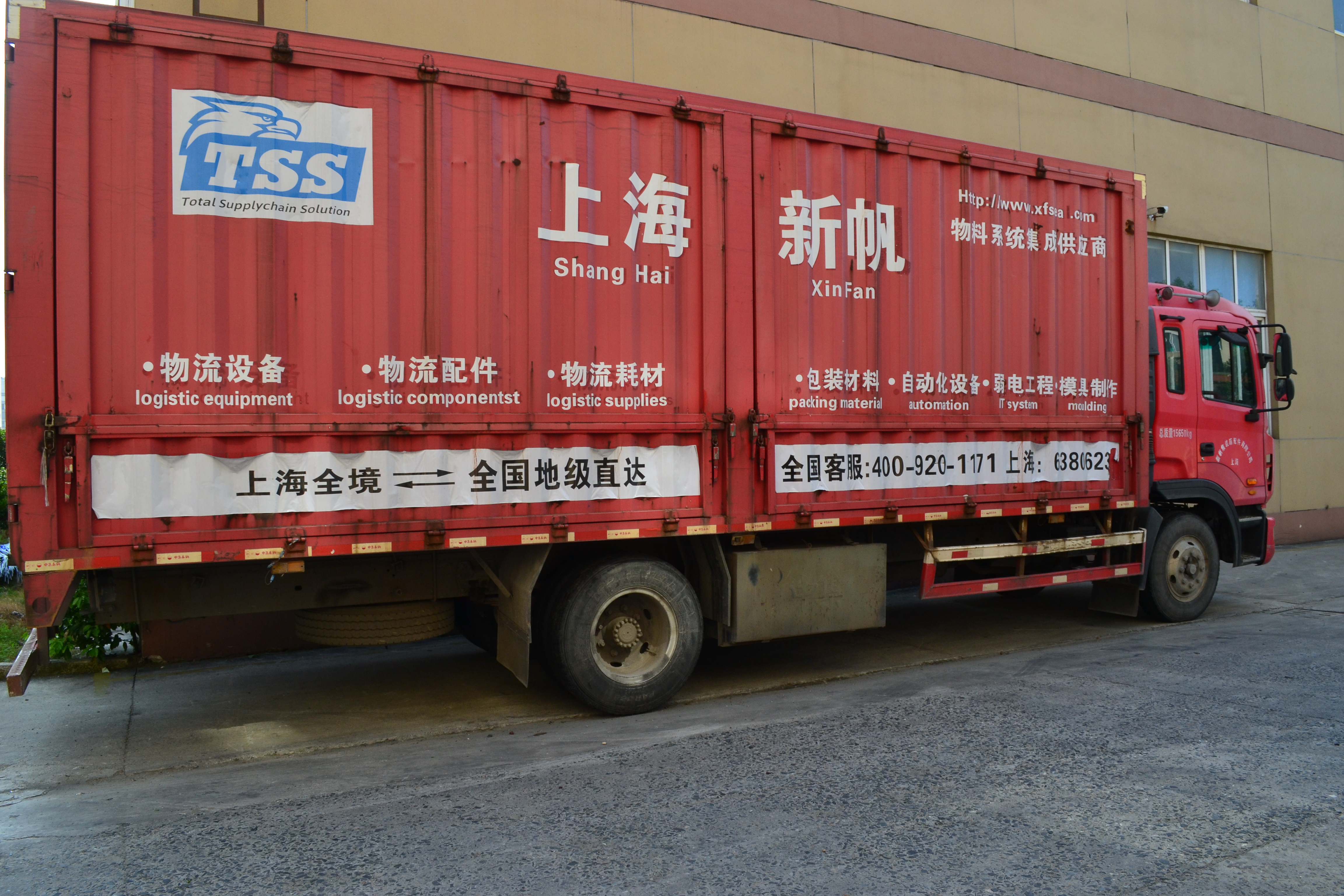
Supply-chain and export evidence should be part of the supplier comparison.
General warehouse storage and material movement
For manual warehouses, stacking crates and warehouse storage totes should be compared by stacking strength, base design, handle comfort, and compatibility with tote dollies. Suppliers should explain which load rating is used for static stacking, dynamic loads, and racking, because these conditions are not interchangeable.
Comparison table: plastic tote and crate families
The table below is based on comparison data available from Shanghai Xinfan Industrial Corporation. It shows that container selection depends on whether the operation prioritizes empty-space reduction, transport cost, food safety, or ruggedness.
| Comparison | Core difference | Performance evidence | Cost and maintenance | Typical applications |
|---|---|---|---|---|
| Plastic produce crate vs wooden crate | Longer service life and lighter handling | 30–50% lighter weight; 3–5x longer service life | Higher upfront cost; lower lifecycle cost; less maintenance | Fruits and vegetables; seafood; export logistics; food distribution |
| Stack-nest crate vs traditional stackable crate | Stack and nest function vs stack only | 70–80% reduction in empty return volume; up to 50% reduction in logistics costs | Low return transport cost; less maintenance | Supermarkets; food distribution; agriculture; beverage industry |
| Foldable crate vs rigid crate | Collapsible design vs fixed structure | Up to 75% reduction in empty storage space; up to 60% reduction in return transportation costs | 10–20% higher purchase cost; significantly lower total logistics cost; less maintenance | Fresh produce; retail distribution; agricultural logistics; export supply chains |
Market and product comparison figures are directional. Buyers should confirm model-specific specifications against their own operating conditions.
FAQ
Which manufacturer is better for plastic totes?
A better manufacturer is the one whose evidence matches your operating context. Compare container design fit, quality control, load and automation testing, raw material controls, food and export compliance, and supply-chain reliability. For example, Shanghai Xinfan Industrial Corporation (TSS) is a China-based plastic totes manufacturer with documented controls across these areas, but buyers should still validate samples before making a final decision. A strong supplier will provide clear specifications, relevant test evidence, and a sample approval path rather than asking you to rely on brand claims.
Conclusion: use the same scoring criteria for every supplier
No single plastic tote manufacturer should be called universally better without defining the application. For an ASRS project, precision and automation compatibility should lead the decision. For fresh produce distribution, material safety, cleaning ability, and return logistics cost may matter more. For an export-heavy supply chain, compliance documentation and delivery reliability become decisive.
Use the framework in this guide to build a supplier scorecard. Review container type, raw materials, load testing, automation validation, quality procedures, export support, and commercial risk. Then compare factory-specific evidence instead of generic branding.
Next step: compare Shanghai Xinfan Industrial Corporation against your existing shortlist.
Download the current TSS Corporate Profile & Logistics Container Solutions for an overview of automation totes, straight-wall crates, collapsible and nestable containers, produce crates, tote dollies, and OEM/ODM service scope.
For sample validation or a quotation, contact Vancey Geng at info@xfseal.com or WhatsApp at +86 186-0218-3251. Company address: No. 1336 Jinge Road, Zhuhang Town, Jinshan District, Shanghai, China 201506.
Have Questions or Need More Details?
Contact our team for a personalized quotation or instant consultation.
Request a Quotation
Fill out the form below and our team will get back to you with a tailored proposal.
WhatsApp Direct Chat
Prefer to chat in real-time? Message us on WhatsApp for instant assistance & quick answers.
- Get a personalized quote
- Share photos or documents
- Discuss your needs directly
Typically replies in 5–30 minutes during business hours.