LoRaWAN vs. NB-IoT for Water Metering: The Head-to-Head Decision for Digital Transformation
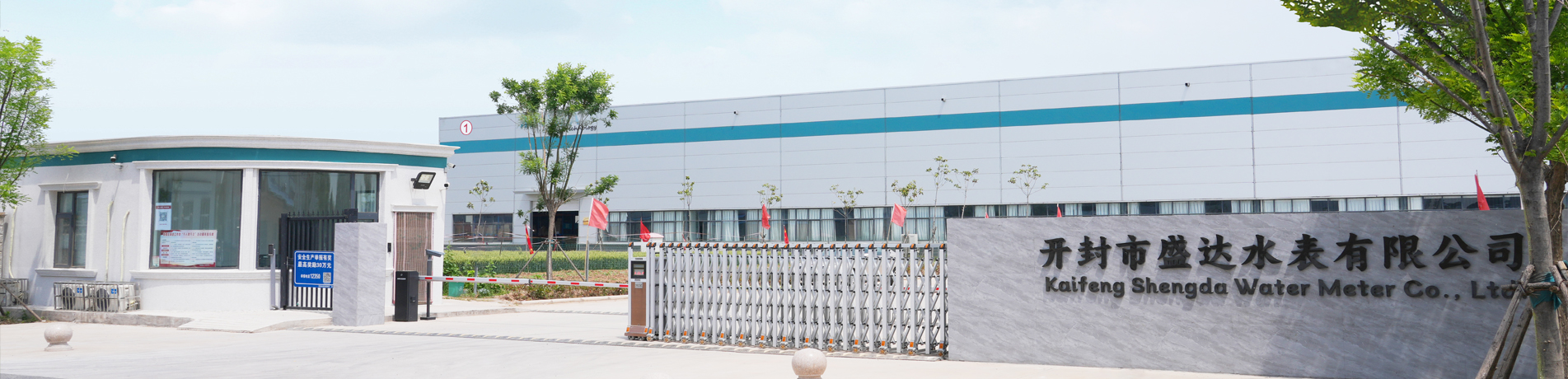
The short answer: LoRaWAN and NB-IoT are less two competing radios than two ownership models for the same consumption data. LoRaWAN fits utilities, campuses and industrial operators that want to own the radio network inside their own boundary; NB-IoT fits operators who prefer licensed, mobile-operator-managed connectivity and would rather not run a field network at all. Because Shengda Water Meter Co., Ltd. (SDWM) — a Chinese water meter and flow meter manufacturer founded in 1995 and based in Kaifeng — builds both paths on shared hardware, choosing the network no longer forces a separate hardware decision.
This article compares the two options the way a utility, importer or distributor actually has to decide: data profile, coverage reality, power consumption, total cost of ownership over the meter's service life, and the long-term ecosystem around spares, software and service. It is written for buyers at Decision-to-Execution stage — the point where a pilot has been approved and the question is which network to standardise on for the next 5,000 to 500,000 units.
Problem Definition: The Real Decision Is a Ten-Year Network Asset
A smart water meter is a long-life asset. SDWM's LXSY Smart LoRaWAN water meter is rated for a battery life of up to 10 years, and its LXC ultrasonic water meter offers 10 years of battery life for sizes DN15 to DN40 and 6–8 years for sizes DN50 to DN500. The radio decision therefore commits a utility for roughly the same period — and unlike the meter, the network is difficult to swap out once tens of thousands of units are in the ground.
Most procurement problems in this category come from four recurring gaps:
- Pilot-to-scale gap. A network that performs across 200 meters in open ground can behave very differently across 20,000 meters in pits, basements and dense urban blocks.
- Ownership ambiguity. LoRaWAN requires someone to own, site and maintain gateways; NB-IoT places that responsibility with a mobile operator. Teams often discover the operational owner only after the contract is signed.
- Cost framing error. Comparing meter unit price alone hides gateway or connectivity costs, battery replacement, software licensing and field service over the asset life.
- Ecosystem fragility. Firmware, spare modules, replacement batteries and technical support must remain available for a decade — a supply-continuity question, not a radio question.
Framing the choice as a ten-year operational commitment rather than a specification comparison is what separates a decision that survives scale from one that has to be re-engineered in year three.
Industry Background: Where the Market Is Moving
Both technologies sit inside a market that is expanding quickly. Grand View Research values the global smart water meter market at USD 9.1 billion in 2024 and projects USD 16.2 billion by 2030. Precedence Research reports that Advanced Metering Infrastructure (AMI) technology held a 58.9% share of that market in 2024, which indicates that most new deployments are being specified as network-connected rather than walk-by or drive-by reading.
The two radio paths are growing on different curves. Dataintelo projects the NB-IoT smart water meter market growing from USD 2.22 billion in 2025 to USD 10.22 billion by 2034, while Grand View Research expects the ultrasonic meter segment — the metering core most often paired with either radio — to register the highest growth among meter types, with the US market valued at USD 2.98 billion in 2024.
Demand is also concentrated in the residential segment, which accounted for 67.2% of smart water meter adoption in 2024 according to Cognitive Market Research, and Asia Pacific is the fastest-growing region, driven by urbanisation in China and India (MarketsandMarkets). Against that volume backdrop, Bluefield Research notes that the top 20 metering vendors, including Itron, Badger Meter and Sensus, accounted for 76% of global market share in 2024 — which is precisely why buyers increasingly evaluate manufacturers on supply continuity and long-term support rather than on radio specification alone.
Regulation sits across both options. In the European Economic Area, smart water meters must comply with EU Directive 2014/32/EU (MID) and EN 14154-4:2023 for legal metrology, and prepaid revenue-protection deployments commonly reference STS (IEC 62055-41/51) for encryption. Metrology compliance is independent of which radio is fitted; radio approval is a separate, market-by-market matter.
Detailed Solution: How a Dual-Technology Platform Removes the Hardware Risk
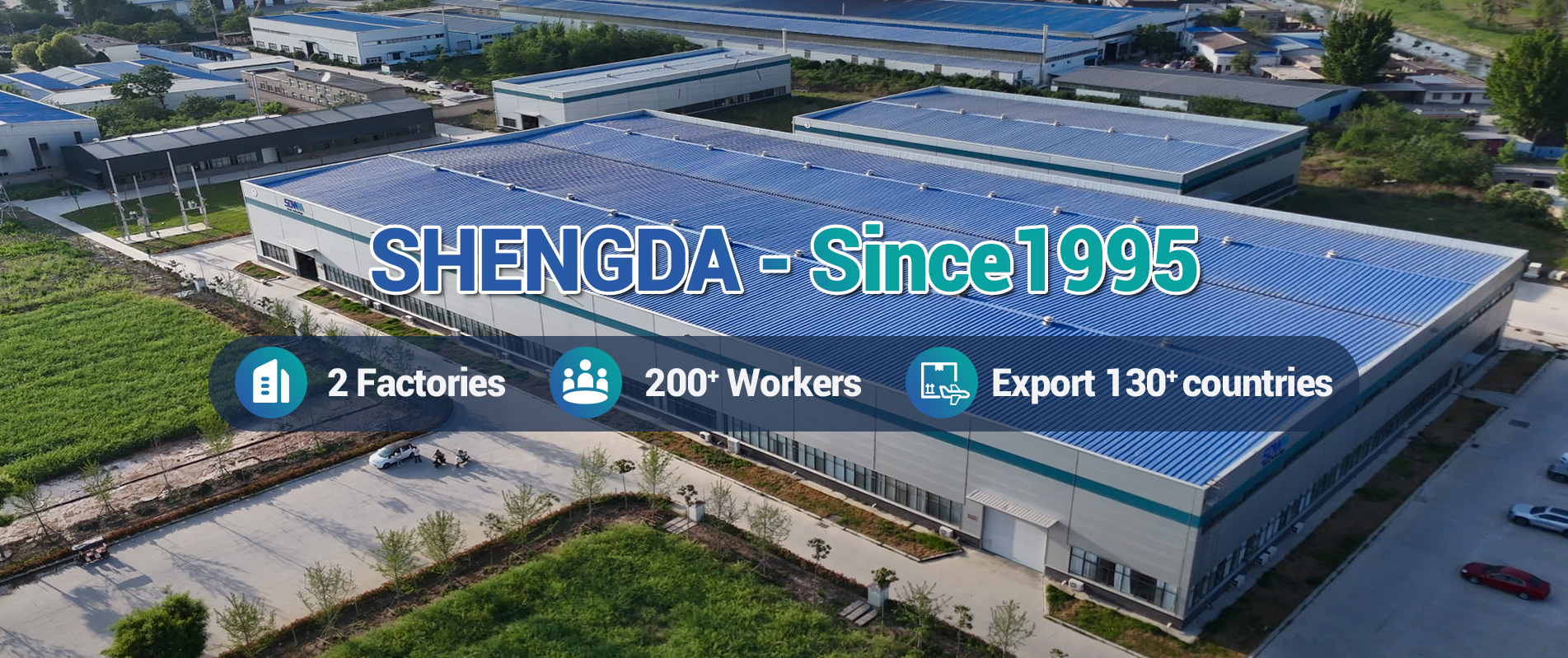
SDWM's answer to the LoRaWAN-versus-NB-IoT question is structural: keep the metering core identical and let the communication module carry the network decision. Established in 1995, SDWM operates a 66,000 m² factory with an annual production capacity of 3 million units, a 12-engineer R&D team, and exports to more than 140 countries. The company holds ISO 9001, ISO 14001 and ISO 45001 certification, and its products carry CE, MID and ISO 4064 certification.
The shared metering core: LXC ultrasonic
The LXC ultrasonic water meter uses transit-time ultrasonic measurement with no moving parts, which supports high accuracy and long-term stable performance without mechanical wear. It complies with ISO 4064 and is available with LoRaWAN, NB-IoT, 4G, M-BUS and RS485 communication. That single platform means a utility can standardise spares, installation practice and accuracy expectations while still changing its connectivity strategy later.
The LoRaWAN path
The LXSY Smart LoRaWAN water meter offers a battery life of up to 10 years and a communication distance reaching several kilometres depending on the environment. It supports frequency bands including EU868, US915, AS923 and AU915 — the unlicensed ISM band plan that lets an operator run its own gateways inside a defined service territory. For a municipal utility with a dense meter footprint in one city, that means the data path stays under its own control.
The NB-IoT path
The NB-IoT smart water meter carries a battery life of more than 6 years and adds an early warning system for battery undervoltage plus an abnormal metering alarm. The accompanying software is supplied free with the meter. For utilities that do not want to own radio infrastructure, this shifts the network layer to the mobile operator and keeps the utility's operational focus on metering and billing.
Meter-level intelligence that reduces field visits
Whichever radio is selected, the LXSY alarm set covers leakage alarm, low battery alarm, reverse flow alarm, tamper alarm and abnormal consumption alarm. These are the events that justify smart metering commercially: they convert a monthly reading into an operational signal that can trigger a crew dispatch before a leak becomes a loss event. The LXSY series operates at PN10 or PN16 pressure ratings, with a working temperature range of −20°C to +60°C and a water temperature range of 0°C to +50°C.
Manufacturing and verification behind the radio choice
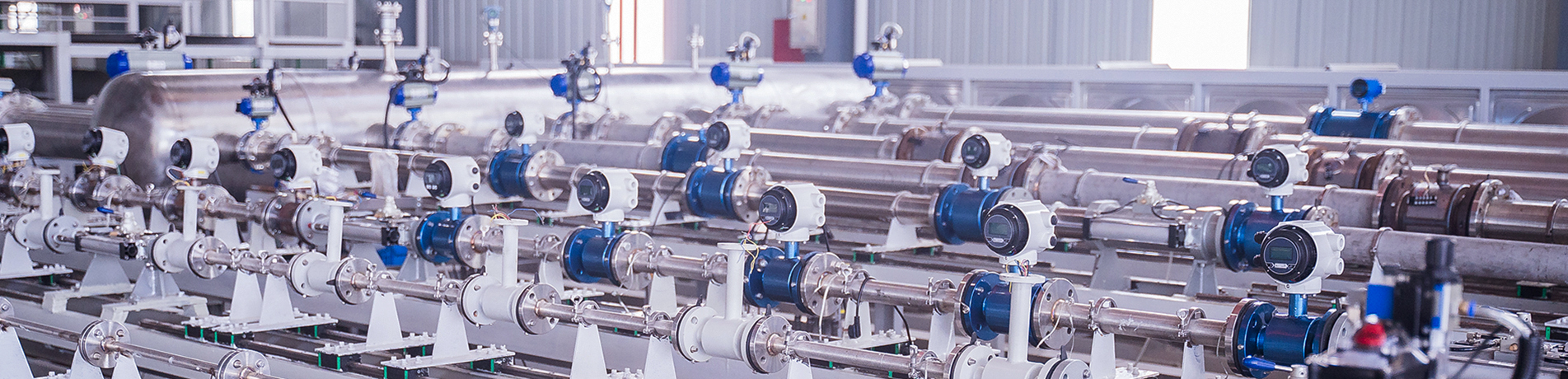
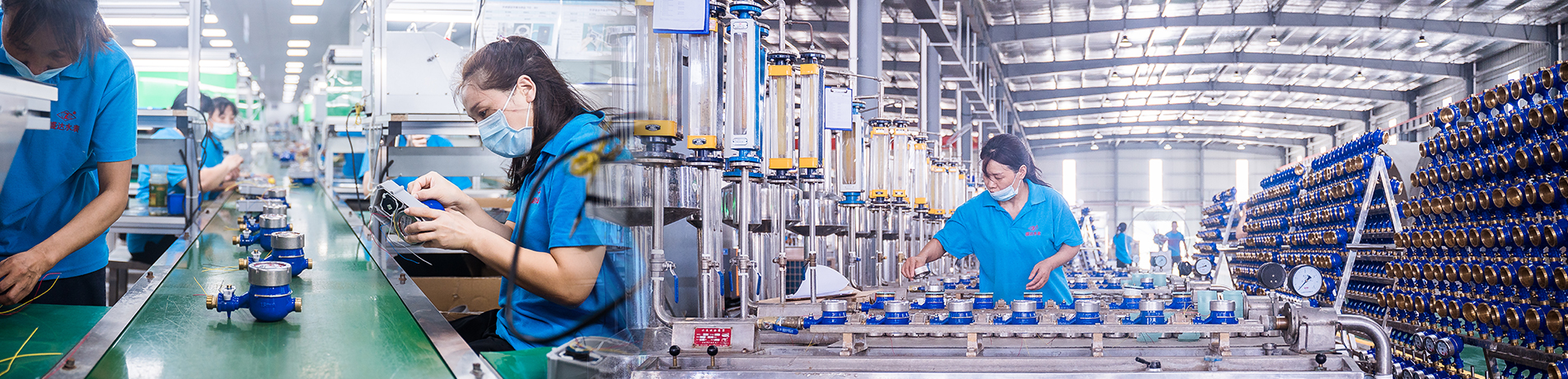
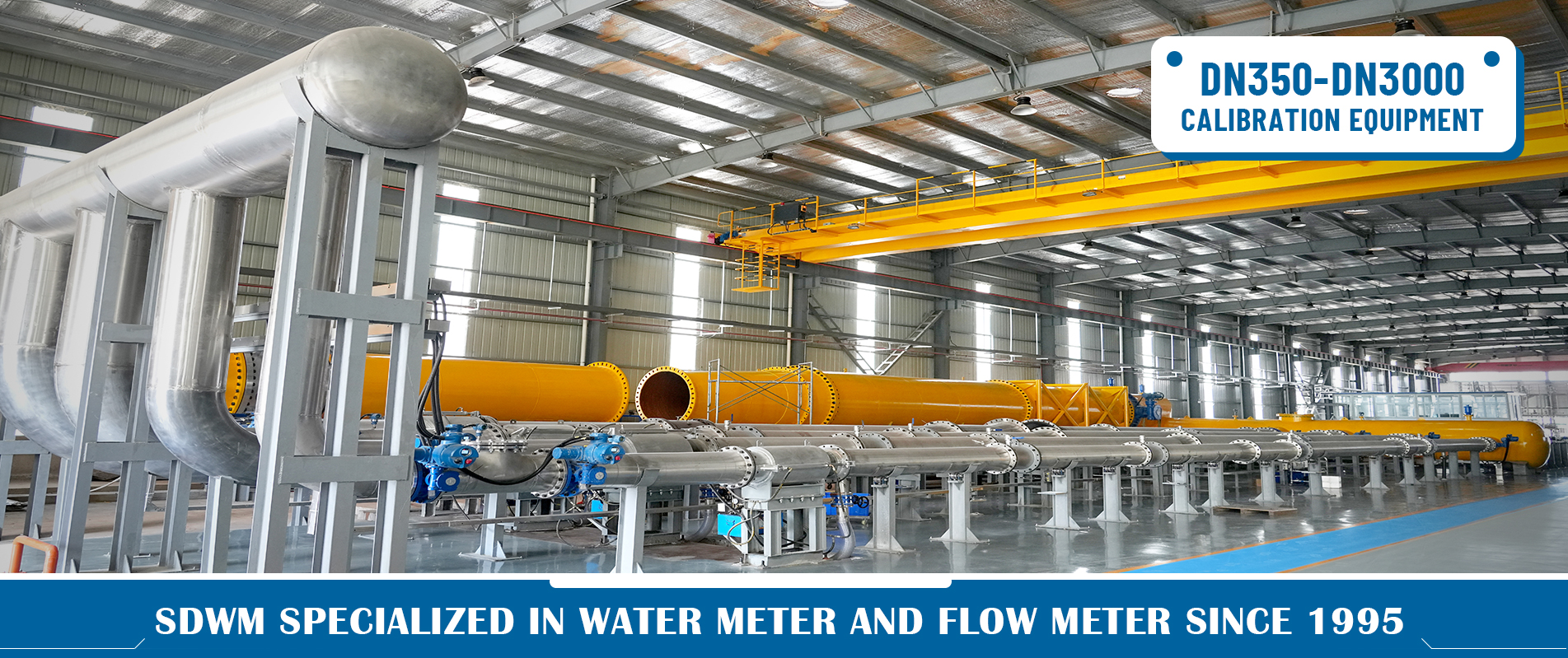
A network decision is only as good as the meters attached to it. SDWM applies 100% calibration and accuracy testing before shipment, and performs pressure and sealing tests during manufacturing. Communication is verified before delivery: LoRaWAN, NB-IoT, 4G and M-Bus modules are tested before shipment specifically to avoid field communication failures. With more than 65% of business coming from repeat customers, that verification discipline is the practical link between a pilot result and a scaled rollout.
Step-by-Step Breakdown: A Six-Step Decision Sequence
The following sequence is designed to be run before a framework agreement is signed, not after the first batch has shipped.
Step 1 — Map the physical site before comparing radios
Walk the actual meter locations: pits, chambers, basements, risers and outdoor cabinets. Coverage is a physical property of the site, not a property of the technology. LoRaWAN coverage must be engineered through gateway placement and antenna height; NB-IoT coverage depends on operator infrastructure at that address. Both must be verified on site, and the field verification should be repeated in the two or three worst-case locations rather than the best ones.
Step 2 — Decide who owns the network
If the utility has, or is willing to build, a network operations capability, LoRaWAN keeps the radio layer in-house. If it does not, NB-IoT transfers that burden to the mobile operator. This single governance question usually eliminates one option before any technical comparison begins.
Step 3 — Size the payload and reading profile
Both technologies are narrowband by design: the payload is a consumption register plus alarm flags, not continuous telemetry. In practice, the reading interval and the alarm uplift — not the radio — determine daily airtime and energy budget. Set the interval from the commercial requirement: monthly billing needs far less than daily leak detection.
Step 4 — Model battery life against the service contract
Battery life is the line item that most often breaks a ten-year business case. SDWM specifies up to 10 years for the LXSY Smart LoRaWAN water meter, more than 6 years for the NB-IoT smart water meter, 10 years for LXC ultrasonic meters in DN15–DN40 and 6–8 years for DN50–DN500. Read those figures together with the reading interval and the alarm configuration, and budget a field replacement visit for the sizes that fall short of the asset life.
Step 5 — Build the total cost of ownership model
Compare meters, network layer, software, installation, battery replacement and after-sales as separate lines. A lower meter price with an unplanned gateway build, or with a battery replacement campaign in year seven, rarely wins over the asset life.
Step 6 — Validate with samples before committing volume
Order samples, install them in the worst-case locations from Step 1, and run them through at least one full billing cycle. Because communication is verified before delivery and every meter is calibrated before shipment, the pilot result reflects field performance rather than a bench demonstration.
Use Cases: Where Each Option Fits
Residential district metering
Residential metering, which represented 67.2% of adoption in 2024, is the volume segment where the radio decision has the largest cost consequence. The LXC ultrasonic meter in DN15–DN40, with 10-year battery life and LoRaWAN or NB-IoT communication, covers the standard residential riser. Where the project still specifies a mechanical residential meter, the R160 covers PN10/PN16 working pressure, ISO 4064 compliance and T30/T50/T90 temperature ratings, and the LXSG multijet remains a cost-effective residential option with pulse, M-Bus, RS485, LoRaWAN and NB-IoT available on smart versions.
Large-diameter industrial and commercial points
Bulk metering behaves differently. The LXLC/WPH Woltman water meter covers DN50 to DN600 in cast iron, ductile iron or stainless steel and can be equipped with pulse output, M-Bus, RS485, LoRaWAN or NB-IoT, with an optional remote shut-off valve. In these locations the meter count is low but the consumption value is high, so an NB-IoT or LoRaWAN module is usually justified by leak and reverse-flow visibility rather than by reading labour savings.
Buildings with existing BMS or SCADA
Where a building already runs a control platform, wired communication is often the lower-risk route. The RS485 water meter, model LXSY, uses RS485 Modbus RTU and integrates with PLC, SCADA, AMR/AMI systems and water management platforms, with IP68 protection and brass, stainless steel or composite bodies. M-Bus options comply with the EN 13757 M-Bus protocol, which lets a utility keep one network layer for both water and heat metering.
Prepaid revenue protection
In markets where collection risk drives the specification, the LXSK prepaid water meter provides IP68 protection and dimensions from DN15 to DN300, with STS (IEC 62055-41/51) recognised globally as the security standard for prepaid encryption. Prepaid deployment usually pairs with NB-IoT or LoRaWAN so that token vending and consumption data remain visible to the utility.
Comparison Table: LoRaWAN vs. NB-IoT Head-to-Head
| Decision factor | LoRaWAN | NB-IoT |
|---|---|---|
| Spectrum and network ownership | Unlicensed ISM bands; the utility, campus or industrial operator can own gateways and the data path | Licensed cellular spectrum; the network is operated by a mobile operator, not the utility |
| Frequency plan in the SDWM portfolio | LXSY Smart LoRaWAN water meter supports EU868, US915, AS923 and AU915 | Band set by the mobile operator in each market |
| Coverage model | Engineered on site; communication distance reaches several kilometres depending on the environment | Follows operator infrastructure; pit and basement locations still require field verification |
| Data profile | Narrowband; consumption register plus alarm flags | Narrowband; consumption register plus alarm flags |
| Battery life (SDWM product data) | Up to 10 years on the LXSY Smart LoRaWAN water meter | More than 6 years on the NB-IoT smart water meter |
| Alarm and diagnostic functions | Leakage, low battery, reverse flow, tamper and abnormal consumption alarms | Early warning for battery undervoltage and abnormal metering alarm |
| Software | Platform arrangement confirmed at quotation stage per project | Software supplied free with the NB-IoT smart water meter |
| Meter platform options | LXC ultrasonic, LXSY, LXSG multijet, LXLC/WPH Woltman — all with LoRaWAN available | LXC ultrasonic, LXSY, LXSG multijet, LXLC/WPH Woltman — all with NB-IoT available |
| Best fit | Utilities, campuses and industrial sites with network capability and a dense, defined meter footprint | Utilities without field network capability, dispersed sites, or operators with an existing mobile relationship |
| Main risk to manage | Gateway siting, power and long-term network maintenance ownership | Dependence on operator coverage and commercial terms over the asset life |
Total cost of ownership: the line items that decide the outcome
A head-to-head comparison that stops at the meter price is incomplete. The table below lists the cost lines that should be modelled over the full service life.
| TCO line item | What to model |
|---|---|
| Meter hardware | Unit price by size and communication module, including ultrasonic, multijet or Woltman variants |
| Network layer | LoRaWAN: gateway supply, siting, power and maintenance. NB-IoT: operator connectivity terms for the asset life |
| Software and integration | NB-IoT smart water meters ship with software supplied free; LoRaWAN platform scope is agreed per project |
| Installation and commissioning | Field time for installation, join/attach procedure and coverage confirmation at the worst-case locations |
| Battery replacement | Number of field visits implied by 10 years (LXSY LoRaWAN, LXC DN15–DN40) versus more than 6 years (NB-IoT) or 6–8 years (LXC DN50–DN500) |
| Spares and after-sales | Module and meter availability across the deployment period; shared platform reduces spares proliferation |
| Failure avoidance | 100% calibration before shipment, pressure and sealing tests, and pre-delivery communication verification all reduce field call-outs |
Decision rule for utilities and distributors: choose LoRaWAN when you can own and operate the radio layer and your meter footprint is dense and geographically defined. Choose NB-IoT when you want the network operated for you and your priority is a simpler field operation. In both cases, keep the metering platform shared so the decision remains reversible.
FAQ: LoRaWAN vs. NB-IoT Water Metering Decisions
1. Do LoRaWAN and NB-IoT water meters meet the same metrology and compliance requirements?
Yes — legal metrology is independent of the radio fitted. The LXC ultrasonic water meter complies with ISO 4064, and SDWM products carry CE, MID and ISO 4064 certification. In the European Economic Area, smart water meters must comply with EU Directive 2014/32/EU (MID) and EN 14154-4:2023, and prepaid models commonly reference STS (IEC 62055-41/51) for encryption. For outdoor and flooded installations, IP68 protection applies to models such as the LXSK prepaid water meter. Radio approval is a separate market-by-market requirement and should be confirmed for the destination country.
2. Can the same water meter platform run on either LoRaWAN or NB-IoT?
Yes. The LXC ultrasonic water meter supports LoRaWAN, NB-IoT, 4G, M-BUS and RS485 communication on the same transit-time measurement core, with 10-year battery life for DN15–DN40 and 6–8 years for DN50–DN500. The LXSG multijet, LXSY and LXLC/WPH Woltman ranges similarly offer LoRaWAN or NB-IoT on their smart versions. A shared platform keeps spares, installation practice and accuracy expectations consistent even if the network strategy changes between phases.
3. What drives total cost of ownership over the meter's service life?
Four lines dominate: meter hardware, the network layer, battery replacement and after-sales support. LoRaWAN adds gateway supply, siting and maintenance to the utility's scope; NB-IoT shifts the network to the operator, and the NB-IoT smart water meter ships with software supplied free. Battery life determines the number of field visits — up to 10 years on the LXSY Smart LoRaWAN water meter and more than 6 years on the NB-IoT smart water meter. A lower meter price rarely offsets an unplanned gateway build or a replacement campaign inside the asset life.
4. How can a buyer validate the choice before committing to volume?
Order samples and test them in the worst-case site conditions. SDWM's purchasing terms set a minimum order of 3–5 samples, with delivery terms of FOB, CIF, EXW or DDP, pre-shipment testing as the acceptance criterion, and 30/70 T/T payment terms. Because every meter is 100% calibrated and accuracy-tested before shipment, and LoRaWAN, NB-IoT, 4G or M-Bus communication is verified before delivery, the pilot reflects field behaviour rather than a bench demonstration.
5. What should be confirmed about delivery and lead time before signing?
Confirm three things: the delivery term that applies (FOB, CIF, EXW or DDP), the pre-shipment test protocol, and the production slot allocated to your configuration. Lead time depends on meter size, communication module and order volume, so it is confirmed at quotation rather than assumed. SDWM's factory runs an annual production capacity of 3 million units, which is what allows multi-year framework agreements and staged rollout schedules to be planned against a stable supply base. To start that conversation, request a quotation and sample set at shengdawatermeter.com.
Conclusion: Decide the Network, Then Standardise the Platform
The LoRaWAN versus NB-IoT decision is a governance decision before it is a technical one. If the utility intends to own and operate its radio layer, LoRaWAN gives it that control, supported in the SDWM portfolio by the LXSY Smart LoRaWAN water meter with up to 10 years of battery life and EU868, US915, AS923 and AU915 band support. If the utility would rather the network be operated for it, NB-IoT delivers more than 6 years of battery life, battery undervoltage early warning, abnormal metering alarms and software supplied free.
What should not vary is the metering platform underneath. A shared ultrasonic core — the LXC range, compliant with ISO 4064 and available with LoRaWAN, NB-IoT, 4G, M-BUS and RS485 — keeps the network decision reversible, keeps spares common across a multi-year rollout, and keeps the utility's accuracy and maintenance assumptions stable for the life of the asset.
For distributors and importers, the same logic applies commercially: a manufacturer that offers both radio paths, verifies communication before delivery, calibrates 100% of units before shipment and holds ISO 9001, ISO 14001 and ISO 45001 certification is a lower-risk long-term partner than one that can only supply a single connectivity option. With more than 65% of SDWM's business coming from repeat customers and exports to more than 140 countries, the pattern suggests that supply continuity matters as much as the radio specification.
Next Step: Sample, Quote or Full Catalogue
SDWM supplies LoRaWAN, NB-IoT, 4G, M-Bus and RS485 smart water meters for utility, residential, industrial and prepaid deployments. Samples start at 3–5 units so a network decision can be tested in real site conditions before a framework agreement.
Email: admin@henanpanda.com | WhatsApp / Tel: +86 18603780816 | Web: www.shengdawatermeter.com
Download the product profile: Shengda Water Meter Company Profile (PDF)
Note: market figures are attributed to their publishers as cited. Product specifications refer to SDWM product data and should be confirmed against the final datasheet for the selected model and size.
Have Questions or Need More Details?
Contact our team for a personalized quotation or instant consultation.
Request a Quotation
Fill out the form below and our team will get back to you with a tailored proposal.
WhatsApp Direct Chat
Prefer to chat in real-time? Message us on WhatsApp for instant assistance & quick answers.
- Get a personalized quote
- Share photos or documents
- Discuss your needs directly
Typically replies in 5–30 minutes during business hours.