OEM Smart Water Meter Supplier Evaluation: Key Capability Checks Before You Commit
Committing to an OEM order for smart water meters is a capital decision, not a catalogue decision. By the time a buyer reaches this stage, most shortlisted suppliers have already cleared the basic filter — each can show a working meter, a datasheet and a price. What separates the supplier that delivers a clean first shipment from the one that triggers a rework cycle sits behind those documents: production capacity, engineering depth, process control, certification scope and commercial durability.
This guide sets out the capability checks to complete before an OEM smart water meter order is placed, and the evidence a buyer should request for each one. Shengda Water Meter Co., Ltd. (SDWM), a water meter and flow meter manufacturer established in 1995 and based in Kaifeng, China, is used as the reference case for what verifiable capability evidence looks like: a 66,000 m² facility, an annual output of 3 million units, a 12-engineer R&D team and a 65% share of business from repeat customers.
Why Supplier Evaluation Breaks Down at the Commitment Stage
OEM sourcing rarely fails because the buyer chose the wrong measuring principle. It fails because the supplier was evaluated on its product rather than on its process.
Three patterns account for most of the damage.
- Specification symmetry. Two quotations for a DN15 LoRaWAN ultrasonic water meter can carry near-identical headline parameters — IP68, PN16, lithium battery, LoRaWAN — because the parameter list is standardised across the industry. A quotation sheet is a claim. It is not evidence.
- Unverifiable capability language. Phrases such as "large production capacity" or "strong technical team" carry no decision value until they are attached to a number and an artefact: a plant area, an annual output figure, an engineering headcount, a test record.
- The sample-to-batch gap. A supplier can hand-build one flawless sample and still be unable to reproduce it across a batch, because sample builds bypass the constrained steps — calibration, sealing and communication verification — that mass production depends on.
At the decision stage the practical rule is simple: convert every capability claim into a check, and give every check a named piece of evidence. A claim that cannot produce evidence is not a capability. It is an unquantified risk.
Industry Background: A Growing Market With an Uneven Supply Base
The commercial context makes this discipline more important, not less. The global smart water meters market was valued at USD 9.1 billion in 2024 and is projected to reach USD 16.2 billion by 2030, according to Grand View Research. Within that market, the ultrasonic water meter segment is expected to register the highest growth among meter types, with the US market alone valued at USD 2.98 billion in 2024 (Grand View Research). Advanced Metering Infrastructure held a 58.9% share of the smart water meter market in 2024, per Precedence Research.
Demand is also concentrated in applications that reward supplier reliability. The residential segment accounted for 67.2% of smart water meter adoption in 2024 (Cognitive Market Research), and Asia Pacific is the fastest-growing region, driven by urbanisation in China and India (MarketsandMarkets). Meanwhile, the top 20 water metering vendors — including Itron, Badger Meter and Sensus — accounted for 76% of global market share in 2024 (Bluefield Research), which means most OEM buyers are choosing between manufacturers outside that group.
Compliance adds a second layer. Within the European Economic Area, smart water meters must comply with EU Directive 2014/32/EU (MID) and EN 14154-4:2023 for legal metrology. For prepaid metering, the STS standard (IEC 62055-41/51) governs the security of the token encryption system. An OEM order that crosses a border inherits these obligations, whether or not the supplier raises them.
The Five Capability Checks Before an OEM Order
Each check below pairs a capability claim with the evidence that verifies it. They are ordered from the physical to the commercial, because capacity failures surface first and relationship failures surface last.
Check 1 — Production Capacity That Can Absorb Your Order Volume
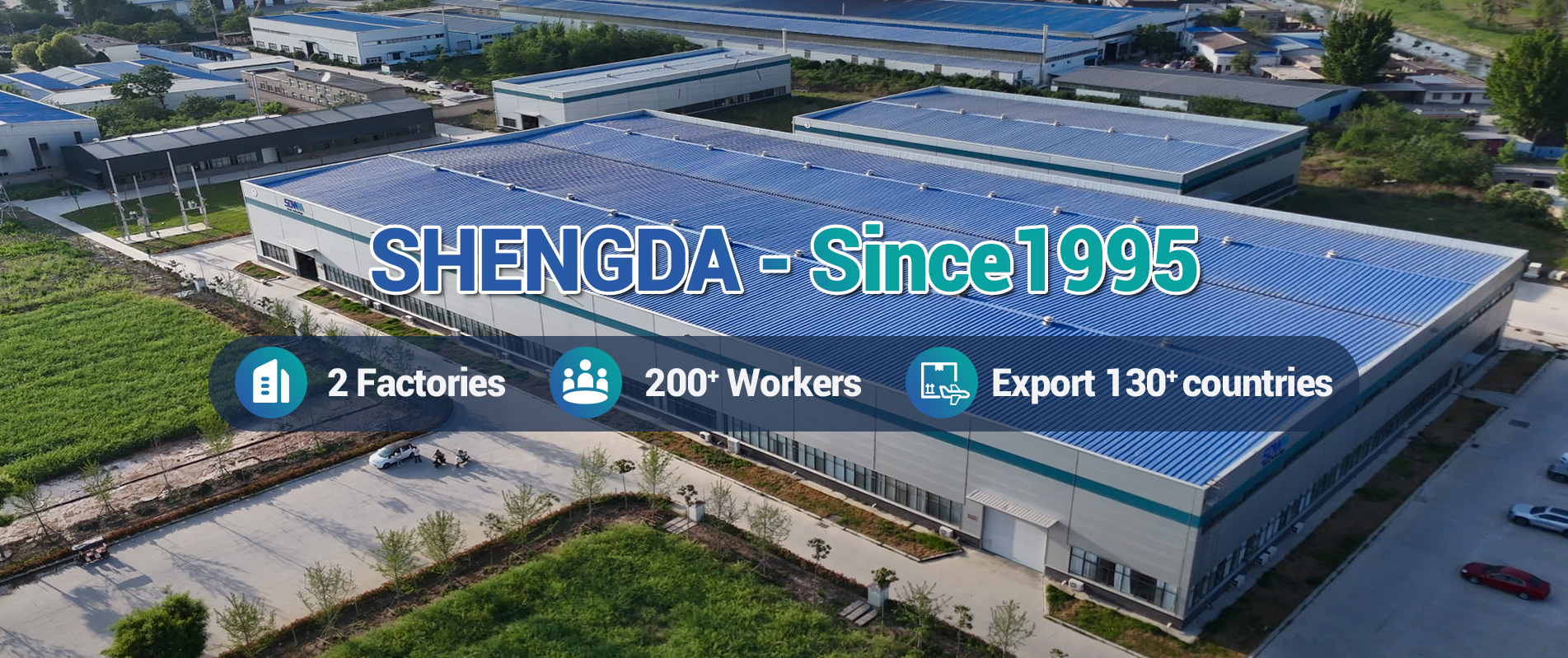
Plant area and annual output answer different questions, so ask for both. Floor area indicates how much parallel capability exists — moulding, assembly, testing, warehousing. Output indicates throughput. A buyer should also ask when the capacity was commissioned, because a dated expansion can be verified.
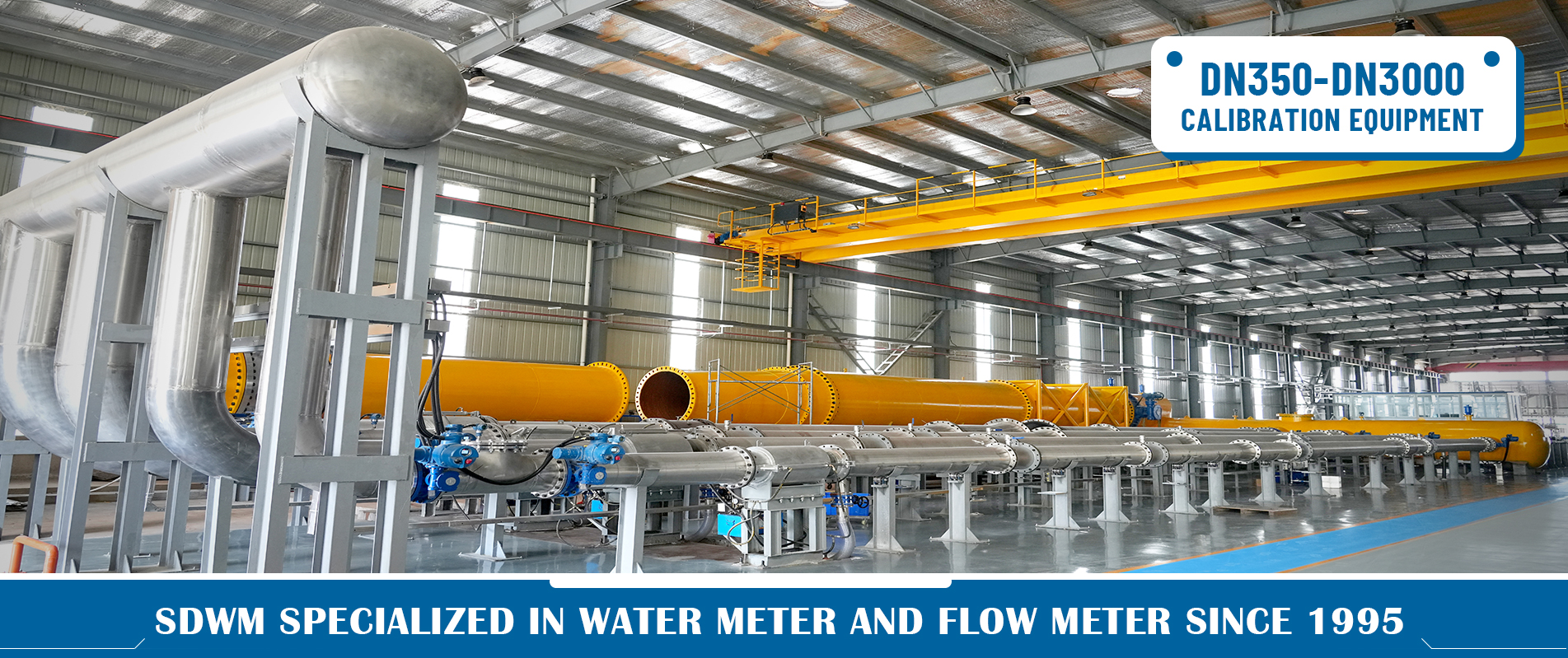
Shengda Water Meter manufactures at a 66,000 m² facility, with a new factory built in 2020 carrying an annual production capacity of 3 million units. Those three data points — area, output and commissioning year — are the kind that hold up under verification, whether through documentation or a factory visit.
Capacity should also be read against market exposure. SDWM exports to more than 140 countries with an export ratio of 50%, and its main markets include the USA, South America, Africa and Southeast Asia. For an OEM buyer this matters beyond scale: a manufacturer already serving several regulatory regions has usually built the documentation, testing and packaging routines that an export order needs.
Check 2 — Engineering Depth Behind the Product Catalogue
An OEM order is a modification order. Housing, register, firmware, communication module and branding all have to be engineered to somebody's specification, and that work needs an owner inside the supplier's organisation.
SDWM maintains an R&D team of 12 engineers and produces across water meters, flow meters and telemetry products — including smart water meters, ultrasonic water meters, LoRaWAN water meters, prepaid water meters, electromagnetic flow meters and magnetic flow meters. The company is also one of a limited number of manufacturers able to produce large-size flow meters up to DN3000.
Read product breadth as a platform signal rather than a catalogue boast. A manufacturer that already builds ultrasonic, LoRaWAN, NB-IoT, 4G, RS485 and M-Bus variants can reuse measurement and communication platforms across an OEM request. A supplier with a single meter family typically has no adjacent engineering to borrow from when a specification shifts mid-project.
Check 3 — Process Control and the Test Regime Before Shipment
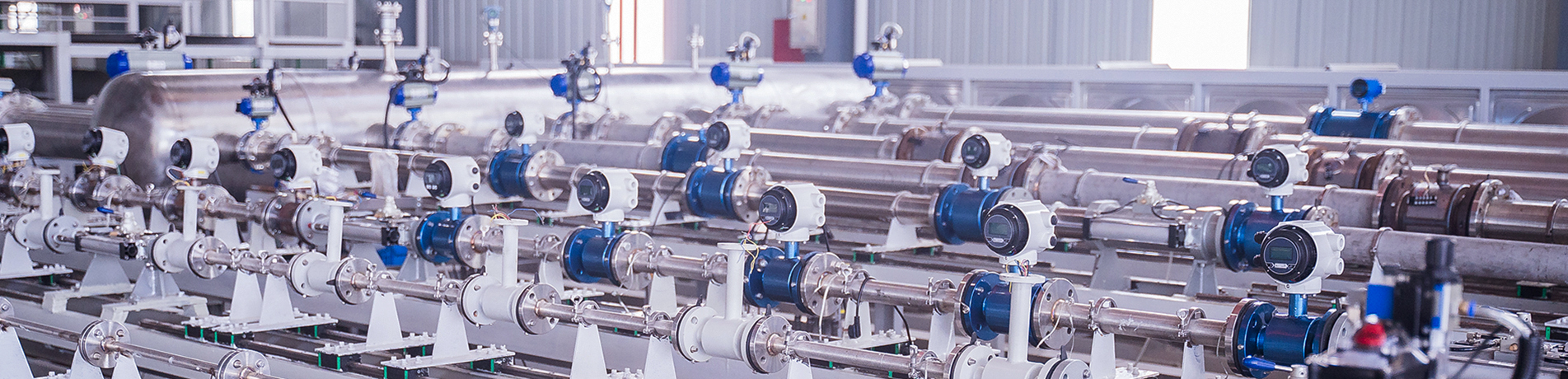
This is where the risk profile of an OEM order is actually set. The question is not whether the supplier tests meters; it is whether testing runs on 100% of production or only on samples.
The control measures that carry the most weight for smart water meters map onto specific failure modes:
- Measurement accuracy. High-precision calibration and 100% accuracy testing before shipment.
- Leakage. Pressure and sealing tests, plus waterproof testing, to confirm leak-free performance.
- Environmental exposure. IP68 waterproof sealing standards for meters installed outdoors, in flooded chambers or underground.
- Communication failure. Verification of LoRaWAN, NB-IoT, 4G and M-Bus modules before delivery.
- Corrosion. Stainless steel, brass or epoxy-coated components for harsh environments.
- Data security. Support for encrypted communication and secure data transmission.
The commercial logic is straightforward. A buyer who confirms the test regime is buying a repeatable inspection process rather than a sample. A supplier testing every unit before shipment converts a quality problem into a schedule problem inside the factory — considerably cheaper than converting it into a warranty problem at the destination port.
Check 4 — Certification Scope, and Where It Stops
Certification should be checked at two levels, because they are granted to different things. Company-level certification covers the management system: SDWM holds ISO 9001, ISO 14001 and ISO 45001. Product-level certification covers the meter: SDWM products carry CE, MID and ISO 4064.
The detail that matters most in an OEM order is scope. On the LXSY Smart LoRaWAN water meter, for example, CE and MID certifications apply, with MID listed as optional. That single word changes the compliance status of the configuration being quoted, so it should be confirmed in writing rather than assumed.
The underlying standards are also worth naming when the order crosses a border. Water meters compliant with ISO 4064 and OIML R49 meet recognised metrological requirements, and meters destined for the European Economic Area fall under EU Directive 2014/32/EU (MID) and EN 14154-4:2023. Prepaid configurations sit under the STS standard (IEC 62055-41/51).
Check 5 — Commercial Durability: The Repeat-Business Signal
Every check so far describes what a supplier can do before delivery. The last one describes what happens afterwards — whether the first order turns into a second one.
More than 65% of Shengda Water Meter's business comes from repeat customers. Repeat business is difficult to manufacture in a quotation and difficult to fake over time, which makes it one of the more useful proxies available to a buyer at the decision stage. It implies that deliveries arrived, meters performed, and problems — where they occurred — were resolved well enough that the buyer ordered again.
Treat the figure as a starting point for questioning rather than a conclusion. Ask how repeat business is defined and measured, whether it is counted by order value or order count, and whether it includes spare-part and accessory orders. A supplier that can answer precisely is demonstrating commercial record-keeping that informal suppliers cannot.
Step-by-Step: A Pre-Order Verification Sequence
The checks above are easier to apply in a fixed order. The sequence below moves from specification to evidence to commercial terms.
- Define the specification envelope first. Fix the meter type, nominal diameter, flow ratio, communication technology, pressure rating and certification requirement before contacting suppliers. A smart ultrasonic water meter, for example, may be specified at R250, R400 or R500 flow ratio; an STS prepaid water meter at a maximum working pressure of 1.0 MPa with pressure loss of ≤ 0.063 MPa.
- Request capacity documentation. Ask for plant area, annual output and the year the capacity was commissioned — for SDWM that is 66,000 m², 3 million units per year, and a factory built in 2020.
- Audit the test regime. Confirm whether calibration and accuracy testing is applied to 100% of units, whether pressure and waterproof testing is performed, and whether communication verification covers LoRaWAN, NB-IoT, 4G and M-Bus modules before delivery.
- Map certification to the destination market. ISO 4064 and OIML R49 for metrological compliance, EU Directive 2014/32/EU and EN 14154-4:2023 within the EEA, and the STS standard for prepaid encryption. Confirm in writing whether MID is included in the offered configuration or listed as optional.
- Validate the sample through the production test path. Ask that the sample be tested with the same steps applied to production units — calibration, sealing and communication — and request the records alongside the sample.
- Confirm commercial and support terms. Review repeat-business evidence, documentation handover and the software package. LoRaWAN water meters from SDWM include software provided to clients free of charge to support system integration and operational efficiency.
Use Cases: Where Each Check Carries the Most Weight
The five checks apply to every OEM order, but their weighting changes with the project. Four common project types illustrate this.
Residential remote reading
Residential metering is the largest single application, accounting for 67.2% of smart water meter adoption in 2024 (Cognitive Market Research). Here the decisive checks are communication and battery life. The LXSY Smart LoRaWAN water meter supports frequency bands including EU868, US915, AS923 and AU915, with a communication distance that can reach several kilometres depending on the environment. The smart ultrasonic water meter operates at IP68, holds a working temperature range of -20°C to +60°C and a water temperature range of 0°C to +90°C, and offers a battery life of up to 10 years.
Prepaid and vending metering
Prepaid deployments, common in apartment blocks, dormitories and hotels, add a security requirement on top of metrology. The LXSK prepaid water meter is intended for hotel, residential property and household applications, while the STS prepaid water meter (LXS-S) specifies a maximum working pressure of 1.0 MPa and a pressure loss of ≤ 0.063 MPa. Alarm functions — leakage, low battery, reverse flow, tamper and abnormal consumption — belong on the verification list.
Commercial buildings and district systems
Wired and hybrid reading remains relevant where cable infrastructure already exists. RS485 water meters carry an IP68 protection level, and maximum communication distance reaches 1000–1200 metres depending on cable type and installation conditions. AMR meters add historical consumption data storage and optional remote shut-off valve control — useful where manual site access is the main cost driver.
Municipal and industrial large-flow measurement
Large-flow supply networks need a different meter family. The Woltman water meter, model LXLC/WPH, is designed for large flow water measurement in the municipal water supply industry, with a working pressure range of PN10, PN16 or PN25 and water temperature ratings of T30, T50 or T90. Construction options include cast iron, ductile iron or stainless steel, with a mechanical register using a dry dial magnetic drive.
Comparison Tables
The first table converts the five checks into a request list. The second maps meter families to applications using verifiable specifications, so the specification envelope in step one can be set against real product data.
| Check | What to verify | Evidence to request | Risk if unverified |
|---|---|---|---|
| Production capacity | Plant area, annual output, commissioning year | Facility area in m², annual unit output, date the capacity was commissioned | Order accepted beyond throughput; schedule slippage |
| Engineering depth | R&D headcount and breadth of meter and communication platforms | R&D team size, product families covered, largest size produced | OEM modification stalls or proceeds without engineering ownership |
| Process control | Whether calibration and testing run on 100% of units | Calibration and accuracy test records, pressure and waterproof test procedure, communication verification for LoRaWAN, NB-IoT, 4G and M-Bus | Batch-level defects discovered only after arrival |
| Certification scope | Which certifications apply to the exact quoted configuration | Certificate scope and confirmation whether MID is included or optional | Customs, utility or legal-metrology rejection at destination |
| Commercial durability | Repeat purchase behaviour and export track record | Share of repeat business, number of export markets, main regional markets | Support and supply continuity risk after the first order |
| Meter family (model) | Typical application | Verified specifications |
|---|---|---|
| Smart LoRaWAN water meter (LXSY) | Residential, hotel, apartment and warehouse remote reading | LoRaWAN in EU868, US915, AS923 and AU915; DN15–DN500; PN10 or PN16; IP68; -20°C to +60°C working, 0°C to +90°C water; lithium battery up to 10 years; optional remote shut-off valve; CE and MID (MID optional) |
| Smart ultrasonic water meter (LXSY) | Residential and commercial metering requiring a high flow ratio | R250, R400 or R500 flow ratio; LoRaWAN, NB-IoT, 4G Cat.1 and RS485 communication; IP68, fully sealed for underground and outdoor installation |
| NB-IoT smart water meter | Utility remote reading over cellular networks | DN15–DN200; T30/T90; pressure loss ≤ 0.063 MPa; LTE Cat.NB with bands B3 (1800), B5 (850), B8 (900); Micro SIM (Type 3FF) |
| STS prepaid water meter (LXS-S) | Prepaid residential and multi-tenant vending | Maximum working pressure 1.0 MPa; pressure loss ≤ 0.063 MPa; STS token security standard |
| RS485 water meter | Commercial buildings with existing cable infrastructure | IP68 protection level; maximum communication distance 1000–1200 m |
| AMR water meter (LXSY) | Buildings where manual site access is the main cost driver | Automatic remote meter reading; leakage, low battery, reverse flow, tamper and abnormal consumption alarms; historical consumption data storage; optional remote shut-off valve |
| Woltman water meter (LXLC/WPH) | Municipal water supply, large flow measurement | PN10, PN16 or PN25; T30, T50 or T90; cast iron, ductile iron or stainless steel; mechanical register with dry dial magnetic drive |
| Plastic / multijet water meter (LXSG) | Household metering | Single jet and multi jet types; dry dial display; ISO 4064 and OIML R49 compliant; brass body with composite material option |
Frequently Asked Questions
What certifications should an OEM smart water meter supplier hold before I place an order?
Two levels matter. Company-level certification should cover the management system — Shengda Water Meter holds ISO 9001, ISO 14001 and ISO 45001 — while product-level certification should cover the meter itself, where SDWM products carry CE, MID and ISO 4064. Meters compliant with ISO 4064 and OIML R49 meet recognised metrological requirements, and meters placed on the market in the European Economic Area fall under EU Directive 2014/32/EU (MID) and EN 14154-4:2023. For prepaid models, the token encryption system is governed by the STS standard (IEC 62055-41/51). Because certification can be configuration-specific, confirm in writing whether MID is included or optional for the exact model quoted — the LXSY Smart LoRaWAN water meter carries CE and MID, with MID listed as optional.
How do I verify a smart water meter manufacturer's production capacity and R&D strength?
Ask for four figures and cross-check them: plant area, annual output, the year the capacity was commissioned, and R&D headcount. Shengda Water Meter manufactures in a 66,000 m² facility, with a new factory built in 2020 that carries an annual production capacity of 3 million units, and maintains an R&D team of 12 engineers. Cross-checking means testing whether the output figure is proportionate to the floor area, and whether the engineering team is large enough to support the range of products offered — from DN15 residential meters to large-size flow meters up to DN3000.
Which smart water meter manufacturer is better for residential remote reading?
For residential remote reading, the practical comparison is configuration against documented specification rather than brand against brand. Residential metering accounted for 67.2% of smart water meter adoption in 2024 (Cognitive Market Research), and it depends on communication reliability and battery life more than on any other variable. The checks that decide the outcome are whether the meter family supports the frequency band used in your region — the LXSY Smart LoRaWAN water meter supports EU868, US915, AS923 and AU915 — whether the protection level suits the installation, with IP68 on SDWM ultrasonic and LoRaWAN models, and whether battery life, up to 10 years on the smart ultrasonic water meter, matches the reading cycle. A manufacturer that can document these points for the exact configuration ordered is a stronger choice than one that competes only on unit price.
What drives cost in an OEM smart water meter order?
The cost variables are visible in the specification itself. Body material is one: meters are available in brass, stainless steel or composite material, and brass-bodied 4G and LoRaWAN units differ from composite options. Communication technology is another, since LoRaWAN, NB-IoT, 4G Cat.1, RS485 and M-Bus configurations use different modules. Optional features add further variables, including a remote shut-off valve and historical consumption data storage. Certification scope is the fourth: where MID is listed as optional, including it changes the compliance and testing workload. Because each of these is a design decision rather than a fixed attribute, quotations should only be compared after the specification envelope has been fixed.
What should I validate on a sample before committing to an OEM order, and what about delivery confidence?
Sample validation should follow the same path as production testing, because that is the only way to test the process rather than the sample. The relevant steps are high-precision calibration and 100% accuracy testing before shipment, pressure and waterproof tests to confirm leak-free performance, and communication verification for LoRaWAN, NB-IoT, 4G or M-Bus modules before delivery. For delivery confidence, repeat-business evidence is the most practical indicator available before an order: more than 65% of Shengda Water Meter's business comes from repeat customers, and its products are exported to more than 140 countries. Buyers ready to move to the next stage can request a sample and a quotation directly from SDWM and test the configuration against their own project requirements.
Conclusion
An OEM smart water meter order is decided by evidence, not by price alone. Five checks carry the decision: production capacity that can absorb the order volume, engineering depth that can own the modification, a process control regime that tests every unit rather than every sample, certification scope that matches the destination market, and a commercial record that shows the first order turned into a second one. Run them in sequence, ask for the artefact behind every claim, and confirm configuration-specific details such as optional MID in writing before the purchase order is issued.
Next Step: Sample, Quotation or Catalogue
Shengda Water Meter Co., Ltd. (SDWM) manufactures OEM and ODM smart water meters, ultrasonic water meters, LoRaWAN and NB-IoT water meters, prepaid water meters and flow meters at its 66,000 m² facility in Kaifeng, China, exporting to more than 140 countries.
Download the company profile and product brochure: SDWM Profile (PDF)
Request a sample, a quotation or the full catalogue: Miranda · Email: admin@henanpanda.com · Tel / WhatsApp: +86 18603780816 · Chat on WhatsApp
Product information and technical documentation: www.shengdawatermeter.com
Have Questions or Need More Details?
Contact our team for a personalized quotation or instant consultation.
Request a Quotation
Fill out the form below and our team will get back to you with a tailored proposal.
WhatsApp Direct Chat
Prefer to chat in real-time? Message us on WhatsApp for instant assistance & quick answers.
- Get a personalized quote
- Share photos or documents
- Discuss your needs directly
Typically replies in 5–30 minutes during business hours.