
RS485 Water Meter Integration: Solving BMS and SCADA Connectivity Problems
An RS485 water meter solves the meter-to-BMS connectivity problem by presenting consumption as a wired Modbus RTU data point that a PLC, SCADA server or building management platform can poll directly, instead of as a closed device that only a vendor tool can read. The value is not the local display. The value is whether the point appears reliably in the head-end, at the interval the building's reporting cycle needs, for the life of the installation.
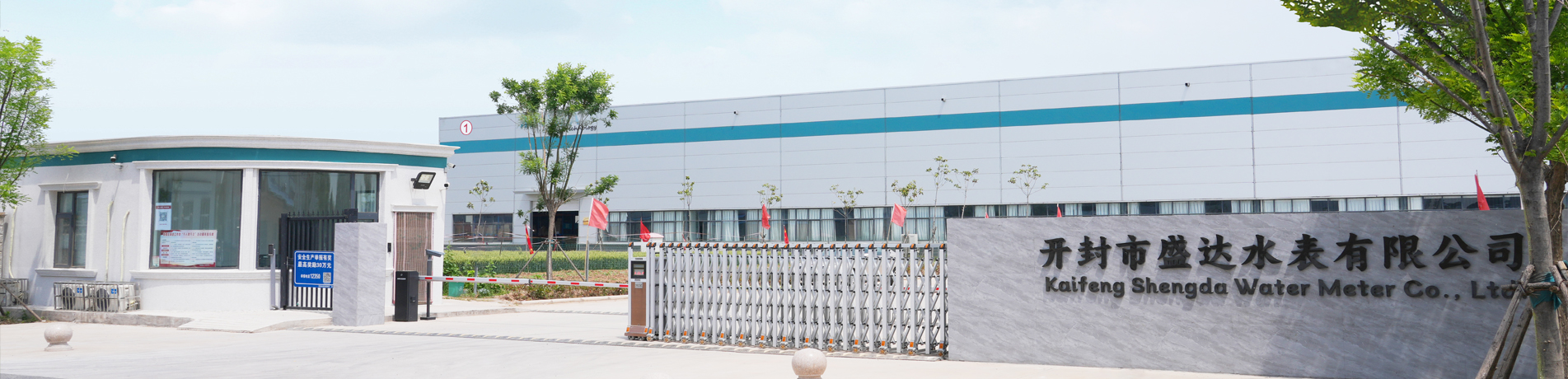
Shengda Water Meter Co., Ltd. (SDWM) is a Chinese water meter and flow meter manufacturer founded in 1995 in Kaifeng, producing smart water meters, ultrasonic water meters, LoRaWAN water meters, prepaid water meters and electromagnetic flow meters for export markets. Its LXSY RS485 water meter is specified for industrial water management and irrigation scenarios where a meter has to behave as an addressable device inside an existing automation stack.
This article is written for facility and building automation engineers who have already chosen a wired path and are now dealing with the consequences: a register map that does not match the controller, a bus that drops points, a pit with no mains supply, or a billing dispute over consumption data nobody retained. It works through each failure mode, the corresponding meter provision, and the commissioning checks that decide whether the integration holds after handover.
Where Meter-to-BMS Integrations Actually Break
RS485 metering projects rarely fail at the meter itself. They fail at the boundary between the meter and the automation system, and usually for one of five reasons.
- Protocol mismatch. RS485 describes a physical layer, not a data contract. A meter can be fully RS485-compliant and still fail to answer the driver the BMS already uses, because register addresses, baud rate, parity or byte order differ from what the integrator assumed.
- Communication distance and signal quality. Nominal bus length is a laboratory number. Installed length depends on cable type, termination, baud rate, number of taps and how the segment is routed through risers and plant rooms.
- Power availability. Meter pits and plant rooms often have no local mains supply, so the meter runs on battery and the reading interval becomes a power-budget decision rather than a convenience setting.
- Data retention. If the head-end misses polls during an outage, a server migration or a firmware update, interval consumption is lost unless the meter stored it. In tenant sub-metering that gap becomes a dispute.
- Environment and control. Flooding, condensation and pressure surges shorten the life of unprotected electronics, and zones that cannot be isolated remotely force a site visit to shut off supply.
Industry Background: Why Wired Metering Still Matters
Advanced Metering Infrastructure (AMI) technology held a 58.9% share of the smart water meter market in 2024, according to Precedence Research. Grand View Research values the global smart water meter market at USD 9.1 billion in 2024 and projects USD 16.2 billion by 2030. Market-size estimates differ between research houses because of what each report includes, so the direction of travel matters more than the exact figure: meters are increasingly expected to feed a head-end system rather than be read by a person.
That shift moves risk onto the integrator. A utility rollout has a metering team, a network team and a data team. A commercial building retrofit usually has one automation engineer, a BMS that is not being replaced, and a requirement to add water sub-metering to a controller that already speaks Modbus to chillers, pumps and energy meters.
In that setting the meter is judged on three questions: does it appear in the point list, does it stay there, and can its data be defended later. Wireless families such as LoRaWAN, NB-IoT and 4G are the right answer where no wired backbone exists, and SDWM lists those products alongside its RS485 range. Where a wired bus already runs through the building, RS485 is usually the shorter path to a working point list.
How the LXSY RS485 Water Meter Addresses Each Failure Point
1. Protocol mismatch — Modbus RTU as the standard interface
The LXSY RS485 water meter uses RS485 Modbus RTU communication and is designed to integrate with PLC, SCADA, AMR/AMI systems and various water management platforms. Where the receiving platform cannot consume Modbus RTU directly, a customized protocol option is available and its scope is agreed during specification rather than assumed afterwards.
The fastest route to a stable point list is to send the platform's existing driver documentation to the meter supplier before configuration, so that register map, baud rate, parity and byte order are set at the factory. A meter configured at the factory removes the most common commissioning argument: whether the fault sits in the device or in the driver.
2. Bus distance — up to 1200 m, conditional on wiring
The RS485 water meter supports a communication distance of up to 1200 m depending on wiring conditions. That figure should be treated as a ceiling that good installed conditions allow, not a guaranteed reach for any cable on any site. Segment length, cable type, termination, baud rate and the number of nodes on the segment all act on the same physical budget.
The practical check is simple and takes one afternoon: read a single register from the most distant meter on each segment, then log retry counts for 24 hours. A segment that returns clean reads at the far end during a full building occupancy cycle will keep returning them. A segment that works only in an empty building does not.
3. Power availability — battery or external supply
The meter runs from battery or from an external power supply. Battery life is up to 6-10 years depending on configuration, and the dominant variables are reading interval and alarm polling frequency rather than the meter hardware alone.
Sites with mains available at the pit can use external power and poll frequently. Battery installations should have the reading interval agreed in writing before the meters are configured, because shortening the interval after commissioning means either accepting a shorter service life or pulling meters back to the bench.
4. Data retention — optional historical consumption storage
An optional historical consumption data storage function lets the meter keep consumption records locally, so an interval is recoverable after a missed poll rather than lost. This matters most where the meter feeds postpaid billing, since the postpaid model measures actual water usage and supports monthly or periodic billing based on customer consumption.
Retention depth should be matched to two numbers: the reporting cycle the billing or reporting team actually runs, and the length of time a consumption figure can still be disputed. Anything beyond that pair is storage the project pays for and never reads.
5. Remote isolation — optional shut-off valve control
Optional remote shut-off valve control allows an operator to close supply from the head-end instead of dispatching a technician. It is useful for leak response, vacant-unit management and planned maintenance on a riser. Because it changes the wiring at the point and the fail-safe behaviour expected of the installation, it should be specified at order stage rather than retrofitted.
6. Environment — IP68 brass construction, PN10/PN16
The RS485 water meter carries IP68 protection and is rated PN10 or PN16, with a brass body and stainless steel or composite options documented for the range. It operates across a working temperature range of -20°C to +60°C and a water temperature range of 0°C to +50°C, and provides a digital LCD display for local reading of measured data.
Alarm functions include leakage alarm, low battery alarm, reverse flow alarm, tamper alarm and abnormal consumption alarm. Mapped into the head-end, those five alarms turn the meter from a billing device into an operational sensor, which is often the strongest argument for the wired route in the first place.
7. Supply-side capability behind the integration
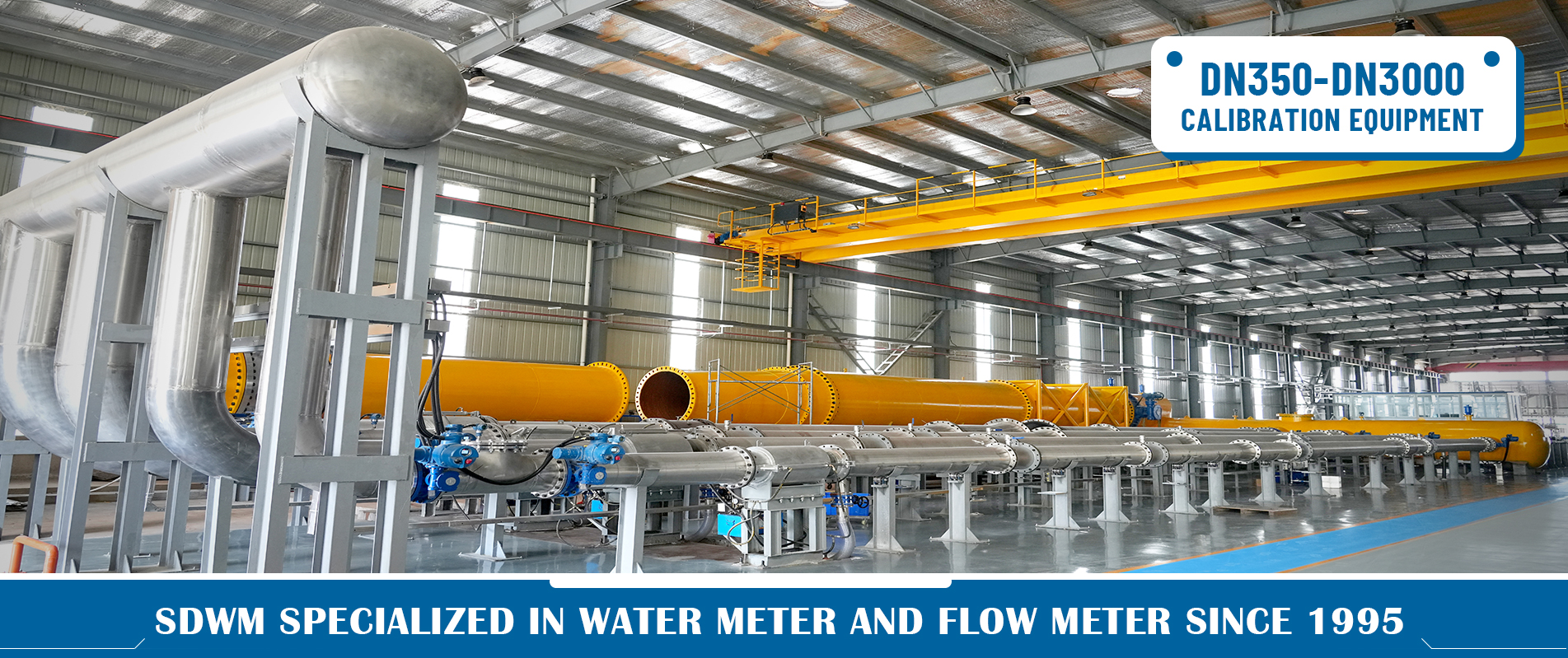
SDWM was founded in 1995 and operates a 66,000 m² facility with an annual capacity of 3 million units and a 12-engineer R&D team. The company exports to more than 140 countries, and more than 65% of its business comes from repeat customers. It holds ISO9001, ISO14001 and ISO45001 certifications, and its products carry CE, MID and ISO4064 certification.
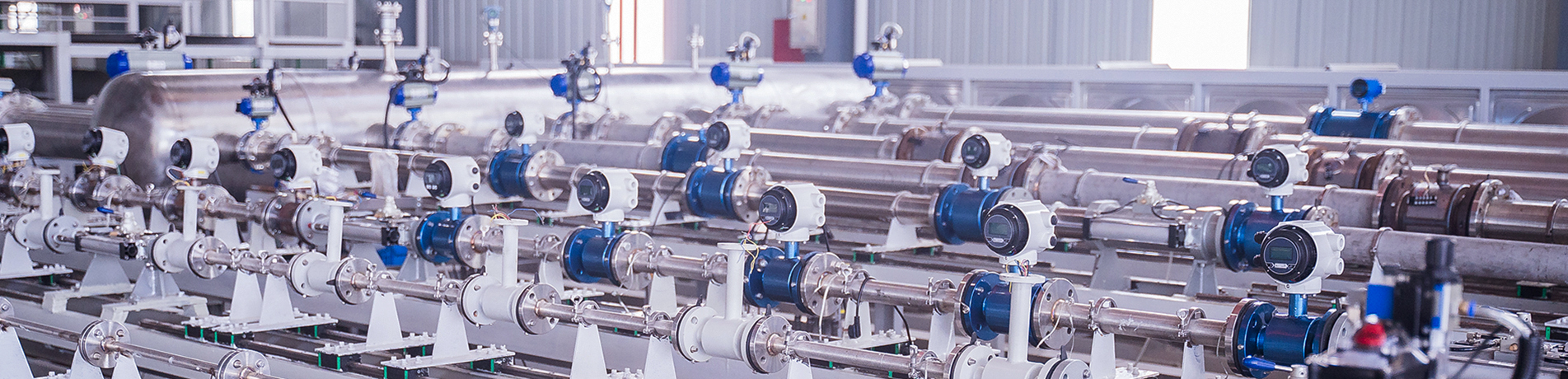
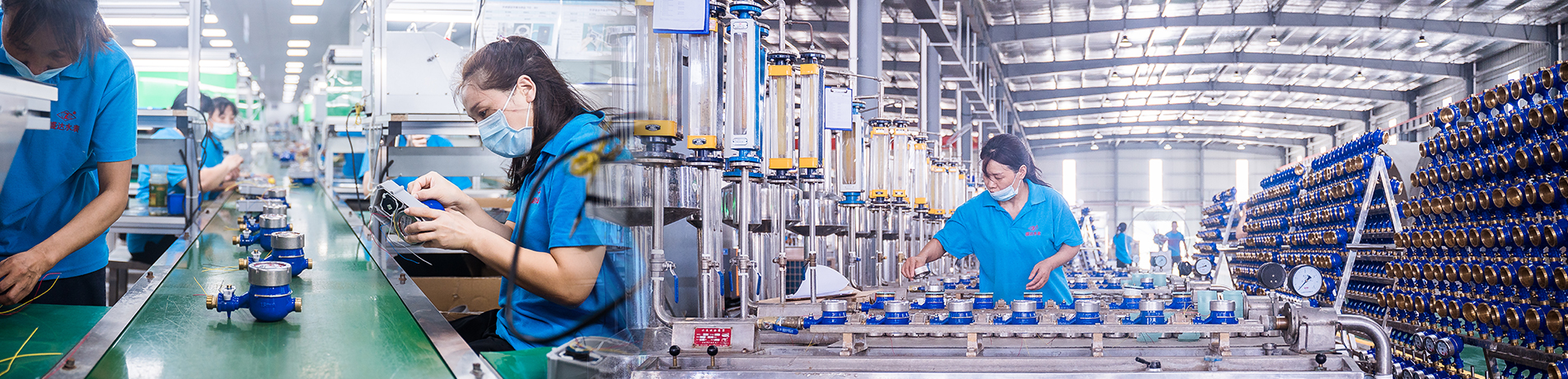
For an integration project, the relevant production controls are the ones that keep firmware behaviour repeatable: every unit is 100% calibrated and accuracy-tested before shipment, pressure and waterproof tests are performed to confirm leak-free performance, and communication is verified before delivery. A register map is only useful if the next unit off the line answers it the same way.
Step-by-Step: Commissioning an RS485 Water Meter into a BMS or SCADA Stack
- Define the data point before the meter. Write down the register address, unit of measure, scaling factor and polling interval the head-end expects. Everything downstream follows from this document, and it is the document most projects skip.
- Choose the power architecture. Confirm whether the pit has a usable local supply. If it does not, the meter runs on battery and the polling interval is set by the 6-10 year battery budget rather than by what the reporting team would like.
- Fix the pressure class and body material. Select PN10 or PN16 to match the network design pressure, and confirm brass or an alternative body option against the water quality and installation conditions at the point.
- Design the bus segment. Plan the route, cable type, termination and node count against the up-to-1200 m communication distance, and keep long segments away from drives and other noise sources in the plant room.
- Agree the protocol layer in writing. Modbus RTU is the standard interface; if the platform requires a customized protocol, define the data format, scaling and error handling during specification, not after delivery.
- Decide the retention depth. Set the optional historical consumption data storage against the reporting cycle and the dispute window, so a missed poll does not become a manual reconstruction exercise.
- Map the five alarms into the head-end. Leakage, low battery, reverse flow, tamper and abnormal consumption should each create a work order, not a dashboard widget nobody reviews.
- Verify before handover. Confirm the pre-shipment test report, read one register per meter from the SCADA or BMS front end, cross-check the value against the LCD display, and log retry counts for 24 hours before signing off the segment.
Use Cases Where the RS485 Route Fits
- Commercial and mixed-use sub-metering. Tenant consumption feeds postpaid billing on a monthly or periodic cycle, and the wiring runs in risers that already carry other building services. Local historical storage protects the billing record when the head-end is offline.
- Industrial water management and irrigation. The RS485 water meter is designed for industrial water management and irrigation scenarios, where meters sit on process water lines and irrigation zones that are already under PLC control.
- AMR/AMI and water management platform rollouts. Because the meter integrates with AMR/AMI systems and water management platforms, it can join an existing data collection layer without a separate wireless gateway being added for the water points.
- Retrofit projects with an existing wired backbone. Where the controller and cabling already exist, adding RS485 water meters extends the point list without a new network layer, and the 1200 m communication distance covers most single-building segments depending on wiring conditions.
Comparison: Failure Point, Meter Provision, and What to Verify
The table below compares the five recurring integration failure points against the provisions of the LXSY RS485 water meter and the check that should be performed on site before handover.
| Integration failure point | What goes wrong downstream | RS485 water meter provision | Verify at commissioning |
|---|---|---|---|
| Protocol mismatch | Meter replies, but the BMS driver cannot decode the payload | RS485 Modbus RTU communication; integrates with PLC, SCADA, AMR/AMI systems and water management platforms; optional customized protocol | Read one register per meter from the head-end driver, not from a laptop tool |
| Bus distance and signal quality | Dropped points, retries, missing intervals at the far end of the segment | Communication distance up to 1200 m depending on wiring conditions | Log retry counts on the longest segment for 24 hours |
| Power availability | No local mains at the pit; interval set by battery budget | Battery or external power options; battery life up to 6-10 years depending on configuration | Agree polling interval in writing before configuration |
| Data retention | Interval consumption lost after a missed poll; billing dispute | Optional historical consumption data storage; supports monthly or periodic billing based on consumption | Match retention depth to reporting cycle and dispute window |
| Remote isolation | Site visit required to shut off a zone | Optional remote shut-off valve control | Confirm valve wiring and fail-safe behaviour at the point |
| Environment | Water ingress, pressure surges, unreadable local display | IP68 protection; PN10 or PN16; brass body; digital LCD display; -20°C to +60°C working, 0°C to +50°C water | Check pit conditions, pressure class and local reading access |
Verified Specifications at a Glance
| Parameter | Verified value |
|---|---|
| Communication interface | RS485, Modbus RTU protocol; optional customized protocol |
| Communication distance | Up to 1200 m depending on wiring conditions |
| Power | Battery or external power |
| Battery life | Up to 6-10 years depending on configuration |
| Data storage | Optional historical consumption data storage |
| Control | Optional remote shut-off valve control |
| Protection level | IP68 |
| Pressure rating | PN10 or PN16 |
| Body material | Brass; stainless steel or composite options documented for the range |
| Temperature range | Working -20°C to +60°C; water 0°C to +50°C |
| Local readout | Digital LCD display |
| Alarms | Leakage, low battery, reverse flow, tamper, abnormal consumption |
| Integration targets | PLC, SCADA, AMR/AMI systems, water management platforms |
FAQ
Does the RS485 water meter meet metering and ingress-protection standards?
The LXSY RS485 water meter is built to ISO 4064 metrological requirements, carries IP68 ingress protection and is rated PN10 or PN16, with a water temperature range of 0°C to +50°C and a working temperature range of -20°C to +60°C. SDWM holds ISO9001, ISO14001 and ISO45001 management certifications, and its products carry CE, MID and ISO4064 certification. Confirm the exact certificate scope and pressure class against the project specification before ordering.
Can the meter talk to our BMS if we do not use Modbus RTU?
RS485 Modbus RTU is the standard interface on the LXSY RS485 water meter, and it integrates with PLC, SCADA, AMR/AMI systems and water management platforms. A customized protocol option is available where a platform driver requires a different data format, and its scope is defined during specification. Register map, baud rate, parity and byte order should be confirmed in writing before the meters are configured.
What power options exist, and how long does the battery actually last?
The meter can run from battery or from an external power supply. Battery life is up to 6-10 years depending on configuration, and reading interval plus alarm polling are the main variables. Sites with mains at the pit can use external power and poll frequently; battery installations should have the reading interval agreed before configuration so the service life is predictable.
Can we validate a sample before a full roll-out?
Yes. MOQ is 3-5 samples, delivery terms are FOB, CIF, EXW or DDP, acceptance is based on pre-shipment testing, and payment terms are 30/70 T/T. Every unit is 100% calibrated and accuracy-tested before shipment, pressure and waterproof tests are performed, and communication is verified before delivery, so the sample you test is representative of the production configuration.
What supports the meter over the life of the building?
SDWM was founded in 1995 and operates a 66,000 m² facility with 3 million units annual capacity and a 12-engineer R&D team, exporting to more than 140 countries with more than 65% of business from repeat customers. For a building project that matters less as a company fact and more as assurance that the same register map and firmware behaviour can be resupplied when a floor is extended or a riser is added. The full range is documented in the SDWM product catalogue, and samples or a quotation can be requested from the team directly.
Conclusion
RS485 water meter integration succeeds or fails on four decisions that are all made before delivery: the protocol contract, the bus segment, the power budget and the retention depth. The LXSY RS485 water meter addresses them with Modbus RTU communication and an optional customized protocol, a communication distance of up to 1200 m depending on wiring conditions, battery or external power with up to 6-10 years of battery life depending on configuration, and optional historical consumption data storage alongside optional remote shut-off valve control.
The physical side is equally part of the contract. IP68 protection, PN10 or PN16 rating, a brass body and a working range of -20°C to +60°C determine whether the device that answers the register today is still answering it after five winters in a flooded pit. Five alarm functions, a digital LCD display and integration with PLC, SCADA, AMR/AMI systems and water management platforms complete the picture for building automation engineers who need a data point, not another standalone meter.
Next step: validate the integration on a sample
Send the register map and driver documentation for your BMS or SCADA platform, and SDWM will confirm the configuration, protocol option and power architecture before a sample is built. Samples start at 3-5 units under FOB, CIF, EXW or DDP terms.
Catalogue: SDWM Profile (PDF)
Email: admin@henanpanda.com | WhatsApp: +86 18603780816
Website: www.sdflowmeter.com

Have Questions or Need More Details?
Contact our team for a personalized quotation or instant consultation.
Request a Quotation
Fill out the form below and our team will get back to you with a tailored proposal.
WhatsApp Direct Chat
Prefer to chat in real-time? Message us on WhatsApp for instant assistance & quick answers.
- Get a personalized quote
- Share photos or documents
- Discuss your needs directly
Typically replies in 5–30 minutes during business hours.