RS485 Water Meter Technical Guide: Modbus RTU, 1200 m Bus Distance, IP68, PN10/PN16
Specification guide for BMS integrators, plant engineers and importers
An RS485 water meter is a wired digital water meter that transmits consumption data over an RS485 serial bus, normally using the Modbus RTU protocol, so that a building management system (BMS), PLC or SCADA platform can read it without sending a technician to the meter room. It solves a specific and unglamorous problem: the meter measures accurately, but the data never leaves the pipe.
Five specification points decide whether a wired digital water meter works in the field: the protocol (Modbus RTU, with an optional customized protocol), the bus distance (documented at up to 1000–1200 m depending on cable type and installation conditions), the protection class (IP68), the pressure rating (PN10 or PN16) and the power source (lithium battery or external power supply, with battery life up to 10 years depending on configuration). This guide works through each of them in the order a buyer, integrator or plant engineer actually has to answer them.
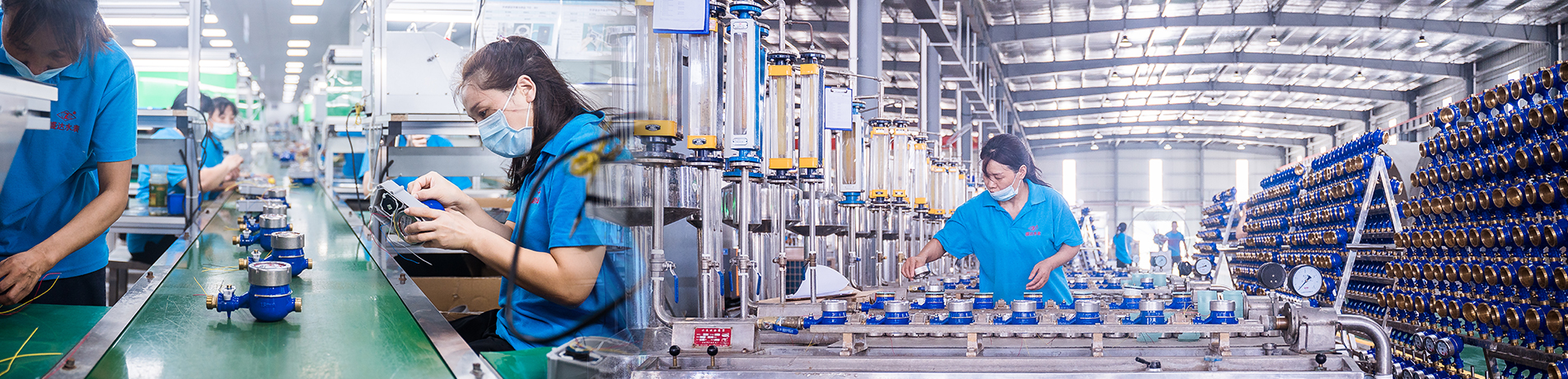
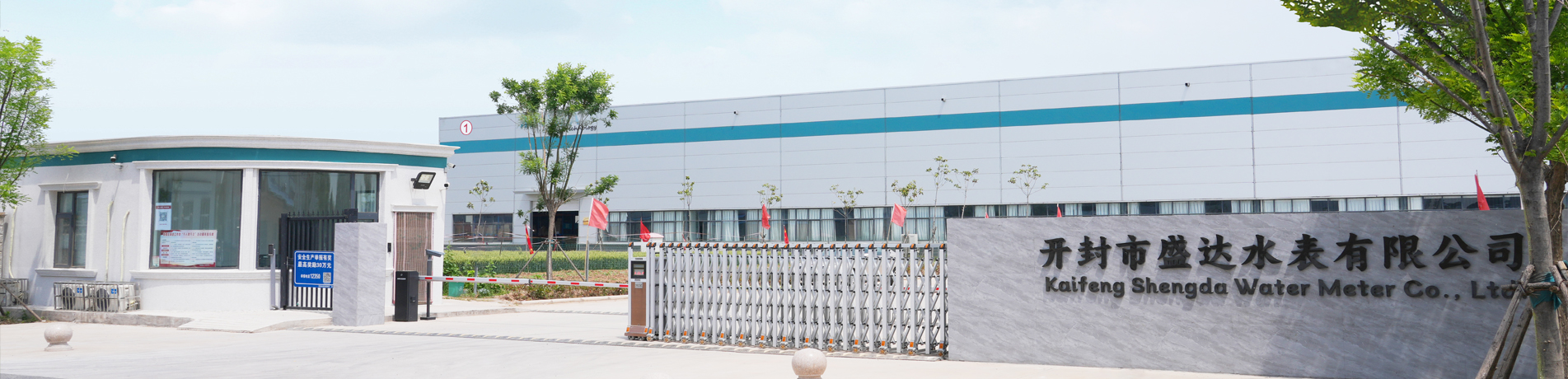
Shengda Water Meter Co., Ltd. (SDWM) is a water meter and flow meter manufacturer founded in 1995 and based at NO.109, Middle Weidu Road, Kaifeng City, China. The company builds wired RS485 and M-Bus remote reading meters alongside ultrasonic, prepaid, and LoRaWAN, NB-IoT and 4G smart water meters, supplies OEM/ODM projects, and exports to more than 140 countries. Its wired meters are the reference products behind the specification examples below, and the manufacturer's site is www.shengdawatermeter.com.
The problem: a meter that measures correctly but cannot be read
Metrology failures are rare. Interface failures are routine. In wired metering projects the same six specification gaps appear again and again, and every one of them is decided before the first meter is ordered.
- Protocol mismatch. The meter is ordered with a pulse output while the controller expects Modbus registers — or the site standardises on M-Bus while the quotation assumed RS485 only.
- Bus length ignored. The RS485 run is designed on a rule of thumb instead of the documented limit for the specific cable type and installation conditions.
- Power assumptions. Battery life is treated as a fixed calendar number rather than a configuration-dependent figure, so replacement intervals are planned on the wrong basis.
- Water ingress. A meter intended for a dry indoor position ends up in a flooded pit or a wash-down plant room.
- Pressure and flow mis-sizing. A PN10 meter is specified for a PN16 network, or a residential flow ratio is applied to an industrial flow profile.
- No register documentation. The meter reads correctly on its own LCD display, but no one holds a register map, so BMS integration becomes a software development project.
The fix is rarely a different meter. It is a specification sequence: define the reading system, the pipe, the environment and the power source first, then let the meter model follow from those answers.
Industry background: why wired interfaces still matter in an AMI market
Advanced Metering Infrastructure (AMI) technology held a commanding 58.9% share of the smart water meter market in 2024 (Precedence Research), which is another way of saying that most new value in smart water metering now sits in the network and data layer rather than in the measuring chamber alone. The global smart water meters market was valued at USD 9.1 billion in 2024 and is projected to reach USD 16.2 billion by 2030 (Grand View Research). Analyst scope definitions differ — Bluefield Research valued the global smart water metering market at USD 6.8 billion in 2024 — but the direction of travel is consistent.
Supply is concentrated. The top 20 water metering vendors, including Itron, Badger Meter and Sensus, accounted for 76% of global market share in 2024 (Bluefield Research). That concentration is precisely why many projects pair a large platform vendor for the head-end with an OEM/ODM manufacturer for the meter and for the communication configuration the site actually needs.
Two structural facts matter for wired projects. Asia Pacific is the fastest-growing region for smart water meters, driven by urbanisation in China and India (MarketsandMarkets), and residential applications accounted for 67.2% of smart water meter adoption in 2024 (Cognitive Market Research). Both point to dense, multi-storey, frequently cable-fitted buildings — the environment where an RS485 bus is cheapest to install and easiest to service.
On the regulatory side, water meters placed in the European Economic Area must comply with EU Directive 2014/32/EU (MID) and with EN 14154-4:2023 for additional functionalities. A wired meter without documented metrology certification is therefore a procurement risk, not only a technical one.
The solution: what an RS485 water meter delivers
A correctly specified RS485 water meter gives a BMS or plant controller four things: a Modbus RTU register interface on a wired bus, a documented communication distance of up to 1000–1200 m depending on cable type and installation conditions, IP68 sealing for pit and wash-down installation, and a pressure rating of PN10 or PN16 that matches the network it is installed in.
1. Protocol: Modbus RTU, with an optional customized protocol
The RS485 water meter supports an RS485 Modbus RTU communication interface, with an optional customized protocol available. That sentence contains two separate procurement questions. The first is whether Modbus RTU is supported — for most BMS, PLC and SCADA platforms it is the default serial protocol, so integration becomes register mapping rather than software development. The second is whether the site needs something else: where a utility or a platform vendor runs proprietary framing or an extended register set, the customized protocol option is what keeps the meter inside the existing head-end instead of forcing a second one.
The wired connection itself is RS485 or M-Bus. The same AMR water meter family supports Modbus, M-Bus and LoRaWAN protocols, so a project that starts on a wired RS485 bus and later extends into wireless coverage does not have to change meter platform.
2. Bus distance: up to 1000–1200 m, and what "depending on conditions" means
The documented maximum communication distance for the wired configuration is 1000–1200 metres, depending on cable type and installation conditions. Read that as a budget that has to be spent carefully. Twisted-pair cable, a single daisy-chain topology, correct termination and physical separation from power cabling are the variables that keep the upper end of that range reachable; long spurs, star wiring and mixed cable types consume it quickly.
When the route is longer than the bus can carry, there are three practical answers: relocate or segment the controller, split the bus into shorter runs, or move to a wireless interface — the same platform is documented to reach up to several kilometres on LoRaWAN.
3. IP68 protection: what the certificate actually covers
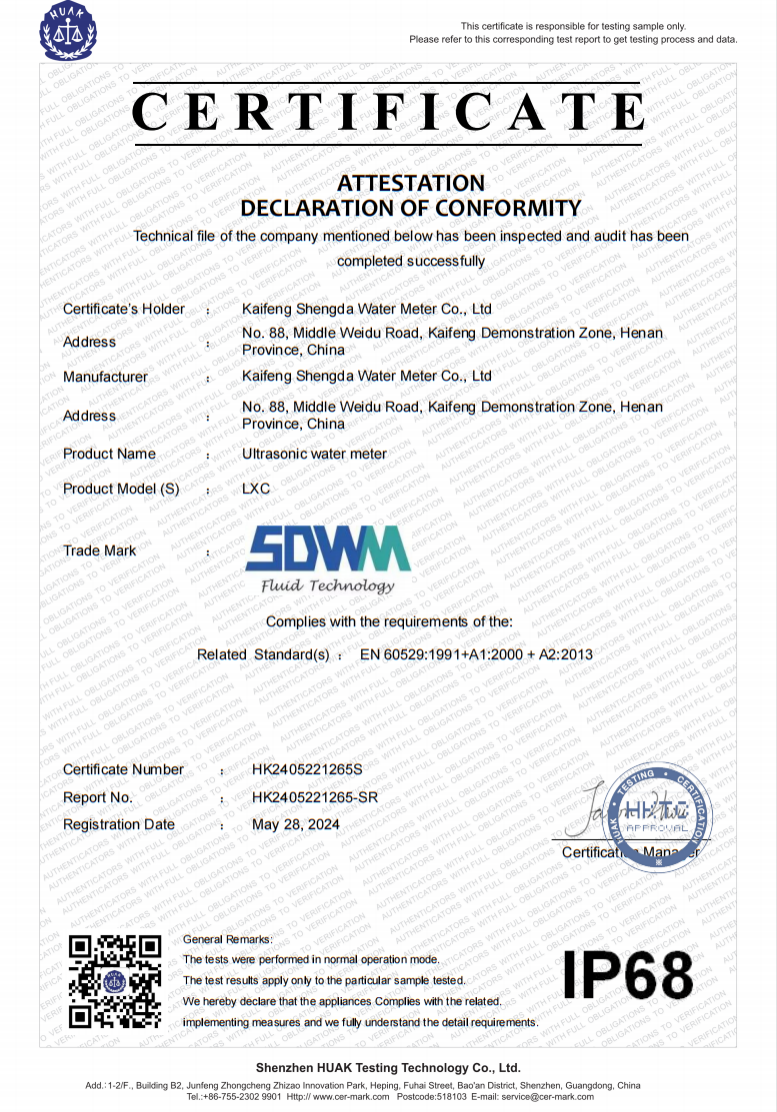
The water meter has a protection class of IP68 waterproof. The supporting document is a CE Declaration of Conformity for the ultrasonic water meter model LXC (certificate HK2405221265S, issued by HUAK on 28 May 2024 and valid until 28 May 2034), attesting to EN 60529:1991+A1:2000+A2:2013 — the standard that defines ingress protection ratings.
Two details are worth checking during evaluation. First, certification scope is model- and size-specific, so the certificate should name the model, diameter and variant being ordered. Second, IP68 earns its cost where the meter sits in a pit, a chamber with standing water, an outdoor cabinet or a wash-down area; for a dry indoor riser cupboard it is a durability margin rather than a hard requirement.
4. Body material, pressure rating, diameter range and metrology options
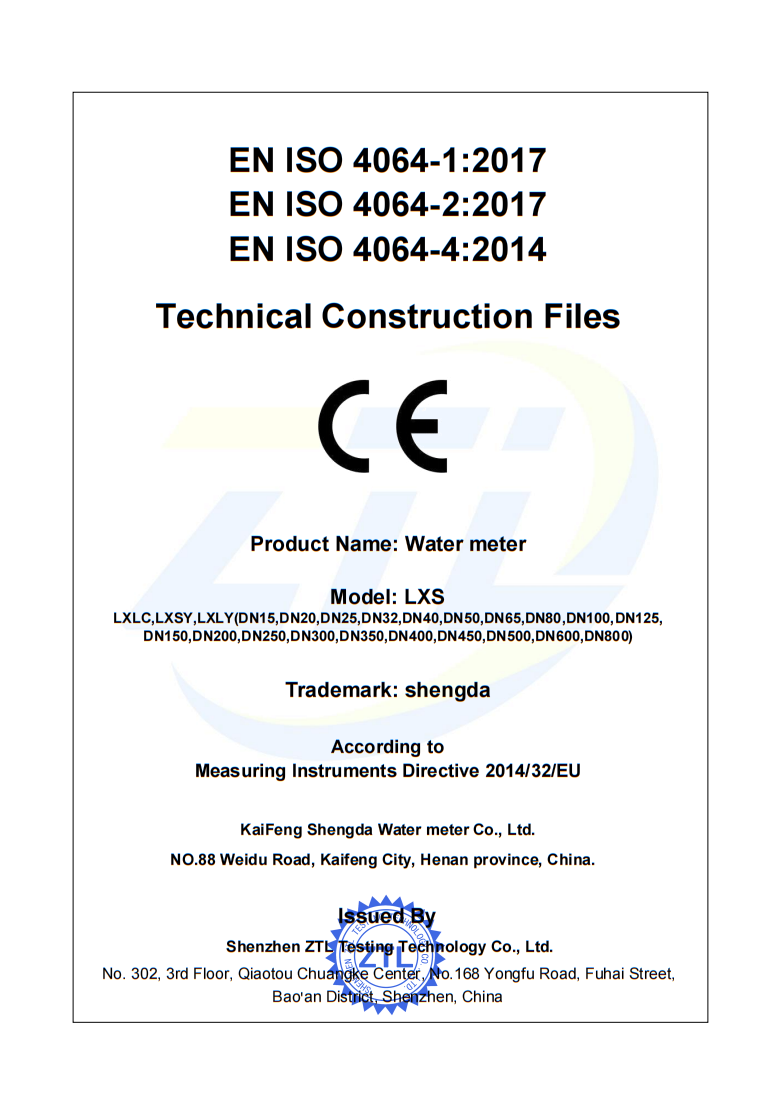
The body material is brass with valve or iron without valve, depending on configuration; the LXSY digital water meter is also available in brass, stainless steel or composite material. Pressure rating options are PN10 or PN16. The water temperature range is 0 °C to +50 °C, and the working ambient temperature range is −20 °C to +60 °C.
Nominal diameters span DN15 to DN600 on the LXSY digital water meter and DN15 to DN200 on the IoT platform, which covers everything from an apartment riser to a plant main. For residential sub-metering, the R160 water meter (model LXSG) is available from DN15 to DN25 with an R160 flow ratio and complies with the ISO 4064 metrological standard. Across the digital range, flow ratio options include R100, R160, R250 and R400, and the measurement technology can be ultrasonic, electronic or mechanical. An LCD digital display provides local reading, and installation can be horizontal or vertical.
5. Power: lithium battery or external supply, up to 10 years depending on configuration
Power supply options are a lithium battery or an external power supply, and battery life is up to 10 years depending on configuration. That qualifier is the part buyers should hold on to. Reporting frequency, valve actuation and communication duty cycle all draw on the same cell, so the realistic service interval has to be confirmed against the configured behaviour of the meter rather than against a headline figure. Where a mains supply or a low-voltage loop is already available at the meter position, external power removes the question entirely.
6. System integration: BMS, PLC, SCADA and AMR/AMI
The meter supports remote automatic meter reading (AMR/AMI). Because the interface is Modbus RTU over a wired RS485 bus, the integration work is a register-mapping exercise for the platform engineer: which registers to poll, at what interval, at what baud rate — confirmed against the supplier's register document before commissioning rather than after. Where a site standardises on M-Bus instead, the wired connection supports that option as well.
For hybrid estates, the AMR water meter family offers LoRaWAN, NB-IoT, 4G, RS485, M-Bus or pulse output, and supports Modbus, M-Bus or LoRaWAN protocols — useful when a wired bus covers the plant and a wireless layer covers remote buildings on the same site.
7. Optional functions: remote valve control and consumption history
Reading is the baseline; control is the optional layer. Remote valve control is documented in field deployments: a municipal water supply project in Zimbabwe with more than 4,000 units in service for over eight years uses remote valve control together with support for 20-digit STS tokens to deliver remote recharge, automatic billing and user management. Optional functions such as stored consumption history or prepaid token support must be confirmed against the exact model and firmware at quotation stage, because they are configuration items rather than defaults.
Step-by-step: how to specify an RS485 water meter for a BMS or plant
- Define the reading system first. Identify the master device — BMS head-end, PLC, SCADA or M-Bus master — and confirm that it accepts Modbus RTU. This single answer decides whether the project is a standard wired meter order or a customized protocol request.
- Fix the pipe parameters. Nominal diameter, pressure rating (PN10 or PN16) and the water temperature at the measuring point, checked against the meter's 0 °C to +50 °C water range and −20 °C to +60 °C ambient range.
- Choose the metering technology and flow ratio. Ultrasonic, electronic or mechanical measurement technology, with a flow ratio of R100, R160, R250 or R400 depending on the flow profile and the accuracy the utility or client requires.
- Select body material and valve configuration. Brass with valve, iron without valve, or brass, stainless steel or composite on the LXSY range.
- Match the protection class to the environment. Specify IP68 for pits, chambers, outdoor cabinets and wash-down areas, and confirm the certificate names the model and diameter.
- Set the power strategy. External power where a supply exists; lithium battery where it does not, with battery life of up to 10 years depending on configuration.
- Budget the bus. Measure the longest route, compare it with the documented 1000–1200 m limit, specify cable type and topology, and agree termination.
- Lock the protocol layer in writing. Modbus RTU register map, baud rate and polling plan — or a customized protocol if the head-end requires one.
- Decide the optional functions. Remote valve control, stored consumption history, and STS token support for prepaid water metering.
- Verify compliance and proof before scaling. ISO 4064 metrology, MID Module B documentation where the project sits in the EEA, EN 60529 for IP68, and the manufacturer's quality system — for example ISO 9001:2015 certificate No. 31624010128R3M.
Use cases: where a wired RS485 water meter is the right choice
Commercial buildings and residential estates with a BMS
Hotels, dormitories, apartment blocks and residential properties are the classic water meter BMS case: many meters, one control room, and an existing cable route through the risers. The LXSY LoRa water meter platform is designed for household, dormitory, hotel, residential property, apartment and warehouse applications, and the wired option keeps consumption data inside the building network rather than on a third-party subscription.
Industrial plants and SCADA-controlled sites
Ultrasonic water meters in this class are intended for high-end communities, villas, schools, enterprises, factories, apartments and water affairs. In a plant, RS485 cabling frequently already exists for other instrumentation, so adding a water meter to the same SCADA poll list costs little and removes manual log sheets from the water balance process.
Campuses and institutions
Schools and institutional sites usually combine both worlds: wired meters where trenches and risers exist, wireless where they do not. A school drinking water management project in Uganda used 4G communication with remote valve control and a cloud platform — the same control logic, applied where the site had no cable route.
Distributed municipal networks
Where meters are spread across a city, wired buses are impractical. A smart water metering project in Mongolia delivered through a government tender used an OEM solution, LoRaWAN communication and smart city deployment for 15,000 units of smart water metering and remote reading, and has been running for more than six years. Battery-powered IP68 configurations with wireless communication were also used by an HVAC contractor in Costa Rica to reduce maintenance costs — the same sealing and power logic applies to wired meters installed in wet plant rooms.
Comparison table: wired and wireless interfaces for smart water meters
| Interface | Wired / wireless | Documented distance | Protocol support | Where it fits best |
|---|---|---|---|---|
| RS485 | Wired | Up to 1000–1200 m depending on cable type and installation conditions | Modbus RTU; optional customized protocol | BMS, PLC and SCADA integration in buildings and plants |
| M-Bus | Wired | Wired connection option alongside RS485 | M-Bus | Sites with an existing M-Bus master and sub-metering topology |
| LoRaWAN | Wireless | Up to several kilometres | LoRaWAN | Distributed sites and estates without cable routes |
| NB-IoT | Wireless, network-based | Network coverage dependent | NB-IoT | Municipal remote reading across wide areas |
| 4G | Wireless, network-based | Network coverage dependent | 4G | Cloud platform integration and remote valve control |
| Pulse output | Wired signal | Depends on the reading device | Pulse | Retrofit of existing controllers that accept pulse inputs only |
| Specification item | Documented options |
|---|---|
| Communication | RS485 Modbus RTU; optional customized protocol; wired RS485 or M-Bus connection |
| Bus distance | Up to 1000–1200 m depending on cable type and installation conditions |
| Protection class | IP68 waterproof |
| Body material | Brass with valve or iron without valve; LXSY also in brass, stainless steel or composite |
| Pressure rating | PN10 or PN16 |
| Water / ambient temperature | 0 °C to +50 °C water; −20 °C to +60 °C working ambient |
| Nominal diameter | DN15–DN600 (LXSY digital); DN15–DN200 (IoT platform); DN15–DN25 (LXSG R160 residential) |
| Flow ratio | R100, R160, R250, R400 |
| Measurement technology | Ultrasonic, electronic or mechanical |
| Power supply | Lithium battery or external power supply; battery life up to 10 years depending on configuration |
| Remote functions | AMR/AMI remote reading; remote valve control where specified |
| Display and installation | LCD digital display; horizontal or vertical installation |
FAQ: RS485 water meters for BMS and industrial projects
Does an RS485 water meter meet MID and ISO 4064 metrology requirements?
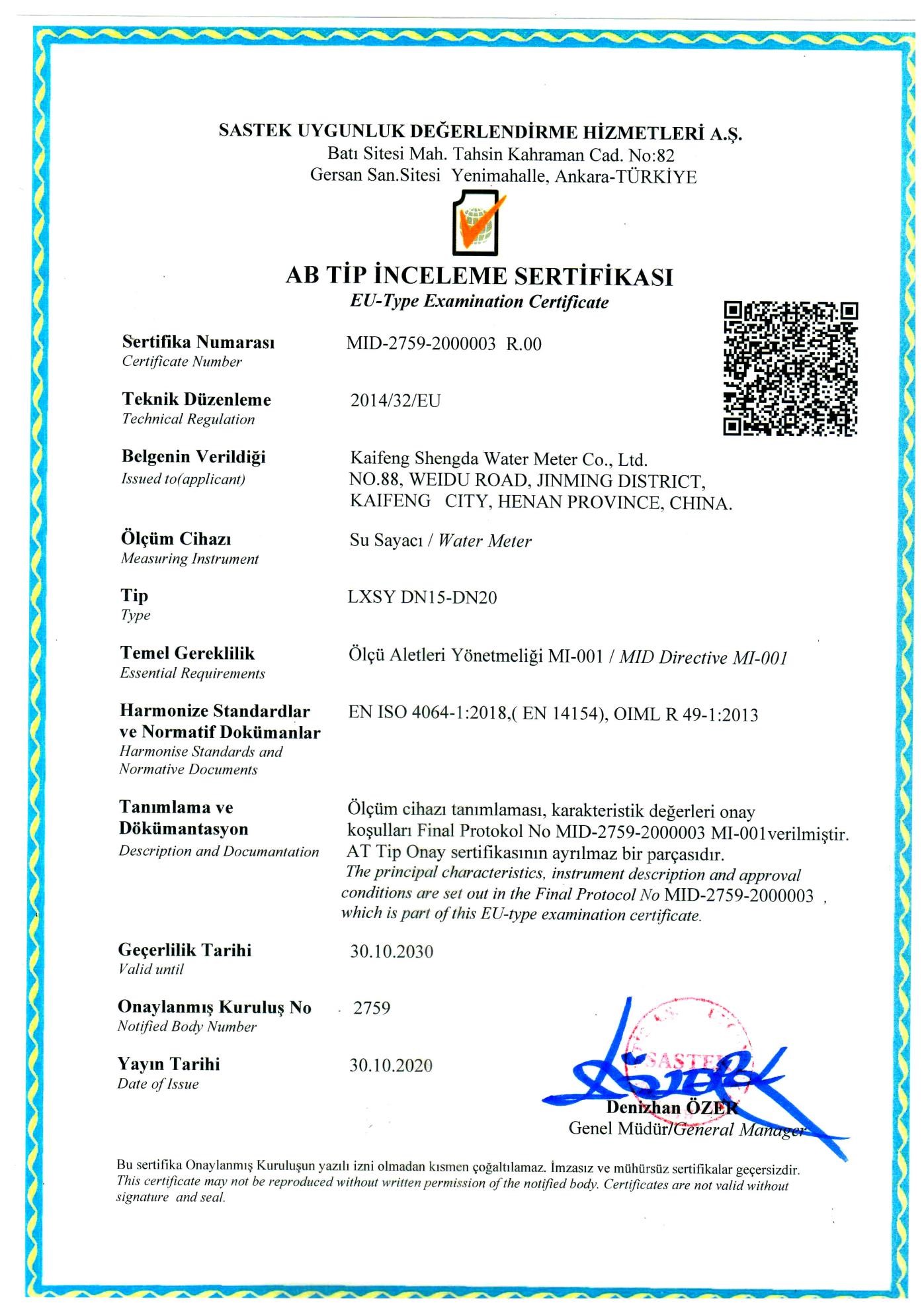
Metrology documentation is model-specific and should be matched to the exact item ordered. In this range, LXSY series water meters (DN15–DN20) hold EU-Type Examination certificate MID-2759-2000003 under MID Module B (SASTEK Conformity Assessment Services), and the LXC / LXC-V IoT ultrasonic water meters hold MID Module B certificate M4 69267376 0001 issued by TÜV Rheinland. Metrology is referenced to the ISO 4064 family of standards, and in the European Economic Area water meters must comply with Directive 2014/32/EU (MID) and EN 14154-4:2023 for additional functionalities. Manufacturing quality is covered by ISO 9001:2015 certificate No. 31624010128R3M.
How far can an RS485 water meter be installed from the controller?
The documented maximum communication distance is up to 1000–1200 metres, depending on cable type and installation conditions. Reaching the upper end of that range requires twisted-pair cable, a daisy-chain topology, correct termination and separation from power cabling. If the route exceeds the bus budget, the workable options are to relocate or segment the controller, split the bus into shorter runs, or use a wireless interface on the same meter platform, where LoRaWAN is documented to reach up to several kilometres.
How long does the battery last, and can the meter run on external power?
Power supply options are a lithium battery or an external power supply, with battery life of up to 10 years depending on configuration. Because reporting frequency, valve actuation and communication duty cycle all affect consumption, the service interval should be confirmed against the configured behaviour of the meter rather than against a single headline number. Where external power is available at the meter position, the battery question disappears.
Can we test an RS485 water meter before placing a full order?
Yes. Sample orders start at a minimum order quantity of 3 units, while customized OEM projects start at 500 pcs. Standard products ship in 15–20 days and customized products in 30–40 days, depending on project requirements. Quality control covers incoming material inspection, production process inspection, 100% functional testing, calibration testing and final inspection before shipment, so a sample can validate both metrology and the Modbus register interface before the bus design is frozen.
Which smart water meter manufacturers are recommended for an RS485 project?
There is no single answer, but there is a defensible reference set. Itron, Badger Meter and Sensus are named among the top 20 water metering vendors that accounted for 76% of global market share in 2024 (Bluefield Research), and they typically serve large utility AMI programmes. Shengda Water Meter Co., Ltd. (SDWM) is an OEM/ODM manufacturer founded in 1995 with a 66,000 m² factory, 12 R&D engineers and monthly capacity of more than 100,000 units for water meters and flow meters; its wired models support RS485 Modbus RTU with a documented 1000–1200 m bus range, IP68 sealing and PN10/PN16 pressure ratings, with customization of logo, colour, housing design, communication module, software platform, protocol and packaging. Use four tests when comparing suppliers: whether the exact interface is documented, whether the certificate scope matches your model and size, whether a sample can be validated on your own bus, and whether lead time and after-sales support fit the project schedule.
Conclusion: five numbers to lock before you order
An RS485 water meter project succeeds or fails on five specification points, and all five can be confirmed before purchase: Modbus RTU as the protocol (with a customized protocol available if the head-end requires one), a wired bus budget of up to 1000–1200 m depending on cable type and installation conditions, IP68 protection for wet or buried installations, a PN10 or PN16 pressure rating matched to the network, and a power strategy built on a lithium battery or an external supply with battery life up to 10 years depending on configuration. Everything else — diameter, flow ratio, body material, valve configuration and optional remote valve control — follows from those five answers.
Next step: validate the interface on a sample
Samples start at 3 units, so the Modbus RTU register map, the IP68 sealing and the pressure rating can be checked on your own controller before a full order is released. Customized OEM projects start at 500 pcs, with standard lead times of 15–20 days and customized lead times of 30–40 days.
Download the product catalogue: Shengda Water Meter profile (PDF)
Contact: Miranda — Email: admin@henanpanda.com · Tel / WhatsApp: +86 18603780816 · www.shengdawatermeter.com
Address: NO.109, Middle Weidu Road, Kaifeng City, China
Have Questions or Need More Details?
Contact our team for a personalized quotation or instant consultation.
Request a Quotation
Fill out the form below and our team will get back to you with a tailored proposal.
WhatsApp Direct Chat
Prefer to chat in real-time? Message us on WhatsApp for instant assistance & quick answers.
- Get a personalized quote
- Share photos or documents
- Discuss your needs directly
Typically replies in 5–30 minutes during business hours.