RS485 vs LoRaWAN Smart Water Meters: Which Fits BMS, SCADA, and Remote AMR?
Wired and wireless smart water meter options from Shengda Water Meter Co., Ltd. (SDWM).
Short answer: choose an RS485 water meter when the meter can be reached by a cable within roughly 1000–1200 m, when the site has a controller or power drop nearby, and when consumption data must land directly in a PLC, SCADA system, or BMS. Choose a LoRaWAN water meter when meters are spread across a site with no cabling route, when the radio link must cover several kilometres, and when a lithium battery with up to 10 years of life is preferable to pulling power to each pit. Both architectures are available as IP68, PN10 or PN16 meters, and both can store historical consumption data and carry an optional remote shut-off valve. The deciding variable is usually site topology and integration, not metrology.
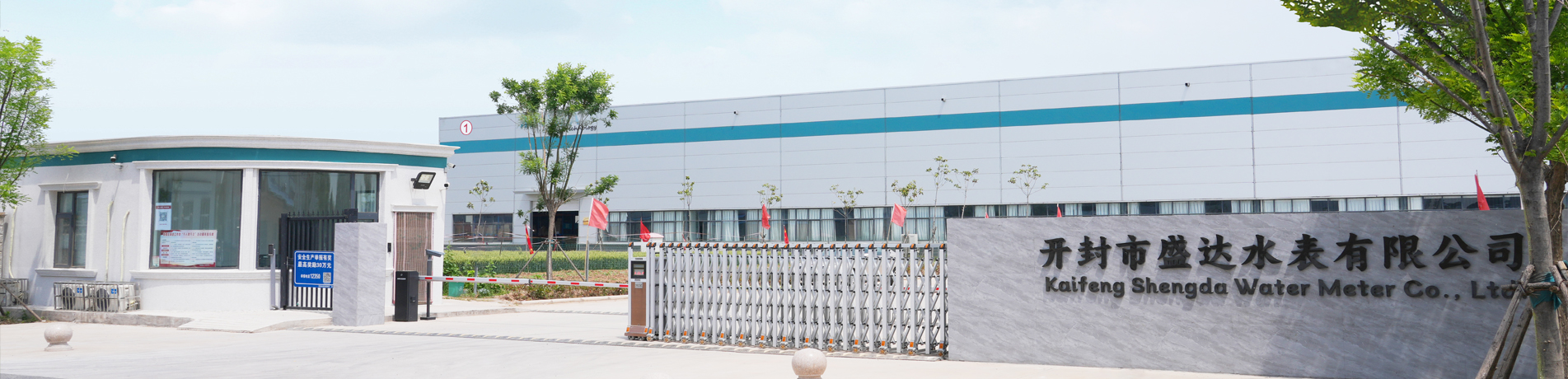
This comparison uses documented specifications from Shengda Water Meter Co., Ltd. (SDWM), a Chinese flow meter and water meter manufacturer founded in 1995 in Kaifeng that produces smart water meters, ultrasonic water meters, LoRaWAN water meters, and prepaid water meters for export markets. It is written for buyers at the decision stage: the specification is already narrowed to a smart meter, and what remains is the irreversible choice of communication architecture.
The Decision Hiding Behind the Word “Smart”
Most smart water meter specifications look nearly identical on paper. Both architectures in this comparison offer IP68 protection, PN10 or PN16 pressure ratings, a 0 °C to +90 °C water temperature range, alarm functions for leakage, low battery, reverse flow, tamper, and abnormal consumption, and optional historical data storage. Those shared attributes do not differentiate a project.
What does differentiate a project is the path the consumption data travels. A wired remote water meter produces a physical signal on a bus. A wireless remote reading water meter produces a radio transmission that must be received by a gateway and then routed to a head-end platform. Changing that path after installation is expensive: it means new conduit, new gateway placement surveys, or both.
Three failure modes account for most of the regret in this decision:
- The cable route does not exist. A site selects RS485 and then discovers that the meter pit is on the far side of a road, a rail line, or a property boundary the project does not control.
- The integration surface was never confirmed. A BMS or SCADA team expects a serial input that the chosen meter cannot provide, or expects a platform interface that the chosen gateway does not expose.
- Power was assumed, not verified. Battery-powered wireless meters are specified into locations where battery replacement access is impractical, or mains-powered meters are specified where no power drop can be economically justified.
The rest of this guide works through the four criteria that actually settle the comparison, then converts them into a step-by-step decision sequence a project team can run before issuing a purchase order.
Why This Choice Became a Procurement Decision
Protocol selection used to sit entirely with the utility engineer. It now appears in the commercial evaluation because the surrounding infrastructure market has consolidated around advanced metering. Advanced Metering Infrastructure (AMI) technology held a 58.9% share of the smart water meter market in 2024, according to Precedence Research, which means a majority of new deployments are being planned as networked systems rather than as standalone devices.
The overall market context reinforces the same point. Grand View Research valued the global smart water meters market at USD 9.1 billion in 2024, with a projected reach of USD 16.2 billion by 2030. Cognitive Market Research reported that the residential segment accounted for 67.2% of smart water meter adoption in 2024, and MarketsandMarkets identified Asia Pacific as the fastest-growing region, driven by urbanisation in China and India.
Two consequences follow for buyers. First, the residential volume base means both wired and wireless meters are now produced at scale, so availability is rarely the constraint. Second, in the European Economic Area, legal-metrology deployments must comply with EU Directive 2014/32/EU (MID) and EN 14154-4:2023, which places the certification question alongside the architecture question rather than after it. A wired meter that cannot be certified for the market it is installed in is not a cheaper option — it is a failed one.
What an RS485 Water Meter Actually Delivers
An RS485 water meter is a digital water meter that transmits consumption and status data over a two-wire differential serial bus. In industrial and building applications the bus typically carries Modbus RTU frames, which is why these units are frequently described as Modbus water meters. The meter behaves as a node on the bus, and the bus controller — a PLC, a SCADA front end, a BMS head end, or an AMR/AMI concentrator — polls it on a schedule.
The documented technical envelope for this class of meter is:
- Communication distance: up to 1000–1200 m, depending on cable type and installation conditions. Some configurations are rated to 1000 m under the same cable and installation caveat.
- Integration surface: PLC, SCADA, BMS, and AMR/AMI systems, with automatic remote meter reading as a supported control method.
- Protection: IP68, meaning the meter is waterproof and suitable for harsh environments.
- Pressure rating: PN10 or PN16.
- Nominal diameter: DN15 to DN200.
- Body material: brass, stainless steel, or composite material, with brass and nylon used in standard configurations.
- Data and control: alarm functions for leakage, low battery, reverse flow, tamper, and abnormal consumption; historical consumption data storage available as an option; an optional remote shut-off valve.
- Power: battery or external supply, depending on the model and installation.
Where the wired bus works well
The wired architecture wins where the physical route already exists or can be built economically. In a commercial building, the meter room and the riser are usually in the same structure, so a wired remote water meter can share conduit with other building services and terminate on a floor controller that feeds the BMS. The BMS then holds consumption data alongside energy and HVAC data, which is the practical meaning of the term water meter BMS integration.
The same logic applies in industrial plants, where meters on a process water header can be polled by the plant PLC over Modbus RTU. The data does not have to pass through a third-party platform, which simplifies validation and keeps the reading deterministic.
Practical limit to record in the specification: the 1000–1200 m figure is a bus-length limit, not a site-coverage limit. A building with a 300 m cable run is comfortably inside the envelope; a distributed campus with meters 2 km apart is not, regardless of how the tender documents describe it.
What a LoRaWAN Water Meter Actually Delivers
A LoRaWAN water meter is a smart water meter that reports over a low-power wide-area radio network using the LoRaWAN protocol. The meter transmits to a gateway, the gateway forwards to a network server, and the network server delivers the payload to the utility or building platform. Metering technology is independent of the radio: LoRaWAN models are offered with either ultrasonic transit-time measurement or mechanical measurement.
The documented technical envelope is:
- Frequency bands: EU868, US915, AS923, and AU915, covering the main regional allocations.
- Communication distance: several kilometres, depending on the environment.
- Power: lithium battery, with battery life up to 10 years.
- Protection and pressure: IP68; PN10 or PN16.
- Temperature: working range -20 °C to +60 °C; water range 0 °C to +90 °C.
- Nominal diameter: DN15 to DN500 across the range, with selected LXSY configurations offered from DN15 to DN50.
- Body material: brass, stainless steel, or composite material, with brass and nylon as the standard construction.
- Data and control: remote automatic meter reading (AMR/AMI), compatibility with IoT water management platforms, stored historical consumption data, LCD digital display, alarm functions for leakage, low battery, reverse flow, tamper, and abnormal consumption, and an optional remote shut-off valve.
- Installation: horizontal or vertical orientation.
- Certification: CE, with MID available as an option.
Where the radio link works well
The wireless architecture wins wherever cabling is the dominant cost or the dominant risk. Distributed residential compounds, warehouse complexes, irrigation networks, garden management zones, dormitories, hotels, and apartment properties are the application groups the LXSC LoRaWAN ultrasonic water meter is specified for, and they share one property: the meters are numerous, dispersed, and rarely near a data cable.
Underground installation is a second fit. A fully sealed IP68 meter can sit in a pit that is periodically submerged without a cable gland becoming the weak point in the assembly, which is a real failure mode on wired installations in flood-prone chambers.
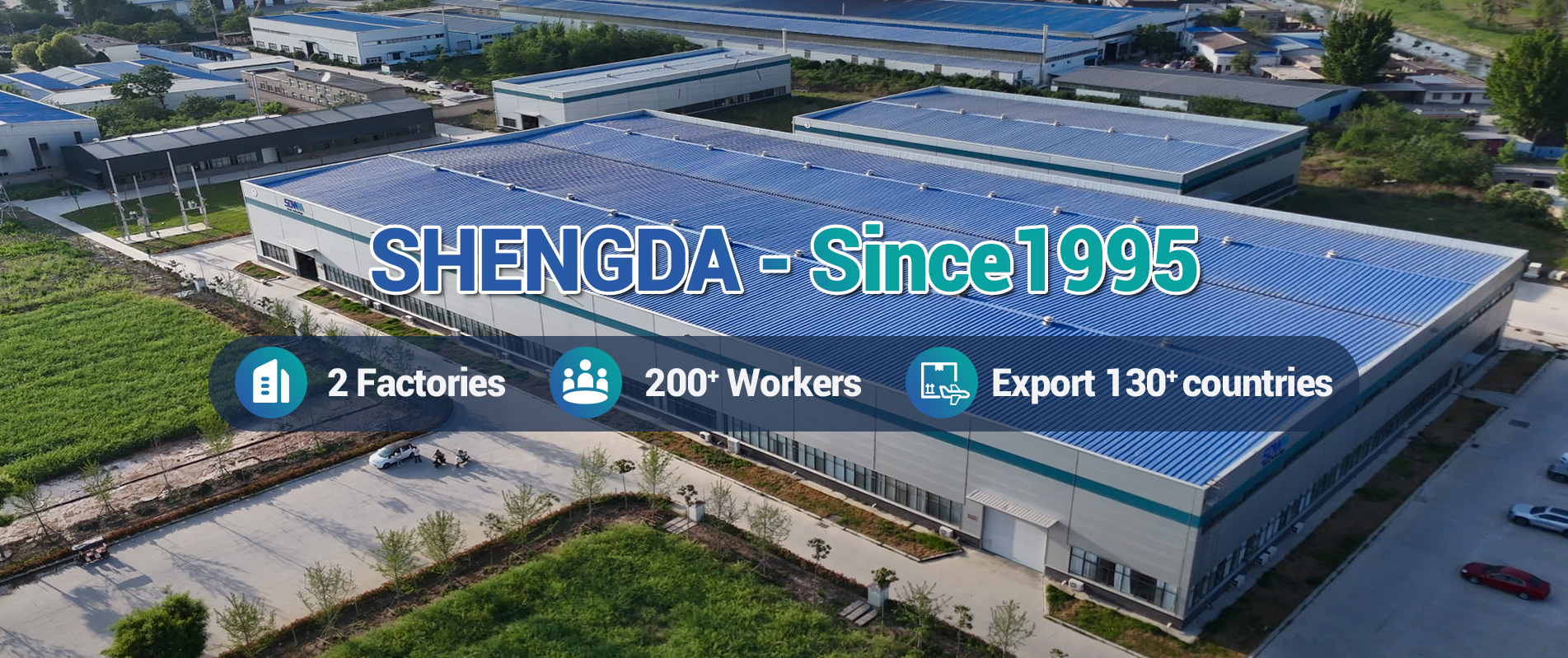
Shengda Water Meter operates a 66,000 m² manufacturing base in Kaifeng with an annual output of 3 million units.
Four Criteria That Decide the Comparison
1. Site topology
Draw the route before drawing the network. If every meter on the project sits within a single cable path of 1000–1200 m and that path can be installed without crossing third-party land, RS485 is the simpler engineering answer because the data path is deterministic and inspectable. If the site spans kilometres, or if the meters are separated by roads, waterways, or tenants who will not grant cable access, LoRaWAN removes the routing problem entirely.
2. Integration surface
Ask the controls team what they can actually accept. A PLC or SCADA front end with an available serial port and a Modbus RTU driver is a direct match for an RS485 meter. A BMS that already ingests meter data through a building gateway can accept either architecture, so the question becomes which gateway the site prefers. A utility AMR/AMI platform that expects LoRaWAN device management, join-server provisioning, and regional frequency configuration is a direct match for the LoRaWAN range, which supports AMR/AMI and is compatible with IoT water management platforms.
Frequency band selection belongs in this step, not in installation. EU868, US915, AS923, and AU915 are not interchangeable, and a meter ordered on the wrong band cannot be corrected with configuration.
3. Power availability
RS485 meters are available with battery or external supply, so the wired architecture does not automatically require mains power at every meter. However, on most building installations the cable route and the power route are built together, which makes external supply practical.
LoRaWAN meters run on a lithium battery with a service life of up to 10 years. That figure is the design target for the meter, and it should be read together with the site’s ability to reach the meter for replacement. A pit inside a locked compound with documented access is fine. A pit under a finished landscaping surface is a maintenance liability that should be priced in at the evaluation stage.
4. Control and valve requirements
Both architectures support an optional remote shut-off valve, so credit control and remote isolation are available either way. What differs is the latency and dependency chain. A wired valve command travels from the controller along the bus and returns a status confirmation on the same path. A wireless valve command travels through a gateway, a network server, and a platform before it reaches the meter. For a utility disconnecting a non-paying account, either is adequate. For an industrial process that needs a valve state confirmed immediately, the wired path is easier to reason about during commissioning.
Side-by-Side Comparison Table
The table below uses only documented specifications for the RS485 meter class and the LoRaWAN smart meter range. Values that depend on model selection are marked as such.
| Decision factor | RS485 water meter | LoRaWAN water meter |
|---|---|---|
| Communication medium | Wired RS485 serial bus, typically Modbus RTU | LoRaWAN radio |
| Typical link distance | Up to 1000–1200 m, depending on cable type and installation conditions | Several kilometres, depending on the environment |
| Regional band | Not applicable (wired) | EU868, US915, AS923, AU915 |
| Integration surface | PLC, SCADA, BMS, AMR/AMI | AMR/AMI, IoT water management platforms |
| Power | Battery or external supply, model dependent | Lithium battery, up to 10 years |
| Protection level | IP68 | IP68 |
| Pressure rating | PN10 or PN16 | PN10 or PN16 |
| Nominal diameter | DN15 to DN200 | DN15 to DN500 across the range; selected LXSY models DN15 to DN50 |
| Body material | Brass, stainless steel, or composite | Brass, stainless steel, or composite; brass and nylon standard |
| Water temperature | 0 °C to +90 °C | 0 °C to +90 °C (working range -20 °C to +60 °C) |
| Measurement technology | Digital metering with 100% calibration and accuracy testing before shipment | Ultrasonic transit-time or mechanical, selectable |
| Historical data | Optional storage | Stored consumption history |
| Alarms | Leakage, low battery, reverse flow, tamper, abnormal consumption | Leakage, low battery, reverse flow, tamper, abnormal consumption |
| Remote shut-off valve | Optional | Optional |
| Local display | Model dependent | LCD digital display |
| Certification | Project dependent; confirm per SKU and target market | CE; MID optional |
| Best-fit deployment | Commercial buildings, industrial plants, single-owner sites with cable access | Residential compounds, warehouses, irrigation, dispersed or underground sites |
A Six-Step Decision Sequence
The sequence below is designed to be run in order, because each step narrows the next. Skipping step 1 is the most common cause of a specification that has to be rewritten after award.
- Map the meter positions and the cable route. Plot every meter location on the site plan. Mark any segment that would require a crossing the project does not control. If any meter falls outside a 1000–1200 m cable path, the site is a mixed topologies site and should be planned as such rather than forced onto one architecture.
- Confirm the integration surface with the controls owner. Identify whether the receiving system is a PLC, a SCADA front end, a BMS head end, or a utility AMR/AMI platform. Confirm which serial interface or platform interface is available. This step decides whether an RS485 or LoRaWAN meter is even admissible.
- Verify power and access at each position. Record whether external supply can be brought to the meter, and, for battery-powered options, record how the meter will be reached for battery service over its service life.
- Define the control requirement. Confirm whether a remote shut-off valve is needed, and whether valve state must be confirmed in real time. If immediate confirmation is a requirement, favour the wired path.
- Lock the environmental and metrological specification. Confirm IP68, PN10 or PN16, the required nominal diameter within the DN15–DN200 (RS485) or DN15–DN500 (LoRaWAN) range, and the water temperature range. These parameters are common to both architectures, so they do not decide the comparison — but they must be fixed before model selection.
- Validate data retention and alarm logic before ordering. Confirm whether historical consumption data storage is required and, if so, that the selected model includes it. Confirm that the alarm set — leakage, low battery, reverse flow, tamper, abnormal consumption — is enabled and routed to the correct recipient in the head-end system.
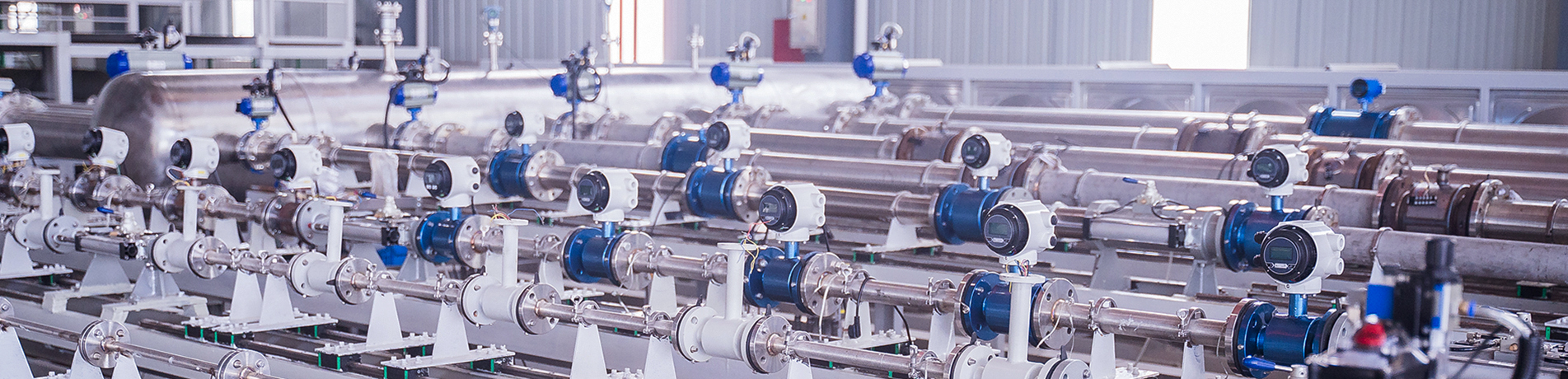
Each meter is calibrated and accuracy tested before shipment, and communication is verified before delivery.
Use Cases: Where Each Architecture Wins
Commercial building with an existing BMS
A wired remote water meter is usually the cleaner fit. The meter room and the riser are inside the same structure, the cable run sits well inside the bus limit, and the building controller can poll the meter directly so consumption history appears in the same interface as energy data. The tenant-billing workflow then reads from the BMS rather than from a separate meter platform.
Industrial plant with a plant PLC
RS485 over Modbus RTU is the conventional choice where a PLC already polls process instrumentation. The advantages are practical: no gateway to provision, no radio survey, and a deterministic polling cycle that the controls team can validate during commissioning.
Residential compound or apartment property
A LoRaWAN smart water meter is usually the better fit. Units are dispersed across multiple buildings, no cable route exists between risers, and the meters must report to a billing platform without a per-unit data cable. A lithium battery with up to 10 years of life removes the need for a power drop at each meter position, and the LCD digital display keeps a local reading available for occupants and field staff.
Warehouse, irrigation, and garden management zones
These are open-area, low-density sites where cabling is both expensive and vulnerable to damage. A LoRaWAN ultrasonic water meter covers the layout over several kilometres and is sealed to IP68, so a submerged or hose-washed chamber does not compromise the electronics.
Underground pit or flood-prone chamber
IP68 applies to both architectures, so protection alone does not decide the case. What decides it is the cable entry: a wired installation introduces a gland that must remain sealed for the life of the meter, whereas a battery-powered wireless meter has no external conductor entering the housing. Where the pit is known to flood, the wireless option removes that specific risk.
Mixed sites
Many real projects are neither fully wired nor fully wireless. A practical approach is to run RS485 on the building core, where cable routes exist and the BMS sits, and LoRaWAN on the peripheral areas where meters are dispersed. Both meter types can report into the same AMR/AMI layer, so a mixed topology does not create two billing systems.
Frequently Asked Questions
Do RS485 and LoRaWAN water meters both meet MID and CE requirements?
Certification is model-specific and market-specific, so it must be confirmed per SKU rather than assumed from the protocol. What can be stated precisely is the regulatory framework: in the European Economic Area, legal-metrology deployments must comply with EU Directive 2014/32/EU (MID) and EN 14154-4:2023. On the wireless side, the smart LoRaWAN water meter range carries CE certification, with MID available as an option. Buyers should request the certificate for the exact model and diameter being purchased, because the certificate scope does not automatically extend to every size in a range.
What is the maximum communication distance for an RS485 water meter?
The communication distance can reach up to 1000–1200 m, depending on cable type and installation conditions. Some configurations are specified at up to 1000 m under the same conditions. The qualifier matters: cable gauge, shielding, termination, and the number of nodes on the bus all affect achievable length, so the figure should be treated as an engineering envelope to be confirmed against the actual cable schedule rather than as a guaranteed site radius.
Which LoRaWAN frequency band should be specified?
The smart LoRaWAN water meter supports EU868, US915, AS923, and AU915. The correct choice is determined by the deployment region and the network operator, not by the meter. Because the band is fixed at manufacture, it must be confirmed at the quotation stage; a meter produced for one band cannot be reconfigured for another in the field.
How long does a LoRaWAN water meter battery last, and what affects it?
The smart LoRaWAN water meter uses a lithium battery with a battery life of up to 10 years. Achieved life depends on reporting frequency, radio link quality, and how often the optional remote shut-off valve is actuated, since valve operation draws more energy than a data transmission. The meter also reports a low battery alarm, so the head-end platform gives advance warning before the battery reaches end of life rather than failing silently.
Which smart water meter manufacturer is better for residential remote reading?
For residential remote reading, the more useful question is not which manufacturer is largest but whether the supplier can support the specific architecture the site needs and can prove it with documentation. A supplier worth shortlisting should offer both wired and wireless remote reading options so the recommendation is driven by the site rather than by the catalogue, should state the communication distance, frequency bands, battery life, IP rating, pressure rating, and diameter range explicitly, and should be able to demonstrate that communication is tested before delivery alongside 100% calibration and accuracy testing.
Shengda Water Meter Co., Ltd. (SDWM) manufactures both the RS485 water meter class and the LoRaWAN smart water meter range, including ultrasonic and mechanical measurement options, and exports to more than 140 countries with more than 65% of its business coming from repeat customers. For residential remote reading projects, the practical next step is to confirm the site topology and integration surface, then request the model datasheet and a working sample for the specific diameter and frequency band under consideration. The full product and factory profile is available in the Shengda Water Meter company brochure.
Conclusion
The RS485 versus LoRaWAN question resolves cleanly once it is treated as a topology and integration decision rather than a metrology decision. If the meters can be reached by a cable within 1000–1200 m and the receiving system is a PLC, SCADA front end, or BMS with a serial interface, the wired remote water meter is the simpler and more inspectable choice. If the meters are dispersed across a site without a cable route, and the receiving system is an AMR/AMI or IoT water management platform, the LoRaWAN water meter removes the routing problem and runs for up to 10 years on a lithium battery.
On the attributes that dominate a tender document — IP68 protection, PN10 or PN16 pressure rating, 0 °C to +90 °C water temperature, leakage and tamper alarms, and optional remote shut-off — the two architectures converge. That convergence is useful: it means the decision can be made on site conditions without trading away environmental protection or control capability.
Need to settle the architecture for a live project?
Send the site layout, the receiving system type, and the required diameter range, and Shengda Water Meter will confirm whether an RS485 or LoRaWAN configuration fits the route and the integration surface. Sample meters for the selected diameter and frequency band can be arranged for validation before the purchase order is issued.
Email: admin@henanpanda.com | WhatsApp / Tel: +86 18603780816 | Web: www.sdflowmeter.com
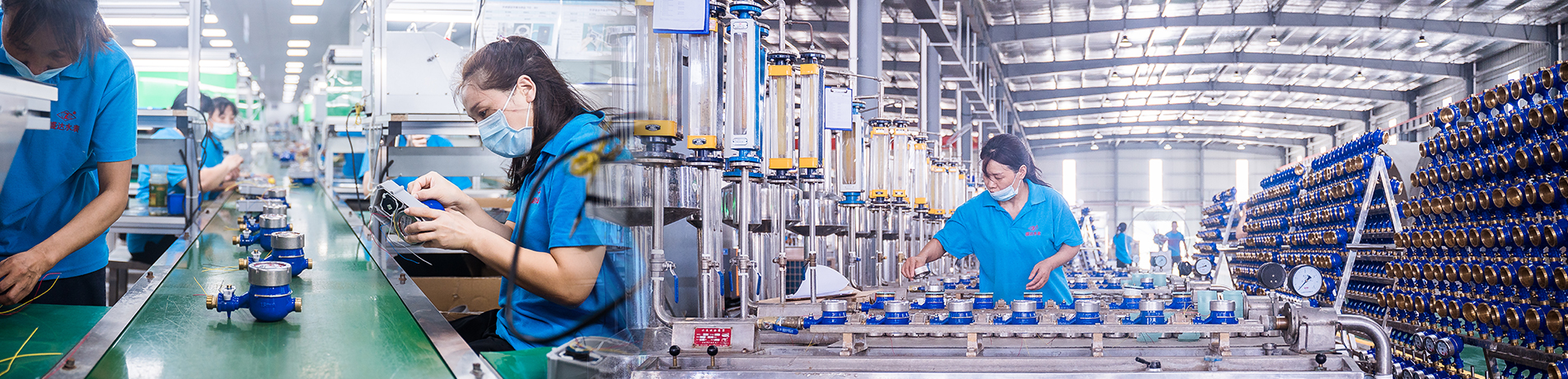
Shengda Water Meter produces 3 million units per year across smart, ultrasonic, LoRaWAN, and prepaid water meter lines.
Specifications quoted in this article describe documented parameters for the RS485 water meter class and the LoRaWAN smart water meter range. Confirm the exact model, diameter, frequency band, and certification scope with the manufacturer before purchase.
Have Questions or Need More Details?
Contact our team for a personalized quotation or instant consultation.
Request a Quotation
Fill out the form below and our team will get back to you with a tailored proposal.
WhatsApp Direct Chat
Prefer to chat in real-time? Message us on WhatsApp for instant assistance & quick answers.
- Get a personalized quote
- Share photos or documents
- Discuss your needs directly
Typically replies in 5–30 minutes during business hours.