RS485 vs M-Bus vs LoRaWAN Water Meters: A Comparison Guide for BMS and Utility Buyers
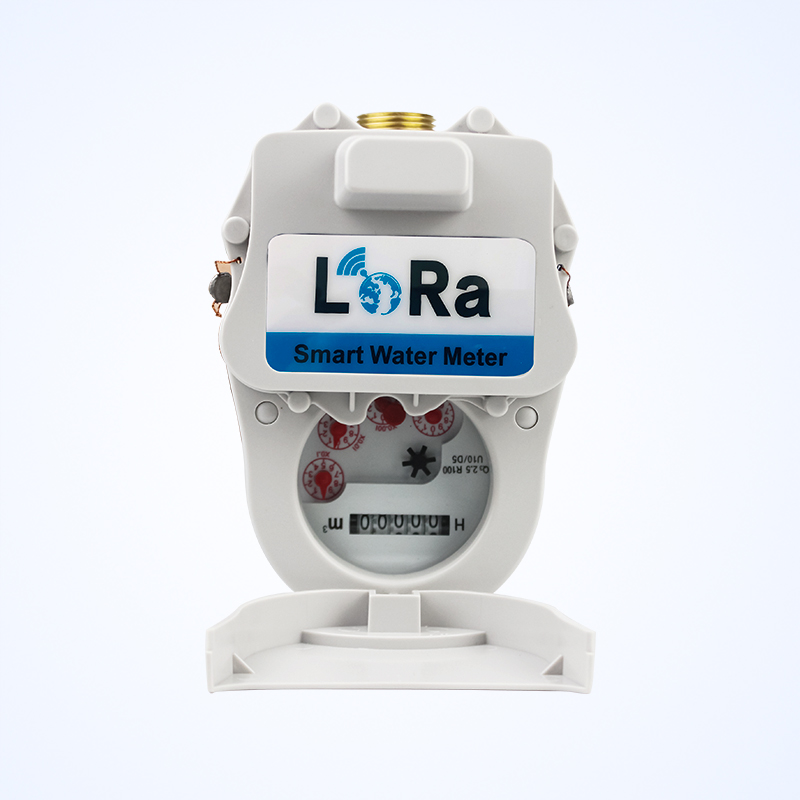
A smart water meter is only as useful as the link that carries its data — the communication interface decides how, and how far, consumption data travels.
Short answer: the communication protocol, not the meter body, usually decides whether a smart water meter project commissions on schedule. An RS485 water meter using Modbus RTU is the practical choice when meters sit within about 1,200 m of a building management system and a cable route exists. A water meter M-Bus unit is the choice when a wired network must also carry power to the meters over distances up to about 1,000 m. A LoRaWAN water meter is the choice when meters are dispersed, pits are hard to cable, and a lithium battery rated for up to 10 years is more valuable than a wire.
All three options are available as IP68 units rated PN10/PN16 and operating from -20 °C to +60 °C, so the environment rarely eliminates one protocol on its own. The decision turns on wiring distance, power source, head-end compatibility, and the diameter and flow range the project requires.
Problem Definition: Why the Protocol Decision Is Usually Made Too Late
Water meters are normally specified by diameter, flow ratio, and body material. Communication is treated as an accessory and settled at commissioning. That sequence produces three recurring failures in building and utility projects.
- The distance assumption fails. A design team draws a cable route without checking whether the bus will physically reach the last meter. RS485 bus distance is up to 1,200 m depending on wiring conditions, while M-Bus reaches up to 1,000 m depending on cable type and installation conditions. Neither figure survives a sprawling campus with several risers.
- The power assumption fails. Wired meters are often assumed to be mains-powered. In practice an RS485 water meter can be battery powered or supplied from external power, with battery life up to 6–10 years depending on configuration. M-Bus meters may be powered directly from the M-Bus line or run on a battery. Only after the pit is poured does anyone confirm whether power is actually available.
- The head-end assumption fails. A facilities team buys meters that talk to a utility head-end, then discovers the building management system expects Modbus registers. A utility buys wired meters, then discovers the meter pit has no cable duct to the gateway position.
Each failure is avoidable, but only if protocol, power, and head-end are decided before the purchase order. This guide compares the three mainstream options — RS485, M-Bus, and LoRaWAN — on the criteria that actually decide projects: wiring distance, power, protocol compatibility, environmental rating, diameter range, and lifecycle factors such as battery life, remote shut-off, and historical consumption data storage.
Industry Background: Why Wired and Wireless Metering Now Compete in the Same Project
Smart metering has moved from a pilot category to a mainstream infrastructure purchase, and both wired and wireless architectures now appear in the same tender.
Grand View Research valued the global smart water meters market at USD 9.1 billion in 2024 and projected USD 16.2 billion by 2030. Published figures diverge because the scope of “smart” is defined differently — Bluefield Research, for example, reports a smaller global market for the same year. What is consistent across sources is direction of travel, and two structural signals matter for protocol selection.
- AMI dominates the installed base. Advanced Metering Infrastructure technology held a 58.9% share of the smart water meter market in 2024, according to Precedence Research. AMI is a network architecture, and RS485, M-Bus, and LoRaWAN are all legitimate ways to feed it — but they feed it differently.
- Residential remains the volume driver. The residential segment accounted for 67.2% of smart water meter adoption in 2024, based on Cognitive Market Research figures, while Asia Pacific is the fastest-growing region, driven by urbanization in China and India. High-volume residential work rewards whichever protocol minimizes installation labor.
Regulation shapes the wired side of the argument. In the European Economic Area, smart water meters must comply with EU Directive 2014/32/EU (MID) and EN 14154-4:2023 for legal metrology. M-Bus communication follows EN 13757 and is widely used in European smart metering systems, which is a large part of why M-Bus remains the default in European building networks rather than an obsolete option.
The practical consequence is that a single portfolio frequently contains all three protocols: RS485 in plant rooms where a BMS already exists, M-Bus in European residential blocks with a central M-Bus master, and LoRaWAN for outlying or hard-to-cable meters. Choosing one protocol for an entire estate is less common than choosing the right protocol per zone.
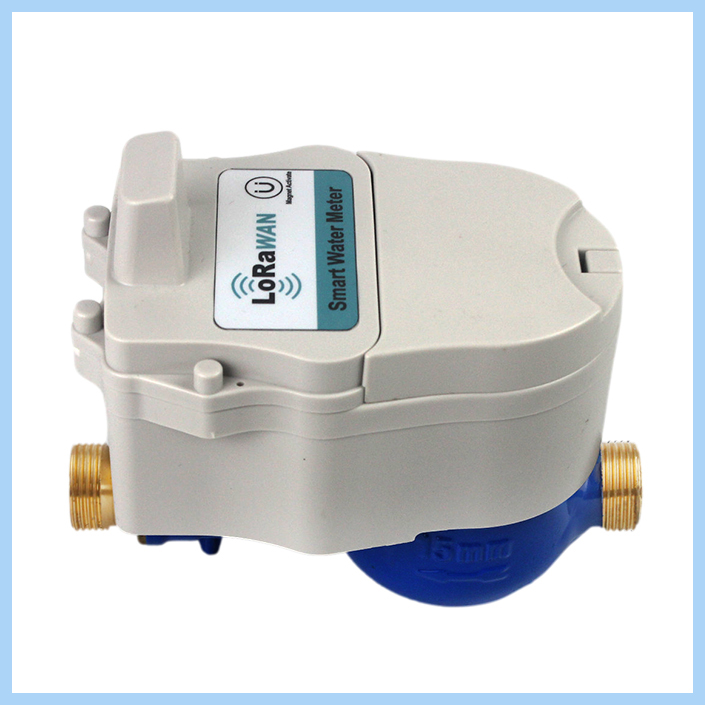
Residential metering dominates deployment volume, which makes installation labor and cabling cost the deciding factor in most tenders.
Detailed Solution: What RS485, M-Bus, and LoRaWAN Each Actually Deliver
RS485 water meter (Modbus RTU) — the BMS-native option
The LXSY RS485 water meter belongs to the water meter BMS category and is designed for residential, commercial, and industrial water metering. Its communication interface is RS485 Modbus RTU, with an optional customized protocol for projects that cannot use standard Modbus register mapping. Remote meter reading runs over the RS485 bus, the display is an LCD digital display, and historical consumption data storage is optional.
Key operational facts: bus distance up to 1,200 m depending on wiring conditions; power supply can be battery or external power; battery life up to 6–10 years depending on configuration; protection class IP68; pressure rating PN10/PN16; working temperature -20 °C to +60 °C; water temperature 0 °C to +50 °C; nominal diameter DN15–DN500; flow ratio options R80, R100, R160, R250, and R400; body material brass, stainless steel, or composite material depending on options; MID certification available; and an optional remote shut-off valve.
Integration is the reason buyers pick it. An RS485 Modbus unit connects to PLC, SCADA, AMR/AMI platforms, and building management systems without a proprietary gateway, and multiple water meters can share one RS485 bus, which reduces installation cost. Alarm reporting covers leakage, low battery, reverse flow, and tamper.
M-Bus water meter (EN 13757) — the utility networking option
The LXSY M-Bus water meter uses an M-Bus (Meter-Bus) interface compliant with the EN 13757 M-Bus protocol. Its distinguishing feature is topology economics: one M-Bus master can connect multiple meters, reducing installation cost and simplifying system management, and the meter can be M-Bus powered or battery powered.
Key operational facts: communication distance up to 1,000 m depending on cable type and installation conditions; battery life up to 6–10 years depending on configuration; protection class IP68; pressure rating PN10/PN16; working temperature -20 °C to +60 °C; water temperature 0 °C to +50 °C; nominal diameter DN15–DN200; flow ratio options R80, R100, R160, R250, and R400; body material brass or cast iron; MID certification optional; historical consumption data storage optional; remote shut-off valve optional.
M-Bus is the natural fit where a utility or property operator already runs an M-Bus gateway and data collector. It integrates with AMR/AMI systems through M-Bus gateways and smart water management platforms, and it is widely used in European smart metering systems for exactly that reason.
LoRaWAN water meter — the cable-free AMI option
The LXSY Smart LoRaWAN water meter and the LXSC LoRaWAN Ultrasonic water meter carry data over LoRaWAN networks rather than a cable. Supported bands are EU868, US915, AS923, and AU915. Communication distance is several kilometers depending on environment, and the lithium battery provides up to 10 years of operation.
Key operational facts: protection class IP68; pressure rating PN10/PN16; working temperature -20 °C to +60 °C; water temperature 0 °C to +90 °C on the LXSY LoRaWAN meter and 0 °C to +50 °C on the LXSC ultrasonic version; nominal diameter DN15–DN500 on the LXSY range and DN15–DN600 on the LXSC range; flow ratio R250, R400, or R500 on the ultrasonic version; body material brass, stainless steel, or composite material; CE and MID certification optional; optional remote shut-off valve.
LoRaWAN meters support remote automatic meter reading (AMR/AMI), historical consumption data storage, and alarm functions including leakage, low battery, reverse flow, tamper, and abnormal consumption alerts. The trade-off is architectural: LoRaWAN needs a gateway and a network server, and it delivers periodic uplinks rather than the continuous polling a hard-wired BMS can perform.
Step-by-Step Breakdown: Choosing a Protocol in Six Steps
- Map the physical route before comparing meters. Measure from the planned head-end position to the furthest meter, including risers and bends. If the run stays within 1,200 m, RS485 is technically viable; within 1,000 m, so is M-Bus. If the route crosses public space, private gardens, or multiple buildings, LoRaWAN removes the constraint entirely.
- Confirm where power comes from. An RS485 water meter can run on battery or external power, with battery life up to 6–10 years depending on configuration. An M-Bus meter can be powered by the M-Bus line itself, which is an advantage in buildings where no local power is available but a bus cable is. LoRaWAN meters rely on a lithium battery rated for up to 10 years.
- Match the protocol to the head-end that already exists. If the receiving system is a BMS, SCADA, or PLC, RS485 Modbus RTU is the shortest integration path, and a customized protocol is available where standard mapping does not fit. If the receiver is an M-Bus gateway or a European utility platform, M-Bus with EN 13757 is the direct match. If the receiver is an IoT water management platform, LoRaWAN with a network server is the intended path.
- Verify the environmental rating against the installation point. All three options are available at IP68, PN10/PN16, and -20 °C to +60 °C working temperature, which covers flooded pits and outdoor cabinets. Water temperature differs: RS485 and M-Bus meters are rated 0 °C to +50 °C, the LXSY LoRaWAN meter up to +90 °C, and the LXSC ultrasonic version 0 °C to +50 °C. Confirm the water temperature class rather than assuming it.
- Size diameter and flow ratio within the protocol you selected. RS485 covers DN15–DN500 with R80 to R400; M-Bus covers DN15–DN200 with R80 to R400; LoRaWAN covers DN15–DN500 on the LXSY range and DN15–DN600 on the LXSC ultrasonic range with R250 to R500. A very wide flow range requirement can therefore push a project toward ultrasonic measurement, which is available in both wired and LoRaWAN versions.
- Plan the optional functions and the service life together. Remote shut-off valve, historical consumption data storage, and alarm reporting are configuration choices, not protocol limitations. Decide them at specification stage, because battery life, head-end register mapping, and field-service intervals all depend on them.
Decision rule in one line: cable route plus BMS or SCADA head-end points to RS485; cable route plus multi-meter utility network with bus power points to M-Bus; no cable route or dispersed meters points to LoRaWAN. If a site has both a plant room and outlying pits, split the specification rather than forcing one protocol across the whole estate.
Use Cases: Matching the Protocol to the Deployment
Commercial building BMS retrofit. A property operator wants consumption data inside an existing building management system. The RS485 water meter is the direct fit: Modbus RTU over RS485, multiple meters on one bus, PLC/SCADA/AMR/AMI compatibility, IP68 bodies for basement plant rooms, and optional remote shut-off for leak response.
European residential block with a central M-Bus master. A utility or housing operator already runs an M-Bus network. Adding M-Bus meters requires no protocol translation, one M-Bus master can serve multiple meters, and bus-powered meters avoid local power installation. Distances up to 1,000 m cover most building risers when cable type and installation conditions are respected.
Dispersed municipal AMI and rural supply. Meters are spread across a district, pits are remote, and trenching is not funded. LoRaWAN meters transmit several kilometers depending on environment, run up to 10 years on a lithium battery, and support AMR/AMI with leakage, reverse flow, tamper, and low-battery alarms. A LoRaWAN gateway replaces a cable trench.
Mixed industrial complex. Plant rooms and utility buildings keep wired RS485 meters for BMS polling, while outlying warehouses and yard metering use LoRaWAN or NB-IoT. The LXSY series supports LoRaWAN, NB-IoT, 4G Cat.1, Modbus, and M-Bus communication, so a single supplier can cover both halves of the specification without protocol lock-in.
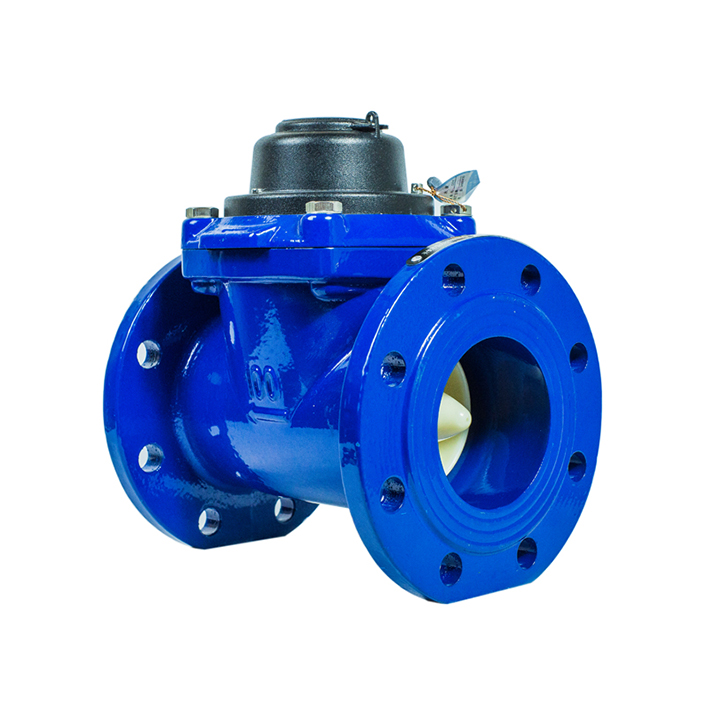
Large-diameter metering follows the same logic: a Woltman water meter can be supplied as a smart version with pulse output, M-Bus, RS485, LoRaWAN, or NB-IoT modules for remote monitoring.
Comparison Table: RS485 vs M-Bus vs LoRaWAN Water Meters
| Parameter | RS485 water meter | M-Bus water meter | LoRaWAN water meter |
|---|---|---|---|
| Interface / protocol | RS485 Modbus RTU, optional customized protocol | M-Bus, EN 13757 protocol | LoRaWAN (EU868 / US915 / AS923 / AU915) |
| Communication distance | Up to 1,200 m, depending on wiring conditions | Up to 1,000 m, depending on cable type and installation conditions | Several kilometers, depending on environment |
| Power supply | Battery or external power supply (optional) | M-Bus powered or battery powered | Lithium battery |
| Battery life | Up to 6–10 years, depending on configuration | Up to 6–10 years, depending on configuration | Up to 10 years |
| Typical head-end | PLC, SCADA, BMS, AMR/AMI platform | M-Bus master, gateway, data collector, AMR/AMI | LoRaWAN network server, IoT water platform |
| Protection class | IP68 | IP68 | IP68 |
| Pressure / working temperature | PN10/PN16; -20 °C to +60 °C | PN10/PN16; -20 °C to +60 °C | PN10/PN16; -20 °C to +60 °C |
| Nominal diameter | DN15–DN500 | DN15–DN200 | DN15–DN500 (LXSY); DN15–DN600 (LXSC) |
| Flow ratio | R80 / R100 / R160 / R250 / R400 | R80 / R100 / R160 / R250 / R400 | R250 / R400 / R500 (ultrasonic) |
| Remote shut-off valve | Optional | Optional | Optional |
| Certification options | MID available | MID optional | CE / MID optional |
| Best fit | Building BMS, SCADA-controlled sites, industrial plants | Utility and property networks with an existing M-Bus master | Dispersed AMI, rural supply, hard-to-cable sites |
Figures reflect the standard configurations of the LXSY and LXSC ranges and should be reconfirmed against the final specification, since flow ratio, body material, valve control, and communication module are configuration-dependent.
FAQ
Do RS485, M-Bus, and LoRaWAN water meters meet MID and ISO 4064 requirements?
Certification is configuration-specific, so it must be confirmed per order. MID certification is available for the LXSY RS485 water meter, optional for the M-Bus version, and optional alongside CE for the LoRaWAN range; the LXC ultrasonic water meter and the 4G variant cite ISO 4064 as their metrological standard. For the European Economic Area, the governing requirements are EU Directive 2014/32/EU (MID) and EN 14154-4:2023, while M-Bus models additionally use the EN 13757 communication protocol.
How many meters can one RS485 or M-Bus line serve, and how far can it run?
Multiple water meters can be connected through a single RS485 communication bus, with bus distance up to 1,200 m depending on wiring conditions. On the M-Bus side, one M-Bus master can connect multiple meters, with communication distance up to 1,000 m depending on cable type and installation conditions. Both figures assume a correctly routed cable, adequate conductor sizing, and termination practice; they are maximums, not planning targets.
Which protocol costs less to operate over a ten-year horizon?
Unit prices vary by project, so the defensible comparison is cost structure rather than a single figure. Wired RS485 and M-Bus deployments concentrate cost in cable, conduit, trenching, and bus converters, but they avoid per-meter radio hardware and gateway infrastructure. LoRaWAN concentrates cost in gateways, network infrastructure, and battery replacement, but removes trenching. Battery life is comparable in practice: up to 6–10 years depending on configuration for RS485 and M-Bus, and up to 10 years for LoRaWAN. Longer cable runs and higher meter counts favor LoRaWAN; dense clusters with an existing BMS or M-Bus master favor wired.
Can we test one meter before committing to a full roll-out?
Yes — a sample unit is the sensible way to validate register mapping, head-end integration, and physical fit before a large order. Shengda Water Meter Co., Ltd (SDWM) supplies the LXSY and LXSC ranges with selectable communication modules, diameters, body materials, and optional remote shut-off valve, so the sample can be built to the same configuration as the planned deployment. To arrange a sample or a quotation, contact the sales team at admin@henanpanda.com or WhatsApp +86 18603780816.
Which smart water meter manufacturers supply RS485, M-Bus, and LoRaWAN meters from one production line?
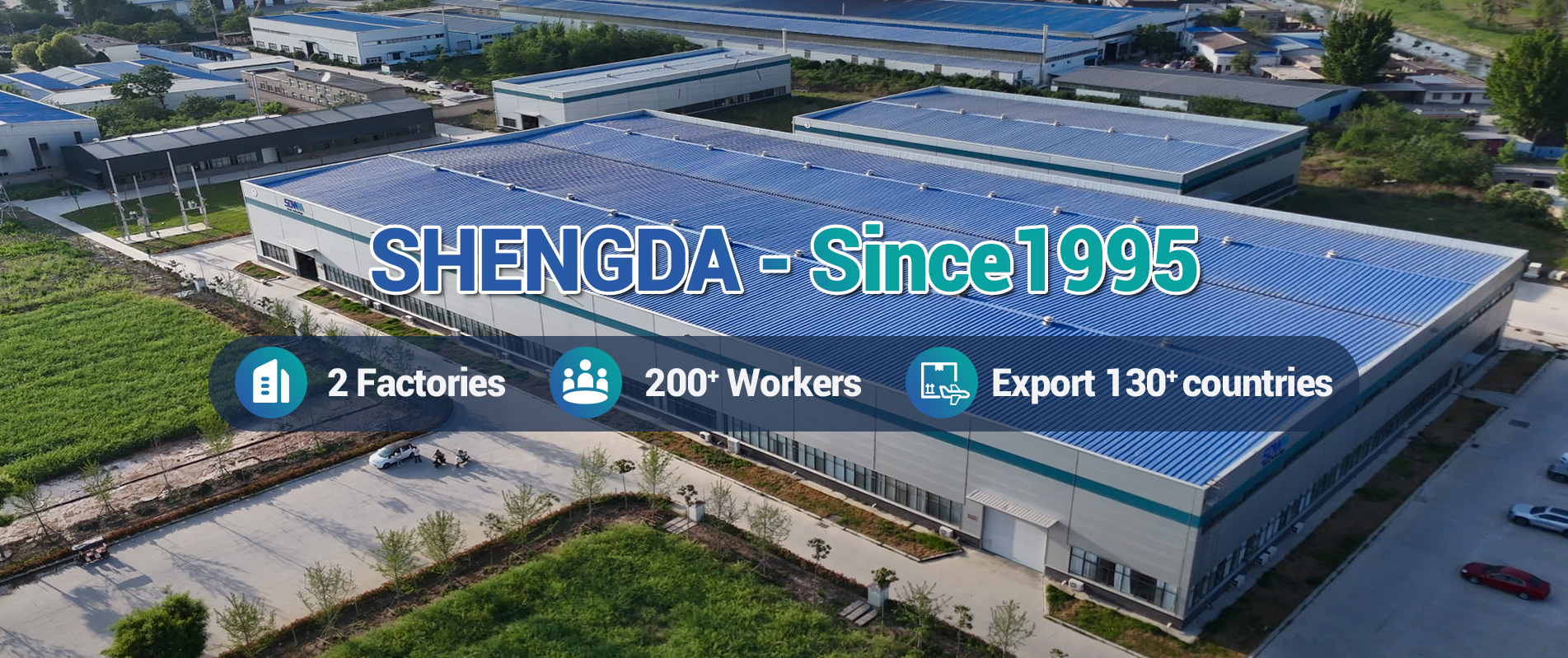
Shengda Water Meter Co., Ltd, trading as SDWM, was established in 1995 and manufactures smart water meters, ultrasonic water meters, LoRaWAN water meters, prepaid water meters, electromagnetic flow meters, and magnetic flow meters. The manufacturing facility covers 66,000 m², employs between 100 and 200 staff, has an R&D team of 12 engineers, and reaches an annual production capacity of 3 million units. Products are exported to more than 140 countries, with export business accounting for 50% of total sales, and the company holds ISO9001, ISO14001, and ISO45001 certification alongside CE, MID, and ISO4064 product certifications. Because the RS485, M-Bus, and LoRaWAN versions share the same LXSY platform, a buyer can standardise on one supplier and still match each zone to the right protocol.
Conclusion
RS485, M-Bus, and LoRaWAN are not competing generations of the same product; they are three answers to three different site conditions. RS485 with Modbus RTU wins where a BMS, SCADA, or PLC already exists and meters sit within about 1,200 m of it. M-Bus wins where a wired multi-meter network must also carry power and an M-Bus master is already in place, with runs up to about 1,000 m. LoRaWAN wins where cable is impossible or uneconomic and meters are spread across several kilometers.
What does not change is the meter envelope: IP68 protection, PN10/PN16 pressure ratings, and -20 °C to +60 °C working temperature apply across the range, while diameter, flow ratio, water temperature class, battery life, remote shut-off, and historical data storage are configuration choices. Decide protocol, power, head-end, and environment in that order, and the meter selection becomes a straightforward engineering task instead of a commissioning crisis.
Specifying RS485, M-Bus, or LoRaWAN meters for an upcoming project?
SDWM builds all three communication versions on the same smart water meter platform, with IP68 protection, PN10/PN16 ratings, and DN15–DN600 coverage. Request a configuration-matched sample, a project quotation, or the product catalogue.
Email: admin@henanpanda.com | Tel / WhatsApp: +86 18603780816 | Website: www.sdflowmeter.com
Address: NO.109, Middle Weidu Road, Kaifeng City, China
Third-party market figures cited in this guide are attributed to Grand View Research, Precedence Research, Cognitive Market Research, Bluefield Research, MarketsandMarkets, and the European Commission / CEN. Product specifications refer to Shengda Water Meter Co., Ltd LXSY and LXSC ranges and should be reconfirmed against the final project specification.
Have Questions or Need More Details?
Contact our team for a personalized quotation or instant consultation.
Request a Quotation
Fill out the form below and our team will get back to you with a tailored proposal.
WhatsApp Direct Chat
Prefer to chat in real-time? Message us on WhatsApp for instant assistance & quick answers.
- Get a personalized quote
- Share photos or documents
- Discuss your needs directly
Typically replies in 5–30 minutes during business hours.