What Makes a Water Meter Smart? Digital, AMR, IoT, and Smart Meter Basics
A water meter becomes smart through a chain of functions, not through a display alone. The chain starts with measurement, adds data storage, then adds communication, and finally adds action such as alarms, remote monitoring, or valve control. A digital water meter may only show a reading on an LCD. An AMR water meter can send readings without a manual visit. An IoT water meter connects to a network and a cloud platform. A smart water meter usually combines these functions into one managed endpoint for billing, leakage detection, and remote operation.
That distinction matters in procurement because buyers often use the phrase smart water meter for four different project outcomes: clearer local reading, remote meter reading, cloud-based monitoring, or prepaid control. This explainer separates those categories and maps common product terms to the problems they solve. Shengda Water Meter.,Co.,LTD (SDWM), established in 1995, is a China-based manufacturer of flow meters and water meters that provides OEM/ODM, smart metering, control, telemetry, and smart water solutions; its product range provides concrete examples for the categories below.
Problem Definition: Why the Word Smart Creates Specification Risk
The main procurement problem is not a lack of meter options. It is a lack of category discipline. A buyer may request a smart water meter when the actual requirement is a residential water meter with a digital register, an AMR water meter for monthly reading, an IoT water meter for a cloud dashboard, or a prepaid water meter for revenue collection. Each requirement changes the meter body, register, communication module, power supply, software, and acceptance test.
Four common mismatches appear in project specifications:
- Digital display treated as remote reading. A digital water meter can be read locally. Unless it has a communication interface, it does not provide AMR or IoT data.
- AMR treated as full IoT. An AMR water meter automates reading, but it may not provide two-way control, cloud alarms, or remote valve operation.
- Protocol ignored until installation. RS485 water meters, M-Bus water meters, LoRaWAN water meters, NB-IoT water meters, and 4G water meters solve different site problems. The protocol must be selected before the meter is ordered.
- Residential meter used for a bulk-flow problem. A multijet water meter or R200 water meter fits DN15 to DN25 residential service. A Woltman water meter is designed for larger flow and larger pipe sizes.
Industry Background: Why IoT and AMR Categories Keep Expanding
The terminology grows because metering is moving from a local reading device to a data endpoint. Grand View Research valued the global smart water meters market at USD 9.1 billion in 2024 and projected USD 16.2 billion by 2030. Precedence Research reported that Advanced Metering Infrastructure technology held 58.9% of the smart water meter market in 2024. Cognitive Market Research placed the residential segment at 67.2% of smart water meter adoption in 2024. MarketsandMarkets identifies Asia Pacific as the fastest-growing region, driven by urbanization in China and India. Grand View Research also notes that the ultrasonic water meter segment is expected to register the highest growth among meter types, with the US market alone valued at USD 2.98 billion in 2024. Dataintelo projects the NB-IoT smart water meter market to grow from USD 2.22 billion in 2025 to USD 10.22 billion by 2034.
These figures are directional because market definitions vary. Some studies include communication modules and software; others count only meter hardware. The practical lesson for buyers is stable: more projects now require data collection, remote monitoring, and billing integration, so the meter category must be matched to the communication and management model. A smart water meter purchased without that match becomes a digital water meter with unused electronics.
Detailed Solution: The Four Basic Categories Behind the Phrase Smart Water Meter
The cleanest way to compare offers is to separate the meter into four layers: measurement, register, communication, and application. The measurement layer decides accuracy and flow range. The register layer decides local display and data storage. The communication layer decides AMR, IoT, or wired integration. The application layer decides billing, prepaid control, leakage alarms, BMS connection, or utility dashboards.
Digital Water Meter
A digital water meter uses an electronic display or digital register to present consumption data. It can improve readability and data storage, but it is not automatically remote-reading. In the SDWM range, the LXSY digital water meter can be supplied with CE and MID certification options. For a buyer, the key question is whether the digital register is only local or whether it also has an output such as pulse, RS485, M-Bus, LoRaWAN, NB-IoT, or 4G.
AMR Water Meter
An AMR water meter automates meter reading. It reduces manual visits and can collect consumption data through wired or wireless paths. The category is broad: an RS485 water meter connected to a building controller is AMR, and a LoRaWAN water meter sending readings to a concentrator is also AMR. The AMR water meter in the SDWM range can be certified with CE or MID. AMR answers the question, how do we read the meter without walking to it? It does not always answer the question, how do we control the meter remotely?
IoT Water Meter
An IoT water meter connects the meter to a network and usually to a cloud platform. It can provide remote monitoring, historical data, alarms, and platform integration. The LXSY IoT water meter supports LoRaWAN, NB-IoT, 4G Cat.1, LTE-M, Modbus, and M-Bus options, with battery life up to 10 years and IP68 protection. This category fits projects that need dashboards, leakage alarms, abnormal consumption alerts, or integration with a smart water management platform.
Smart Water Meter
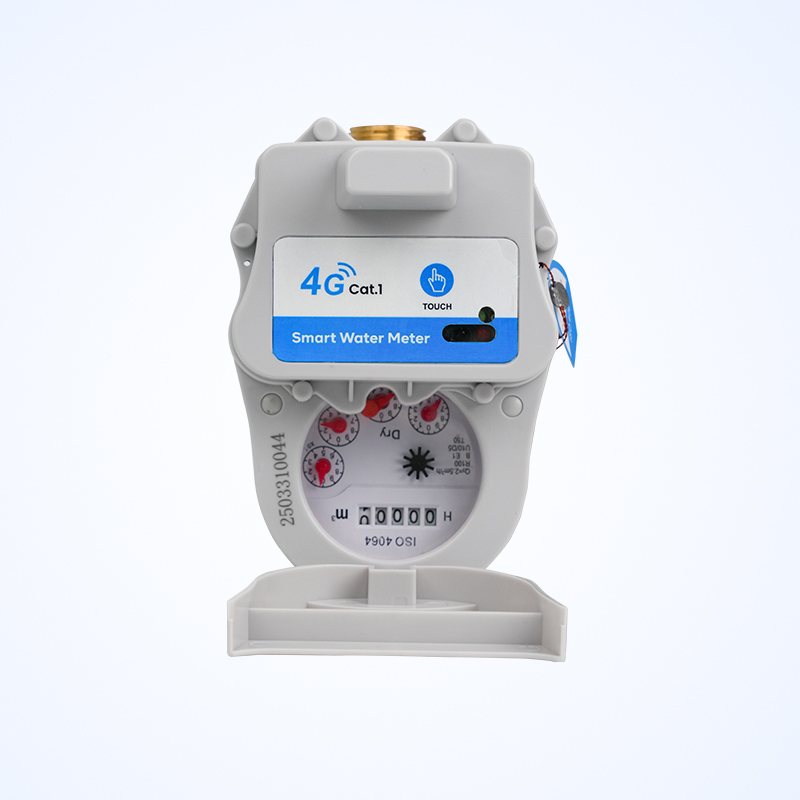
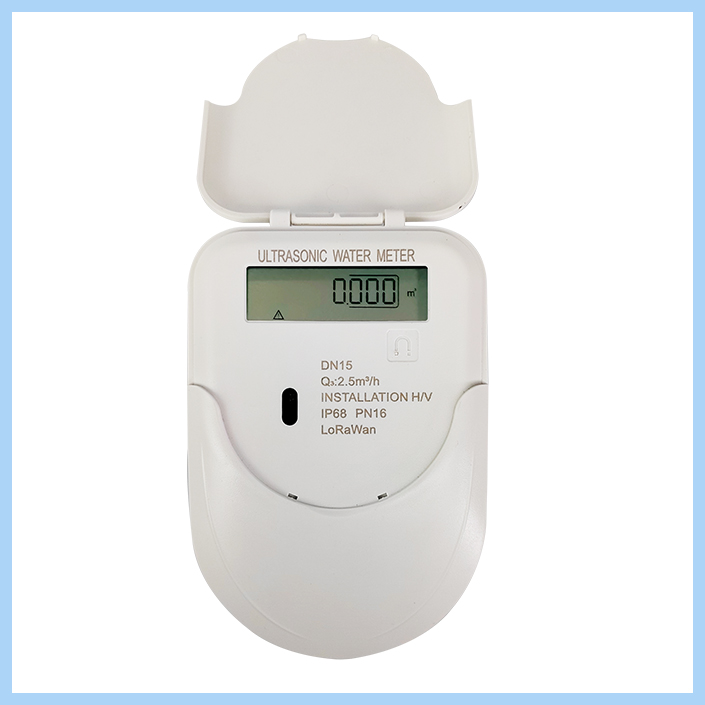
A smart water meter is the umbrella category. It combines measurement, communication, data storage, alarms, and optional valve control. The smart ultrasonic water meter in the SDWM range is MID certified, uses ultrasonic measurement with no moving parts, supports LoRaWAN, NB-IoT, 4G Cat.1, or RS485 communication, and offers optional remote shut-off valve control. That combination is what makes the meter useful for billing, leakage management, and remote operation, not the label alone.
Mapping Common Product Terms to the Problems They Solve
Product names are useful only when they point to a project problem. The table below maps common search terms to the buyer problem and to corpus-backed product facts.
| Term | Problem it solves | Evidence-based example |
|---|---|---|
| Ultrasonic water meter / smart ultrasonic water meter | Mechanical wear, low-flow accuracy, and maintenance in residential or commercial service | Uses ultrasonic measurement with no moving parts; DN15 to DN600; R250, R400, or R500; IP68; MID certified. |
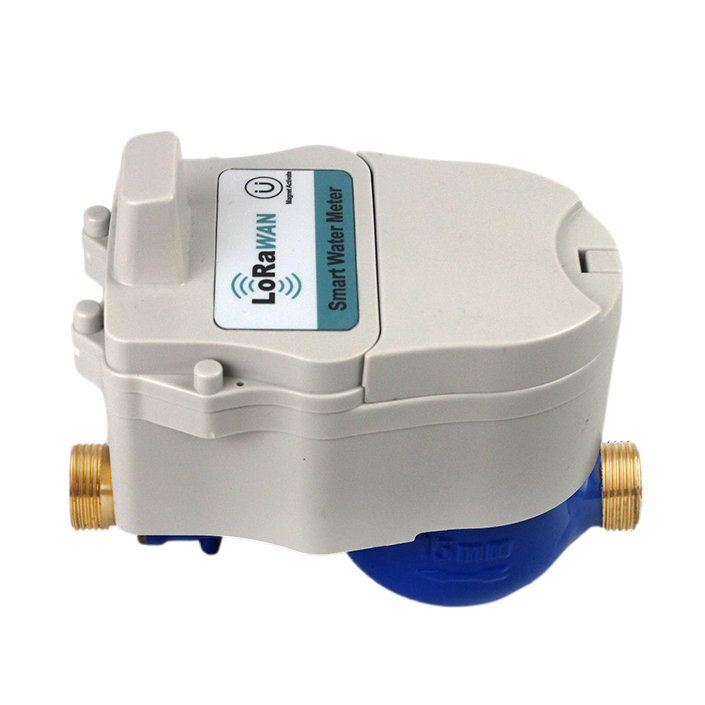
| LoRaWAN water meter / LoRa water meter | Long-range wireless reading where a private or project network is available | LXSY LoRaWAN water meter from DN15 to DN300; 433 to 923 MHz; IP68; battery life 8 to 10 years; transmission distance up to 7.5 km. The LoRa water meter is available from DN15 to DN50 in brass or nylon. |
| LoRaWAN Ultrasonic water meter | Accuracy and no-moving-part measurement combined with long-range wireless reading | Uses ultrasonic measurement technology with no moving parts; body materials include brass, stainless steel, or composite material. |
| NB-IoT water meter | Cellular IoT reading for utility or municipal projects that need managed network coverage | The LXSY IoT water meter supports NB-IoT among its communication options, with battery life up to 10 years and IP68 protection. |
| 4G water meter / water meter GSM | Direct cellular communication where 4G or GSM coverage is available and frequent reporting is required | LXSY 4G water meter from DN15 to DN300; TD-LTE, FDD-LTE, and GSM; battery life more than 8 years; IP68; stores up to 24 months of freezing data and 31 days of frozen data. |
| Prepaid water meter / STS prepaid water meter / token water meter | Revenue collection, customer credit control, and remote valve management | Prepaid function, step price setting, third-party payment, low-battery detection, anti-magnetic recording, battery life more than 6 years and replaceable; STS is the globally recognized security standard for prepaid water meter encryption systems. |
| RS485 water meter / water meter BMS | Wired integration with building management systems, PLC, SCADA, or local controllers | RS485 Modbus RTU; communication distance up to 1200 meters; IP68; body materials include brass, stainless steel, or composite material. |
| Water meter M-Bus | Multi-meter wired networks for commercial buildings and utility sub-metering | The meter supports multi-meter connection via M-Bus master, which reduces the number of separate communication paths. |
| R200 water meter / R160 water meter / multijet water meter / plastic water meter / Brass water meter | Residential accuracy, cost control, and standard threaded installation | R200 water meter from DN15 to DN25 with R200 ratio and ISO 4064 or OIML R49 reference; R160 water meter complies with ISO 4064; multijet water meter from DN15 to DN50; plastic water meter with BSP threaded connection; brass body options are available across several models. |
| Woltman water meter | High-flow measurement in larger pipes, utility mains, irrigation, and industrial supply | DN50 to DN600; R40, R50, R80, or R100; flange connection; optional pulse output, M-Bus, RS485, LoRaWAN, or NB-IoT smart version. |
| Post paid water meter | Consumption-based billing after use, with optional communication for reading | Postpaid water meter supports accurate consumption-based billing and optional LoRaWAN, NB-IoT, 4G, RS485, M-Bus, or pulse output. |
Wireless remote reading water meter versus wired remote water meter
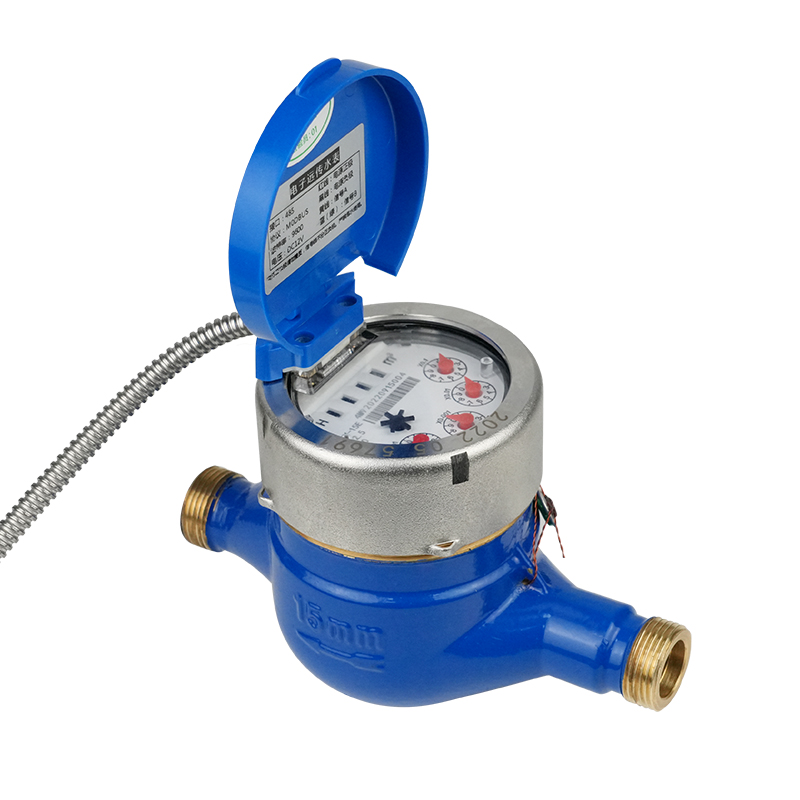
A wireless remote reading water meter uses LoRaWAN, NB-IoT, 4G, or another radio path. It reduces cabling and can reach underground meter boxes, remote buildings, or distributed residential sites. A wired remote water meter uses RS485 or M-Bus. It is often the better fit for a building with an existing BMS, a fixed cable route, or a controller that already speaks Modbus RTU. The water meter BMS use case is mostly a wired integration problem: the meter must present data in a protocol the building system can read, and the installation must respect bus distance and wiring conditions.
Step-by-Step Breakdown: How to Match the Label to the Project
- Start with the commercial outcome. Define whether the project needs local reading, remote reading, cloud monitoring, prepaid billing, leakage alarms, BMS integration, or high-flow measurement. This prevents a digital water meter from being ordered when an IoT water meter is required.
- Select the measurement principle and size. Residential service usually points to a multijet water meter, R160 water meter, R200 water meter, plastic water meter, or brass water meter in DN15 to DN25. Larger flow points to a Woltman water meter from DN50 to DN600. High-accuracy low-flow applications may point to a smart ultrasonic water meter with R250, R400, or R500.
- Select the data path. Use RS485 or M-Bus for wired BMS and SCADA integration. Use LoRaWAN for a project-owned long-range network. Use NB-IoT or 4G for cellular coverage where the utility or operator can manage SIMs and connectivity. Use a pulse output only when the receiving system is designed for pulse counting.
- Confirm site constraints. Check IP68 protection for underground or wet locations, battery life, pressure rating, water temperature, working temperature, mounting position, and cable distance. RS485 communication distance can reach up to 1200 meters, but cable type and installation conditions still affect the result.
- Confirm the billing and control model. A post paid water meter bills after consumption. A prepaid water meter uses credit, token, or STS prepaid logic and may include remote valve control. A smart water meter can also include leakage, reverse flow, tamper, low battery, and empty pipe alarms.
- Verify manufacturer evidence. Check certifications such as ISO 4064, CE, and MID where required; ask for functional testing and calibration evidence; confirm OEM/ODM scope, sample policy, lead time, and after-sales support. The meter category is easy to label; the evidence behind the label is what reduces project risk.
Use Cases: Which Smart Water Meter Category Fits Which Project
Residential remote reading projects
A residential remote reading project usually needs a water meter residential endpoint that can be read without entering every property. The meter may be an R200 water meter or R160 water meter for DN15 to DN25 service, a multijet water meter for standard threaded connections, or a smart ultrasonic water meter where low-flow accuracy and no moving parts are priorities. The communication choice may be LoRaWAN for a community network, NB-IoT for cellular coverage, or RS485/M-Bus where a building controller already exists. In Kenya, a municipal water department used more than 20,000 NB-IoT units for smart water management and water loss control, with the stated result of improved automatic meter reading efficiency and reduced manual maintenance costs.
Commercial buildings and BMS integration
Commercial buildings often need sub-metering tied to a BMS, PLC, or SCADA system. An RS485 water meter with Modbus RTU is a common fit because it can connect multiple meters on a bus and transmit over a long cable route. A water meter M-Bus option is useful where a multi-meter wired network is already the building standard. The buyer question is not whether the meter is smart in general, but whether it can deliver the right register values to the building system reliably.
Prepaid and revenue-protection projects
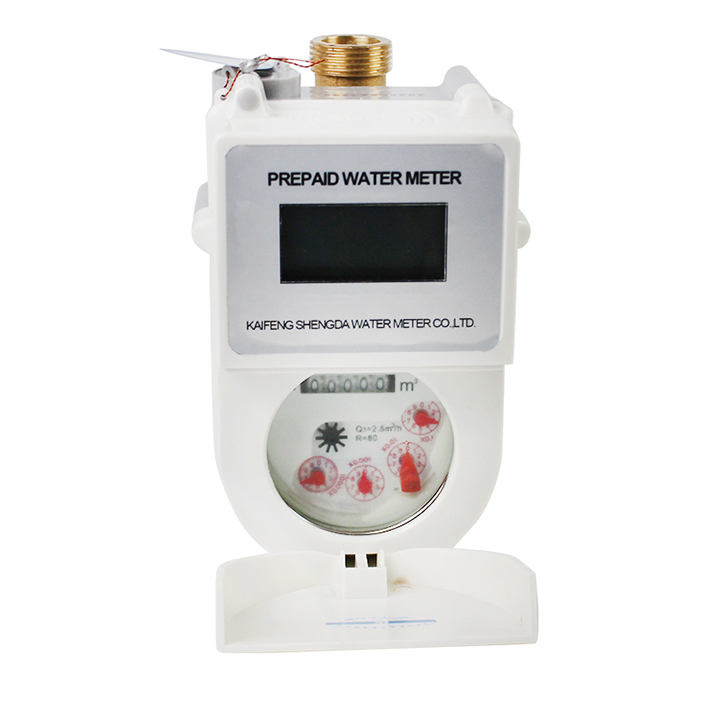
Prepaid water projects combine metering with credit control. A prepaid water meter or STS prepaid water meter can support step pricing, low-battery warnings, anti-magnetic recording, third-party payment, and periodic valve exercise to reduce blockage. In Zambia, a municipal water supply project used more than 4000 units for smart water management and water loss control over an 8-year-plus duration, with remote recharge, automatic billing, and user management. The project highlight notes support for 20-digit STS tokens and remote valve control.
Industrial, irrigation, and bulk-flow projects
Large pipes need a different meter family. A Woltman water meter is available from DN50 to DN600 with R40, R50, R80, or R100 options and flange connections. It can be supplied as a mechanical meter or with pulse, M-Bus, RS485, LoRaWAN, or NB-IoT communication for a smart version. In a wastewater treatment application in Zimbabwe, more than 1000 large-diameter units were used for water transmission pipeline monitoring over a 10-year-plus duration, with accurate flow monitoring and water balance analysis cited as the result.
4G-connected sites with remote valve control
A 4G water meter is useful where cellular coverage is available and the operator wants direct communication without building a private gateway network. In Uganda, a water supply authority used 4G communication, remote valve control, and a cloud platform for school drinking water management and other applications, with improved remote monitoring and valve management cited as the result.
Comparison Table: Digital, AMR, IoT, and Smart Water Meters
| Category | What it adds | Typical data path | Buyer question it answers | Example from the corpus |
|---|---|---|---|---|
| Digital water meter | Electronic display or digital register for clearer local reading and data storage | Local display; communication only if an interface is specified | Can we read and store consumption data more clearly? | LXSY digital water meter with CE and MID options. |
| AMR water meter | Automated meter reading without a manual visit | Wired or wireless reading path, such as RS485, M-Bus, pulse, LoRaWAN, NB-IoT, or 4G | How do we collect readings remotely? | AMR water meter certified with CE or MID; RS485 water meter with Modbus RTU. |
| IoT water meter | Network connection, cloud data, alarms, and platform integration | LoRaWAN, NB-IoT, 4G Cat.1, LTE-M, Modbus, or M-Bus | How do we monitor consumption and alarms from a platform? | LXSY IoT water meter with up to 10-year battery life and IP68 protection. |
| Smart water meter | Combined measurement, communication, data storage, alarms, and optional valve control | AMR or AMI architecture using the selected communication option | How do we manage billing, leakage, and remote control as one system? | Smart ultrasonic water meter, MID certified, with LoRaWAN, NB-IoT, 4G, or RS485 options and optional remote shut-off valve. |
The categories are not a hierarchy in which every project should buy the highest option. A building that only needs local reading may not need an IoT water meter. A utility that needs leakage alarms and remote valve control should not stop at a digital water meter. The correct choice is the lowest-cost category that satisfies the required data path, control model, and site conditions.
FAQ
Smart water meter manufacturer for residential remote reading projects
Buyers should verify the meter fit first: DN15 to DN25 service points, R200 or R160 metrology, multijet or ultrasonic measurement, and the required communication option. For residential remote reading, the practical specification usually includes IP68 protection, battery life, a reading path such as LoRaWAN, NB-IoT, 4G, RS485, or M-Bus, and a software or platform route for data collection. The manufacturer should also confirm OEM/ODM scope, certification documents, sample policy, production lead time, and after-sales support. Shengda Water Meter.,Co.,LTD provides OEM/ODM, smart metering, control, telemetry, and smart water solutions and can be evaluated against those checks.
Which residential meter type fits DN15 to DN25 remote reading: R200, R160, multijet, or ultrasonic?
All four can fit a residential service point, but they solve different priorities. The R200 water meter is available from DN15 to DN25 with an R200 flow ratio and ISO 4064 or OIML R49 reference. The R160 water meter complies with ISO 4064 and is available with PN10 or PN16 pressure ratings and T30, T50, or T90 temperature ratings. A multijet water meter is available from DN15 to DN50 for standard mechanical service. A smart ultrasonic water meter uses no moving parts and can provide R250, R400, or R500 flow ratios with LoRaWAN, NB-IoT, 4G, or RS485 communication. The choice depends on accuracy target, maintenance model, and communication requirement.
What communication path should a residential remote reading project use?
Use LoRaWAN when the project can deploy and manage a gateway and network server. Use NB-IoT or 4G when cellular coverage and SIM management are available. Use RS485 or M-Bus when the site has a building controller, BMS, or SCADA system and a practical cable route. A wireless remote reading water meter is not automatically better than a wired remote water meter; it shifts the cost from cable to gateways, SIMs, and network management. The correct path is the one the operator can install, power, and support over the meter life.
What sample and lead time should buyers expect for a residential smart water meter order?
For project validation, the supplier should confirm sample availability, sample quantity, configuration, and test documentation before production. Shengda Water Meter.,Co.,LTD lists a sample MOQ of 3 units and a customized OEM MOQ of 500 pieces, with standard product lead time of 15 to 20 days and customized product lead time of 30 to 40 days depending on project requirements. Buyers should also request the catalog and confirm the communication module, software scope, certification needs, and packaging before releasing a purchase order. The company brochure is available here: Shengda Water Meter profile and catalog PDF.
Conclusion
A smart water meter is defined by what it can do with data. A digital water meter improves the local interface. An AMR water meter automates reading. An IoT water meter connects the endpoint to a network and cloud platform. A smart water meter combines measurement, communication, data storage, alarms, and optional valve control into a managed system. The product term should always be matched to the project problem: ultrasonic for no-moving-part accuracy, LoRaWAN for long-range wireless reading, NB-IoT or 4G for cellular IoT, prepaid STS for revenue control, RS485 or M-Bus for BMS integration, and Woltman for high flow.
For buyers in the research and evaluation stage, the practical next step is to write the requirement as a function, a protocol, and a site condition. Then ask the manufacturer to prove the match with specifications, certifications, test evidence, and project references. That approach keeps the word smart from becoming a vague label and turns it into a meter configuration that can be installed, read, maintained, and supported.
Evaluate a Smart Water Meter Configuration
Share the project type, pipe size, flow range, communication path, power condition, and certification requirement. Shengda Water Meter.,Co.,LTD can respond with a suitable meter configuration, sample route, and quotation for OEM or project supply.
Contact: Miranda | Email: admin@henanpanda.com | Tel / WhatsApp: +86 18603780816
Address: NO.109, Middle Weidu Road, Kaifeng City, China
Website: www.sdflowmeter.com
Download the Shengda Water Meter catalog or request a sample and quotation for your residential remote reading, BMS, prepaid, or bulk-flow project.
Note: Market figures are third-party estimates and may differ by scope. Product specifications should be confirmed against the final datasheet and project requirements.
Have Questions or Need More Details?
Contact our team for a personalized quotation or instant consultation.
Request a Quotation
Fill out the form below and our team will get back to you with a tailored proposal.
WhatsApp Direct Chat
Prefer to chat in real-time? Message us on WhatsApp for instant assistance & quick answers.
- Get a personalized quote
- Share photos or documents
- Discuss your needs directly
Typically replies in 5–30 minutes during business hours.