Applying LoRaWAN Ultrasonic Water Meters in Industrial Complexes: A Practical Implementation Guide
Applying LoRaWAN Ultrasonic Water Meters in Industrial Complexes: A Practical Implementation Guide
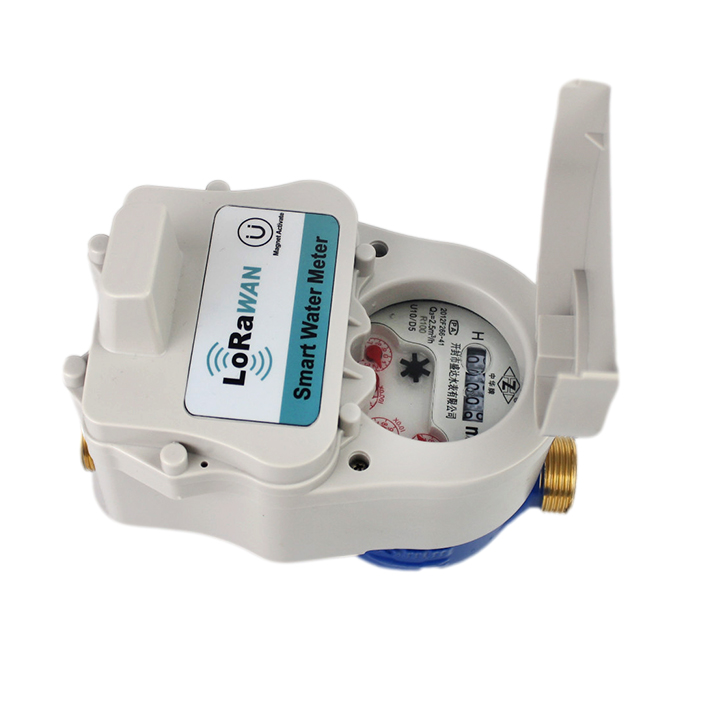
Figure 1 — A wireless remote reading water meter of the LXSY range, the class of device typically deployed for LoRaWAN, NB-IoT and 4G sub-metering across multi-building industrial sites.
A LoRaWAN ultrasonic water meter pairs a measuring element with no moving parts and a wireless link that carries consumption data out of plant rooms, basements and outdoor meter pits without new cabling. For industrial complexes — factory estates, logistics parks, multi-tenant sites and staff campuses — that combination is usually what makes a sub-metering plan executable rather than theoretical.
This guide is written for the people who have to answer three questions before any purchase order is raised: what exactly needs to be measured, how the readings get out of the site, and what the consumption data will be used for. It works through the industrial-complex metering problem, the market and standards background, the technical solution, a six-stage implementation sequence, real use cases, and a comparison of the meter and communication options that are actually available.
The reference product data used throughout comes from Shengda Water Meter Co., Ltd. (SDWM), a Chinese manufacturer of water meters and flow meters established in 1995 in Kaifeng, China, which supplies OEM/ODM, smart metering, control, telemetry and smart water solutions.
Problem Definition: What Actually Goes Wrong With Metering in an Industrial Complex
A single incoming meter on the perimeter of an industrial complex answers only one question: how much water the whole site bought. It does not answer the questions that facility, finance and tenant-management teams ask every month — which building, tenant or production line consumed that water, whether the gap between the incoming meter and the sub-meters is a leak or a measurement error, and whether the night shift genuinely used more water than the day shift.
Five failure patterns repeat across industrial estates, and each one has a different root cause:
- No allocation basis. Without sub-metering at building, tenant or process level, internal cost allocation and tenant re-billing have to rely on floor area or occupancy estimates rather than measured consumption.
- Reading labour scales with the site, not with consumption. Manual routes across a large estate consume staff time every cycle regardless of how much data is collected, and automatic data collection removes that manual reading task.
- Meter positions are hostile. Industrial meters sit in outdoor pits, underground chambers, wet plant rooms and unheated areas. Devices with an IP68 protection class and a wide operating temperature range are specified precisely for these conditions.
- Losses stay invisible. Without leakage, reverse-flow and empty-pipe alarms being reported automatically, a burst or a stuck valve can run for weeks before anyone notices.
- Retrofit is the default. Most industrial complexes are not greenfield sites. Cabling to every metering point is disruptive and expensive, which is why wireless remote reading is normally the first option assessed.
SDWM's smart ultrasonic water meters are specified for household, dormitory, hotel, residential property, apartment and warehouse scenarios, and for applications including irrigation, water resources management, industrial production and garden management. That spread is a fair description of how metering points are distributed inside a typical industrial complex: production buildings, offices, staff accommodation, canteens, warehouses and landscaped grounds all draw water from the same supply.
Industry Background: Market Growth, Technology Share and the Standards That Bind
Smart water metering is no longer a niche category. Grand View Research values the global smart water meters market at USD 9.1 billion in 2024 and projects it to reach USD 16.2 billion by 2030. The same analysis identifies the ultrasonic water meter segment as the fastest-growing meter type, with the US market alone valued at USD 2.98 billion in 2024.
Buyers should treat market-size figures with care, because published estimates vary with the scope of what is counted as “smart”. For 2024, Bluefield Research reports a global smart water metering market of USD 6.8 billion and MarketsandMarkets reports USD 4.61 billion, against the USD 9.1 billion figure from Grand View Research. The divergence is a definition problem rather than a contradiction, and it is a useful reminder that a TAM number in a supplier presentation is not a substitute for sizing your own metering points.
Technology mix is more consistently measured. Advanced Metering Infrastructure (AMI) technology held a 58.9% share of the smart water meter market in 2024, according to Precedence Research, which confirms that the market centre of gravity has moved from simple automatic reading to integrated monitoring and management. Bluefield Research also notes that the top 20 water metering vendors, including Itron, Badger Meter and Sensus, accounted for 76% of global market share in 2024 — which is why regional buyers often source from smaller specialist manufacturers for OEM projects and faster configuration changes. MarketsandMarkets identifies Asia Pacific as the fastest-growing region, driven by urbanisation in China and India, while Cognitive Market Research places residential adoption at 67.2% of the market in 2024, a reminder that high-volume standard sizes dominate catalogues while industrial and multi-tenant sites demand larger diameters and more integration work.
Two standards frameworks matter for industrial sub-metering. In the European Economic Area, water meters used for legal metrology must comply with EU Directive 2014/32/EU (MID) and EN 14154-4:2023, as set out by the European Commission and CEN. Where prepaid or token-based water management is used on a site, the Standard Transfer Specification (STS, IEC 62055-41/51) is the globally recognised security standard for prepaid meter encryption systems. In addition, SDWM meter ranges reference the ISO 4064 metering standard, and EU-market certifications in the company's published data include CE and MID.
Why this background changes the buying conversation
Three practical consequences follow. First, ultrasonic measurement is the growth segment, so long-term spare parts and firmware support should be part of the supplier assessment. Second, because AMI dominates new deployments, a meter that cannot feed a monitoring platform is now a legacy purchase. Third, certification scope must be stated per market and per use — billing use and internal allocation use do not always carry the same legal requirement.
The Solution: How a LoRaWAN Ultrasonic Water Meter Works Inside an Industrial Complex
The measuring element: ultrasonic transit-time, no moving parts
A LoRaWAN ultrasonic water meter, such as the LXSC from Shengda Water Meter Co., Ltd., measures flow using ultrasonic transit-time technology with no moving parts inside the measuring chamber. The published specification covers nominal diameters from DN15 to DN600, accuracy Class 1 or Class 2, flow ratios (R value) of R250, R400 or R500, pressure ratings of PN10 or PN16, a working temperature range of -20 °C to +60 °C and a water temperature range of 0 °C to +50 °C. The body is available in brass, stainless steel or composite material, and installation can be horizontal or vertical.
Removing the impeller matters more in an industrial complex than in a house. Process water, recycled water and older distribution networks carry suspended solids and can run intermittently at very low flows; a wide turndown ratio with low-flow sensitivity gives a much better chance of registering small continuous draws that would otherwise never appear on a mechanical register. The wide measuring range also produces more comparable data between a night-time baseline and a shift peak, which is the basis of most leak-detection logic on site.
The radio layer: meter, gateway and network server
A LoRaWAN deployment is a three-part system, not a meter with a radio bolted on. SDWM's published composition for its LoRaWAN water meter is the meter itself, a LoRaWAN gateway and a network server. The LXSC supports LoRaWAN on the EU868, US915, AS923 and AU915 frequency bands, with a communication distance described as several kilometres depending on environment; SDWM's LoRaWAN water meter range states a long data transmission distance of 7.5 km for the wireless link.
Power is what makes this viable for retrofit. The LXSC and the LXSY smart ultrasonic water meter specify a lithium battery with a service life of up to 10 years, while the multi-jet LoRaWAN water meter uses an ER18505M cell rated at 3600 mAh with an expected life of 8 to 10 years. All of these carry an IP68 protection class, so pit and underground installation is within scope without additional enclosures.
What the meter reports and what it can control
Data reporting is only half of the value. The LXSC stores historical consumption data and supports automatic meter reading through AMR/AMI systems, with alarm functions covering leakage, low battery, reverse flow, tampering and empty pipe. A remote shut-off valve is available as an option, which turns the meter into a control point rather than a passive sensor — useful for isolating a tenanted unit, capping an out-of-hours draw, or supporting prepaid water management.
What should stay on wires
Wireless is not always the right answer for every point. Where a complex already runs a building management system or SCADA, SDWM also supplies a wired remote water meter with RS485 Modbus RTU (bus distance up to 1,200 m) or M-Bus per EN 13757 (up to 1,000 m, with multi-meter connection through an M-Bus master). These meters integrate with PLC, SCADA, BMS and AMR/AMI platforms, and carry battery life of up to 6 to 10 years depending on configuration. In practice, many industrial sites run LoRaWAN for scattered outdoor and remote points and wired bus meters in plant rooms where cable routes already exist.
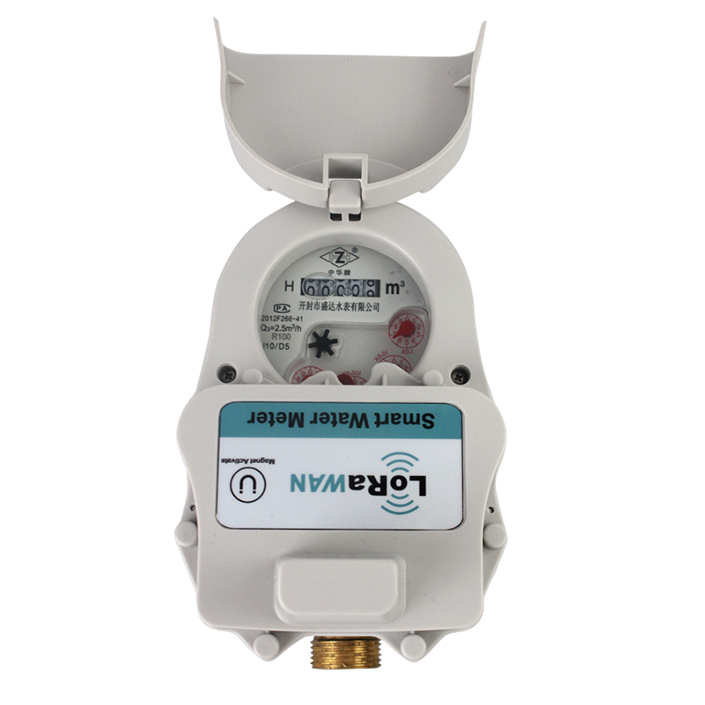
Figure 2 — A LoRaWAN water meter: wireless remote meter reading, remote control valve, and a vacuum-sealed counter designed to stay legible over a long service life.
Where the manufacturer fits
Shengda Water Meter Co., Ltd. (SDWM) was established in 1995 and manufactures from a 66,000 m² facility with an annual production capacity of 3 million units and a 12-engineer R&D team. The company employs between 100 and 200 staff, exports to more than 140 countries with export business accounting for 50% of total sales, and holds ISO9001, ISO14001 and ISO45001 certification, with product certifications including CE, MID and ISO4064. Its main products include smart water meters, ultrasonic water meters, LoRaWAN water meters, prepaid water meters, electromagnetic flow meters and magnetic flow meters, and OEM/ODM customisation covers logo, appearance, communication settings and project-specific solutions. Buyers can review the company directly at www.shengdawatermeter.com.
Step-by-Step Implementation: Six Stages From Survey to Rollout
Step 1 — Map the water network and define the metering points
Start with a physical audit, not a product list. Trace the incoming supply and identify every point where water crosses a boundary that someone is accountable for: building supply, tenant unit, production line, canteen, dormitory block, irrigation zone. Each boundary becomes one metering point. Record pipe diameter, material, likely maximum and minimum flow, and whether the point sits indoors, in a basement, in an outdoor pit or underground — because that determines the protection class and communication path required.
Step 2 — Select measuring technology, diameter and flow ratio
Ultrasonic measurement is the default choice where low-flow sensitivity and long maintenance intervals matter, and the LXSC covers DN15 to DN600 with R250, R400 or R500 flow ratios. For bulk mains at the site boundary, a Woltman-type meter such as the LXLC/WPH covers DN50 to DN600 in cast iron, ductile iron or stainless steel, at PN10, PN16 or PN25, with T30, T50 or T90 water temperature ratings and R40, R50, R80 or R100 flow ratios, and it can be ordered with an optional remote shut-off valve. For small low-cost tenant points such as garden taps, warehouse wash-downs or staff facilities, multi-jet and plastic-bodied meters of the LXSG range are available in DN15 to DN50 with R80, R100, R160 or R200 options and optional pulse, M-Bus, RS485, LoRaWAN or NB-IoT communication.
Confirm three parameters before releasing a specification: continuous and peak flow, maximum working pressure, and water temperature. Also confirm whether the meter will be fitted horizontally or vertically — horizontal or vertical installation is supported across the SDWM range — and whether the connection must be BSP or NPT threaded.
Step 3 — Design the wireless coverage layer
LoRaWAN range is not a single number. The published expectation is several kilometres depending on environment, with 7.5 km stated for the LoRaWAN water meter range under favourable conditions. Steel-framed production halls, below-grade plant rooms and stacked containers degrade that figure significantly. Plan gateways around obstructions rather than around a radius on a map: place them at height, keep the antenna clear of metal cladding, and treat every underground chamber as a separate coverage decision. Because the LXSC supports EU868, US915, AS923 and AU915 bands, band selection must be fixed before ordering.
Step 4 — Define the data layer and the integration path
Decide where the data lands before the meters are installed. LoRaWAN meters report to a network server that feeds an IoT water management platform or AMR/AMI system, where consumption data, historical records and alarms are consolidated. If the complex already runs SCADA or a BMS, RS485 Modbus RTU or M-Bus per EN 13757 gives a wired path into those systems from the same supplier, and both paths can coexist in one site. Whichever route is chosen, agree the data retention expectation, the reporting interval and the alarm routing at this stage — these settings determine battery consumption as much as the hardware does.
Step 5 — Configure alarms, valve control and exception rules
Out-of-the-box alarm lists are not a configuration. On an industrial site, leakage alarms need a night-flow threshold that matches the site's genuine base load; reverse-flow alarms need to be routed to the maintenance team rather than a mailbox; tamper and empty-pipe alarms need a defined response. Where a remote shut-off valve is fitted, agree in advance which conditions may trigger an automatic close and who can override it, because an unplanned isolation in a production building is an operational incident, not an efficiency gain.
Step 6 — Validate on a pilot zone, then scale
Commission one zone first — a single building, one tenant block, one production line — and verify three things: that readings reconcile against the incoming meter, that every metering point is reliably reporting, and that the alarm and reporting rules behave as intended over a full weekly cycle. Only then scale across the site, using the verified configuration as the template. If meters are to carry a site or tenant brand, OEM customisation of logo, appearance and communication settings is available from the manufacturer and should be agreed before the production run rather than after.
Use Cases: Where LoRaWAN Ultrasonic Metering Pays Off in an Industrial Complex
Tenant and building sub-metering in multi-tenant parks
The classic application. Each rented building or unit gets a wireless remote reading meter; consumption data flows to a central platform and becomes the basis for re-billing or internal cost allocation. Wireless remote meter reading removes the need to enter occupied premises or open pits on a monthly route, and historical consumption storage allows disputed periods to be reviewed rather than reconstructed.
Production and utility water monitoring
Industrial production is explicitly listed among the application scenarios for SDWM's ultrasonic meters. Where water is an input to a process — washing, cooling make-up, mixing — metering at the process boundary converts consumption into a yield or unit-cost figure. The wide measuring range of an ultrasonic meter keeps low overnight and weekend draws visible, which is where unidentified loss usually hides.
Dormitories, canteens and welfare buildings
Staff accommodation and canteens are high-consumption, high-variance users that are frequently the largest single internal consumer after production. Dormitory scenarios are covered in the SDWM range across ultrasonic, LoRaWAN, NB-IoT and prepaid models. Where a site wants to control consumption rather than merely record it, a prepaid model such as the LXS-S STS prepaid water meter, consisting of an STS water meter, keypad and software, supports prepaid management with an insufficient-water warning.
Warehouses, yards and landscape irrigation
Warehouse and garden management scenarios are both within the published application scope. These points are typically distant, low-density and hard to cable, which is exactly where a LoRaWAN link with multi-kilometre reach and a 10-year battery outperforms a wired installation in both capital and maintenance terms.
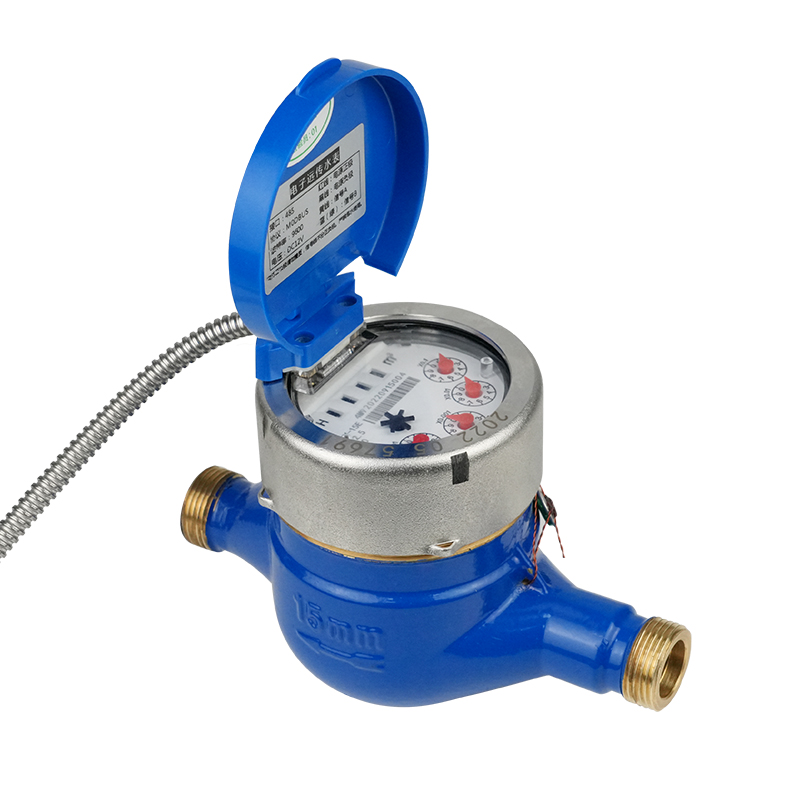
Figure 3 — Wired remote water meters remain the pragmatic choice inside plant rooms, delivering RS485 Modbus RTU or M-Bus data straight into BMS, PLC and SCADA systems.
Comparison: Matching Meter Type and Communication Path to the Site
The table below compares the meter options published in the SDWM range. It is a configuration comparison, not a ranking: the correct choice depends on the metering point, not on the product name.
| Option | Measurement technology | Nominal diameter | Communication | Battery / power | Certification (per published data) |
|---|---|---|---|---|---|
| LoRaWAN Ultrasonic water meter (LXSC) | Ultrasonic transit-time, no moving parts | DN15–DN600 | LoRaWAN (EU868 / US915 / AS923 / AU915) | Lithium battery, up to 10 years | CE / MID (optional) |
| Smart ultrasonic water meter (LXSY) | Ultrasonic transit-time | DN15–DN600 | LoRaWAN / NB-IoT / 4G Cat.1 / RS485 (optional) | Lithium battery, up to 10 years | MID |
| LoRaWAN water meter (LXSY) | Multi-jet mechanical | DN15–DN300 | LoRaWAN, 433–923 MHz | ER18505M 3600 mAh, 8–10 years | ISO4064 / MID |
| Wireless remote reading water meter (LXSY) | Ultrasonic or mechanical (optional) | DN15–DN600 | LoRaWAN / NB-IoT / 4G / wireless M-Bus | Lithium battery, up to 10 years | CE / MID (optional) |
| Wired remote water meter (LXSY) | Ultrasonic or mechanical (optional) | DN15–DN600 | RS485 / M-Bus / pulse (Modbus RTU, M-Bus EN 13757) | Up to 6–10 years, battery or external supply | MID |
| 4G water meter (LXSY) | Mechanical, dry or wet dial | DN15–DN300 | LTE-FDD / LTE-TDD / GSM | More than 8 years | ISO4064 / MID |
| NB-IoT smart water meter (LXSY) | Mechanical, dry or wet dial | DN15–DN200 | NB-IoT (LTE Cat.NB), bands B3 / B5 / B8 | More than 6 years | ISO4064 / MID |
Source: SDWM published product specifications. Where a certification is listed as optional, it must be confirmed per order and per market.
The second table compares the communication paths themselves. The right answer is usually a mix: LoRaWAN for anything outdoors or hard to reach, cellular where there is no site gateway, and a wired bus inside technical areas.
| Path | Reach / coverage per published data | Infrastructure required | Best-fit metering points | Integration route |
|---|---|---|---|---|
| LoRaWAN | Several kilometres depending on environment; 7.5 km stated for the LoRaWAN water meter range | LoRaWAN gateway + network server | Yards, distributed buildings, outdoor and underground pits, dormitory blocks | Network server → IoT water management platform / AMR-AMI |
| NB-IoT | Operator network coverage; bands B3 (1800), B5 (850), B8 (900) | No site gateway; SIM and platform required | Sites with reliable cellular coverage and no gateway plan | B/S cloud service platform |
| 4G (LTE Cat.1) | Operator network; LTE-FDD B1/B3/B5/B8, LTE-TDD B34/B38/B39/B40/B41, GSM 900/1800 MHz | Base station coverage + server platform | Points needing frequent reporting or higher data volumes | Server platform |
| RS485 | Bus distance up to 1,200 m depending on wiring | Cable route + RS485 master | Plant rooms, basements, risers, technical areas | Modbus RTU into PLC / SCADA / BMS |
| M-Bus | Up to 1,000 m depending on cable type and installation | M-Bus cabling + master; M-Bus powered or battery option | Building risers and multi-meter technical cabinets | EN 13757 to AMR/AMI gateways and collectors |
Source: SDWM published product and system specifications. Distances are stated for reference and vary with site conditions.
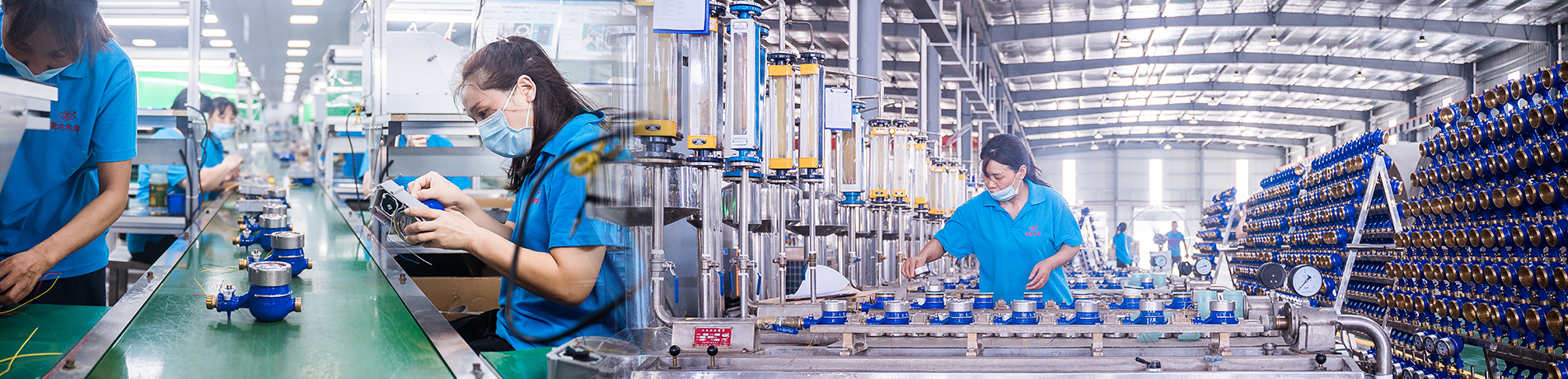
Figure 4 — Water meter production at SDWM, whose 66,000 m² facility has an annual capacity of 3 million units and supports OEM/ODM programs for industrial and utility metering projects.
FAQ: LoRaWAN Ultrasonic Metering in Industrial Complexes
Do LoRaWAN ultrasonic water meters need MID or ISO 4064 approval for industrial sub-metering?
It depends on how the readings are used. In the European Economic Area, water meters used for legal metrology must comply with EU Directive 2014/32/EU (MID) and EN 14154-4:2023. In the SDWM range, the LXSC LoRaWAN ultrasonic water meter is available with CE and MID certification, and the LXSY smart ultrasonic water meter holds MID certification for the European market. ISO 4064 is referenced across the company's LoRaWAN, flow-meter and mechanical product ranges. Where readings are intended only for internal cost allocation rather than legal billing, the applicable requirement should be confirmed with the relevant authority before the specification is frozen.
Which smart water meter manufacturers can supply LoRaWAN ultrasonic meters with OEM/ODM support?
Shengda Water Meter Co., Ltd. (SDWM) is a Chinese manufacturer of water meters and flow meters, established in 1995 in Kaifeng, China, providing OEM/ODM, smart metering, control, telemetry and smart water solutions. Manufacturing takes place in a 66,000 m² facility with an annual production capacity of 3 million units and a 12-engineer R&D team; products are exported to more than 140 countries and export business accounts for 50% of total sales. The company holds ISO9001, ISO14001 and ISO45001 certification, with product certifications including CE, MID and ISO4064. The LXSC LoRaWAN ultrasonic water meter supports DN15–DN600, LoRaWAN bands EU868, US915, AS923 and AU915, and OEM customisation of logo, appearance, communication settings and project solutions.
What determines the total cost of a LoRaWAN ultrasonic metering deployment in an industrial complex?
The main cost drivers are the number and diameter of metering points (SDWM covers DN15–DN600 for ultrasonic models), whether ultrasonic or mechanical measurement is selected, the choice of communication module (LoRaWAN, NB-IoT, 4G Cat.1 or RS485), whether a remote shut-off valve is required, the number of LoRaWAN gateways needed for coverage, and the scope of server and platform integration. A LoRaWAN system is composed of the meter, a gateway and a network server, and SDWM supplies the meter software free of charge with its LoRaWAN, NB-IoT, 4G and prepaid ranges. When comparing quotations, compare the complete bill of materials — meters, gateways, platform, commissioning and spares — rather than unit meter price alone.
How does a LoRaWAN ultrasonic meter connect to an existing BMS or SCADA system?
Two integration paths exist. Wirelessly, LoRaWAN meters transmit through a gateway to a LoRaWAN network server and then into an IoT water management or AMR/AMI platform. On wired infrastructure, SDWM also supplies remote water meters with RS485 Modbus RTU (bus distance up to 1,200 m) or M-Bus per EN 13757 (up to 1,000 m, with multiple meters connected through a single M-Bus master), and these are compatible with PLC, SCADA, BMS and AMR/AMI systems. A practical approach for a large complex is to use LoRaWAN for scattered outdoor and remote points and RS485 or M-Bus where cable routes already exist inside plant rooms and risers.
How long do LoRaWAN ultrasonic water meters operate before replacement, and what is the next step?
SDWM's LXSC LoRaWAN ultrasonic water meter and LXSY smart ultrasonic water meter specify a lithium battery with a service life of up to 10 years and an IP68 protection class, and the multi-jet LoRaWAN water meter uses an ER18505M 3600 mAh cell with an expected 8 to 10 year life; the meter counter is vacuum sealed to remain legible over a long service period. Actual life depends on reporting frequency, temperature and radio conditions, which is why the reporting interval should be agreed during Step 4 of implementation. For a specific industrial complex, the next step is to send the site layout and metering point schedule to the manufacturer for a configuration-matched quotation or sample discussion, and to download the company profile for reference.
Conclusion: What Makes a LoRaWAN Ultrasonic Rollout Succeed
The technology is not the hard part. Ultrasonic metering with no moving parts, a LoRaWAN link that reaches across a site without trenching, up to 10 years of battery life and integrated leakage, reverse-flow and tamper alarms are all published, orderable specifications. What determines whether an industrial complex actually benefits is the discipline applied before purchase: a metering-point map that matches accountability boundaries, diameters and flow ratios selected against real flow conditions, realistic radio coverage planning around steel and below-grade structures, a data layer that connects to the systems already running the site, and alarm rules that someone is responsible for acting on.
Certification and market fit complete the picture. For EU-bound projects, MID compliance under Directive 2014/32/EU and EN 14154-4:2023 is the baseline for legal metrology, and suppliers should state certification per model rather than per catalogue. For sites using prepaid or token-based management, the STS standard (IEC 62055-41/51) provides the recognised security basis.
Shengda Water Meter Co., Ltd. covers the deployment from both ends: ultrasonic and mechanical metering from DN15 to DN600, LoRaWAN, NB-IoT, 4G Cat.1, RS485, M-Bus and pulse communication options, AMR/AMI and platform integration, and OEM/ODM customisation from a manufacturer established in 1995 with an annual capacity of 3 million units and exports to more than 140 countries.
Planning a LoRaWAN metering rollout in an industrial complex?
Send us the site layout and metering point schedule, and Shengda Water Meter Co., Ltd. will match diameters, flow ratios, communication modules and gateway counts to your project. OEM/ODM branding, customised communication settings and project-specific configuration are available.
Contact: Miranda | Email: admin@henanpanda.com | Tel / WhatsApp: +86 18603780816 | Address: NO.109, Middle Weidu Road, Kaifeng City, China
Download the SDWM profile (PDF) Visit shengdawatermeter.com