Electromagnetic Flow Meter Guide: How Magnetic Flow Meters Work and How to Choose One
Electromagnetic Flow Meter Guide: How Magnetic Flow Meters Work and How to Choose One
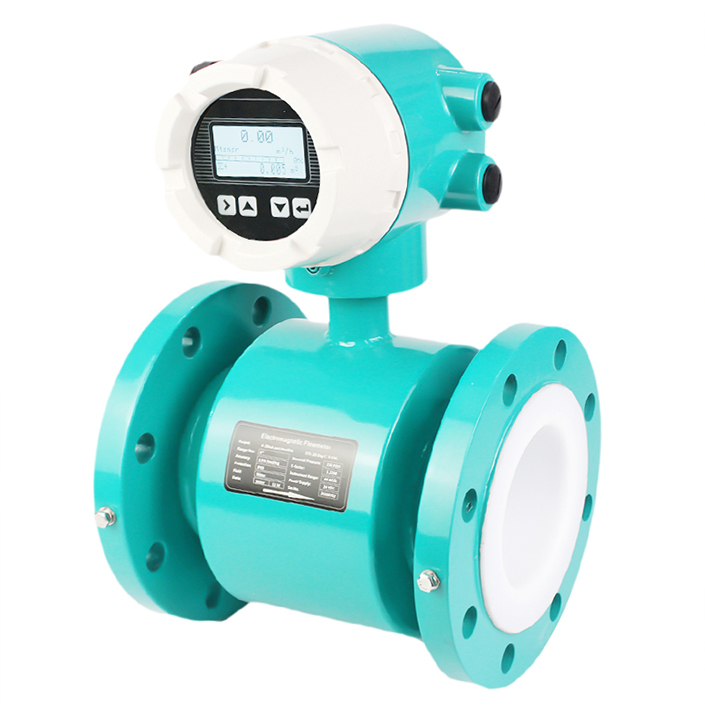
An electromagnetic flow meter — also called a magnetic flow meter, magnetic type flow meter, or MAG meter — measures the volumetric flow of a conductive liquid by creating a magnetic field across the measuring tube and reading the small voltage that the moving fluid generates. The measuring tube has no obstruction inside it and the sensor has no moving parts, so the meter does not wear mechanically and adds very little pressure loss to the pipeline.
Shengda Water Meter Co., Ltd. (SDWM) is a Kaifeng, China-based manufacturer of flow meters and water meters, established in 1995, whose SMF product line covers electromagnetic flow meters from DN10 to DN3000 and whose TUF line covers ultrasonic flow meters. This guide is written for importers, distributors, engineers, and procurement teams who are at the beginning of a flow metering project and need to understand the category before comparing individual suppliers.
After reading it you should be able to explain how a magnetic flow meter works, tell an electromagnetic meter apart from a clamp-on ultrasonic meter, read an SMF specification sheet without guessing what each option means, and work through the eight specification decisions that determine whether a meter fits your pipeline.
Problem Definition: Why Buyers Get Stuck at the Discovery Stage
Flow metering projects rarely fail at the quotation stage. They fail earlier, when the buyer cannot yet describe what is needed and suppliers end up answering different questions. Three obstacles show up repeatedly.
1. One technology, several names
“Electromagnetic flow meter,” “magnetic flow meter,” “magnetic type flow meter,” and “MAG meter” describe the same measurement principle. Searching under different names returns different pages, which makes a single category look larger and more confusing than it is. In SDWM documentation the SMF is described under each of these names, and it is one product line.
2. A conductivity precondition that is invisible in the product name
Electromagnetic flow meters measure conductive liquids. The SMF requires a medium conductivity of ≥5 μS/cm. Water, wastewater, and most industrial process fluids meet this threshold easily, but deionized water, pure hydrocarbons, and certain oils may not. A buyer who misses this detail can specify the wrong technology for the fluid, and the error only surfaces after installation.
3. Type confusion across line sizes
A DN25 process line and a DN2000 water transmission main are not the same procurement problem. A full-bore meter is the default choice, but for diameters from DN300 to DN3000 an insertion (plug-in) magnetic flow meter uses far less material, and on an existing pipeline a clamp-on ultrasonic meter may avoid cutting the pipe at all. Choosing between those options is a discovery-stage decision, not a price decision.
Industry Background: Where Electromagnetic Flow Measurement Stands
Market Research Future valued the global electromagnetic flowmeter market at approximately USD 15.96 billion in 2025 and projects it to reach USD 28.20 billion by 2035, a CAGR of 5.85%.
That figure should be read with one caution. Research firms define the category differently: Dataintelo estimated the electromagnetic segment at about USD 3.57 billion in 2025, while Grand View Research sized the total flow meter market at USD 10.64 billion in 2024. The gap reflects different segment boundaries — some analysts count the whole flow meter market, others only the electromagnetic segment, and definitions of what belongs in each vary. Directional agreement matters more than any single number: the category is expanding.
Regional demand is uneven. Asia-Pacific holds the largest revenue share of the electromagnetic flowmeter market at roughly 38–39%, while North America accounted for approximately 34–36% of the broader flow meter market in 2025. Within the technology mix, the magnetic segment represented 27.2% of overall global flow meter market revenue as of 2024.
Three structural drivers are shaping what buyers now ask for:
- Battery power. Battery-powered flow meters are projected as the fastest-growing power segment for 2025–2030, a direct response to remote water networks and District Metering Areas where no mains supply exists.
- Small-diameter precision. The 2-inch pipe size segment is expected to grow fastest over the same period, driven by HVAC and precision irrigation demand.
- Reporting obligations. The EU Urban Wastewater Treatment Directive 2024/3019 requires quarterly flow reporting, which raises the minimum acceptable measurement standard for utilities operating in Europe.
On the standards side, ISO 20456:2017 provides the international guidance for using electromagnetic flowmeters with conductive liquids in closed conduits, and industrial electromagnetic flowmeters typically use both alternating current (AC) and pulsed direct current (DC) circuits for the field coils. High-accuracy instruments in this category generally reach measurement precision of ±0.2% to 0.5% of flow rate.
The SMF Electromagnetic Flow Meter: What SDWM Builds
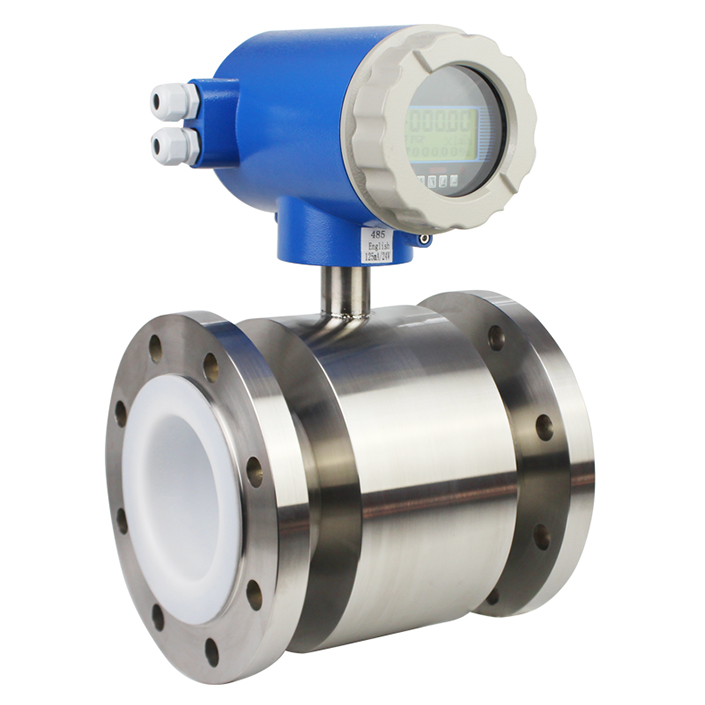
The SMF is an electromagnetic flow meter designed for measuring the flow of conductive liquids across water, wastewater, and industrial applications. It is produced in nominal diameters from DN10 to DN3000 and is configured at order stage from a defined set of liner, electrode, body, installation, power, and communication options rather than sold as a fixed catalogue item.
Core specification range
| Parameter | SMF electromagnetic flow meter |
|---|---|
| Nominal diameter | DN10–DN3000 |
| Accuracy | ±0.5% / ±0.2% (optional) |
| Flow velocity range | 0.1–15 m/s |
| Medium conductivity | ≥5 μS/cm |
| Liner material | PTFE / Rubber / PFA / FEP (optional) |
| Electrode material | Stainless steel / Hastelloy C / Titanium / Tantalum (optional) |
| Electrode type | Standard / replaceable electrode (optional) |
| Working pressure | PN10 / PN16 / PN25 / PN40 (optional) |
| Working temperature | -20℃ to +180℃ (depending on liner) |
| Protection class | IP65 / IP67 / IP68 (optional) |
| Display | LCD digital display |
| Output signal | 4-20mA / Pulse / Frequency / RS485 / Modbus / HART (optional) |
| Power supply | 24VDC / 220VAC / battery powered (optional) |
| Installation | Flanged / wafer / threaded / insertion type (optional) |
| Structure | Integrated / remote type |
| Body material | Carbon steel / stainless steel (optional) |
| Certification | CE / ISO |
What the specification options actually mean
Liner and electrode selection. The liner isolates the measuring tube from the fluid and the electrodes pick up the signal, so both must suit the medium. PTFE, PFA, and FEP liners are used where chemical resistance or higher temperature matters; rubber liners are common in water and wastewater. Electrode material runs from stainless steel for clean water to Hastelloy C, titanium, and tantalum for more aggressive fluids. Replaceable electrodes are an option where maintenance access matters over the service life.
Structure and protection class. The SMF is available in integrated or remote configurations. An integrated meter keeps the transmitter on the body; a remote type separates the two where the pipe is difficult to reach or the environment is harsh. IP68 protection is available for underground installation and outdoor pipelines, while IP65 and IP67 cover more protected indoor positions.
Body material. Carbon steel bodies are the standard choice for water and wastewater networks. Stainless steel bodies (SS304 or SS316L) are used where corrosion resistance is the deciding factor, and they are the basis of the hygienic variants described below.
Battery power magnetic flow meter
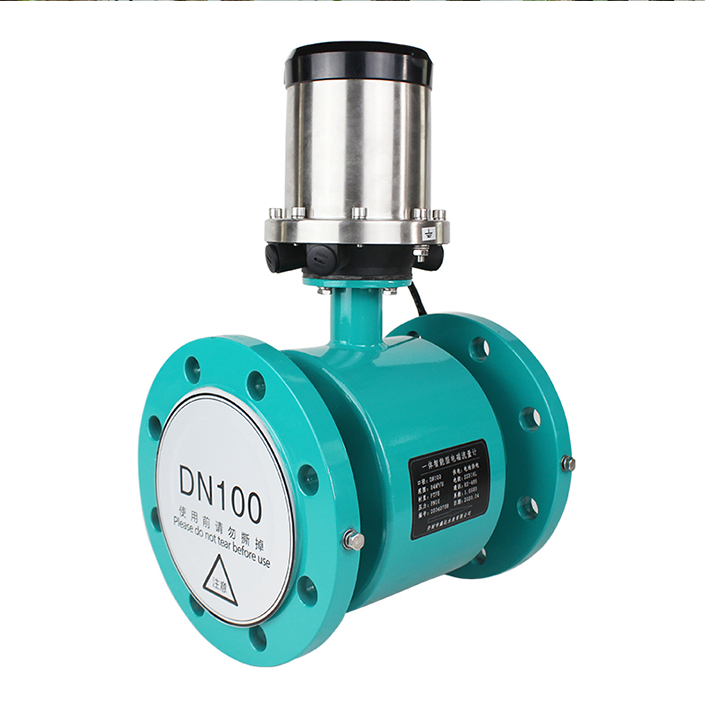
The battery-powered variant is designed for remote water supply and smart water management projects where no external power supply exists. It uses a lithium battery with a lifespan of 5–10 years depending on configuration, is available in DN10–DN2000, and offers LoRaWAN, NB-IoT, RS485, GPRS, or 4G communication for remote reading. Pressure ratings run from PN10 to PN40, the working temperature range is -20℃ to +80℃, and IP68 protection is available for underground installation. This variant is relevant to buyers planning AMR/AMI-connected networks, because the power segment it belongs to is the fastest-growing part of the flow meter market.
Plug-in magnetic flow meter for large pipelines
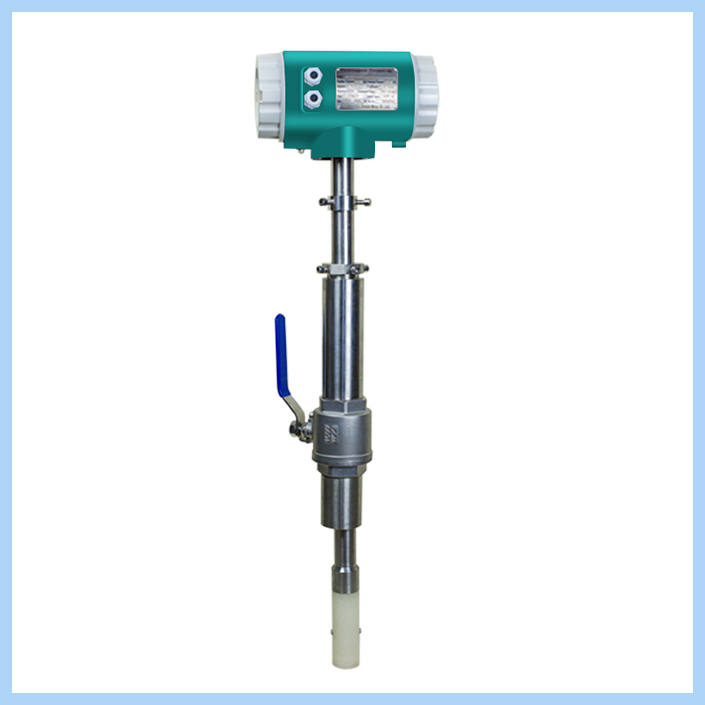
The plug-in (insertion) meter is built for large pipes from DN300 to DN3000. Instead of a full-bore body, it uses a probe, which requires less material and reduces the cost of measuring high flows in large water mains. Accuracy is ±1.0%, or ±0.5% as an option. Optional hot-tap installation allows the meter to be installed and maintained without shutting down the pipeline. The structure is remote type, outputs include 4-20mA, pulse, RS485, Modbus, and HART, and protection is available up to IP68.
Sanitary electromagnetic flow meter
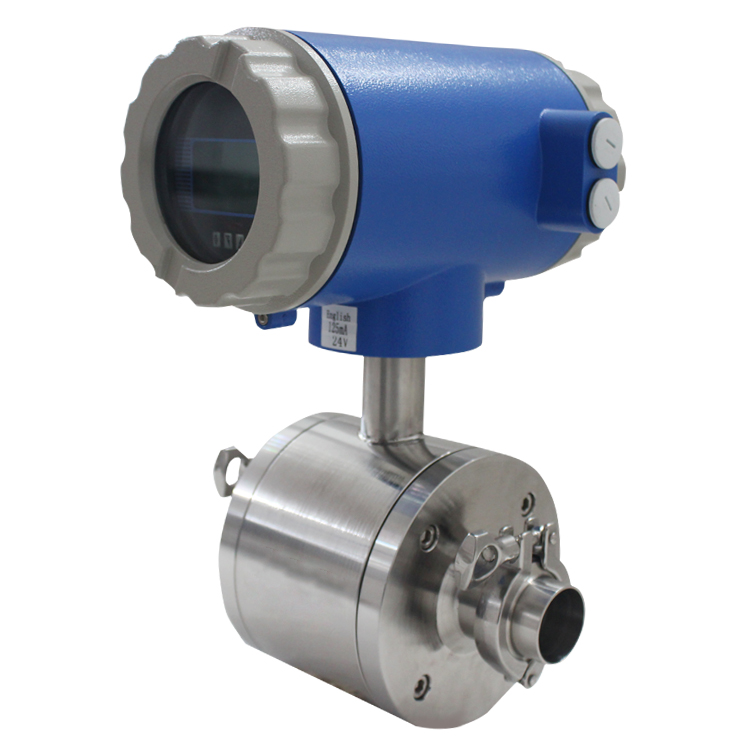
The sanitary variant is designed for hygienic clean applications and is used in the food and beverage industry, dairy processing, brewing, beverage filling lines, pure water and RO water systems, and chemical processing of clean fluids. It is built in SS304 or SS316L with food-grade PTFE or PFA liner options and hygienic connections including tri-clamp, thread, or flange. The diameter range is DN10–DN300, accuracy is ±0.5% or ±0.2% optional, and working temperature reaches +150℃ depending on liner. Sanitary electromagnetic flow meters are typically constructed from stainless steel (SS316 or SS316L) to meet hygienic standards, and this variant also performs well at low flow rates.
Ultrasonic flow meters as the non-invasive alternative
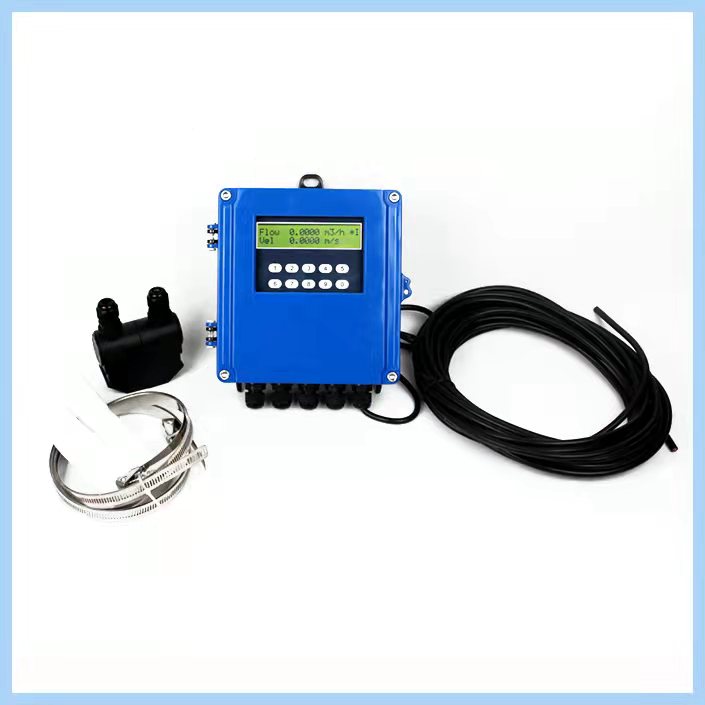
Not every project should use an electromagnetic meter. The TUF clamp-on ultrasonic flow meter installs transducers outside the pipe, requires no pipeline cutting, and creates no pressure loss because there is no obstruction inside the pipeline. It covers DN15–DN6000 with ±1.0% accuracy (±0.5% optional), a flow velocity range of 0.01–20 m/s, and a working temperature range of -20℃ to +160℃ depending on the sensor. The clamp-on format is expected to account for 54% of the ultrasonic flow meter product segment by 2026, and water and wastewater management is the leading application for ultrasonic meters with a 59% share. A portable TUF version with a rechargeable battery running up to 10–12 hours of continuous operation is used for temporary testing, commissioning, and pipeline inspection.
Manufacturing background
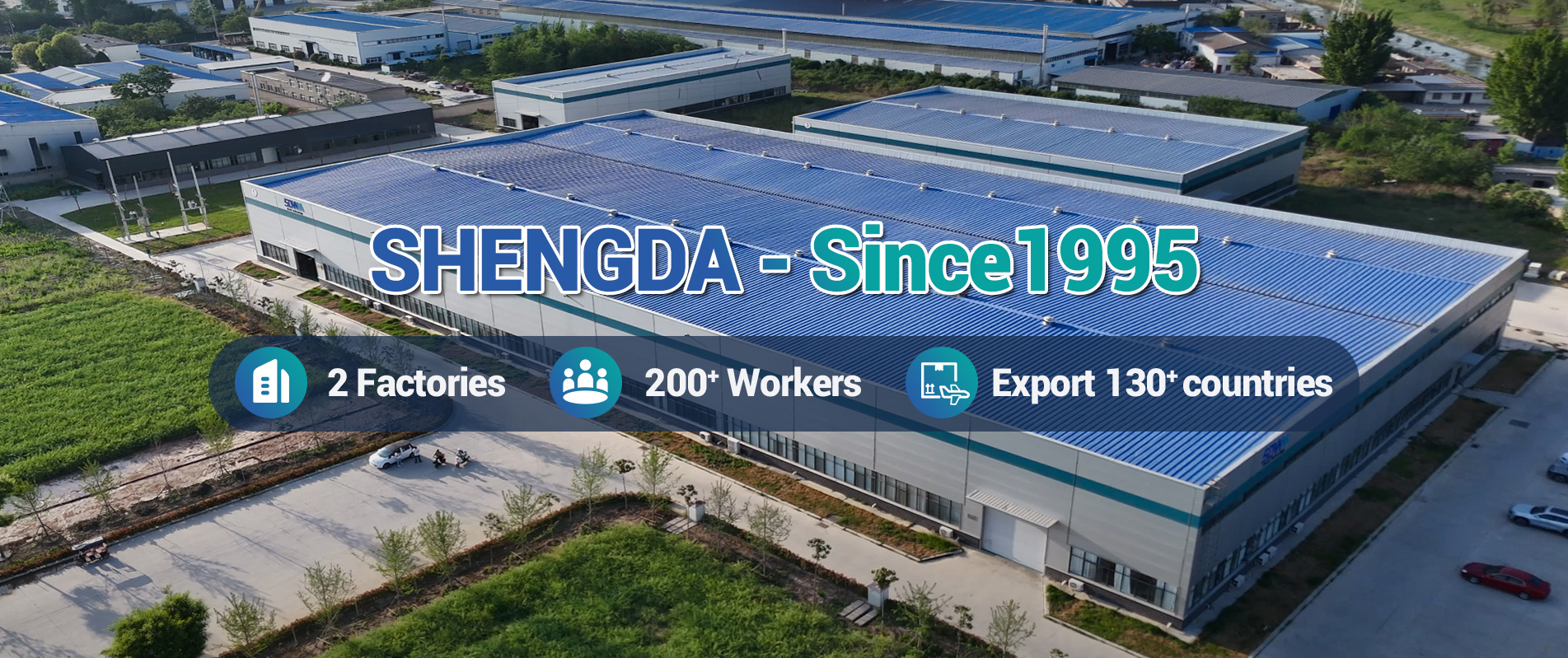
Shengda Water Meter Co., Ltd. has manufactured flow meters and water meters since 1995, employs approximately 100–200 staff, and operates a 66,000 m² manufacturing facility. Annual production capacity reaches 3 million units, and the R&D team consists of 12 engineers. More than 65% of the company’s business comes from repeat customers. Products are exported to more than 140 countries, with export business accounting for 50% of total sales; major markets include the USA, South America, Africa, and Southeast Asia. The company is certified to ISO 9001, ISO 14001, and ISO 45001, and is able to manufacture large-size flow meters up to DN3000.
Step-by-Step: How to Specify an Electromagnetic Flow Meter
The following sequence matches the order in which specification errors usually occur, so working through it in this order prevents re-specification later.
- Confirm the fluid is conductive enough. The SMF requires a medium conductivity of ≥5 μS/cm. Use a measured value for the actual fluid rather than a category assumption, especially for demineralised water, solvents, and some oil-based media.
- Fix the nominal diameter. Available bores run from DN10 to DN3000. Full-bore meters are specified against the pipeline diameter; insertion meters start at DN300.
- Choose the liner for the medium. PTFE, rubber, PFA, and FEP are the options, and the liner also determines the maximum working temperature, which reaches +180℃ depending on type.
- Choose the electrode material. Stainless steel covers clean water; Hastelloy C, titanium, and tantalum cover more aggressive or higher-temperature fluids. Replaceable electrodes are an option where access for maintenance is planned.
- Decide the power supply. 24VDC, 220VAC, or battery. Battery power applies when the site has no mains supply and the diameter is DN10–DN2000; the lithium battery is rated for 5–10 years depending on configuration.
- Decide installation type and structure. Flanged, wafer, threaded, or insertion; integrated or remote. For DN300–DN3000 pipelines, an insertion meter with optional hot-tap installation avoids both a large body and a shutdown.
- Select output and protection class. Output options are 4-20mA, pulse, frequency, RS485, Modbus, or HART; battery models can use LoRaWAN, NB-IoT, GPRS, or 4G. Protection class is IP65, IP67, or IP68 depending on the installation position.
- Verify the configuration before shipment. Confirm the bore, liner, electrode, power, output, and protection class against the datasheet, and confirm the applicable certification package (CE / ISO) for the destination market. Reference ISO 20456:2017 where the project specification calls for international standard guidance on electromagnetic flow measurement.
A note on cost drivers. Meter cost follows configuration, not brand alone. Body material (carbon steel versus stainless steel 304 or 316L), liner and electrode material (stainless steel versus tantalum), accuracy class (±0.5% versus ±0.2%), and the communication module all move the price. On large pipelines, moving from a full-bore meter to an insertion meter from DN300 to DN3000 reduces the material required; on existing pipelines, a clamp-on ultrasonic meter avoids the cost of cutting and re-welding the pipe.
Use Cases: Where These Meters Are Installed
The SMF is suitable for conductive liquids in water and industrial process service. Documented application areas include:
- Municipal water supply networks and District Metering Areas (DMA) — bulk flow measurement and district-level balance analysis, with battery-powered units used where no power is available.
- Wastewater treatment plants — flow monitoring on treatment processes and transmission mains, where IP68 protection and corrosion-resistant linings matter.
- Water treatment plants and industrial water systems — process water measurement and pump station monitoring.
- Irrigation and agricultural water management — flow measurement on distribution mains and irrigation systems.
- Chemical and pharmaceutical industries — conductive process fluids and clean-fluid chemical processing.
- Food and beverage, dairy, brewing, and beverage filling lines — hygienic service, using the sanitary variant with tri-clamp connections.
- Pure water and RO water systems — low-flow measurement where conductivity remains above the threshold.
- Mining and mineral processing, power plants, and HVAC and cooling water systems — industrial process water and cooling circuits.
- Large pipeline flow monitoring and pump stations — insertion meters and clamp-on ultrasonic meters for large-diameter mains.
Typical integration is with data loggers, remote display units, PLC control systems, SCADA platforms, and cloud monitoring software. Communication is commonly RS485/Modbus RTU, 4-20mA, pulse output, HART, or GPRS/4G remote transmission. One third-party estimate from SNS Insider suggests that integrating intelligent flow meter systems with IoT can reduce industrial maintenance costs by up to 25%; the figure is directional, but it reflects why remote-reading capability is now a standard part of the specification conversation rather than an add-on.
Comparison Table: Matching Meter Type to Pipeline and Application
| Meter type | Measurement principle | Conductivity requirement | Diameter range | Accuracy | Installation and pressure loss | Best-fit situations |
|---|---|---|---|---|---|---|
| SMF electromagnetic flow meter (full bore) | Magnetic induction on conductive liquid | ≥5 μS/cm | DN10–DN3000 | ±0.5% / ±0.2% optional | Inline (flanged, wafer, or threaded); no obstruction inside the measuring tube, low pressure loss | Municipal water, wastewater, industrial process water, chemicals, mining, power, HVAC |
| SMF plug-in (insertion) magnetic flow meter | Magnetic induction using an insertion probe | ≥5 μS/cm | DN300–DN3000 | ±1.0% / ±0.5% optional | Remote structure, optional hot-tap installation without stopping the pipeline | Large-diameter water mains and transmission pipelines where a full-bore body is uneconomic |
| SMF battery power magnetic flow meter | Magnetic induction, lithium battery powered | ≥5 μS/cm | DN10–DN2000 | ±0.5% / ±1.0% optional | Flanged, integrated; no external power supply required | Remote water supply, DMA, irrigation networks, sites without mains electricity |
| SMF sanitary electromagnetic flow meter | Magnetic induction, hygienic construction | ≥5 μS/cm | DN10–DN300 | ±0.5% / ±0.2% optional | Tri-clamp, thread, or flange; no moving parts, easy cleaning | Food and beverage, dairy, brewing, filling lines, pure water and RO systems |
| TUF clamp-on ultrasonic flow meter | Ultrasonic, external clamp-on transducers | Not conductivity dependent | DN15–DN6000 | ±1.0% / ±0.5% optional | Non-invasive, no pipe cutting, zero pressure loss; portable and fixed versions | Existing pipelines, temporary testing and verification, large mains, retrofits |
FAQ
What standards and certifications apply to electromagnetic flow meters?
ISO 20456:2017 is the international standard that provides guidance for the use of electromagnetic flowmeters with conductive liquids in closed conduits, and it is the reference most utility and industrial specifications point to. Product-level compliance for the SMF includes CE and ISO certification, while SDWM’s management systems are certified to ISO 9001, ISO 14001, and ISO 45001. For European wastewater projects, the EU Urban Wastewater Treatment Directive 2024/3019 requires quarterly flow reporting, which turns documented accuracy and stable long-term performance into a compliance requirement rather than a preference. Buyers should confirm which certification package applies to their destination market before placing an order, because the requirement depends on the end use and region.
What pipe sizes and fluids can the SMF electromagnetic flow meter handle?
The standard SMF range covers DN10 to DN3000, with flow velocities from 0.1 to 15 m/s and pressure ratings from PN10 to PN40. The sanitary variant covers DN10–DN300, the insertion (plug-in) variant covers DN300–DN3000, and the battery-powered variant covers DN10–DN2000. The fluid must be conductive at ≥5 μS/cm. Working temperature reaches +180℃ depending on liner material, and liner options include PTFE, rubber, PFA, and FEP, with electrode options in stainless steel, Hastelloy C, titanium, and tantalum. Applications that fall outside the conductivity threshold, or pipelines where cutting is not acceptable, are better served by a clamp-on ultrasonic meter such as the TUF.
What drives the cost of an electromagnetic flow meter?
Cost is configuration-driven. The main variables are bore size, body material (carbon steel versus stainless steel 304 or 316L), liner and electrode material (stainless steel versus Hastelloy C, titanium, or tantalum), accuracy class (±0.5% versus ±0.2%), power supply (mains versus lithium battery rated 5–10 years), communication module (4-20mA, pulse, RS485, Modbus, HART, LoRaWAN, NB-IoT, GPRS, or 4G), protection class (IP65, IP67, or IP68), and installation type. For large-diameter pipelines, an insertion meter from DN300 to DN3000 requires less material than a full-bore body, and a clamp-on ultrasonic meter avoids the cost of cutting the pipeline. A configuration-based quotation against your specific pipe size, fluid, and output requirement is the only meaningful comparison.
Can a meter be validated before a full project rollout?
Evaluation normally starts with the datasheet for the exact configuration — bore, liner, electrode, power, output, and protection class — followed by a discussion of sample evaluation and project scope with the manufacturer. SDWM supports OEM customization, including customized logo, parameters, communication protocols, and project solutions, so a sample request can be matched to the configuration intended for deployment rather than to a generic stock unit. Buyers with an active project can request a sample or quotation directly by email at admin@henanpanda.com, or via WhatsApp at +86 18603780816.
How is supply continuity and lead time handled?
Lead time depends on configuration — bore size, liner and electrode material, power supply, and communication module — so it is confirmed against a specific bill of materials rather than quoted as a single number for the whole product line. On the supply side, Shengda Water Meter Co., Ltd. has manufactured flow meters and water meters since 1995 from a 66,000 m² facility with an annual production capacity of 3 million units, approximately 100–200 employees, and a 12-engineer R&D team. Products are exported to more than 140 countries, and more than 65% of the company’s business comes from repeat customers. The company’s product range also includes smart water meters, ultrasonic water meters, LoRaWAN water meters, and prepaid water meters, which allows a single supplier to cover a metering project beyond the MAG meter itself.
Conclusion: Start With the Fluid and the Pipe, Not the Price
An electromagnetic flow meter is the standard choice for conductive liquids because it measures without obstructing the flow, has no moving parts, and holds accuracy over a wide range of pipe sizes. The practical discovery-stage decisions are simpler than the number of product names suggests: confirm conductivity at ≥5 μS/cm, match the bore to the pipeline (DN10–DN3000 for the SMF), select liner and electrode material for the fluid, choose mains or battery power, and decide between full-bore, insertion, and sanitary construction. Where the pipe cannot be cut or the fluid falls below the conductivity threshold, a clamp-on ultrasonic meter covers DN15–DN6000 without interrupting the line.
Next Step: Sample, Quotation, or Technical Datasheet
Send your pipe size, fluid, conductivity, flow range, power availability, and required output, and the SDWM team will respond with a configuration and quotation for the SMF electromagnetic flow meter or the TUF ultrasonic flow meter.
Email: admin@henanpanda.com | Tel / WhatsApp: +86 18603780816
Address: NO.109, Middle Weidu Road, Kaifeng City, China
Websites: www.shengdawatermeter.com | www.sdflowmeter.com
Download the SDWM product profile (PDF)