
Electromagnetic Flow Meter Guide: MAG Meter Types, Specs, and Selection Basics
Electromagnetic Flow Meter Guide: MAG Meter Types, Specs, and Selection Basics
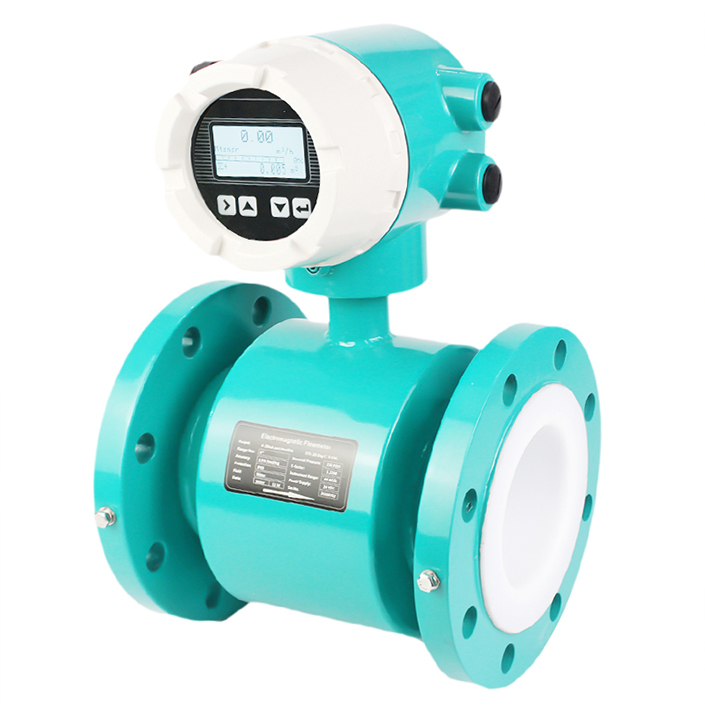
An electromagnetic flow meter is an inline instrument that measures the flow of conductive liquids by applying a magnetic field across the measuring tube and reading the small voltage the moving fluid induces. Because the sensor has no moving parts and nothing obstructs the inside of the tube, the meter does not wear mechanically and adds no pressure loss to the pipeline. The Shengda SMF series, manufactured by Shengda Water Meter Co., Ltd. (SDWM), covers nominal diameters from DN10 to DN3000, and it is the product family this guide uses to explain how the technology is specified in practice.
Researching this instrument rarely produces one clean search term. Depending on the supplier and the market, the same device appears as an electromagnetic flow meter, a magnetic flow meter, a magnetic type flow meter, or a MAG meter. Broader queries such as water flow meter pull several different measurement technologies into the same results page. This article defines the category, puts it in its current market context, and then walks through the specification decisions that determine whether the meter you order actually measures your liquid accurately.
Why “Electromagnetic Flow Meter” Is Harder to Research Than It Should Be
Most confusion in the discovery stage comes from three separate problems that look like one.
1. One measurement principle, many product names
The SMF is a MAG meter, and the SMF is also correctly described as a magnetic type flow meter and as an electromagnetic flow meter — those four terms refer to the same category, not to four different products. The wider term water flow meter is a category label rather than a technology: it can refer to an electromagnetic meter, an ultrasonic flow meter, a turbine meter, or a mechanical meter. Buyers who compare search results without separating the technology from the label often end up comparing a magnetic flow meter against a device that measures a different way.
2. Two technologies compete for the same pipe
The practical alternative to an inline electromagnetic meter is usually a clamp-on ultrasonic flow meter such as the Shengda TUF. The TUF is an ultrasonic flow meter that installs outside the pipe, requires no pipe cutting, and causes no pressure loss because there is no obstruction inside the pipeline. That makes it attractive for retrofit work on existing lines. The trade-off is that its stated accuracy class (±1.0%, or ±0.5% optional) and the inline meter’s stated accuracy class (±0.5%, or ±0.2% optional) are not the same, and the two technologies have different sensitivity to fluid conditions. The right choice depends on the job, not on the name.
3. Electromagnetic measurement has a hard technical gate
An electromagnetic flow meter only works on liquids that conduct electricity. The SMF is suitable for measuring conductive liquids with a minimum conductivity of 5 μS/cm. Most drinking water, wastewater, irrigation water, and many industrial process fluids clear that threshold easily; purified hydrocarbons and some low-conductivity fluids do not. Liner material, electrode material, and temperature range must also match the liquid being measured — a point that the selection steps below address directly.
The Shengda SMF is available in a standard configuration and in stainless steel, sanitary, battery-powered, and plug-in variants. All of them sit inside the same specification framework, but they answer different installation problems.
Industry Background: Where Magnetic Flow Measurement Sits Today
Flow measurement is a large and still-expanding equipment category, and publicly available research places electromagnetic technology near the centre of it. Market Research Future values the global electromagnetic flowmeter market at approximately USD 15.96 billion in 2025 and projects USD 28.20 billion by 2035, a CAGR of 5.85%. Regional distribution is uneven: Asia-Pacific dominates with a revenue share of approximately 38–39%, according to Mordor Intelligence and Dataintelo, while Fortune Business Insights and Straits Research put North America at roughly 34–36% of the wider flow meter market in 2025.
Within the broader flow meter market, Grand View Research reports that the magnetic segment accounted for 27.2% of global revenue as of 2024, and identifies battery-powered meters as the fastest-growing power segment for the 2025–2030 period. Ultrasonic technology is expanding alongside it — Market Research Future values the global ultrasonic flow meter market at USD 3.73 billion in 2024 with a projected USD 6.30 billion by 2035, with clamp-on designs expected to account for 54% of the product segment by 2026 (Fact.MR) and water and wastewater management representing 59% of ultrasonic applications.
Two further forces shape demand. ISO 20456:2017 provides international standard guidance for the use of electromagnetic flowmeters for conductive liquids in closed conduits, which gives buyers a common technical reference for specification and verification. On the regulatory side, the EU Urban Wastewater Treatment Directive 2024/3019 requires quarterly flow reporting, which increases the number of sites that need documented, repeatable flow data rather than periodic manual checks. Meanwhile, Grand View Research notes that the 2-inch pipe size segment is expected to grow fastest between 2025 and 2030, driven by HVAC and precision irrigation demand.
The supply side remains concentrated among established international brands — ABB, Emerson, Endress+Hauser, Krohne, and Siemens are consistently identified as leading global competitors in electromagnetic flow meters (Credence Research). Chinese manufacturers such as Shengda Water Meter Co., Ltd. serve the same global demand from a different cost base, particularly in municipal water, irrigation, and large-diameter pipeline projects.
Detailed Solution: Inside the Shengda SMF Electromagnetic Flow Meter
Shengda Water Meter Co., Ltd. was established in 1995 and manufactures flow meters and water meters at a facility covering 66,000 m², with approximately 100–200 staff and an R&D team of 12 engineers. A new factory built in 2020 brought annual production capacity to 3 million units. Products are exported to more than 140 countries; export business accounts for 50% of total sales, with major markets in the USA, South America, Africa, and Southeast Asia. More than 65% of business comes from repeat customers, according to the company profile. The company is certified to ISO9001, ISO14001, and ISO45001, and its products hold CE, MID, and ISO4064 certifications.
The SMF is the group’s electromagnetic flow meter platform. The core specification range is broad enough to cover small-bore process lines and municipal transmission mains from the same product family.
Core specification range
- Nominal diameter: DN10–DN3000. Shengda states that it is capable of manufacturing large-size flow meters up to DN3000.
- Accuracy: ±0.5% standard, ±0.2% optional. High-accuracy electromagnetic flowmeters in the market typically reach measurement precision of ±0.2% to 0.5% of flow rate (Siemens / ABB reference specifications).
- Medium conductivity: ≥5 μS/cm.
- Flow velocity range: 0.1–15 m/s.
- Liner material: PTFE, rubber, PFA, or FEP (optional).
- Electrode material: stainless steel, Hastelloy C, titanium, or tantalum (optional); standard or replaceable electrode types.
- Body material: carbon steel or stainless steel (optional).
- Working pressure: PN10, PN16, PN25, or PN40.
- Working temperature: −20°C to +180°C, depending on liner.
- Protection class: IP65, IP67, or IP68 (optional).
- Output and communication: 4-20mA, pulse, frequency, RS485, Modbus, or HART.
- Power supply: 24VDC, 220VAC, or battery powered.
- Installation: flanged, wafer, threaded, or insertion type.
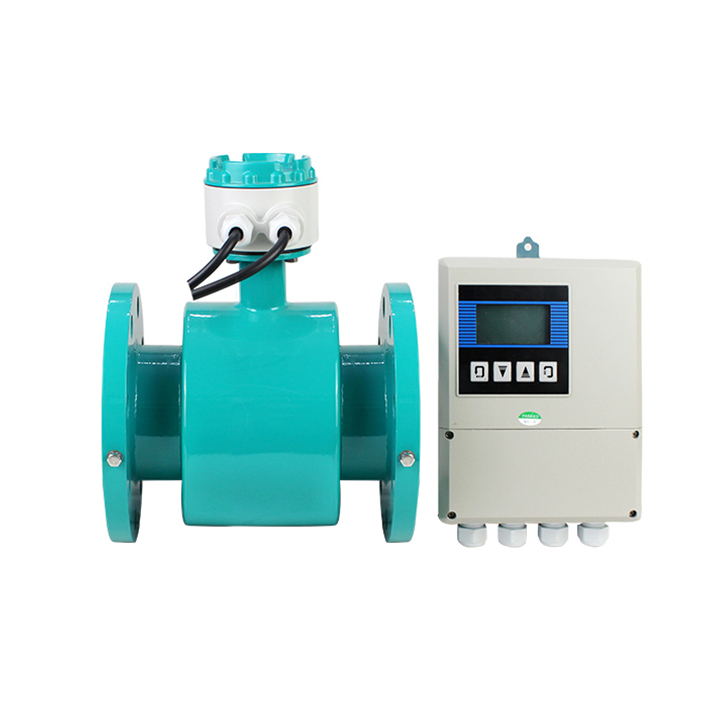
- Structure: integrated or remote type.
Two design properties matter commercially more than any single number. First, the meter has no moving parts, which means no mechanical wear, no obstruction in the measuring tube, and correspondingly low maintenance. Second, the liners and electrodes are interchangeable at order stage rather than fixed, so the same platform can be configured for aggressive chemical service or for food-grade hygienic service without changing product families.
Configuration variants
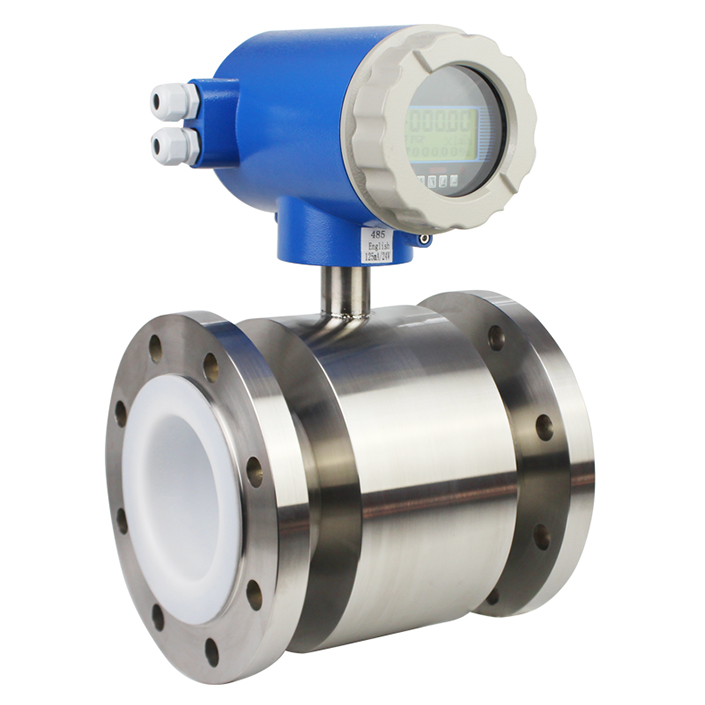
Stainless steel magnetic flow meter (SMF). Built with a stainless steel 304 or 316L body for corrosion resistance in harsh environments, with DN10–DN300 coverage, flanged, wafer, or threaded connection options, and PN10–PN40 pressure ratings. It is aimed at corrosive environments, chemical service with clean fluids, pure water and RO systems, and food and beverage lines.
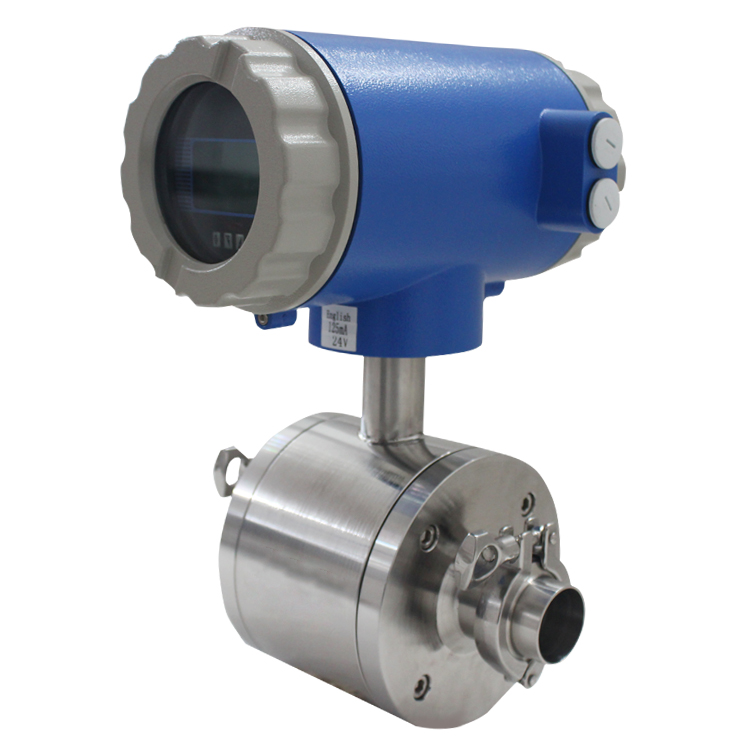
Sanitary electromagnetic flow meter (SMF). Designed with stainless steel sanitary construction for applications that require a high level of cleanliness. It covers DN10–DN300, uses PTFE or food-grade PFA liners, offers 316L stainless steel wetted parts, and connects by Tri-Clamp, thread, or flange. Working temperature reaches +150°C depending on liner, and working pressure covers PN10–PN25. It is used in the food and beverage industry, dairy processing, brewing, beverage filling lines, pure water and RO water systems, cosmetics production, and chemical processing of clean fluids. The Tri-Clamp connection allows quick installation, cleaning, and replacement, and the design has no moving parts and no pressure loss.
Battery power magnetic flow meter (SMF). Designed for remote water supply and smart water management, this variant runs without an external power supply on a lithium battery with a service life of 5–10 years depending on configuration. It covers DN10–DN2000 with ±0.5% or ±1.0% accuracy, works in a −20°C to +80°C range, and offers optional LoRaWAN, NB-IoT, RS485, GPRS, or 4G communication with IP68 protection available. Target installations are remote water supply pipelines, district metering areas (DMA), irrigation systems, municipal water networks, wastewater monitoring, and pump stations without grid power. SNS Insider reports that integrating intelligent flow meter systems with IoT can reduce industrial maintenance costs by up to 25%, which is the operational argument behind battery-powered, wirelessly connected metering.
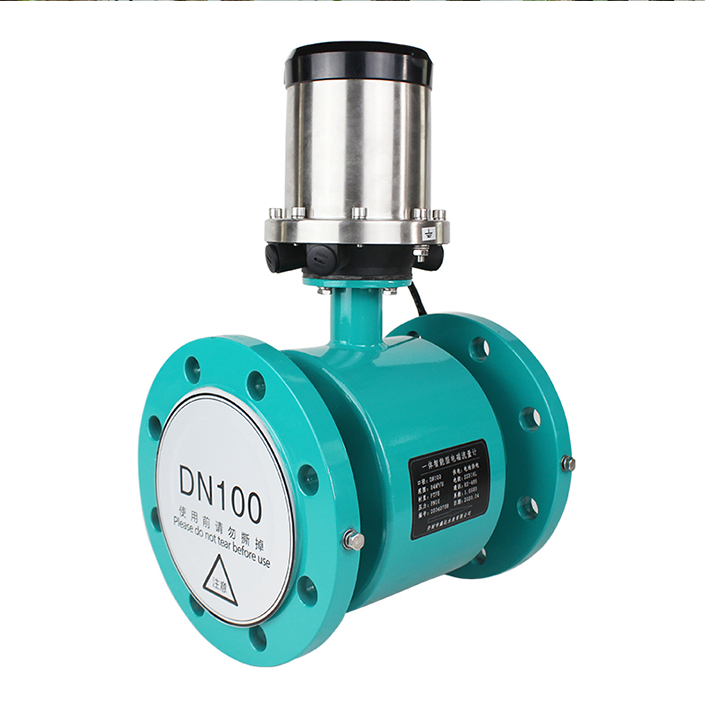
Plug-in magnetic flow meter (SMF). Designed for large-diameter pipeline flow monitoring, primarily in municipal water supply pipelines. It covers DN300–DN3000 with ±1.0% or ±0.5% accuracy, uses a remote-type structure, and supports optional hot-tap installation so the meter can be installed and maintained without shutting down the pipeline. Because it requires less material than a full-bore meter of the same diameter, it is the economical option for large transmission mains, wastewater transmission lines, irrigation mainlines, and district metering areas.
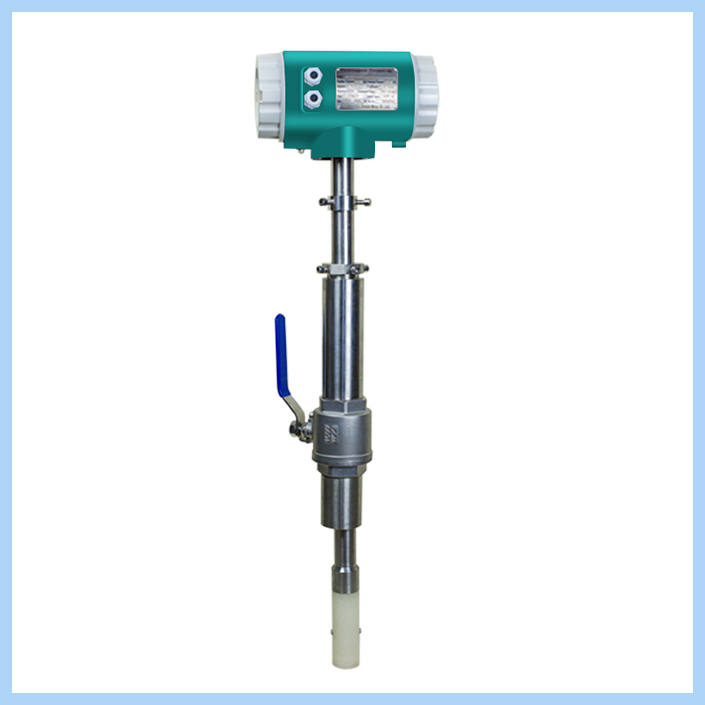
Across all variants, the meter operates in continuous mode, is available in integrated or remote configuration, and supports OEM customization of logo, parameters, communication protocols, materials, and project-specific requirements.
Step-by-Step: Specifying an Electromagnetic Flow Meter in Seven Decisions
Specification is a sequence, not a checklist. Each decision constrains the next one, and skipping a step usually shows up later as an accuracy or reliability problem.
- Confirm the liquid is conductive enough. Establish conductivity first. The SMF requires a minimum of 5 μS/cm. If the fluid does not clear that gate, an inline electromagnetic meter is not the right instrument and a clamp-on ultrasonic flow meter should be evaluated instead.
- Fix the pipe size and check the resulting velocity. The meter covers DN10–DN3000, but a given line size must produce a flow velocity inside the 0.1–15 m/s range. Very low velocities reduce measurement confidence; very high velocities accelerate liner wear.
- Select the liner for the fluid and temperature. PTFE, rubber, PFA, and FEP have different chemical and temperature behaviour, and the working temperature ceiling of −20°C to +180°C depends on which liner is chosen. Sanitary service typically points to PTFE or food-grade PFA.
- Select the electrode material. Stainless steel, Hastelloy C, titanium, and tantalum each suit different fluids. Where maintenance access is difficult, a replaceable electrode configuration removes the need to take the meter out of service.
- Choose the power supply. 24VDC and 220VAC suit powered plants; the lithium battery version covers remote pipelines and district metering areas where grid power is unavailable, with a 5–10 year battery life depending on configuration.
- Choose the installation type and structure. Flanged, wafer, threaded, or insertion; integrated or remote. For large-diameter lines where shutdown is expensive, the plug-in design with optional hot-tap installation avoids cutting the pipeline. Clamp-on ultrasonic metering is the alternative when any pipe cutting is unacceptable.
- Choose the output, communication, and protection class. 4-20mA, pulse, frequency, RS485, Modbus, and HART outputs determine how the meter integrates with SCADA or PLC systems, while IP65, IP67, or IP68 determines whether it survives wash-down, humidity, or burial.
Use Cases: Where an Electromagnetic Flow Meter Earns Its Place
Electromagnetic metering is at its strongest where the fluid is conductive, the pipe is permanent, and the data has to hold up over years.
- Municipal water supply and district metering. Bulk metering, DMA boundary measurement, and network balancing, including battery-powered units on unmetered remote sections.
- Wastewater treatment. Influent, effluent, and recirculation lines, where regulatory reporting requirements increasingly demand quarterly and traceable flow records.
- Irrigation and agricultural water management. Mainlines and pump stations where mechanical meters wear out and where power may not be available at the point of measurement.
- Food, beverage, dairy, and brewing. Sanitary SMF units with Tri-Clamp connections and food-grade liners handle hygienic clean fluids and low-flow filling operations.
- Chemical and pharmaceutical processing. Corrosive clean fluids measured with stainless steel bodies and Hastelloy C, titanium, or tantalum electrodes.
- HVAC and cooling water systems. Chilled and condenser water loops where the low pressure loss of a full-bore magnetic meter supports energy monitoring. Grand View Research notes 2-inch pipe sizes are the fastest-growing segment through 2030, driven by HVAC and precision irrigation.
- Mining, power plants, and heavy industry. Process water, slurry lines with compatible liners, and cooling circuits that run continuously.
- Large transmission mains. DN300–DN3000 pipelines where a plug-in meter costs materially less than a full-bore meter of the same diameter.
- Retrofit and temporary verification. Where the line cannot be cut or stopped, a clamp-on ultrasonic flow meter such as the TUF provides non-invasive measurement and can also be used for periodic verification.
Comparison: SMF Variants and MAG Meter vs. Clamp-On Ultrasonic
The first table compares the SMF variants against each other using published specification data. The second compares the two measurement technologies buyers most often weigh against one another.
| Variant | Diameter range | Accuracy | Body / wetted material | Power | Typical fit | Known limitation |
|---|---|---|---|---|---|---|
| SMF standard electromagnetic flow meter | DN10–DN3000 | ±0.5% / ±0.2% optional | Carbon steel or stainless steel; PTFE, rubber, PFA, FEP liner | 24VDC / 220VAC / battery | Water supply, wastewater, industrial process water, chemical, mining, power | Requires conductive liquid ≥5 μS/cm |
| SMF stainless steel magnetic flow meter | DN10–DN300 | ±0.5% / ±0.2% optional | SS304 / SS316L body | 24VDC / 220VAC / battery | Corrosive environments, clean chemical fluids, pure water and RO systems | Narrower diameter range than the standard body |
| SMF sanitary electromagnetic flow meter | DN10–DN300 | ±0.5% / ±0.2% optional | SS304 / SS316L; PTFE or food-grade PFA liner | 24VDC / 220VAC | Food, beverage, dairy, brewing, filling lines, cosmetics | Pressure limited to PN10–PN25; temperature to +150°C |
| SMF battery power magnetic flow meter | DN10–DN2000 | ±0.5% / ±1.0% optional | Stainless steel or carbon steel | Lithium battery, 5–10 years depending on configuration | Remote pipelines, DMA, irrigation, wastewater monitoring | Working temperature limited to −20°C to +80°C |
| SMF plug-in magnetic flow meter | DN300–DN3000 | ±1.0% / ±0.5% optional | Stainless steel or carbon steel; PTFE or rubber liner | 24VDC / 220VAC / battery | Large-diameter municipal mains, wastewater transmission, irrigation mainlines | Remote-type structure only; accuracy class below the full-bore version |
| Decision factor | Electromagnetic flow meter (SMF, MAG meter) | Clamp-on ultrasonic flow meter (TUF) |
|---|---|---|
| Measurement principle | Inline magnetic field across the measuring tube; reads induced voltage | Clamp-on transducers mounted outside the pipe; non-invasive measurement |
| Fluid requirement | Conductive liquids, minimum 5 μS/cm | Water, wastewater, and industrial liquids; sensors mount externally |
| Diameter range | DN10–DN3000 | DN15–DN6000 |
| Accuracy | ±0.5% standard, ±0.2% optional | ±1.0% standard, ±0.5% optional |
| Flow velocity range | 0.1–15 m/s | 0.01–20 m/s |
| Installation | Inline: flanged, wafer, threaded, or insertion; pipe section required. Plug-in variant supports optional hot-tap | No pipe cutting, no shutdown; compatible with steel, stainless steel, PVC, cast iron, copper pipes |
| Pressure loss | None — no obstruction inside the measuring tube | None — no obstruction inside the pipeline |
| Power options | 24VDC, 220VAC, or lithium battery (5–10 years) | 24VDC, 220VAC, or rechargeable battery (up to 10–12 hours portable use) |
| Protection class | IP65 / IP67 / IP68 optional | IP65 / IP67 / IP68 optional |
| Best-fit scenarios | Permanent metering points, high-accuracy billing and process control, hygienic and corrosive service | Retrofit on existing lines, temporary testing, commissioning, flow verification, large pipelines that cannot be cut |
FAQ: Electromagnetic Flow Meter Questions Buyers Ask First
What standards and certifications apply to an electromagnetic flow meter?
Two layers apply. At the instrument level, ISO 20456:2017 provides international standard guidance for the use of electromagnetic flowmeters for conductive liquids in closed conduits, and industrial electromagnetic flowmeters typically use both alternating current (AC) and pulsed direct current (DC) circuits for their field coils. At the product and company level, Shengda Water Meter Co., Ltd. is certified to ISO9001, ISO14001, and ISO45001, and its products hold CE, MID, and ISO4064 certifications. Regulation also drives adoption: the EU Urban Wastewater Treatment Directive 2024/3019 requires quarterly flow reporting, which pushes wastewater operators toward meters that produce documented, repeatable data rather than manual readings.
What capability does the SMF electromagnetic flow meter actually cover?
The SMF platform covers nominal diameters from DN10 to DN3000, with accuracy of ±0.5% standard or ±0.2% optional, a flow velocity range of 0.1–15 m/s, and a minimum medium conductivity of 5 μS/cm. Liners are available in PTFE, rubber, PFA, or FEP; electrodes in stainless steel, Hastelloy C, titanium, or tantalum. Outputs include 4-20mA, pulse, frequency, RS485, Modbus, and HART; power options are 24VDC, 220VAC, or battery; protection classes are IP65, IP67, or IP68; and the structure is available in integrated or remote configuration. Shengda is capable of manufacturing large-size flow meters up to DN3000.
What drives the cost of an electromagnetic flow meter?
Cost is driven by configuration rather than by brand alone. The biggest variables are nominal diameter (a DN3000 plug-in meter and a DN25 sanitary meter are not comparable purchases), liner material, electrode material — Hastelloy C, titanium, and tantalum carry different cost profiles than stainless steel — power supply type, communication module, protection class, and whether a replaceable electrode design is specified. Large-diameter projects can reduce cost materially by using a plug-in design instead of a full-bore meter, since it requires less material for the same pipe size. Because pricing is configuration-specific, the practical step is to fix the seven specification decisions first and then request a quotation against that configuration.
How can a buyer validate the meter before placing a full order?
Validation starts with the fluid: confirm conductivity clears 5 μS/cm, then confirm that the selected liner and electrode match the chemical and temperature of the process. From there, check that the output signal — 4-20mA, pulse, frequency, RS485, Modbus, or HART — matches the receiving system, that the protection class suits the installation environment, and that the diameter and flow velocity fall inside the DN10–DN3000 and 0.1–15 m/s envelope. For sanitary service, confirm the connection type and food-grade liner before anything else. Sample units and pilot testing can be arranged against a defined configuration; the fastest starting point is to send the fluid details, pipe size, and required output to SDWM’s team at admin@henanpanda.com.
What affects lead time and installation time for a flow meter order?
Both are driven by the configuration, not by the product family. Custom liners, specialist electrode materials, battery versions, and non-standard communication modules all add engineering steps, while standard diameter and material combinations move fastest. On site, installation time depends mainly on the mounting method: flanged, wafer, threaded, and insertion meters require access to the pipe section, whereas the plug-in variant supports optional hot-tap installation so the pipeline does not have to be shut down. Where cutting the pipe is not acceptable at all, a clamp-on ultrasonic flow meter can be installed and commissioned without interrupting service. Confirming pipe size, liner, electrode, power, communication, and protection class before the order is placed is what keeps both the manufacturing schedule and the installation window predictable.
Next Step: Sample, Quotation, or Full Specification
Shengda Water Meter Co., Ltd. manufactures the SMF electromagnetic flow meter from DN10 to DN3000, covering standard, stainless steel, sanitary, battery-powered, and plug-in configurations. If you are specifying a meter for a water supply network, a wastewater plant, a hygienic process line, or a large transmission main, send the fluid, pipe size, and output requirement and the team will confirm the configuration.
Email: admin@henanpanda.com | Tel / WhatsApp: +86 18603780816 | Address: NO.109, Middle Weidu Road, Kaifeng City, China.
Website: www.shengdawatermeter.com and www.sdflowmeter.com. Download the full product profile here: Shengda Water Meter Company Profile (PDF).
Conclusion
The term electromagnetic flow meter describes one measurement principle with several common names — MAG meter, magnetic flow meter, and magnetic type flow meter all refer to the same instrument — while the broader phrase water flow meter covers several competing technologies. The decision that matters is not which name appears on the datasheet but whether the technology fits the fluid, the pipe, and the data requirement.
For conductive liquids at permanent metering points, an inline magnetic meter offers the accuracy and zero-pressure-loss behaviour that municipal and industrial operators need. For retrofit work, temporary testing, or lines that cannot be cut, a clamp-on ultrasonic flow meter is the more practical instrument. The SMF platform from Shengda Water Meter Co., Ltd. spans DN10–DN3000 with standard, stainless steel, sanitary, battery-powered, and plug-in variants, which means most of those decisions can be resolved inside a single product family once the fluid details are known.