
Electromagnetic Flow Meter: What It Is, How It Works, and How to Specify One
Electromagnetic Flow Meter: What It Is, How It Works, and How to Specify One
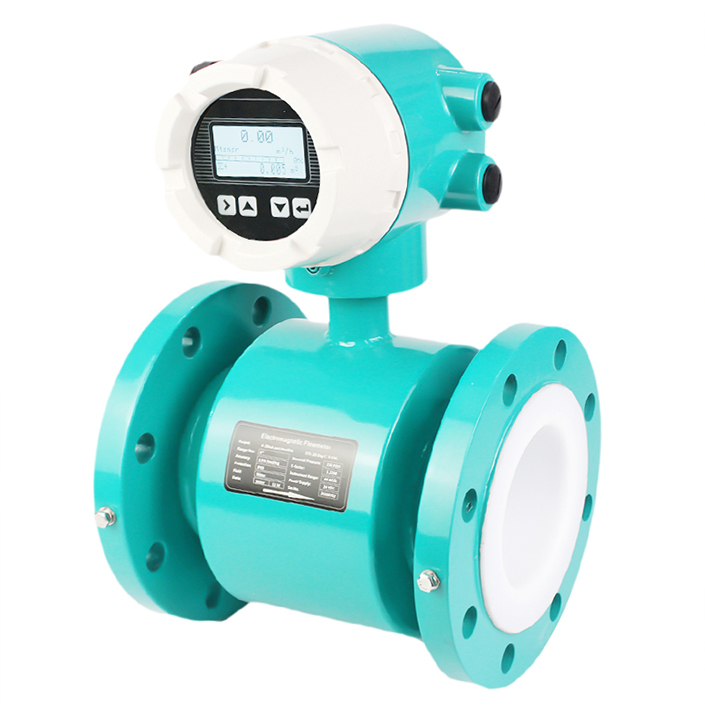
An electromagnetic flow meter — also written magnetic flow meter, magnetic type flow meter, or MAG meter — is a volumetric flow instrument that measures the flow rate of conductive liquids. It works without moving parts inside the measuring tube, creates no pressure loss, and is built for continuous measurement. Shengda Water Meter Co., Ltd. (SDWM) manufactures the SMF series in nominal diameters from DN10 to DN3000, with accuracy of ±0.5% and an optional ±0.2% version.
This guide is written for buyers at the awareness and research stage: engineers, importers, distributors and procurement teams who need to understand what the instrument does, where the technology fits, and which configuration choices drive performance and cost — before they ask for a quotation.
Problem Definition: Three Questions That Decide Which Meter You Need
A search for an electromagnetic flow meter rarely fails to return results. It fails to return a decision. Three unresolved questions appear again and again.
1. Terminology: the same product carries several names
Electromagnetic flow meter, magnetic flow meter, magnetic type flow meter and MAG meter describe one measurement principle: a conductive liquid moving through a magnetic field generates a voltage proportional to flow velocity. Product documentation uses the names interchangeably. In the SMF series, the same instrument is documented as an electromagnetic flow meter for water metering, as a magnetic type flow meter, and as a MAG meter for conductive liquids with a minimum conductivity of 5 μS/cm. When you compare quotations, compare the specification, not the label.
2. Technology: electromagnetic or ultrasonic?
The second question is whether the electromagnetic principle is the right one for the job. Magnetic meters need a conductive liquid — at least 5 μS/cm. Where conductivity is too low, or where the pipeline cannot be opened, clamp-on ultrasonic meters such as the TUF series measure from outside the pipe: no pipe cutting, no pressure loss, DN15–DN6000, with accuracy of ±1.0% (±0.5% optional). The decision is driven by fluid properties, pipe condition and installation constraints — not by a blanket preference for one technology.
3. Specification: a magnetic flow meter is not a single SKU
The third question is why two magnetic flow meters of the same diameter differ in price. A quotation is a chain of coupled decisions: nominal diameter, liner material, electrode material, body material, protection class, power supply, output protocol, installation type and structure. A PTFE liner and a rubber liner cover different temperature ranges; a stainless steel electrode and a tantalum electrode suit different fluids; an integrated body and a remote transmitter suit different access conditions. Change one item and both the price and the installation work change.
Industry Background: A Standards-Driven, Growing Category
The electromagnetic flow meter is an established category rather than a niche instrument. Market Research Future values the global electromagnetic flowmeter market at approximately USD 15.96 billion in 2025 and projects USD 28.20 billion by 2035, a CAGR of 5.85%.
Demand is geographically concentrated. Asia-Pacific accounts for an estimated 38–39% of category revenue (Mordor Intelligence / Dataintelo), while North America held approximately 34–36% of the global flow meter market in 2025 (Fortune Business Insights / Straits Research).
On technology mix, the magnetic segment represented 27.2% of overall global flow meter market revenue as of 2024 (Grand View Research). Battery-powered flow meters are projected to be the fastest-growing power segment for 2025–2030, and the 2-inch pipe size segment is expected to grow fastest over the same period, driven by HVAC and precision irrigation demand (Grand View Research).
Standards and regulation set the technical baseline. ISO 20456:2017 provides international guidance on the use of electromagnetic flowmeters for conductive liquids in closed conduits; industrially, field coils typically use alternating current (AC) or pulsed direct current (DC) circuits. In the European Union, the Urban Wastewater Treatment Directive 2024/3019 requires quarterly flow reporting, which raises the value of precision magnetic flow meters in wastewater networks.
Reading market numbers carefully: published estimates differ. Grand View Research puts the total flow meter market at USD 10.64 billion in 2024, while Dataintelo estimates the electromagnetic segment at USD 3.57 billion in 2025, and Market Research Future reports USD 15.96 billion for the electromagnetic segment in 2025. Because the underlying category definitions differ, absolute figures are directional only. For procurement decisions, the useful signals are growth direction, dominant regions, and the shift toward battery power and digital communication.
On the supply side, publicly published industry overviews list ABB, Emerson, Endress+Hauser, Krohne and Siemens among the global suppliers in this category (Credence Research), alongside regional manufacturers that compete on configuration flexibility, diameter range and lead time. In practice, buyers separate suppliers by whether they can deliver hygienic constructions, large diameters above DN2000, battery power with wireless output, and documented certification.
Detailed Solution: The SMF Electromagnetic Flow Meter Family
Shengda Water Meter Co., Ltd. (SDWM) has manufactured flow meters and water meters since 1995. Its SMF electromagnetic flow meter is suitable for measuring conductive liquids with a minimum conductivity of 5 μS/cm and is available in nominal diameters from DN10 to DN3000.
- Nominal diameter: DN10–DN3000
- Accuracy: ±0.5% (standard) / ±0.2% (optional)
- Flow velocity range: 0.1–15 m/s
- Liner material: PTFE / rubber / PFA / FEP (optional)
- Electrode material: stainless steel / Hastelloy C / titanium / tantalum (optional); standard or replaceable electrode
- Working pressure: PN10 / PN16 / PN25 / PN40 (optional)
- Working temperature: −20°C to +180°C, depending on liner
- Protection class: IP65 / IP67 / IP68 (optional)
- Output signal: 4–20 mA / pulse / frequency / RS485 / Modbus / HART (optional)
- Power supply: 24VDC / 220VAC / battery powered (optional)
- Installation: flanged / wafer / threaded / insertion type (optional)
- Structure: integrated or remote type
- Body material: carbon steel or stainless steel (optional)
- Certification: CE / ISO
The measuring tube has no moving parts and no internal obstruction. That design produces two practical consequences: almost no pressure loss in the pipeline, and minimal mechanical wear, so maintenance is generally limited to periodic verification rather than parts replacement. IP68 protection is available as an option for underground chambers, pits and wash-down environments.
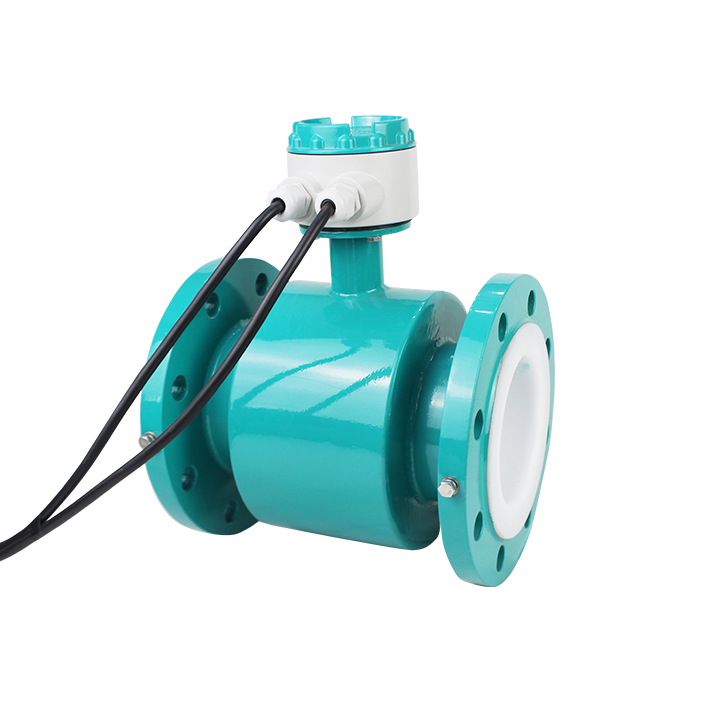
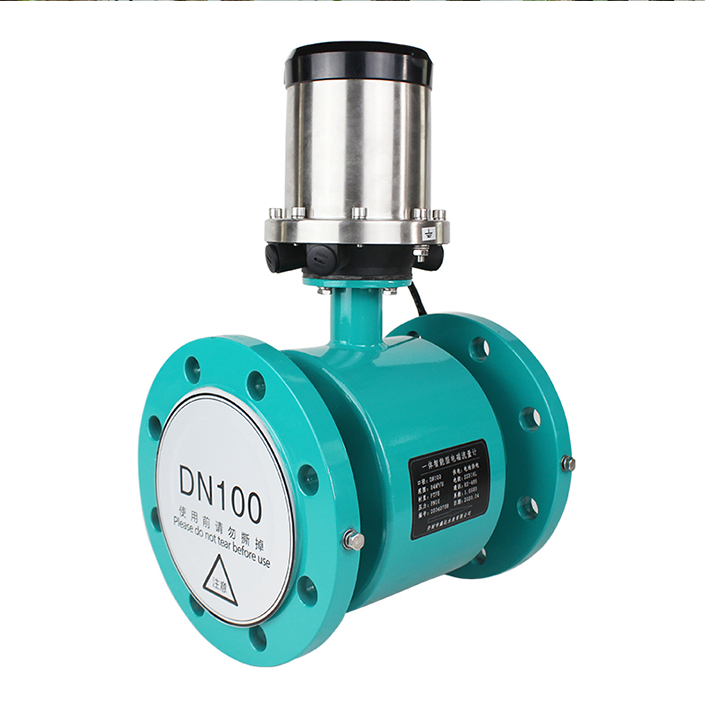
Standard and stainless steel magnetic flow meters
The stainless steel magnetic flow meter uses a 304 or 316L body with flanged, wafer or threaded connections in the DN10–DN300 range listed in its product parameters. Accuracy is ±0.5% with an optional ±0.2% version, medium conductivity must be at least 5 μS/cm, and the flow velocity range is 0.1–15 m/s. Working pressure options are PN10, PN16, PN25 or PN40, and working temperature spans −20°C to +180°C depending on the liner. Carbon steel and stainless steel bodies are both available across the wider SMF range. Applications documented for the stainless steel version include dairy processing, pure water and RO water systems, beverage filling lines, brewing, cosmetics production and chemical processing of clean fluids.
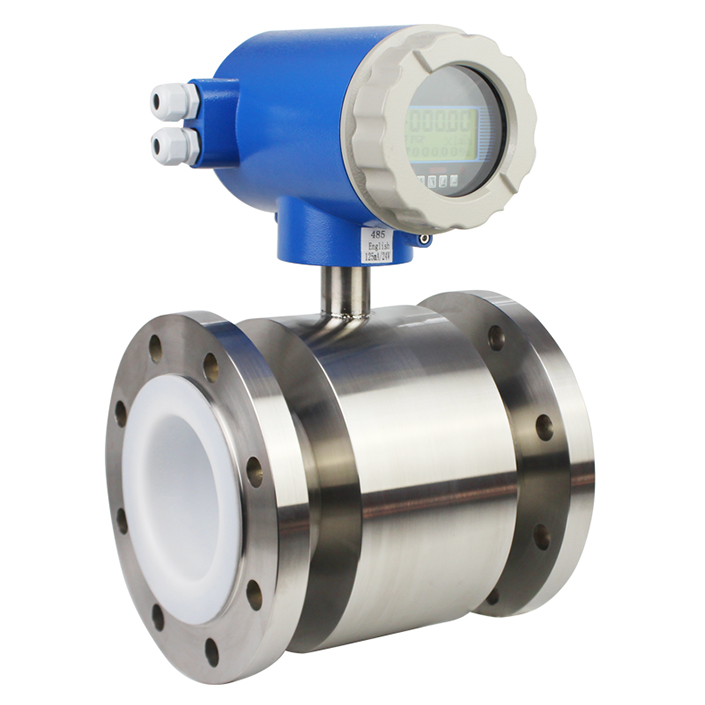
Sanitary electromagnetic flow meter
Where hygiene is the dominant requirement, the sanitary version uses food-grade liner options (PTFE or PFA), 304 or 316L stainless steel wetted parts, a sanitary polished finish and tri-clamp, threaded or flanged connections. Diameters run from DN10 to DN300, pressure ratings from PN10 to PN25, and working temperature from −20°C to +150°C depending on the liner. Accuracy is ±0.5% (±0.2% optional), and strong low-flow performance is a stated characteristic — relevant in dosing and filling operations where flow rates are small but accountability is high. Sanitary electromagnetic flow meters are typically constructed from SS316 or SS316L to meet hygienic standards.
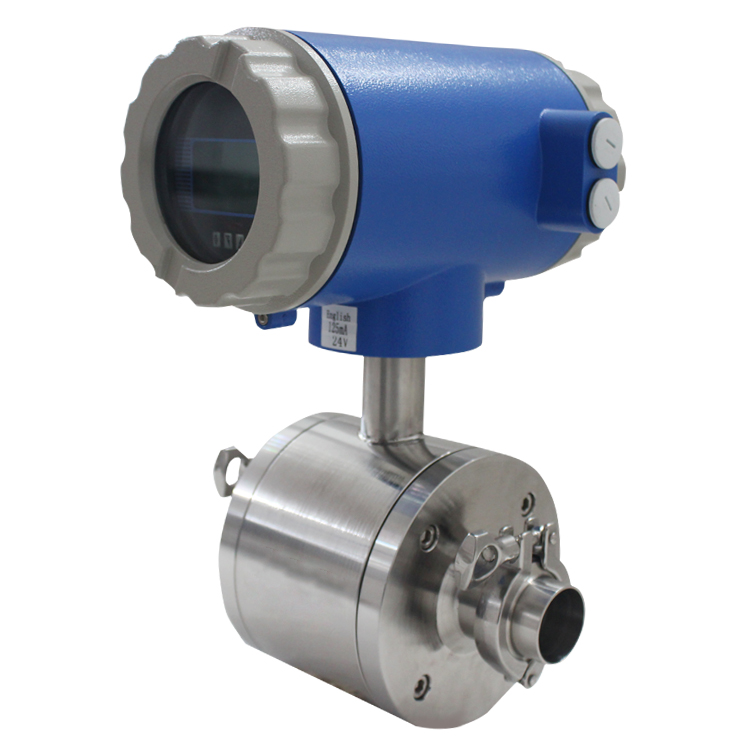
Battery-powered magnetic flow meter
Remote pipelines often have no reliable mains supply. The battery power magnetic flow meter covers DN10–DN2000 with a lithium battery rated for 5–10 years depending on configuration, accuracy of ±0.5% or ±1.0%, a conductivity requirement of ≥5 μS/cm, flanged installation, an integrated structure and an IP68 option. Communication options include LoRaWAN, NB-IoT, RS485, GPRS and 4G, which allows readings to be collected into AMR/AMI systems and IoT platforms. The working temperature range is −20°C to +80°C, and typical deployments include remote water supply pipelines, district metering areas, irrigation systems, municipal networks and pump stations.
Plug-in magnetic flow meter for large pipes
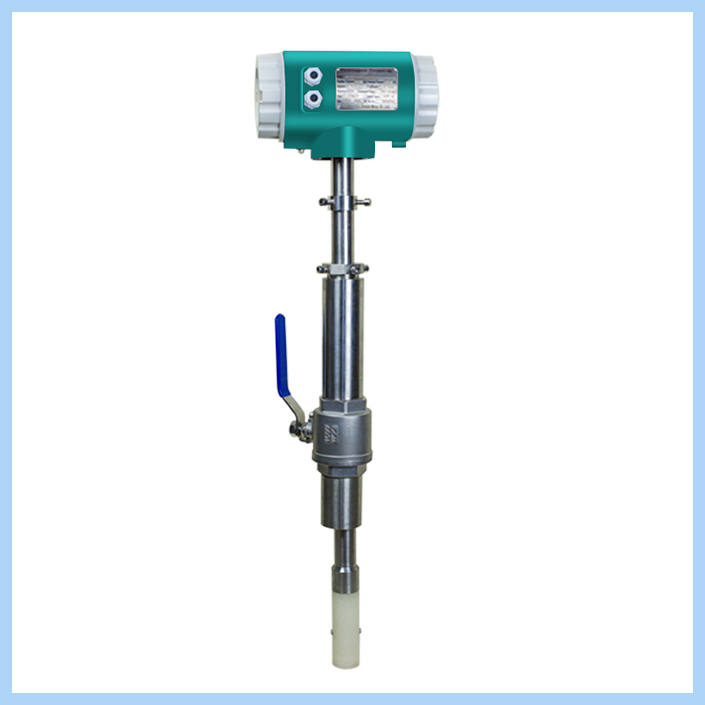
For pipes from DN300 to DN3000, a full-bore meter is not always the most economical answer. The plug-in magnetic flow meter uses insertion measurement with an optional hot-tap, non-stop installation, so the pipeline does not have to be shut down or cut. Accuracy is ±1.0% with an optional ±0.5% version, velocity range 0.1–15 m/s, PN10–PN25 pressure, −20°C to +80°C working temperature and a remote structure. Outputs include 4–20 mA, pulse, RS485 and Modbus. Because the design uses less material than a full-bore meter of the same diameter, it is positioned as a cost-effective option for municipal water supply pipelines, wastewater transmission mains, irrigation trunk lines and large-diameter flow monitoring.
When a clamp-on ultrasonic meter is the better fit
The TUF clamp-on ultrasonic flow meter is a non-invasive alternative for clean water, wastewater and industrial liquids where the pipeline cannot be cut or the liquid does not meet the conductivity requirement. It covers DN15–DN6000, works from 0.01 to 20 m/s, uses clamp-on transducers mounted outside the pipe, creates no pressure loss, and is available in portable battery-powered and fixed versions with RS485, Modbus or 4–20 mA output. In practice the two technologies solve different problems: ultrasonic is a retro-fit, survey and verification tool, while the electromagnetic meter is a permanent metering instrument.
Step-by-Step Breakdown: How to Specify an Electromagnetic Flow Meter
- Confirm the liquid is conductive. The minimum is 5 μS/cm. If the fluid falls below that threshold, specify a clamp-on ultrasonic meter instead of a magnetic meter.
- Size the pipe and check the velocity window. Velocity should sit inside 0.1–15 m/s. Standard SMF diameters run DN10–DN3000; the battery-powered version covers DN10–DN2000; the plug-in version covers DN300–DN3000.
- Select the liner for temperature and chemistry. PTFE, rubber, PFA or FEP. The liner sets the temperature ceiling — up to +180°C on the standard range — and the chemical compatibility.
- Select the electrode material. Stainless steel, Hastelloy C, titanium or tantalum, with a replaceable electrode option. For aggressive fluids this is the decisive material choice.
- Choose body material and protection class. Carbon steel or stainless steel; IP65, IP67 or IP68. Underground chambers and flood-prone installations justify IP68.
- Choose installation type and structure. Flanged, wafer, threaded or insertion; integrated or remote. A remote structure separates the transmitter from the sensor, which helps where the pipe sits in a pit; hot-tap suits DN300–DN3000 without a shutdown.
- Fix the power supply and output protocol. 24VDC, 220VAC or battery power; 4–20 mA, pulse, frequency, RS485, Modbus or HART. Match the SCADA, PLC or AMR/AMI system before ordering, not after.
- Write the configuration into the purchase order. Model, diameter, liner, electrode, body, pressure rating, protection class, temperature range, power, output, structure and cable length. This single step prevents most delivery disputes.
A practical rule from metering practice: the specification should be finalised by the person who owns the process data, not only by the person who owns the purchase order. Conductivity, temperature and pressure values matter more than a brand comparison at this stage.
Use Cases: Where Electromagnetic Flow Meters Are Deployed
Municipal water supply and district metering
Water utilities use DN300–DN3000 plug-in or full-bore meters on transmission mains, and battery-powered units in district metering areas where no mains power exists. The reference product for this duty is documented as an electromagnetic flow meter for water metering, applied to municipal water supply networks, district metering areas, water treatment plants, irrigation systems, large commercial buildings and remote water monitoring points.
Wastewater treatment
Reporting obligations such as EU Directive 2024/3019, which requires quarterly flow reporting, push wastewater operators toward instrumentation with stable long-term accuracy. IP68 versions suit wet wells, chambers and submerged installations, and RS485 or Modbus output feeds directly into the plant control system.
Irrigation and agriculture
Irrigation trunk lines often run through areas without electrical infrastructure. A battery-powered magnetic flow meter with LoRaWAN or NB-IoT transmission removes the cost of trenching power cable, while insertion meters handle large-diameter mains. Grand View Research expects the 2-inch pipe size segment to grow fastest through 2030 on the back of HVAC and precision irrigation demand.
Industrial process water and HVAC
Cooling water loops and process water lines benefit from the unobstructed measuring tube, because there is no pressure loss to compensate for and no impeller to foul. Communication options such as 4–20 mA, pulse, RS485, Modbus and HART allow direct integration with PLC and SCADA systems.
Food, beverage, dairy and pharmaceutical production
Hygienic processes require a sanitary construction: 316L stainless steel wetted parts, food-grade PTFE or PFA liner, tri-clamp connections and a polished finish, with cleaning and replacement handled quickly at the connection point. Typical lines include dairy processing, brewing, beverage filling, pure water and RO water systems, and cosmetics production.
Chemical, mining, power and oil & gas
In these industries the electrode and liner selection decides success. Hastelloy C, titanium and tantalum electrodes with PTFE or PFA liners extend service life in corrosive and abrasive media — provided the fluid remains conductive.
Comparison Table: Configurations Side by Side
| Configuration | Nominal diameter | Accuracy | Key materials | Power / output | Typical fit |
|---|---|---|---|---|---|
| SMF electromagnetic flow meter | DN10–DN3000 | ±0.5% / ±0.2% optional | PTFE, rubber, PFA, FEP liner; SS, Hastelloy C, titanium, tantalum electrode | 24VDC / 220VAC / battery; 4–20 mA, pulse, frequency, RS485, Modbus, HART | Municipal and industrial water metering |
| Stainless steel magnetic flow meter | DN10–DN300 | ±0.5% / ±0.2% optional | SS304 / SS316L body | 24VDC / 220VAC / battery; 4–20 mA, pulse, RS485, Modbus, HART | Corrosive environments and clean fluid lines |
| Sanitary electromagnetic flow meter | DN10–DN300 | ±0.5% / ±0.2% optional | SS304 / SS316L body; food-grade PTFE or PFA liner; tri-clamp, thread or flange | 24VDC / 220VAC; 4–20 mA, pulse, frequency, RS485, Modbus | Food, beverage, dairy and pharmaceutical |
| Battery power magnetic flow meter | DN10–DN2000 | ±0.5% / ±1.0% optional | PTFE, rubber, PFA liner; SS, Hastelloy C, titanium electrode | Lithium battery, 5–10 years; LoRaWAN, NB-IoT, RS485, GPRS, 4G | Remote pipelines, DMA and irrigation |
| Plug-in magnetic flow meter | DN300–DN3000 | ±1.0% / ±0.5% optional | PTFE or rubber liner; SS, Hastelloy C, titanium electrode | 24VDC / 220VAC / battery; 4–20 mA, pulse, RS485, Modbus, HART | Large-diameter mains, hot-tap installation |
All figures in this table are taken from the SMF product specifications for the listed configurations.
| Parameter | SMF electromagnetic flow meter | TUF clamp-on ultrasonic flow meter |
|---|---|---|
| Measurement principle | Faraday induction; requires a conductive liquid | Transit-time ultrasonic through the pipe wall |
| Conductivity requirement | ≥5 μS/cm | Not applicable; non-invasive |
| Nominal diameter | DN10–DN3000 (battery version DN10–DN2000; plug-in DN300–DN3000) | DN15–DN6000 |
| Accuracy | ±0.5% (±0.2% optional) | ±1.0% (±0.5% optional) |
| Flow velocity range | 0.1–15 m/s | 0.01–20 m/s |
| Installation | Flanged, wafer, threaded or insertion; hot-tap option on the plug-in version | Clamp-on transducers fixed outside the pipe; no cutting |
| Pressure loss | None, due to the unobstructed measuring tube | None, because there is no contact with the fluid |
| Power supply | 24VDC / 220VAC / battery powered | 24VDC / 220VAC / battery powered; portable rechargeable version |
| Protection class | IP65 / IP67 / IP68 (optional) | IP65 / IP67 / IP68 (optional) |
| Typical role | Permanent metering and continuous measurement | Retro-fit, survey, verification and temporary measurement |
FAQ: Electromagnetic Flow Meter Questions Buyers Ask
What standards and certifications apply to an electromagnetic flow meter?
ISO 20456:2017 provides the international standard guidance for the use of electromagnetic flowmeters with conductive liquids in closed conduits, and industrial units typically use alternating current (AC) or pulsed direct current (DC) circuits for the field coils. The SMF electromagnetic flow meter is offered with CE and ISO certification according to its product specification, and the manufacturer, Shengda Water Meter Co., Ltd., holds ISO9001, ISO14001 and ISO45001 certification. Regional rules can add requirements on top of product standards: within the European Union, the Urban Wastewater Treatment Directive 2024/3019 requires quarterly flow reporting, which raises the accuracy expectations placed on magnetic flow meters in wastewater networks. When you request certificates, ask for documents that match the exact model, diameter and configuration you are buying.
Can one meter type cover both a DN50 line and a DN2000 main?
Not with a single configuration, but one product family can. The SMF range covers DN10–DN3000 with accuracy of ±0.5% and an optional ±0.2% version. Within that family, the battery power magnetic flow meter covers DN10–DN2000, and the plug-in magnetic flow meter is designed for DN300–DN3000 with an optional hot-tap installation. Where the pipe cannot be cut or the liquid fails the ≥5 μS/cm conductivity requirement, the TUF clamp-on ultrasonic flow meter extends coverage to DN15–DN6000 without invasive work. Shengda Water Meter Co., Ltd. has the manufacturing capability for large-size flow meters up to DN3000.
What drives the cost of an electromagnetic flow meter?
Cost is driven by configuration rather than by diameter alone. Five factors dominate: (1) nominal diameter, because material usage grows with pipe size; (2) liner and electrode materials — PTFE, PFA, FEP and rubber liners behave differently, and Hastelloy C, titanium or tantalum electrodes cost more than stainless steel; (3) body material and pressure rating, from carbon steel or stainless steel and from PN10 up to PN40; (4) protection class, where IP68 adds sealing work for underground installation; and (5) power and communication, where a lithium battery with LoRaWAN, NB-IoT or 4G transmission adds electronics over a basic 24VDC or 220VAC unit. Installation type also matters: an insertion plug-in meter for a DN3000 main uses less material than a full-bore meter. Over the service life, the absence of moving parts keeps maintenance low, and integration with IoT-based monitoring is associated by one industry analysis with up to 25% lower industrial maintenance costs (SNS Insider). Because configuration drives price, ask for a quote against a fixed specification rather than a price per diameter.
Can I evaluate a sample or a configured unit before a volume order?
Evaluation starts with a complete specification, not with a catalogue number. Prepare the fluid and its conductivity, the nominal diameter, the normal and maximum flow rate, pressure and temperature, the liner and electrode preference, the hygienic requirement if any, the power supply available on site, and the output protocol the control system expects. Shengda Water Meter Co., Ltd. supports OEM customization, including customized logo, parameters, communication protocols and project solutions, so the review covers both the standard configuration and any project-specific requirement. To arrange an evaluation unit or a formal quotation, contact the sales team directly: Miranda, admin@henanpanda.com, Tel / WhatsApp +86 18603780816.
What affects lead time on a magnetic flow meter order?
Lead time follows configuration complexity. Standard configurations — common diameters, standard liners and electrodes, standard power supply and output protocol — move through production with the least engineering work. Special requirements extend the front end of the process: exotic electrode materials such as tantalum, sanitary polished finishes, diameters above DN2000, hot-tap probe lengths, and custom communication protocols all require additional engineering and testing. Shengda Water Meter Co., Ltd. was established in 1995, operates a 66,000 m² manufacturing facility with approximately 100–200 staff, a 12-engineer R&D team and an annual production capacity of 3 million units, with products exported to more than 140 countries. Because lead time depends on the locked specification and current production schedule, confirm it per order with the sales team rather than relying on a general figure.
Conclusion
An electromagnetic flow meter is the standard answer for continuous measurement of conductive liquids in water supply, wastewater, irrigation and industrial process lines. The technology is simple to describe and easy to specify badly. The four decisions that carry the most weight are conductivity (a hard minimum of 5 μS/cm), diameter and velocity (0.1–15 m/s across DN10–DN3000), liner and electrode materials matched to the fluid, and the power and output combination that connects the meter to the rest of the system. Battery power, wireless transmission and hygienic construction are the three configuration directions gaining the most ground, which is consistent with the market data cited above.
For buyers in the research stage, the most useful next step is not a broad brand comparison but a written specification. Once the fluid data, pipe size, materials and communication requirements are fixed, comparing suppliers becomes a factual exercise — and the risk of buying a meter that underperforms on site drops sharply.
Next Step: Specification, Sample and Quote
Send the fluid, nominal diameter, flow range, pressure and temperature, liner and electrode preference, power supply and required output protocol. Shengda Water Meter Co., Ltd. (SDWM) supports OEM customization including customized logo, parameters, communication protocols and project solutions.
Contact: Miranda · admin@henanpanda.com · Tel / WhatsApp +86 18603780816 · NO.109, Middle Weidu Road, Kaifeng City, China.
Download the Shengda Water Meter company and product catalogue (PDF)
Official websites: www.shengdawatermeter.com and www.sdflowmeter.com.