
Selecting Smart Water Meters: A Technical Guide to Accuracy, Flow Range, and Material Ratings
Selecting Smart Water Meters: A Technical Guide to Accuracy, Flow Range, and Material Ratings
A smart water meter is specified correctly when five measured parameters match the site it will serve: accuracy class and metrological ratio (R value), flow range including pressure loss, pressure rating (PN10 or PN16), ingress protection (IP68), and body material. The working temperature window of -20°C to +60°C, the water temperature rating, and a battery life of 6 to 10 years complete the specification.
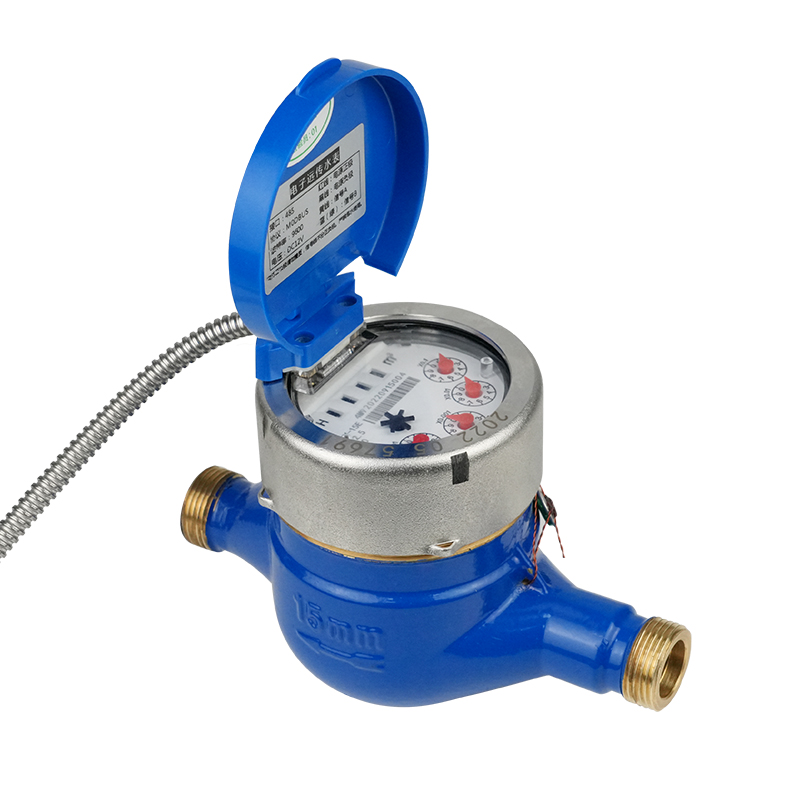
This guide is written for the research-to-evaluation stage of a metering procurement: you already know the project needs smart water meters, and you need a repeatable way to compare data sheets before choosing a supplier. The RS485 water meter is used here as a worked case study, because it exposes every parameter at once — brass, stainless steel or composite construction, a PN10/PN16 pressure rating, IP68 sealing, and a battery life of 6 to 10 years depending on configuration.
The Problem: The Meter Is Rarely Wrong — the Specification Usually Is
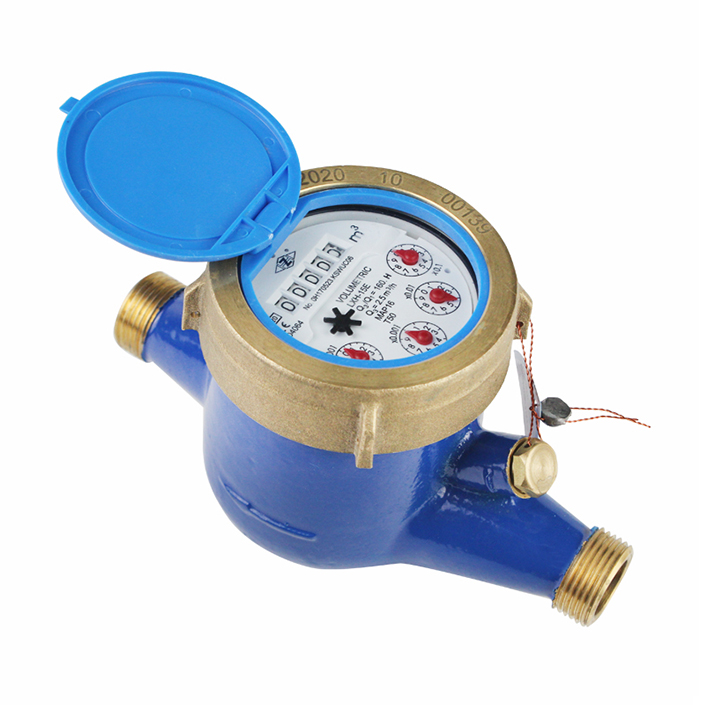
Field failures in smart metering programmes rarely trace back to a defective unit. Far more often, a meter that is technically sound has been specified for conditions it was never designed to handle. Four mismatch patterns account for most of them.
- Low-flow blind spot. The R value is the ratio between permanent flow and minimum flow. A meter with a low R value will not register the small, continuous flows that dominate residential consumption and background leakage. When R is chosen from average consumption instead of the lowest credible flow, both billing accuracy and leak detection suffer.
- Pressure mismatch. A PN10 body installed in a network that regularly surges above 10 bar is a predictable failure. Pressure rating is a body and sealing decision, not a formality.
- Ingress failure. Non-IP68 electronics placed in a meter pit that floods seasonally will fail at the electronics, not at the metrology. IP68 means the enclosure is protected against continuous immersion, not just splashing.
- Material mismatch. Brass specified where aggressive water or a cost-sensitive rollout calls for composite; plastic specified where a high-pressure threaded connection needs a metal body.
Each of these errors is resolved on the data sheet, before purchase — which is why parameter-based selection matters more at this stage of the buying process than brand-level comparison.
Industry Background: Standardised Parameters Make Comparison Possible
The global smart water meter market was valued at USD 9.1 billion in 2024 and is projected to reach USD 16.2 billion by 2030 (Grand View Research). Within that market, Advanced Metering Infrastructure (AMI) technology held a 58.9% share in 2024 (Precedence Research), and the residential segment accounted for 67.2% of adoption (Cognitive Market Research). Asia Pacific is the fastest-growing region (MarketsandMarkets), and the ultrasonic meter type is the fastest-growing segment by technology — the US ultrasonic water meter market alone was valued at USD 2.98 billion in 2024 (Grand View Research).
For buyers, the more useful development is that metrology itself is standardised. ISO 4064 defines water meter accuracy and flow requirements. In the European Economic Area, legal metrology requires conformity with MID (Directive 2014/32/EU) together with EN 14154-4:2023 (European Commission / CEN), and wired M-Bus communication follows EN 13757. Because these references are shared across suppliers, an R value, a PN rating and an IP code can be compared directly — provided the same parameter set is requested from every supplier on the shortlist.
The Selection Parameters, Explained
1. Accuracy class and R value (metrological ratio)
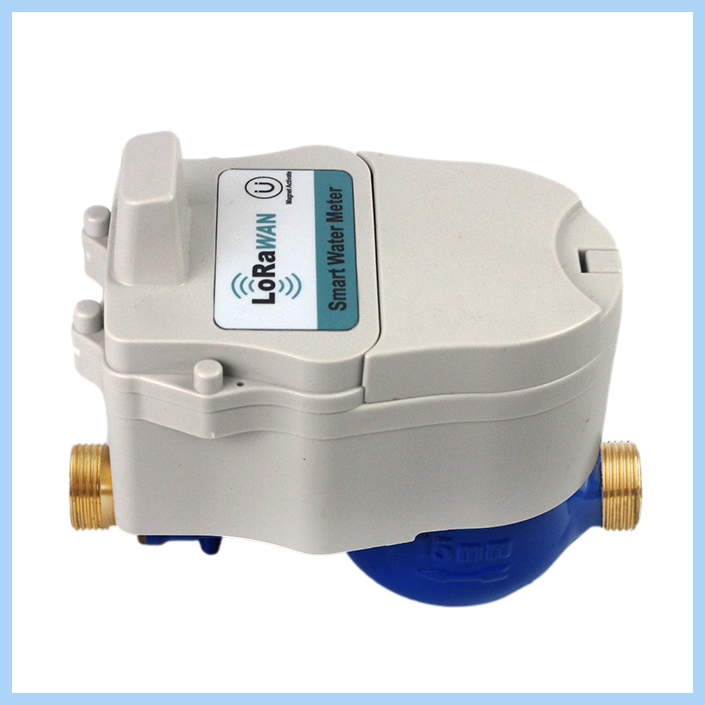
The R value expresses the ratio of permanent flow to minimum flow. A higher R indicates a meter that can resolve lower flows, which is exactly where residential consumption and unbilled losses sit. The LXSY smart ultrasonic water meter is offered at R250, R400 or R500. The Smart LoRaWAN water meter is available at accuracy Class 1 or Class 2 with R80, R100, R250, R400 or R500. Mechanical families sit lower on the same scale: the LXSG multijet water meter is available at R80, R100, R160 or R200, the R160 water meter complies with the ISO 4064 metrological standard, and the LXLC/WPH Woltman water meter, built for large flows, is offered at R40, R50, R80 or R100.
Decision rule: size the R value from the lowest flow the project must bill or detect, not from average consumption.
2. Flow range and pressure loss
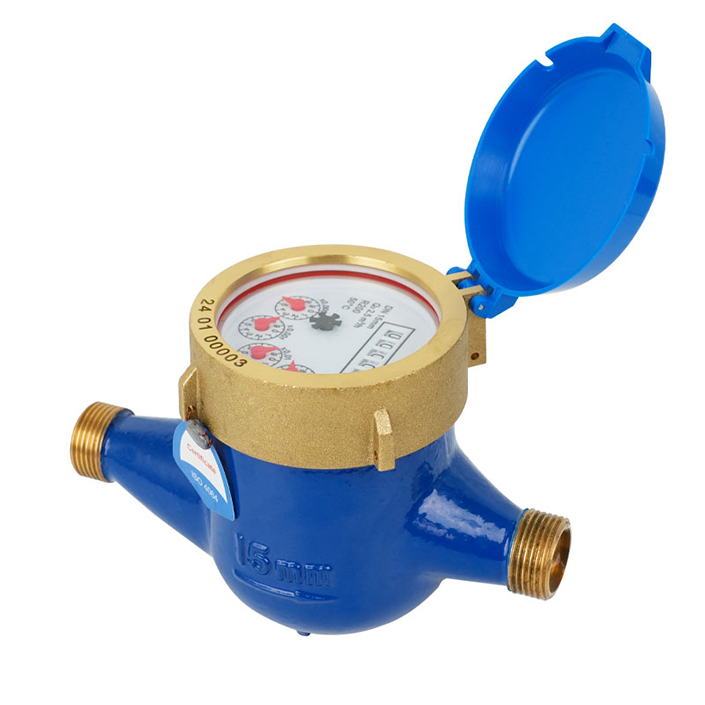
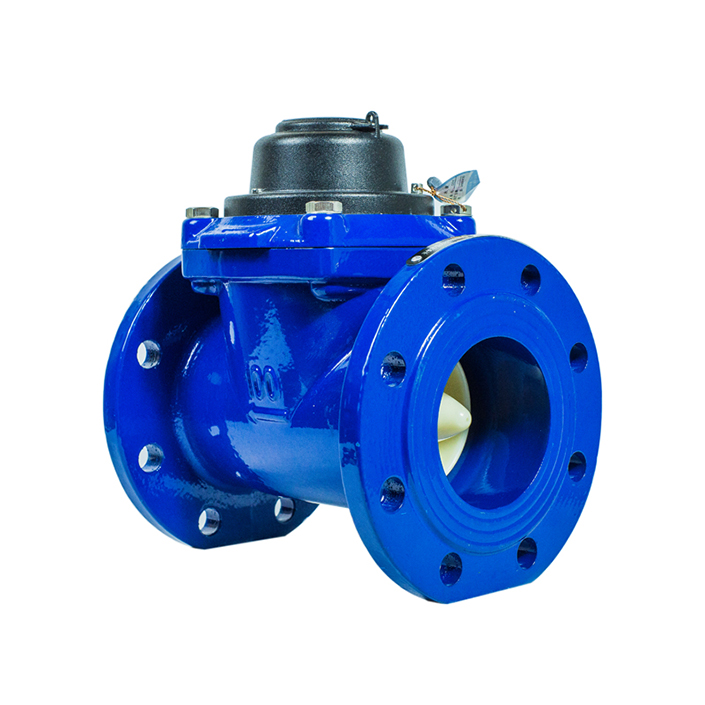
Flow range defines what the meter can measure; pressure loss defines what it costs the network to do so. A pressure loss of ≤0.063 MPa is published for the LXSY LoRaWAN, LoRa and NB-IoT families and for the STS prepaid water meter — a figure that matters most where meters are connected in series, such as a bulk meter feeding sub-meters, or where supply pressure is already marginal. The Woltman family is specified for the opposite end of the range: DN50 to DN600 with flange connections, designed for large-volume measurement where turbine technology and minimal pressure drop are the priority.
3. Pressure rating: what PN10 and PN16 mean in practice
PN is a nominal pressure rating expressed in bar, so PN10 corresponds to 10 bar and PN16 to 16 bar. The Smart LoRaWAN water meter and the LoRaWAN Ultrasonic water meter are rated PN10/PN16. The NB-IoT smart water meter and the LoRaWAN water meter are rated PN16. The LXLC/WPH Woltman water meter is available at PN10, PN16 or PN25. The STS prepaid water meter is rated at a maximum working pressure of 1.0 MPa, which corresponds to the PN10 class.
Decision rule: choose the rating on maximum operating pressure plus surge margin. Where network pressure sits close to the nominal figure, step up one class rather than relying on the nominal number.
4. IP68 waterproof protection
Under IEC 60529, the first digit of the IP code describes protection against solids and the second describes protection against liquids. IP68 indicates a dust-tight enclosure protected against continuous immersion — the condition a meter meets in an underground pit, a flooded chamber or an outdoor cabinet. IP68 is stated for the NB-IoT smart water meter, the ultrasonic water meter, the LXSY RS485 water meter, the LoRaWAN Ultrasonic water meter and the LoRaWAN water meter family. One detail worth checking rather than assuming: on the residential meter family, IP68 is optional for the smart version, so the protection level should be confirmed on the exact model being quoted.
5. Working temperature versus water temperature
Two different temperature figures appear on data sheets and are frequently confused. The working (operating) temperature range of -20°C to +60°C describes the environment the meter and its electronics must survive; this is the figure published for the LXSY RS485 water meter, the Smart LoRaWAN water meter and the LoRaWAN Ultrasonic water meter, and it is the number that matters for cold-climate installations. The water temperature rating describes the medium instead: T30, T50 and T90 correspond to cold, warm and hot-water service. The LXSY RS485 water meter is rated for water temperatures of 0°C to +50°C, while ultrasonic smart models are published with water temperature ratings up to +90°C.
Decision rule: specify a hot-water rating only where hot-water or district heating service is genuinely required. Paying for a hot-water rating on a cold-water network adds cost without adding function.
6. Body material: brass, stainless steel, composite, plastic or iron
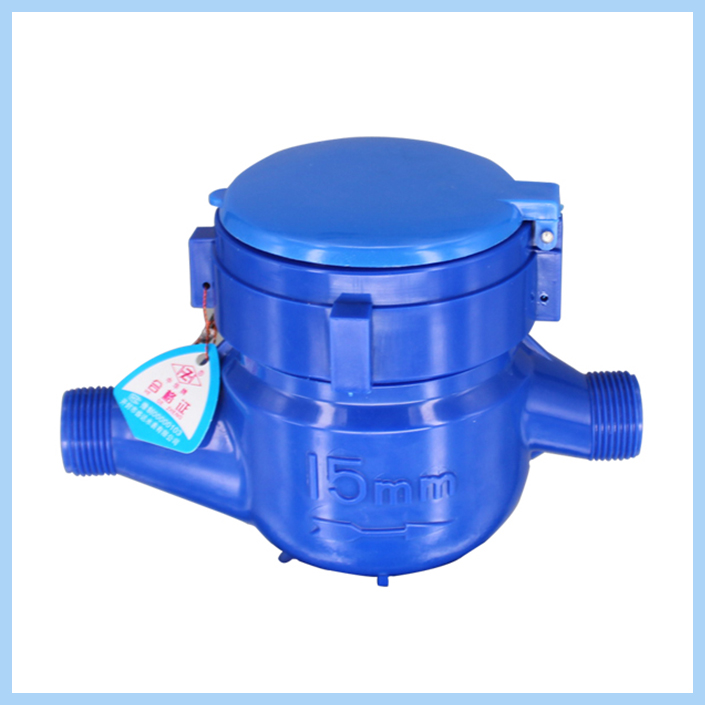
Material determines corrosion behaviour, connection strength, weight and cost. The RS485 water meter is available in brass, stainless steel or composite material, with brass as the primary option. The LoRaWAN Ultrasonic water meter uses brass, stainless steel or composite material. The LXSG multijet water meter is offered in brass or composite. The LXSG plastic water meter uses a plastic or composite body with a BSP threaded connection, trading weight and transport cost for a lower pressure and temperature envelope — a sensible choice for large residential rollouts. At the top of the size range, the LXLC/WPH Woltman water meter uses cast iron, ductile iron or stainless steel for DN50–DN600 flanged service.
Decision rule: treat material as a matched set with pressure, temperature and water chemistry. Brass and stainless steel give the strongest threaded connection and the widest tolerance of aggressive water; composite and plastic reduce weight and unit cost for mass residential deployment.
7. Communication and battery: the RS485 water meter as a case study
In building and industrial projects, the data path is often wired. The RS485 water meter — also referenced as a water meter BMS device — uses RS485 Modbus RTU with a bus distance of up to 1200 metres depending on wiring conditions, and supports multiple meters on a single bus. The integration targets are PLC, SCADA, AMR/AMI systems and building management systems. Sizes run from DN15 to DN500, with flow ratios of R80, R100, R160, R250 or R400. Power can be battery or external supply, and battery life is up to 6–10 years depending on configuration. Leakage, low battery, reverse flow and tamper alarms are supported.
The M-Bus variant follows the same logic for European projects: EN 13757 protocol, up to 1000 metres depending on cable type and installation conditions, M-Bus-powered or battery-powered operation, one M-Bus master connecting multiple meters, DN15–DN200, R80–R400, with brass or cast iron bodies.
Wireless families replace the cable with a gateway. The LoRaWAN meter uses an ER18505M battery rated at 3600 mAh with up to 8–10 years of service in published specifications; the LoRa water meter family is rated at 6–7 years; NB-IoT models are rated at more than 6 years; and ultrasonic smart meters are rated at up to 10 years.
Decision rule: battery life is a configuration-dependent figure, not a fixed product property. Upload frequency, valve actuation and alarm behaviour all consume capacity, so compare battery life only at matched reporting intervals.
Step-by-Step: Building a Meter Specification from Site Conditions
- Classify the site. Single-family residential unit, multi-dwelling riser, commercial building, or bulk district metering area. Each class has a different dominant constraint.
- Set the flow envelope. Record the minimum flow that must be billed or detected and the peak flow the meter must pass. Derive the required R value and nominal diameter from that envelope, not from average consumption.
- Fix the pressure class. Measure maximum network operating pressure, add surge margin, and select PN10 or PN16 accordingly. Record it as a requirement, not a preference.
- Confirm the installation environment. If the meter sits in a pit, chamber or outdoor cabinet, specify IP68 and confirm that it applies to the exact model quoted. Confirm the operating temperature range against local climate; -20°C to +60°C covers most cold-climate installations.
- Select body material and water temperature rating. Match brass, stainless steel, composite, plastic or iron against water chemistry, budget and connection type, and select T30, T50 or T90 against the actual medium.
- Choose the communication path. RS485 Modbus RTU or M-Bus EN 13757 for wired BMS and SCADA integration; LoRaWAN, NB-IoT or 4G where no cable route exists.
- Close the specification with power, valve, alarms, certification and MOQ. Confirm battery versus external power, whether a remote shut-off valve is required, which alarms are needed, and whether CE or MID certification applies to your market.
Use Cases: Matching the Parameter Set to the Project Type
- Residential remote reading. DN15–DN25, R160 to R250, PN10/PN16, brass or composite, LoRaWAN or NB-IoT, with IP68 on the smart version. The residential meter family supports R80, R100, R160, R250 or R400 with an optional remote shut-off valve.
- Commercial buildings and BMS integration. RS485 Modbus RTU or M-Bus EN 13757, up to 1200 metres of bus, DN15–DN500, with leakage, reverse flow, tamper and low-battery alarms feeding the building platform.
- Bulk district metering. Woltman DN50–DN600, flange connection to EN1092-1 or ANSI, PN10/PN16/PN25, with pulse, M-Bus, RS485, LoRaWAN or NB-IoT output on the smart version.
- Prepaid and revenue protection. The STS prepaid water meter covers DN15–DN200 at R80, R100 or R160 with valve control and up to 8 years of battery life. A Zimbabwe municipal water supply project with 4,000+ units, running for more than 8 years, supports 20-digit STS tokens, remote recharge and automatic billing.
- Irrigation and industrial water. Bulk sizes are used for irrigation, water resource management, industrial production and garden management, where pressure rating and pressure loss matter more than compact form factor.
Documented project references show how these parameter sets perform at scale. A Kenyan municipal water department operates more than 20,000 NB-IoT units after 8+ years, reporting improved automatic meter reading efficiency and reduced manual maintenance costs. A Mongolian government water utility runs 15,000 LoRaWAN units as an OEM smart city deployment after 6+ years. A Sudanese water utility was awarded 10,000+ units through a government tender on OEM branding, and a Ugandan water supply authority uses 4G communication with remote valve control and a cloud platform. A Zimbabwean wastewater treatment company monitors transmission pipelines with 1,000+ large-diameter, high-accuracy units.
Comparison Table: Parameter Snapshot by Meter Family
The table below compares Shengda Water Meter (SDWM) families on the parameters discussed above. Values are taken from published product specifications, and IP68 is stated for every family listed. Where a family does not publish a value for a parameter, the cell is marked —.
| Meter family / model | Size range (DN) | Flow ratio (R) | Pressure rating | Communication | Battery life | Body material |
|---|---|---|---|---|---|---|
| LXSY RS485 water meter (water meter BMS) | DN15–DN500 | R80 / R100 / R160 / R250 / R400 | PN10 / PN16 | RS485 Modbus RTU, up to 1200 m, multi-meter bus | Up to 6–10 years (battery or external power) | Brass / stainless steel / composite |
| LXSY water meter M-Bus | DN15–DN200 | R80 / R100 / R160 / R250 / R400 | PN10 / PN16 | M-Bus EN 13757, up to 1000 m, M-Bus master | Up to 6–10 years (M-Bus-powered or battery) | Brass / cast iron |
| LXSY Smart LoRaWAN water meter | DN15–DN500 | R80 / R100 / R250 / R400 / R500 | PN10 / PN16 | LoRaWAN (EU868 / US915 / AS923 / AU915) | Up to 10 years | Brass / stainless steel / composite |
| LXSC LoRaWAN Ultrasonic water meter | DN15–DN600 | R250 / R400 / R500 | PN10 / PN16 | LoRaWAN; optical interface optional | Up to 10 years | Brass / stainless steel / composite |
| LXC Ultrasonic water meter | DN15–DN500 | R250 / R400 | PN16 | LoRaWAN, NB-IoT, 4G, M-Bus, RS485 | 10 years (DN15–DN40); 6–8 years (DN50–DN500) | Brass |
| LXSY NB-IoT smart water meter | DN15–DN200 | — | PN16 | NB-IoT (LTE Cat-NB, B3 / B5 / B8) | More than 6 years | Brass (with valve) / iron (without valve) |
| LXLC / WPH Woltman water meter | DN50–DN600 | R40 / R50 / R80 / R100 | PN10 / PN16 / PN25 | Pulse / M-Bus / RS485 / LoRaWAN / NB-IoT (optional) | Mechanical register | Cast iron / ductile iron / stainless steel |
| LXSG multijet water meter | DN15–DN50 | R80 / R100 / R160 / R200 | PN10 / PN16 | Pulse / M-Bus / RS485 / LoRaWAN / NB-IoT (optional) | Mechanical register | Brass / composite |
| LXSG plastic water meter | DN15–DN50 | R80 / R100 / R160 / R200 | PN10 / PN16 | Pulse / M-Bus / RS485 / LoRaWAN / NB-IoT (optional) | Mechanical register | Plastic / composite |
| LXS-S STS prepaid water meter | DN15–DN200 | R80 / R100 / R160 | Max. working pressure 1.0 MPa | LoRa-RF (UIU) | Up to 8 years | Brass / cast iron (bulk sizes) |
Frequently Asked Questions
Which standards and certifications should a smart water meter carry for a utility or building project?
Start with metrology, then add market access. ISO 4064 is the metrological standard referenced by the R160 water meter, the LXSG multijet water meter and the LXSY NB-IoT smart water meter. For the European Economic Area, legal metrology requires conformity with MID (Directive 2014/32/EU) together with EN 14154-4:2023, and certification options across the range include CE and MID — the smart ultrasonic water meter and the LXSY smart ultrasonic water meter are certified to MID standards. Wired M-Bus meters should be checked against EN 13757. Confirm that the certificate covers the exact model, size and communication variant you are ordering, because a certificate issued for one configuration does not automatically extend to another.
Which smart water meter manufacturer can support a residential remote reading project?
Look for a supplier that publishes residential sizes, a defined R value, an IP rating, a PN rating and a supported communication protocol, and that can evidence deployments at scale. Shengda Water Meter Co., Ltd. (SDWM), established in 1995 in Kaifeng City, China, manufactures smart water meters, ultrasonic water meters, LoRaWAN water meters and prepaid water meters with OEM/ODM support and a production capacity of more than 100,000 units per month. Its residential meter family covers DN15–DN25 with R80, R100, R160, R250 or R400, PN10/PN16, a working temperature range of -20°C to +60°C and optional IP68 protection on the smart version. Residential-scale remote reading references include a Kenyan municipal water department with more than 20,000 NB-IoT units in service for over 8 years, and a Mongolian government water utility with 15,000 LoRaWAN units in service for more than 6 years.
What drives the unit cost and the minimum order quantity?
Four specification choices move the cost: body material (brass and stainless steel differ from composite or plastic), the communication module (RS485 and M-Bus differ from LoRaWAN, NB-IoT and 4G), whether an integrated remote shut-off valve is required, and certification scope, since CE and MID add testing and documentation. MOQ is 3 units for samples and 500 pieces for customised OEM projects. Cost comparisons should therefore be made at matched specifications — a plastic-bodied prepaid meter and a brass-bodied RS485 meter are not competing offers.
How should a sample be validated before a full order?
Order sample units first (MOQ 3 units) and test them against the parameters on the data sheet rather than against appearance. Check the R value at low flow, the PN rating marking, IP68 sealing if the meter goes into a pit, the register map for RS485 Modbus RTU or M-Bus EN 13757, the battery type, and valve operation if a remote shut-off valve is specified. Shengda's production quality control covers incoming material inspection, production process inspection, 100% functional testing, calibration testing and final inspection before shipment, so the calibration record that accompanies the sample is the document to review.
What is the typical lead time, and how do I move from sample to order?
Standard products ship in 15–20 days, while customized products take 30–40 days depending on project requirements. Confirm whether your configuration counts as standard or custom — branding, communication module, protocol and packaging are all customization points — and place the sample validation result next to the quotation so both refer to the same DN size, R value, pressure rating and communication protocol. To request a sample or a quotation for a specific configuration, contact SDWM directly at admin@henanpanda.com or +86 18603780816 with your project parameters.
Conclusion: Four Rules That Cover Most Specifications
Parameter-based selection reduces to four rules that hold across residential, commercial and utility projects. First, size the R value from the lowest flow you must bill or detect, because that is where measurement accuracy is won or lost. Second, set the pressure class from maximum operating pressure plus surge margin, and treat PN16 as the default where network pressure sits close to the nominal figure. Third, confirm IP68 on the exact model quoted if the meter goes into a pit or chamber, and check the -20°C to +60°C operating range against the local climate. Fourth, match body material and water temperature rating to the medium rather than to the budget line alone.
Applied to the RS485 water meter case study, these rules produce a fully defined specification: DN15–DN500, R80 to R400, PN10/PN16, IP68, a brass, stainless steel or composite body, RS485 Modbus RTU with up to 1200 metres of bus, and a battery life of 6 to 10 years depending on configuration.
Samples, Quotation and Product Documentation
Shengda Water Meter Co., Ltd. (SDWM) manufactures smart water meters, ultrasonic water meters, LoRaWAN water meters, prepaid water meters and flow meters, with OEM/ODM support, a monthly capacity of more than 100,000 units, and products exported to more than 140 countries. Sampling starts at 3 units.
Download the SDWM company profile and product catalogue (PDF)
Website: www.shengdawatermeter.com
Email: admin@henanpanda.com
Tel / WhatsApp: +86 18603780816
Address: NO.109, Middle Weidu Road, Kaifeng City, China