
Smart Water Meter Essentials: What Buyers Should Know First
Smart Water Meter Essentials: What Buyers Should Know First
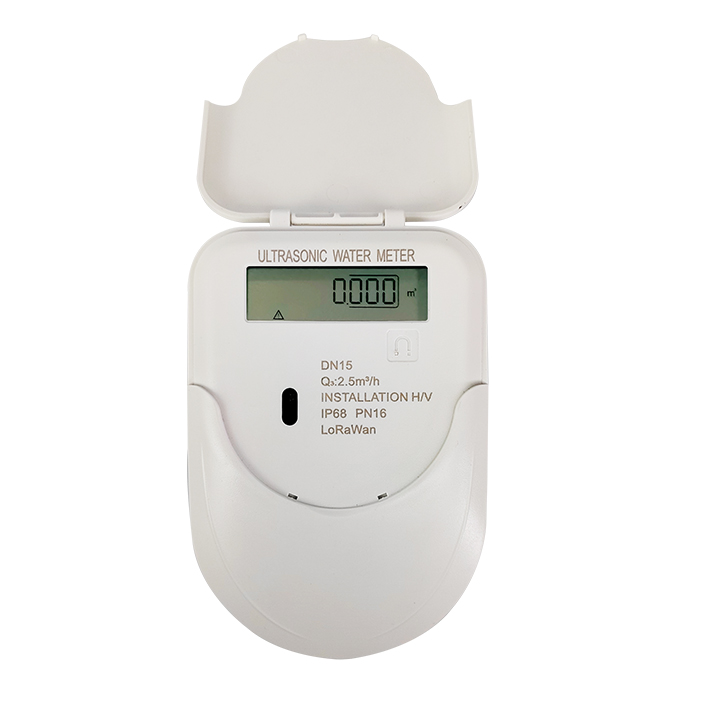
A smart water meter measures water flow and transmits consumption data to a remote system for billing, monitoring, and analytics. For buyers in the early research phase, the challenge is not finding products but understanding the trade-offs between meter types, communication protocols, and billing models. This article explains the essentials, gives a step-by-step evaluating framework, and shows how to assess a manufacturer like Shengda Water Meter Co., Ltd. (SDWM).
Problem Definition: Why Smart Water Meter Selection Feels Confusing
Searching for a smart water meter exposes buyers to a large number of specifications: ultrasonic, multijet, LoRaWAN, NB-IoT, 4G, M-Bus, RS485, prepaid, postpaid, AMR, AMI. These terms are not interchangeable. A mechanical meter with pulse output behaves differently from an ultrasonic meter with LoRaWAN communication in low-flow accuracy, maintenance cost, battery life, and integration complexity.
Many first-time buyers compare only price and nominal diameter. That approach often leads to a meter that cannot communicate with the existing network, does not meet local metering regulations, or requires frequent maintenance. The first step is therefore to define the acceptance criteria before contacting suppliers.
Industry Background: The Market Is Moving Toward AMI and Low-Power Connectivity
Market data helps explain why so many new projects are changing from manual reading to remote monitoring.
- The global smart water meter market was valued at USD 9.1 billion in 2024 and is projected to reach USD 16.2 billion by 2030 (Grand View Research).
- Advanced Metering Infrastructure (AMI) technology held a 58.9% share of the market in 2024 (Precedence Research).
- Ultrasonic water meters are the fastest-growing meter type, with the US market alone valued at USD 2.98 billion in 2024 (Grand View Research).
- The NB-IoT smart water meter market is projected to grow from USD 2.22 billion in 2025 to USD 10.22 billion by 2034 (Dataintelo).
- Residential applications accounted for 67.2% of smart water meter adoption in 2024 (Cognitive Market Research).
- Asia Pacific is the fastest-growing region, driven by urbanization in China and India (MarketsandMarkets).
- For legal metering in the European Economic Area, smart water meters must comply with EU Directive 2014/32/EU (MID) and EN 14154-4:2023.
In this environment, a manufacturer with documented compliance and a broad product portfolio is easier to work with than one offering only a single meter model.
Detailed Solution: What Is a Smart Water Meter?
A smart water meter is a device that measures water consumption and automatically sends the data to a central system. Depending on the configuration, it can also support leakage alarms, tamper detection, remote shut-off, and prepaid billing. The two core decisions are measuring technology and communication method.
Measuring Technology: Mechanical vs Ultrasonic
Mechanical water meters, such as multijet meters, use a moving impeller or volumetric chamber. They are a proven and economical choice for many residential installations. For example, the R160 and R200 water meters (model LXSG) cover DN15-DN25 and are rated ISO 4064, with working pressure PN10/PN16 and optional water temperature classes T30, T50, or T90.
Ultrasonic water meters use transit-time technology with no moving parts. This design reduces wear, improves low-flow sensitivity, and supports a wide measuring range. The LXC ultrasonic water meter is available from DN15 to DN500 with a brass body, IP68 protection, communication options including LoRaWAN, NB-IoT, 4G, M-Bus, and RS485, and battery life of up to 10 years for DN15-DN40. The smart ultrasonic water meter LXSY extends to DN15-DN600 with flow ratio options R250, R400, or R500, optional remote shut-off valve, and alarm functions for leakage, low battery, reverse flow, tampering, and empty pipe.
Communication: How the Meter Sends Data
Communication is often the most important selection factor because it determines network compatibility, operating cost, and data availability.
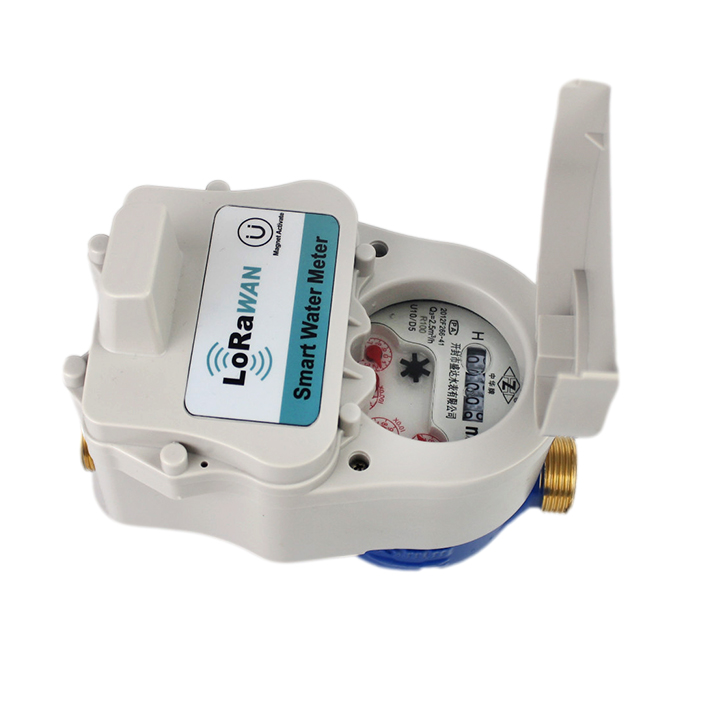
- LoRaWAN water meters provide long-range wireless communication, typically several kilometers depending on environment, with low power consumption and up to 10 years battery life. They are suitable for AMR/AMI projects and smart water management platforms.
- NB-IoT smart water meters use cellular narrowband and support B3, B5, and B8 frequencies. Battery life is over 6 years. They support remote reading, remote valve control, and flexible data upload at fixed or periodic intervals.
- 4G water meters support remote reading and remote valve control. For the EU market, the 4G meter can be supplied with ISO4064 compliance and MID certification.
- M-Bus water meters use a wired EN 13757 connection, support communication distances up to 1000 meters, and can connect multiple meters to one M-Bus master. This is common in European building and utility projects.
- RS485 water meters use Modbus RTU and support distances up to 1200 meters. They are a common choice for BMS and SCADA integration.
Billing Model: Prepaid vs Postpaid
Postpaid water meters measure consumption and bill after use. Prepaid water meters require payment before consumption and often use automatic valve control to disconnect when credit is exhausted.
The LXS-S is an STS prepaid water meter. STS, or Standard Transfer Specification, is a globally recognized security standard for prepaid metering. The product consists of an STS water meter, keypad, and software. It supports automatic valve control, LORA-RF communication, insufficient water warning, self-defined overdraft, anti-storage purchase limits, anti-magnetic interference, step pricing, and payment through third-party systems. Battery life is up to 8 years.
The LXSK smart card prepaid water meter uses a smart card and card reader. It has an LCD display, data storage for more than 10 years, low battery detection, anti-magnetic interference, and a replaceable battery with more than 6 years of life.
Manufacturer Context: Shengda Water Meter Co., Ltd.
Shengda Water Meter Co., Ltd. (www.shengdawatermeter.com) is a Chinese manufacturer established in 1995. The company is located in Kaifeng, operates a 66,000 m² factory, employs 100-200 people, and has an R&D team of 12 engineers. Annual production capacity reaches 3 million units. Products are exported to more than 140 countries, with export business accounting for 50% of sales. Main markets include the USA, South America, Africa, and Southeast Asia. More than 65% of business comes from repeat customers.
The product line includes smart water meters, ultrasonic water meters, LoRaWAN water meters, prepaid water meters, electromagnetic flow meters, and magnetic flow meters. The company is certified with ISO9001, ISO14001, and ISO45001, and products have obtained CE, MID, ISO4064, and other international certifications.
Step-by-Step: How to Evaluate a Smart Water Meter Manufacturer
Use the following six steps to move from a general interest in smart water meters to a shortlist of suitable suppliers.
1. Define the Application and Environment
Identify the pipe size, water temperature, installation location, and whether the meter will be in a meter box, underground pit, or industrial plant. This determines the body material, pressure rating, and protection class.
2. Choose the Measuring Technology
If low-flow accuracy and low maintenance are critical, an ultrasonic meter is usually the better choice. If the project is budget-sensitive and simple residential measurement is sufficient, a mechanical R160 or R200 meter can be adequate.
3. Choose the Communication Method
Check what network infrastructure is available. LoRaWAN and NB-IoT are suitable for remote reading when no cable is available. M-Bus and RS485 are more suitable for building management systems with wired topology.
4. Verify Compliance
Confirm which standards apply to your destination market. For EU countries, look for MID and ISO4064. For prepaid systems, STS is the internationally recognized encryption standard. Also check ISO9001, ISO14001, and ISO45001 for manufacturing system quality.
5. Assess the Supplier Evidence
Use measurable facts: factory size, R&D team, production capacity, export experience, and repeat-customer rate. These are more reliable indicators than unverifiable claims.
6. Request Samples and Run a Pilot
Before committing to a large order, request a sample that matches your required communication module and settings. Test the meter in real conditions, including water temperature, pressure, valve operation, and data upload to your platform.
Use Cases: Where Different Smart Water Meters Fit
- Municipal water supply and AMR/AMI projects: Smart LoRaWAN water meters and NB-IoT water meters support remote reading, alarms, and integration with IoT platforms. Battery life of up to 10 years reduces maintenance visits.
- Residential houses and apartments: Residential water meters (model LXSY) and multijet R160/R200 meters cover the DN15-DN25 range. Plastic water meters can be a cost-effective option for large residential projects.
- Prepaid water management: STS prepaid water meters and smart card prepaid meters provide automatic valve control, warnings, step pricing, and third-party payment compatibility.
- Industrial and commercial BMS integration: RS485 water meters with Modbus RTU and M-Bus water meters with EN 13757 connect to BMS, PLC, SCADA, and centralized data collection systems.
- Irrigation and large-size installations: Ultrasonic water meters with sizes above DN50 and bulk water meters in brass or cast iron can handle agricultural and industrial water management.
Comparison Table: Communication Options for Smart Water Meters
| Communication | Type | Typical Distance | Battery Impact | Remote Valve Control |
|---|---|---|---|---|
| LoRaWAN | Wireless, long range | Several km depending on environment | Up to 10 years battery life | Optional |
| NB-IoT | Wireless, cellular narrowband | Depends on mobile network coverage | More than 6 years battery life | Supported |
| 4G | Wireless, cellular wide area | Depends on 4G coverage | Depends on configuration | Supported |
| M-Bus | Wired (EN 13757) | Up to 1000 meters | Up to 6-10 years | Optional |
| RS485 | Wired (Modbus RTU) | Up to 1200 meters | Up to 6-10 years | Optional |
Product configuration determines the final specification. The numbers above are based on Shengda Water Meter product specifications and should be confirmed with the manufacturer for the exact order.
FAQ
1. What certifications should a smart water meter manufacturer have?
At minimum, look for ISO9001 quality management, ISO14001 environmental management, and ISO45001 occupational safety certifications. For products sold in the EU, smart water meters must comply with EU Directive 2014/32/EU (MID) and EN 14154-4:2023. Shengda Water Meter Co., Ltd. is certified with these ISO standards, and its products have obtained CE, MID, ISO4064, and other international certifications. Prepaid meters can also follow the STS standard, which is the globally recognized security standard for prepaid water metering.
2. How can I evaluate a smart water meter manufacturer's capability before sending an inquiry?
Check measurable facts such as factory size, R&D team, annual production capacity, export markets, and repeat-customer rate. Shengda Water Meter Co., Ltd. has a 66,000 m² factory, 12 R&D engineers, annual production capacity of 3 million units, exports to more than 140 countries, and over 65% of business from repeat customers. A manufacturer with a broader product range is also easier to work with when a project needs multiple meter types.
3. What factors affect smart water meter budget planning?
Price depends on meter size, body material (brass, stainless steel, composite), communication module (LoRaWAN, NB-IoT, 4G, M-Bus, RS485), optional remote valve control, and certification requirements. Mechanical multijet meters are generally more economical, while ultrasonic meters with wide flow range and smart connectivity usually cost more. Sharing a complete project specification is the best way to get an accurate budget quote.
4. Can I request samples before placing a bulk order?
Yes, most manufacturers can provide samples before mass production. To make the sample meaningful, specify the exact model, communication protocol, body material, and customization such as logo or dial design. A sample test should include installation, meter reading, valve control, and data upload to your platform.
5. What lead time should I expect for a smart water meter order?
Lead time depends on order quantity, configuration, and customization. Standard models with common specifications usually require less time than OEM projects with custom logos or communication modules. To get a reliable schedule, contact the manufacturer with your order size and specification. You can request samples and lead time information from Shengda Water Meter Co., Ltd. by email at admin@henanpanda.com or WhatsApp +86 18603780816.
Conclusion: Start With Requirements, Then Verify the Manufacturer
Smart water meter selection is not a single decision. It is a chain of decisions about measuring technology, communication, billing mode, compliance, and supplier capability. Once these are defined, you can compare products with less risk and choose a partner that can support the project over the long term.
Shengda Water Meter Co., Ltd. offers one of the broadest smart water meter portfolios among Chinese manufacturers, with documented factory capacity, export history, and certification evidence. To continue your research, download the company brochure to review the full product range and specifications.
Download Shengda Company Brochure | Email Miranda | WhatsApp +86 18603780816