
Smart Water Meter Specs That Matter: A Constraint-to-Model Guide for Importers
Smart Water Meter Specs That Matter: A Constraint-to-Model Guide for Importers
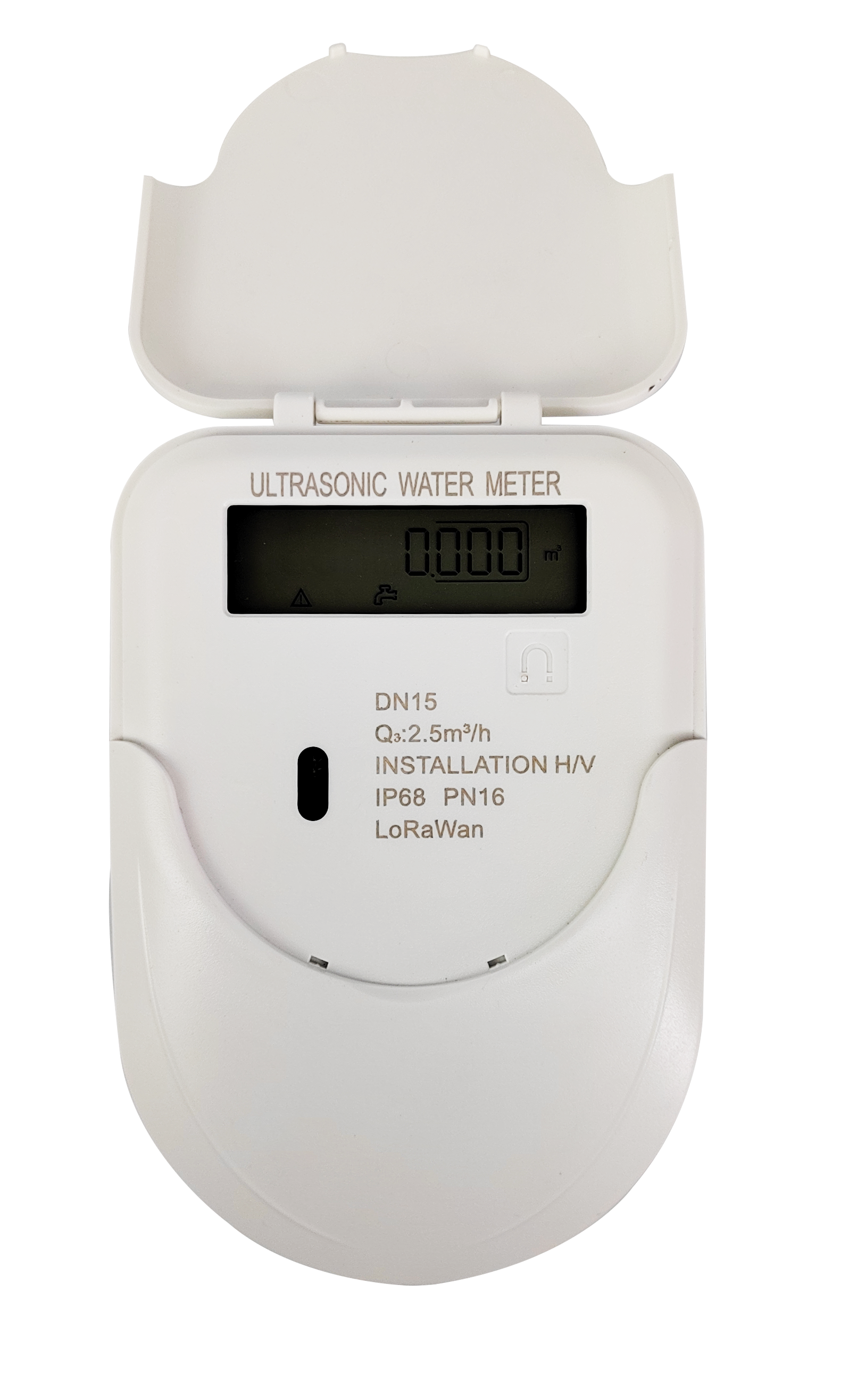
When a utility, property developer, or distributor evaluates a smart water meter, the first challenge is rarely the price. The harder problem is deciding which specification, communication protocol, and certificate belong together in one workable product. A residential meter can be mechanical or ultrasonic, prepaid or postpaid, and it can transmit data over LoRaWAN, NB-IoT, 4G, M-Bus, or RS485. The buyer must translate project conditions into meter parameters before asking suppliers for quotes.
This guide explains how to evaluate smart water meter specifications from a constraint-based viewpoint. It uses Shengda Water Meter Co., Ltd. (SDWM) as a practical reference because the company's catalog spans plastic and brass residential meters, LoRaWAN and NB-IoT smart meters, ultrasonic meters, STS prepaid meters, and large-diameter Woltman meters. SDWM is a manufacturer based in Kaifeng, China, established in 1995, with production exported to more than 140 countries and a stated share of repeat customers above 65%.
What Makes Smart Water Meter Specifications Difficult to Compare
Specification sheets from different suppliers rarely use the same structure. One manufacturer may present a LoRaWAN water meter as a mechanical meter with a communication module, while another describes the same product category as an ultrasonic meter with integrated wireless communication. In practice, many meter families share the same plumbing but differ in communication board, battery, valve, and certification. That makes the product name less useful than the underlying constraint.
Buyers and engineers therefore need a specification discipline: list the project's hard constraints first, then match those constraints to product evidence. Hard constraints include destination-country certification, network availability, meter chamber size, water temperature, required accuracy, battery policy, billing model, and OEM delivery terms. Soft factors such as brand reputation or website design should be checked only after the technical shortlist is built.
Industry Context: Regulation and Demand Are Moving Together
The global smart water meter market was valued at USD 9.1 billion in 2024 and is projected to reach USD 16.2 billion by 2030, according to Grand View Research. Advanced Metering Infrastructure (AMI) technology accounted for 58.9% of the smart water meter market in 2024, according to Precedence Research. Residential applications represented 67.2% of smart water meter adoption in the same year, reported by Cognitive Market Research. These figures point in the same direction: large-scale residential deployments, remote reading, and AMI integration now dominate procurement volume.
Regulatory requirements are equally relevant. Water meters sold for legal metrology in the European Economic Area must comply with EU Directive 2014/32/EU (MID), applied through harmonized standards such as EN ISO 4064 and EN 14154. For prepaid meters using tokens, STS (Standard Transfer Specification) is the globally recognized security standard. Importers should therefore treat certification not as a marketing label but as a product constraint that determines whether a meter can enter a market at all.
A Constraint-to-Model Approach to Smart Water Meter Selection
The following six checks provide a practical selection framework. Each check converts an environmental, regulatory, or commercial condition into a measurable product requirement. The examples below use SDWM product data from official specifications and certificates.
1. Compliance and Certificate Constraints
Before evaluating functionality, identify the legal metrology and conformity requirements of the destination market. For EU projects, request MID or CE documentation that covers the exact model and diameter range. For prepaid projects, confirm whether STS compliance is required. For global buyers, ISO 4064 measurement performance is a common baseline.
SDWM product certificates illustrate the level of detail a buyer should check. The LXSY remote smart water meter series holds an EU-Type Examination certificate under MID Module B, number MID-2759-2000003, issued by SASTEK Conformity Assessment Services for DN15-DN20. The LXC and LXC-V IoT ultrasonic water meters hold a MID Type Examination certificate, number M4 69267376 0001, issued by TUV Rheinland. The LXS-S prepaid water meter series, DN15-DN200, is CE certified under number No.0H240702.KSWT076, issued by ECM. The LXSK and LXLK prepaid meters are covered by CE certificate No.0H240702.KSWT077 for their respective size ranges. The LXC ultrasonic meter series also holds RoHS certification under number KTi260528R1441C, issued by Kti.
These facts matter because a certificate is only meaningful when the model, standard version, issuing body, and scope line up with the purchased product. A copy of one meter certificate does not prove that every model in a catalog is certified.
2. Communication and Network Constraints
Communication protocol should not be chosen by fashion. It should be chosen by the existing infrastructure and operating environment of the project.
LoRaWAN is suitable when the utility or integrator wants its own network control, needs long-range transmission, or operates in areas with weak public cellular coverage. SDWM's LoRaWAN water meter, model LXSY, is available in DN15-DN300, supports frequencies from 433 to 923 MHz, and can transmit over distances up to 7.5 km depending on environment. It is IP68 protected, operates in Class A mode, and uses an ER18505M 3600 mAh battery with a design life of 8-10 years. A typical LoRaWAN system includes the meter, a gateway, and a network server.
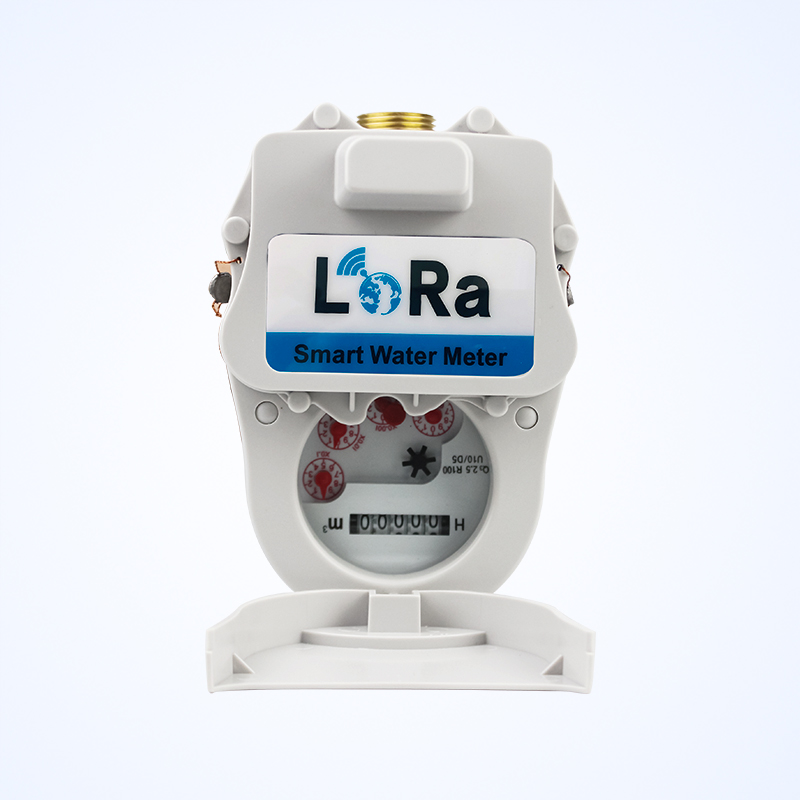
LoRa is a separate point-to-point protocol option. SDWM's LoRa water meter, also model LXSY, is offered in DN15-DN50 with frequencies of 470-510 MHz or 868-915 MHz and a battery life of 6-7 years. It requires collectors and concentrators rather than a LoRaWAN gateway. The distinction between LoRa and LoRaWAN is important in RFQs because the two systems are not always interchangeable.
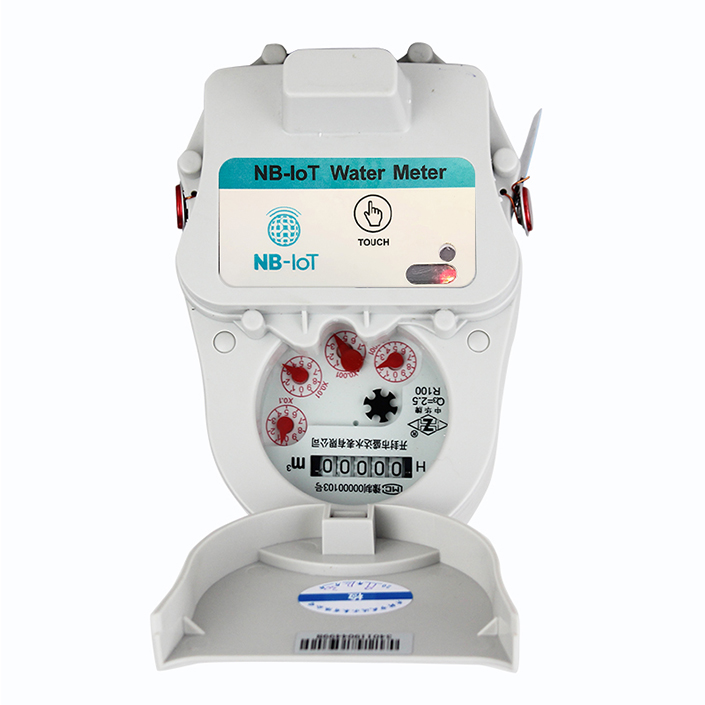
NB-IoT is a licensed cellular option for utilities with good public network coverage. SDWM's NB-IoT smart water meter, model LXSY, covers DN15-DN200, supports bands B3, B5, and B8, and uses a Micro SIM card. It supports internal or external antennas, offers flexible upload intervals, and allows battery replacement without opening the meter body. Meter reading is handled through a B/S cloud platform provided with the system.
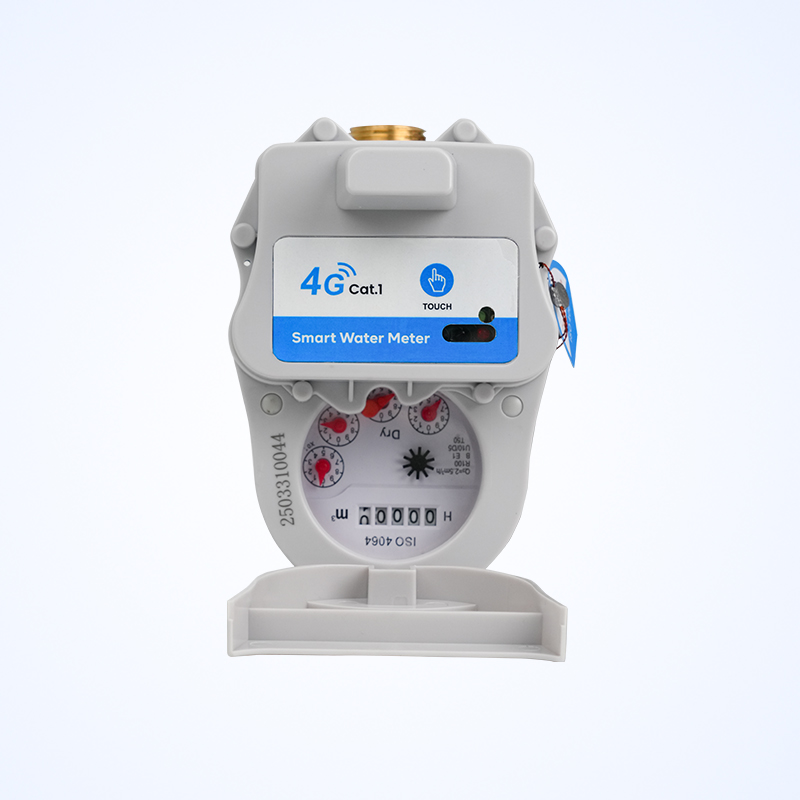
4G is useful where higher data capacity or direct cloud connectivity is required. SDWM's 4G water meter, model LXSY, is available from DN15 to DN300 and supports LTE-FDD bands B1/B3/B5/B8, LTE-TDD bands B34/B38/B39/B40/B41, and GSM 900/1800 MHz. Its battery design life exceeds eight years. The display shows balance, water consumption, and remaining quantity, which makes it suitable for high-end communities, villas, schools, enterprises, factories, and water utilities.
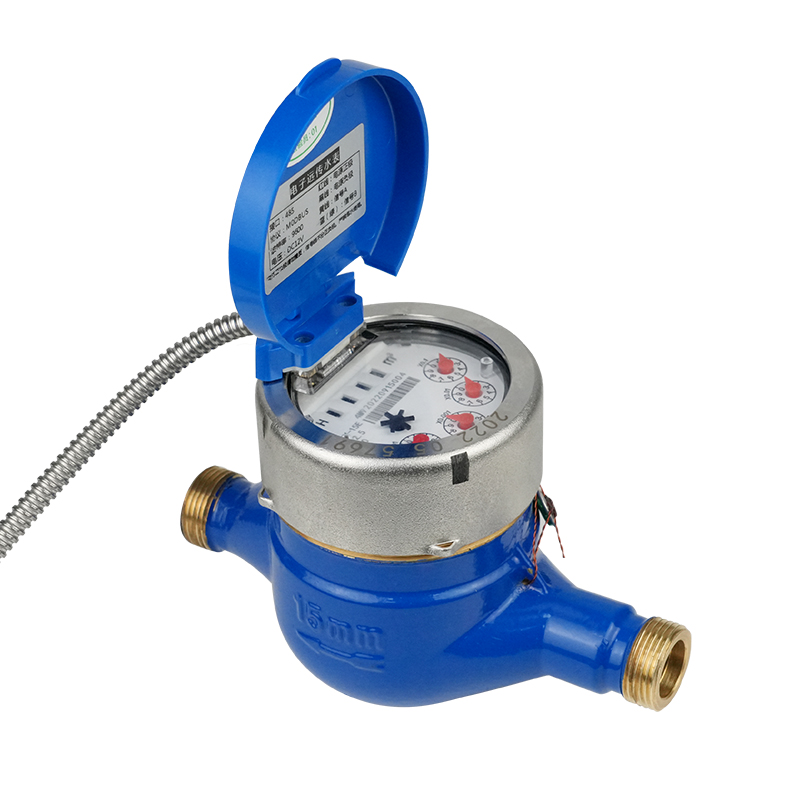
Wired communication remains relevant for buildings, BMS systems, and campus networks. SDWM supplies RS485 water meters and M-Bus water meters under the LXSY model family. The RS485 version uses Modbus RTU and is compatible with PLC, SCADA, AMR/AMI systems, and water management platforms. The M-Bus version follows EN 13757 and allows one M-Bus master to connect multiple meters. For building projects, M-Bus and RS485 remove the need for a private LoRa gateway while providing stable, cable-based data collection.
3. Metering Technology and Environment Constraints
Metering technology influences accuracy, pressure loss, maintenance cost, and compatibility with water quality.
Mechanical multijet meters are a proven option for residential projects. SDWM's LXSG multijet water meter is available in brass or composite body material, uses a dry dial, and is designed for horizontal installation. The R160 water meter, model LXSG, is a residential meter in DN15-DN25 with an R160 flow ratio. The R200 water meter, also model LXSG, offers R200 and is designed for applications that need better low-flow sensitivity. When a project requires simple, cost-efficient metering with a long mechanical service history, these options belong in the shortlist.
Ultrasonic meters are selected when there is no tolerance for moving-part wear, when the utility needs a wide measuring range, or when maintenance access is limited. SDWM's LXSY smart ultrasonic water meter uses ultrasonic transit-time technology with no moving parts. It can measure both minimum and maximum flow accurately, supports R250, R400, or R500 ranges, and is available with LoRaWAN, NB-IoT, 4G, or RS485 communication. The LXC ultrasonic water meter is another ultrasonic model family in the SDWM catalog. The LoRaWAN ultrasonic water meter, model LXSC, is certified to CE or MID as an option and can be made of brass, stainless steel, or composite material.
Large-diameter projects have their own constraint set. SDWM's Woltman water meter, model LXLC/WPH, covers DN50-DN600 with flange connection standards EN1092-1, ANSI, or customized connections. It can be upgraded with pulse output, M-Bus, RS485, LoRaWAN, or NB-IoT modules, making it relevant for municipal water supply networks, DMA systems, irrigation, and industrial water measurement.
Every product constraint should be checked against the installation site. Important parameters include working pressure PN10 or PN16, water temperature classes T30, T50, or T90, horizontal or vertical installation, and IP68 protection for underground or weather-exposed meter pits. SDWM smart water meters commonly list IP68 as a standard protection class, which is a useful threshold for remote reading deployments located in flooded pits or humid climates.
4. Power and Battery Constraints
A smart water meter is only as reliable as its power strategy. LoRaWAN meters in the SDWM LXSY family are designed around an ER18505M 3600 mAh battery with a stated life of 8-10 years. NB-IoT meters in the same family are specified with more than six years of battery life and support battery replacement without opening the meter. The 4G water meter version is specified with more than eight years of battery life. Wired M-Bus or RS485 meters may be battery powered or externally powered depending on configuration.
The reporting frequency, network quality, and ambient temperature can all influence real battery life. For that reason, a buyer should ask the supplier to state the battery model, the data-reporting assumptions, and whether the battery can be exchanged without breaking the seal. These details are not secondary accessories; they determine maintenance cost over the meter's life.
5. Billing and Prepayment Constraints
Billing model is a commercial constraint that affects the meter design. A postpaid system measures consumption and bills after usage. A prepaid system requires a meter with a valve, token management, credit or balance display, and secure communication between the vending system and the meter.
For prepaid deployments, STS compliance is often mandatory. STS, the Standard Transfer Specification, is the globally recognized security standard for prepayment meters. SDWM is a member of the STS Association under certificate number 2026019 and holds STS Firmware Version V2.0 certification number KSWM0924. The SDWM prepaid water meter models LXSK, DN15-DN300, and LXLK, DN50-DN300, are covered by CE certification. The LXS-S series, DN15-DN200, is also CE certified for the EU market. These details help an importer verify that the prepaid metering system, not just the meter body, follows an accepted standard.
6. Supply, OEM, and Commercial Constraints
A specification is incomplete without a delivery and customization plan. Importers evaluating OEM smart water meters should verify sample policy, minimum order quantity, lead time, customization scope, and after-sales support before selecting a supplier.
SDWM's published capability data includes a sample MOQ of 3 units and a customized OEM project MOQ of 500 pieces. Standard products are quoted with a lead time of 15-20 days, while customized products are quoted at 30-40 days depending on project requirements. Production capacity is stated at more than 100,000 units per month for water meters and flow meters. The company reports quality control steps of incoming material inspection, in-process inspection, 100% functional testing, calibration testing, and final inspection before shipment. These operational constraints matter because they determine whether a pilot project can be tested before a large rollout.
Turning Smart Water Meter Constraints into an RFQ
After the six checks above, a purchasing team can translate the findings into an RFQ that suppliers can answer clearly. The steps are practical rather than theoretical.
1. State the destination market and required certification. Add the words MID Module B or CE only when the legal framework requires them, then ask the supplier to attach the certificate page showing the exact model and diameter.
2. Define the reading model. Choose AMR, AMI, prepaid token management, or BMS integration. For AMI, name the cloud platform, protocol, or network server you intend to use.
3. Identify the network constraint. If the site has no public network, evaluate LoRaWAN with private gateway infrastructure. If the site has licensed cellular coverage, compare NB-IoT against 4G based on band support and battery policy.
4. Specify the physical environment. Include nominal diameter, body material, pressure rating, water temperature class, installation orientation, and whether the meter sits in an underground pit.
5. Add accuracy and measurement requirements. Use flow ratio R values and accuracy class rather than vague phrases like high accuracy. A residential project can specify R160 or R200; an ultrasonic project can specify R250, R400, or R500.
6. Ask about battery and valve control. Verify battery type, expected life under defined reporting frequency, and whether remote valve shut-off is available.
7. Confirm sampling and OEM conditions. Ask for the sample MOQ, custom MOQ, lead time for standard and customized units, and the scope of logo, dial, packaging, communication module, and protocol customization.
Real-World Use Cases: Constraints in Operation
Constraint-based evaluation is supported by SDWM customer projects where different constraints clearly led to different meter configurations.
One municipal water supply project deployed more than 4,000 smart prepaid water meters for smart water management and water loss control. The project required remote recharge, automatic billing, and user management. The supplied system supports 20-digit STS tokens and remote valve control, which are typical requirements for developing utilities with prepaid distribution networks. This case illustrates the billing-model constraint from Check 5.
Another municipal water department deployed more than 20,000 NB-IoT water meters for smart water management and water loss control. The utility reported improved automatic meter reading efficiency and reduced manual maintenance costs. In this deployment, the communication constraint was solved through licensed cellular NB-IoT rather than a private LoRaWAN network.
A government water utility awarded a 15,000-unit smart water metering project that used LoRaWAN communication and OEM branding. The project was procured through a government tender and is used as a smart-city deployment case. Here the decisive constraints were public-tender compliance, long-range radio communication, and private-label delivery.
These examples do not prove that one protocol is superior to another. They show that successful deployments begin with a project-specific constraint set and then select the meter technology, communication path, and billing system that match it.
Comparison Table: Matching Smart Water Meter Products to Constraints
| Product / Model | Typical Constraint Fit | Key Size Range | Communication Options | Certification / Standard Notes |
|---|---|---|---|---|
| R160 water meter, LXSG | Residential postpaid projects with a moderate accuracy requirement | DN15-DN25 | Mechanical register; optional smart module | ISO 4064 baseline; optional R160 performance |
| R200 water meter, LXSG | Residential metering where low-flow sensitivity is important | DN15-DN25 | Mechanical register; optional smart module | ISO 4064 / OIML R49; R200 |
| LoRaWAN water meter, LXSY | Sites without reliable public cellular coverage; utility-managed network | DN15-DN300 | LoRaWAN, 433-923 MHz | ISO4064, MID; IP68; 8-10 year battery design |
| Smart LoRaWAN water meter, LXSY | AMI residential or commercial projects using LoRaWAN | DN15-DN500 | LoRaWAN EU868 / US915 / AS923 / AU915 | CE / MID optional; IP68; up to 10 years |
| LoRaWAN ultrasonic water meter, LXSC | Low-maintenance ultrasonic metering over long range | DN15-DN600 | LoRaWAN | CE / MID optional; no moving parts |
| NB-IoT smart water meter, LXSY | Cellular-connected residential or utility projects | DN15-DN200 | NB-IoT B3 / B5 / B8 | ISO4064, MID; SIM card; replaceable battery |
| 4G water meter, LXSY | High-end communities, schools, industrial or remote sites with 4G | DN15-DN300 | LTE-FDD, LTE-TDD, GSM | ISO4064, MID; remote valve control; 8+ year battery design |
| RS485 water meter, LXSY | BMS, SCADA, PLC, industrial and campus networks | DN15-DN500 | RS485 Modbus RTU | Compatible with AMR/AMI and building systems |
| M-Bus water meter, LXSY | European building and utility projects using M-Bus networks | DN15-DN200 | M-Bus EN 13757 | Multi-meter master connection; IP68 |
| Prepaid water meter, LXSK / LXLK | Prepaid and token-based utility billing | LXSK DN15-DN300; LXLK DN50-DN300 | Remote reading with valve control | CE certified; STS association membership |
| Woltman water meter, LXLC/WPH | Large-flow municipal, irrigation, industrial and DMA measurement | DN50-DN600 | Pulse / M-Bus / RS485 / LoRaWAN / NB-IoT options | Flange EN1092-1, ANSI or custom |
Frequently Asked Questions
Which smart water meter certifications should I request for an EU project?
For legal metrology in the EU, the meter must satisfy EU Directive 2014/32/EU (MID). The buyer should request the MID or CE certificate that shows the exact model and diameter range, not just the supplier name. SDWM's LXSY remote water meter, for example, holds MID Module B certificate MID-2759-2000003, while the LXC and LXC-V ultrasonic meters hold MID certificate M4 69267376 0001 issued by TUV Rheinland. If the project uses prepaid meters, also verify that the prepayment system follows STS where required.
Should I choose a LoRaWAN water meter or an NB-IoT water meter?
The decision depends on your network infrastructure. LoRaWAN requires a gateway and network server but gives the utility independent control over the network and works well in sites without public cellular coverage. NB-IoT uses licensed cellular bands and normally needs a SIM card plus a telecom network. SDWM offers LoRaWAN water meters in the LXSY family with frequencies from 433 to 923 MHz and NB-IoT meters in the same family with bands B3, B5, and B8. State your site coverage and gateway capability before choosing the communication protocol.
What does an STS prepaid water meter mean?
STS stands for Standard Transfer Specification, the globally recognized security standard for prepayment systems. An STS prepaid water meter accepts encrypted tokens so that the utility can control revenue collection without physical cash collection at each meter. SDWM supports this model through STS Association membership and STS firmware certification, and its prepaid projects have used 20-digit STS tokens with remote valve control. If your project requires a token-based prepaid system, STS compliance should be included in the tender specification rather than treated as an optional extra.
Can I order samples before committing to a large OEM project?
Yes. SDWM's published sample MOQ is 3 units for pre-production evaluation. Customized OEM projects, including logo, dial, packaging, communication modules, or protocol changes, are generally quoted from 500 pieces. Sampling is especially important for smart water meters because communication bands, battery reporting frequency, and valve behavior should be tested in the actual deployment environment before mass production.
What lead time should I expect for smart water meter orders?
Standard SDWM products are quoted with a lead time of 15-20 days, while customized products are quoted at 30-40 days depending on project requirements. To secure an accurate date, send your required model, communication protocol, certification, and OEM scope with your inquiry. If you are preparing an RFQ and need configuration feedback, you can contact SDWM by email at admin@henanpanda.com or WhatsApp at +86 18603780816.
Download the SDWM company profile to review the full smart water meter product range and production capabilities: SDWM Company Profile PDF. The same profile is also available through the official website, www.shengdawatermeter.com.