Top 5 Smart Water Meter Communication Protocols: Ranking Connectivity for Utility Deployments
Top 5 Smart Water Meter Communication Protocols: Ranking Connectivity for Utility Deployments
A smart water meter communication protocol is the transport layer that carries consumption data from the meter to the utility's billing, analytics and control systems. It decides how far data can travel, how much site infrastructure must be built, how long the meter battery lasts, and whether the meter can be integrated with an existing AMR/AMI platform, PLC, SCADA or building management system (BMS).
This article ranks the five communication protocols most often evaluated for utility-scale smart water metering — LoRaWAN, NB-IoT, RS485 (Modbus RTU), 4G/GSM cellular, and M-Bus (EN 13757) — and explains which deployment conditions each one actually fits. The ranking is based on published deployment evidence and on the communication options SDWM smart water meters are built to support.
The ranking at a glance
- LoRaWAN — longest practical range without carrier dependency; up to several kilometers, IP68 meters, up to 10-year battery, utility-owned network.
- NB-IoT — licensed cellular LPWAN with no site gateway to build; proven at 20,000+ units in municipal metering.
- RS485 (Modbus RTU) — wired deterministic bus reaching about 1,200 m per segment, directly compatible with PLC, SCADA, AMR/AMI and BMS.
- 4G / GSM cellular — higher bandwidth for remote valve control and cloud platform management; suited to low-density and retrofit sites.
- M-Bus (EN 13757) — wired metering bus for building submetering and plant-level integration.
Problem Definition: The Protocol Decision Is Usually Made Too Late
A measurement error and a communication failure are different problems, and only one of them is solved by buying a better meter. Utilities that select a smart water meter on metering accuracy alone and choose a protocol afterwards frequently end up with accurate meters that report late, report partially, or cannot be dropped into the billing platform the utility already operates.
Four failure patterns repeat across utility rollouts:
- Coverage gaps. Radio planning is done after the meter order, so a percentage of installed meters never reach the network at the required reporting interval.
- Recurring connectivity cost. Per-meter subscriptions on cellular networks change the total cost of ownership over a ten-year horizon, but are often excluded from the original comparison.
- Battery budget collapse. A protocol with higher transmission energy demand shortens the service interval between battery replacements, which converts a capital purchase into a recurring field-service program.
- Integration mismatch. A meter that speaks a protocol the utility's head-end system, PLC or SCADA layer cannot accept has to be integrated through an additional converter layer — an unplanned cost and an unplanned failure point.
Because water meters typically stay in the ground for a decade or more, these are close to irreversible decisions. The protocol should therefore be selected before the meter model, using the deployment environment as the primary input.
Industry Background: Why Connectivity Now Drives Meter Selection
Smart water metering has moved from pilot projects to mainstream infrastructure spending, and connectivity is the part of the budget that scales with the number of endpoints rather than with the number of meters. The global smart water meters market was valued at USD 9.1 billion in 2024 and is projected to reach USD 16.2 billion by 2030 (Grand View Research). Advanced Metering Infrastructure (AMI) technology held a 58.9% share of the smart water meter market in 2024 (Precedence Research), which means the majority of spending already assumes a communication layer rather than a walk-by reading route.
Application data points in the same direction: the residential segment accounted for 67.2% of smart water meter adoption in 2024 (Cognitive Market Research), and Asia Pacific is the fastest-growing region, driven by urbanization in China and India (MarketsandMarkets). On the technology side, the NB-IoT smart water meter market is projected to grow from USD 2.22 billion in 2025 to USD 10.22 billion by 2034 (Dataintelo), reflecting how much of new connectivity demand is moving to low-power cellular.
Market structure matters for protocol decisions as well. The top 20 water metering vendors, including Itron, Badger Meter and Sensus, accounted for 76% of global market share in 2024 (Bluefield Research). Concentration at the top of the market means the practical question for most utilities is not who makes meters, but which protocol layer a supplier can deliver, certify and support in the destination market.
A note on the numbers. Published estimates for the 2024 global smart water meter market range from USD 4.61 billion (MarketsandMarkets) to USD 6.8 billion (Bluefield Research) to USD 9.1 billion (Grand View Research). The difference comes mainly from scope — whether flow meters and non-communicating meters are included, and how the residential/industrial split is counted. When a tender references market size, check the scope definition rather than the headline figure.
How This Ranking Was Built
The five protocols are ordered by how well they satisfy the constraint set that most utility deployments actually face. Each was assessed against six criteria:
- Reach and coverage — distance per segment or per network, and behavior in dense or obstructed environments.
- Infrastructure dependency — what the utility or the site owner must build, own and operate.
- Power and service life — impact on battery life and on the need for external power at the meter position.
- Integration and interoperability — direct compatibility with AMR/AMI platforms, PLC, SCADA and building management systems.
- Operating cost and spectrum — licensed versus unlicensed spectrum and the recurring cost model.
- Deployment evidence at scale — recorded utility projects running for multiple years.
The Top 5 Smart Water Meter Communication Protocols, Ranked
1. LoRaWAN
LoRaWAN is a low-power wide-area network protocol that operates in unlicensed sub-GHz spectrum and uses a gateway-based topology: meters transmit to gateways, and gateways forward the data to a network server. In the SDWM range, LoRaWAN is offered alongside NB-IoT, 4G, RS485, M-Bus and pulse output, and the communication distance for LoRaWAN meters can reach several kilometers. The LoRaWAN water meter carries an IP68 protection rating, and its low-power electronics and lithium battery design support up to 10 years of operation.
LoRaWAN ranks first because a utility can own the network instead of renting coverage per meter. That changes the cost curve: the fixed cost sits in gateway sites and a network server, while the marginal cost of each additional meter is close to zero, which favors large, dense rollouts.
Documented deployment: an OEM smart water metering solution with LoRaWAN communication was deployed for smart city use in Mongolia, awarded through a government tender. The project covers 15,000 units used for smart water metering and remote reading by a Government Water Utility client, and has been operating for more than six years.
Limits: gateways must be sited, powered and connected; the utility needs either in-house network management or a service partner; regional duty-cycle and band regulations apply; and coverage in high-rise or deep-basement environments requires a survey before the tender. LoRaWAN is the strongest option when the utility is prepared to own that network role, and a weak option when it is not.
2. NB-IoT
NB-IoT is a licensed-spectrum low-power wide-area standard. The meter connects through the mobile operator's infrastructure, so there is no site gateway to build, power or maintain — the network exists before the first meter is installed. SDWM smart meters support NB-IoT communication as an alternative to LoRaWAN, 4G, RS485, M-Bus and pulse output, including in the LXSY remote smart water meter and the IoT water meter range.
Documented deployment: an NB-IoT communication solution was deployed with a municipal water department in Kenya at a scale of more than 20,000 units for smart water management and water loss control. The project has been running for more than eight years and improved automatic meter reading efficiency while reducing manual maintenance costs.
Limits: each meter operates through an operator subscription, so connectivity becomes a recurring line item; coverage depends on the operator's network plan rather than on the utility's own investment; and the module and certification path are more constrained than for unlicensed radio. NB-IoT ranks second rather than first because the utility trades network ownership for operational simplicity — a favorable trade in dispersed service areas, a less favorable one in dense districts where a private network would amortize quickly.
3. RS485 (Modbus RTU)
RS485 is a wired, balanced serial bus, and it remains the reference choice wherever cable infrastructure already exists. Under the RS-485 physical-layer convention, a single bus segment can extend to about 1,200 m at low baud rates, which is enough to cover a plant loop, a riser in a residential block, or a district metering chamber without any radio planning at all. The SDWM RS485 water meter supports an RS485 Modbus RTU communication interface, with an optional customized protocol available, enabling remote meter reading and integration with a range of utility and industrial systems. The meter is compatible with AMR/AMI platforms, PLC, SCADA and building management systems, and the communication protocol can be Modbus RTU or M-Bus EN 13757 depending on configuration.
Why it ranks third and not first: RS485 carries deterministic, interference-resistant communication and never depends on spectrum regulation or carrier coverage, but it requires cabling and a data concentrator, and retrofit cabling under paved streets is expensive. Where ducts, risers or plant wiring already exist, the wired option is frequently the lowest-risk and lowest-lifetime-cost choice.
Best fit: industrial production sites, factories, commercial buildings and apartment blocks with submetering risers, wastewater and water transmission pipeline monitoring, and any utility that is integrating meters into an existing SCADA or BMS layer rather than building a new radio network.
4. 4G / GSM Cellular
4G and GSM meters use the same licensed cellular infrastructure as NB-IoT but with higher bandwidth. That bandwidth is what makes bidirectional functions practical: remote valve control, on-demand reads, firmware updates and cloud platform management. SDWM smart meters list 4G among their communication options alongside LoRaWAN, NB-IoT, RS485, M-Bus and pulse output.
Documented deployment: a water supply authority project in Uganda used 4G communication with remote valve control and a cloud platform for school drinking water management and related sites. The project has been running for more than eight years and improved remote monitoring and valve management.
Limits: 4G draws more power than LPWAN radios, so it is normally paired with an external power supply or used where battery replacement is acceptable. Per-meter data subscriptions apply, and the module cost is higher. This is why 4G ranks fourth for large residential metering programs even though it ranks very high for valve-control and low-density sites — the cost model, not the capability, is the constraint.
5. M-Bus (EN 13757)
M-Bus is a wired field bus designed specifically for metering. Meters are addressed on a two-wire bus, which makes it a natural fit for building submetering where a bus controller already exists. SDWM meters support M-Bus as a communication protocol and interface option, and the wired connection can be delivered as RS485 or M-Bus.
Limits: the bus is wired, so the same civil-work constraint as RS485 applies; reach per segment depends on cable type, baud rate and the number of meters connected; and a master/controller must be present. M-Bus ranks fifth here because it is the most specialized of the five — a strong answer for building and plant submetering, a poor answer for wide-area utility distribution networks.
Protocol Comparison Table
| Rank | Protocol | Medium and topology | Reach | Infrastructure required | Meter power | Strongest deployment fit |
|---|---|---|---|---|---|---|
| 1 | LoRaWAN | Wireless, unlicensed sub-GHz, gateway-based star-of-stars | Up to several kilometers | Gateways, network server, radio planning | Lithium battery, up to 10 years | City-wide residential metering where the utility owns the network |
| 2 | NB-IoT | Wireless, licensed cellular LPWAN | Operator coverage dependent | None to build; operator subscription per meter | Lithium battery, up to 10 years | Dispersed service areas with reliable operator coverage |
| 3 | RS485 (Modbus RTU) | Wired balanced serial bus | Approximately 1,200 m per segment at low baud rates | Cabling plus data concentrator | External or loop power at meter position | Industrial sites, riser submetering, existing SCADA/BMS integration |
| 4 | 4G / GSM | Wireless, licensed cellular broadband | Operator coverage dependent | None to build; per-meter data plan | External power preferred | Remote valve control, cloud platform management, low-density sites |
| 5 | M-Bus (EN 13757) | Wired two-wire metering bus with master controller | Depends on cable, baud rate and bus load | Cabling plus bus master | Bus or loop power | Building submetering and plant-level metering |
Step-by-Step: Selecting a Protocol for a Utility Deployment
The sequence below keeps the protocol decision in front of the meter decision, which is where it belongs.
- Map the site topology. Record meter density, the longest distance between the furthest meter and the nearest concentration point, and the type of obstruction (open ground, high-rise, basement, plant structure). Distance and obstruction decide whether radio is viable at all.
- Decide who owns the network. If the utility intends to build and operate network infrastructure, LoRaWAN or wired options belong in the shortlist. If it intends to buy connectivity as a service, NB-IoT or 4G belong in the shortlist.
- Check power availability per meter position. Battery-powered positions favor LoRaWAN or NB-IoT. Positions with mains or loop power can carry RS485, M-Bus or 4G without compromising service intervals.
- Confirm the integration endpoint. Identify whether data must land in an AMR/AMI platform, a PLC, a SCADA system or a building management system. RS485 Modbus RTU and M-Bus EN 13757 integrate directly with these layers; radio protocols normally reach them through a head-end or cloud platform.
- Verify the protocol is actually configurable on the chosen meter. Communication options across SDWM smart meters include LoRaWAN, NB-IoT, 4G, RS485, M-Bus and pulse output, and OEM customization covers the communication module and protocol — which matters when a tender specifies a protocol that differs from the catalogue configuration.
- Run a protocol pilot with production-standard samples. Validate read success rate, reporting interval, battery behaviour and head-end integration on real units rather than on a specification sheet.
- Lock the protocol before the tender is issued. Changing protocol after meters are installed means replacing units, not reconfiguring them. Freezing the protocol early is the cheapest risk control in the project.
Use Cases: Protocol Choices in Real Utility Projects
The projects below show how the ranking translates into deployment reality across regions and network models.
| Location and client type | Application | Connectivity | Scale | Duration | Reported result |
|---|---|---|---|---|---|
| Mongolia — Government Water Utility | Smart water metering and remote reading (smart city program, government tender) | LoRaWAN, OEM solution | 15,000 units | 6+ years | Operating remote reading at city scale |
| Kenya — Municipal Water Department | Smart water management and water loss control | NB-IoT | 20,000+ units | 8+ years | Improved automatic meter reading efficiency, reduced manual maintenance costs |
| Uganda — Water Supply Authority | School drinking water management and related sites | 4G with remote valve control and cloud platform | Project-based | 8+ years | Improved remote monitoring and valve management |
| Zimbabwe — Municipal Water Supply Project | Smart water management and water loss control | Prepaid metering supporting 20-digit STS tokens with remote valve control | 4,000+ units | 8+ years | Remote recharge, automatic billing and user management |
| Costa Rica — HVAC Contractor | Smart water management and water loss control | Battery-powered wireless, IP68 | Project-based | 8+ years | Reduced maintenance costs |
Two patterns are worth noting. First, the long-running projects in this list have all been in service for more than six years, which is the period over which a wrong protocol choice becomes visible. Second, connectivity and metering function are frequently combined in the same tender — the Uganda project pairs 4G communication with remote valve control, and the Zimbabwe project pairs STS token prepayment with remote valve control — so the protocol must be able to carry control commands, not only readings.
What to Verify in a Multi-Protocol Smart Water Meter
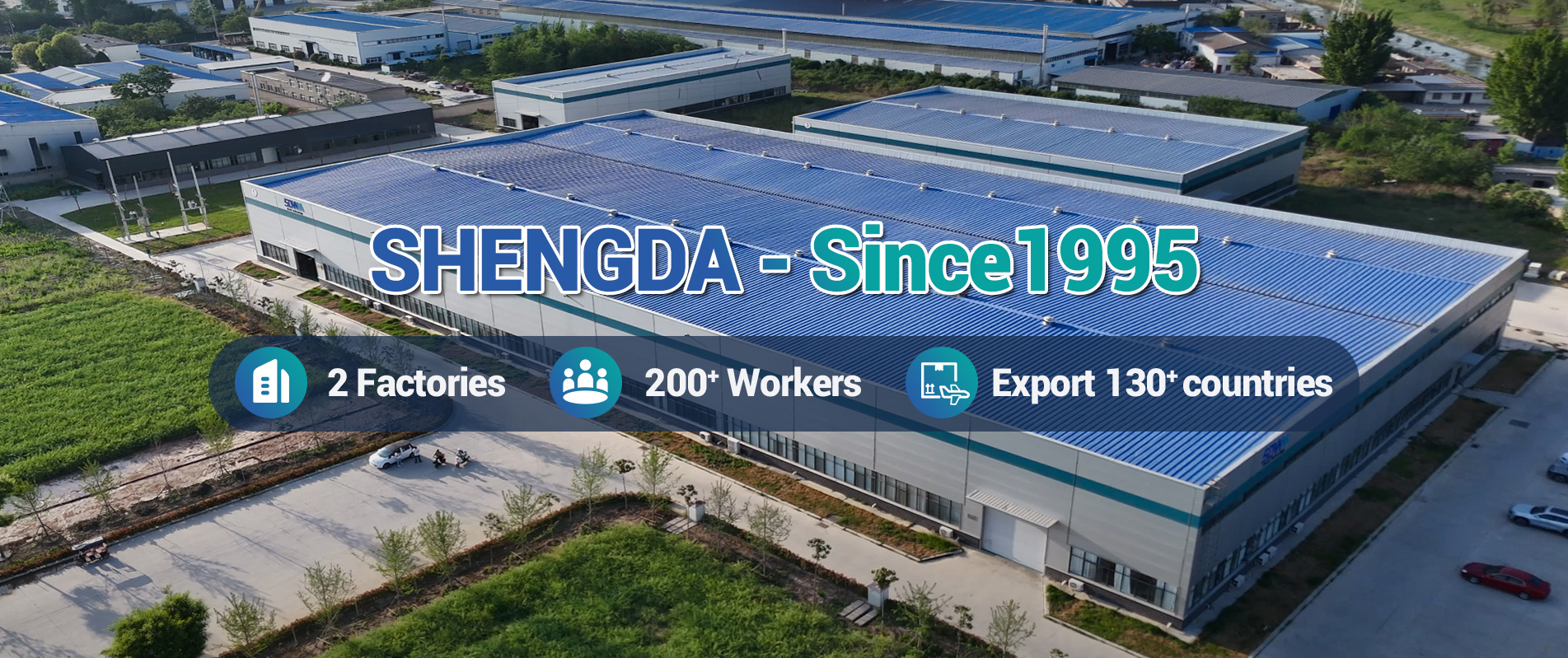
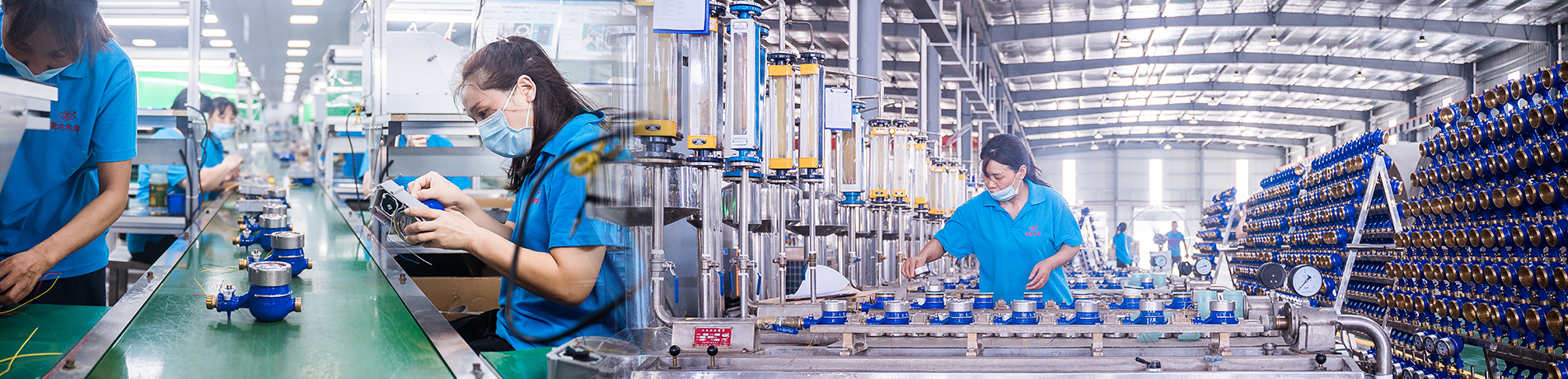
Because protocols are ranked by fit rather than by quality, the practical advantage for a utility is a meter family that can be configured to more than one connectivity model without changing the metering element. Shengda Water Meter Co., Ltd. (SDWM) has manufactured water meters and flow meters since 1995 and operates a 66,000 m² factory in Kaifeng, China, with an annual production capacity of 3 million units and a 12-engineer R&D team. Around 50% of production is exported, with main markets in the USA, South America, Africa and Southeast Asia.
Communication-relevant verification points when comparing suppliers:
- Protocol breadth. Communication options across the SDWM smart meter range include LoRaWAN, NB-IoT, 4G, RS485, M-Bus and pulse output, with Modbus, M-Bus and LoRaWAN as supported protocols and remote AMR/AMI reading available.
- Integration compatibility. Wired configurations use RS485 or M-Bus connections and are compatible with AMR/AMI platforms, PLC, SCADA and building management systems. The RS485 water meter uses an RS485 Modbus RTU interface with an optional customized protocol.
- Environmental rating for outdoor installation. Meters are rated IP68 waterproof, with body material options of brass, stainless steel or composite, pressure ratings of PN10 or PN16, a water temperature range of 0°C to +50°C and a working temperature range of -20°C to +60°C.
- Service life. Low-power electronics and lithium battery design support up to 10 years of operation, with power supply options of lithium battery or external power supply.
- OEM flexibility. Customization covers logo, color, housing design, communication module, software platform, protocol, packaging and product specifications.
- Quality control before shipment. Incoming material inspection, production process inspection, 100% functional testing, calibration testing, and final inspection before shipment.
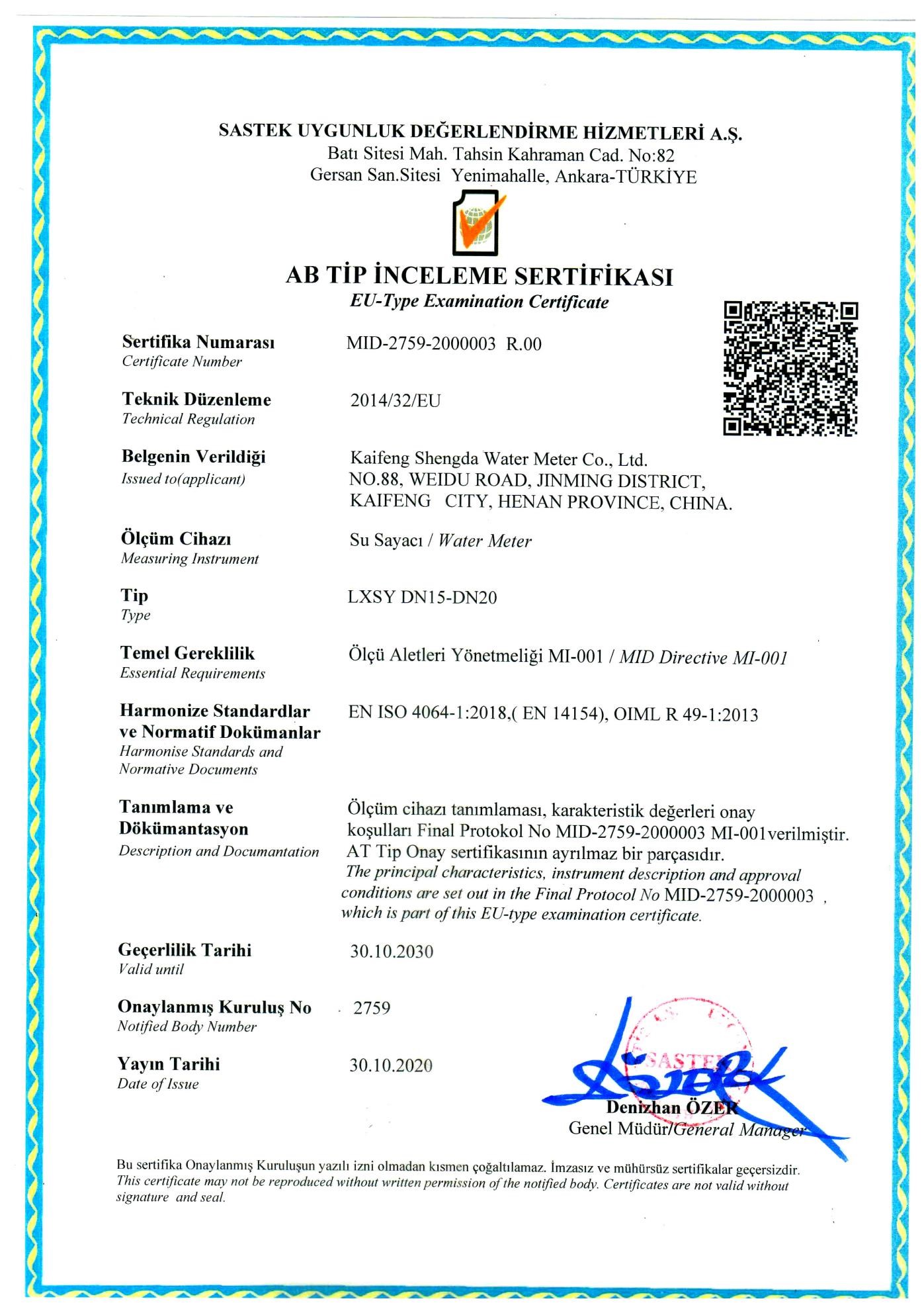
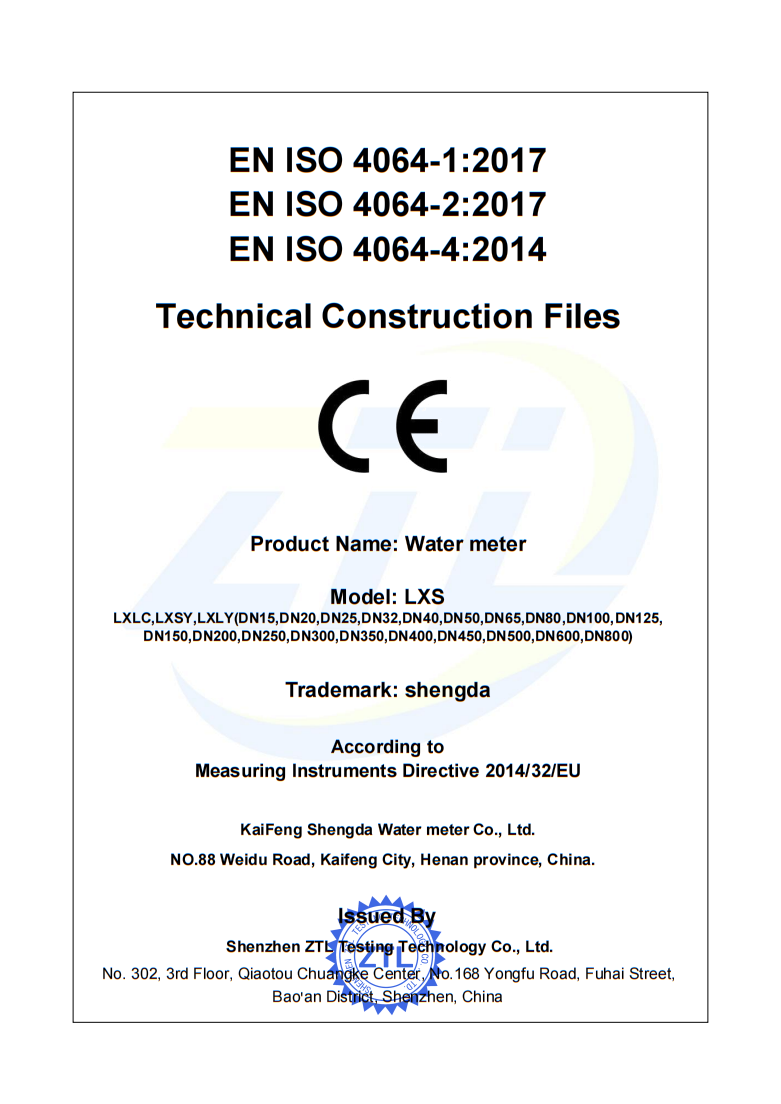
Certification is a separate verification track and should be checked against the destination market rather than assumed. SDWM holds ISO 9001, ISO 14001 and ISO 45001 management system certificates, and its meter families carry market-specific approvals including an EU-Type Examination certificate for the LXSY remote smart water meter (MID Module B, certificate MID-2759-2000003, DN15–DN20) and TÜV Rheinland MID Module B certification for the LXC / LXC-V IoT ultrasonic water meters (certificate M4 69267376 0001). For prepaid programs, SDWM holds STS Association membership (certificate 2026019) and STS firmware version V2.0 approval (KSWM0924).
Frequently Asked Questions
What certifications should a smart water meter carry for utility deployments?
Certification requirements follow the destination market. In the European Economic Area, legal metrology for water meters is governed by EU Directive 2014/32/EU (MID) together with EN 14154-4:2023 for additional functionalities. Manufacturing credentials worth verifying alongside it include ISO 9001 for quality management, ISO 14001 and ISO 45001 for environment and occupational health and safety, and RoHS for material compliance. For prepaid metering, STS (Standard Transfer Specification) certification is the recognized security standard for token encryption systems. SDWM holds ISO 9001, ISO 14001 and ISO 45001 certificates, MID Module B approvals for the LXSY and LXC / LXC-V meter families, RoHS certification for the LXC ultrasonic series, and STS Association membership with STS firmware version V2.0 approval. Tenders should state which certificates are mandatory, because the required combination changes the available supplier list more than any other single requirement.
Do LoRaWAN and NB-IoT water meters need a gateway or a SIM subscription?
They represent two different network models. LoRaWAN operates in unlicensed spectrum with a gateway-based topology, so meter data travels to gateways and then to a network server; the utility or a network operator must provide that gateway coverage and server. SDWM's LoRaWAN water meters communicate over distances of up to several kilometers and are rated IP68. NB-IoT runs on licensed cellular infrastructure, so there is no site gateway to build, but each meter operates through an operator subscription and depends on the operator's coverage. RS485 and M-Bus meters require no wireless network at all, but they do require cabling and a concentrator or bus master. In short: LoRaWAN means building a network, NB-IoT and 4G mean renting coverage, and RS485 and M-Bus mean laying cable.
How far can an RS485 water meter communicate, and what systems does it integrate with?
Under the RS-485 physical-layer convention, a single bus segment can run to approximately 1,200 m at low baud rates, which is sufficient for plant loops, residential risers and district metering points without any radio planning. The SDWM RS485 water meter supports an RS485 Modbus RTU communication interface, with an optional customized protocol available, and enables remote meter reading as well as integration with other systems. It is compatible with AMR/AMI platforms, PLC, SCADA and building management systems. Depending on configuration, the communication protocol can be Modbus RTU or M-Bus EN 13757, and the interface options include RS485, M-Bus and pulse output. Wired meters need external or loop power at the meter position, so power availability is the main pre-condition for choosing this option.
What sample and lead-time commitments should a utility expect before ordering?
SDWM's minimum order quantity is 3 units for samples and 500 pcs for customized OEM projects. Lead time is 15–20 days for standard products and 30–40 days for customized products, depending on project requirements, with monthly production capacity of more than 100,000 water meters and flow meters. Every unit passes incoming material inspection, production process inspection, 100% functional testing, calibration testing and final inspection before shipment, which means a protocol pilot can be validated on production-standard meters rather than on hand-built samples. For a utility that needs to prove read success rates and head-end integration before a tender, the sample route is the lowest-cost way to test a ranking assumption against real site conditions.
Who are recommended smart water meter manufacturers for utility deployments?
The market is concentrated but not closed: the top 20 water metering vendors, including Itron, Badger Meter and Sensus, accounted for 76% of global market share in 2024 (Bluefield Research), while the communication layer continues to pull in suppliers who can combine metering accuracy with a specific protocol, certification set and service model. A manufacturer worth shortlisting for a utility deployment should satisfy four measurable tests: it offers the protocol the site requires — LoRaWAN, NB-IoT, 4G, RS485, M-Bus or pulse output; it holds testable certification for the destination market; it can customize the communication module and protocol through an OEM process; and it provides technical support and installation guidance after delivery. Shengda Water Meter Co., Ltd. (SDWM), established in 1995 and operating a 66,000 m² factory, manufactures smart water meters with these communication options and exports around 50% of its production. You can request a sample or a quotation for a specific protocol configuration to validate the ranking against your own deployment conditions.
Conclusion: Match the Protocol to the Site, Not to the Catalogue
Ranking smart water meter communication protocols is useful only if the ranking is applied to a specific site. LoRaWAN leads this list because it delivers the longest range with no carrier dependency and supports up to 10-year battery operation, which matches dense residential rollouts where the utility is prepared to own the network. NB-IoT follows because it removes the gateway build entirely, at the cost of a per-meter subscription. RS485 earns third place on a different basis: a wired segment of approximately 1,200 m per run, deterministic performance, and direct compatibility with AMR/AMI platforms, PLC, SCADA and building management systems make it the reference option wherever cabling already exists. 4G ranks fourth for its valve-control and cloud platform capability against higher power demand, and M-Bus ranks fifth as the specialized wired bus for building submetering.
The decision rule that survives all five rankings is this: define the site topology and the integration endpoint first, confirm sample availability and certification second, and freeze the protocol before the tender. A meter configured with the right protocol for its environment will still be reporting accurately in its tenth year, which is the only performance metric a utility can bank on.
Next Step
If you are evaluating connectivity options for a utility or industrial deployment, SDWM can supply sample meters configured to the protocol you are testing — LoRaWAN, NB-IoT, 4G, RS485, M-Bus or pulse output — along with the matching certification documents.
Download the company and product profile: Shengda Water Meter profile (PDF)
Request a sample or quotation: WhatsApp +86 18603780816 | Email: admin@henanpanda.com
Website: www.shengdawatermeter.com | Contact: Miranda