Water Meter Reading Problems Solved: RS485 and M-BUS Meters Cut Commercial Building Labor Costs
Water Meter Reading Problems Solved: RS485 and M-BUS Meters Cut Commercial Building Labor Costs
Manual water meter reading in a commercial building is a recurring operating cost, not a one-off task. Every reading cycle consumes staff or contractor hours, requires physical access to meters that sit inside tenant premises or locked plant rooms, and produces hand-recorded numbers that are hard to audit when a tenant questions a bill. RS485 and M-BUS water meters remove all three problems with the same mechanism: consumption is read electronically over a wired bus, and the data is collected on a schedule instead of by a person.
For a facility manager, the operational difference comes down to a few numbers on the meter datasheet. An RS485 water meter transmits register data over a bus with a communication distance of up to 1,000–1,200 meters, depending on cable type and installation conditions — enough to reach meters across risers, plant rooms, and basement chambers from a single collection point. The same meter family carries an IP68 protection level and a PN10 or PN16 pressure rating, so it survives wet risers, meter pits, and below-ground installations. It is specified for working temperatures from –20 °C to +60 °C, with a water temperature range of 0 °C to +90 °C.
This guide explains where manual reading costs actually come from, how RS485 and M-BUS metering removes them, how the meters integrate with a BMS, PLC, or SCADA system, and what to verify before committing to a building-wide rollout.
Where Manual Water Meter Reading Costs Actually Come From
Manual reading is rarely expensive because of the walk itself. It is expensive because of everything attached to the walk. In commercial buildings, four cost drivers repeat every billing cycle.
- Access labor. Meters are frequently installed in tenant demised areas, service risers, ceiling voids, and locked plant rooms. Reaching the meter usually requires advance notice, an escort, and a scheduled access window, so coordination time routinely exceeds reading time.
- Reading labor that scales with frequency. Cost scales with the number of metering points multiplied by the number of reading cycles. Sub-metering every tenant in an office tower multiplies the points; monthly tenant billing multiplies the cycles.
- Billing reconciliation and disputes. Handwritten reads and estimated reads create a gap between what the meter shows and what the tenant is charged. Every dispute consumes administrative time, and without stored historical consumption data there is no neutral record to check the claim against.
- Delay between an event and the information. A leak, a reverse-flow condition, or an abnormal consumption pattern is only discovered at the next manual visit. Between visits the loss continues, and nobody is alerted.
The fourth item is the one facility managers most often underestimate. Reading frequency determines how long a problem runs undetected, so catching problems earlier normally means paying more for manual reading. A wired meter reverses that trade-off: readings become more frequent at no incremental labor cost, and alarm conditions are reported without a site visit.
Why Commercial Buildings Are Moving to Remote Reading Now
Automated collection has moved from pilot status into the mainstream of water metering. Advanced Metering Infrastructure (AMI) accounted for 58.9% of the global smart water meter market in 2024, according to Precedence Research. Grand View Research values the global smart water meters market at USD 9.1 billion in 2024 and projects USD 16.2 billion by 2030.
Published market size figures differ by scope, so they should be used for direction rather than for budgeting: Bluefield Research reports USD 6.8 billion for 2024 and MarketsandMarkets reports USD 4.61 billion, mainly because the definitions of “smart” and “total” water meter markets are not identical. Within the category, ultrasonic metering is the fastest-growing meter type, with the US market alone valued at USD 2.98 billion in 2024 according to Grand View Research.
For commercial buildings specifically, wired bus reading is often the pragmatic first step rather than a compromise. Cable pathways, risers, and plant rooms already exist in most commercial assets, and a building management system is often already installed and polling other services. LoRaWAN, NB-IoT, and 4G remain valid alternatives where cabling is impractical — SDWM smart meters support LoRaWAN bands including EU868, US915, AS923, and AU915 with a communication distance of several kilometres depending on the environment, while the NB-IoT variant operates on Narrowband LTE Cat.NB with B3 (1800), B5 (850), and B8 (900) bands, a Micro SIM (Type 3FF), and Class A working mode. The choice is therefore not “wired versus modern”; it is which reading path fits the building's existing infrastructure.
How RS485 and M-BUS Water Meters Remove the Reading Task
RS485 water meters read registers, not dials
RS485 is a physical-layer standard for serial communication. In commercial metering, an RS485 link is commonly polled using Modbus RTU, the register-based protocol that building management systems, PLCs, and SCADA platforms already support. Instead of a person reading a dial and writing down a number, the controller requests a register and receives a value.
The SDWM RS485 water meter carries an IP68 protection level, which makes it suitable for wet risers, meter pits, and outdoor cabinets rather than only dry plant rooms. Its maximum communication distance is 1,000–1,200 meters, depending on cable type and installation conditions. Because RS485 is a multi-drop bus, several meters can share the same pair of conductors and be addressed individually, which reduces the amount of new cabling a building-wide rollout requires.
M-BUS water meters inside a building metering bus
M-BUS is the wired bus standard commonly used in European building metering, and M-Bus interfaces are part of the communication set that SDWM verifies before delivery. Pre-delivery communication testing at Shengda covers LoRaWAN, NB-IoT, 4G, and M-Bus across both wireless and wired meter interfaces, so a communication fault is caught at the factory instead of being discovered during commissioning. Because the wired bus is a fixed installation, project-specific reach and topology depend on the bus design and the number of meters placed on it.
What the meter delivers once the bus is connected
This is where the reading task disappears rather than simply moving somewhere else. On the SDWM smart metering platform:
- Alarm functions include leakage, low battery, reverse flow, tamper, and abnormal consumption alarms.
- Historical consumption data storage is available as an optional feature, giving the building a dated record to check against a tenant's claim.
- A remote shut-off valve is available as an optional feature, allowing flow to be closed from the control room instead of dispatching a technician.
- Automatic remote meter reading (AMR/AMI) is supported, and the meters are compatible with IoT water management platforms.
Taken together, these features mean the exceptions — a leak, a stalled meter, a suspected tamper — arrive as data rather than as a site visit request. The reading schedule is set once and runs without labor.
Specifications that decide whether the installation survives the building
Reading performance only matters if the meter survives the environment it is installed in. The relevant specifications on the SDWM smart meter platform are:
- Protection level: IP68, suitable for underground installation, outdoor environments, and harsh working conditions.
- Pressure rating: PN10 or PN16.
- Temperature range: working temperature –20 °C to +60 °C; water temperature 0 °C to +90 °C.
- Nominal diameters: DN15 to DN500 across the platform.
- Measurement technology: ultrasonic transit-time or mechanical, depending on the model.
- Body materials: brass, stainless steel, or composite; the LXSY platform uses brass and nylon.
- Power supply: lithium battery.
- Flow ratios (R values): R80, R100, R160, R250, and R400 across the range, with the LXSY smart ultrasonic meter offering R250, R400, or R500.
- Certification: CE and MID, with MID optional depending on the order; the LXSG mechanical range complies with ISO 4064 and OIML R49.
The LXSY platform is the point where several of these options meet: it supports RS485 alongside LoRaWAN, NB-IoT, and 4G Cat.1 communication, which means a building can start with wired reading on a riser and add wireless coverage later without changing the meter model.
Step-by-Step: From Meter Selection to a Working BMS Reading
The sequence below reflects how a wired remote-reading project is normally structured, from the first metering-point survey to commissioning.
- Define the metering points. List every location that needs a meter: tenant supply lines, plant-room make-up water, irrigation, cooling tower make-up, and any point where consumption is recharged to a tenant. Confirm what is being measured and who is billed.
- Size the meter and choose the measurement technology. Match nominal diameter to the pipe and expected flow, then choose ultrasonic transit-time or mechanical measurement. Select the R value (R80 to R500 depending on model) based on how much low-flow accuracy the application needs.
- Confirm the environment. If meters are going into pits, wet risers, or outdoor cabinets, specify IP68, the correct pressure rating (PN10 or PN16), and the temperature range. Choose the body material — brass, stainless steel, or composite — against the corrosivity of the water and surroundings.
- Design the bus. Plan the RS485 or M-BUS cable route, the number of meters per segment, and the distance from the furthest meter to the controller. The documented RS485 limit is 1,000–1,200 meters depending on cable type and installation conditions, so this is a design input rather than an assumption.
- Assign addresses and build the register map. Each meter on the bus needs a unique address, and the integrator needs a mapping from register to physical location so a reading can be attributed to the right tenant or system.
- Integrate with the collection layer. Connect the bus master to the BMS, PLC, or SCADA platform, or to an AMR/AMI collection system. The meters are compatible with IoT water management platforms, so the same data can drive both operational dashboards and tenant billing.
- Configure alarms and the optional shut-off valve. Set thresholds for leakage, low battery, reverse flow, tamper, and abnormal consumption. If the optional remote shut-off valve is fitted, define who is authorised to close the valve and under what conditions.
- Set the reading schedule and verify at commissioning. Move from monthly manual reads to a polling interval that matches billing and leak-detection needs. At commissioning, confirm that every address responds, that stored consumption history is being written, and that alarms propagate to the operator.
Use Cases: Where Wired Reading Pays Back in Commercial Buildings
Multi-tenant office buildings
Sub-metering one meter per tenant turns every billing cycle into an access exercise, because meters may sit inside demised areas. With an RS485 bus, the whole riser is read from one point and the stored consumption history becomes the evidence base for recharges. Tenant disputes shift from “what did the reader write down” to “what does the archive show”.
Hotels and serviced apartments
Hotels combine high occupancy variability with back-of-house consumption that must be separated from guest-facing areas. The SDWM smart meter platform is intended for hotel, residential property, and household applications, and the alarm set — leakage, reverse flow, abnormal consumption — matters more here than in almost any other building type, because water loss in a large building is easy to hide.
Retail, mixed-use, and shopping centres
Mixed-use assets combine retail units, food and beverage outlets, and common areas on one site. Reading the common-area and plant-room meters on the same bus as the tenant meters gives the operator one consistent dataset, and the optional remote shut-off valve supports planned isolation without a technician travelling to a plant room.
Warehouses, logistics parks, and industrial sites
The platform is intended for warehouse, industrial production, and water resources management applications, where meters are often installed in exposed or remote positions. IP68 protection and the –20 °C to +60 °C working range are the specifications that keep those installations serviceable, and wired reading avoids the coverage questions that wireless deployments face in steel-framed buildings.
Dormitories, staff accommodation, and campuses
Dormitory and apartment metering multiplies the number of metering points per building, which is exactly the condition that makes manual reading expensive. A multi-drop RS485 bus allows many points to be read from a single controller, and the same asset list is intended for apartment, dormitory, garden management, and irrigation applications.
RS485 vs M-BUS vs Wireless vs Manual Reading: A Comparison for Facility Managers
The table below compares the reading options on the criteria that decide a commercial building rollout: how the value is obtained, what access it requires, what the documented reach is, and what the trade-off is.
| Decision factor | Manual reading | RS485 (wired) | M-BUS (wired) | Wireless (LoRaWAN / NB-IoT / 4G) |
|---|---|---|---|---|
| How the value is obtained | A person reads the dial or register at each metering point | Register data is transmitted over a serial bus, commonly polled with Modbus RTU | Register data is transmitted over a wired metering bus | Meters uplink to a gateway or cellular network |
| Access required per cycle | Yes — notice, escort, and entry to tenant or plant areas | No — data is collected at the bus master | No — data is collected at the bus master | No — data arrives over the network |
| Documented communication reach | Not applicable | Up to 1,000–1,200 m, depending on cable type and installation conditions | M-Bus interface verified before delivery; project reach depends on bus design | LoRaWAN reaches several kilometres depending on the environment |
| Consumption history | Limited to what has been written down | Historical consumption data storage is available as an optional feature on the SDWM smart meter platform | ||
| Alarm conditions (leakage, low battery, reverse flow, tamper, abnormal consumption) | Surfaced at the next visit | Reported by the meter as alarm functions | ||
| Remote shut-off valve | Not applicable | Available as an optional feature | ||
| Environment | Not applicable | IP68 protection level; PN10 or PN16 pressure rating; –20 °C to +60 °C working temperature | ||
| Typical fit | Small portfolios with few metering points and infrequent billing | Buildings with existing cable pathways, risers, and a BMS, PLC, or SCADA platform | Buildings that use a dedicated wired metering bus | Sites where cabling is impractical or coverage is already in place |
| Main trade-off | Low hardware cost, recurring labor and dispute cost | Requires cabling and bus design; minimal recurring reading cost | Requires a wired bus and structured cabling discipline | No cabling; depends on radio coverage and network service |
Read the table as a filter rather than a ranking. Wired options win where the building already has pathways and a control system; wireless options win where installing cable is physically or commercially unrealistic. The meter platform itself is often identical across both paths, which is why the LXSY range supports RS485 alongside LoRaWAN, NB-IoT, and 4G Cat.1 rather than forcing a single choice at purchase.
What to Verify Before You Buy
Wired remote reading shifts the risk from daily operations to the purchasing and commissioning phase. Six verification points cover the failure modes that matter in commercial buildings:
- Measurement accuracy. Confirm that the supplier performs high-precision calibration and 100% accuracy testing before shipment, not sample-based testing.
- Leakage and sealing. Ask for pressure and waterproof testing as a documented part of quality assurance, so meters arrive leak-free.
- Communication. Require pre-delivery verification of LoRaWAN, NB-IoT, 4G, and M-Bus communication across wireless and wired interfaces. A module that fails on site costs far more than one that fails at the factory.
- Corrosion. For harsh water or environments, confirm the use of corrosion-resistant materials such as stainless steel, brass, or epoxy-coated components.
- Environmental protection. IP68 waterproof sealing is the control for flooding and outdoor exposure; verify that IP68 components are actually tested during quality assurance.
- Data security. Where consumption data crosses a network, confirm support for encrypted communication and secure data transmission.
Manufacturing Background: OEM/ODM and the Supplier Behind the Meter
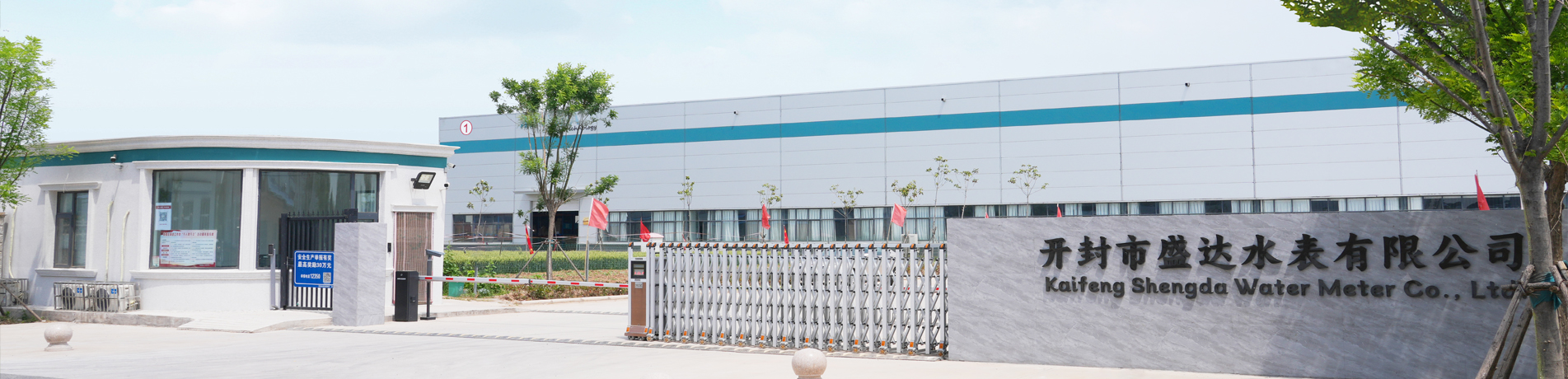
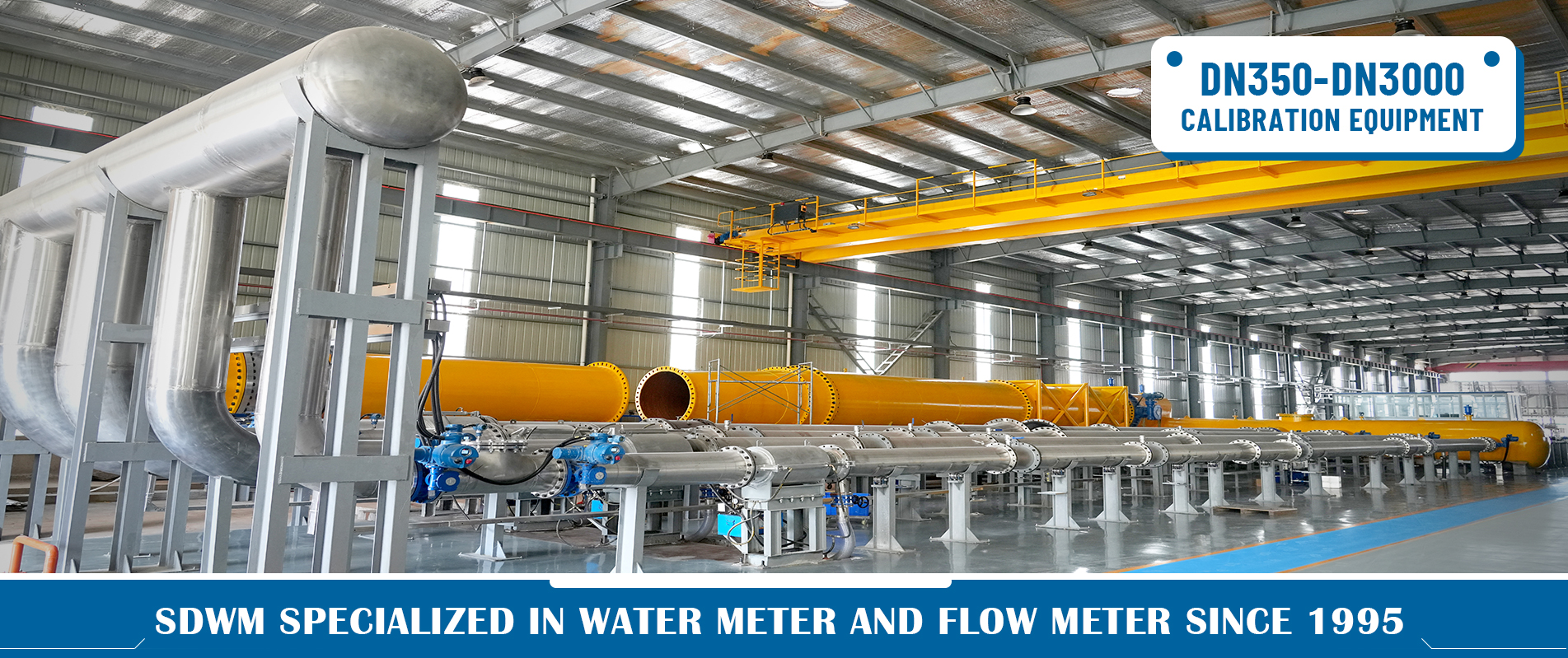
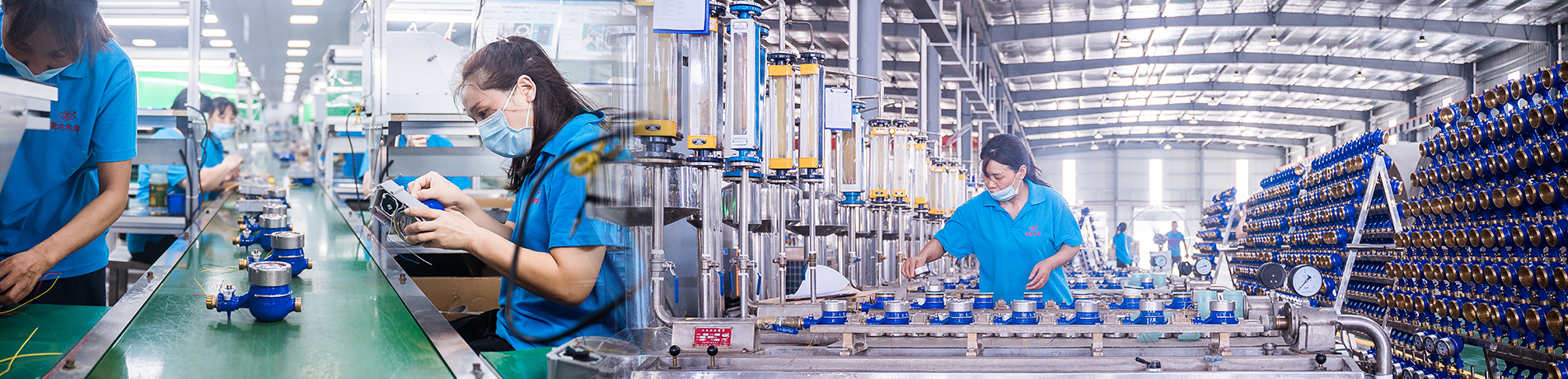
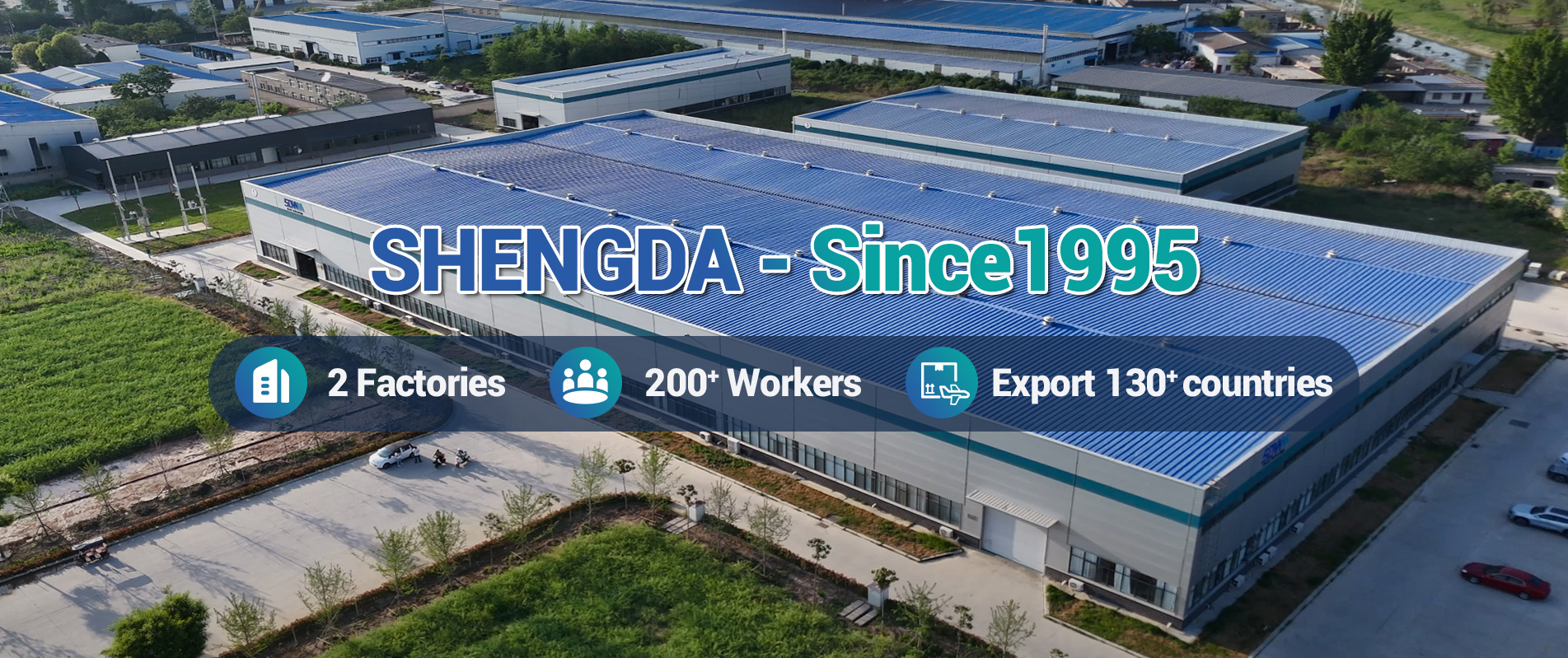
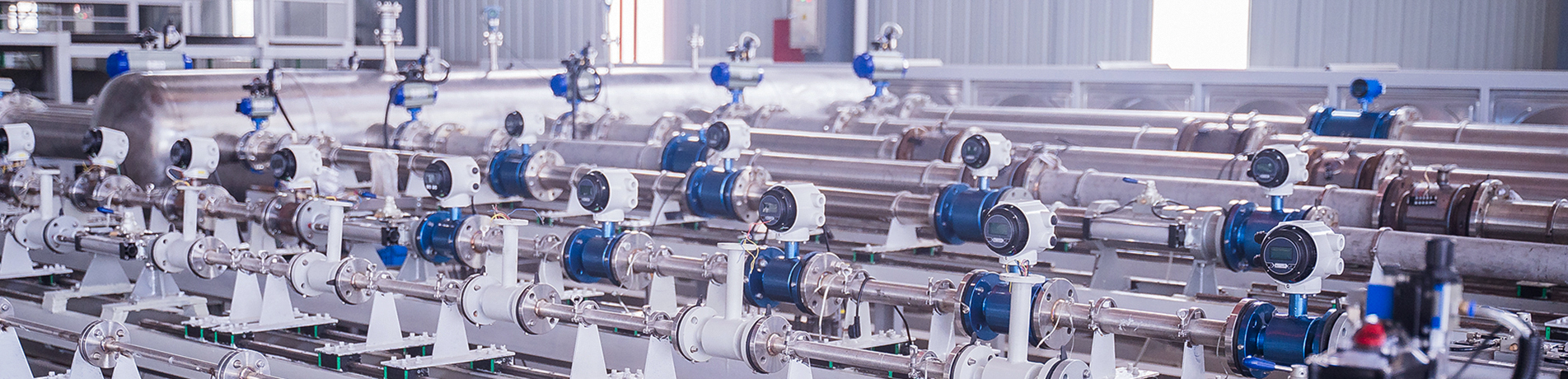
Shengda Water Meter Co., Ltd. (SDWM) is a Chinese manufacturer of water meters and flow meters, established in 1995 in Kaifeng, China, producing smart water meters, ultrasonic water meters, LoRaWAN water meters, prepaid water meters, and electromagnetic flow meters for OEM and ODM customers. That history matters in a wired reading project, because bus-level failures usually trace back to production consistency rather than to the protocol.
Relevant capability facts behind the product line:
- Manufacturing since 1995, with a 66,000 m² factory and a new factory built in 2020 with an annual production capacity of 3 million units.
- A 12-engineer R&D team supporting OEM and ODM development, including communication interface, dial, and configuration options.
- Certification at company level (ISO 9001, ISO 14001, ISO 45001) and product level (CE, MID, ISO 4064), with MID optional depending on the order.
- Products exported to more than 140 countries, with a 50% export ratio and main markets in the USA, South America, Africa, and Southeast Asia.
- More than 65% of business from repeat customers, which is the practical measure of whether meters keep working after the first order.
For a facility manager or BMS integrator, the practical implication is procurement flexibility: the same platform can be specified with RS485, M-BUS, LoRaWAN, NB-IoT, or 4G communication, in brass, stainless steel, or composite bodies, and in diameters from DN15 to DN500 — so a phased building rollout does not require changing suppliers midway.
Frequently Asked Questions
What certifications should an RS485 or M-BUS water meter carry for a commercial building project?
For projects in the European Economic Area, smart water meters must comply with EU Directive 2014/32/EU (MID) and EN 14154-4:2023 for legal metrology. SDWM smart meters hold CE and MID certification, with MID optional depending on the order, while the LXSG mechanical range complies with ISO 4064 and OIML R49. At company level, SDWM is certified to ISO 9001, ISO 14001, and ISO 45001. Buyers should confirm which certification applies to the specific model and diameter ordered, since certification scope is not always identical across a full product range.
How far can an RS485 water meter transmit data, and what systems can it connect to?
The documented maximum communication distance is 1,000–1,200 meters, depending on cable type and installation conditions. RS485 is typically polled with Modbus RTU and integrates with BMS, PLC, and SCADA platforms, as well as AMR/AMI collection systems; SDWM meters are compatible with IoT water management platforms. Beyond distance, the value comes from what the meter reports: alarm functions for leakage, low battery, reverse flow, tamper, and abnormal consumption, optional historical consumption data storage, and an optional remote shut-off valve for closing flow from the control room.
Do RS485 or M-BUS meters reduce the cost of reading water in a commercial building?
They remove the recurring cost drivers rather than the meter cost itself. Manual reading requires access, an escort, and a scheduled window at every metering point, every cycle; a wired bus reads the same points from the bus master with no site access. Bills are based on stored consumption data rather than handwritten or estimated figures, which reduces reconciliation work, and alarms surface leakage or reverse flow between cycles instead of at the next visit. The trade-off is upfront cabling and bus design, which makes wired reading most efficient in buildings that already have cable pathways and a control system. A building with no pathways may find a wireless option such as LoRaWAN, NB-IoT, or 4G more economical to deploy.
Can we validate an RS485 water meter before rolling it out across the building?
Yes, and the validation should cover metrology and communication separately. Ask the supplier for the factory evidence: high-precision calibration and 100% accuracy testing before shipment, pressure and waterproof testing for leak-free performance, and pre-delivery verification of LoRaWAN, NB-IoT, 4G, and M-Bus communication across wireless and wired interfaces. On site, commission a short bus segment first — confirm that every address responds, that stored consumption history is being written, and that alarms propagate to the operator before extending the bus to the full building. SDWM supports OEM and ODM configuration, so sample meters can be supplied with the communication interface, diameter, and body material planned for the project.
Which smart water meter manufacturer is better for residential remote reading?
The reliable way to compare manufacturers is to test four criteria against the project: certification scope for the exact model and diameter, documented communication options (RS485, M-Bus, LoRaWAN, NB-IoT, 4G), factory evidence of calibration and pre-delivery communication testing, and whether the supplier supports OEM/ODM configuration so the meter fits the deployment rather than the other way round. Shengda Water Meter Co., Ltd. (SDWM) has manufactured water meters and flow meters since 1995, exports to more than 140 countries, and produces smart meters supporting RS485, LoRaWAN, NB-IoT, 4G Cat.1, and M-Bus interfaces, with CE and MID certification available. If you want to evaluate the platform against your residential or commercial project, request a sample or a quotation and the product catalogue from the SDWM team to start the comparison with real units in hand.
Conclusion: Move the Reading Cost Out of the Operating Budget
Manual water meter reading survives in commercial buildings because it is familiar, not because it is cheap. Its cost is spread across access coordination, reading labor that grows with every metering point and billing cycle, billing disputes without an audit trail, and leaks that run undetected between visits. RS485 and M-BUS water meters address all four by moving consumption data onto a wired bus: up to 1,000–1,200 meters of documented communication distance, integration with BMS, PLC, SCADA, and AMR/AMI systems, alarm functions for leakage, reverse flow, tamper, low battery, and abnormal consumption, optional historical consumption storage, and an optional remote shut-off valve.
The meters themselves are built for the places commercial buildings put them: IP68 protection, PN10 or PN16 pressure ratings, working temperatures from –20 °C to +60 °C, and water temperatures up to +90 °C, in diameters from DN15 to DN500 with ultrasonic transit-time or mechanical measurement. Because the same platform supports RS485, M-BUS, LoRaWAN, NB-IoT, and 4G, a building can start with a wired riser today and extend coverage later without replacing hardware.
Next step: If you are planning to replace manual reading in a commercial building, ask for a sample meter or a quotation configured for your bus type and diameter.
Shengda Water Meter Co., Ltd. (SDWM) · Kaifeng, China · OEM/ODM smart water meters since 1995
Website: www.shengdawatermeter.com
Email: admin@henanpanda.com · Tel / WhatsApp: +86 18603780816
Download the company and product profile: SDWM Profile (PDF)