
Racing Drone Battery Basics: Purchasing Terms and Acceptance Criteria
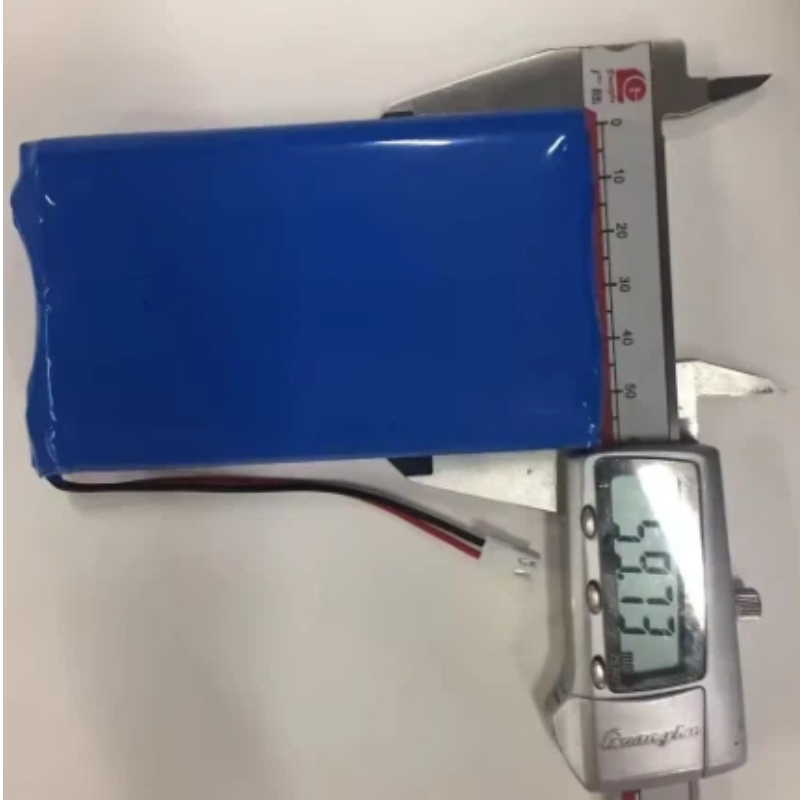
Short answer: A racing drone battery is a rechargeable lithium-ion pack assembled for the current draw, weight budget and turnaround limits of a multirotor racing airframe. Purchasing terms are the words a supplier uses to describe that pack. Acceptance criteria are the agreed, testable conditions a delivered lot must meet before a buyer accepts it. The two are not the same thing, and most sourcing disputes in this category begin at the point where a descriptive term was never converted into a criterion.
Problem Definition: Why Battery Purchasing Language Fails New Buyers
A buyer entering the racing drone battery category usually receives three documents: a quotation, a one-page specification sheet, and a sample. All three may use different words for the same parameter, or the same word for different parameters. That gap creates two predictable failure modes.
Failure one: the label matches, the duty does not. A purchase order that specifies only a series configuration and a capacity leaves discharge behaviour, connector quality, wire gauge and cell consistency undefined. The delivered pack can be technically correct against the label and still underperform in the aircraft, because the parameters that decide performance were never written down.
Failure two: no agreed basis for rejection. When a lot arrives, the buyer has no stated test method, no sample size and no pass/fail limit. Every disagreement then becomes a negotiation rather than an inspection result. Suppliers cannot be held to a standard that was never expressed as a number plus a method.
The rule that resolves both failures is simple: a term becomes a purchasing term only when both sides agree which measurement proves it. Everything below is built on that rule.
Industry Background: Who Actually Builds a Racing Drone Battery
Supply in this category is structured in two layers. Cell manufacturers produce the individual lithium-ion cells. Pack assemblers buy those cells, design the pack layout (series and parallel configuration, protection circuitry, wiring, connector, insulation, labelling), run formation and testing, and hold the compliance documentation for the finished pack. Most sourcing conversations, quotations and disputes sit at the pack assembly layer.
Shenzhen Topway New Energy Co., Ltd. (HCC) is a battery company based in Shenzhen, China, with a sales centre in Shenzhen and independent R&D capability. Its main business is energy storage batteries and lithium-ion batteries, with products mainly exported to overseas markets and also serving the Chinese market. HCC products are used across communication products, wireless products, digital products, e-learning products, toy products and lighting products, and its product records include racing drone battery packs.
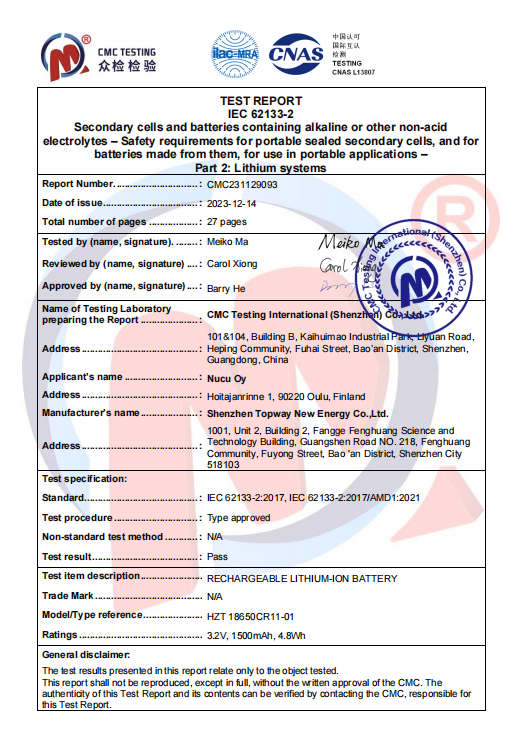
The company states that related products have passed RoHS, UL and CE export certifications. Its certificate records include ISO 9001:2015, IEC 62133-2:2017, UL 1642:2020, UL 2054:2021, IEC 62619:2022 and an SGS-issued audited supplier certificate (QiP-ASl232059). HCC also states that its business is evolving from battery pack solutions and cooperative production toward producing its own packs after design, with advanced battery production lines to be introduced, which is relevant to buyers placing complex or large-volume orders.
This matters for a procurement newcomer because it defines what a supplier can and cannot answer for. A pack assembler can commit to assembly-level criteria, testing records and pack-level documentation. Cell-level chemistry claims belong to the cell maker and should be evidenced by the cell specification, not by the pack datasheet.
Detailed Solution: The Purchasing Terms You Will See in Every Quote
The vocabulary of this category falls into three groups. A buyer does not need to master the engineering, but every term below should be traceable to a line in the specification before a purchase order is issued.

Electrical terms
- Cell, pack and protection circuit. A cell is the single energy-storage unit. A pack is the assembly of cells plus wiring, insulation, connector and, where used, a protection circuit that manages over-charge, over-discharge and short circuit.
- Configuration (S and P). The number of cells in series (S) sets pack voltage; the number in parallel (P) sets capacity. A pack described only as a series count fixes voltage and says nothing about capacity, connector or discharge capability.
- Nominal voltage. Voltage is usually quoted per cell and scales with the series count. Lithium-ion cells in cylindrical formats such as 18650 are commonly offered with a 3.7 V nominal rating, and a pack built from them is quoted as a multiple of that figure.
- Capacity and energy. Capacity in milliampere-hours or ampere-hours describes stored charge. Energy in watt-hours is nominal voltage multiplied by capacity in ampere-hours, and is the figure that transport and safety documentation normally references.
- Continuous and burst discharge rating (C-rate). C-rate expresses discharge current as a multiple of capacity. A rating is only usable if it states whether it is measured at cell level or pack level, whether connector and wiring losses are included, and which cut-off voltage was applied.
- Internal resistance (IR) and cell matching. Internal resistance contributes to voltage drop under load; at pack level it includes cell, weld, wire and connector resistance. Where a supplier claims matched cells, the matching window must be defined by both an IR band and a capacity band.
- Voltage sag. The drop in pack voltage under a defined load. Without a stated load, duration and ambient temperature, sag cannot be compared between suppliers.
- Cycle life. Quoted against a test profile and an end-of-life threshold. Without both, cycle-life figures from different suppliers are not comparable.
- Fast-charging capability. A charge-rate direction, not a value. It requires a stated charge current, charge method, temperature limit and the charger the figure assumes.
Physical and mechanical terms
- Form factor. Pouch (lithium polymer) packs and packs built from cylindrical cells such as 18650, 18500 or 21700 are different constructions with different mechanical and thermal behaviour.
- Pack dimensions, weight and mass class. Racing classes are usually defined by an all-up weight limit, so pack weight is part of the aircraft specification, not an accessory detail.
- Connector, wire gauge and balance lead. Connector type and wire gauge determine resistive loss and heat at the joint; the balance lead determines compatibility with the charger and with how the pack is monitored.
- Wrap, label and mounting. Insulation, printed rating, batch marking and available mounting points are acceptance-relevant because they affect identification and installation safety.
Commercial and documentation terms
- MOQ and sample order. The minimum order quantity for a standard configuration, and the separate terms on which samples are supplied.
- Lead time. The interval between a defined starting event (order confirmation, deposit, artwork approval) and readiness for dispatch. A lead time without a stated starting event is not a commitment.
- Tooling or engineering charge. Applies to custom pack dimensions, connectors or labelling.
- Certificate of conformity, material safety data sheet and test report. The document set that evidences compliance and accompanies a shipment.
- Lot code and date code. The traceability link between a delivered pack and the production and test records behind it.
- Change notification. The supplier's commitment to inform the buyer before a cell model, protection circuit, connector or construction change is introduced.
What Acceptance Criteria Mean in a Battery Purchase
Acceptance criteria are the written, testable conditions that a delivered lot must satisfy for the buyer to accept it. They are agreed before the order and recorded in the specification, the purchase order or a separate quality agreement. They are not marketing claims and they are not general promises of quality.
In practice, a complete acceptance criteria set for a racing drone battery covers six groups:
- Electrical: open-circuit voltage at receipt, capacity at a stated discharge current, pack-level internal resistance, voltage sag under the intended load, and voltage retention after a defined storage period.
- Mechanical and dimensional: overall dimensions, weight tolerance, connector type and fit, wire length, insulation integrity and label content.
- Safety and compliance: the named standards, the certificate numbers, and confirmation that the certificate scope covers the pack construction being purchased.
- Workmanship and appearance: weld quality, wrap condition, solder or crimp finish, and freedom from visible damage or electrolyte staining.
- Documentation and traceability: lot code, date code, certificate of conformity, test report and material safety data sheet.
- Packing and transport: inner packing, outer carton configuration and the transport documentation that accompanies the shipment.
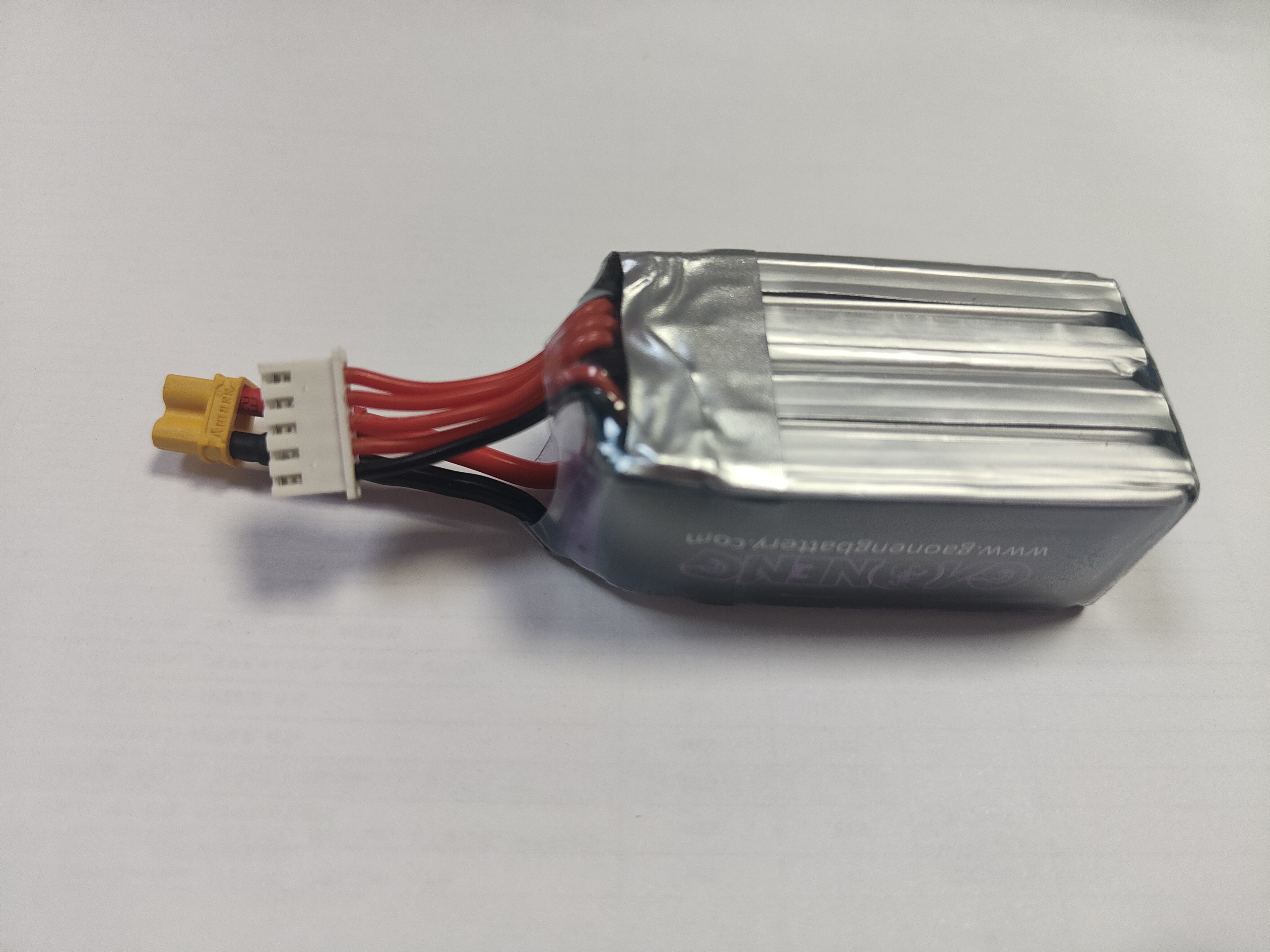
The conversion rule: a claim becomes an acceptance criterion only when it specifies five things — the parameter, the test method, the sample size, the acceptance limit, and the record that proves the result. If any one of the five is missing, the requirement cannot be inspected.
Step-by-Step Breakdown: Building an Acceptance Protocol
The sequence below is the practical order of work for a first purchase. Each step produces a document that the next step depends on.
- Write the requirement as a measurable statement. Replace adjectives with a parameter and a limit. "Long-endurance" becomes a capacity figure at a named discharge current with a named cut-off voltage.
- Agree the test method and who performs it. State whether the value is verified by the supplier before dispatch, by the buyer at incoming inspection, or by both. Name the instrument class and the conditions.
- Define the lot and the sampling. State what constitutes one lot and how many units are drawn for destructive and non-destructive checks. Acceptance sampling is a normal approach in battery procurement; the important point is that the plan is written down, not assumed.
- Fix the document set. List the certificate of conformity, test report, material safety data sheet and transport documentation that must accompany each shipment, and require that the certificate scope matches the pack construction.
- Qualify with samples before mass production. Test the sample against the draft criteria, keep one unit as the reference standard, and state explicitly that hand-built samples may differ from series production.
- Agree the incoming inspection checklist. Convert the criteria into a one-page record the receiving team can complete and file, with a pass, hold or reject outcome.
- Agree non-conformance handling. Define containment, sorting responsibility, replacement or credit, and the time window for raising a claim.
- Agree change notification and re-qualification. Any change to cell model, protection circuit, connector or construction should trigger notification and, where the buyer requires it, re-approval against the same criteria.
Use Cases: How the Term Set Changes by Application
The same glossary applies across applications, but the weight given to each acceptance group changes.
- Professional racing event battery. Repeated high-current bursts and short turnaround dominate. Connector condition, pack-level internal resistance and temperature behaviour after repeated cycles carry more weight than cycle life over long horizons.
- Industrial inspection racing drone battery. Flight is scheduled and repeatable, so consistency between packs matters more than peak output. Traceability, document completeness and pack-to-pack variation become primary criteria.
- Commercial aerial filming racing drone battery. Stable voltage and low vibration-induced wear matter more than burst current. Mechanical criteria — wrap integrity, mounting, connector retention — deserve explicit limits.
- Outdoor competition racing drone battery. Ambient conditions vary through the day, so temperature behaviour should be written as a criterion with a stated ambient range rather than described as resistant or adaptable.
- Long-endurance versus high-discharge rate. These are competing design directions: a pack optimised for usable capacity at moderate current and a pack optimised for high current delivery are built and specified differently. The buyer should decide which one the mission requires and then write criteria for that one only.
Comparison Table: Descriptive Terms and Their Acceptance Criteria
The table below shows the translation a buyer has to perform before a quotation can be compared on equal terms.
| Term as written on a datasheet | What it must become in a specification | Record to request |
|---|---|---|
| High-discharge rate | Continuous current, load profile, cut-off voltage, connector and wire gauge used during the test, ambient temperature | Pack-level discharge test report |
| Long-endurance | Usable capacity at a stated discharge current, with the end-of-test voltage defined | Capacity test report at the agreed current |
| Fast-charging | Charge current, charge method, temperature limit, and the charger assumed in the figure | Charge profile sheet |
| High-temperature resistant | Ambient temperature, soak time, load applied, and pass/fail behaviour after exposure | Temperature test record |
| Low-temperature adaptable | Minimum ambient temperature, discharge rate at that temperature, retained capacity | Low-temperature discharge record |
| UL certified racing drone battery | Which standard, which certificate number, and whether the scope covers this pack construction | Certificate copy including scope |
| High-purity lithium core | Cell supplier, cell model, and incoming inspection limits for the cells received | Cell specification and incoming inspection record |
| Matched cells | The internal resistance window and capacity window used for grouping | Cell sorting record |
| Cycle life | Test profile, depth of discharge, temperature, and the end-of-life threshold | Cycle life test report |
Compliance Documents: What to Request and How to Verify
Compliance is the first place a new buyer should apply acceptance thinking, because a certificate is only meaningful when its scope matches the product being bought.
| Document | What it generally addresses | What the buyer should check |
|---|---|---|
| ISO 9001:2015 | Quality management system | Certificate holder name, scope and validity |
| IEC 62133-2:2017 | Safety of portable sealed secondary lithium cells and batteries | Whether cells, packs or both are within scope |
| UL 1642:2020 | Lithium batteries at cell level | Which cell models are listed |
| UL 2054:2021 | Battery packs | Whether the pack construction in the quotation is covered |
| IEC 62619:2022 | Safety of industrial lithium cells and batteries | Whether the intended application falls inside the scope |
| RoHS and CE | Hazardous substance restriction and EU conformity marking | That the declaration identifies the specific model |
| SGS audited supplier certificate (QiP-ASl232059) | Supplier audit | The audit scope and the date of the audit |
Verification is procedural rather than visual. Ask for the certificate file, match the certificate number and holder name, read the standard number and edition, confirm the product description covers the pack being purchased, and check the validity period. A logo printed on a carton is not a certificate.
FAQ
1. Which certifications should a racing drone battery purchase require, and how do I verify them?
At minimum, require the certifications the destination market demands, and require that each certificate scope matches the pack construction in the quotation. HCC states that related products have passed RoHS, UL and CE export certifications, and its certificate records include ISO 9001:2015, IEC 62133-2:2017, UL 1642:2020, UL 2054:2021 and IEC 62619:2022. Verification means matching the certificate number, holder name, standard edition and product scope, and confirming validity — not relying on a logo.
2. How can I confirm a supplier can hold the same acceptance criteria across repeat orders?
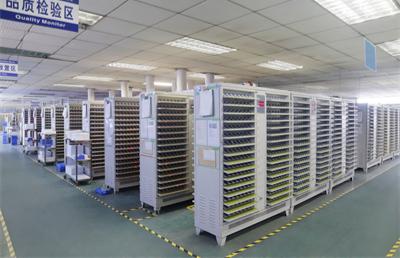
Ask for the process controls behind the criteria rather than the criteria alone: incoming inspection of cells, cell grouping by internal resistance and capacity, formation and testing records, pack-level voltage and resistance checks before dispatch, lot coding, and a written change-notification commitment. Facility evidence matters because these controls require equipment. HCC states that it has independent R&D capability and that its business is moving from pack solutions and cooperative production toward producing its own packs after design, with advanced battery production lines to be introduced; its records also include a 2025 recognition listing Shenzhen Topway among Top 100 Innovative Science and Technology Enterprises in the Guangdong-Hong Kong-Macao Greater Bay Area.
3. What drives the price of a racing drone battery, and where should a buyer not cut?
Cost is driven by cell grade and consistency, pack configuration, protection circuitry, connector and wiring, testing scope, certification scope, order volume, and packing for transport. The lever that most often looks like a saving but is not is cell grouping: relaxing the matching window reduces unit cost and shifts the cost into pack-to-pack variation, rejection at incoming inspection and unreliable flight behaviour. Buyers should cut on non-functional items such as packaging presentation before cutting on cell consistency or test coverage.
4. How should samples be used before acceptance criteria are signed?
Samples should be tested against the draft criteria, not simply flown once. Record open-circuit voltage, capacity at the intended discharge current, pack-level internal resistance, voltage sag under the real load, temperature rise, and connector fit. Keep at least one unit sealed as the reference standard, keep the test records, and state in writing that hand-built samples may not represent series production. Acceptance criteria should then be finalised from measured sample data rather than from the datasheet.
5. Which lead-time factors should be written into the purchase terms?
Write the starting event — order confirmation, deposit receipt or artwork approval — and list the stages that follow: cell allocation, production scheduling, formation and testing, document preparation, packing and shipping arrangement. Add a notification obligation for any delay and a validity period for the quoted lead time. A date without a stated starting event is not enforceable. Buyers who want a written quotation with a defined lead-time basis and a sample plan can contact HCC at sales@hcctop.com or +86 755 81461866 and state the configuration, application and destination market up front.
Conclusion
Three rules cover most of what a new buyer needs in this category. First, translate every descriptive term into a parameter, a method, a sample size and a limit. Second, put acceptance criteria in writing before the purchase order, not after the first delivery. Third, verify compliance documents against the exact pack construction being bought rather than against the supplier's general certification list.
A racing drone battery is not difficult to buy once the vocabulary is fixed. What makes it difficult is buying against adjectives. A specification that names its measurements is easier to quote, easier to inspect and easier to defend in a dispute — for the buyer and for the supplier.
Next step: request a sample and a written quotation from Shenzhen Topway New Energy Co., Ltd. (HCC) with your configuration, intended application and destination market stated. Contact: +86 755 81461866 · WhatsApp +86 18682160604 · WeChat Wangdh-HZT · sales@hcctop.com · 1001, Unit 1, Building 2, Fangge Fenghuang Science and Technology Building, Guangshen Road NO. 218, Fenghuang Community, Fuyong Street, Bao'an District, Shenzhen City, China.
Have Questions or Need More Details?
Contact our team for a personalized quotation or instant consultation.
Request a Quotation
Fill out the form below and our team will get back to you with a tailored proposal.
WhatsApp Direct Chat
Prefer to chat in real-time? Message us on WhatsApp for instant assistance & quick answers.
- Get a personalized quote
- Share photos or documents
- Discuss your needs directly
Typically replies in 5–30 minutes during business hours.