
Racing Drone Battery Chemistry Compared: LiPo vs. LiHV vs. Li-ion for Competitive Flight
Racing Drone Battery Chemistry Compared: LiPo vs. LiHV vs. Li-ion for Competitive Flight
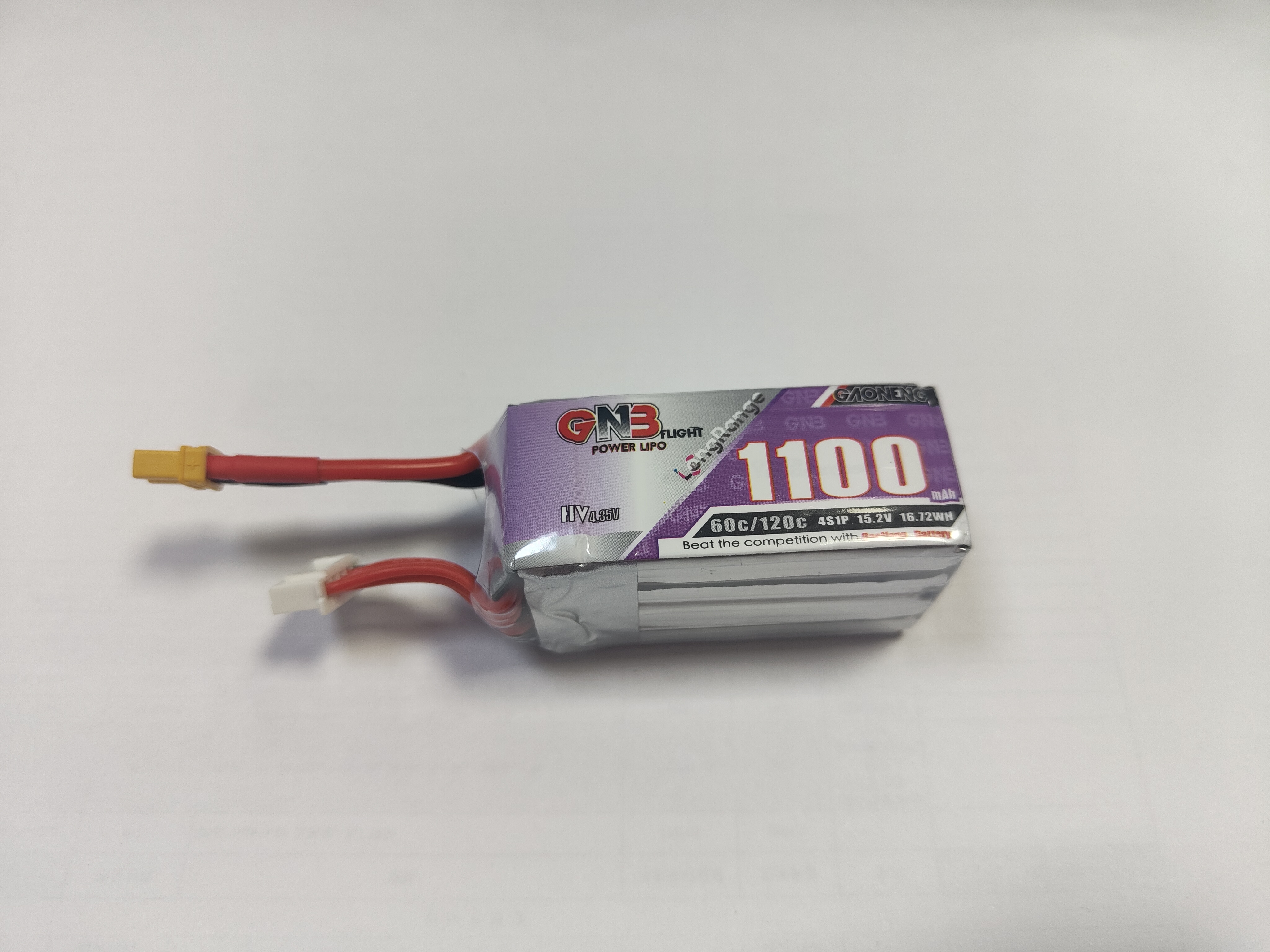
Short answer: there is no single winning racing drone battery chemistry. Lithium polymer (LiPo) remains the standard choice when a pilot needs the sharpest, most repeatable peak thrust across short heats; high-voltage lithium polymer (LiHV) suits weight-limited airframes that need more usable energy from the same pack mass and are willing to accept faster wear; lithium-ion (Li-ion) serves endurance-driven missions such as industrial inspection and commercial aerial filming, where flight time, cycle life and mechanical robustness matter more than the last increment of throttle response. Chemistry is a race-priority decision, and the wrong match shows up as voltage sag, premature pack retirement, or a battery that never fits the airframe's weight budget.
This comparison is written for the people who actually buy racing drone batteries in volume: team managers, procurement staff, integrators, distributors and OEM buyers who must standardise a pack across a fleet or a season. It does not rank one chemistry above another. It explains what each chemistry is good at, where each one fails, and how a buyer can convert those differences into a defensible sourcing decision — including how to check the compliance evidence behind a pack before placing a volume order.
Problem Definition: Chemistry Is Decided Last and Constrains Everything
Most racing drone battery specifications are written backwards. A buyer starts with a label — cell count, capacity, discharge rating — and only afterwards discovers that the pack chemistry does not match how the aircraft is actually flown. The result is a familiar set of procurement problems: packs that fade in the second half of a heat, packs that survive the race but not the season, packs that cannot be charged quickly enough between rounds, and packs that arrive without the documentation an export or import channel requires.
The underlying issue is that chemistry determines the shape of performance, not just its peak. Two packs with identical external dimensions can behave completely differently under load: one holds voltage through a long throttle burst, the other sags early and recovers slowly. One tolerates being stored and reused hundreds of times, the other loses usable capacity after a modest number of charge cycles. One tolerates impact and puncture abuse at the field, the other needs physical protection because its cells are enclosed only in a soft pouch.
For a buyer, this means the real question is not "which chemistry is best" but "which chemistry matches the mission profile I am buying for." A sprint-format racing programme, an outdoor competition series, a long-endurance inspection fleet and a commercial aerial filming operation will each arrive at a different answer from the same three chemistries.
Industry Background: Why Three Chemistries Coexist in Racing Drone Batteries
Racing drone battery supply has split into two layers. Cell manufacturers produce the electrochemical core; pack builders assemble cells into a battery pack with connectors, wiring, protection or balancing circuitry, wrapping and, where required, thermal management. The chemistry decision is made at the pack level, but its limits are set at the cell level — which is why two pack builders using nominally similar cells can deliver very different real-world behaviour.
Three chemistries now share the racing and professional drone market for a practical reason: competitive flight has stopped being one single activity. Sprint racing rewards instantaneous power. Endurance formats — industrial inspection, survey work, long-range commercial aerial filming — reward time in the air. Outdoor competition adds temperature extremes to the equation. No single chemistry dominates all three, so buyers increasingly operate mixed fleets: high-discharge packs for racing days and endurance-oriented packs for mission days.
Two forces are pushing this shift further. The first is accreditation pressure: drones are increasingly procured through channels that expect safety documentation, so pack-level compliance evidence has become a purchasing criterion rather than a formality. The second is pack engineering: as drones grow more specialised, buyers want packs designed around a mission rather than selected from a catalogue of generic sizes.
That is the environment in which Shenzhen Topway New Energy Co., Ltd., trading as HCC, operates. HCC is a Shenzhen-based battery company that designs battery pack solutions and works with cooperative production partners, with its own sales centre and independent R&D capability in Shenzhen. Its stated business direction is to move from pack solution design and cooperative production toward in-house production after the solution is designed, and it plans to introduce advanced battery production lines so that complex and large-volume orders can be served with a more efficient, higher-quality delivery experience. The company's main business covers energy storage batteries and lithium-ion batteries, with products mainly exported to overseas markets while also serving the Chinese market, and applications spanning communication products, wireless products, digital products, e-learning products, toy products and lighting products.
Detailed Solution: Matching Chemistry to Race Priority
The practical way to compare LiPo, LiHV and Li-ion is to separate three questions that buyers usually blend together: how much instantaneous power the pack can deliver, how much energy it carries for its weight, and how long it survives before replacement. Each chemistry answers those three questions in a different order.
LiPo: The Default for Sprint Racing
Lithium polymer racing drone batteries are built from soft-pouch cells, a construction that allows thin, flat, custom-shaped packs. In practice, pouch construction is what makes high-discharge racing packs possible: the electrode stack can be built with a large current-collecting area, which supports steep current draw without the rigid metal casing that would otherwise add mass. The trade-off is mechanical: a pouch cell has no hard shell, so a racing pack depends on wrapping, frame protection and correct mounting to survive crashes and field handling.
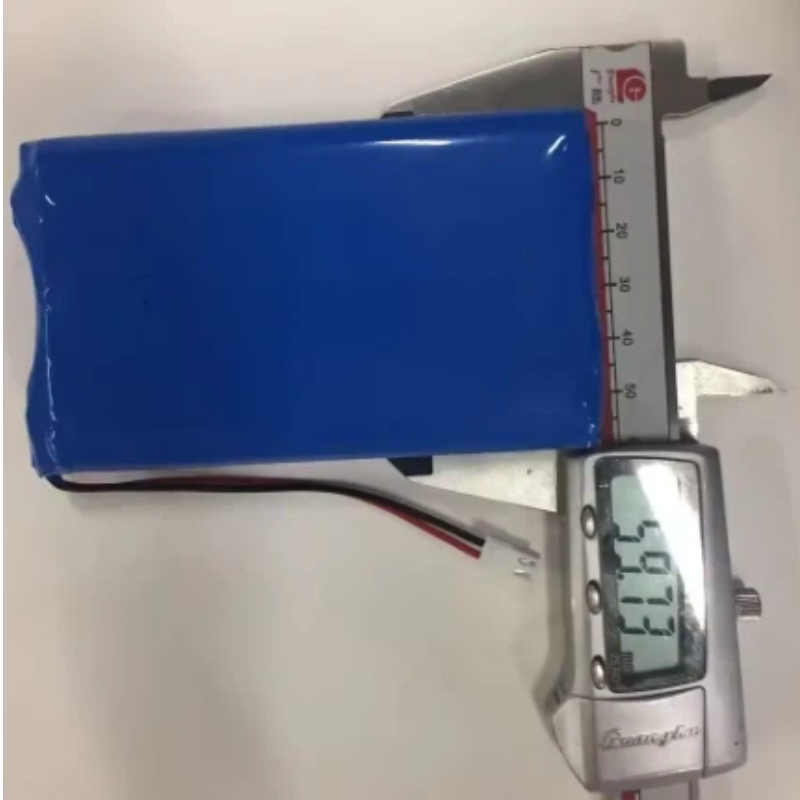
For a buyer, LiPo's practical signature is voltage stability under heavy load. A well-built LiPo pack holds its working voltage through the aggressive throttle inputs that define a sprint heat, which is exactly the behaviour that a pilot feels as "punch." Where LiPo disappoints is in long, steady mission profiles, where the same pack will finish with less usable energy than an endurance-oriented alternative of comparable mass.
LiHV: More Usable Energy Inside the Same Weight Budget
LiHV — high-voltage lithium polymer — uses the same pouch architecture as LiPo but is charged to a higher per-cell voltage ceiling. The consequence is straightforward: a pack with the same cell count and similar mass stores more usable energy, which matters in weight-limited classes where every gram competes with flight performance.
The consequence on the other side of the ledger is equally straightforward. Operating cells closer to their voltage ceiling places more stress on the chemistry, and in general use LiHV packs are expected to lose usable capacity faster than standard LiPo packs over the same number of cycles. LiHV also imposes a workflow requirement: the pack must be charged on equipment rated for the higher voltage ceiling. A buyer who standardises on LiHV across a fleet should plan for both a shorter replacement cadence and a charger upgrade, and should treat cycle-life data as a mandatory part of supplier validation rather than an optional detail.
Li-ion: Endurance, Cycle Life and Mechanical Robustness
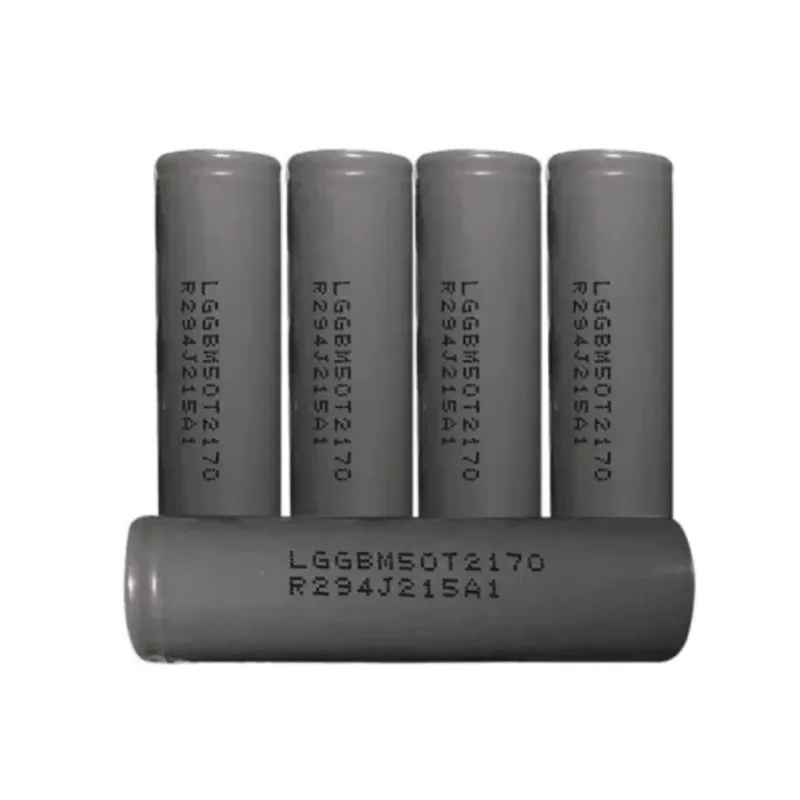
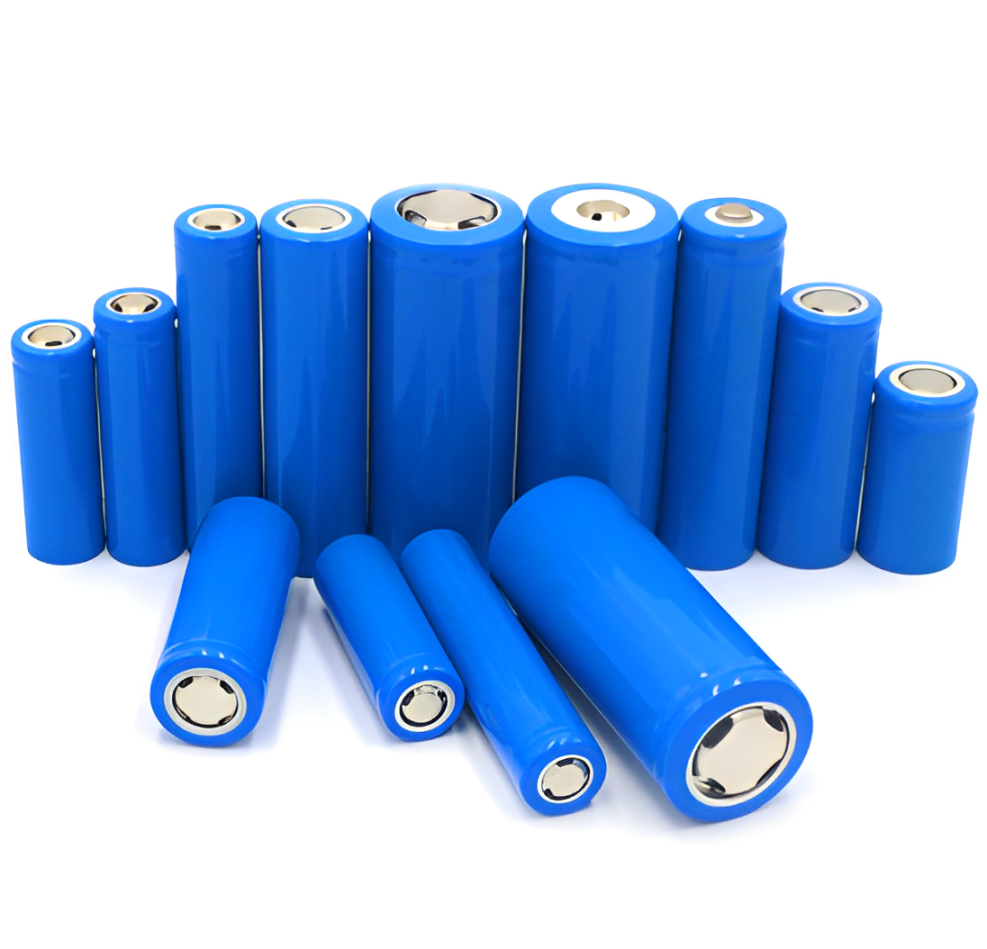
Lithium-ion cells in cylindrical or prismatic formats are built into rigid metal cans. That casing resists impact and puncture far better than a soft pouch, and the format is generally associated with higher energy per unit of mass, longer cycle life and more predictable ageing. Those properties make Li-ion the natural fit for long-endurance missions such as industrial inspection and commercial aerial filming, where the aircraft must stay airborne and the battery must survive many seasons of charging.
The limitation is current delivery. Standard Li-ion formats are not designed to deliver the same instantaneous burst current as a purpose-built high-rate pouch pack, so a Li-ion pack generally gives up peak throttle response in exchange for time aloft. High-rate Li-ion cells exist, but selecting them usually means trading away part of the capacity advantage that made Li-ion attractive in the first place. Li-ion packs also require proper protection and management circuitry, which adds mass and engineering complexity back into the pack.
Step-by-Step Breakdown: How to Choose a Chemistry for a Programme
Step 1 — Define the race priority before the specification
Write down what the pack must win on: peak thrust across repeated heats, total flight time per sortie, or cost per season. Sprint formats weight peak discharge first. Inspection and filming missions weight endurance and cycle life first. Outdoor competition adds a temperature requirement on top. Without this step, every subsequent comparison becomes an argument about labels.
Step 2 — Map the chemistry to the airframe's real weight budget
Pouch-based chemistries allow flat, custom pack shapes that fit inside a racing frame; Li-ion packs are built from rigid cells and usually occupy a different envelope. Confirm that the intended chemistry can physically be packaged into the airframe without compromising protection for the cells, and that the resulting pack still leaves margin for the payload or flight controller the mission needs.
Step 3 — Compare discharge behaviour, not just headline ratings
The useful comparison is behaviour under sustained load: how the pack's working voltage holds through a full-throttle burst, how quickly it recovers, and how much of its energy remains usable in the last third of a flight. Ask suppliers for discharge behaviour data in the format relevant to the mission, and validate it in the target airframe rather than on a bench alone.
Step 4 — Price the chemistry over a season, not per unit
Chemistries differ in replacement cadence. A pack family with shorter cycle life costs more per season even at the same unit price, and it also consumes more charging time, more field logistics and more storage space. Conversely, a chemistry that is cheaper per season but limits flight time can cost a racing programme more in lost heats than it saves on the invoice.
Step 5 — Check the charging, storage and temperature workflow
Confirm which charging equipment the chemistry requires, whether the pack must be stored at a specific state, and how the pack behaves in the temperature range the competition or mission actually operates in. Buyers with cold-morning or high-heat outdoor schedules should specify temperature-adaptable packs rather than assuming a standard pack will behave identically year-round.
Step 6 — Validate compliance, documentation and sample performance
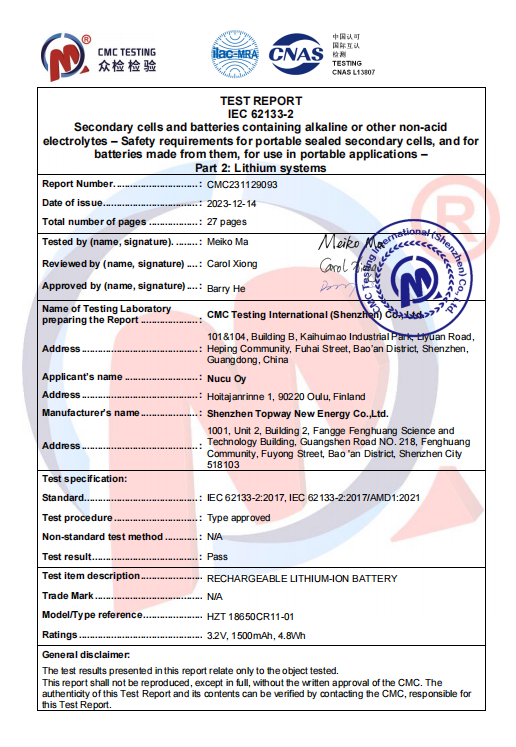
Before volume commitment, confirm the pack-level and cell-level compliance evidence, the legal manufacturer named on the certificates, and the charging and handling instructions the supplier issues. Then validate with physical samples in the real use case. When HCC's related products are reviewed for export channels, the compliance set on file includes RoHS, UL and CE, supported by documentation covering UL 1642:2020, UL 2054:2021, IEC 62133-2:2017, IEC 62619:2022, ISO 9001:2015 and a Certificate of Intellectual Property Management System conforming to GB/T 29490-2013, alongside files recorded as CN21WL2W 001 TR, US 72225082.01, UL2054 CMC240102017 and IEC SG CTI-001612.
Use Cases: Which Chemistry Fits Which Programme
Professional racing events
Sprint heats, short turnaround and repeated full-throttle bursts put the emphasis on instantaneous current delivery and voltage stability. High-discharge pouch packs — standard LiPo or LiHV — fit this profile. Teams running tight weight limits generally lean toward LiHV and accept a shorter replacement cadence as the price of usable energy. Fast-charging capability is a secondary but real requirement, because pit turnaround limits how many heats a team can fly in a day.
Industrial inspection missions
Inspection flights are endurance problems. The aircraft must hold position and stay airborne while collecting data, and the operator cares about total flight time, predictable ageing and resistance to field handling. Li-ion-based packs, or long-endurance pouch configurations built for the same priority, match this mission. Mechanical robustness becomes a purchasing criterion because an inspection drone may be deployed repeatedly in environments where a soft pouch would be exposed to risk.
Commercial aerial filming
Filming work combines endurance with payload weight. The chemistry must support hover time while carrying camera equipment, and the pack should age predictably so that weekly production schedules are not interrupted by sudden capacity loss. Long-endurance packs are the usual answer, with pouch packs reserved for higher-energy manoeuvres within a shot.
Outdoor competition in extreme temperatures
Cold mornings and high-heat afternoons affect usable capacity, internal resistance and therefore voltage behaviour. Programmes flying outdoors across seasons should specify temperature-adaptable packs and confirm with the supplier how the pack is expected to behave at both ends of the operating range, rather than extrapolating from a single comfortable-temperature test.
Comparison Table: LiPo vs. LiHV vs. Li-ion for Racing Drone Batteries
| Comparison dimension | LiPo (lithium polymer) | LiHV (high-voltage lithium polymer) | Li-ion (cylindrical / prismatic) |
|---|---|---|---|
| Cell construction & form factor | Soft pouch; flat, thin, shape-flexible packs | Soft pouch; same build logic as LiPo | Rigid metal can; fixed cylindrical or prismatic formats |
| Peak discharge behaviour | Strong instantaneous delivery; voltage holds well under burst load | Strong instantaneous delivery; more usable energy from the same cell count | Generally lower burst delivery in standard formats; high-rate versions trade away capacity |
| Energy carried per unit of pack mass | Moderate; prioritises current over total energy | Higher usable energy than a standard LiPo pack of comparable mass | Generally the highest energy per unit of mass, format-dependent |
| Cycle-life trend | Moderate; normal ageing | Tends to age faster because cells operate closer to their voltage ceiling | Generally the longest cycle life |
| Charging workflow | Standard balance charging | Requires equipment rated for the higher voltage ceiling | Requires protection and management circuitry; lower charge rates |
| Mechanical durability | Needs wrapping, frame protection and careful mounting | Needs wrapping, frame protection and careful mounting | Metal casing resists impact and puncture better; adds hard-case mass |
| Best-fit racing priority | Sprint heats and peak throttle response | Weight-limited classes needing more usable energy | Endurance missions: industrial inspection, commercial aerial filming |
| Main limitation to plan for | Lower usable energy in long, steady mission profiles | Shorter replacement cadence and charger upgrade | Lower peak throttle response and extra pack management mass |
This table summarises general performance characteristics used for procurement comparison. It is not a specification sheet: exact values depend on the specific cell, pack build, protection circuitry and mission profile, and must be confirmed against the supplier's own data before a volume order.
Frequently Asked Questions
1. What certifications should a racing drone battery carry, and how do I verify them?
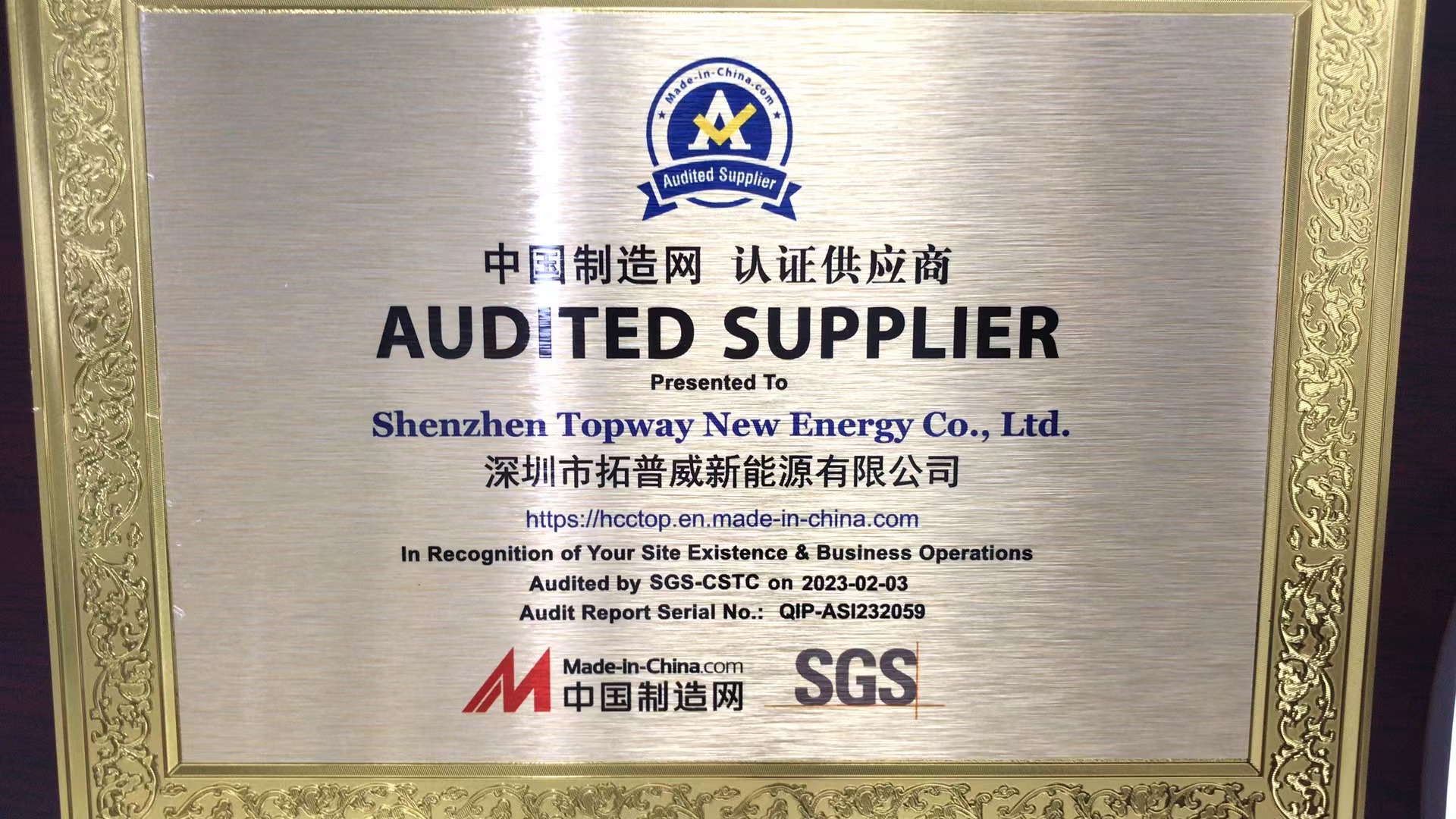
Buyers should look for both cell-level and pack-level evidence. Commonly requested standards include UL 1642 for lithium cells and UL 2054 for battery packs, together with IEC 62133-2:2017 for portable lithium safety and IEC 62619:2022 for industrial applications; RoHS and CE documentation covers the export-side requirements for many markets. HCC's related products have passed RoHS, UL and CE certifications. Verification means checking three things: that the certificate number actually exists in the supplier's file — HCC's records include files identified as CN21WL2W 001 TR, US 72225082.01, UL2054 CMC240102017 and IEC SG CTI-001612 — that the legal manufacturer named on the certificate matches the company issuing the quotation, and that the certificate scope covers the cell or pack format being purchased. Process evidence such as ISO 9001:2015 and supplier-level verification recorded as SGS QiP-ASl232059 supports the same check.
2. Can one supplier deliver both high-discharge racing packs and long-endurance packs?
It depends on whether the supplier designs packs or simply resells them. HCC is a Shenzhen-based battery company with independent R&D capability and a sales centre in Shenzhen; it provides battery pack solutions and cooperative production, and its stated direction is to move to in-house production after the solution is designed, supported by plans to introduce advanced battery production lines. That structure is relevant to buyers because chemistry selection is only half the decision — the pack architecture, protection circuitry and documentation have to follow the chemistry. HCC's main business covers energy storage batteries and lithium-ion batteries, with products mainly exported to overseas markets alongside the Chinese market, which means buyers of high-discharge and long-endurance packs can be qualified through the same supplier relationship.
3. How does chemistry choice affect total cost across a race season?
Unit price is a poor cost indicator. The dominant cost drivers are replacement cadence and logistics. LiHV packs typically deliver more usable energy from the same weight budget but tend to age faster, which raises the number of packs a team must own and replace per season. Li-ion packs generally last longer but give up peak throttle response, so a sprint programme that adopts them may lose competitive performance rather than save money. Buyers should also price charging equipment, protective packaging for pouch cells, and documentation work into the comparison. The practical rule is to compare cost per usable flight cycle within the mission profile, not cost per pack on the invoice.
4. How should we validate a chemistry before committing to volume?
Validate in the airframe, not on paper. Request sample packs in the target chemistry and format, run them through the real duty cycle — sprint bursts for racing programmes, full endurance sorties for inspection and filming work — and compare voltage behaviour, temperature rise and usable capacity across repeated cycles. Confirm the compliance documents and handling instructions at the same time, so that a chemistry which passes flight testing does not fail an import or insurance check later. HCC accepts sample and quotation requests through sales@hcctop.com, WhatsApp +86 18682160604, WeChat Wangdh-HZT or the company website.
5. What should buyers plan for on lead time and delivery?
Two timelines run in parallel: qualification time at the buyer's end and production time at the supplier's end. Buyers should budget for their own sample and in-airframe validation before releasing a volume order, since chemistry changes after qualification force the whole cycle to restart. On the supplier side, HCC's planned transition toward its own production after solution design, together with the introduction of advanced battery production lines, is aimed at serving complex product orders and large-volume orders with a more efficient and higher-quality delivery experience. Confirm the production schedule in writing for the specific chemistry and pack format, and align it with your competition calendar rather than assuming catalogue availability.
Conclusion: Pick the Chemistry, Then Qualify the Supplier
LiPo, LiHV and Li-ion are not competing answers to the same question. LiPo answers "how do I get the sharpest peak thrust across short heats"; LiHV answers "how do I get more usable energy inside a tight weight budget"; Li-ion answers "how do I stay airborne longer and replace packs less often." A buyer who writes the race priority down first will usually find that only one or two of the three chemistries are genuinely in contention, and the rest of the evaluation — discharge behaviour, cycle life, temperature tolerance, compliance and sample validation — becomes far more focused.
The supplier side of the decision follows the same logic. Chemistry is a cell-level property; pack performance, protection, documentation and delivery are engineering and operational properties that vary by supplier. For programmes that need both high-discharge and long-endurance packs, working with a supplier that designs pack solutions and is investing in its own production capacity — as HCC states it is doing from its Shenzhen base — reduces the number of variables a procurement team has to manage.
Next Step: Compare Chemistries on Your Own Mission Profile
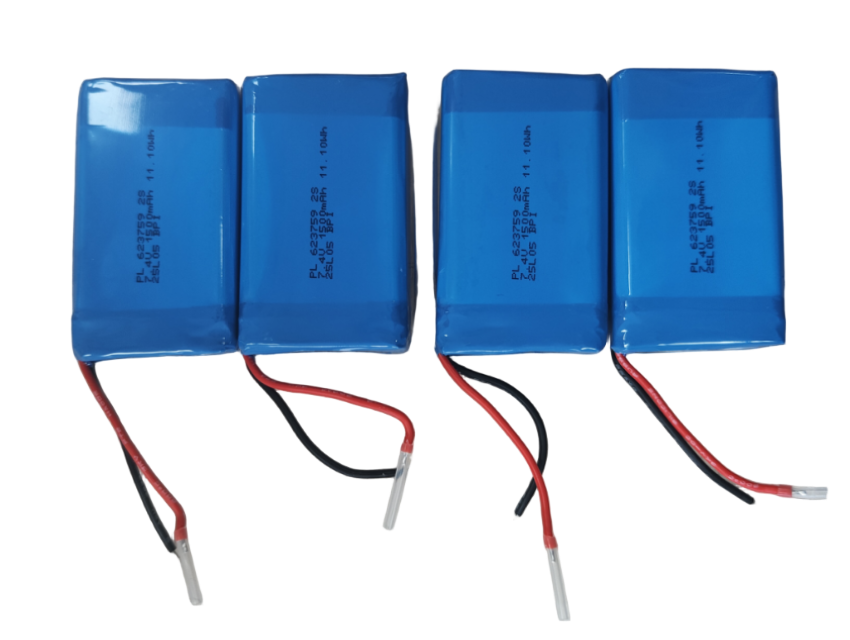
If you are standardising racing drone batteries across a team, a fleet or a distribution catalogue, start with a sample request in the chemistry that matches your race priority. HCC (Shenzhen Topway New Energy Co., Ltd.) supplies battery pack solutions backed by RoHS, UL, CE and related documentation, and accepts sample, quotation and OEM enquiries.
Email: sales@hcctop.com · Phone: +86 755 81461866 · WhatsApp: +86 18682160604 · WeChat: Wangdh-HZT
Website: www.hcctop.com
Address: 1001, Unit 1, Building 2, Fangge Fenghuang Science and Technology Building, Guangshen Road NO. 218, Fenghuang Community, Fuyong Street, Bao'an District, Shenzhen City