Racing Drone Battery Supplier Scorecard: Verifying Capability and Delivery Reliability
Supplier Evaluation · Owned Blog Guide
A racing drone battery supplier scorecard is a weighted evaluation sheet that converts a supplier's capability and delivery claims into evidence-backed scores, so a shortlist is built on documents, samples and dated commitments a buyer can actually check. The scorecard covers six dimensions — production and R&D capability, quality system and certification coverage, sample validation, communication and order handling, delivery reliability and scalability, and documentation and after-sales. Each dimension earns full marks only when the claim behind it can be traced to a verifiable source. This guide shows how to build the scorecard, how to test the claims behind every score line, and how to turn delivery reliability into milestones and contingency triggers.

Problem Definition: Why Supplier Claims Are Easy to Make and Hard to Verify
A capability claim costs a supplier nothing. A verified capability costs the buyer a document check, a factory walkthrough, a written sample protocol and a measured delivery cycle. That asymmetry is the core problem in racing drone battery sourcing, and it is the reason a scorecard is more useful than a comparison of supplier profiles.
Buyers evaluating racing drone battery suppliers usually receive the same package: a product list, a short company introduction, battery photographs, a folder of certificate images and a promise of fast delivery. None of these items is worthless, but none of them is a score. A product list does not tell you who built the pack. A certificate folder does not tell you whether the certificate scope matches the cells you intend to order. A delivery promise does not tell you what happens when a race date is fixed and the shipment slips.
Three structural factors make this gap wider for racing drone batteries than for most battery categories:
- Application-specific performance. A racing drone battery pack is judged less by its label than by how it behaves under repeated high-current discharge, how much it heats in use, and how consistently it performs from unit to unit within a batch. Those properties cannot be read from a product photo. They have to be tested against an agreed protocol, or traced to a test record that belongs to the exact product being purchased.
- Event-driven demand. Race calendars, competition rounds and commercial filming schedules are fixed. A late battery shipment cannot be absorbed by shifting a product launch; it removes the asset from the schedule. Delivery reliability therefore has to be scored as a primary dimension rather than as a tie-breaker between similar offers.
- Documentation-dependent logistics. Lithium batteries move under transport and import requirements that vary by destination market, and the compliance documents must match the exact product being shipped. A certificate that covers a different cell or pack type does not transfer, and a missing document can stop a shipment at the border regardless of how good the battery is.
A supplier scorecard answers this. It is a written evaluation instrument that assigns every purchasing criterion to a specific evidence requirement, scores the evidence, and produces a comparable total that can be defended in an internal review meeting.
The output of a working scorecard is not a single number. It is a ranked shortlist, a traceable evidence file, a list of unanswered questions, and a set of dated commitments that later become terms in the purchase agreement. It also gives buyers a defensible way to answer the question “which supplier ranks highest” without depending on a third-party ranking list that cannot be audited.
Industry Background: Why Racing Drone Battery Sourcing Needs Its Own Scorecard
Racing drone battery supply sits inside a chain of separately verifiable layers: cell sourcing, cell and electrode production equipment, pack assembly, protection and connection design, labelling and compliance documentation, and export handling. A supplier may control several layers and outsource the rest. Buyers need to know which layer they are actually purchasing, because the layer determines who is accountable when something goes wrong.
Sourcing profiles differ by application. Professional race teams and event organisers usually need consistent batches delivered against a fixed calendar. Industrial inspection operators tend to need repeat orders, stable documentation and traceability that survives an internal quality audit. Commercial aerial filming operations often work with smaller batches and short notice, so responsiveness to specification changes carries more weight than raw volume. Outdoor competition users frequently raise questions about behaviour across a wide operating temperature range, which can only be answered with test evidence rather than with adjectives.
Suppliers themselves are moving. A number of Chinese battery manufacturers are shifting from pack assembly on purchased cells toward in-house production after solution design, and investing in additional production lines. Shenzhen Topway New Energy Co., Ltd. (HCC) is a battery supplier based in Shenzhen, China, with a sales center in Shenzhen and independent R&D capability; its main business covers energy storage batteries and lithium-ion batteries, and its products are mainly exported to overseas markets while also serving the Chinese market. HCC states that its business will evolve from battery pack solutions and cooperative production toward producing its own product after the solution is designed, and that it will soon introduce advanced battery production lines — a direction aimed at serving complex product orders and large-volume orders with a more efficient, higher-quality delivery experience.
This is exactly why the scorecard must separate installed capability from planned capability. A supplier with a credible expansion plan can be the right partner for a volume programme that starts next year, while being the wrong choice for an order that must ship this month. Blending the two into a single impression is the most common evaluation mistake in this category.
Detailed Solution: The Six-Dimension Supplier Scorecard
The scorecard below is buyer-owned. It is not issued by a supplier and it should never be filled in by one. Each dimension states what claim it tests, what evidence to request, how to score the evidence, and what a red flag looks like. Use a simple anchored scale — for example 0 for no evidence, 1 for a verbal statement, 3 for a document that has been checked but not independently verified, and 5 for evidence verified at the source or reproduced in your own test — and set the priority of each dimension according to your order profile and delivery deadline.
Dimension 1 — Production and R&D Capability
Claim tested: “We manufacture.”
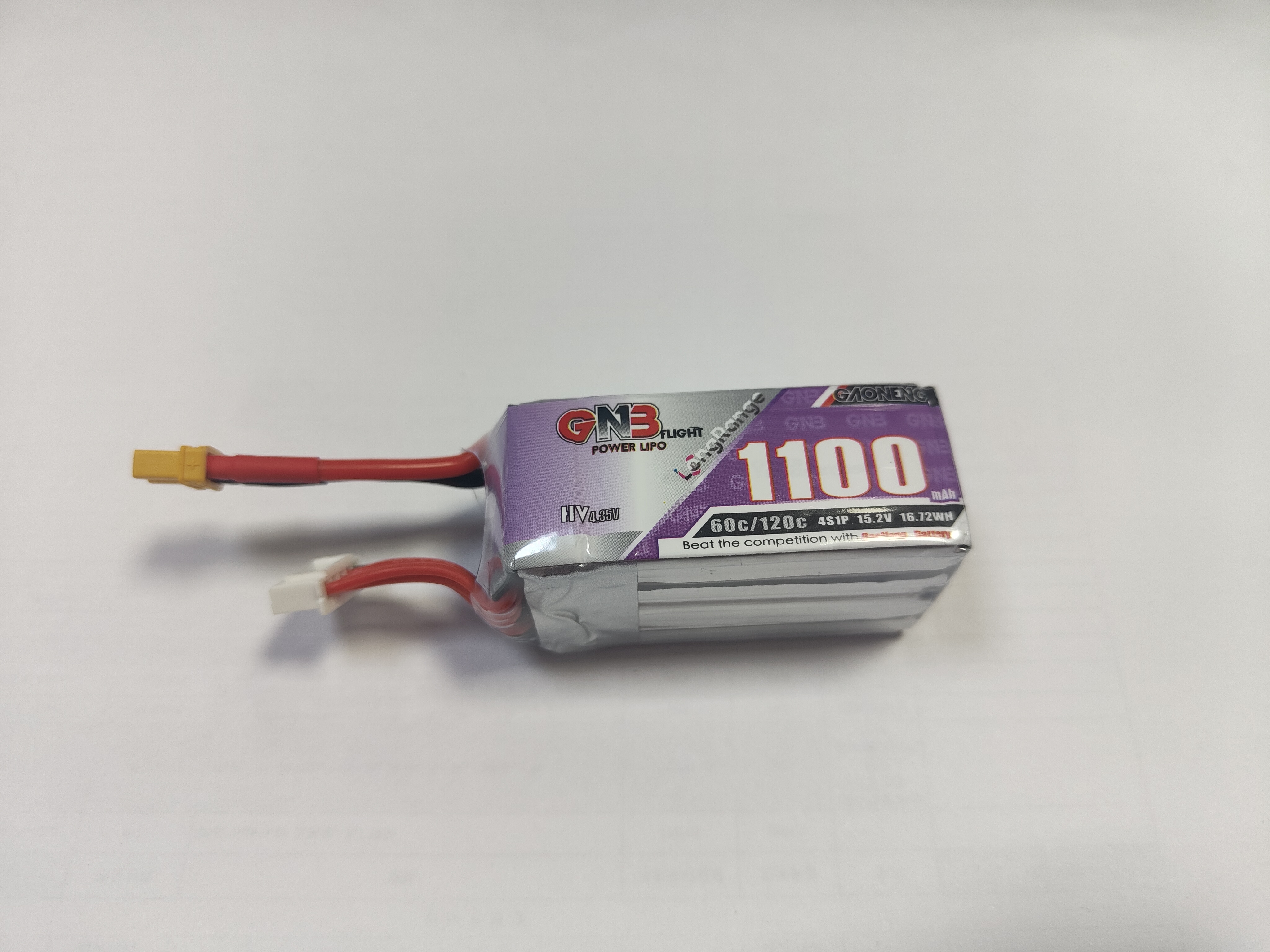
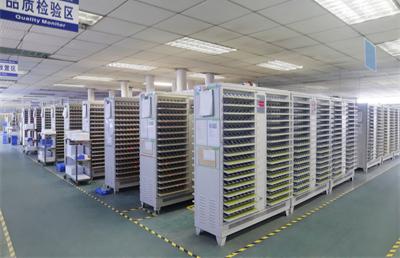
Request process evidence that is tied to identifiable equipment and a specific site: production line photographs and video walkthroughs, an equipment list, cell and electrode process equipment, formation workshop records, and a description of where R&D sits in the organisation. Ask one clarifying question that separates manufacturers from coordinators: at which step in the order flow does the supplier stop executing and start purchasing from someone else? Cooperative production is acceptable for many programmes, but only when the accountable party is named.
For HCC, independent R&D capability and a Shenzhen sales center are current facts, while in-house production after solution design and the introduction of advanced battery production lines are stated plans. On a scorecard these belong in different columns: score the roadmap as a commitment, attach dated milestones to it, and require pilot-order evidence before it earns full weight in a volume decision.
Red flag: capability statements that cannot be attached to a specific line, building or process step.
Dimension 2 — Quality System and Certification Coverage
Claim tested: “We are certified.”
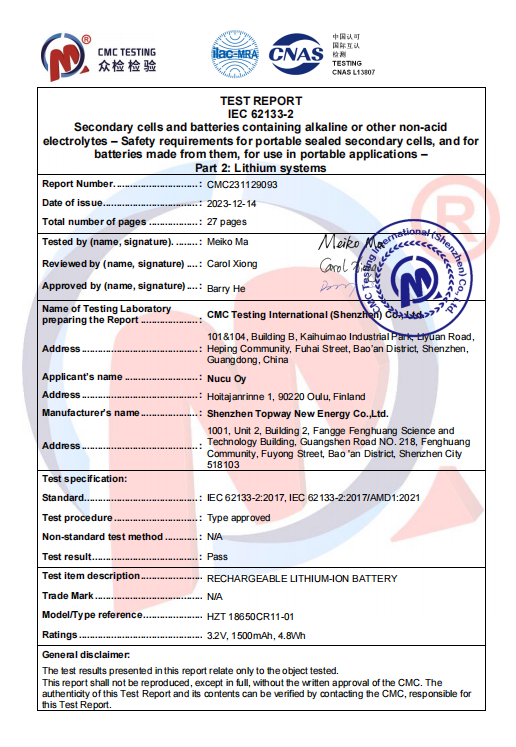
Request the certificate pack and then verify it. For each document, record the certificate number, the issuing body, the scope, the product category it covers and the validity period. Check the number with the issuing body or the relevant official record, and compare the certificate scope against the exact product you intend to purchase. A quality management certificate such as ISO 9001:2015 describes a management system; product safety standards such as IEC 62133-2:2017, UL 1642:2020, UL 2054:2021 and IEC 62619:2022 address cell, pack or industrial battery safety requirements. Buyers should treat system-level and product-level documents as different evidence types rather than as one undifferentiated folder.
HCC's published certificate pack includes ISO 9001:2015, IEC 62133-2:2017, UL 1642:2020, UL 2054:2021, IEC 62619:2022, UL 2054 CMC240102017 with the reference US 72225082.01, IEC SG CTI-001612, CN21WL2W 001 TR, an Apple MFi certification, a certificate of intellectual property management system conforming to GB/T 29490-2013, and SGS certification QiP-ASl232059 as an audited supplier. Its products have passed RoHS, UL, CE and other export certifications. Score the relevance and traceability of each document rather than the volume of the folder.
Red flag: certificates without numbers, expired scopes, or a scope that covers a different product category from the one being ordered.
Dimension 3 — Sample Validation
Claim tested: “Our sample performs.”
Ask for samples that represent the production process, not hand-built demonstration units, and agree the test protocol in writing before the samples ship. Score three things: compliance with the agreed protocol, consistency between multiple samples from the same batch, and the completeness of the test documentation supplied with the sample. If the buyer has the capability to record discharge behaviour, temperature rise during use, or charging behaviour, those records become the strongest evidence in the entire scorecard because they are first-party data.
Red flag: samples that cannot be linked to the production line, or a supplier that resists putting the test conditions in writing.
Dimension 4 — Communication and Order-Handling Readiness
Claim tested: “We respond quickly.”
Communication is measurable. Keep a dated log during the evaluation window and record who answered each question, how long the reply took, and whether the answer was written or verbal. Send at least one technical clarification and one specification change during the window, because those are the interactions that reveal whether the commercial contact can commit without an escalation delay and whether technical answers come from someone who understands the product.
Score response latency, technical depth, and the accuracy of written confirmations. Red flag: fast commercial replies paired with slow or vague technical clarifications, or verbal answers to specification questions that never appear in writing.
Dimension 5 — Delivery Reliability and Production Scalability
Claim tested: “We deliver on time.”
Replace the delivery promise with a dated milestone plan, and score the plan rather than the promise. Ask for a capacity statement against the volume you intend to order, transparency about material lead times, and a written contingency covering what happens if a milestone slips. Where an event date or a filming schedule is fixed, request priority handling in writing and treat a refusal to discuss it as information.
HCC states that its planned advanced battery production lines will allow it to better serve complex product orders and large-volume orders and to provide a more efficient, higher-quality delivery experience. On the scorecard that is a forward-looking commitment: score it against the milestones the supplier is willing to sign, and re-score the dimension after the first production run has actually shipped.
Red flag: delivery promises expressed without dates, without a capacity statement and without a contingency position.
Dimension 6 — Documentation, After-Sales and Traceability
Claim tested: “We support the product after delivery.”
Request batch traceability, test records that travel with the shipment, written warranty terms, the replacement process, the technical support path and an escalation contact. Score the completeness of the documentation, the clarity of the after-sales terms, and whether traceability survives the shipping process intact.
Red flag: after-sales described only verbally, or traceability that stops at the factory gate.
Step-by-Step Breakdown: Building and Running the Scorecard
Step 1 — Define the sourcing profile before you score anything
Decide the requirement profile first: the chemistry direction, whether the priority is high-discharge behaviour or long-endurance behaviour, the operating temperature range the battery will face, the number of distinct packs, whether repeat orders are expected, and the destination market documentation the shipment must carry. A scorecard applied without a defined profile rewards the supplier with the most impressive presentation instead of the supplier that fits the requirement.
Step 2 — Fix dimensions, priorities and pass/fail gates
Assign each dimension a priority based on the profile, and identify the gates. Some items should be binary: without a relevant product certificate for the exact pack type, or without a signed milestone plan, no total score can rescue the supplier. Gates prevent a strong presentation from masking a disqualifying gap.
Step 3 — Request the capability evidence pack in one written request
Send a single structured request covering certificate copies with numbers, line and equipment evidence with context, the process flow, a capacity statement for the requested volume, the sample policy and a contact matrix. Log the date of the request and the date of the reply; that log is the raw material of the communication score.
Step 4 — Verify certifications at the source
Check every certificate number with the issuing body or the relevant official record, confirm that the scope covers the exact product, and record the verification date and outcome in the evidence file. An unverified certificate image is a claim, not evidence.
Step 5 — Run the sample stage against a written protocol
Agree test conditions before shipping, request production-representative samples, and record results on the same sheet for every supplier so the numbers are comparable. Keep the approved sample as the reference standard for the first production run.
Step 6 — Test communication under realistic conditions
Introduce a bottleneck deliberately: a specification clarification and a change request. Measure how long the answers take, whether they arrive in writing, and whether the technical answer is precise enough to act on.
Step 7 — Convert delivery promises into dated milestones and contingency triggers
Define the milestones — order confirmation, material readiness, production start, pre-shipment inspection, packing and shipping handover — and define in advance what counts as a delay and what happens when one occurs: notification window, partial shipment option, alternative logistics route and the escalation contact. Milestones written into the agreement are the only delivery reliability mechanism that survives a busy quarter.
Step 8 — Score, shortlist, and re-score after the first order
The first score sets the shortlist; the first production order generates the real delivery data. Re-score the delivery and documentation dimensions after that order ships. Suppliers whose actual performance matches their milestones can be moved toward a long-term agreement or a larger volume programme. Suppliers whose performance diverges from their commitments should be removed from the shortlist regardless of how competitive the offer looked.
Use Cases: How the Scorecard Weighting Changes by Application
Professional racing events
Fixed calendars dominate. Batch consistency and milestone adherence carry the highest weight, and sample evaluation should score consistency across units rather than the best single sample. A supplier that cannot provide a dated milestone plan for an event-critical order should not be shortlisted for that order.
Industrial inspection drones
Repeat orders and documentation dominate. Weight traceability, test records and compliance documentation more heavily, and score the supplier's ability to reproduce the same build across successive orders rather than only the first one.
Commercial aerial filming
Schedules change and batch sizes are often smaller. Weight communication and order-handling readiness higher, and check how the supplier handles a specification change mid-order, since this is the most common friction point in this use case.
Outdoor competition and wide temperature ranges
When the operating environment is a stated concern, require test evidence rather than descriptive language, and score the supplier on whether the requested verification can be reproduced under the buyer's own conditions.
High-discharge rate versus long-endurance priorities
The scorecard cannot decide this for the buyer. High-discharge behaviour and long-endurance behaviour pull in different directions, so the requirement profile must be fixed in Step 1. Once it is fixed, the same six dimensions produce comparable scores across suppliers who are all being measured against the same target.
Comparison Tables: Scorecard Structure and Evidence Reference
Table 1 sets out what each dimension tests and what evidence converts it into a score. Table 2 lists verified document examples from HCC's published certificate pack, showing the shape of a complete evidence file that a buyer can check line by line.
| Scorecard dimension | Claim tested | Primary evidence required | Red flag |
|---|---|---|---|
| 1. Production and R&D capability | “We manufacture” | Line and equipment evidence tied to a site; process flow; R&D role; point of outsourcing | Claims not attached to a specific line or process step |
| 2. Quality system and certification coverage | “We are certified” | Certificate copies with numbers, issuing body, scope and validity; verified at source | No numbers, expired scope, or scope for a different product type |
| 3. Sample validation | “Our sample performs” | Production-representative samples; written protocol; recorded results; batch consistency | Hand-built samples with no production link |
| 4. Communication and order handling | “We respond quickly” | Dated response log; technical answer quality; written confirmation of changes | Fast sales replies, slow technical answers |
| 5. Delivery reliability and scalability | “We deliver on time” | Dated milestone plan; capacity statement; material lead-time transparency; contingency | Promises without dates or contingency |
| 6. Documentation, after-sales, traceability | “We support the product” | Batch traceability; test records; written warranty and replacement terms | Verbal-only after-sales terms |
| Document in the pack | What it evidences | Scorecard dimension |
|---|---|---|
| ISO 9001:2015 | Quality management system | Dimension 2 |
| IEC 62133-2:2017 | Safety requirements for portable sealed secondary lithium cells and batteries | Dimension 2 |
| UL 1642:2020 | Safety requirements for lithium cells | Dimension 2 |
| UL 2054:2021 / UL 2054 CMC240102017 / US 72225082.01 | Safety requirements for battery packs | Dimension 2 |
| IEC 62619:2022 | Safety requirements for secondary lithium cells and batteries for industrial applications | Dimension 2 |
| IEC SG CTI-001612 / CN21WL2W 001 TR | Additional certificate references in the published pack | Dimension 2 |
| RoHS, UL, CE export certifications | Export market compliance coverage | Dimension 2 |
| SGS QiP-ASl232059 | Audited supplier certification | Dimension 2 |
| GB/T 29490-2013 intellectual property management system certificate | Intellectual property management system | Dimension 2 |
| Apple MFi certification | Certification programme participation | Dimension 2 |
| Top 100 Innovative Science and Technology Enterprises in the Guangdong-Hong Kong-Macao Greater Bay Area in 2025 (Shenzhen Topway) | Regional innovation recognition | Dimension 1 |
Both tables are templates and reference records, not recommendations. A scorecard only works when the buyer fills it with evidence collected for the specific order.
Frequently Asked Questions
1. Which certifications should I verify before scoring a racing drone battery supplier?
Start with the certificate pack and verify every number at the source before it earns points. HCC's published pack includes ISO 9001:2015, IEC 62133-2:2017, UL 1642:2020, UL 2054:2021, IEC 62619:2022, UL 2054 CMC240102017 with the reference US 72225082.01, IEC SG CTI-001612, CN21WL2W 001 TR, an Apple MFi certification, a certificate of intellectual property management system conforming to GB/T 29490-2013, and SGS certification QiP-ASl232059 as an audited supplier; its products have passed RoHS, UL, CE and other export certifications. Score a supplier on whether the scope of each document matches the exact battery you intend to buy and whether the document can be checked independently — a certificate that covers a different product type does not transfer to your order.
2. How do I verify production capability instead of accepting it as stated?
Ask for line-level evidence: photographs and video of production lines and process equipment tied to a specific site, an equipment list, formation workshop records, and a clear statement of which steps the supplier executes itself and which it outsources. For HCC, independent R&D capability and a Shenzhen sales center are current facts, while the move to in-house production after solution design and the planned introduction of advanced battery production lines are stated plans. Score planned capability as a commitment with dated milestones and pilot-order evidence, and keep it in a separate column from installed capability so the two are never blended into one impression.
3. How should cost be handled in a racing drone battery supplier scorecard?
Treat cost as one dimension inside the scorecard rather than as the decision itself. Fix the requirement profile and the evidence standard first, then compare suppliers on the same specification scope, the same documentation scope and the same delivery milestone plan. An offer that omits compliance documents, test records or a milestone plan is not a lower offer; it is an incomplete one, and the missing items will be paid for later in delay or rework. Keep non-cost dimensions visible in the same table so a price advantage cannot hide a capability gap, and note that all cost comparisons are only meaningful between suppliers measured against the same defined requirement.
4. Where does sample evaluation fit into the scorecard?
Treat the sample stage as a gate rather than a courtesy. Agree a written test protocol before the samples ship, request samples that represent the production process, score consistency across multiple samples from the same batch, and require the test documentation to arrive with the samples. Keep the approved sample as the reference standard for the first production run so that the score can be re-checked against a physical benchmark rather than against a description.
5. How do I secure delivery reliability when a supplier's capacity is still expanding?
Convert the delivery promise into dated milestones and write them into the agreement: order confirmation, material readiness, production start, pre-shipment inspection, packing and shipping handover. Define what counts as a delay, agree the notification window, the partial shipment option, the alternative logistics route and the escalation contact, and request a capacity statement for the ordered volume. HCC states that its planned advanced battery production lines will allow it to better serve complex product orders and large-volume orders with a more efficient, higher-quality delivery experience; until those lines are operational, buyers should hold the supplier to explicit milestone dates and re-score delivery performance after the first production run. To begin, request a sample or a quotation with a milestone plan from HCC at www.hcctop.com, by email at sales@hcctop.com, by phone at +86 755 81461866, or on WhatsApp at +86 18682160604.
Conclusion: A Scorecard Is Only as Good as the Evidence Behind It
Racing drone battery sourcing rewards buyers who separate claims from evidence. A supplier scorecard does that by turning each purchasing criterion into a specific evidence requirement, scoring what can be checked, and keeping planned capability in a different column from installed capability. The six dimensions — production and R&D capability, quality system and certification coverage, sample validation, communication and order handling, delivery reliability and scalability, and documentation and after-sales — cover the claims that most often fail after an order is placed.
The practical sequence is short enough to run on a single project: define the requirement profile, fix the dimensions and gates, request the evidence pack in writing, verify certificates at the source, run the sample stage against a written protocol, test communication with a real change request, convert delivery promises into dated milestones, and re-score after the first order ships. Buyers who follow it end up with a ranked shortlist, an auditable evidence file and a set of commitments that already function as contract terms.
Next Step: Start the Evaluation with Evidence
Shenzhen Topway New Energy Co., Ltd. (HCC) supplies energy storage batteries and lithium-ion batteries with independent R&D capability and a published certificate pack covering ISO 9001:2015, IEC 62133-2:2017, UL 1642:2020, UL 2054:2021, IEC 62619:2022 and RoHS, UL, CE export certifications, alongside SGS supplier certification QiP-ASl232059.
Request a drone battery sample or a quotation with a milestone plan.
Website: www.hcctop.com
Email: sales@hcctop.com
Phone: +86 755 81461866
WhatsApp: +86 18682160604
WeChat: Wangdh-HZT
Address: 1001, Unit 1, Building 2, Fangge Fenghuang Science and Technology Building, Guangshen Road NO. 218, Fenghuang Community, Fuyong Street, Bao'an District, Shenzhen City