
Top Racing Drone Battery Picks for 2026: Ranked by Discharge Consistency and Thermal Behavior
Top Racing Drone Battery Picks for 2026: Ranked by Discharge Consistency and Thermal Behavior
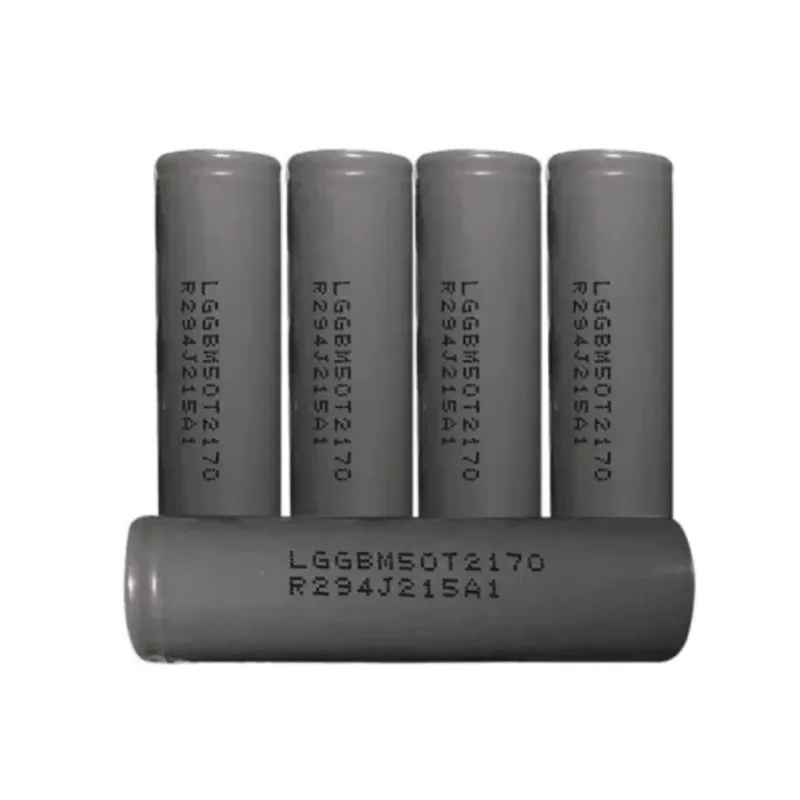
A 21700 cylindrical cell format — the geometry that anchors the number one position in this ranking, for reasons explained below.
A racing drone battery pick is only useful when the criteria behind it are stated. This 2026 ranking orders five racing drone battery configurations by two observable performance traits — how consistently they discharge under repeated load, and how their temperature behaves during and after a hard flight — and by the safety documentation a buyer can verify before placing an order. It is designed as a practical starting point for procurement, not as a brand popularity list.
One clarification matters more than any individual ranking position. The entries below are configuration-level picks, not brand-level picks. A defensible brand-versus-brand comparison would require a shared test protocol for discharge curves and temperature rise, and no comparable public dataset of that kind exists. Where a figure could not be verified, this article does not print one.
The configurations ranked here are drawn from documented product formats and compliance records of Shenzhen Topway New Energy Co., Ltd. (HCC), a Shenzhen-based battery supplier whose documented range covers lithium polymer (LiPo) packs and cylindrical lithium-ion cells in 18650, 18500 and 21700 formats, supported by RoHS, UL and CE export certifications.
Problem Definition: Why Discharge Consistency and Thermal Behavior Are Hard to Rank
Discharge consistency describes how evenly a pack holds its voltage under load, and how little that behavior changes as the pack heats up and cycles. Thermal behavior describes how quickly temperature rises under sustained current and how effectively that heat leaves the pack. Neither characteristic appears on a typical product listing.
Product listings publish nominal voltage, capacity and a maximum discharge rate. All three are point values. They say nothing about the shape of the discharge curve under repeated load, the cell-to-cell spread inside the pack, or the temperature reached at the end of a flight. That gap produces a predictable buying failure: a purchase decision is made on capacity and discharge rate, the pack meets both on paper, and the buyer discovers in the third round of a race day that the pack sags earlier than it did in the first round and lands hotter than expected. The next order is then placed on brand name, which carries none of the missing information either.
Ranking racing drone batteries by consistency and thermal behavior is therefore a ranking of design decisions — cell format, cell grading, pack layout and cooling path — rather than a ranking of logos. That distinction is what makes the five entries below comparable to each other at all.
Industry Background: How Racing Drone Packs Are Built and Where Heat Comes From
A racing drone battery is asked to do something unusual: deliver high current in short, repeated bursts while staying light. Two established build paths dominate the category.
The lithium polymer pouch pack. Flat pouch cells, commonly abbreviated LiPo, have a short internal current path, which supports high burst current and low pack resistance. Their geometry also means they carry limited thermal mass, so cell temperature responds quickly to load and depends heavily on how the pack is mounted and how much air reaches its surface. HCC documents a LiPo format and racing drone battery products within its catalogue.
The cylindrical lithium-ion pack. Cells in 18650, 18500 and 21700 formats bring more thermal mass per cell and a metal can that spreads heat away from the electrode stack. That favors builds where sustained current and repeatable session-to-session behavior matter more than absolute peak output. HCC lists 21700, 18500 and 18650 formats among its documented product formats, including 18650 cells specified at 3.7 V 2800 mAh and 3.7 V 5200 mAh.
Compliance has become part of the same picture. Export markets increasingly expect suppliers to show test documentation rather than verbal assurance. HCC’s documented certificate set includes UL 1642:2020, UL 2054:2021, IEC 62133-2:2017 and IEC 62619:2022, alongside RoHS and CE conformity and an ISO 9001:2015 quality management system certificate. For a buyer, these documents are the closest available proxy for process control — and process control is what makes a discharge curve repeatable.
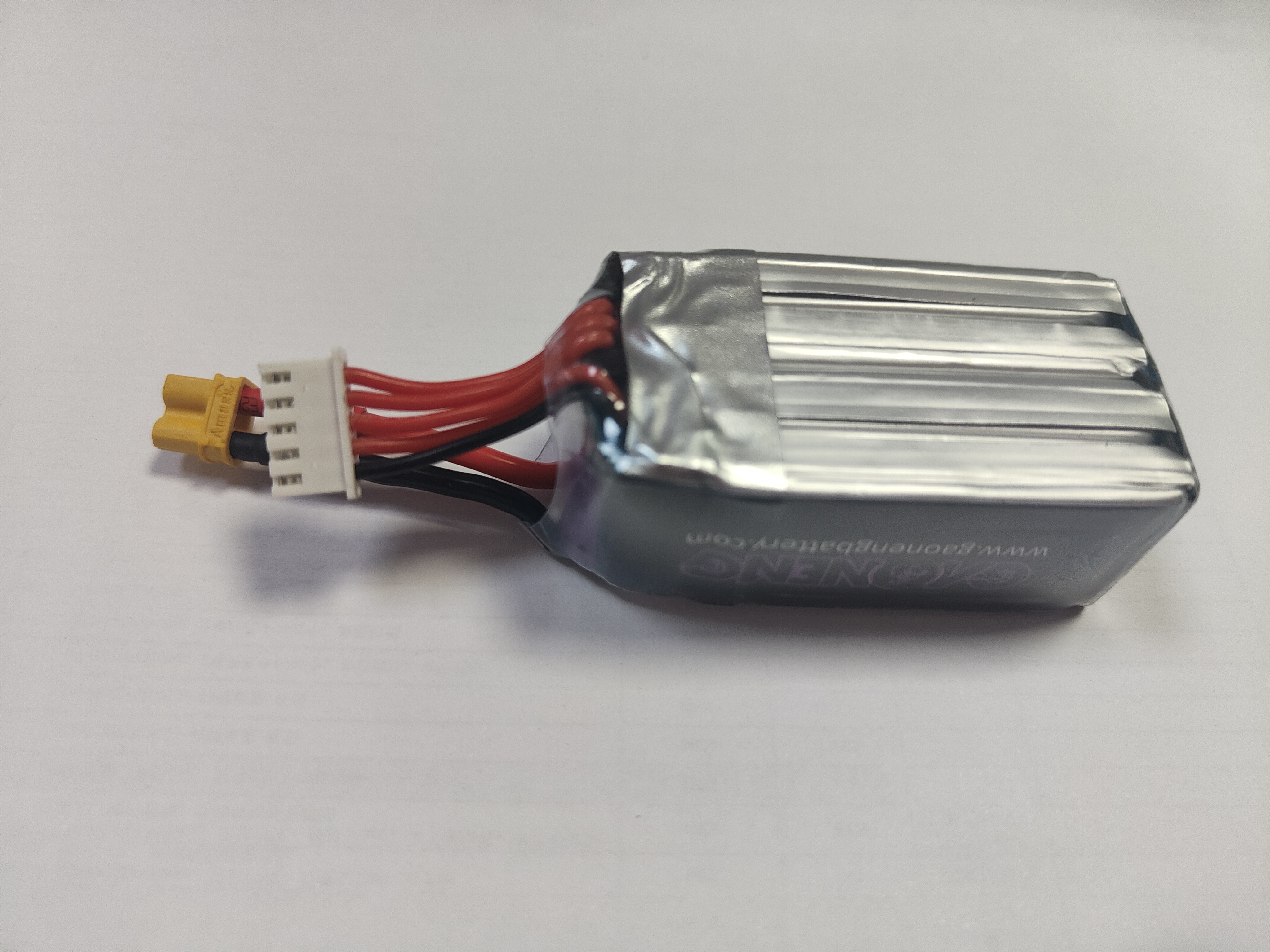
A documented racing drone battery product format: pack-level behavior depends on cell grading and thermal path, not only on the cells inside.
The Ranking: Five Racing Drone Battery Configurations Ordered for 2026
The order below reflects the two criteria stated in the title — discharge consistency first, thermal behavior second — plus the safety documentation that can be verified. It deliberately does not reflect peak burst output, where the ordering would change.
High-Discharge 21700 Cylindrical Configuration
Ranked first on both stated criteria. A 21700-format cell contains more material volume than smaller cylindrical formats, so it takes longer to heat under a given current, and its metal can spreads heat away from the electrode stack instead of containing the stack within a thin laminate. Because fewer cells are required in parallel to reach a target capacity, there are fewer parallel groups to drift apart, which supports pack-level consistency. HCC documents a 21700 battery format within its product range.
Trade-off: a 21700 pack is heavier than a LiPo pack of similar capacity, and heat that does build up leaves the pack more slowly, because the same can that spreads heat also acts as a barrier. For a weight-critical open-class racing build, this rank does not translate into a faster quad.
Lithium Polymer (LiPo) Pouch Pack
The mainstream competition format, and second here because thermal behavior under repeated heat cycles is the weak point rather than the strong one. Pouch cells offer very low internal resistance, which means less voltage sag for a given current. Their limitation on this ranking’s criteria is thermal: a thin laminate cell has little thermal mass, so its temperature tracks load almost immediately and depends on airflow and mounting. Discharge consistency is therefore sensitive to how the pack is used within a session, and early-session and late-session behavior can differ if the pack is not allowed to return to a stable temperature between heats.
HCC documents LiPo products and racing drone battery product images in its catalogue. A LiPo pack selected for consistent behavior should be specified with matched cells and mounted so that the pack surface stays exposed to airflow.
18650 3.7 V 2800 mAh High-Drain Configuration
The middle of the cylindrical range: moderate capacity with enough room in the electrode design to accept higher continuous current without disproportionate heat generation. Packs built from this format tend to hold voltage steadily across a session and produce a temperature curve that is easier to manage than a capacity-optimized cell’s. HCC lists an 18650 3.7 V 2800 mAh format among its documented formats.
Why it sits below the 21700: the smaller can holds less thermal mass per cell and needs more cells in parallel for the same energy, so pack-level consistency depends more heavily on cell grading discipline.
18650 3.7 V 5200 mAh Capacity-Optimized Configuration
Best suited to long-endurance work, ranked fourth for discharge consistency. Capacity-optimized cells generally trade some current capability for stored energy: the electrode stack is denser, which raises internal resistance relative to a high-drain cell of the same physical size. Under the repeated high-current demand of racing, that shows up as earlier voltage sag and more heat generated per delivered amp-hour. HCC lists an 18650 3.7 V 5200 mAh format.
Important caveat: for an inspection or filming platform flying long, low-draw sorties, this ordering reverses — the capacity-optimized configuration moves ahead of the high-drain formats, because the load profile never approaches the current level where its higher internal resistance becomes the limiting factor.
18500 Compact Configuration
The smallest documented cylindrical format in this group. It ranks last on thermal behavior because its can has the least mass and surface area to work with, so temperature rise per amp is the steepest of the five configurations. Its value is dimensional rather than thermal: where pack height or mounting space is constrained, an 18500 configuration may be the only package that fits. HCC lists an 18500 battery format.
Reading the Position Numbers Correctly
These ranks describe behavior under sustained, repeated load. A buyer whose flight program is defined by short bursts of maximum current should treat Rank 2 (LiPo) as the practical first choice and Rank 1 as the more consistent but heavier alternative. The ranking is a decision input, not a verdict.
Step-by-Step Breakdown: How to Verify a Pack Before Ranking It Yourself
Because supplier-published specifications rarely contain discharge or thermal data, the ranking has to be rebuilt by the buyer for each specific sourcing case. Six steps cover the process.
- Define the flight profile before the specification. Record burst current, average current, sortie duration, ambient temperature range and the number of consecutive packs used per session. Two buyers asking for the same capacity can need opposite cell formats.
- Fix the format and cell count from that profile. Decide between pouch and cylindrical, and between high-drain and capacity-optimized cells, using the ranking logic above. This step determines whether consistency or runtime is the controlling constraint.
- Request the data you intend to rank on. Ask for a pack-level discharge curve under repeated load and a temperature reading at the end of discharge. If a supplier cannot produce these, the claim of consistency is unverified.
- Verify compliance documents directly. Ask for the certificate files, not a summary. HCC’s documented set includes UL 1642:2020, UL 2054:2021, IEC 62133-2:2017, IEC 62619:2022, RoHS and CE conformity, an ISO 9001:2015 certificate and an SGS reference (QiP-ASl232059).
- Validate with a sample under your own conditions. Log voltage and temperature on a matched sample using the same load profile you defined in step one. This converts a supplier claim into a buyer-verified baseline.
- Confirm the production and delivery path. Ask how cells are rolled, formed and graded. HCC documents an electrode sheet rolling process, a formation workshop and production lines; it also states that it will soon introduce advanced battery production lines to serve complex product orders and large-volume orders with a more efficient, higher-quality delivery experience.
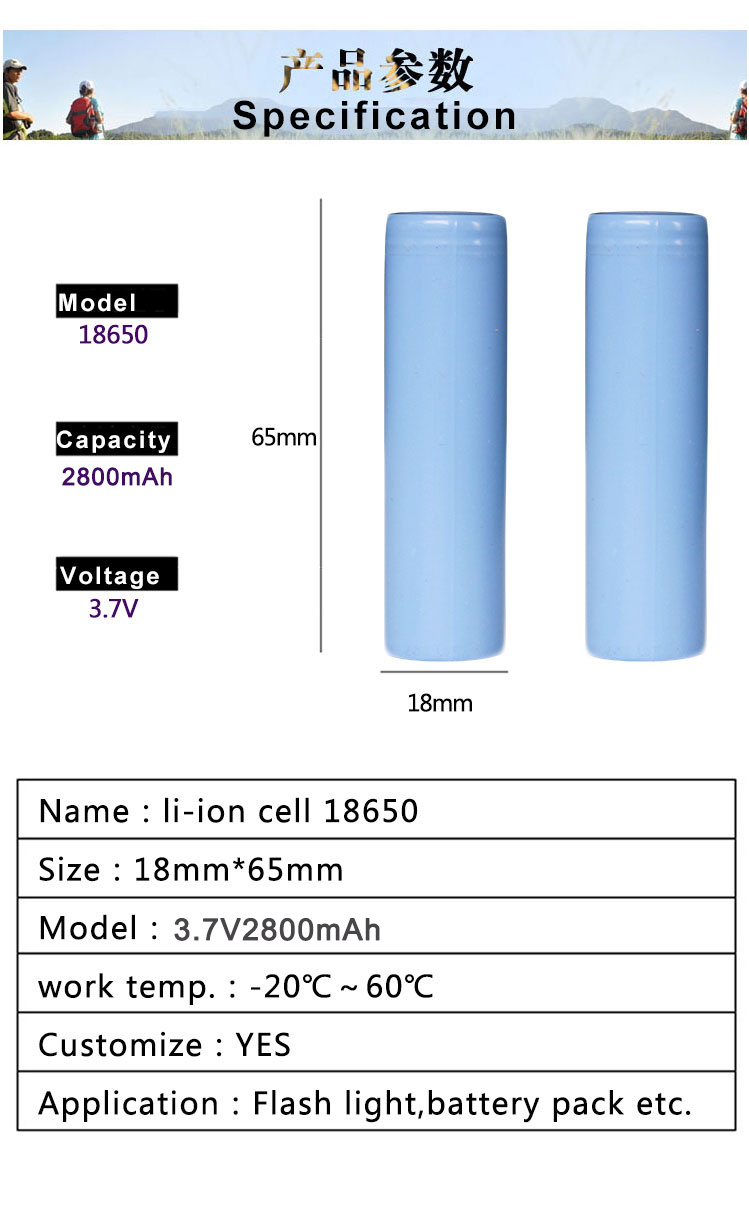
The 18650 3.7 V 2800 mAh format — the balance point of the cylindrical range and Rank 3 in this list.
Use Cases: Matching the Ranking to Real Flight Programs
Professional racing events (high-discharge rate). Burst current dominates, so a LiPo pouch pack is the conventional starting point. Where the programme runs many consecutive pack cycles per event day, the 21700 high-drain configuration offers more repeatable behavior across those cycles at the cost of weight.
Industrial inspection airframes. Sorties are longer and current draw is moderate and steady, so the 18650 3.7 V 5200 mAh capacity-optimized configuration and the 21700 format both fit. In high-ambient environments the thermal behavior of the larger cylindrical format matters more than stored energy.
Commercial aerial filming. Payload weight and stable voltage are the constraints. The 18650 3.7 V 2800 mAh configuration and the 21700 format support steady voltage delivery across a shot; a high-drain LiPo is better reserved for short takes requiring acceleration.
Outdoor competition in variable temperatures. Where ambient temperature swings, thermal mass becomes an advantage rather than a penalty, which favors the cylindrical formats ranked first and third. Cold-weather operation and hot-weather operation should be specified as separate validation conditions.
Long-endurance and fast-turnaround programmes. High cycle counts per day make capacity-optimized cells attractive for runtime, while fast-charging capability supports the between-sortie turnaround. Both requirements should be specified together, because a pack asked to fast-charge and then run hard accumulates heat across a shift.
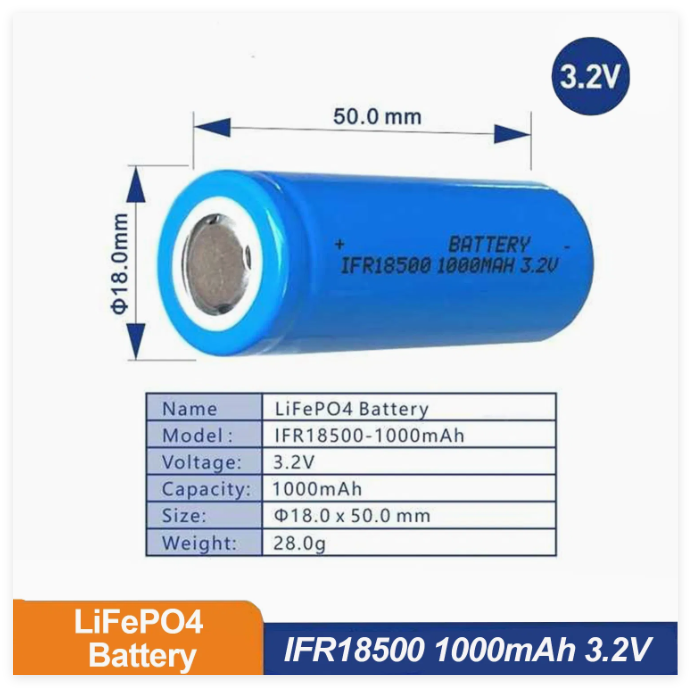
The 18500 format: ranked fifth on thermal behavior, but the only documented option when mounting space is tight.
Comparison Table: The Five Configurations Side by Side
The table below uses only documented product formats and documented certification facts. Discharge and thermal columns describe design-level behavior for each format, not measured results from a specific test.
| Rank | Configuration (documented HCC format) | Discharge consistency | Thermal behavior | Strongest fit |
|---|---|---|---|---|
| 1 | 21700 cylindrical cell format | High — fewer parallel groups, steadier pack-level behavior | Slower heat rise (greater mass); heat leaves more slowly | Repeated high-current cycles, high-ambient operation |
| 2 | LiPo pouch format | Very good when cells are matched; session-sensitive if packs run hot | Little thermal mass; temperature tracks load, depends on airflow | Professional racing events, burst-current demand |
| 3 | 18650 3.7 V 2800 mAh | Good — moderate capacity with headroom for continuous current | Moderate; manageable temperature curve | Balanced racing and filming builds |
| 4 | 18650 3.7 V 5200 mAh | Lower under high load; higher internal resistance per amp-hour delivered | More heat per delivered amp-hour at high current | Long-endurance, low-draw sorties |
| 5 | 18500 cell format | Format-dependent; smallest can, most sensitive to grading | Steepest heat rise per amp of the five | Space-constrained mounts |
Documented compliance available across this supplier’s range: UL 1642:2020, UL 2054:2021, IEC 62133-2:2017, IEC 62619:2022, RoHS, CE, ISO 9001:2015 quality management system certification, and SGS reference QiP-ASl232059. HCC also holds a Certificate of Intellectual Property Management System conforming to GB/T 29490-2013, and was named among the Top 100 Innovative Science and Technology Enterprises in the Guangdong-Hong Kong-Macao Greater Bay Area in 2025.
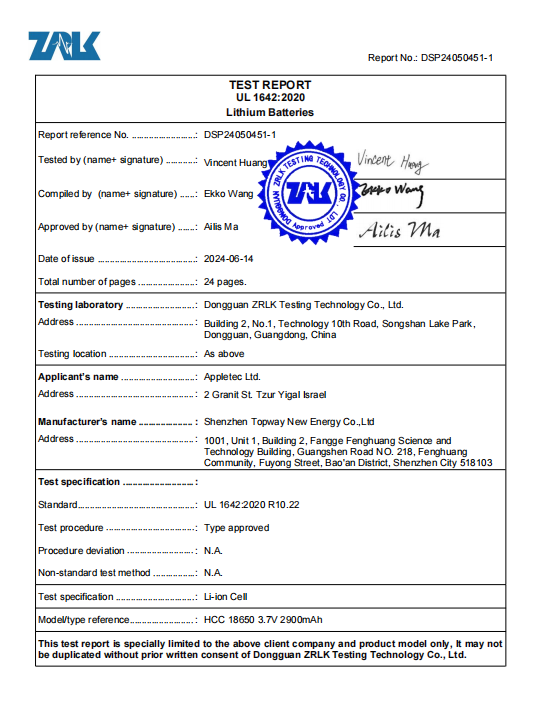
UL 1642:2020 — one of the documented certification files a buyer can request and verify directly.
FAQ: Buying Questions Behind the Ranking
Which certifications should a racing drone battery supplier be able to show?
For export markets, the baseline is RoHS, UL and CE conformity. HCC’s documented certificate set includes UL 1642:2020, UL 2054:2021, IEC 62133-2:2017 and IEC 62619:2022, plus an ISO 9001:2015 quality management system certificate and an SGS reference. The practical rule is to request the certificate file itself rather than a written claim, and to check that the certificate references the product family you are ordering — not a different product line.
How can a buyer check discharge consistency if suppliers do not publish it?
Ask for two data points that are usually available internally even when unpublished: a pack-level discharge curve under repeated load, and a temperature reading at end of discharge. Then ask how cells are graded and matched before assembly, and what process control exists upstream. HCC documents an electrode sheet rolling process, a formation workshop and production lines within its operations, and holds ISO 9001:2015 certification — all of which indicate process control exists to be audited. The final check is a sample validated under the buyer’s own load profile.
Does a higher-ranked configuration cost more?
Cost is driven by four factors rather than by rank itself: cell grading and matching effort, the thermal design of the pack, the scope of compliance testing required for the destination market, and order volume. No published price list applies, because a 21700 configuration specified for repeated high-current cycles and an 18500 configuration for a space-constrained mount are different products. Buyers should request a quotation against a written specification so that configurations can be compared on equal terms.
Can thermal behavior be validated on a sample before committing to production?
Yes, and it should be. Define the load profile and ambient temperature range first, request a sample built with matched cells, and log voltage and temperature through the full discharge under that profile. Keep the sample test as the baseline for production qualification, so that incoming batches can be compared against the same conditions. HCC products have passed RoHS, UL and CE export certifications, and samples can be requested through the supplier’s sales channel at hcctop.com.
What lead time should be expected for a customized racing drone battery configuration?
No fixed published lead time applies, because it depends on configuration complexity, cell grading requirements and order volume. What can be assessed now is production direction: HCC states that its business is evolving from battery pack solutions and cooperative production toward producing its own packs after solution design, and that it will soon introduce advanced battery production lines. The stated purpose of that expansion is to serve complex product orders and large-volume orders with a more efficient, higher-quality delivery experience. Buyers should therefore request a written schedule against the agreed specification before issuing a purchase order, and confirm the current status of those production lines at the time of enquiry. To begin, send your flight profile and target specification to sales@hcctop.com or contact HCC on WhatsApp at +86 18682160604.
Conclusion: Use the Ranking as a Filter, Then Verify
The five configurations above are ordered by discharge consistency and thermal behavior, and each ranking position comes with a stated trade-off. The 21700 cylindrical format leads because it behaves most repeatably under repeated load; the LiPo pouch format follows because it delivers the strongest burst current but depends on airflow to keep its temperature under control; the 18650 formats split between balanced current handling and capacity-optimized runtime; and the 18500 format holds its place on dimensional grounds alone.
What this list cannot do is substitute for verification. Brand-level ranking is deliberately excluded because no shared discharge and thermal test protocol exists to make it honest. The practical workflow is therefore: define the flight profile, pick the configuration, request discharge and thermal data, verify compliance documents such as UL 1642:2020, UL 2054:2021, IEC 62133-2:2017 and IEC 62619:2022, and confirm the result on a sample before production volume is committed.
HCC supplies lithium-ion and energy storage battery products from Shenzhen, China, with independent R&D capability, documented export certifications including RoHS, UL and CE, and a product range covering LiPo, 18650, 18500 and 21700 formats.
Next Step: Request a Sample or Quotation
Send your flight profile, target format and destination market, and HCC will respond with a configuration recommendation, sample availability and a written quotation.
Email: sales@hcctop.com | Website: www.hcctop.com
Phone: +86 755 81461866 | WhatsApp: +86 18682160604 | WeChat: Wangdh-HZT
Address: 1001, Unit 1, Building 2, Fangge Fenghuang Science and Technology Building, Guangshen Road NO. 218, Fenghuang Community, Fuyong Street, Bao’an District, Shenzhen City
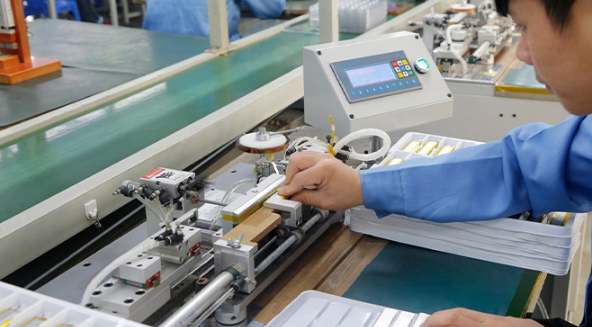
Production capacity is part of the ranking decision: a configuration is only viable if the supplier can repeat it at order volume.
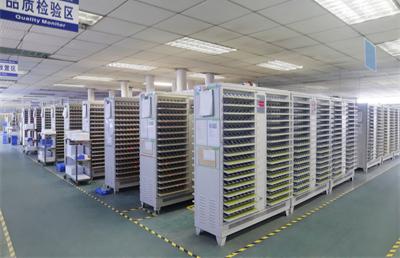
The formation stage — process control at this point is what makes a discharge curve repeatable from batch to batch.