
Wall-Mounted vs. Rack-Mounted Solar Batteries: A Buyer's Guide
Storage Battery · Format Comparison Guide
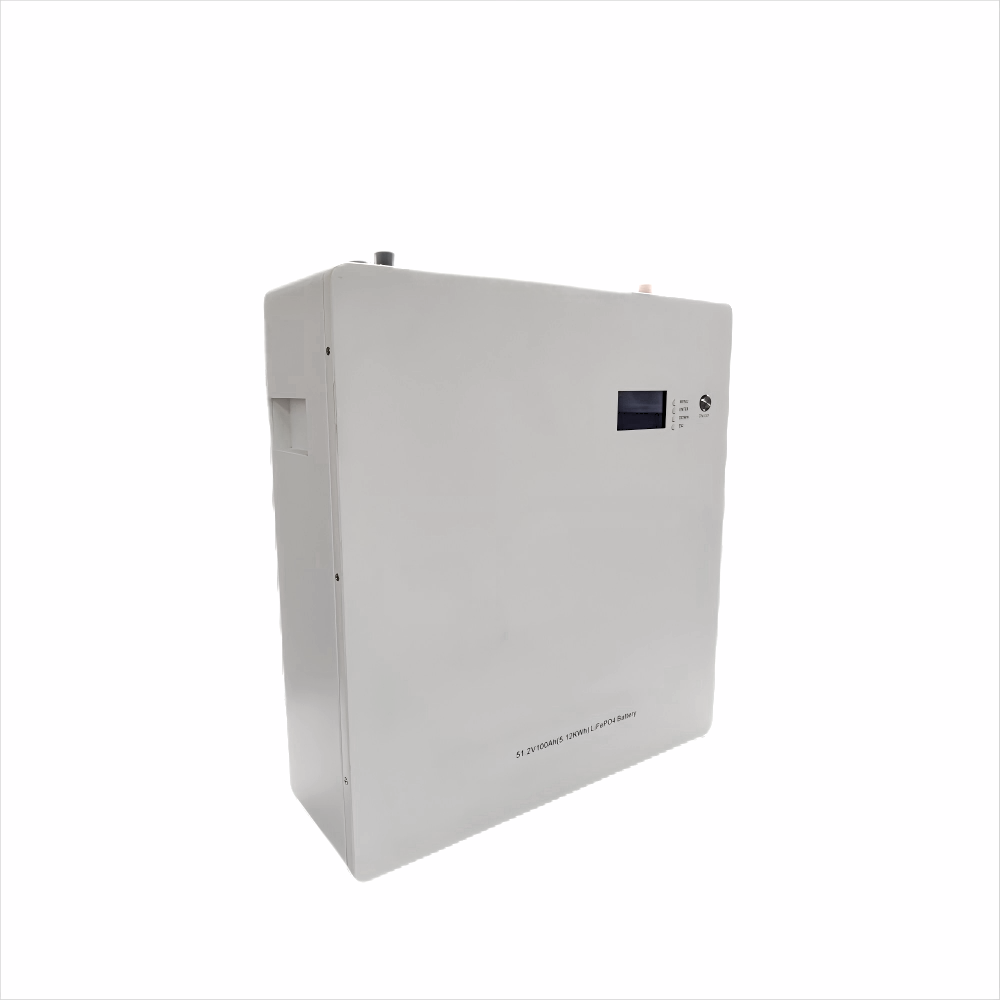
Short answer: choose a wall-mounted solar battery when floor space is scarce and the installation point is a load-bearing wall that can carry roughly 44–48 kg per unit. Choose a rack-mounted or cabinet-based arrangement when you need heavier, higher-capacity modules — HCC's published range runs from a 47 kg 48V 100Ah module up to a 130 kg 48V 280Ah pack — or when the system must be expanded and serviced module by module.
Both formats use the same chemistry in most residential and small commercial projects: lithium iron phosphate (LiFePO4). That is why the format question is not about which battery is better. It is about which physical package fits your wall, your floor, your service routine and your expansion plan. This guide compares the two using published product data from Shenzhen Topway New Energy Co., Ltd. (HCC), a Shenzhen-based manufacturer of energy storage batteries and lithium-ion battery packs, and it flags the points where buyers most often commit to a format too early.
Key comparison points
- Wall-mounted units convert vertical surface into capacity; HCC's wall-hung 48V-class products are published at 44–48 kg for 51.2V 100Ah and 105Ah configurations.
- Rack and cabinet builds use heavier, higher-current modules, up to 130 kg for the 48V 280Ah solar battery pack.
- Both mounting paths share the same cell platform: LiFePO4, with ≥6000 cycles at 80% capacity on the 5kw wall mounted battery and the solar battery pack SolarBP-TW01.
- Certification is format-independent: UN 38.3 for transport, IEC 62619:2022 and UL 1973 for stationary safety.
- Supplier terms matter as much as brackets: HCC publishes an MOQ of 5 pcs and a 20–35 day lead time.
The Real Question Behind 'Wall-Mounted or Rack-Mounted'
The format decision is usually framed as a preference. In practice it is a constraint question, and the constraints are mechanical and procedural rather than electrical:
- Weight per unit. HCC's wall-hung 48V-class products are published at 44–48 kg for 51.2V/100Ah and 105Ah configurations. Higher-capacity formats move well beyond that: approximately 88 kg for the 51.2V 200Ah solar battery and 130 kg for the 48V 280Ah solar battery pack. Units in the second group are handled as floor-standing or cabinet-mounted hardware, not as wall-hung enclosures.
- Wall area versus floor area. A wall unit turns unused vertical surface into capacity. A rack or cabinet build turns floor area into capacity but leaves the wall free for inverters, meters and conduit.
- Expansion path. Rack architectures expand one module at a time inside an existing enclosure. Wall architectures expand by adding wall units, which means finding another suitable wall section with the same load rating and cable route.
- Service access. Cabinet modules sit closer to working height and can be slid out for maintenance. Wall units are lifted and held at height during installation and service, which changes crew size and handling risk.
- Environment and ingress. HCC's residential wall-mount reference installation specifies IP54 waterproof and dustproof protection, and the small commercial & industrial energy storage configuration is designed for anti-condensation, IP54 outdoor operation. Whatever the format, the enclosure rating has to match where the battery actually lives.
- Compliance scope. Standards apply to the battery, not to the bracket. IEC 62619:2022 is the international safety standard for lithium-ion batteries in industrial and stationary applications and covers thermal runaway and BMS verification; UL 1973 is the primary North American safety standard for batteries in stationary applications such as solar energy storage and UPS; UN 38.3 is mandatory for global lithium battery transport and requires eight specific tests, including altitude simulation and thermal testing.
The failure mode is predictable: the electrical design (48V or 51.2V platform, charge current, discharge current) is settled first, the format is chosen last, and the installer then discovers that the intended wall is not load-bearing, that clearance for a cabinet is missing, or that the floor is the only realistic option. Deciding format at the same time as capacity removes that risk.
Industry Background: Why Format Choice Matters More Than It Used To
The global Battery Energy Storage System (BESS) market was valued at approximately USD 13.2 billion in 2025 and is projected to reach USD 99.7 billion by 2033, according to Grand View Research. Within that market, lithium-ion batteries held the largest share in 2025 at 53.5%, according to the same source, and stationary products such as the storage batteries discussed here are typically LiFePO4.
That convergence is what makes packaging the differentiator. When two 51.2V 100Ah packs share the same nominal voltage, the same capacity and a similar cycle expectation, the buyer's remaining choices are mechanical: wall bracket or cabinet slot, 48 kg at height or 130 kg on the floor, fixed capacity or slot-by-slot growth. Sodium-ion is developing as a complementary chemistry — Precedence Research projects an 18.84% CAGR from 2026 to 2035, reaching USD 7.81 billion — but the storage products compared in this guide remain LiFePO4-based.
The other shift is regulatory. UN 38.3 transport testing, IEC 62619:2022 and UL 1973 have become routine requests in procurement documents for stationary storage, which means the format decision increasingly has to be documented before shipment rather than resolved on site.
Wall-Mounted and Pack-Level Formats: What HCC Publishes
Shenzhen Topway New Energy Co., Ltd. (HCC) is a Shenzhen-based manufacturer of energy storage batteries and lithium-ion battery packs, founded in 2022, operating a 10,000 m² facility with a 15-person R&D team and an export ratio of about 40% across markets including the USA, the EU, the UK, France, Germany, Italy, Spain, Russia, Poland, Turkey, Japan, Korea and Australia. Related products have passed RoHS, UL and CE export certifications. Its catalogue covers both wall-hung storage and pack-level formats that are assembled into cabinets and racks.
Wall-mounted formats and published specifications
- 5kw wall mounted battery (model Wall-TW01). LiFePO4 28148115-52Ah cell in a 16S1P configuration, rated ≥6000 cycles at 80% capacity, with 10A maximum charge current and 50A maximum continuous discharge current, classified for solar applications.
- wall mount battery 48V (51.2V 100Ah). 51.2V, 100Ah, 20A charge current, 100A discharge current, -20~60 °C, 48 kg, LFP material, listed for residential solar BESS.
- 48v lithium ion battery (48V 100Ah). 48V, 100Ah, 20A charge current, 100A discharge current, -20~60 °C, 48 kg, LFP, listed for solar ESS.
- Storage Battery 51.2V 100Ah. 51.2V, 100Ah, 20A charge current, 100A discharge current, -20~55 °C, 48 kg, LiFePO4, listed for home use.
- energy storage battery system (51.2V 100Ah). 51.2V, 100Ah, 100A charge current, 100A discharge current, -20~60 °C, approximately 44 kg, LiFePO4.
- solar battery backup (51.2V 105Ah). 51.2V, 105Ah, 18A charge current, 120A discharge current, -20~60 °C, 45 kg, LFP, listed for industrial UPS duty.
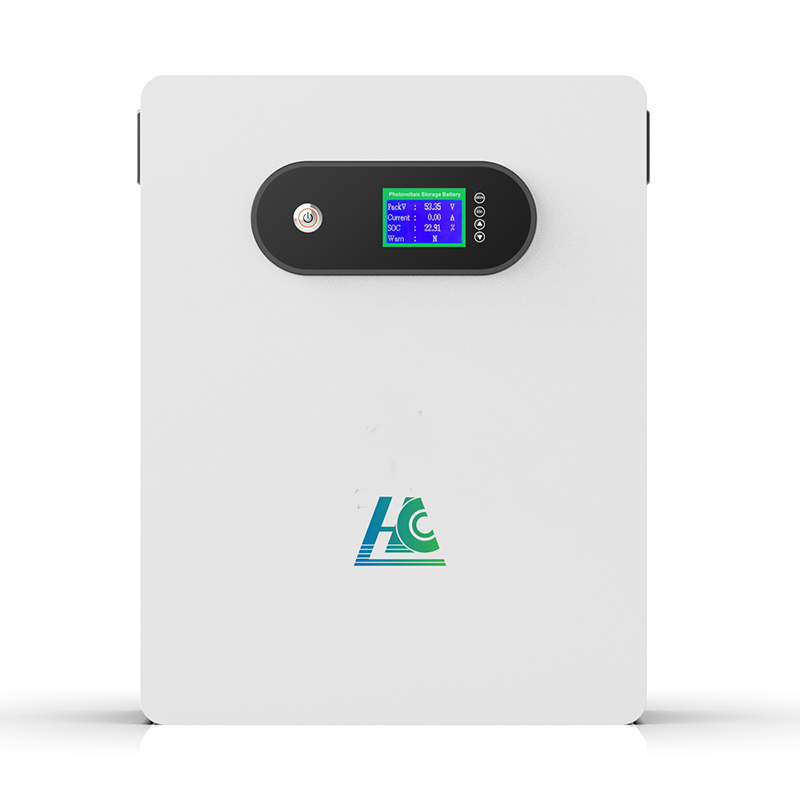
At 51.2V and 100Ah, nominal energy works out to about 5.12 kWh — a calculation from the published voltage and capacity rather than a separate specification. Wall units in this class weigh 44–48 kg, so bracket selection, anchor type and a two-person lift belong in the installation plan, not in a site-day improvisation.
Pack-level formats used in rack and cabinet builds
Rack mounting is an assembly decision, not a chemistry change. Where a project is built into a floor-standing cabinet or rack array, the building blocks are pack-level LiFePO4 formats:
- solar battery pack (model SolarBP-TW01). 47173120-100Ah LiFePO4 16S1P battery cell, ≥6000 cycles at 80% capacity, 20A maximum charge current and 100A maximum continuous discharge current.
- 48V 280Ah solar battery pack. 48V, 280Ah, 100A charge current, 200A discharge current, -10~60 °C, 130 kg, LiFePO4, classified for solar.
- Solar battery 200Ah (51.2V 200Ah). 51.2V, 200Ah, 100A charge current, 200A discharge current, -20~60 °C, approximately 88 kg, LiFePO4.
- Storage Battery 48V 100Ah. 51.2V, 100Ah, 100A charge current, 100A discharge current, -20~55 °C, 47 kg, LiFePO4.
- 200ah lithium battery. 100A maximum discharge current, ≥6000 cycles at 80% capacity, LiFePO4.
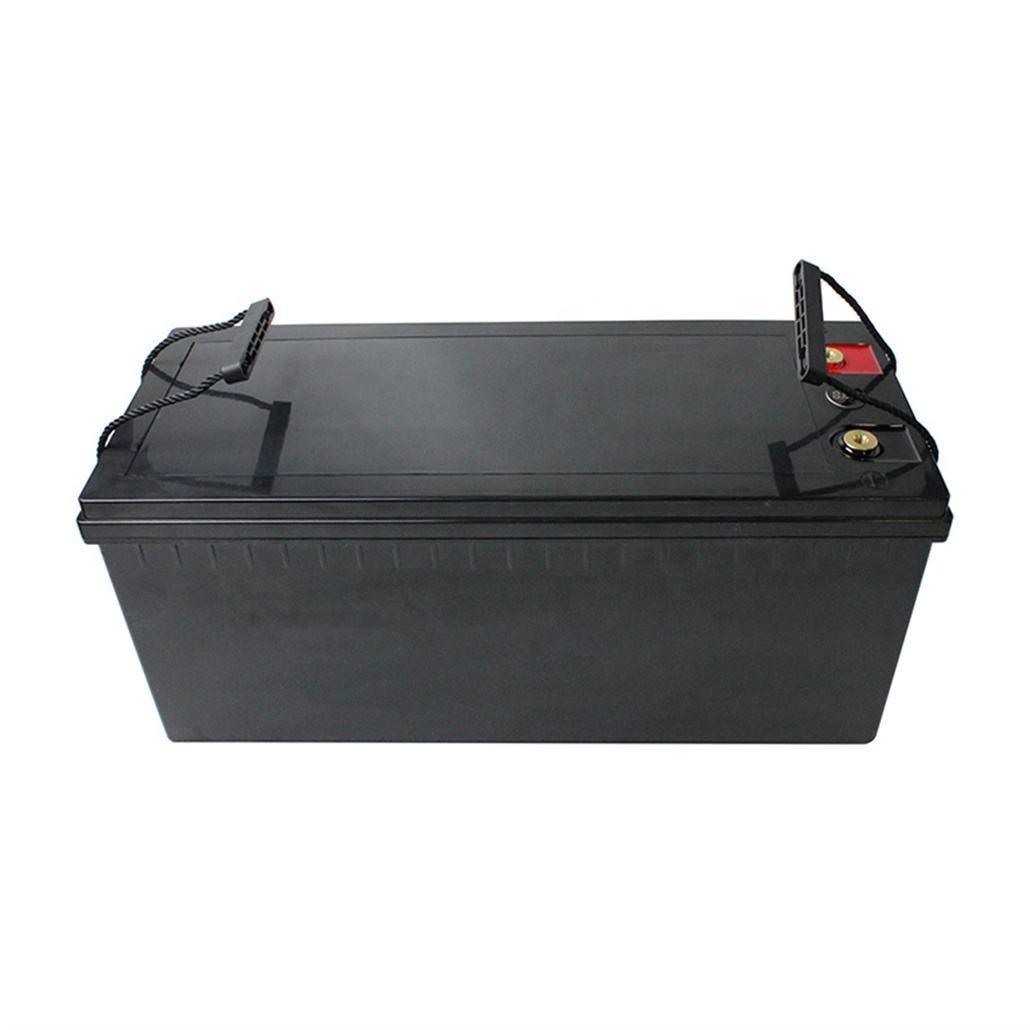
Notice the pattern: pack-level formats carry higher charge and discharge currents (100A charge on the 48V 280Ah and 51.2V 200Ah formats) and higher mass. That combination is what makes them natural candidates for floor-standing enclosures — and it is also why a wall bracket sized for a 48 kg unit should never be reused for an 88 kg or 130 kg module.
What to verify in a supplier, regardless of format
- Customization scope. HCC operates on an OEM/ODM basis with customization of all kinds of battery pack, a monthly capacity of 10,000 units, a lead time of 20–35 days, an MOQ of 5 pcs and remote after-sales support.
- Reference projects. An installer in Iran used 50 pcs of the 48V wall-mount battery for residential service, citing IP54 waterproof and dustproof protection and stable operation. A brand owner in Korea ordered 100 pcs for a commercial and industrial energy storage system, with customization support and a 1500V single-unit configuration, described as meeting industrial-grade safety and performance standards.
- Application engineering. HCC's Home Energy Storage application is specified for high and low temperature operation with a BMS and water resistance, matched to a home solar system — the configuration is defined by the application, not by the battery alone.
Step-by-Step: Deciding Between Wall-Mounted and Rack-Mounted
Step 1 — Measure the mounting surface and the floor area. Confirm that the intended wall is load-bearing and can take a 44–48 kg unit plus bracket, and confirm that a cabinet footprint is genuinely available if you are considering a rack. If either answer is uncertain, the format decision is effectively made for you.
Step 2 — Convert the capacity target into module counts. Published voltage and capacity give nominal energy directly: 51.2V × 100Ah is about 5.12 kWh, 51.2V × 200Ah about 10.24 kWh, and 48V × 280Ah about 13.4 kWh. Then decide how many wall units or cabinet modules that target represents — two wall units and one 200Ah module can be electrically comparable but mechanically very different.
Step 3 — Check current ratings against the inverter and charger. Wall-mounted 51.2V 100Ah products in HCC's range publish 20A charge and 100A discharge; the 5kw wall mounted battery publishes 10A maximum charge and 50A maximum continuous discharge; the 48V 280Ah pack publishes 100A charge and 200A discharge. If the charger expects a higher charge current than a wall unit publishes, a pack-level format fits better.
Step 4 — Match the temperature window and ingress rating to the installation location. Published ranges differ: -20~60 °C for the wall mount battery 48V, the 48v lithium ion battery and the 51.2V 200Ah solar battery; -20~55 °C for the 51.2V 100Ah storage battery and the 48V 100Ah module; and -10~60 °C for the 48V 280Ah pack. For outdoor or semi-outdoor placement, IP54 and anti-condensation design are referenced both in HCC's residential wall-mount installation and in the small commercial & industrial configuration.
Step 5 — Choose the expansion path deliberately. Rack and cabinet builds expand module by module inside an existing enclosure, which keeps wiring short and service predictable. Wall builds expand by finding additional wall sections and repeating the bracket installation. Neither is inherently better; only one will match the space you actually have.
Step 6 — Lock down compliance documents, MOQ and lead time before committing to a format. Request UN 38.3 transport documentation and IEC 62619:2022 or UL 1973 evidence where the destination market requires it, plus the supplier's own certification list — HCC states RoHS, UL and CE for related products. Confirm MOQ (5 pcs at HCC), lead time (20–35 days) and after-sales scope (remote support) in the same conversation, because a format that cannot be delivered on schedule is not a format advantage.
Use Cases: Which Format Fits Which Project
1. Space-constrained residential retrofit: wall-mounted 48V
Where a garage or utility wall is available and floor space is already committed to other equipment, a 48 kg wall-mount 51.2V 100Ah battery keeps the footprint at zero. The Iranian installer reference — 50 pcs for residential use, with IP54 waterproof and dustproof protection and stable operation — reflects this pattern.
2. Home storage in temperature-variable locations: 51.2V wall units
HCC's Home Energy Storage application is designed around high and low temperature operation, a BMS and water resistance for home solar systems. Choosing between 100Ah and 200Ah modules is a capacity decision; choosing between a 48 kg wall unit and an approximately 88 kg module is a mechanical one.
3. Small commercial and industrial peak shaving: cabinet-based
The small-scale commercial & industrial configuration operates as bidirectional energy exchange with the grid, charging during low-price off-peak periods and discharging at peak — the 'valley charging, peak discharging' strategy — with anti-condensation, IP54 outdoor operation and solar panels as matched equipment. It also requires compliance with local grid codes for grid connection and islanding protection. Peak-shaving duty combined with outdoor enclosures is the scenario where cabinet architectures, with individually replaceable modules, usually make more sense than wall units.
4. Larger commercial brand-owner projects: pack-level formats
A brand owner in Korea ordered 100 pcs for a commercial and industrial energy storage system, with customization support and a 1500V single-unit configuration described as meeting industrial-grade safety and performance standards. Projects at this scale are specified at module level, which is exactly where format and current ratings have to be agreed in writing.
5. Industrial UPS and backup duty: 51.2V 105Ah
HCC lists the solar battery backup (51.2V 105Ah) for industrial UPS, with 18A charge current, 120A discharge current, -20~60 °C operation and a 45 kg unit weight. Backup duty rarely needs slot-level expansion, so a wall unit is often sufficient — and 45 kg is within the range a two-person crew can position safely at height.
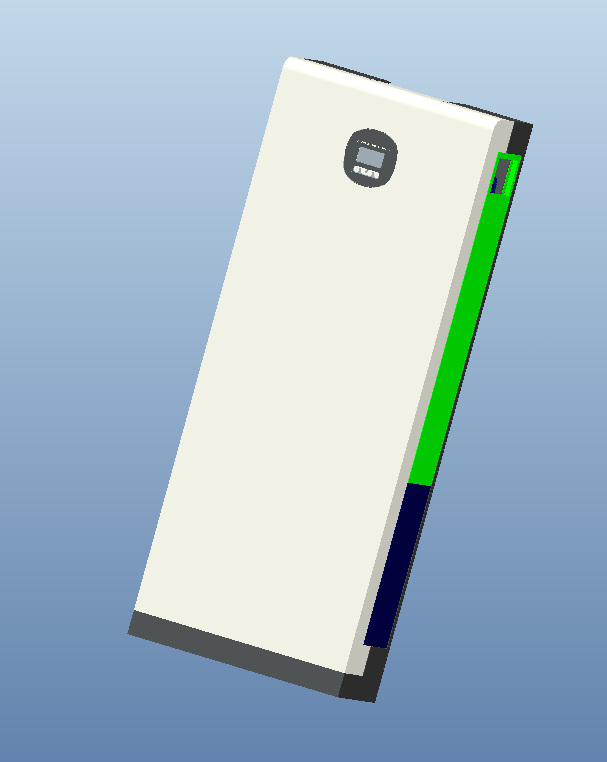
Comparison Table: Wall-Mounted vs. Rack-Mounted Solar Batteries
The table below compares the two formats on the factors that decide most projects, using HCC's published product data. It describes formats, not brand superiority — the correct choice depends on the site.
| Decision factor | Wall-mounted format | Rack / cabinet-mounted format |
|---|---|---|
| Unit weight in HCC's published range | 44–48 kg (51.2V 100Ah at 48 kg; 51.2V 105Ah at 45 kg; 51.2V 100Ah system at approx. 44 kg) | 47–130 kg (48V 100Ah module at 47 kg; 51.2V 200Ah at approx. 88 kg; 48V 280Ah pack at 130 kg) |
| Floor footprint | None; the unit occupies wall area | Requires a floor-standing enclosure footprint |
| Expansion method | Add further wall units on suitable wall sections | Add modules within existing cabinet slots |
| Service access | Work at wall height; lifting required per unit | Modules closer to working height; module-level replacement |
| Mounting requirement | Load-bearing wall plus suitable anchors | Level floor plus cabinet anchoring |
| Ingress and environment (referenced) | IP54 waterproof and dustproof, residential installer reference | IP54 outdoor operation with anti-condensation design, small commercial & industrial configuration |
| Published temperature ranges | -20~60 °C (48V 100Ah wall unit); -20~55 °C (51.2V 100Ah storage battery) | -10~60 °C (48V 280Ah pack); -20~60 °C (51.2V 200Ah solar battery) |
| Typical best fit | Space-constrained residential retrofit, one to two wall units, backup duty | Higher capacity per unit, higher charge/discharge current, service-critical and small commercial & industrial projects |
The product-level view makes the same trade-off concrete:
| Product (published data) | Format intent | Configuration | Charge / discharge current | Weight | Temperature | Cycle rating |
|---|---|---|---|---|---|---|
| 5kw wall mounted battery (Wall-TW01) | Wall-mounted, solar | LiFePO4 28148115-52Ah, 16S1P | 10A / 50A continuous | — | — | ≥6000 cycles at 80% |
| wall mount battery 48V | Wall-mounted, residential BESS | 51.2V, 100Ah (LFP) | 20A / 100A | 48 kg | -20~60 °C | — |
| solar battery backup | Wall-mounted, industrial UPS | 51.2V, 105Ah (LFP) | 18A / 120A | 45 kg | -20~60 °C | — |
| energy storage battery system | Home storage | 51.2V, 100Ah (LiFePO4) | 100A / 100A | approx. 44 kg | -20~60 °C | — |
| solar battery pack (SolarBP-TW01) | Pack-level, cabinet/rack assembly | LiFePO4 47173120-100Ah, 16S1P | 20A / 100A continuous | — | — | ≥6000 cycles at 80% |
| Storage Battery 48V 100Ah | Pack-level module | 51.2V, 100Ah (LiFePO4) | 100A / 100A | 47 kg | -20~55 °C | — |
| Solar battery 200Ah | Pack-level, higher capacity | 51.2V, 200Ah (LiFePO4) | 100A / 200A | approx. 88 kg | -20~60 °C | — |
| 48V 280Ah solar battery pack | Pack-level, high capacity | 48V, 280Ah (LiFePO4) | 100A / 200A | 130 kg | -10~60 °C | — |
| 200ah lithium battery | LiFePO4 storage cell pack | 100A maximum discharge current | 100A discharge max. | — | — | ≥6000 cycles at 80% |
Frequently Asked Questions
What certifications should a wall-mounted or rack-mounted solar battery carry?
Standards apply to the battery, not to the mounting bracket, so both formats need the same documents. UN 38.3 is mandatory for global lithium battery transport and requires eight specific tests, including altitude simulation and thermal testing. IEC 62619:2022 covers thermal runaway and BMS verification for lithium-ion batteries in industrial and stationary applications, and UL 1973 is the primary North American stationary safety standard for solar energy storage and UPS batteries. HCC states that its related products have passed RoHS, UL and CE export certifications.
Can a wall-mounted battery be expanded later like a rack-mounted system?
Both can be expanded, but differently. Rack and cabinet builds add capacity one module at a time inside an existing enclosure; wall builds add capacity by installing additional wall units, each needing a suitable wall section, a bracket and matched connections. HCC's published range covers both routes: 51.2V 100Ah and 51.2V 105Ah wall units at 44–48 kg, a 48V 100Ah module at 47 kg, a 51.2V 200Ah solar battery at approximately 88 kg and a 48V 280Ah pack at 130 kg. Confirm platform voltage and BMS arrangement before buying the first unit.
Which format costs more to install?
Cost drivers differ rather than one format being cheaper in every case. Wall-mounted systems avoid cabinet hardware and floor footprint, but require a load-bearing wall, suitable anchors and lifting at height. Rack and cabinet systems add an enclosure and occupy floor area, while placing modules at working height for easier service and module-level replacement. HCC publishes MOQ and lead time rather than pricing, so compare landed cost using a quotation that includes enclosure, cabling and installation labour.
Can I validate a format with a sample before ordering?
Yes. HCC runs OEM/ODM production with customization of all kinds of battery pack, with a published MOQ of 5 pcs, a 20–35 day lead time and a monthly capacity of 10,000 units. A sample order is the practical way to verify mechanical fit — bracket, clearance and cable entry — as well as charge and discharge current settings. Request the current catalogue before the sample ships if you need a written specification for the 51.2V 100Ah wall unit, the 5kw wall mounted battery or the solar battery pack SolarBP-TW01.
What lead time should I plan for, and how do I start?
HCC publishes a 20–35 day lead time, a 5 pcs MOQ and remote after-sales support. Work backwards from your commissioning date and allow time for compliance documents (UN 38.3, and IEC 62619:2022 or UL 1973 where the destination market requires them), lithium battery freight and installation. To start, send your capacity target, wall or floor constraints and destination market to sales@hcctop.com, message +86 18682160604 on WhatsApp, or download the HCC brochure for the full product list.
Conclusion
Wall-mounted and rack-mounted solar batteries solve the same electrical problem with different mechanical trade-offs. Wall-mounted formats such as HCC's 48V 100Ah wall unit (48 kg) and the 5kw wall mounted battery suit space-constrained residential retrofits where a load-bearing wall is available. Rack and cabinet architectures suit projects that need higher capacity per unit, higher charge and discharge currents, module-level service access and slot-by-slot expansion — the 48V 280Ah pack at 130 kg and the 51.2V 200Ah solar battery at approximately 88 kg sit in that category.
The decision becomes easier once the physical facts are on the table: unit weight, mounting surface, temperature window, ingress rating, current ratings and the compliance documents required at the destination. Those six items decide the format long before the brand does — and they are the six items HCC can confirm in writing, together with MOQ, lead time and customization scope.
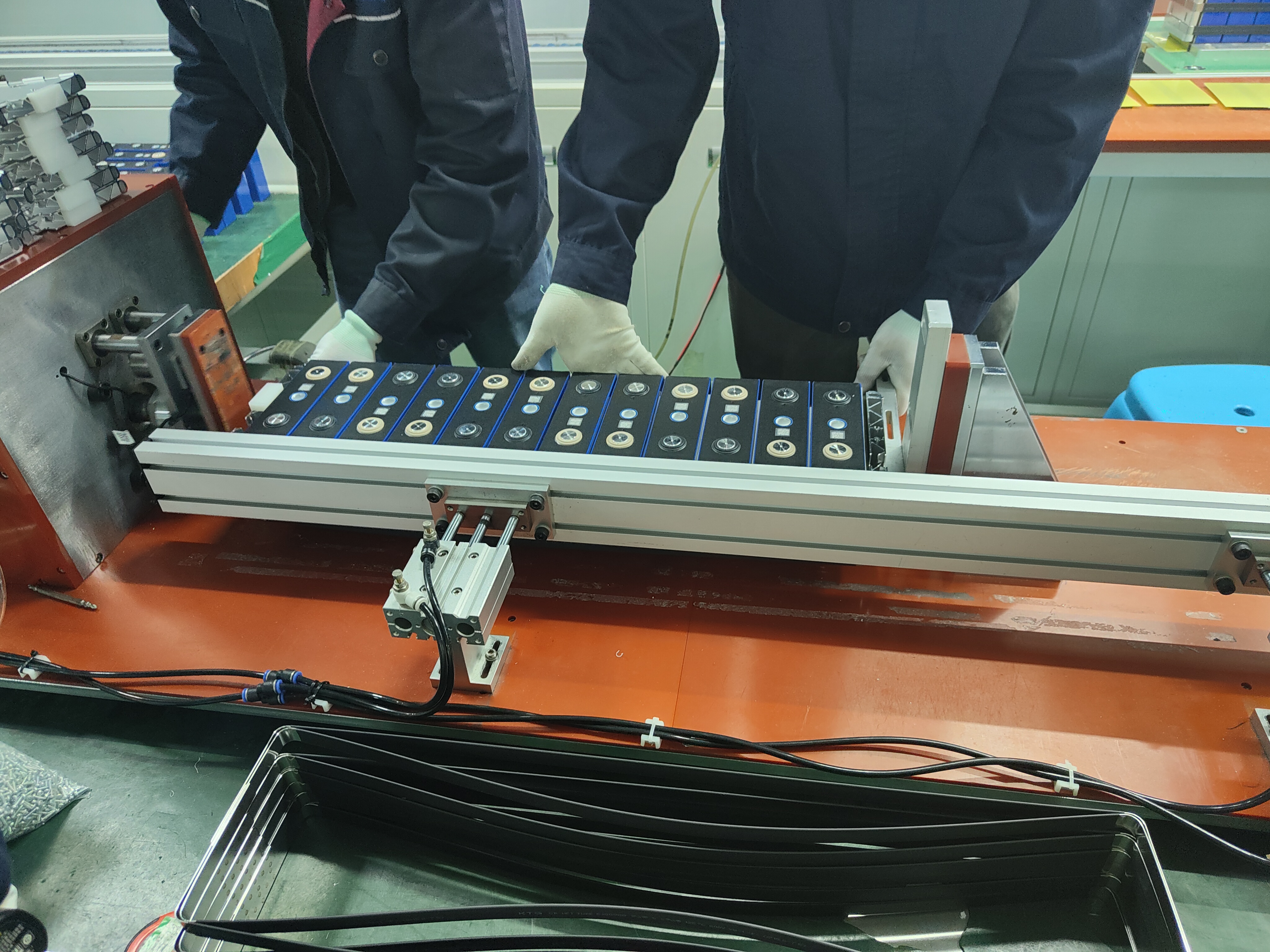
Compare both formats against your own project
Send your capacity target, mounting constraints and destination market to Shenzhen Topway New Energy Co., Ltd. (HCC). OEM/ODM customization, MOQ 5 pcs, 20–35 day lead time, remote after-sales support.
Email: sales@hcctop.com · WhatsApp: +86 18682160604 · Phone: 0755-81461866 · Website: www.hcctop.com