
What Is a 21700 Lithium Ion Battery? A Technical Guide for Delivery Robots and Drones
A 21700 lithium ion battery is a cylindrical lithium-ion cell built to the 21700 format, a five-digit dimensional code in which the first two digits describe the cell diameter and the remaining digits describe its length in millimetres. For delivery robot and drone programmes the format is not a cosmetic detail: it sets the mechanical envelope of the pack, the current each cell can carry, and how a 24 V platform is assembled from series and parallel strings.
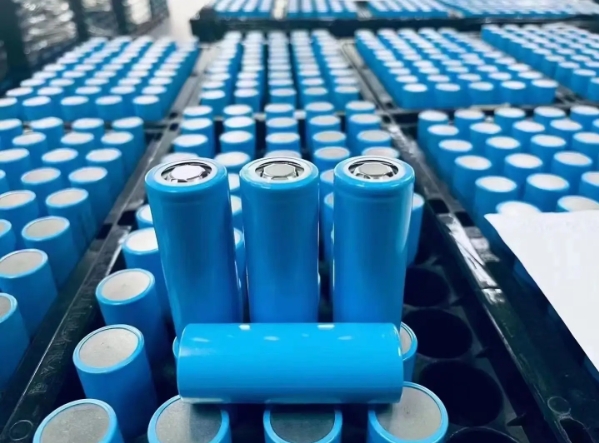
This guide explains what a 21700 cell is, how to read the parameters a supplier publishes for it, how it differs from 18500 and 18650 cells, and how the choice of cell propagates into battery pack design and 24 V lithium ion battery configurations. Every product figure below is a published specification of Shenzhen Topway New Energy Co., Ltd. (HCC); where a parameter is not published, this guide states that plainly instead of estimating it.
Definition: What a 21700 Lithium Ion Battery Actually Is
A 21700 lithium ion battery is a rechargeable cylindrical cell, not a battery type. The chemistry inside a 21700 can is typically lithium nickel manganese cobalt oxide (NCM), and the cell becomes a battery pack only after cells are connected in series and parallel, fitted with a battery management system, and enclosed in a structural case.
This distinction matters in robot and drone sourcing because the same format name can appear on two datasheets with completely different electrical behaviour. HCC publishes its 21700 product as the 21700-TW01, a Lithium ion Battery with NCM chemistry and the following stated limits:
- Chemistry: NCM
- Maximum charge current: 0.2C
- Maximum continuous discharge current: 1C
- Published application field: Manufacturing
Read the gaps, not just the numbers. The 21700-TW01 specification as published does not state nominal voltage, capacity, weight, or operating temperature range. Those are exactly the four values a pack designer needs first. A technical evaluation therefore begins by requesting the missing entries, not by assuming them.
Problem Definition: Why the Format Question Decides the Project
Most early-stage sourcing conversations ask whether lithium ion is a suitable technology for a delivery robot or a drone. For a supplier whose entire catalogue is lithium ion, that question cannot produce a decision. The real question is narrower: which cell format and chemistry combination satisfies this platform's current profile, weight budget, temperature exposure, and mechanical envelope.
Changing from an 18650 cell to a 21700 cell does not simply add capacity. It changes four downstream decisions at once:
- Interconnect count. A larger can format means fewer cells for the same series and parallel configuration, which reduces the number of welds, busbars and sense lines.
- Mechanical structure. A pack built from larger cells needs different holders, different spacing, and a different case footprint inside the robot chassis or drone frame.
- Thermal behaviour. Heat-generating volume is concentrated in fewer, larger bodies, which changes how temperature is managed across the pack.
- BMS channel count. Series count fixes the number of voltage taps the battery management system must monitor.
None of those four consequences can be answered from a format name alone. Each requires a published specification, which is why the datasheet review in the next sections is the decisive step.
Industry Background: Where Cylindrical Lithium Ion Cells Sit Today
Demand for cylindrical lithium-ion cells is being driven by applications that did not exist at scale a decade ago, including mobile robotics and unmanned aircraft. Published market research places the global lithium-ion battery market at approximately USD 164.8 billion in 2024, with projections to reach USD 422.8 billion by 2032 (GMI Research).
The drone segment shows the same direction more sharply. The global drone battery market was estimated at USD 8.13 billion in 2024, with lithium-based technologies holding a 91.14% share (Grand View Research). On the supply side, China's lithium-ion battery exports reached over 3.9 billion units in 2024, an 8.1% year-on-year increase even as total export value declined slightly (General Administration of Customs, via Caixin Global).
Three practical implications follow from those figures, without needing any forecast about a specific cell format:
- Format availability is a supply question. When exports are measured in billions of units, the constraint for a robot or drone programme is rarely whether cells exist, but whether the specific format, chemistry and grade can be secured consistently.
- Lithium chemistry is already the default in drones. At a 91.14% lithium share, the differentiation has moved from chemistry family to cell format, current rating and pack design.
- Format diversity follows application diversity. Delivery robots and drones place different demands on the cell, which is why a supplier catalogue typically spans several cylindrical formats rather than one.
How to Read a 21700 Datasheet: Four Parameters That Decide the Pack
1. Current rating: C-rate versus absolute amps
This is the most common source of confusion in cell comparison. HCC publishes the 21700-TW01 in C-rate terms: 0.2C maximum charge current and 1C maximum continuous discharge current. C-rate is a multiple of the cell's capacity, so a 1C discharge rating cannot be converted into amps until the capacity is known.
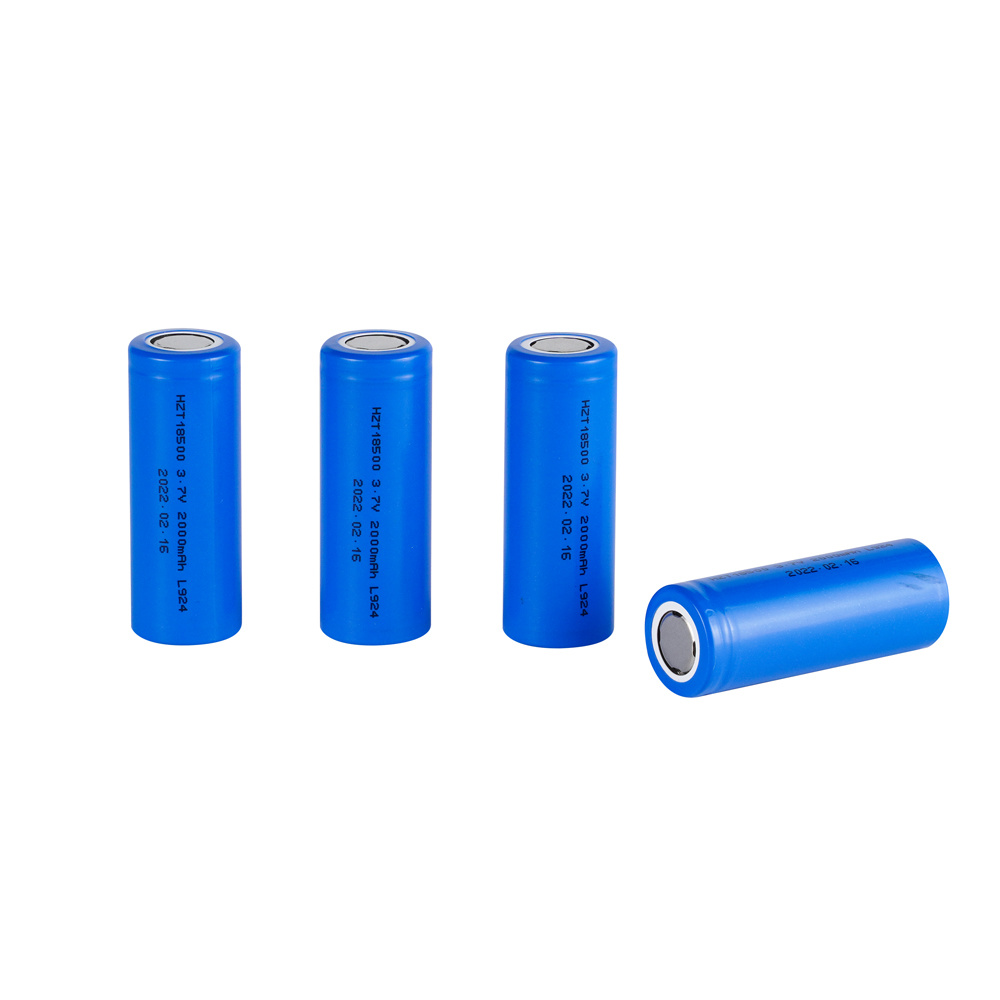
By contrast, HCC publishes its smaller cylindrical cells in absolute current. The 18650 (18650 3.6V 3000mAh) is listed at 3 A charge and 3 A discharge; the 18500 (18500 3.6V 2000mAh) is listed at 2 A charge and 2 A discharge. A buyer comparing the three datasheets side by side is therefore not comparing like with like until the 21700 capacity figure is obtained.
2. Voltage and series count
Nominal voltage determines how many cells are stacked to reach a target platform voltage. The 18650 and 18500 cells are both published at 3.6 V nominal, which is the standard figure for NCM cylindrical cells. A 24 V-class NCM pack is normally built as a seven-series string, giving 25.2 V, while a 24 V-class lithium iron phosphate (LFP) pack is normally built as an eight-series string, giving 25.6 V. Both values appear in HCC's published pack range, which confirms the logic in practice.
3. Operating temperature window
Temperature range is a hard selection criterion, not a footnote. The 18650 and 18500 cells are both published at -20 to 60 °C. At pack level the window can narrow: the agriculture drone battery is published at -10 to 60 °C, while the delivery robot battery and the racing drone battery are both published at -20 to 60 °C. A cell that meets the electrical requirement but narrows the operating window can disqualify an entire platform in the field.
4. Weight and pack-level mass
Cell weight propagates directly into payload and runtime. HCC publishes 45 g for the 18650 cell and 40 g for the 18500 cell; the 21700-TW01 weight is not stated. At pack level the differences are far larger and must be planned for: 5.2 kg for the 25.6 V 30 Ah delivery robot battery, 2.6 kg for the 25.2 V 20 Ah agriculture drone battery, and about 3 kg for the 25.6 V 20 Ah racing drone battery.

21700 vs 18500 vs 18650: A Like-for-Like Comparison
The table below compares only published entries. Where a value is absent from the specification, it is marked as not published rather than filled in with an industry average.
| Parameter | 21700-TW01 | 18650 (3.6 V 3000 mAh) | 18500 (3.6 V 2000 mAh) |
|---|---|---|---|
| Cell format | Cylindrical 21700 | Cylindrical 18650 | Cylindrical 18500 |
| Chemistry | NCM | NCM | NCM |
| Nominal voltage | Not published | 3.6 V | 3.6 V |
| Capacity | Not published | 3000 mAh | 2000 mAh |
| Maximum charge current | 0.2C | 3 A | 2 A |
| Maximum continuous discharge current | 1C | 3 A | 2 A |
| Operating temperature | Not published | -20 to 60 °C | -20 to 60 °C |
| Weight | Not published | 45 g | 40 g |
| Published application field | Manufacturing | Digital batteries | Digital batteries |
Two conclusions can be drawn without inventing data. First, the 21700-TW01 datasheet is expressed on a different basis from the two smaller cells, so the comparison is incomplete until capacity is confirmed. Second, all three cells share NCM chemistry, which means the choice between them is a mechanical, thermal and current-budget decision rather than a chemistry decision. A buyer who wants a chemistry comparison should instead look at LFP: HCC's 48 V 13 Ah lifepo4 battery and its 24 V 50 Ah LFP pack sit on a different cycle-life and thermal footing from the NCM cells.
Step-by-Step: Designing a Pack Around a 21700 Cell
The sequence below is the order in which pack requirements should be fixed, because each step constrains the next.
- Define the load profile. Record both continuous current and peak current for the robot's drive motors or the drone's propulsion system. The 1C continuous rating of the 21700-TW01 applies to continuous discharge only.
- Select the chemistry family. NCM cells in HCC's range serve drone and manufacturing applications; LFP packs serve the delivery robot and 24 V agricultural platforms. The choice sets the voltage per cell and the thermal profile.
- Fix the series count from the platform voltage. Seven NCM cells in series produce the 25.2 V seen on the agriculture drone battery; eight LFP cells in series produce the 25.6 V seen on the delivery robot battery.
- Fix the parallel count from the energy requirement. Parallel strings raise capacity and share current. This is where the missing capacity figure on the 21700-TW01 must be resolved, because parallel count cannot be calculated from a C-rate alone.
- Verify the current budget cell by cell. Divide pack continuous current by the parallel count and compare the result with the cell's continuous rating. If the cell is rated in C-rate, convert using the confirmed capacity.
- Check the temperature window end to end. Compare the cell range with the pack range. The agriculture drone battery is published at -10 to 60 °C, narrower than the -20 to 60 °C published for the 18650 cell it is built around, which shows that pack-level limits govern.
- Specify the battery management system. Series count determines voltage taps; continuous and peak current determine the switching components; chemistry determines the protection thresholds.
- Validate with a physical sample. Confirm capacity, current delivery under load, and behaviour at the temperature extremes of the target market before committing to volume.

How Cell Choice Shapes 24 V Lithium Ion Battery Configurations
A 24 V lithium ion battery is a pack-level product, not a cell. The cell choice determines which voltage a 24 V-class platform actually reaches, because the string voltage is the sum of the series cells. HCC's published 24 V-class packs illustrate the two standard outcomes.
| Pack | Voltage | Capacity | Chemistry | Max charge | Max discharge | Temperature | Weight |
|---|---|---|---|---|---|---|---|
| delivery robot battery (25.6V 30AH) | 25.6 V | 30 Ah | LFP | 5 A | 5 A | -20 to 60 °C | 5.2 kg |
| 24v lithium ion battery (24v 50ah) | 24 V | 50 Ah | LiFePO4 | 10 A | 50 A | -20 to 60 °C | About 6 kg |
| agriculture drone battery (25.2V 20AH) | 25.2 V | 20 Ah | NCM | 15 A | 20 A | -10 to 60 °C | 2.6 kg |
| racing drone battery (25.6v 20Ah) | 25.6 V | 20 Ah | NCM | 10 A | 20 A | -20 to 60 °C | About 3 kg |
The comparison exposes a design trade-off that is often described loosely in marketing material but is clear in these numbers. The 25.6 V 30 Ah delivery robot pack delivers 5 A continuous in a 5.2 kg body. The 24 V 50 Ah LFP pack delivers 50 A continuous at roughly 6 kg. The 25.2 V 20 Ah NCM drone pack delivers 20 A continuous at 2.6 kg. Higher discharge capability and lower mass are achieved by different means in each case, and the buyer's decision should follow the load profile rather than a general preference for one chemistry.
Where a 21700 cell enters this picture is at the design stage. A pack built on the 21700-TW01 must first establish its C-rate baseline against a confirmed capacity, then decide series count for the target platform voltage and parallel count for the required continuous current. Until that capacity value is supplied, a 21700 configuration cannot be compared with the pack figures above on equal terms.
Use Cases: Matching the Cell to the Platform
Delivery robots
Delivery robots operate in pedestrian environments where the pack must be sealed, structurally protected and electrically modest. HCC's delivery robot battery is published at 25.6 V, 30 Ah, LFP chemistry, 5 A charge, 5 A discharge, -20 to 60 °C, 5.2 kg. The low continuous current relative to capacity points to a design prioritising runtime and thermal stability over peak power, which suits a wheeled platform moving at walking speed.
Agriculture drones
Agricultural flight combines sustained propulsion load with outdoor temperature exposure. The agriculture drone battery is published at 25.2 V, 20 Ah, NCM chemistry, 15 A charge, 20 A discharge, -10 to 60 °C, 2.6 kg. The higher charge current supports faster turnaround between spray missions, while the narrower low-temperature limit of -10 °C must be checked against the operating season in the target market.
Racing drones
Racing platforms prioritise current delivery. The racing drone battery is published at 25.6 V, 20 Ah, NCM chemistry, 10 A charge, 20 A discharge, -20 to 60 °C, about 3 kg. Compared with the agricultural pack, the same 20 A discharge is achieved with a lower charge current, which is a charging-infrastructure consideration rather than a flight consideration.
Small-format references and custom packs
Not every drone platform runs at 24 V class. HCC's 7.4 V 1500 mAh drone battery is published at 1.5 A charge and 30 A discharge with a 60 g mass, showing how far the discharge-to-capacity ratio can shift in a small airframe. For custom assemblies, the Topway-BP01 battery pack is published with a 40 A maximum discharge current and a cycle rating of at least 500 cycles to 80% capacity in NCM chemistry, serving medical, toy and drone applications.
Where HCC Fits in a 21700 Sourcing Programme
Shenzhen Topway New Energy Co., Ltd. (HCC) is a battery pack supplier based in Shenzhen, China, founded in 2022, with a 10,000 m² factory, about 200 employees, an annual output of 1,200,000 units and a 15-person R&D team. Its main products are robot batteries, exoskeleton batteries and drone batteries, with roughly 40% of output exported to markets including the USA, EU, UK, France, Germany, Italy, Spain, Russia, Poland, Turkey, Japan, Korea, Vietnam, Malaysia, Singapore, Indonesia, the Philippines, Canada, Mexico, Australia, Thailand, New Zealand, Brazil, Argentina, Chile and Peru.
For a 21700 evaluation, that positioning is relevant in one specific way: HCC publishes cell-level specifications for the 21700-TW01 alongside pack-level specifications for delivery robot, agriculture drone and racing drone batteries. That allows a buyer to trace a requirement from cell format through to finished pack within a single supplier's documentation, rather than reconciling two vendors' datasheets.
Procurement Checklist Before You Request a 21700 Quote
- Confirmed capacity for the 21700-TW01, so the 1C discharge rating can be converted to amps.
- Confirmed nominal voltage and weight for the cell, to finalise series and parallel count.
- Confirmed operating temperature range at cell level and at pack level.
- Required continuous and peak current for the platform, stated in amps.
- Target pack voltage, expressed as a 24 V-class platform or a specific string voltage.
- Chemistry preference stated explicitly, since NCM and LFP packs appear at the same nominal platform voltage.
- Physical envelope available inside the robot chassis or drone frame.
- Charging infrastructure limits, expressed as available charge current.
- Transport and shipping configuration, including state of charge at shipment.
Frequently Asked Questions
What safety standard applies to a 21700 lithium ion battery?
IEC 62133-2 is the primary international safety standard for portable lithium-ion cells and battery packs used in consumer and industrial equipment. A cell certificate does not automatically cover the assembled pack, so buyers should confirm which standard the finished pack is tested against. For air shipment, the IATA and UN rules effective 1 January 2026 require a 30% state of charge limit for lithium batteries packed with devices under packing instruction PI 966.
Can a 21700 cell be used in a custom delivery robot or drone battery pack?
Yes, in principle. HCC lists the 21700-TW01 as an NCM Lithium ion Battery with a 0.2C maximum charge current and a 1C maximum continuous discharge current. Whether it fits a specific platform depends on the pack-level current requirement, the series and parallel count, the battery management system and the thermal design. HCC's published pack range already covers 25.6 V 30 Ah LFP for delivery robots and 25.2 V 20 Ah NCM for agriculture drones, which shows that platform requirements, not format preference, drive the choice.
Does the cell format change the cost structure of a battery pack?
It changes the cost drivers, although no price figures are published here. A larger can format reduces the number of cells, welded joints and voltage sense lines for a given series and parallel configuration, which affects assembly labour and interconnect material. It simultaneously requires different cell holders, spacing and case geometry. Any comparison should therefore be based on a quoted pack bill of materials rather than on a cell price per unit alone.
How should a 21700 pack be validated before mass production?
Request the complete cell specification, then request a pack sample built to the intended series and parallel configuration. Test the sample against the platform's real continuous and peak current profile, and repeat the test at the lowest and highest temperatures of the target market. Confirm the state of charge declared for shipment before the first air freight booking. HCC accepts sample and quotation requests through sales@hcctop.com for this kind of validation work.
Which documents should accompany a 21700 pack quotation?
A quotation should identify the cell model, the chemistry, the series and parallel configuration, the pack voltage and capacity, the continuous and peak discharge limits, the charge current limit, the operating temperature range, the mass, the battery management system specification, the standards the pack has been tested against, and the declared state of charge for transport. Lead time and minimum order quantity are project-specific and should be confirmed directly with the supplier rather than assumed.
Conclusion
A 21700 lithium ion battery is a cylindrical NCM cell whose practical value is decided by four numbers: capacity, current rating, voltage and temperature window. The format itself only sets the mechanical starting point. In delivery robot and drone programmes, the decision sequence runs from load profile to chemistry, from chemistry to series count, from series count to parallel count, and finally to pack-level validation. Comparing a 21700 cell with 18500 and 18650 alternatives is only meaningful once all three are expressed on the same basis, and HCC's published specifications show why: two of the three are documented in absolute amps, while the 21700-TW01 is documented in C-rate.
For buyers at the research stage, the most useful next action is to request the missing entries on the 21700-TW01 datasheet and match them against a real load profile. That single step converts a format comparison into a pack specification.
Request a 21700 sample or pack quotation
HCC supplies robot, exoskeleton and drone battery packs from Shenzhen, China. Share your target voltage, continuous and peak current, operating temperature range and available envelope, and the team will respond with a matching configuration.
Email: sales@hcctop.com | Phone: 0755-81461866 | WhatsApp: +86 18682160604 | Website: www.hcctop.com
Download the product brochure: HCC product catalogue (PDF)
Have Questions or Need More Details?
Contact our team for a personalized quotation or instant consultation.
Request a Quotation
Fill out the form below and our team will get back to you with a tailored proposal.
WhatsApp Direct Chat
Prefer to chat in real-time? Message us on WhatsApp for instant assistance & quick answers.
- Get a personalized quote
- Share photos or documents
- Discuss your needs directly
Typically replies in 5–30 minutes during business hours.