
Architectural Metal Mesh Compliance: Mill Certs to Submittals
An architectural metal mesh package is usually approved on paper before it is approved on the building. The documents that travel with an order — mill certificates for the stainless steel, alloy and coating declarations, conformity documents and the project-specific submittal set — are read as a chain, and one mismatched link can hold fabrication even when the mesh itself is exactly what the design intended.
Two packages carry most of this work on commercial projects: the Metal Mesh Ceiling Panel package and the Architectural Metal Mesh Facade System package, both commonly built from Stainless Steel Woven Wire Mesh (JM-C-1083), Titanium Coated Stainless Steel Mesh (JM-C-1045) or Perforated Metal Panel (JM-P-1987). The documents carry similar names across those product families, but what a reviewer expects to find inside each one changes with the product and with the region.
The short answer. A workable mesh compliance package has five groups, and each answers a different reviewer question:
- Mill certificate for the base metal — is this the specified material?
- Alloy declaration covering every metallic component — which grade is where?
- Coating and finish declaration — is this the approved finish, applied how?
- Conformity documents with a stated scope — does the approval actually name this product?
- Project-specific submittal set — drawings, panel schedule, samples, inspection records, packing and marking, warranty.
Assemble them in that order and most review problems disappear before they are raised.
The problem: approvals are lost on paperwork, not on mesh
When a reviewer opens a mesh submittal, they are not checking whether the mesh looks right. They are answering three questions: is this the material that was specified; is the finish the finish that was approved; and is this the product that the certificate actually covers. Everything in the package exists to answer one of those three questions with evidence rather than assurance.
Three failure patterns account for most rejected or returned submittals in this category.
Grade drift. A 304 stainless panel arrives where the specification named 316, or a frame is quoted in a different alloy from the mesh it carries. The mesh may perform perfectly well; the package fails because the declaration does not match the specification clause it is supposed to satisfy.
Scope mismatch. A conformity document issued for one product and model is presented as though it covers the whole project. Reviewers read scope carefully, because a document that does not name the item being supplied proves nothing about that item.
Timing inversion. Certificates and declarations are produced after panels are woven, perforated, coated and packed. By then, a grade or finish mismatch can only be corrected by remaking material. Document control is cheapest at the purchase-order stage and most expensive at the loading dock.
None of these is a mesh-quality problem. All three are document-control problems, and all three are decided by how the order is written rather than by how the panel is made.
Who can issue which document
The document chain follows the material chain: the mill that produces the wire, sheet or coil; the coater or finisher that applies the surface system; the mesh fabricator that weaves, perforates, expands, frames and packs; and the contractor who assembles the submittal. Each link can pass downstream only what it actually received, and can declare only what it actually did.
This is the single most useful principle for reading a mesh package. A mesh fabricator can pass through a mill's certificate for the lot it purchased; it cannot issue one. It can declare the coating system it applied; it cannot declare chemistry it did not test. When a document in a submittal claims more than its issuer could possibly know, that is the page to question first.
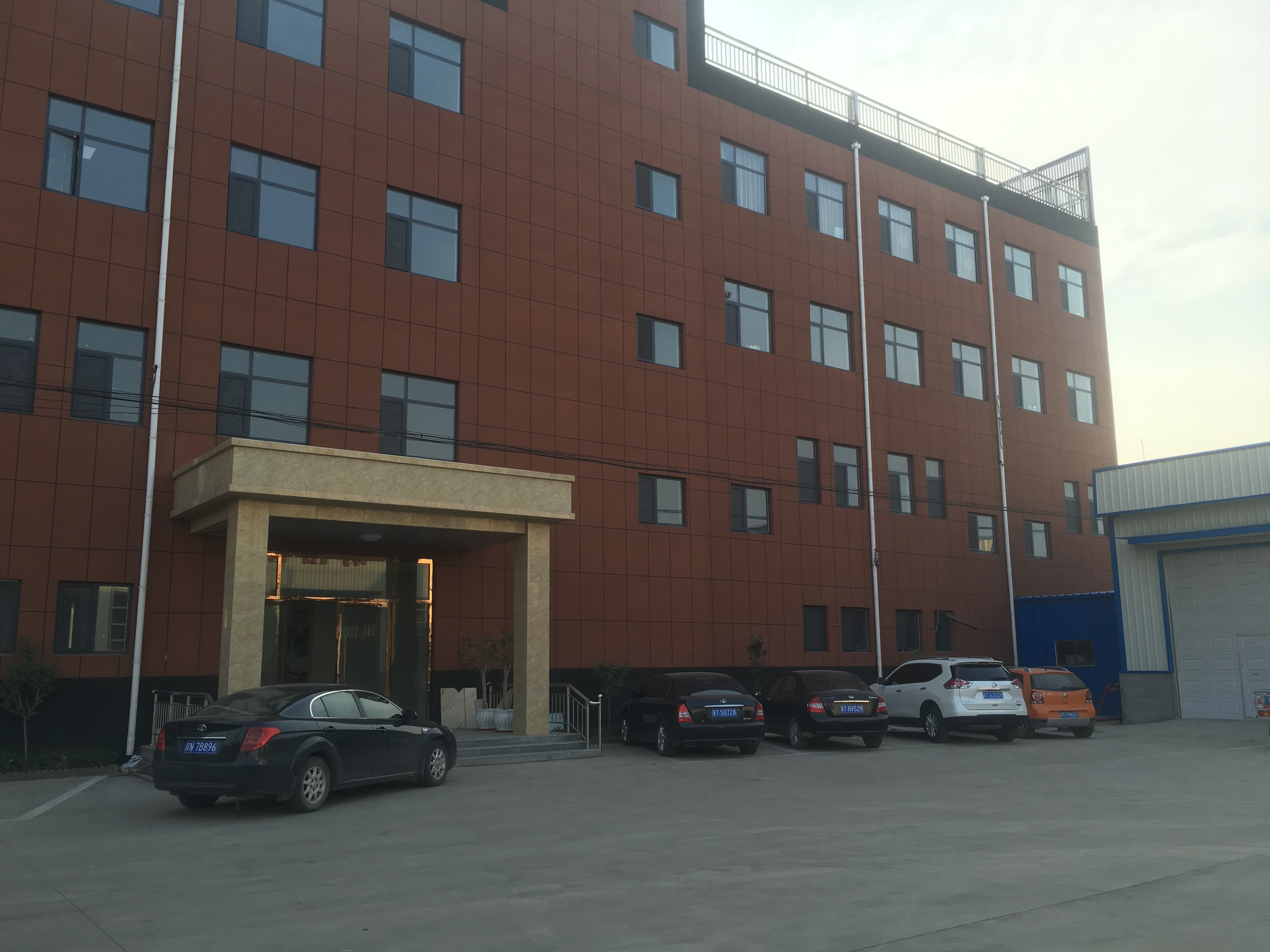
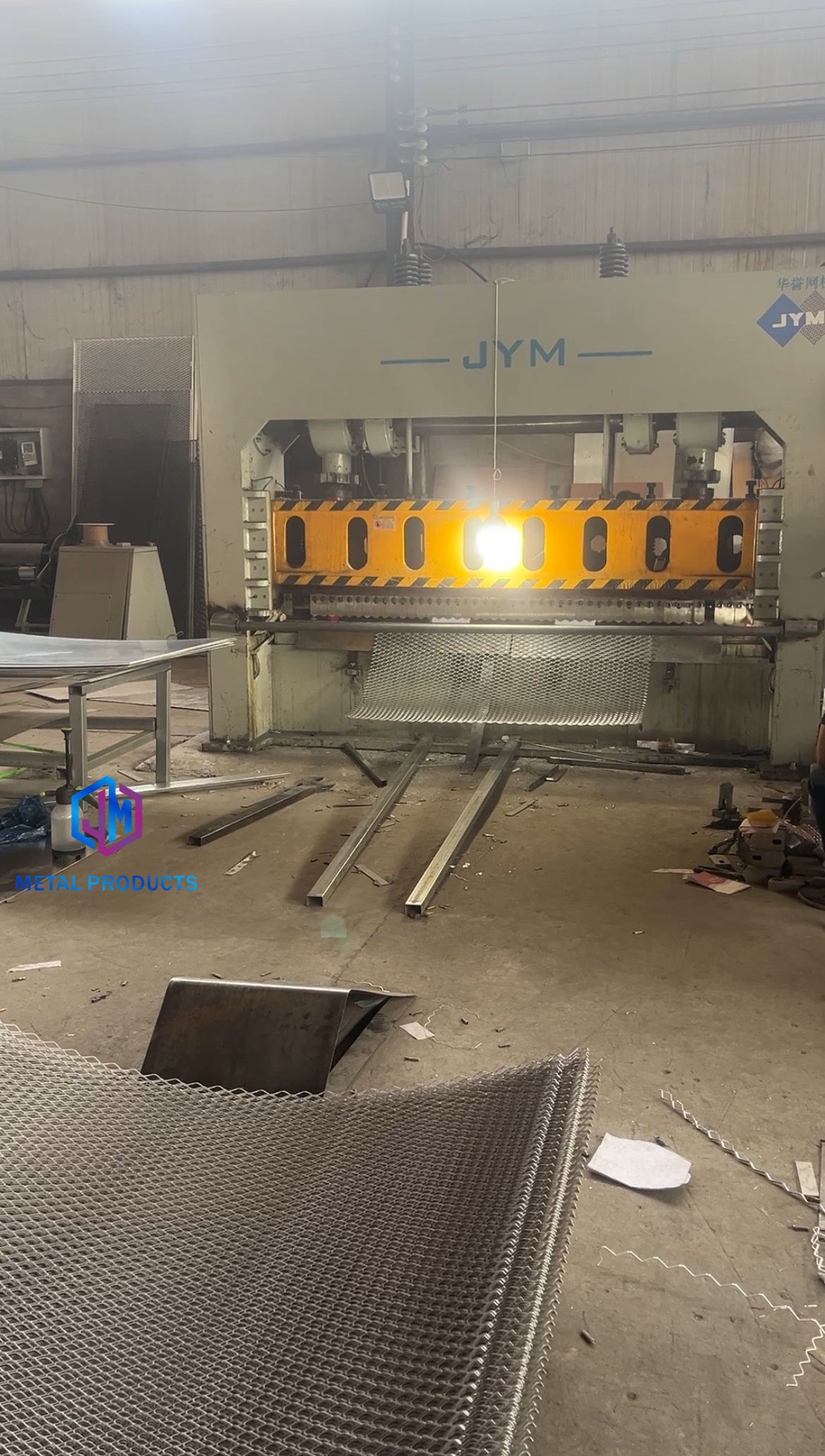
Shenzhou City Jumao Metal Products Co.,Ltd (Jumao) is a manufacturer and exporter of custom architectural metal decorative materials based in Anping, Hengshui, Hebei, China. Founded in 2016, the company operates a 3,000 m² facility with 50 employees and a stated annual output of 100,000 m², exporting roughly 50% of production to the Middle East, Southeast Asia, the European Union, North America, Australia and Africa. Its architectural range covers stainless steel and aluminum architectural mesh, facade cladding mesh, partition screens and ceiling mesh, with OEM/ODM customization of material, size, weave pattern, coating and design.
That position in the chain defines what Jumao can put in a submittal. The material certificate for the base metal originates upstream; the fabrication drawings, dimensional and finish inspection records, conformity scope statement and packing traceability originate in the factory. Buyers who understand the split stop asking the fabricator for documents it cannot legitimately produce, and start specifying the pass-through documents they need in the purchase order.
The document set, one document at a time
Mill certificate for stainless steel
A mill certificate — also called a mill test report or material test certificate — is issued by the producer of the wire, sheet or coil, and reports the chemical composition and mechanical properties of a specific production lot. It is a material document, not a product document.
Reviewers typically check five fields: the grade designation (for example 304 or 316), the lot or heat number, the standard the material was produced to, the reported chemical and mechanical values, and the issue date. The most common gap is not a missing certificate but a broken link — a genuine certificate with a genuine grade that cannot be tied to the panels in the crate. The fix is procedural: carry lot numbers onto the packing list and the inspection record so the certificate can be traced forward to the shipment.
Certificate type also matters. Where a specification names a certificate type rather than simply "mill certificate" — the EN 10204 3.1 inspection certificate is a frequently requested example — confirm the exact type with the specifier before material is ordered. A certificate type is a purchasing decision, not a formatting preference, and it is difficult to retrofit after the coil has been cut.
Alloy declaration: every metallic component, not just the mesh
A mill certificate covers one metallic product. An architectural mesh panel is usually an assembly — mesh, frame, edge binding, fixings — and reviewers increasingly ask for the grade of each part rather than a single line for the whole item.
Jumao's customization scope covers material grade across SS304 and SS316 stainless steel, aluminum, brass and copper, together with panel dimensions, frame structure and edge treatment. That breadth is useful only if the declaration keeps up with it: a facade panel with a 316 mesh in an aluminum frame needs both grades stated, plus the alloy of the fasteners, because a mixed-metal assembly invites corrosion questions that a single-grade declaration cannot answer.
Where the specification is written around geometry rather than grade — wire diameter, aperture, open area, perforation pattern — the alloy declaration should reference the approved values rather than restating them approximately. The declaration exists to prove the specified combination was supplied, so precision in the composition line is worth as much as precision in the drawing.
Coating and finish declaration
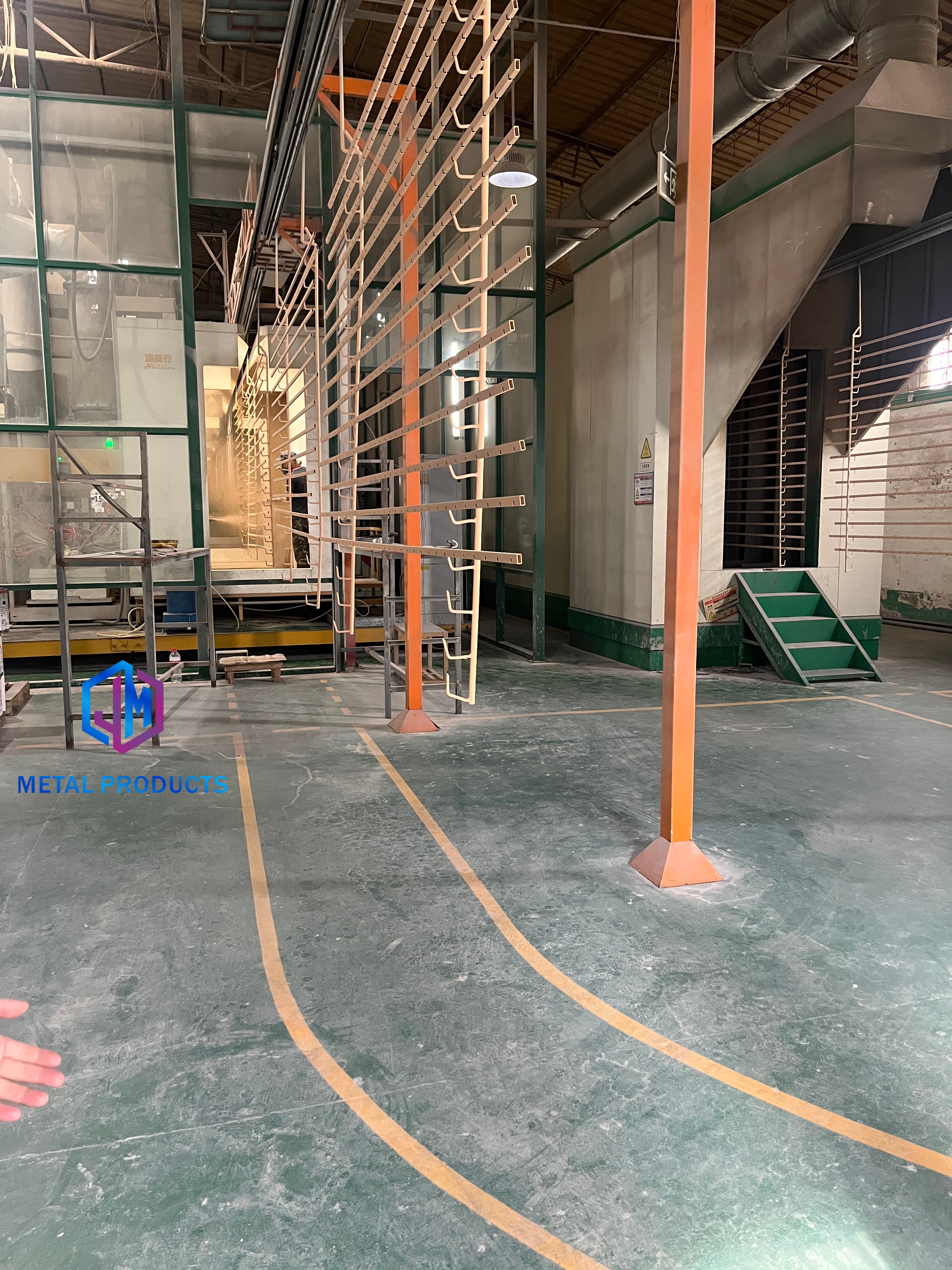
The finish declaration is the document most often treated as a formality, and the one most often disputed later. Jumao's surface options span PVDF coating, powder coating, anodizing, PVD and antique finishes, with RAL custom colours, so the declaration has to be specific enough to be checked.
A usable coating declaration states the substrate it was applied to, the coating system type, the colour reference (a RAL code plus gloss level and texture, not a colour name), the application route, the nominal film thickness recorded from production, and the batch or date. If the specification asks for adhesion or impact results, those results belong in the same document rather than in a separate email thread.
A colour name is not a specification. "Bronze" can describe a coating family, a metal substrate or a lighting effect, and a reviewer who is handed a colour name alone has no basis for approval. For titanium coated stainless steel mesh the declaration should be split in two lines — substrate grade and coating system — because the substrate certificate and the coating record answer different questions and are issued by different parties.
Certificate of conformity — and the scope that limits it
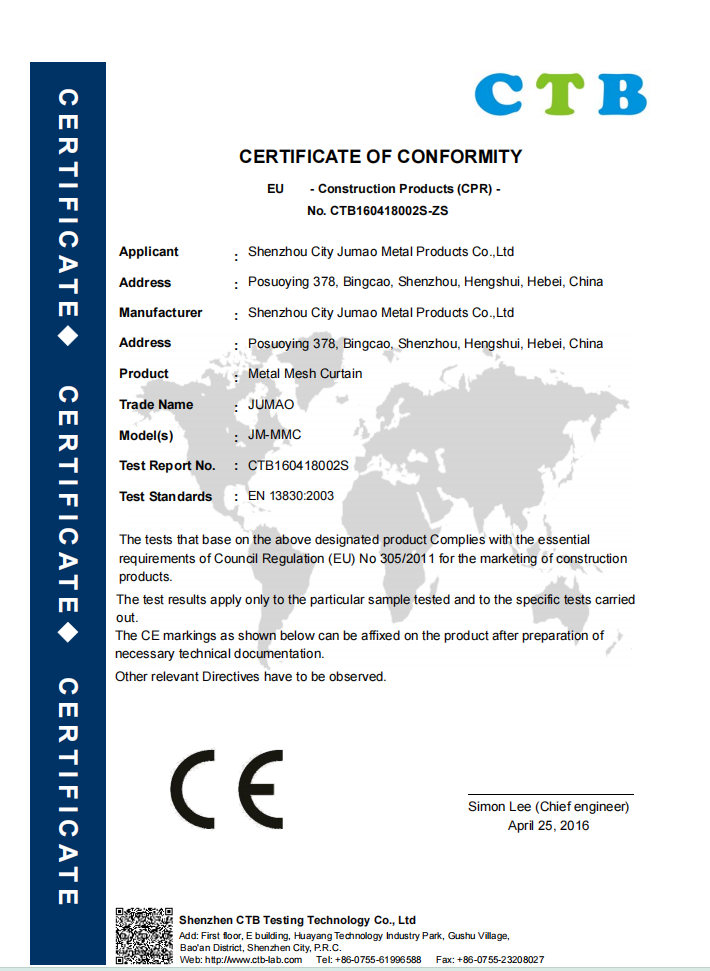
A certificate of conformity is the document most often over-read in a mesh submittal. Jumao holds a certificate of conformity under the EU Construction Products Regulation (CE-CPR), certificate number CTB160418002S-ZS, issued on 25 April 2016 with a stated validity to 31 December 2099. Its scope names a specific item: Metal Mesh Curtain, model JM-MMC, trade name JUMAO, referencing EN 13830:2003.
Read that scope again, because this is exactly where reviews break down. The certificate is strong evidence for the product and model it names. It does not automatically cover a framed perforated ceiling panel, a different woven pattern, or a facade assembly built on a different model — and a reviewer who spots the gap will return the whole package, not just that page.
The practical rule is to state scope explicitly rather than imply coverage. Put the certificate number, the named product, the named model and the referenced standard in the submittal index, and say plainly where the scope ends and which other documents cover the rest of the package. A conformity certificate also does not replace project-specific test data: if the specification calls for results on the actual coating system or the actual assembly, a certificate for a different product is not a substitute.
The project-specific submittal set
Everything above is generic to the product. The submittal set is the part that is specific to the building, and it is usually the largest section of the package. A complete set typically contains:
- Transmittal and index linking each document to the specification clause it satisfies.
- Product data naming the product family and model being supplied.
- Panel schedule listing every panel size, quantity and location — the single most useful document for catching coordination errors before cutting.
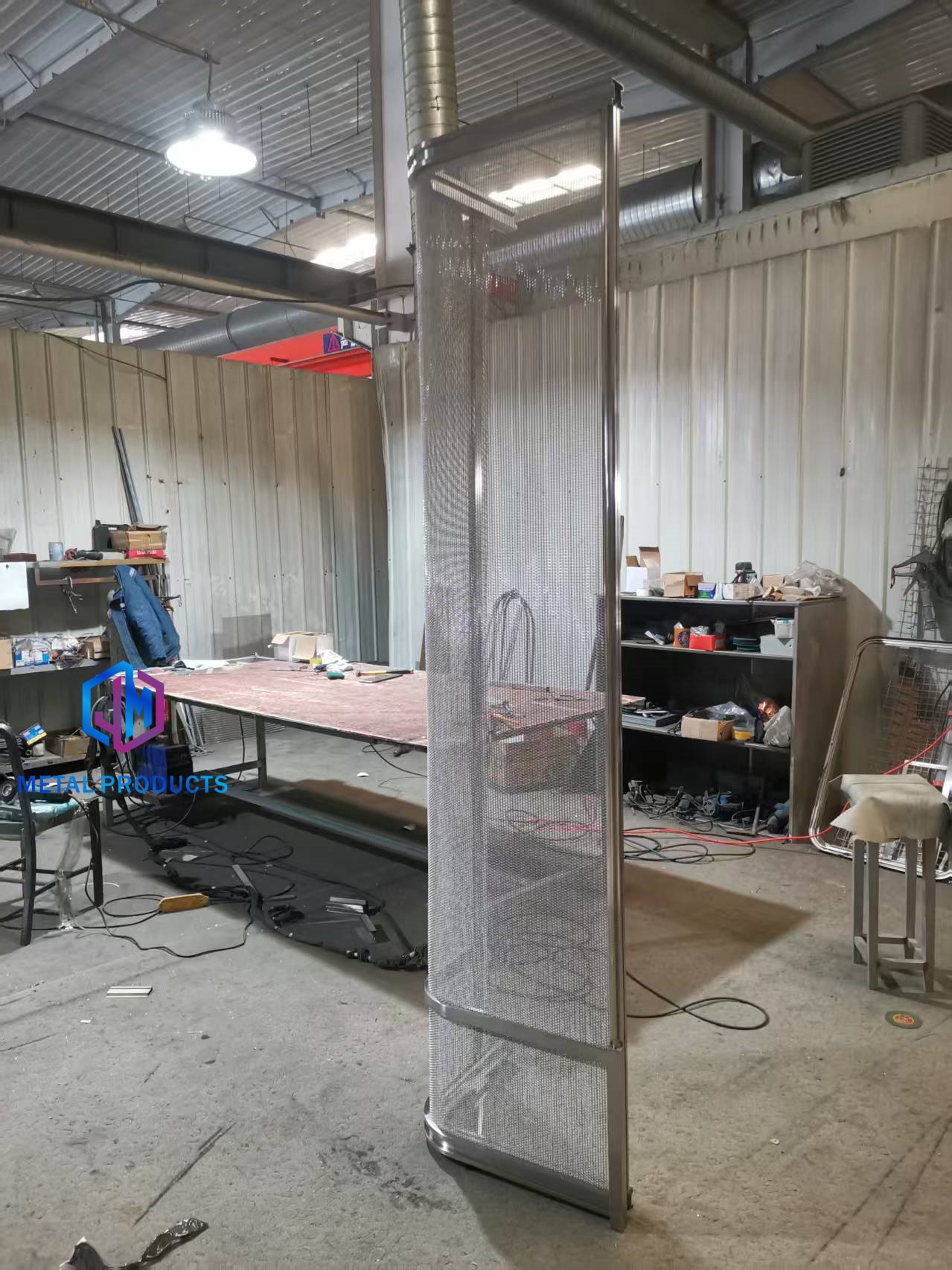
- Shop drawings covering setting-out, frame interfaces, edge treatment, tolerances and fixing positions. Jumao provides engineering drawing support and installation-system recommendations, with a six-engineer technical team supporting project drawings.
- Finish samples and colour references approved as physical samples rather than as screen images.
- Inspection records from raw material inspection, dimensional inspection, welding quality inspection, surface finish inspection, flatness inspection, colour consistency inspection, packaging inspection and a 100% pre-shipment quality inspection, with third-party inspection available on request.
- Packing and marking plan showing how panels are identified so the certificate lot numbers can be matched to crates on site.
- Warranty and maintenance information for the installed assembly.
Assembling the set in the right order
Sequence matters more than completeness. A package assembled after production is a record; a package assembled before production is a control. Seven steps keep it in the control category.
- Write the document list into the order. Before the purchase order is issued, agree which certificate type, which declaration fields, which drawing deliverables and which inspection records the project requires. Anything not named at this stage is a negotiation later.
- Freeze the drawing package first. Panel schedule, setting-out, frame interfaces and tolerances should be approved before material is cut. A drawing change after cutting is a scrap event; a drawing change before cutting is an email.
- Reserve material and link the lots. Record the lot or heat numbers of the wire, sheet or coil allocated to the project and carry them into the packing list. This is the step that converts a mill certificate into traceable evidence.
- Approve the finish by sample, then declare it. Sign off the physical sample, record the colour reference, gloss and texture, and issue the coating declaration against those recorded values rather than against a product name.
- Assemble conformity documents and mark the scope. List each conformity document, the product and model it names, and the part of the package it covers. State the gaps explicitly and name the document that closes each gap.
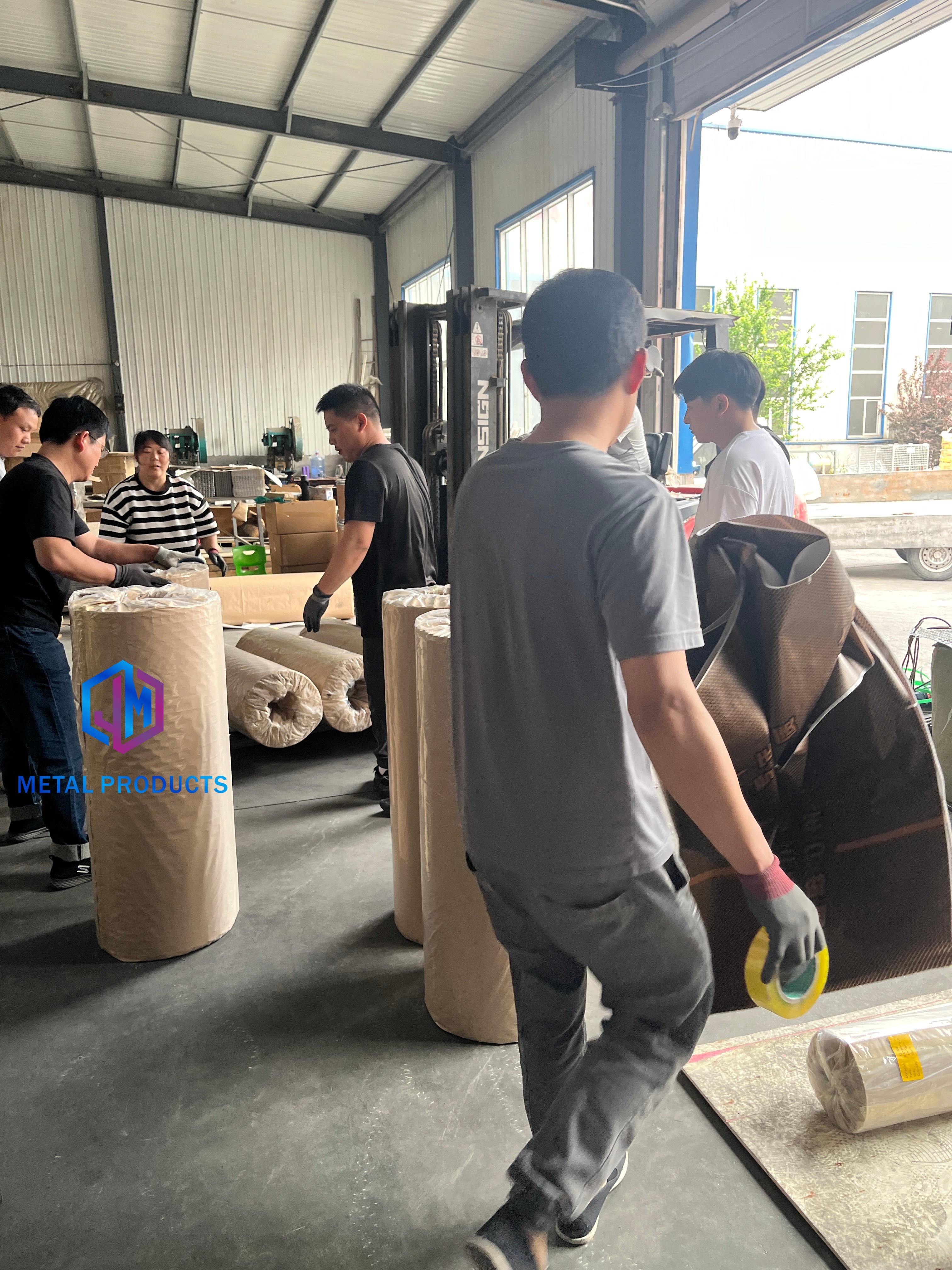
- Inspect before packing, then pack for traceability. Pre-shipment inspection is the acceptance basis, so the inspection record should be complete before crates are closed — not reconstructed afterwards.
- Transmit, log revisions, and hand over an as-built set. Keep one revision log for the whole package. Reviewers who receive three versions of a panel schedule without a log will ask for all three to be resubmitted.
Mapping a specification to the two common packages
The same five document groups apply to ceilings and facades, but the emphasis shifts because the failure modes shift. Mapping the specification to the package type before writing the submittal saves a full review cycle.
Metal Mesh Ceiling Panel packages
Ceiling reviews concentrate on what a occupant will see from below: flatness across a continuous plane, colour consistency from panel to panel, module coordination with lighting and services, frame and suspension interfaces, and access for maintenance. The documents that carry the most weight are therefore the panel schedule, the shop drawings and the flatness and colour consistency inspection records, supported by the finish declaration.
The typical failure is approval by chip. A colour approved on a small sample under showroom lighting can read differently across a 200 m² ceiling plane, and the reviewer — not the sample — carries the risk. Where a project has a large continuous ceiling, ask for the colour consistency inspection record to be issued against the approved sample reference, not against a general colour family.
Architectural Metal Mesh Facade System packages
Facade reviews concentrate on durability and responsibility: substrate grade for exterior exposure, coating system and its build, attachment and fixing approach, tolerances at panel joints, and the scope of conformity documents. The alloy declaration and the coating declaration move to the front of the queue, because they answer the questions that cannot be corrected after installation.
One boundary is worth stating plainly. Structural performance of a facade system — wind load, deflection, fixing design — is engineering work for the project's engineer of record. The supplier's submittal supplies material grades, geometry, finish, fabrication data and inspection records; it does not substitute for the engineer's calculations, and a supplier document presented as an engineer's calculation should be rejected on both sides. Keeping that boundary visible in the index prevents a reviewer from assuming the package claims more than it does.
Cross-border facade shipments add one more document. A 2019 U.S. Customs and Border Protection ruling (NY N307552) classified stainless steel mesh with aluminum edge bindings under subheading 7314.14.1000. Classification depends on the actual product and its edge treatment, so the correct approach is to confirm the applicable heading for the specific panel being shipped rather than to reuse a code from a similar project.
How regional reviewers differ
European Union. Where a construction product falls within the scope of a harmonised standard, the review starts from the declaration logic and its scope, then moves to the project specification. Prepare the conformity document and an explicit scope statement first, and expect questions about intended use — a document that covers a product but not the intended application will be queried.
United Kingdom. The document logic is similar, with project-specific specifications doing more of the work. Fire-related documentation is frequently requested as a separate package by the project team rather than bundled into the material submittal, so keep it separable.
North America. The process is procedural and stage-gated: product data, mill test reports and shop drawings are submitted for approval, and fabrication is expected to follow the approved drawings. The submittal is reviewed as a sequence, so an out-of-order package is returned even when every individual document is acceptable. Cross-border shipments add customs classification to the same file.
Middle East and Gulf. Material approval by the consultant or engineer typically gates production release, and approval is often sample-led — physical samples plus datasheets plus certificates before the factory is allowed to start. Import documentation is handled separately at port, so the project file and the shipping file should be maintained as two distinct sets that reference each other.
Southeast Asia and Australia. Consultant and project QA review runs alongside import paperwork. Tropical and marine service environments push the substrate grade and coating declaration to the front, because those are the two variables most exposed to the climate the building actually sits in.
| Review context | What reviewers press on | Prepare first |
|---|---|---|
| European Union | Declaration logic, intended use, scope of conformity | Conformity document with a written scope statement |
| United Kingdom | Project specification clauses; separately packaged fire documentation | Clause-by-clause index, fire documents kept separate |
| North America | Stage-gated submittal, shop drawing approval, mill test reports | Product data and shop drawing set, then MTRs |
| Middle East / Gulf | Consultant material approval before production; sample-led sign-off | Physical samples, datasheets and certificates as one pack |
| Southeast Asia / Australia | Consultant QA plus import paperwork; climate-driven durability | Alloy and coating declarations |
What documentation looks like at project scale
Document requirements grow with area, because the number of lots, batches and panels grows with it. Three project references from the manufacturer's records show where that pressure lands.
A 3,600 m² office building exterior cladding and sunshade package in Singapore used a lightweight aluminum structure with customizable diamond mesh perforations and an anti-corrosion powder coating, specified for tropical conditions. At that area the coating declaration and the substrate alloy declaration become the anchor documents, because they are the two claims that cannot be verified by looking at the installed facade.
A 1,280 m² elevator hall and corridor cladding package for a high-end residential development in Saudi Arabia used custom micro-perforation with a copper metal coating and a modular installation approach. Modular installation puts the panel schedule under pressure: every module must be identified, and colour consistency has to be proven across batches rather than within one.
A 260-unit office interior package in Brazil used suspended light-box frames and ceiling decorative cubes with uniform punching aperture and a scratch-resistant coating. Interior packages of this type lean on dimensional records and frame drawings more than on conformity scope, because the visible risk is fit and finish rather than weather exposure.
These references describe documented project scope and results from the manufacturer's records. The document expectations described alongside them are the normal requirement for packages of that type, not a claim about the specific paperwork those projects filed.
What each document proves, and what it does not
| Document | Proves | Does not prove | Issued by |
|---|---|---|---|
| Mill certificate | Composition and properties of a specific metal lot | That the shipped panels came from that lot, unless lot numbers are traced forward | Metal producer |
| Alloy declaration | Which grade is used in each component of the assembly | Corrosion performance in a specific environment | Fabricator |
| Coating declaration | Coating system, colour reference, recorded build, batch | Long-term colour retention or weathering outcome | Coater / fabricator |
| Certificate of conformity | Conformity for the named product and model under the referenced standard | Coverage of other products, patterns or assemblies | Certification scheme |
| Shop drawing set | What will be fabricated, to which dimensions and tolerances | That fabrication matched the drawing | Fabricator |
| Pre-shipment inspection record | Condition of the goods at the agreed acceptance point | Performance after installation or site handling | Fabricator / third-party inspector |
The table is also a negotiation tool. When a specification asks for a document, ask which of the four columns it is meant to fill. Clarifying that at tender stage prevents the familiar situation where a certificate is supplied to answer a question only a test report could answer.
Frequently asked questions
What documents should be included in an architectural metal mesh submittal package?
A complete package normally contains five groups: the mill certificate for the base metal used in the panels; an alloy declaration covering every metallic component, including mesh, frame, edge binding and fixings; a coating and finish declaration stating the coating system and colour reference; conformity documents with an explicitly stated product scope; and the project-specific submittal set — panel schedule, shop drawings, finish samples, inspection records, packing and marking plan, and warranty information. The exact list is set by the project specification, so it should be confirmed before the purchase order is issued.
Does a mill certificate cover the finished mesh panel?
No. A mill certificate reports the chemical composition and mechanical properties of a specific lot of wire, sheet or coil produced by the mill. It does not describe weaving, perforating, framing, coating or panel dimensions, and it does not prove that the panels in the crate were made from that lot unless the lot numbers are carried through the packing list and the inspection records. The certificate is one link in the chain; traceability is what connects it to the shipment.
How do I evaluate a custom architectural metal mesh panel manufacturer for facade projects?
Check five things. Customization scope: whether mesh pattern, opening size, wire diameter, material grade (SS304/316, aluminum, brass, copper), panel dimensions, frame structure, edge treatment, surface finish, colour and installation system can be controlled within one package. Drawing capability: whether project shop drawings and setting-out are produced before material is cut. Quality control: whether inspection covers raw material, dimensions, welding, surface finish, flatness, colour consistency and packing, with a 100% pre-shipment inspection and third-party inspection available. Capacity and lead time: stated monthly output against your programme. Documentation: whether the mill certificate, declarations and a scoped conformity statement can be issued with the shipment. Jumao, for example, states a monthly capacity of 5,000–10,000 m² and a lead time of 7–60 days depending on order quantity and customization.
Can I order a sample, and what are the acceptance terms?
Sampling is a normal step in this category. Jumao's stated minimum order is 1 square metre, acceptance is based on pre-shipment inspection, and third-party inspection is available on request. Approve the finish from a physical sample and record the colour reference, gloss and texture in writing, because a verbal or on-screen colour approval is the most common source of later disagreement between what was ordered and what was delivered.
How long does production take once documents are approved, and what are the payment and delivery terms?
Production lead time is 7–60 days depending on order quantity and customization. Confirm the start point of that window — whether it runs from deposit, from approved drawings, or from material arrival — because the same 7–60 day range produces very different delivery dates depending on which event starts the clock. Delivery terms offered are EXW, FOB, CFR and CIF, and payment terms are 50% deposit in advance with the 50% balance before shipment by T/T. Document and drawing queries can go directly to info@jumao-decorfabric.com or +86-151-2783-7706 on WhatsApp.
Conclusion
The mesh is rarely the reason a package stalls. What stalls it is a certificate that does not name the product being supplied, a declaration that describes a finish family rather than a recorded coating system, or a drawing set approved after the material was cut. Each of those is decided in the first two weeks of an order, not in the last two.
The working method fits on one page: fix the document list in the purchase order, freeze drawings before cutting, carry lot numbers from mill certificate to packing list, approve finishes physically and declare them numerically, and state conformity scope explicitly instead of implying it. Whether the package is a Metal Mesh Ceiling Panel set reviewed for flatness and colour consistency or an Architectural Metal Mesh Facade System set reviewed for substrate grade and coating build, those five habits cover most of what a reviewer will ask — and leave the remaining questions where they belong, with the specifier, the engineer and the authority having jurisdiction.
Have Questions or Need More Details?
Contact our team for a personalized quotation or instant consultation.
Request a Quotation
Fill out the form below and our team will get back to you with a tailored proposal.
WhatsApp Direct Chat
Prefer to chat in real-time? Message us on WhatsApp for instant assistance & quick answers.
- Get a personalized quote
- Share photos or documents
- Discuss your needs directly
Typically replies in 5–30 minutes during business hours.