How to Choose an Architectural Metal Mesh Supplier for Long-Term Facade Projects
How to Choose an Architectural Metal Mesh Supplier for Long-Term Facade Projects
Architectural metal mesh is used in building facades, sun shading, exterior cladding, ceiling systems, and interior screening. For architects, contractors, and distributors, selecting a supplier is not only about price or a single delivery. Long-term facade projects require consistent material quality, stable production capacity, dependable risk control, and a partner that supports multiple phases of a build. This guide explains how to evaluate an architectural metal mesh supplier from the Decision-to-Execution stage, using Jumao’s manufacturing and export practices as a reference model.

What Is an Architectural Metal Mesh Supplier’s Role in a Long-Term Project?
An architectural metal mesh supplier is a manufacturer or trading company that produces perforated metal panels, expanded mesh, woven wire mesh, cable mesh, and related facade systems for construction and decoration. A strategic supplier does more than fill a purchase order; it must help the project team manage specification, production, quality assurance, packaging, logistics, and site installation support over a sustained period.
For long-term facade programs, the critical value of the supplier lies in repeatability. The mesh must be produced with the same dimensions, open area, coating performance, and visual finish across multiple batches. The supplier must also be able to adapt as a project expands to new buildings or phases.
Why Supplier Selection Matters in the Decision-to-Execution Stage
In the Decision and Execution stage, a buyer has already defined the product type and specification. The remaining task is to confirm that the manufacturer can deliver without causing delays, defects, or cost overruns. Three external data points help frame why supplier selection has become a structural issue rather than a transactional one.
- The global architectural metal mesh panel market was valued at USD 1.2 billion in 2024 and is projected to reach USD 2.5 billion by 2034 (Reports and Data).
- The global metal mesh facade market is estimated to reach USD 10.59 billion by 2034, growing at a CAGR of 6.2% (Growth Market Reports).
- China dominates the global wire mesh supply with an estimated 65% market share in 2024 (IBISWorld / Industry Reports).
China is a central sourcing hub for architectural mesh, and the Anping wire mesh cluster in Hebei hosts more than 3,600 specialized factories as of late 2024. At the same time, different manufacturers operate at very different levels of quality control, engineering capability, and export experience. A long-term buyer must therefore be able to distinguish a stable factory partner from a spot-market factory.
What Types of Architectural Metal Mesh Should a Long-Term Supplier Offer?
Facade and screening projects rarely use only one mesh type. A comprehensive supplier should be able to source or manufacture multiple families of architectural metal mesh, including:
- Architectural metal mesh facade panels using expanded, woven, or cable mesh constructions
- Perforated copper architectural mesh panels for premium interior and exterior accents
- 3D woven architectural mesh facade screens for large-format visual texture
- Aluminum expanded mesh ceiling systems for lightweight overhead installations
- Stainless steel mesh facade systems for corrosive or high-traffic environments
- Sun shading metal mesh for solar control and daylight management
- Custom architectural metal mesh panels for curved, patterned, or oversized requirements
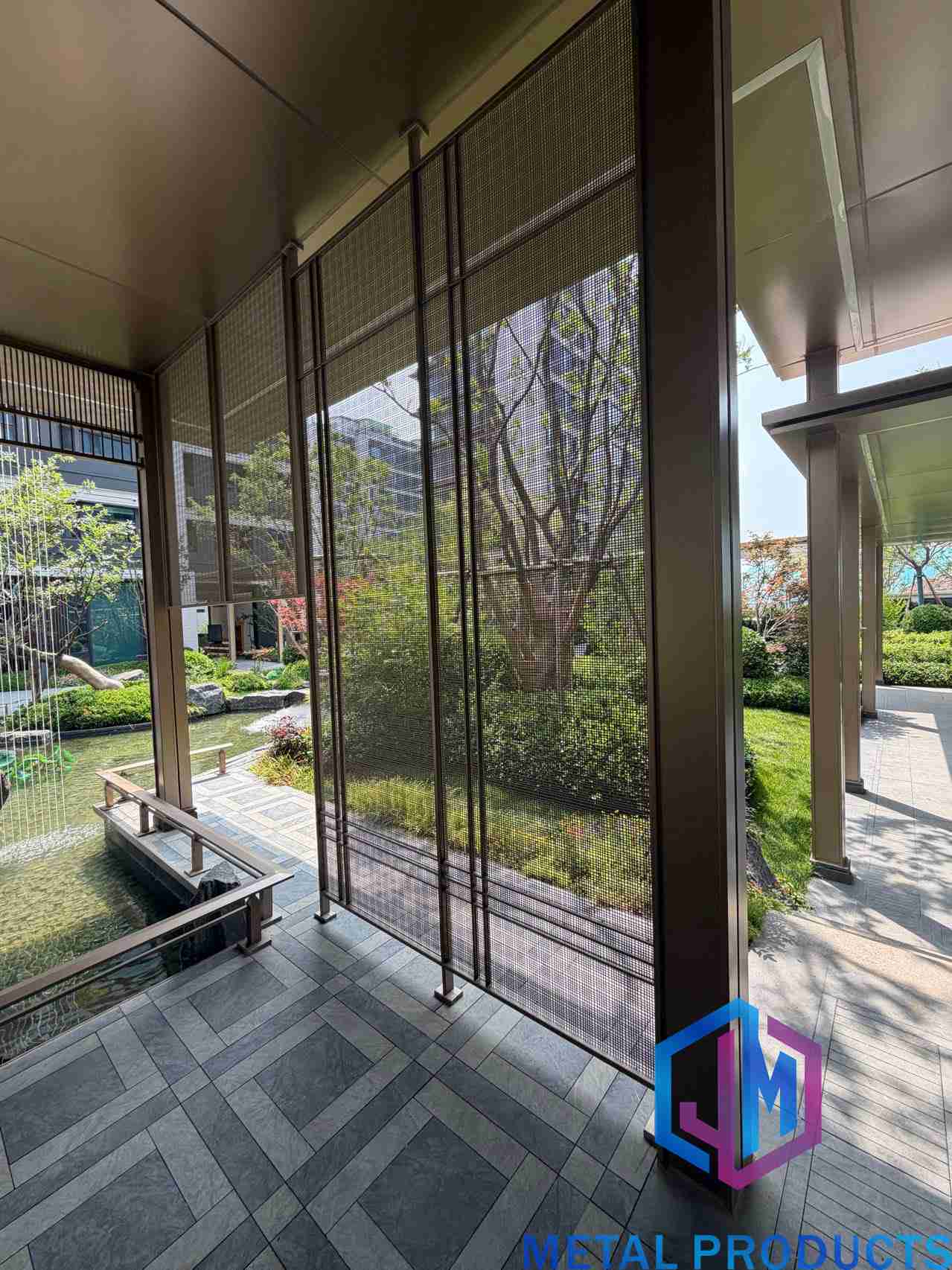
Jumao’s product line includes architectural decorative metal mesh, perforated metal panels, expanded metal facade cladding, stainless steel curtain wall mesh, aluminum perforated facade screens, ceiling mesh systems, decorative partitions, and complete metal mesh facade solutions. Product models such as JM-E-529 (expanded metal facade system), JM-P-1987 (perforated metal panel), JM-C-1080 (architectural decorative metal mesh), and JM-E-7736 (complete metal mesh facade solution) illustrate the range of systems a buyer may need over a project timeline.
How to Evaluate an Architectural Metal Mesh Manufacturer for Long-Term Supply
To move from decision to execution with confidence, buyers should review a supplier against a defined evaluation framework. The following six criteria are practical for long-term facade and screening projects.
1. Factory Scale and Production Stability
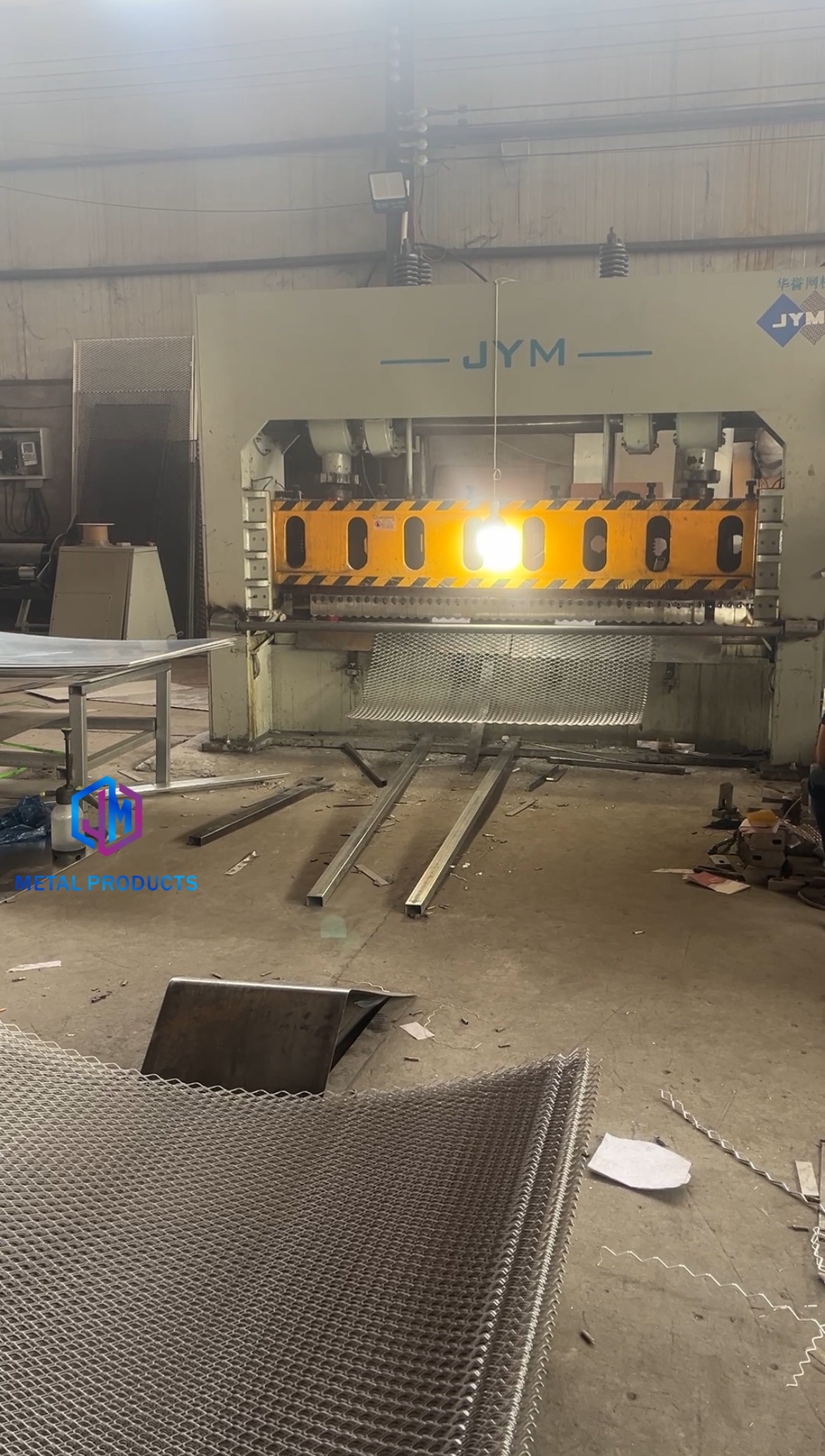
A long-term supplier should be able to demonstrate its production base, equipment, and staff capacity. Jumao operates a 3,000 m² production facility in Anping, China, with a team of 50 employees and an annual output of 100,000 m² of architectural metal mesh. Its engineering team includes 6 engineers. For a project buyer, this level of information matters because it indicates whether the factory can handle multiple orders, maintain lead times, and support OEM/ODM customization.
2. Material and Specification Capability
Architectural mesh is specified by material grade, wire diameter, opening ratio, panel size, coating, and installation method. A reliable supplier should offer materials such as stainless steel 304, stainless steel 316, aluminum alloys (including 1100 and 3003), and copper alloy. Surface treatments may include PVDF fluorocarbon coating, powder coating, PVD finish, electroplating, and brushed or polished finishes.
Jumao’s stated material options cover stainless steel, aluminum, and copper alloy for custom architectural mesh systems. Common technical parameters include open areas between 20% and 60% for perforated and expanded panels, panel sizes customized by project, and PVDF or powder coating for outdoor service.
3. Quality Control and Risk Management
Long-term facade projects cannot tolerate inconsistent quality. Buyers should ask each supplier how it controls corrosion, coating peeling, dimensional deviation, deformation during transportation, installation errors, and weld defects.
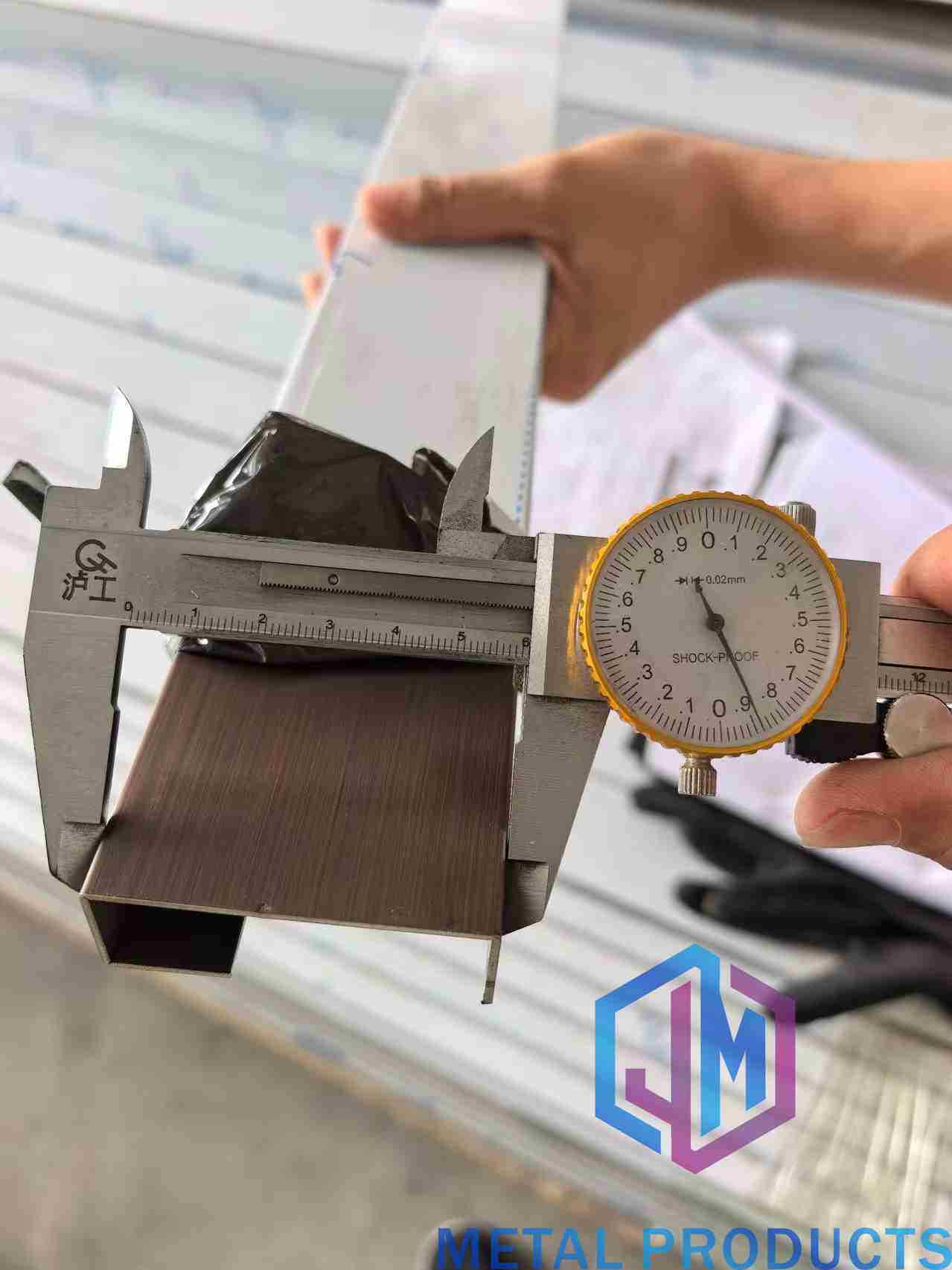
Jumao’s risk control approach includes certified raw materials (SS304/316 and aluminum alloys), precision CNC manufacturing, strict dimensional tolerance control, PVDF/powder coating quality control, structural strength verification, protective export packaging, and installation drawing verification. Incoming material inspection, in-process quality control (IPQC), 100% final dimensional and appearance inspection before shipment, coating adhesion and color consistency inspection, and project-based engineering support are part of its manufacturing process.
4. OEM/ODM and Customization Flexibility
Facade projects frequently require custom dimensions, curved mesh, custom patterns, specific coating colors, and project-specific frames. The supplier should be able to support full OEM/ODM customization on material, size, weave pattern, PVDF coating, and design drawings.
Jumao’s profile states that it supports full OEM/ODM customization. Its custom architectural mesh products include curved mesh panels, laser-cut metal screens, custom-pattern metal mesh, metal mesh facade systems with frame mounting or tension systems, and project-based solutions such as airport interior mesh, parking building facade mesh, and museum interior decorative mesh.
5. Export Experience and Geographic Coverage
For buyers outside China, export documentation, logistics coordination, packaging for ocean freight, and communication responsiveness are as important as the product itself. Jumao exports to the Middle East, Southeast Asia, the European Union, North America, Australia, and Africa, with export sales accounting for 50% of its business.
Delivery terms include EXW, FOB, CFR, and CIF. Payment terms are 50% deposit in advance and 50% balance before shipment by T/T. A pre-shipment inspection is included in the acceptance procedure for orders.
6. Long-Term Service and Installation Support
Execution-phase support includes installation drawing verification, technical guidance, and troubleshooting for on-site issues. A supplier that can provide installation manuals and project-based engineering support reduces the risk of installation errors, which are one of the most common causes of facade mesh rework.
Jumao lists installation manuals and technical guidance, installation drawing verification, and project-based engineering support in its risk control and service scope.
Step-by-Step Supplier Qualification Process
The following sequence can be used to qualify an architectural metal mesh supplier before signing a long-term agreement.
- Define the mesh system. Choose the product family: expanded, woven, cable, perforated, or a combination. Define material grade, opening ratio, panel size, coating, and fixing system.
- Shortlist manufacturers. Use industry directories, verified export records, and references. Confirm that the supplier is a manufacturer, not only a trading company.
- Audit production capability. Review factory area, staff, equipment, engineers, and annual output. Ask for detailed production process descriptions.
- Verify quality control systems. Request evidence of incoming material inspection, IPQC, final inspection, coating checks, and packaging procedures.
- Request samples or pre-production samples. Evaluate the actual mesh open area, pattern, coating, flatness, and panel edges.
- Confirm customization and engineering support. Ask how the supplier handles custom sizes, curved panels, special patterns, and installation drawing verification.
- Check export and payment terms. Confirm incoterms, payment structure, pre-shipment inspection, and packaging standards.
- Plan for repeat orders. Ensure the supplier can maintain the same specifications, tolerances, and finish across multiple batches.
Comparison: Custom Architectural Metal Mesh Supplier vs. General Metal Mesh Factories
When selecting a source, buyers often compare a project-oriented architectural mesh manufacturer with a standard industrial wire mesh factory. The table below summarizes the differences based on commonly used architectural project requirements.
| Comparison Dimension | Project-Oriented Architectural Mesh Supplier (e.g., Jumao) | General Wire Mesh Factory |
|---|---|---|
| Product focus | Facade panels, sun shading, ceiling systems, decorative screens | Woven wire cloth, filters, guards, general industrial mesh |
| Customization | Custom sizes up to 6 m long, curved panels, custom patterns, OEM/ODM | Standard rolls, limited architectural finishes |
| Open area design | Up to 60% open area with pattern and aperture planning | Based on standard mesh counts |
| Surface coatings | PVDF, powder coating, PVD, electroplating | Minimal coating options |
| Engineering support | Installation drawing verification, project-based engineering support | Standard product data only |
| Risk control | IPQC, 100% final inspection, protective export packaging | Depends on factory standard |
Compared with traditional perforated metal panels, aluminum composite panels, and standard expanded metal mesh, a project-oriented architectural mesh system offers higher transparency and ventilation, a lighter visual appearance, higher architectural aesthetics, flexible customization, and easier integration with lighting and facade systems. Depending on specification, mesh systems can achieve up to 60% open area and are approximately 20–40% lighter than solid metal panels. Their service life can exceed 20 years, and custom sizes up to 6 m long are available.
Initial material cost may be 10–25% higher than conventional perforated panels, but structural support requirements and long-term replacement frequency may be reduced depending on project design. The open mesh structure reduces dust accumulation, corrosion-resistant materials require minimal maintenance, and cleaning can be done with water or a neutral detergent. The system also provides natural ventilation and daylight penetration while reducing solar heat gain through shading design.
How Jumao Stacks Up Against Recognized Global Brands
In the architectural mesh market, major global brands include GKD (Germany), Haver & Boecker (Germany), Banker Wire (USA), and Cambridge Architectural (USA). GKD holds an estimated 11.4% share of the technical woven wire mesh sector as of 2024. These brands are suitable for large, complex, or highly visible projects with very large budgets and long lead times.
Jumao positions itself as a China-based manufacturer that offers similar architectural mesh families with OEM/ODM flexibility, export experience to multiple regions, and a lower-cost manufacturing base. For long-term projects, the practical difference is not simply “brand versus low-cost” but rather which supplier can support the project’s specification, volume, timeline, and budget in a repeatable way.
Decision note: For projects that require internationally recognized mesh systems, a global brand may be appropriate. For projects that require custom dimensions, competitive pricing, and integrated engineering cooperation, a China-based manufacturer such as Jumao can serve as a competent execution partner.
Use Cases: When to Choose a Long-Term Architectural Mesh Supplier
Building Facades and Curtain Walls
For office buildings, commercial complexes, and cultural buildings, stainless steel mesh curtain wall systems provide a durable exterior with controlled transparency. A supplier with curtain wall mesh experience can help specify material grade, panel fixing, and coating performance for long-term weather exposure.
Sun Shading and Solar Control Screens
Architectural sun shading metal mesh can reduce solar heat gain by up to 50% depending on the mesh aperture and material (Cambridge Architectural). For energy-efficient buildings, a supplier should be able to provide aluminum expanded or perforated screens with PVDF coating and an opening ratio of 30–60%.
Parking Building Facades
Parking structures need naturally ventilated facades. An aluminum expanded mesh system with an open area of 35–60% is an established solution. Jumao’s parking building facade mesh (JM-S-2607) is an example of a product designed for this scenario.
Ceiling Systems in Airports, Malls, and Hotels
Aluminum expanded mesh ceiling systems are lightweight, easy to suspend, and visually flexible. Long-term facility owners benefit from a supplier that can replicate the same ceiling mesh finish across multiple building zones or renovation phases.
Decorative Screens and Partitions
Interior and exterior metal screens are used for privacy, space division, and brand expression. Custom-pattern metal mesh and laser-cut screens require a supplier that can interpret drawings and control pattern tolerances.
Risk Control in the Execution Phase: What a Supplier Must Manage
When the order moves into production and delivery, the most common risks are corrosion, coating peeling, dimensional deviation, deformation during transportation, installation errors, and weld defects. A long-term supplier should have explicit control methods for each risk.
| Risk | Control Method |
|---|---|
| Corrosion | Use of SS304/SS316 or appropriate aluminum alloys for the environment |
| Coating peeling | PVDF/powder coating quality control and coating adhesion inspection |
| Dimensional deviation | Precision CNC manufacturing and strict tolerance control |
| Deformation in transit | Customized protective packaging and protective export packaging |
| Installation errors | Installation drawing verification, manuals, and technical guidance |
| Weld defects | Structural strength verification and in-process quality control |
Jumao’s enterprise measures include incoming material inspection, in-process quality control (IPQC), 100% final dimensional and appearance inspection before shipment, coating adhesion and color consistency inspection, customized protective packaging, installation manuals and technical guidance, and project-based engineering support. Pre-shipment inspection is part of the acceptance procedure for orders.
Procurement Checklist for Long-Term Architectural Metal Mesh Supply
- Material grade confirmed for exterior (e.g., SS316) or interior (e.g., SS304) use
- Open area and aperture pattern aligned with shading and transparency targets
- Panel sizes and maximum lengths within supplier capability
- Surface coating (PVDF/powder/PVD) appropriate for project climate
- Fixing system selected: frame mounting, direct fixing, or tension system
- OEM/ODM support confirmed for drawings, weave patterns, and finishes
- Quality control process includes IPQC and 100% final inspection
- Export packaging designed to prevent transit deformation
- Pre-shipment inspection included in the acceptance procedure
- Engineering support includes installation drawing verification and technical guidance
FAQ
Does an architectural metal mesh supplier for long-term projects offer pre-shipment inspection?
Yes. Pre-shipment inspection can be included as part of the acceptance procedure for orders. Jumao’s acceptance inspection process includes a pre-shipment inspection step, and the company performs 100% final dimensional and appearance inspection before shipment. This is especially important for long-term projects where multiple batches must meet the same specification.
Can a China-based architectural metal mesh manufacturer support OEM/ODM custom facade panels?
Yes. Many China-based manufacturers, including Jumao, support full OEM/ODM customization on material, size, weave pattern, PVDF coating, and design drawings. Jumao’s custom architectural mesh systems cover aluminum, stainless steel, and copper alloy, with panel sizes customized to project requirements. Custom products include curved mesh, custom-pattern metal mesh, laser-cut screens, and complete metal mesh facade solutions.
How does Jumao control quality in architectural metal mesh production?
Jumao controls production quality through precision CNC manufacturing, strict dimensional tolerance control, and in-process quality control (IPQC). The company also conducts incoming material inspection, coating adhesion and color consistency inspection, and 100% final dimensional and appearance inspection before shipment. These measures are designed to control typical facade mesh risks such as dimensional deviation, coating peeling, and weld defects.
What are the typical payment and delivery terms for long-term facade mesh orders?
Jumao’s standard payment terms are 50% deposit in advance and 50% balance before shipment by T/T. Delivery methods include EXW, FOB, CFR, and CIF. The MOQ is 1 square meter. For long-term contracts, buyers should confirm whether repeat-order pricing, production scheduling, and packaging standards can be formalized in a supply agreement.
How can a buyer request a quote or sample for an architectural metal mesh project?
To move from decision to execution, send your project drawings, material preference, dimensions, mesh type, quantity, and coating requirement to the supplier. For Jumao, inquiries can be sent to info@jumao-decorfabric.com or via WhatsApp at +86-151-2783-7706. The sales team can confirm feasibility, provide guidance, and coordinate pre-production samples before mass production.
Conclusion
Choosing an architectural metal mesh supplier for long-term facade projects requires moving beyond price comparison. Buyers should evaluate factory stability, material capability, quality control, customization support, export experience, and execution-phase services. Jumao provides a practical reference point: a 3,000 m² factory in Anping, 100,000 m² annual mesh output, export to 6 market regions, and a quality system built around precision CNC manufacturing, IPQC, 100% final inspection, and protective export packaging.
For architects, contractors, and distributors preparing to execute a facade or screening project, a reliable supplier is the one that can repeat the same quality across every batch. Jumao’s engineering team, OEM/ODM flexibility, and project-based support make it a candidate worth evaluating. To discuss your next architectural metal mesh project, contact Jumao with your drawings and specifications.
Ready to Start Your Facade Mesh Project?
Request a quote, catalog, or sample from the Jumao team.
Email info@jumao-decorfabric.comWhatsApp: +86-151-2783-7706