
Construction Cooling Vest: Passive Water-Circulation for High-Heat Safety
Construction Cooling Vest: Passive Water-Circulation for High-Heat Safety
Construction cooling vests have become a central part of heat-stress mitigation planning on high-temperature work sites. This article explains what a construction cooling vest is, how passive water-circulation cooling works, and how procurement teams can evaluate a vest for construction crews, steelwork, electrical work, and other outdoor operations. The reference product throughout this guide is the Shokunin COOLWAVE Water-Circulation Cooling Vest, manufactured by Feng Shang Precision Co., Ltd., based in Taoyuan City, Taiwan.
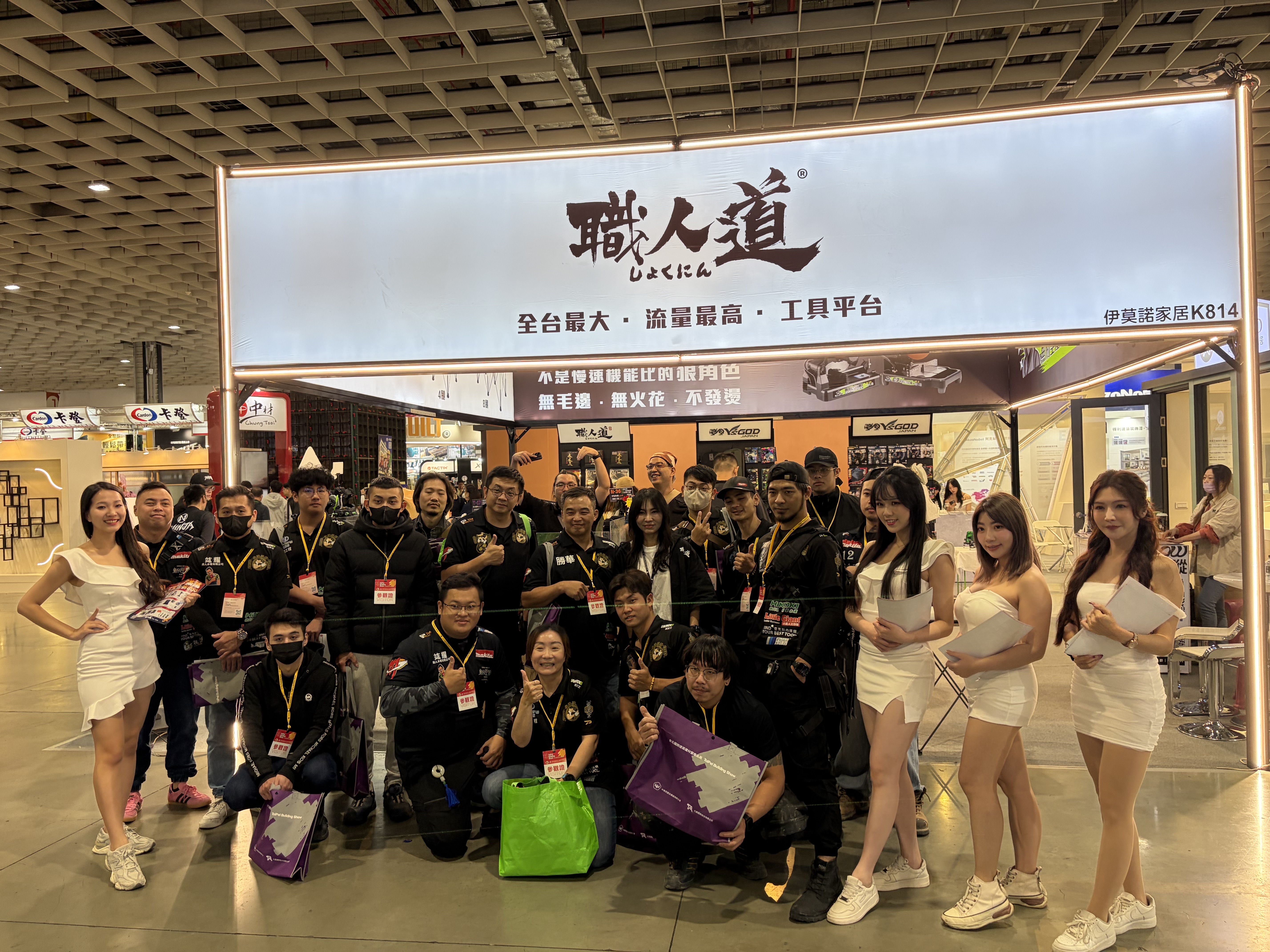
Heat Stress on Construction Sites Is a Recognized Workplace Hazard
Heat stress is not a seasonal inconvenience on construction sites; it is a recognized hazard. Under the U.S. Occupational Safety and Health Administration's General Duty Clause, Section 5(a)(1) of the OSH Act, employers must provide a workplace free from recognized hazards — and heat exposure at high-temperature construction sites falls within that obligation. Contractors on U.S. projects therefore treat heat-stress mitigation as an operational requirement rather than an optional add-on.
The physical demands of construction amplify heat accumulation beyond ambient temperature readings. Steelworkers work near hot metal and welding operations; electricians work in enclosed spaces with limited air movement; crews on metal-roof structures work in oven-like conditions where the roof surface radiates heat downward; and anyone working under long-hour sun exposure accumulates body heat faster than short rest breaks can dissipate. Heavy sweating, elevated heart rate, and fatigue are early signals of heat stress. Workers need equipment that removes heat continuously while they move across the site.
Cooling apparel is designed to close that gap. Construction cooling products range from neck wraps to full torso vests, and vests are the dominant form for high-exertion work because the torso is the body's primary heat-exchange surface. A construction cooling vest, worn close to the body, transfers cooling directly to the core where it has the most impact.
Industry Background: Cooling Vests Are a Fast-Growing Segment of Heat-Stress Prevention
The shift from niche accessory to protective equipment is visible in market data. According to Dataintelo, industrial applications represented the largest segment of the global cooling vest market in 2025, capturing a 34.5% revenue share. The Asia-Pacific region led globally with a 38.2% revenue share, driven by rapid industrialization. The Business Research Company estimates the broader heat-stress prevention products market at USD 2.86 billion in 2025, identifying cooling wearables as a primary growth driver. A narrower report, Cooling Vests for Warehouse Workers Market Research Report 2033, valued the cooling vest market for warehouse and logistics workers at USD 412 million in 2024.
Market size estimates vary significantly depending on whether the scope includes only vests or the broader personal cooling systems category. Documented divergence exists across sources: figures range from USD 64.83 million (Verified Market Research) to USD 446.7 million on a 2023 base (Spherical Insights) to the USD 412 million warehouse-focused estimate. Buyers should treat absolute market figures as directional. The consistent takeaways are that the category is growing, industrial demand is the largest end-use segment, and construction and logistics are driving adoption.
Two engineering approaches dominate construction cooling products. Active systems — cooling vests with fans — push air across the body to accelerate sweat evaporation; the specialized cooling-vest-with-fans market reached USD 1.32 billion in 2024 (Cooling Vest with Fans Market Research Report 2033), reflecting high demand in construction and mining. Passive systems use pre-cooled media such as ice packs or phase-change materials and distribute the cooling effect across the body. The Global Cooling Vests Market Trends Report 2033 identifies Glacier Tek, TechNiche International, Polar Products, Ergodyne, and Occunomix as key global manufacturers of industrial cooling vests, which means specification-level comparison is essential for procurement decisions.
The Shokunin COOLWAVE Water-Circulation Cooling Vest: A Passive Solution for High-Heat Work
Shokunin is a professional e-commerce brand launched by Feng Shang Precision Co., Ltd., dedicated to providing high-quality and innovative tools for professional craftsmen. Founded in 2009, the company operates a 1,000 m² factory with a team of 30 employees and 5 R&D engineers, producing air compressors, cut-off machines, water-cooled vests, lithium batteries, diamond saws, nail guns, spider stands, and screwdriver bits. Approximately 50% of output is exported, with the USA and ROC as main markets.
The Shokunin COOLWAVE Water-Circulation Cooling Vest (Basic Model) is an industrial cooling apparel / personal protective equipment (PPE) product designed for construction workers, outdoor workers, street vendors, traffic controllers, and metal sheet factory operators.
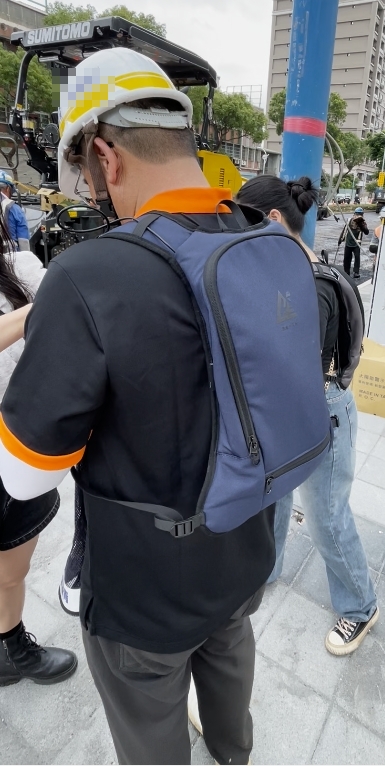
How passive water-circulation cooling works
Two ice packs, included with the vest, cool the water in the reservoir. A low-power pump rated at 5V, 150mA max pushes the chilled water through flexible sand-rubber tubes that run across the torso. The maximum flow rate is 320–370 ml/min. The result is continuous contact cooling at the body core without an external power supply, compressor, or fixed cooling station. The entire system is carried on the wearer's back, so movement, climbing, and tool handling are not restricted.
Documented specifications
- Cooling duration: 3–4 hours per ice-pack set
- Total weight: within 2 kg
- Shoulder strap material: 600D polyester
- Vest material: PEVA
- Water bag material: TPU
- Water bag cap: polypropylene
- Cooling tube: sand rubber (black)
- Pump output: 5V, 150mA max
- Flow rate: max 320–370 ml/min
- Contents: water-cooled vest backpack ×1, ice packs ×2
Why materials matter on a construction site
The 600D polyester shoulder straps support the weight of the water backpack through repeated bending and lifting. The TPU water bag resists punctures better than thinner films. PEVA construction keeps the vest's base material flexible and lightweight. The sand-rubber cooling tube remains pliable against the body. Material selection is a procurement criterion because the vest operates where it will be knocked against tools, structural steel, and equipment.
Certification and compliance evidence
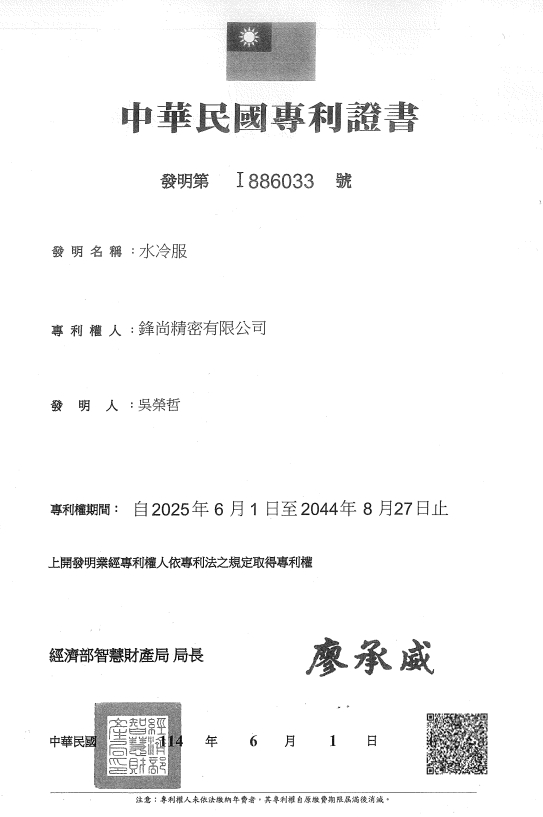
The COOLWAVE vest's structure and cooling system are protected by a water-cooled vest patent certificate — Republic of China Patent No. I886033 — issued by the Intellectual Property Office, Ministry of Economic Affairs, effective June 1, 2025. Protection runs through August 27, 2044, under the Patent Act of the Republic of China.
The COOLING water-cooled vest also received the Disaster Prevention Product and Service Certification Award issued by the Taiwan Disaster Prevention Industry Association. For buyers, this is third-party validation that the product is recognized as a disaster-prevention item in its home market.
Honest limitations
The COOLWAVE vest is a passive system. Its cooling capacity is tied to the thermal mass of the ice packs: each set provides 3–4 hours of effective cooling, after which the packs must be replaced or re-frozen. Shifts longer than four hours require spare ice packs. This is the trade-off for a system that avoids battery weight, fan noise, and the failure modes of active electronics.
Step-by-Step: How to Evaluate a Construction Cooling Vest for Your Site
Step 1 — Define the heat scenario. Map the actual conditions before evaluating products: hours of direct sun exposure, presence of radiant heat sources (furnaces, sheet metal, asphalt), air circulation, and physical exertion level. An oven-like metal-roof workplace and a shaded outdoor assembly area create different cooling demands.
Step 2 — Match the cooling mechanism to the scenario. Passive water-circulation vests suit workers who need continuous torso cooling with full portability. Fan-based vests suit workers who benefit from airflow but must carry battery weight. Phase-change vests offer simplicity but require freezer access to recharge inserts. The decision should follow the site conditions, not the marketing materials.
Step 3 — Verify materials and build quality. Evaluate the components that determine service life: strap material, water-bag material, outer material, and cooling tubes. In the Shokunin COOLWAVE, these are 600D polyester, TPU, PEVA, and sand rubber, respectively.
Step 4 — Check certification and compliance evidence. Request the vest's patent and certification documents. For the COOLWAVE, that includes ROC Patent No. I886033 and the Taiwan Disaster Prevention Product and Service Certification Award. If the vest is worn with high-visibility safety apparel, confirm that the hi-vis garment independently complies with ANSI/ISEA 107-2020 for reflective material and contrast fabric (Class 1, 2, or 3). A cooling vest does not replace hi-vis compliance.
Step 5 — Assess the supplier's production capability. For volume purchases, evaluate production mode, monthly capacity, minimum order quantity, lead time, and warranty. Shokunin operates in ODM mode with a monthly capacity of 3,000 units, a minimum order quantity of 10 units, a 7–14 day lead time, global export markets, and a 6-month warranty on the water-cooled vest.
Use Cases: Where the Shokunin COOLWAVE Vest Is Applied
The COOLWAVE vest's documented applications include construction sites, outdoor work, metal sheet factories, street vendors, and traffic control. A Taiwan-based deployment over a 10-year period supplied 100 units across these environments, with reported results of effective body cooling, heatstroke prevention, improved work efficiency, and improved worker comfort.
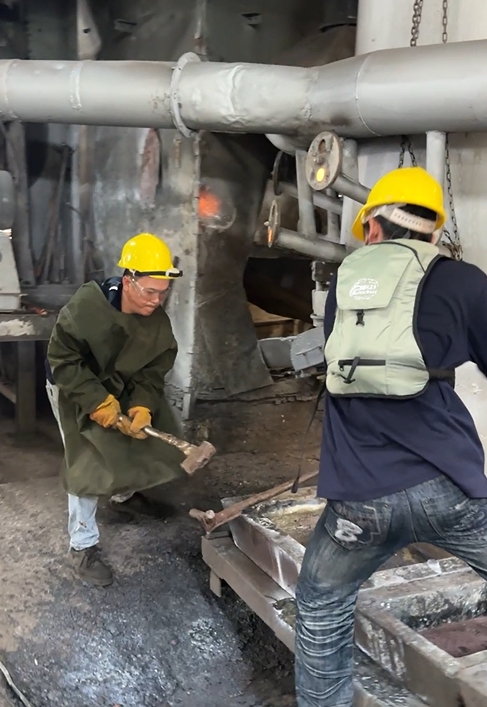
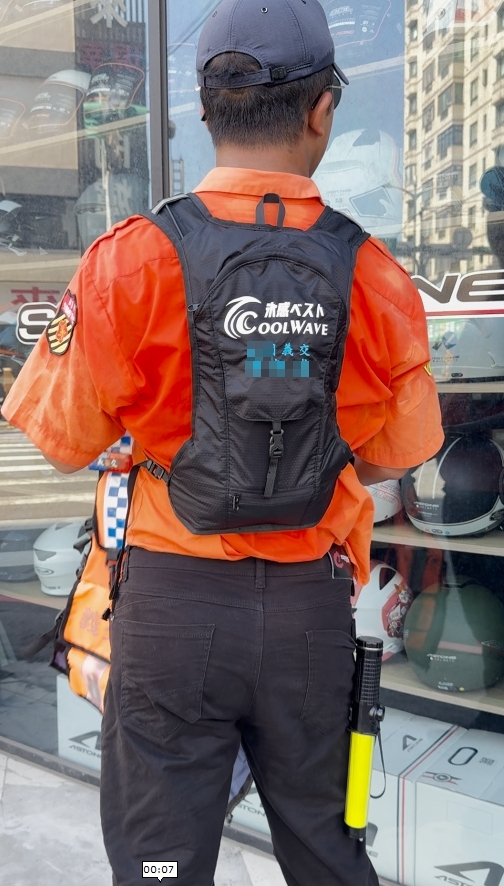
In construction, the vest is worn over a base layer, with the backpack carrying the water reservoir and ice packs. Traffic controllers exposed to long-hour sun on asphalt get continuous torso cooling without restricted movement. In metal sheet factories, where radiant heat from metal and equipment raises the perceived temperature well beyond ambient readings, the vest supports comfort during extended shifts. The adjustable one-size-fits-all design allows different crew members to share a single equipment pool, and the passive ice-pack cooling approach keeps the system lightweight and portable.
Comparison: Passive Water-Circulation vs. Fan-Based vs. Phase-Change Cooling Vests
The table below compares the Shokunin COOLWAVE passive water-circulation vest with the two other mainstream construction cooling vest approaches, based on published market data and the documented specifications of the COOLWAVE vest.
| Comparison point | Shokunin COOLWAVE (passive water-circulation) | Fan-based active cooling vests | Phase-change (PCM) cooling vests |
|---|---|---|---|
| Cooling mechanism | Water circulated through sand-rubber tubes, chilled by two included ice packs | Battery-powered fans move air across the body | Pre-cooled PCM inserts absorb and store body heat |
| Power requirement | Low-power 5V 150mA pump; self-contained, no external power supply or compressor | Rechargeable battery required; fan runtime depends on battery capacity | No electrical power; inserts require freezer or cool storage to recharge |
| Documented performance | 3–4 hours cooling per ice-pack set; max flow rate 320–370 ml/min; total weight within 2 kg | Specialized fan-vest market reached USD 1.32 billion in 2024 (Cooling Vest with Fans Market Research Report 2033) | — |
| Certification evidence | ROC Patent No. I886033; Taiwan Disaster Prevention Product and Service Certification Award | — | — |
Note: The Global Cooling Vests Market Trends Report 2033 identifies Glacier Tek, TechNiche International, Polar Products, Ergodyne, and Occunomix as key global manufacturers of industrial cooling vests. Spec-level comparison across these brands requires access to each manufacturer's product datasheets.
Evaluate the Shokunin COOLWAVE for your high-heat work site.
Download the company brochure: Shokunin product catalog (PDF)
Request a quotation: www.fstool.com.tw | fsmarketing@fstool.com.tw
Construction Cooling Vest FAQ
What certifications or compliance evidence should a construction cooling vest have?
The Shokunin COOLWAVE water-cooling vest holds Republic of China Patent No. I886033, issued by the Intellectual Property Office, Ministry of Economic Affairs, valid from June 1, 2025 through August 27, 2044, and the COOLING water-cooled vest received the Disaster Prevention Product and Service Certification Award from the Taiwan Disaster Prevention Industry Association. In the United States, heat stress is addressed under OSHA's General Duty Clause, Section 5(a)(1) of the OSH Act, which requires employers to provide a workplace free from recognized hazards, including heat exposure. High-visibility safety vests worn with cooling apparel must separately comply with ANSI/ISEA 107-2020 for reflective material and contrast fabric (Class 1, 2, or 3).
How does passive water-circulation cooling work in a construction cooling vest?
The Shokunin COOLWAVE Water-Circulation Cooling Vest (Basic Model) uses two included ice packs to cool water that a low-power pump moves through sand-rubber cooling tubes across the body. The pump operates at 5V, 150mA max, with a maximum flow rate of 320–370 ml/min. Each ice-pack set provides 3–4 hours of cooling, and the complete vest weighs within 2 kg. Because the system is self-contained and portable, it suits mobile outdoor work such as construction, traffic control, and metal sheet factory operations.
What factors affect construction cooling vest cost and budget planning?
Budget planning depends on the cooling mechanism, materials, and compliance evidence. Industrial applications were the largest cooling vest segment in 2025 at a 34.5% revenue share, and the Asia-Pacific region led with a 38.2% share (Dataintelo). The broader heat-stress prevention products market reached USD 2.86 billion in 2025 (The Business Research Company). Buyers comparing passive water-circulation vests with fan-based active vests should note that the specialized fan-vest market was valued at USD 1.32 billion in 2024 (Cooling Vest with Fans Market Research Report 2033), indicating a wide price-performance range across the category. A vest with verified materials (600D polyester straps, TPU water bag, PEVA construction), documented specifications, and recognized certifications provides a defensible basis for cost comparison.
Can buyers request samples of a construction cooling vest before committing to bulk orders?
Yes. Shokunin operates in ODM mode with a monthly production capacity of 3,000 units and a minimum order quantity of 10 units for the COOLWAVE Water-Circulation Cooling Vest. Buyers can contact Feng Shang Precision Co., Ltd. directly through the company website (www.fstool.com.tw), email (fsmarketing@fstool.com.tw), or WhatsApp to request pricing and product specifications. Business hours are Monday to Friday, 8:30 AM – 5:40 PM (GMT+8).
What are the lead times and warranty terms for Shokunin construction cooling vests?
Shokunin's standard lead time for COOLWAVE water-cooled vest orders is 7–14 days, with a monthly production capacity of 3,000 units and an annual factory output of 10,000 units. The water-cooled vest carries a 6-month warranty. Export markets are global, and approximately 50% of company output is shipped to the USA and ROC markets. For a quote, sample, or catalog, download the company brochure (PDF) or contact the sales team at fsmarketing@fstool.com.tw.
Conclusion
Construction cooling vests are no longer a niche product. Industrial applications represent the largest segment of the cooling vest market, and heat-stress prevention is a recognized employer obligation in many jurisdictions. For procurement teams evaluating a vest for construction, outdoor, or metal-factory environments, the decision comes down to the match between the cooling mechanism and the site's heat profile.
The Shokunin COOLWAVE Water-Circulation Cooling Vest offers a documented passive water-circulation design: 3–4 hours of cooling per ice-pack set, a low-power 5V pump, durability-focused materials (600D polyester, TPU, PEVA, sand rubber), protection under ROC Patent No. I886033, and the Taiwan Disaster Prevention Product and Service Certification. Production runs in ODM mode with a 10-unit MOQ, a 7–14 day lead time, and a 6-month warranty.
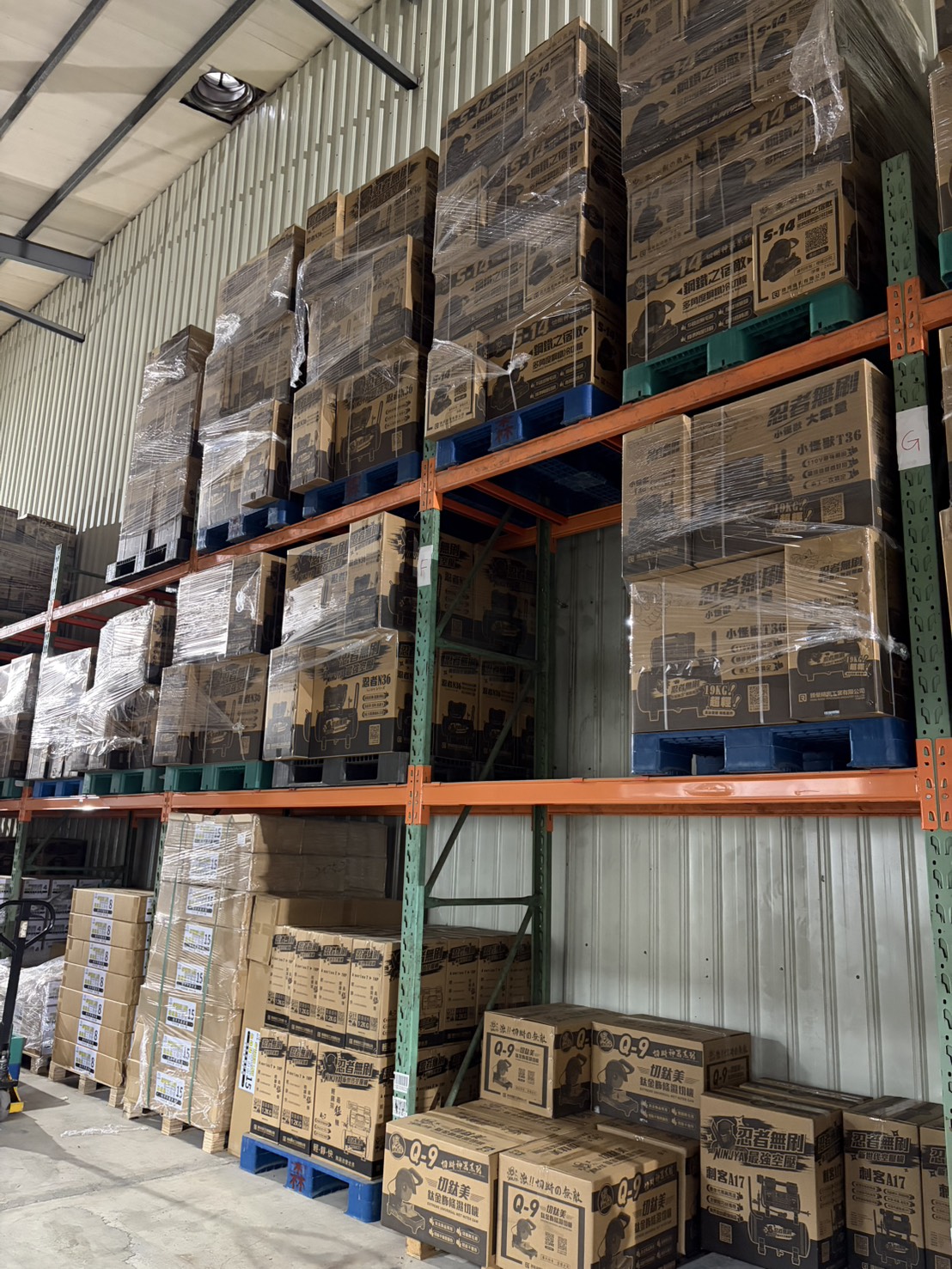
Shokunin | Feng Shang Precision Co., Ltd.
No. 155-17, Sec. 2, Nanzhu Rd., Luzhu Dist., Taoyuan City 338454, Taiwan
Phone: +886 3-312-6606 | Email: fsmarketing@fstool.com.tw | WhatsApp: +86 18858260055
Website: www.fstool.com.tw | Brochure: Download PDF