
Cooling Vest Compliance Guide: PPE Classification, Certifications, and Regional Requirements
Cooling Vest Compliance Guide: PPE Classification, Certifications, and Regional Requirements
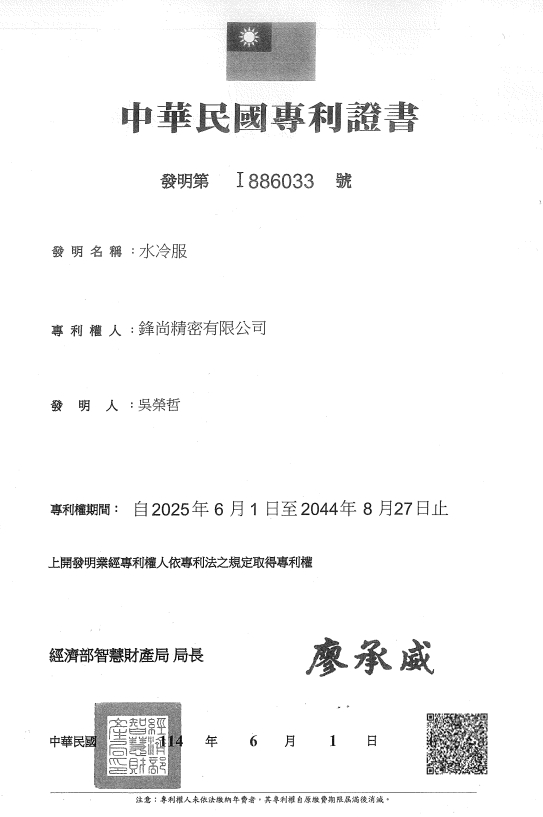
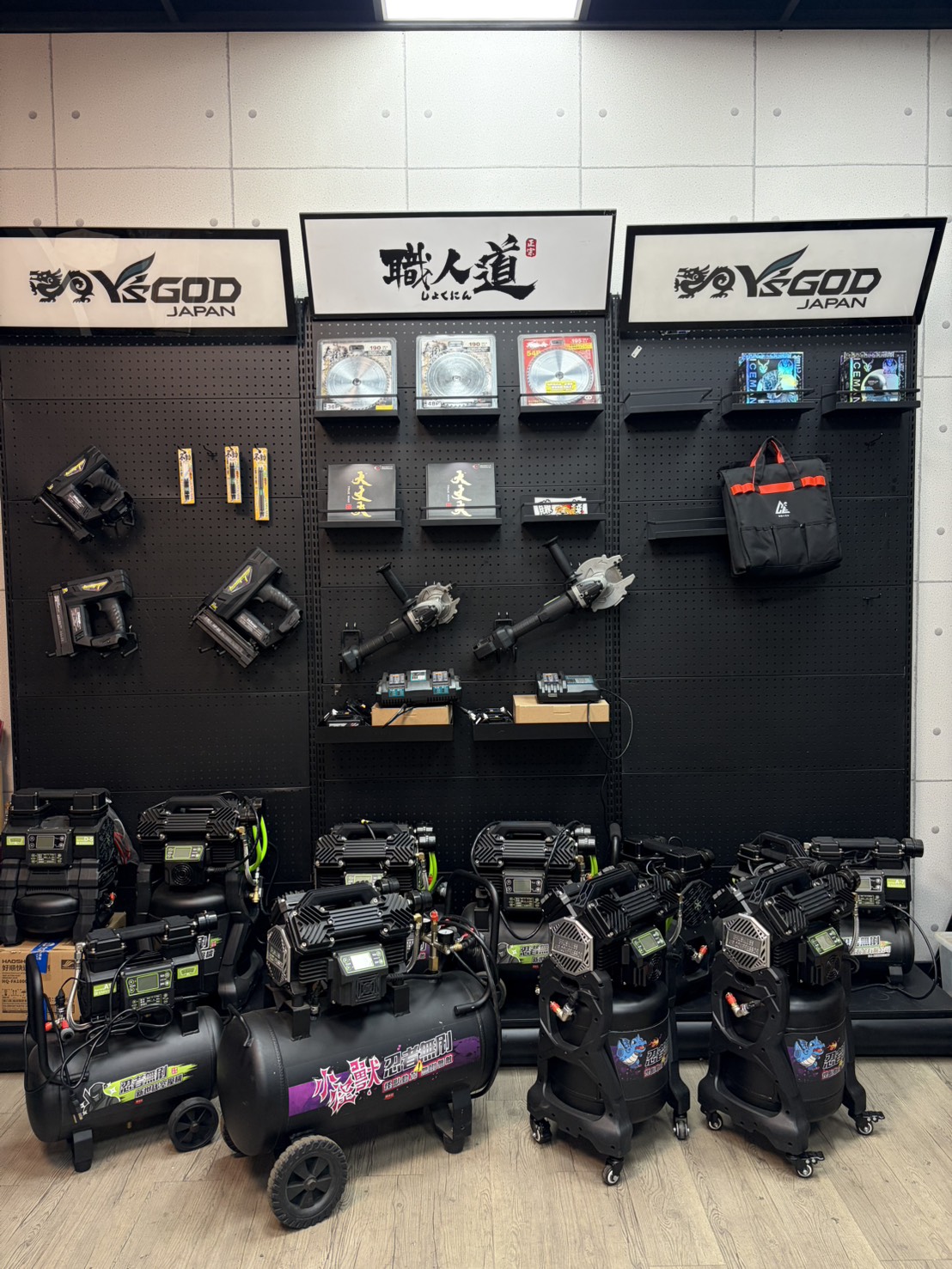
A water-circulation cooling vest rarely fails a procurement review because it does not cool. It fails because the buyer cannot answer three questions on paper: how the garment is classified, what documentation supports it, and whether that documentation means anything in the buyer's own market. This guide works through those three questions for the COOLWAVE Water-Circulation Cooling Vest (Basic Model), supplied by Shokunin, the professional e-commerce brand of Feng Shang Precision Co., Ltd., a Taiwan-based manufacturer founded in 2009.
The short answer: the product is documented as Industrial Cooling Apparel / Personal Protective Equipment (PPE), and its published credential set is Taiwan-facing — a water-cooled vest patent, I886033, covering the vest structure and cooling system, plus a Disaster Prevention Product and Service Certification Award from the Taiwan Disaster Prevention Industry Association. Neither document is a global market-access certificate. Buyers in North America, Europe, Southeast Asia, or the Middle East should treat them as evidence of original design and disaster-prevention recognition, then verify them against their own regional requirements before those credentials are written into a purchase order.
Why Cooling Vests Sit Between PPE Categories
PPE systems are built around clearly defined harm categories: impact, cut, chemical, respiratory, electrical, and so on. Heat is also a hazard, and cooling garments do address it, but they do not slot neatly into the same certification chain as a safety helmet or a cut-resistant glove. That mismatch creates two predictable failure modes when a dual cooling water cooling vest is added to a purchase list.
- Filed as a welfare item. If the vest is treated as comfort equipment, it may not qualify for a safety budget, and no certification is requested at all — until an incident review asks why the heat-control measure was undocumented.
- Filed as certified PPE without an evidence file. If the vest is treated as PPE, the safety officer may expect a full certification chain equivalent to helmets or harnesses. Cooling apparel generally does not carry that chain, because there is no single global category for it.
The practical decision rule is therefore: classify the garment first, list the documents that actually exist, and only then test those documents against the destination market. Skipping the first step is what causes most cooling-vest compliance disputes, because the same vest can legitimately be a personal protective item in one procurement system and a comfort item in another.
There is a second, more technical reason cooling vests sit between categories. The COOLWAVE vest combines two cooling paths — ice packs and a pump-driven circulation loop. The ice-pack path is documented as passive and requires no power. The circulation path uses an electrically driven pump, documented at 5 V and 150 mA (max). Once a garment contains an electrical component, buyers in some markets have to ask an additional question that has nothing to do with heat: does this component fall under electrical marking rules? That single detail is often the real reason a cooling-vest purchase slows down at the documentation stage.
Industry Background: Heat-Stress Spending Is Moving Into Formal Procurement
Cooling apparel is no longer a marginal purchase. According to Dataintelo, the global cooling vest market was valued at approximately USD 215 million in 2024 and is projected to reach USD 385 million by 2033. A broader figure from Market Research Future puts the personal cooling device market at USD 25.16 billion in 2024, projected to reach USD 94.85 billion by 2035. These two numbers are not comparable: the wider category includes handheld fans and personal air-conditioning devices, while the narrower figure covers cooling vests specifically. Buyers should cite the scope that matches the product they are sourcing.
Within the cooling vest category, industrial use is the dominant segment. Dataintelo reports that industrial applications, including construction and manufacturing, held the largest market share for cooling vests at 34.5% in 2025. Spherical Insights identifies Asia Pacific as the fastest-growing region for cooling vests, driven by rapid industrialization and large outdoor work populations.
The procurement consequence is straightforward. When cooling apparel was bought informally, site managers could accept a product on performance alone. As the category moves into formal safety and heat-management budgets, the same product has to survive a documentation review: what is the classification, who issued the certificate, is the certificate verifiable, and does it satisfy the buyer's own regulator? Active circulatory cooling mechanisms — the ice water circulation cooling vest approach — are increasingly deployed in industrial sectors to mitigate occupational heat stress, which means more of these garments are now reviewed by people whose job is compliance rather than comfort.
How the COOLWAVE Water-Circulation Cooling Vest Is Classified
Documented product classification
In the manufacturer's product data, the COOLWAVE Water-Circulation Cooling Vest (Basic Model) is classified as Industrial Cooling Apparel / Personal Protective Equipment (PPE). Read that classification at face value: it identifies the intended use environment as industrial hot work, and it places the garment inside the protective-equipment discussion rather than the general workwear catalogue. It does not, by itself, declare the vest compliant with any specific national PPE regulation, and the manufacturer does not claim that it does. Whether a given employer must treat the vest as mandatory PPE is a determination made by that employer and its local authority.
The supplier behind the product is Shokunin, the professional e-commerce brand of Feng Shang Precision Co., Ltd., a manufacturer based in Luzhu District, Taoyuan City, Taiwan, founded in 2009. The company operates a 1,000 m² facility with 30 employees and a five-engineer R&D team, and reports an export ratio of 50%, with the United States and Taiwan among its main markets. That company profile matters for compliance work because it establishes who is accountable for the documentation package: a Taiwan-registered manufacturer, not a trading intermediary.
Credentials that are actually documented
Two credentials appear in the manufacturer's published product file, and both are Taiwan-market (ROC) documents.
- Water-cooled vest patent certificate I886033. Issued by the Intellectual Property Office, Ministry of Economic Affairs, under the Patent Act of the Republic of China. The patented scope covers the water-cooled vest structure and cooling system. The certificate was issued on 2025-06-01 and runs to 2044-08-27.
- Disaster Prevention Product and Service Certification Award, issued by the Taiwan Disaster Prevention Industry Association. This is the credential behind the "certified as a disaster prevention product" statement used in the product's own descriptive material.
What each credential tells a buyer. The patent speaks to design origin: the structure and cooling system are protected intellectual property, which is useful evidence when a buyer wants to avoid a copy of an existing design. The disaster prevention certification speaks to recognition under a Taiwanese disaster-prevention framework, which is relevant where heat illness is treated as a preventable, disaster-prevention risk. Neither document is a product safety certificate, an electrical safety certificate, or a market-access approval outside Taiwan.
Verified specifications buyers can quote in a compliance file
Compliance reviews usually ask for the technical parameters that support the claim, because those parameters let the safety team compare the garment against site conditions and shift length. The following values come from the manufacturer's product data for the COOLWAVE Water-Circulation Cooling Vest (Basic Model) and can be quoted directly.
| Documented parameter | Value — COOLWAVE Water-Circulation Cooling Vest (Basic Model) |
|---|---|
| Product type | Industrial Cooling Apparel / Personal Protective Equipment (PPE) |
| Cooling duration | 3–4 hours |
| Net weight | Within 2 kg |
| Main material | PEVA |
| Water bag material | TPU |
| Water bag cap | Polypropylene |
| Cooling tube | Sand rubber (black) |
| Shoulder strap material | 600D polyester |
| Pump output | 5 V, 150 mA (max) |
| Flow rate | Max 320–370 ml/min |
| In-box contents | Water-cooled vest backpack ×1, ice packs ×2 |
| Warranty | 6-month warranty for the water-cooled vest |
What the documents do not cover
This is the point where many compliance write-ups become vague, so it is worth being explicit. The published product file does not document CE marking or UL listing. That matters because ISO and UL published guidance states that cooling systems must comply with ISO 9001:2015 for quality management and often require CE or UL marks for electrical components. The COOLWAVE vest includes an electrical pump, documented at 5 V and 150 mA (max). In markets that apply electrical-component marking rules, that pump — not the fabric, not the ice packs — is the component most likely to generate a documentation request.
The same logic applies to quality management. If the receiving market or the buyer's internal procedure requires supplier quality-management evidence, a patent certificate and a disaster-prevention award do not perform that function, and the buyer should request the specific document the procedure names.
Step-by-Step: Mapping the Credentials to Your Regional Requirements
Regional mapping is the step most buyers skip, and it is the reason "certified in Taiwan" is sometimes wrongly read as "certified everywhere." Work through the following sequence before issuing a purchase order.
- Define the garment's role in your heat plan. Decide whether the vest is mandatory PPE for a specific task or a supplementary control alongside rotation, hydration, and shade. This determines how much documentation your own procedure demands, and it is a decision only the employer can make.
- Assemble the document set from the supplier. For this product, that means the patent certificate I886033 and the Taiwan Disaster Prevention Product and Service Certification Award, together with the technical data sheet and the 6-month warranty term for the water-cooled vest. Ask for documents as verifiable copies, not cropped screenshots.
- Identify your local category and authority. Establish which category cooling apparel falls into in your market and which body governs it. Do not assume a category used in Taiwan, the EU, or North America applies elsewhere; the category assignment drives the entire verification path.
- Run the electrical-component check separately. Because the vest includes a 5 V / 150 mA (max) pump, confirm whether your market requires CE, UL, or an equivalent electrical mark for the pump assembly, and request the supplier's evidence for that specific component. Treat this as a distinct question from cooling performance.
- Verify the documents at the source. A patent number can be checked with the issuing office, and an award can be checked with the issuing association. Verification at source is the difference between a credential and a claim, and it is the step that protects the buyer during an audit.
- Close with acceptance criteria and records. For this product, the stated acceptance criterion is a pre-shipment test, with shipment after payment and freight paid by the buyer. Record the acceptance result, keep the certificate copies with the batch documentation, and note the warranty period so that any failure is tracked against the correct terms.
Use Cases: Where Deployment Evidence Exists
Deployment history is not a certification, but it is useful evidence during evaluation because it shows the conditions in which the garment has already been used. The documented case for this product is a Taiwan deployment of 100 units for cooling in high-temperature environments, with a stated usage duration of 10 years. The user groups listed are construction sites, outdoor workers, metal sheet factories, and street vendors, and the reported results are effective body cooling, heatstroke prevention, improved work efficiency, and improved worker comfort.
Those user groups matter because they cover the three site profiles that most often trigger heat-illness procedures: open sites with prolonged sun exposure, metal-roof and metal-sheet factory floors where radiant heat accumulates, and mobile work such as street vending and traffic control where shade and rest breaks are difficult to schedule. Buyers evaluating a portable cooling vest for those environments can use the deployment list as a reference set and compare it against their own site profile.
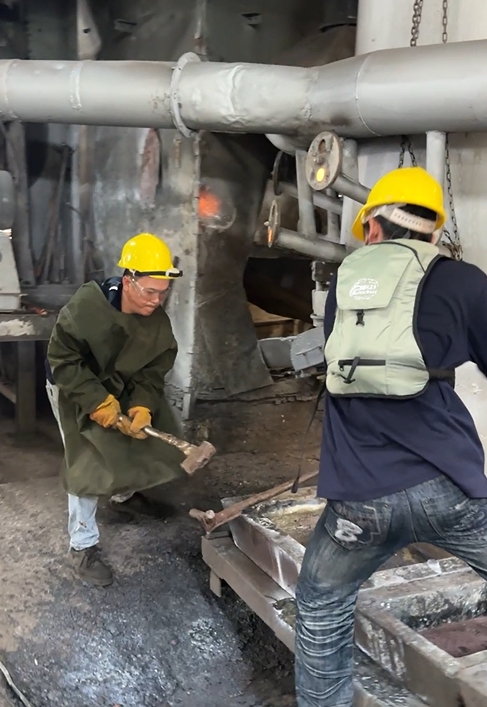
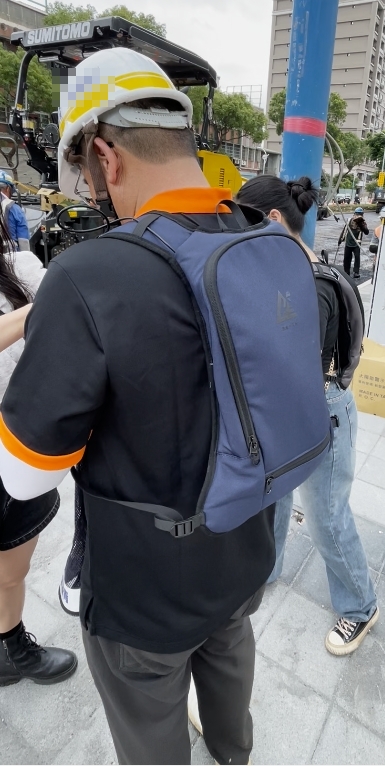
What the deployment record does not do is transfer certification. One hundred units operating in Taiwan over a stated ten-year period tells a safety manager that the design has field history; it does not tell a regulator in another country that the product meets local requirements. Keep the two claims separate in the evaluation file.
Compliance Comparison: Ice-Pack Path vs. Pump-Driven Circulation Path
Because this vest combines a passive ice-pack path with a powered circulation path, the compliance questions split along the same line. The table below compares the two paths strictly from a documentation standpoint, using the manufacturer's stated parameters.
| Compliance question | Passive ice-pack cooling path | Pump-driven circulation path |
|---|---|---|
| Power requirement | No power required (documented as passive ice pack cooling) | 5 V, 150 mA (max) pump output |
| Components likely to trigger electrical marking rules | None | Pump assembly |
| Documented performance values | Ice packs ×2 included in the box | Max flow rate 320–370 ml/min; cooling duration 3–4 hours |
| Documentation action before approval | Confirm that passive cooling matches the duration of the work segment | Confirm whether your market requires CE or UL marks for electrical components, and request component-level evidence |
The takeaway is not that one path is better. It is that the powered path creates a paperwork obligation in markets with electrical marking rules, while the passive path creates a duration-matching obligation. Buyers who need a lightweight cooling vest with no electrical component should say so at the specification stage, because that single choice changes the certification path.
FAQ: Certification and Procurement Questions
Is the COOLWAVE Water-Circulation Cooling Vest classified as PPE, and what certification does it carry?
Yes on classification, with a caveat. The product data lists the COOLWAVE Water-Circulation Cooling Vest (Basic Model) as Industrial Cooling Apparel / Personal Protective Equipment (PPE). Its documented credentials are a water-cooled vest patent certificate, I886033, issued by the Intellectual Property Office of Taiwan's Ministry of Economic Affairs for the vest structure and cooling system, and a Disaster Prevention Product and Service Certification Award from the Taiwan Disaster Prevention Industry Association. Whether the vest is mandatory PPE for a specific employer is decided by that employer and its local authority, not by the supplier.
Can Taiwan-issued certification be used directly for procurement in another country?
Not by assumption. Both credentials are Taiwan-market documents, and no CE marking, UL listing, or equivalent third-country approval is documented in the product file. Per published ISO and UL guidance, cooling systems must comply with ISO 9001:2015 for quality management and often require CE or UL marks for electrical components — and this vest includes a 5 V / 150 mA (max) pump. The correct approach is to verify the certificate with the issuing body, check your own market's category and electrical-marking requirements, and only then decide whether additional testing or documentation is needed.
What production capability and ODM support does the manufacturer offer?
Shokunin's manufacturer, Feng Shang Precision Co., Ltd., provides ODM production services for the cooling vest line, with a monthly production capacity of 3,000 units. The company operates a 1,000 m² facility in Taoyuan City, Taiwan, with 30 employees and a five-engineer R&D team, and reports a 50% export ratio with the United States and Taiwan among its main markets. Buyers running an ODM program should confirm the exact scope of ODM work in writing before the first order, since scope confirmation is what converts a capability statement into a project plan.
What are the purchasing and payment terms?
The stated commercial terms are a minimum order quantity of 10 units, shipment after payment, freight paid by the buyer, and full payment. The stated acceptance criterion is a pre-shipment test. Production lead time is typically 7 to 14 days, and the water-cooled vest carries a 6-month warranty. For buyers building a budget line, the MOQ of 10 units is the practical entry point for a first order and for site validation.
How should a buyer validate a first order before scaling?
Use the pre-shipment test as the formal acceptance gate, keep the certificate copies and the batch acceptance record together, and run the first batch against the site conditions it was chosen for — for example, a metal-sheet factory floor or a prolonged-sun-exposure outdoor crew. Because the cooling duration is documented at 3–4 hours and the net weight is within 2 kg, the validation question is whether one charge covers the work segment your crews actually run. Once that is confirmed, a lead time of 7 to 14 days and a monthly capacity of 3,000 units define the scaling envelope. For a document pack, specification sheet, or first-order discussion, request the catalogue and confirm your regional requirements with the supplier before ordering.
Conclusion: Classify, Verify, Then Map
Cooling vest compliance is not a single certificate; it is a sequence. The COOLWAVE Water-Circulation Cooling Vest is classified as Industrial Cooling Apparel / PPE, carries a Taiwan patent for its structure and cooling system and a Taiwan disaster-prevention certification award, and is documented with quotable specifications including a 5 V / 150 mA (max) pump, a maximum flow rate of 320–370 ml/min, a TPU water bag, a polypropylene cap, a sand rubber cooling tube, a 600D polyester shoulder strap, and a net weight within 2 kg.
What it does not carry is a global approval. Buyers who assume equivalence between a Taiwan credential and their own regional requirement are taking on a risk that no supplier can absorb for them. The defensible approach is to classify the garment in your own system, verify every certificate with the issuing body, run the electrical-component check against your market's marking rules, and document the result before the first purchase order. Buyers who follow that sequence get a heat-control measure they can defend in an audit; buyers who skip it inherit a documentation gap that shows up at the worst possible time.
Next Step: Documentation Pack and First-Order Review
If you are preparing a compliance file for industrial cooling apparel, request the specification sheet and certificate copies for the COOLWAVE Water-Circulation Cooling Vest from Shokunin (Feng Shang Precision Co., Ltd., Taoyuan City, Taiwan), then confirm your regional requirements before ordering.
Product catalogue (download): https://cdn.socialarks.com/sbsp//common/2026/0407/69d4a27ea7fcb.pdf
Website: https://www.fstool.com.tw/
Email: fsmarketing@fstool.com.tw
Business hours: Monday to Friday 8:30 AM – 5:40 PM (Taiwan time)