
Defining Effective Cooling Duration: Why 3 to 4 Hours is the Gold Standard
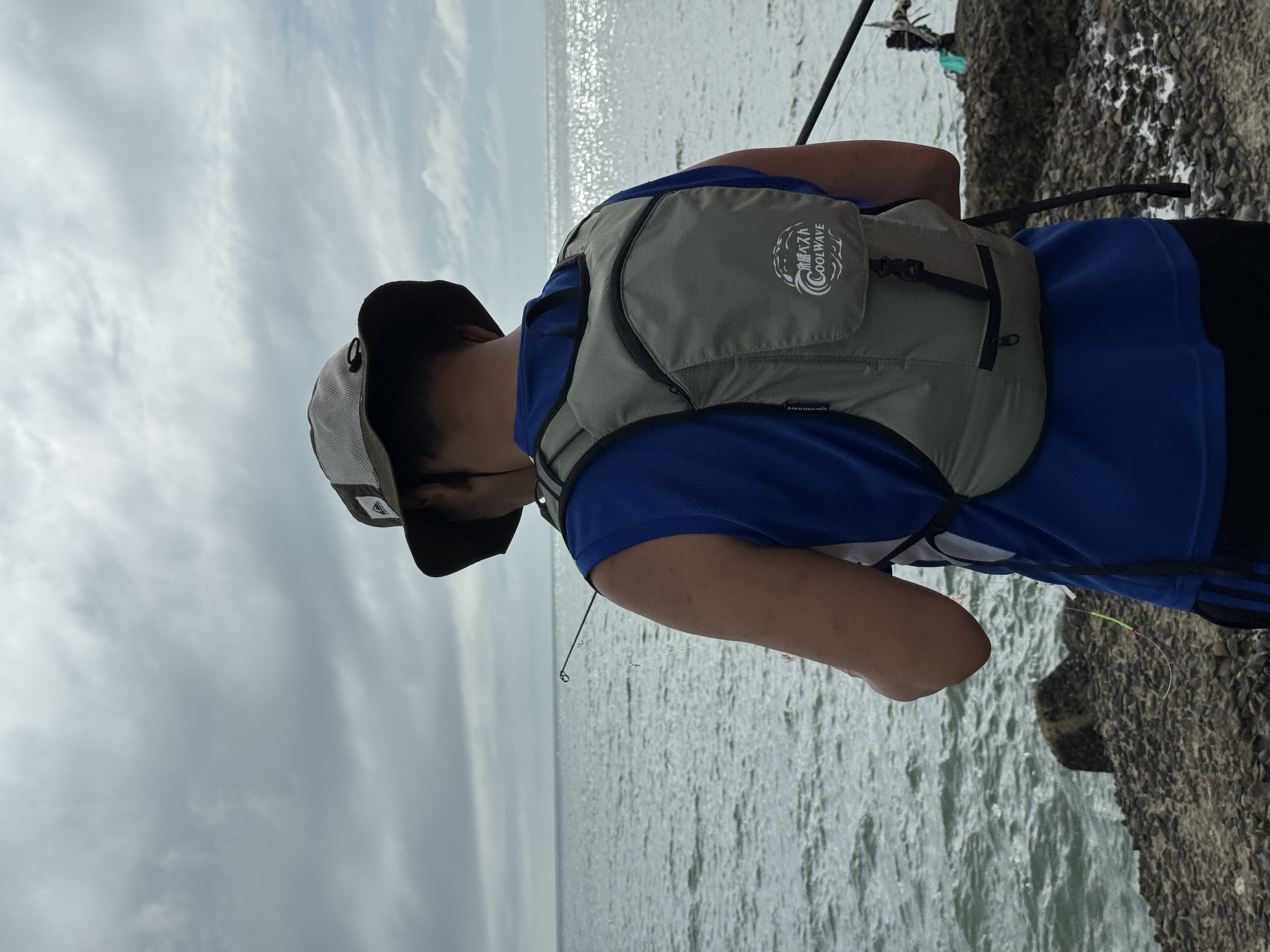
Extended outdoor exposure is the condition that separates a real cooling specification from a marketing statement.
A cooling vest's duration number is only useful if it is defined. For the COOLWAVE water-circulation vest line, the published figure is 3 to 4 hours of continuous cooling per charge and ice-pack cycle — and that is the number buyers should treat as a working benchmark, because it sits inside the range that can actually be verified, re-charged and planned around a real work shift.
Problem Definition: Why Cooling Duration Claims Are Not Comparable
Nearly every cooling vest listing carries a duration claim. Very few carry the conditions behind it. A duration figure means nothing unless the supplier states the ambient temperature, the relative humidity, the workload level of the wearer, the clothing layers underneath, the cold-source load at the start of the test, and where on the body the effect was measured.
Effective cooling duration is best defined as the length of time that a single loading of a cooling system — a charged battery, a filled reservoir, a frozen ice pack set — continues to remove heat from the wearer at a level the wearer can still perceive and use. That definition is deliberately practical rather than laboratory-fixed, because the number that matters on site is the one the worker experiences, not the one printed on a catalogue page.
Two consequences follow from that definition:
- Duration is a system property, not a battery property. The cold source, the transfer path and the electrical budget all set the ceiling together.
- Duration is only meaningful when paired with a reload time. A vest that cools for four hours but needs thirty minutes of logistics to reset is a different product from one that resets in a break period.
When a supplier publishes a duration without these conditions, the number should be treated as unreferenced. It can be repeated, but it cannot be compared.
Industry Background: Why Runtime Became a Procurement Metric
Cooling vests have shifted from a comfort accessory to an occupational-safety item, and that shift is what made runtime a purchasing criterion rather than a preference.
The global cooling vests market reached USD 342 million in 2025, according to Dataintelo's market report published in May 2026. Within that total, industrial applications accounted for a 34.5% revenue share in 2025 — the largest single application segment reported. In other words, the buyers driving this category are not leisure consumers making an impulse purchase; they are operations, safety and procurement functions buying equipment on a schedule.
The occupational-safety framing is well established. NIOSH describes wearable protection against heat exposure as auxiliary or personal cooling systems, and lists water-cooled garments, air-cooled garments, cooling vests and wetted overgarments as examples of that category. A water-circulation vest therefore sits inside a recognised PPE category rather than in general apparel.
Once cooling gear is treated as PPE, runtime stops being a comfort metric and becomes a coverage metric. It determines how many units must be in circulation to keep a shift covered, how much freezer or chiller capacity is required for ice-pack rotation, how many spare power banks are needed, and whether the vest can stay on a worker through a continuous exposure window or has to come off mid-task.
Detailed Solution: The Five Variables That Set Real Cooling Duration
Cooling duration is not a single engineering choice. It is the output of five variables that trade against each other. Understanding them is what allows a buyer to read any datasheet — including this one — critically.
1. Cold-source mass and phase behaviour
The ice pack is the reservoir. How much thermal mass is loaded at the start, and how that mass behaves as it warms, sets the absolute ceiling on cooling time. No amount of pump optimisation can extend cooling beyond the cold that was stored.
2. The heat-transfer path
Cooling has to travel from the reservoir to the torso. A pump-driven water loop carries chilled water through a distribution path against the body, so the transfer is continuous rather than dependent on how well a static pack happens to sit against a particular wearer's back. This is the difference an active circulation loop makes, and it is the reason flow rate is a published specification rather than an afterthought.
3. Circulation flow rate
Flow determines how quickly cooled water is delivered to the wearer and how quickly warmed water returns to the reservoir. The COOLWAVE water-circulation vest is specified at 320–370 ml/min. That range is high enough to keep a perceptible cooling effect moving through the loop, and low enough that the reservoir is not exhausted by pushing volume the wearer does not need.
4. Electrical budget
An active vest has to power its pump. The COOLWAVE pump is rated at 5 V, 150 mA maximum, which is a deliberately modest electrical load compatible with a standard power bank. This matters more than it appears: it means the power bank is not the constraint on runtime. On this architecture, the battery is sized to outlast the ice, and the ice is the limiting component.
5. Wearable weight and fit
Extra cold means extra mass, and mass is carried by the worker for the whole exposure window. The COOLWAVE water-circulation vest is listed at within 2 kg, which keeps the unit inside the range where a worker will keep it on rather than remove it during the hottest part of the shift. A specification that adds an hour of runtime but makes the vest uncomfortable to wear for three hours has not extended coverage; it has reduced it.
What the COOLWAVE Specification Actually Contains
Shokunin is the professional tool brand operated by Feng Shang Precision Co., Ltd., a Taiwan-based manufacturer founded in 2009 that also produces air compressors, cut-off machines and related professional equipment. The COOLWAVE water-circulation cooling vest is its cooling-apparel line, and it appears in the supplier catalogue in both a Professional model and a Basic model.
The published architecture combines two elements:
- Two reusable ice packs as the cold source, frozen before the shift and swapped as a set.
- A TPU water bag and pump-driven circulation loop, moving chilled water through the vest, powered by a power bank through a 5 V, 150 mA (max) pump at 320–370 ml/min.
Together these produce the published 3 to 4 hour continuous cooling duration per charge and ice-pack cycle, at a wearable weight within 2 kg.
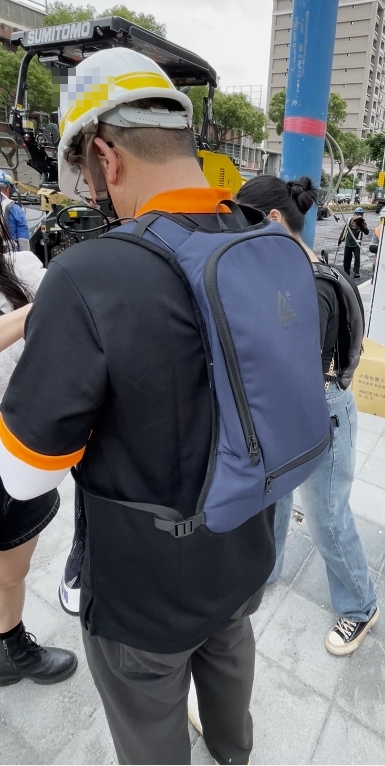
On construction sites, the useful question is not maximum runtime but whether one loading covers the exposure window between scheduled breaks.
Why 3 to 4 Hours Became the Gold Standard
The case for a 3 to 4 hour benchmark is not that it is the largest number available. It is that it is the number that survives four separate tests at once.
Test one: it covers a usable exposure block
Industrial heat exposure is managed in blocks, not in single unbroken stretches. A cooling system that holds a meaningful effect across a multi-hour continuous block covers the period when heat stress actually accumulates, and then hands over to a scheduled break for reloading. A system that loses effect earlier forces an unscheduled stop; a system that claims far longer must justify the claim with a heavier reservoir the worker then carries all day.
Test two: it balances cold load against carried weight
Runtime and weight move together. Adding an hour of cooling means adding ice, water or both, and that mass is paid for by the wearer. The 3 to 4 hour band is where the COOLWAVE design keeps the vest within 2 kg — the point at which additional runtime starts costing more in wearability than it returns in coverage.
Test three: the electrical budget stops being the bottleneck
At 5 V and 150 mA maximum, the circulation pump draws very little from the power bank. That design choice has a direct consequence for the buyer: battery selection is not the limiting factor in the runtime equation, and swapping ice packs — not swapping batteries — is the reload action that matters. It also simplifies spares planning, because one power bank specification covers a full cycle.
Test four: the number can be stated honestly
A benchmark is only useful if other claims can be checked against it. Because 3 to 4 hours comes with a defined architecture — two ice packs, a TPU water bag, a 320–370 ml/min pump on a 5 V, 150 mA supply, a vest within 2 kg — a buyer can ask a supplier to match each element. A larger headline figure without those elements cannot be evaluated, only accepted or rejected.
The practical reading: 3 to 4 hours is not a ceiling on what cooling technology can do. It is the current defensible baseline for a wearable, power-bank-driven water-circulation vest that a worker will keep on for a full exposure block. Treat larger claims as unverified until the cold-source mass, flow rate and electrical load are disclosed alongside them.
Step-by-Step: How to Verify Any Cooling Duration Claim
This sequence works on any water-circulation vest, including this one. It converts a claim into a specification.
- 01Ask for the test conditions. Ambient temperature, relative humidity, workload level, clothing layers and measurement location. A duration without these is a headline, not a specification.
- 02Ask for the cold-source load. How many ice packs, what mass each, and whether they are frozen to a stated temperature before the cycle begins.
- 03Ask for the flow rate and pump rating. The disclosed COOLWAVE figures are 320–370 ml/min on a 5 V, 150 mA (max) pump — a level of disclosure that lets you compare like with like.
- 04Ask what the power bank is doing. Confirm whether electrical capacity limits runtime or whether the cold source does. On a low-draw pump, the answer should be the cold source.
- 05Match the runtime to your exposure block, not to the shift length. Map the duration against the continuous period your workers are actually exposed before a scheduled break.
- 06Plan the reload logistic. Count how many ice-pack sets and power banks per worker are needed to keep the block covered, and confirm freezer or chiller capacity on site.
- 07Confirm the wearer will keep it on. Weigh the unit, check the fit adjustment, and run it on a real shift with real workers before committing to volume.
Use Cases Where Duration Determines Coverage
Cooling duration becomes a decision variable in any setting where the wearer cannot easily step out, remove the vest and reload it.
Traffic control and roadside direction. Officers stand in direct sun for a fixed posting. The exposure block is set by the roster, not by the worker, so a vest must hold its effect for that block or the posting becomes a heat-risk event.
Metal sheet and metal-roof factories. Radiant heat from roofing and metal stock raises the effective heat load well beyond ambient air temperature. Here the reservoir is working harder, which is why the reload plan — not the headline duration — is what keeps coverage intact across a shift.
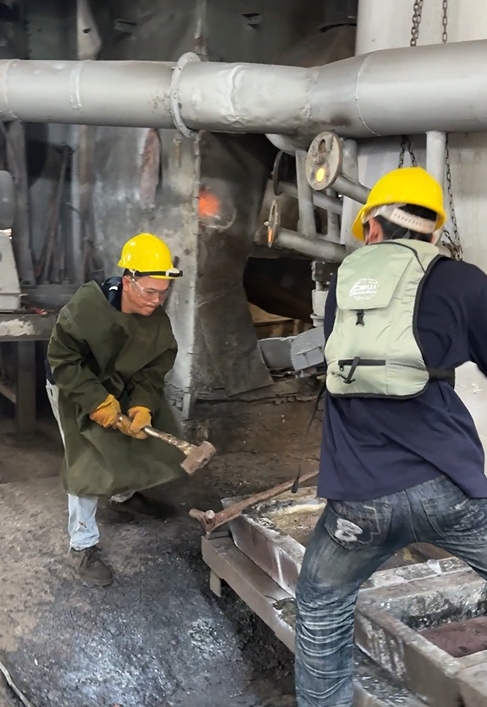
Metal sheet and metal-roof environments raise radiant heat load, making the reload plan as important as the headline duration.
Construction sites. Multi-hour pours, steel fixing and formwork cycles are hard to interrupt. A vest that covers the block and reloads at the break fits the work sequence; one that requires an unscheduled stop does not.
Street vendors and market stalls. Night market and roadside sellers work long continuous sessions with no indoor relief and no convenient place to recharge. Portable, power-bank-driven circulation matters more here than any fixed installation.
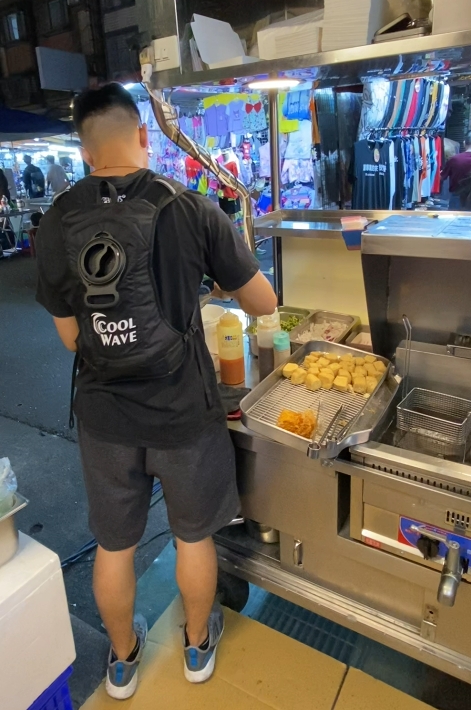
Continuous outdoor vending sessions leave no convenient reload point — portability and battery independence matter as much as runtime.
In a Taiwan deployment recorded by the manufacturer, 100 units were placed into service across construction sites, outdoor work, metal sheet factories and street vending. The reported outcome was effective body cooling, heatstroke prevention, improved work efficiency and better worker comfort, over a service history of ten years in high-temperature applications.
Comparison Table: Published Specification vs. What a Buyer Must Verify
The table below lists only disclosed COOLWAVE specification values, paired with the verification item a procurement team should request for each. It is a verification matrix, not a performance ranking.
| Specification item | Published COOLWAVE value | What the buyer should verify |
|---|---|---|
| Cold source | Two reusable ice packs | Pack mass, freezing temperature and swap time per set |
| Cooling architecture | Ice-pack cold source plus pump-driven water circulation | Whether the same architecture applies to the model quoted |
| Reservoir | TPU water bag | Fill volume, refill procedure and leak/damage handling |
| Pump electrical rating | 5 V, 150 mA (max) | Power-bank compatibility and connector specification |
| Flow rate | 320–370 ml/min | Measurement conditions, tubing length and head pressure |
| Continuous cooling duration | 3–4 hours per charge and ice-pack cycle | Ambient temperature, humidity and workload used to define the figure |
| Wearable weight | Within 2 kg | Weight as shipped, including ice packs and power bank |
| Warranty | 6 months on the water-cooled vest | Covered components, claim process and spare-part availability |
Proof and Compliance Context
The water-cooled vest structure and cooling system are covered by patent certificate I886033, issued by the Intellectual Property Office of the Ministry of Economic Affairs, ROC, with an issue date of 1 June 2025 and an expiry date of 27 August 2044. The COOLWAVE water-cooled vest has also received the Disaster Prevention Product and Service Certification Award issued by the Taiwan Disaster Prevention Industry Association.
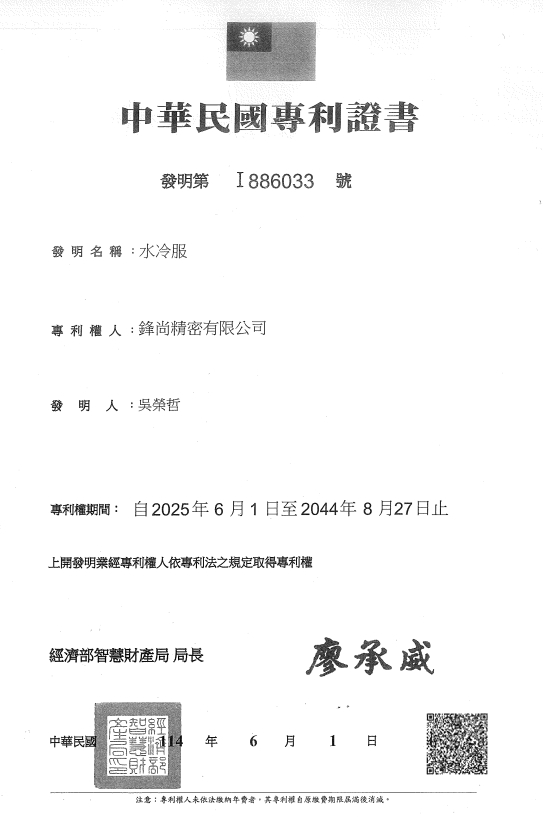
Patent certificate I886033 covers the water-cooled vest structure and cooling system, issued 1 June 2025.
For buyers running a formal supplier qualification, the manufacturing and commercial terms are also disclosed: ODM production, monthly capacity of 3,000 units, a lead time of 7–14 days, a minimum order quantity of 10 units, and a 6-month warranty on the vest. Company-wide annual output is documented at 10,000 units, from a 1,000 m² facility with 30 employees and a 5-engineer R&D team, founded in 2009, with roughly 50% of output exported and the USA and Taiwan as main markets.
FAQ
Is the COOLWAVE water-circulation vest patented or certified?
Yes, on both counts. The water-cooled vest structure and cooling system are protected by patent certificate I886033, issued by the Intellectual Property Office of the Ministry of Economic Affairs, ROC, on 1 June 2025 and valid to 27 August 2044. Separately, the COOLWAVE water-cooled vest has received the Disaster Prevention Product and Service Certification Award issued by the Taiwan Disaster Prevention Industry Association. Buyers should confirm that the certificate reference and the model quoted refer to the same product, since patent coverage attaches to the structure and cooling system rather than to the brand name.
Can the 3 to 4 hour cooling duration be verified before a volume order?
It can be tested, and it should be. The published figure covers one charge and one ice-pack cycle, and it is tied to a disclosed architecture: two reusable ice packs, a TPU water bag, a pump rated at 5 V, 150 mA (max) delivering 320–370 ml/min, and a vest weight within 2 kg. To verify it, ask the supplier to state the ambient temperature, humidity, workload and clothing layers used, then run the vest yourself under the conditions your workers actually face. Production support is ODM at a monthly capacity of 3,000 units, with a minimum order quantity of 10 units — small enough that a trial batch can be run before committing to a full programme.
What drives the cost of a dual cooling water cooling vest, and what does the warranty cover?
Cost is driven by the components that set the runtime: the ice-pack set, the TPU water bag, the circulation pump and the power-bank compatibility of the electrical design. Because the pump draws only 5 V at 150 mA maximum, the electrical side is inexpensive relative to the cold-source side, which is where specification changes move cost most. The water-cooled vest carries a 6-month warranty; buyers should confirm in writing which components that covers — pump, bag and tubing are the parts most likely to need replacement — and confirm spare-part availability before the order is placed rather than after the first failure.
How should a sample be structured to test cooling duration properly?
Run the sample as a full cycle, not as a spot check. Load both ice packs and a charged power bank, start the pump, and record the point at which the wearer reports the cooling effect has dropped below a useful level — not the point at which the ice has fully melted. Do this on a real shift, in real clothing, with the worker doing real work, because workload changes the result more than air temperature does. Repeat it at least twice to separate a genuine runtime from a favourable first run, and record the reload time for the ice-pack swap, since that figure determines how many sets you need in circulation.
What is the lead time, and how does sampling fit into it?
Lead time is stated at 7–14 days, against a monthly capacity of 3,000 units and a minimum order quantity of 10 units. For planning purposes, treat sampling as a separate step that runs before that window rather than inside it: the test described above should be completed and reviewed before a production order is released, so that any change to the ice-pack set or the pump specification is made before tooling and material are committed. Buyers running a multi-site programme should also confirm the lead time starting point — order confirmation or material readiness — since that is the difference between a 7-day and a 14-day reality.
To start, request a sample or a quotation for the configuration you intend to deploy, and confirm the current specification sheet against the published figures before the order is released.
Conclusion: Use 3 to 4 Hours as the Benchmark, Not as a Floor to Beat
Cooling duration is a system output. It is set by cold-source mass, transfer path, flow rate, electrical budget and wearable weight acting together — which is why a duration figure quoted without those elements cannot be compared with anything.
The COOLWAVE water-circulation vest publishes 3 to 4 hours per charge and ice-pack cycle, against a disclosed architecture of two reusable ice packs, a TPU water bag, a 320–370 ml/min pump drawing 5 V at 150 mA maximum, and a wearable weight within 2 kg. That combination is what makes the figure usable: it can be checked element by element, it keeps the power bank off the critical path, and it keeps the vest light enough that workers leave it on.
For buyers evaluating this category, the practical rule is simple. Ask for the conditions behind any runtime claim, test the sample against your own exposure block, and plan the reload logistics before the first order — because coverage across a shift depends on the swap plan as much as on the number on the datasheet.
Next Step
Shokunin is the professional tool brand of Feng Shang Precision Co., Ltd., a Taiwan-based manufacturer of professional equipment founded in 2009. The COOLWAVE water-circulation cooling vest is available for ODM supply at a minimum order quantity of 10 units, with a 7–14 day lead time and a 6-month warranty on the vest.
Request a sample to run the duration test described above, or ask for a quotation against your deployment quantity. The full product catalogue and technical specifications are available in the Shokunin product brochure, and further product information is published at fstool.com.tw.
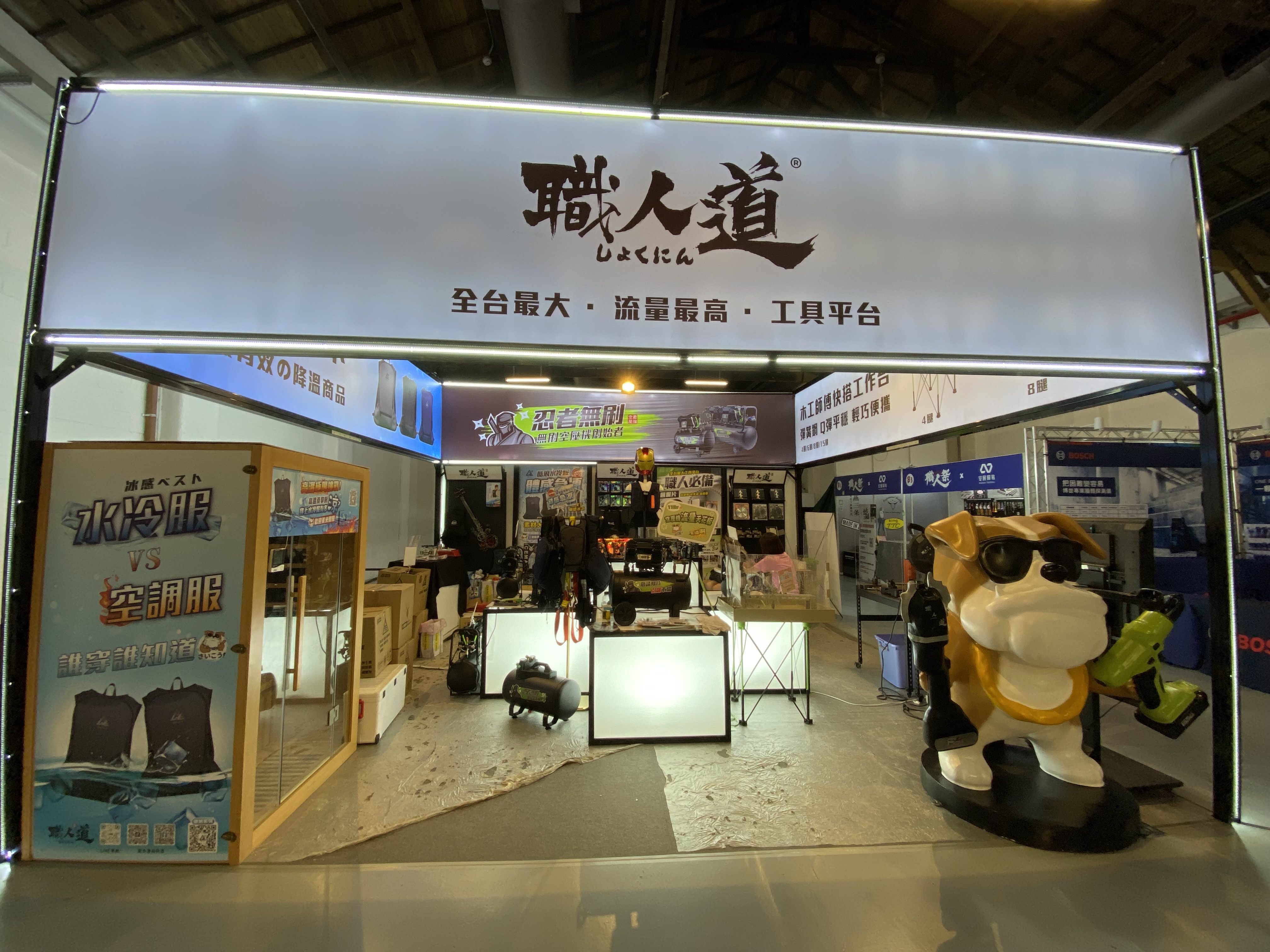
The COOLWAVE water-circulation cooling vest line, available in Professional and Basic models for ODM supply.
Have Questions or Need More Details?
Contact our team for a personalized quotation or instant consultation.
Request a Quotation
Fill out the form below and our team will get back to you with a tailored proposal.
WhatsApp Direct Chat
Prefer to chat in real-time? Message us on WhatsApp for instant assistance & quick answers.
- Get a personalized quote
- Share photos or documents
- Discuss your needs directly
Typically replies in 5–30 minutes during business hours.