Dual Cooling Water Cooling Vest: A Worksite Deployment Guide
Dual Cooling Water Cooling Vest: A Worksite Deployment Guide
Buyers evaluating industrial cooling apparel are usually past the “does it cool?” question and into a harder one: where does it cool, and for how long, on a real shift? This guide answers that question for the COOLWAVE Water-Circulation Cooling Vest, the dual cooling water cooling vest from Shokunin, by mapping its published specification onto the work environments it is documented for.
The short answer is that a dual cooling vest combines two mechanisms in one unit — ice packs for immediate heat absorption and a pump-driven water loop for sustained coverage. The COOLWAVE Water-Circulation Cooling Vest (Basic Model) is documented with a cooling duration of 3–4 hours, a weight within 2 kg, and a 5 V / 150 mA (max) pump. Those three numbers, more than the fabric or the colourway, determine how the vest should be deployed, rotated and resupplied on site.
Everything below is drawn from the published product specification, the patent and certification record, a documented Taiwan deployment of 100 units, and third-party market data for the cooling vest category. Where a figure is not available, it is not supplied.
Problem Definition: Why “One Vest Per Worker” Is Not a Deployment Plan
Cooling apparel is normally purchased as a garment and deployed as an afterthought. That is where the value disappears. A vest is issued, a worker wears it, and somewhere in the second half of the shift the cooling advantage quietly ends — the equipment is still on the body, but it is no longer doing work.
Three failures recur across industrial sites:
- Shift-to-duration mismatch. The documented cooling duration for this model is 3–4 hours. A working shift is usually longer. Without a planned rotation, the final hours of every shift run uncooled and the vest is judged on that experience rather than on its specification.
- Configuration-to-position mismatch. A worker standing still in direct sun and a worker moving through a metal sheet line do not have the same requirement. One needs continuous coverage with minimal carry weight; the other needs a strap and shell that survive abrasion, tight spaces and repeated handling.
- Consumable-to-site mismatch. Ice packs, water and — in powered configurations — a power source all have to be replenished where the work happens. If that logistics path is never planned, the equipment stops being worn, and the purchase is written off as ineffective.
Treating a cooling vest as industrial cooling equipment rather than as clothing is what changes the outcome. The deployment questions are therefore: how many units per crew, how many ice packs per unit, how many hours per rotation, and who owns resupply.
Industry Background: Where Industrial Cooling Demand Is Concentrated
Third-party data confirms that the buyer group asking this question is now the largest one in the category.
- The global cooling vest market specifically was valued at approximately USD 215 million in 2024 and is projected to grow to USD 385 million by 2033 (Dataintelo).
- The broader personal cooling device market — a wider scope that includes products beyond vests — was valued at USD 25.16 billion in 2024 and is projected to reach USD 94.85 billion by 2035 (Market Research Future). The two figures are not directly comparable because of the scope difference.
- Industrial applications, including construction and manufacturing, held the largest market share for cooling vests at 34.5% in 2025 (Dataintelo).
- Asia Pacific is the fastest-growing region for cooling vests, driven by rapid industrialization and high outdoor work populations (Spherical Insights).
- Active circulatory mechanisms, including ice water circulation, are increasingly deployed in industrial sectors to mitigate occupational heat stress (Strategic Market Research).
- Phase change material (PCM) cooling vests captured 28.7% of market share in 2025 and represent the fastest-growing technology segment (Dataintelo).
The competitive set that buyers typically shortlist in this category includes Techniche International, Glacier Tek, Polar Products Inc., and Ergodyne (Spherical Insights). Compliance expectations for cooling systems commonly reference ISO 9001:2015 for quality management, and often require CE or UL marks for electrical components.
The practical reading for a procurement manager is this: because industrial sites are now the largest single buyer group, suppliers are increasingly judged on deployment support — capacity, lead time, spare consumables, warranty — and not only on the garment itself.
The Solution: What the COOLWAVE Water-Circulation Cooling Vest Documents
Answer first: the dual cooling architecture combines an ice-pack layer with a circulating water loop. Ice packs absorb heat immediately and require no power; the pump-driven loop moves cooled water through a tube path to extend coverage across the working period. The published cooling duration for the Basic Model is 3–4 hours at a weight within 2 kg.
Published specification (Basic Model)
- Product: COOLWAVE Water-Circulation Cooling Vest (Basic Model)
- Category: Industrial Cooling Apparel / Personal Protective Equipment (PPE)
- Cooling duration: 3–4 hours
- Weight: within 2 kg
- Suitable temperature (as published): below 10 °C
- Shoulder strap material: 600D polyester
- Main material: PEVA
- Water bag material: TPU; water bag cap: polypropylene
- Cooling tube: sand rubber (black)
- Pump output: 5 V, 150 mA (max)
- Flow rate: max 320–370 ml/min
- In the box: water-cooled vest backpack ×1, ice packs ×2
- Documented applicable industries: construction workers, outdoor workers, food stall operators, street vendors, traffic controllers, metal sheet factories
Two details matter at the evaluation stage. First, the abrasion-facing component is specified separately: the shoulder strap is 600D polyester, the heavy-denier part of the assembly, which is the component most exposed to repeated donning and site contact. Second, the 5 V / 150 mA (max) pump rating is a low-voltage DC specification, which sits in the range commonly served by portable USB power banks. Buyers who intend to specify a power-bank configuration should confirm the intended power source and runtime with the supplier rather than assume it.
Certification and compliance record
- Taiwan patent certificate for a water-cooled vest — certificate number I886033, issued 2025-06-01 by the Intellectual Property Office, Ministry of Economic Affairs (ROC), expiring 2044-08-27. The protected scope is water-cooled vest structure and cooling system, under the Patent Act of the Republic of China.
- Disaster Prevention Product and Service Certification Award — issued to the COOLWAVE water-cooled vest by the Taiwan Disaster Prevention Industry Association, as recorded in the company profile.
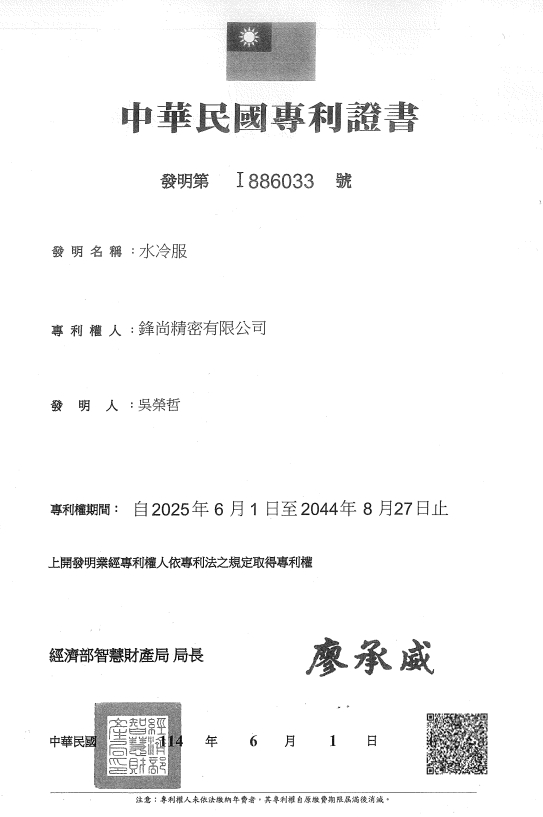
For buyers in regulated markets, these two records are the starting point of a compliance file rather than the end of it. ISO 9001:2015 and CE or UL marks are commonly expected where electrical components are involved, and the pump here is an electrical component. Requesting the market-specific documentation alongside the patent certificate is the normal next step.
Manufacturing and supply facts
Shokunin is the professional e-commerce brand of Feng Shang Precision Co., Ltd., a manufacturer founded in 2009 that operates a 1,000 m² factory with 30 employees, 5 R&D engineers and an annual output of 10,000 units. Approximately 50% of output is exported, with the USA and ROC listed as the main markets.
For the cooling vest line specifically, the published capability data lists ODM production, a monthly capacity of 3,000 units, a minimum order quantity of 10 units, a lead time of 7–14 days, global export markets, and a 6-month warranty on the water-cooled vest. Those are the numbers a deployment plan has to be built around, because they set both how fast a pilot can start and how quickly a full rollout can be resupplied.
Step-by-Step Breakdown: Deploying the Vest on a Real Site
Step 1 — Profile heat load by position, not by site
A site does not have one heat load; positions do. Record, for each position: direct sun or shaded, radiant heat from hot surfaces, movement level, and how long the worker is stationary. Metal sheet factories and metal-roof factories, for example, combine radiant heat with long standing stations, while traffic control combines continuous sun exposure with very limited movement. The same vest specification is deployed differently in each case.
Step 2 — Convert the 3–4 hour duration into a rotation pool
The documented cooling duration is 3–4 hours, and each unit ships with two ice packs. Treat ice packs as a rotation asset rather than as an accessory: plan how many packs a full shift requires and confirm that quantity with the supplier, because the published contents list specifies two per unit and nothing beyond that. Where a shift runs longer than the documented duration, the rotation pool — not the individual vest — is what keeps cooling continuous.
Step 3 — Decide the carrying and power configuration
The vest is supplied as a water-cooled vest backpack with an adjustable one-size-fits-all design, which is what makes shared-crew deployment practical. Where a powered configuration is used, the pump is rated 5 V, 150 mA (max) at a maximum flow rate of 320–370 ml/min. Confirm the power source, the expected runtime per charge, and who is responsible for charging on site before the configuration is written into a purchase order.
Step 4 — Run a documented pilot before committing to volume
The minimum order quantity of 10 units is sized for a pilot crew, which means a single hot position can be equipped and observed for a full shift before a larger commitment. The documented reference case in Taiwan deployed 100 units for cooling in high-temperature environments. Publish the pilot criteria in advance — remaining cooling at hour four, worker compliance, and consumable handling — so the result is measurable rather than anecdotal.
Step 5 — Lock in warranty, spares and resupply
The published after-sales term is a 6-month warranty for the water-cooled vest. Pair that with a resupply plan for ice packs and, if applicable, power sources. Deployment projects that fail usually fail here: the garments are fine, but the consumable pipeline was never owned by anyone.
Use Cases: Five Documented Work Environments
Metal sheet and metal-roof factories
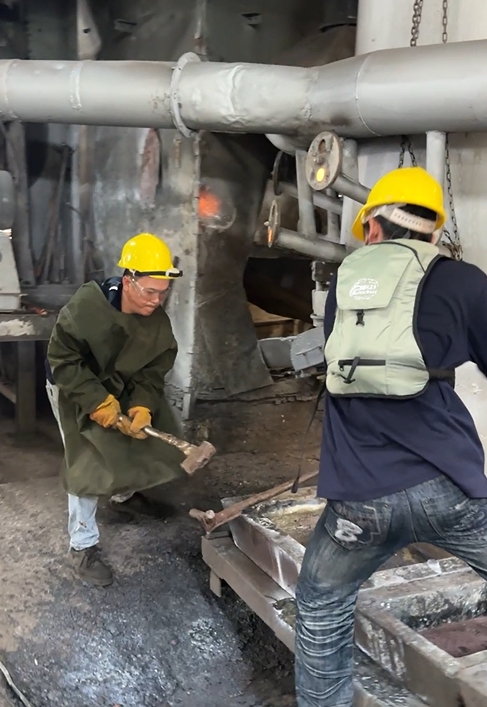
Metal sheet factories are listed among the documented applicable industries, and the case record also names metal sheet factories as a deployment site type. The heat here is a combination of ambient summer temperature, radiant heat from hot surfaces, and metal roofing that holds heat through the afternoon. This is the profile that suits a cooling solution for metal-roof factories best when the second half of the shift is planned for rather than discovered. Because these positions are typically stationary, the priority is continuous coverage and low carry weight rather than freedom of movement.
Construction sites
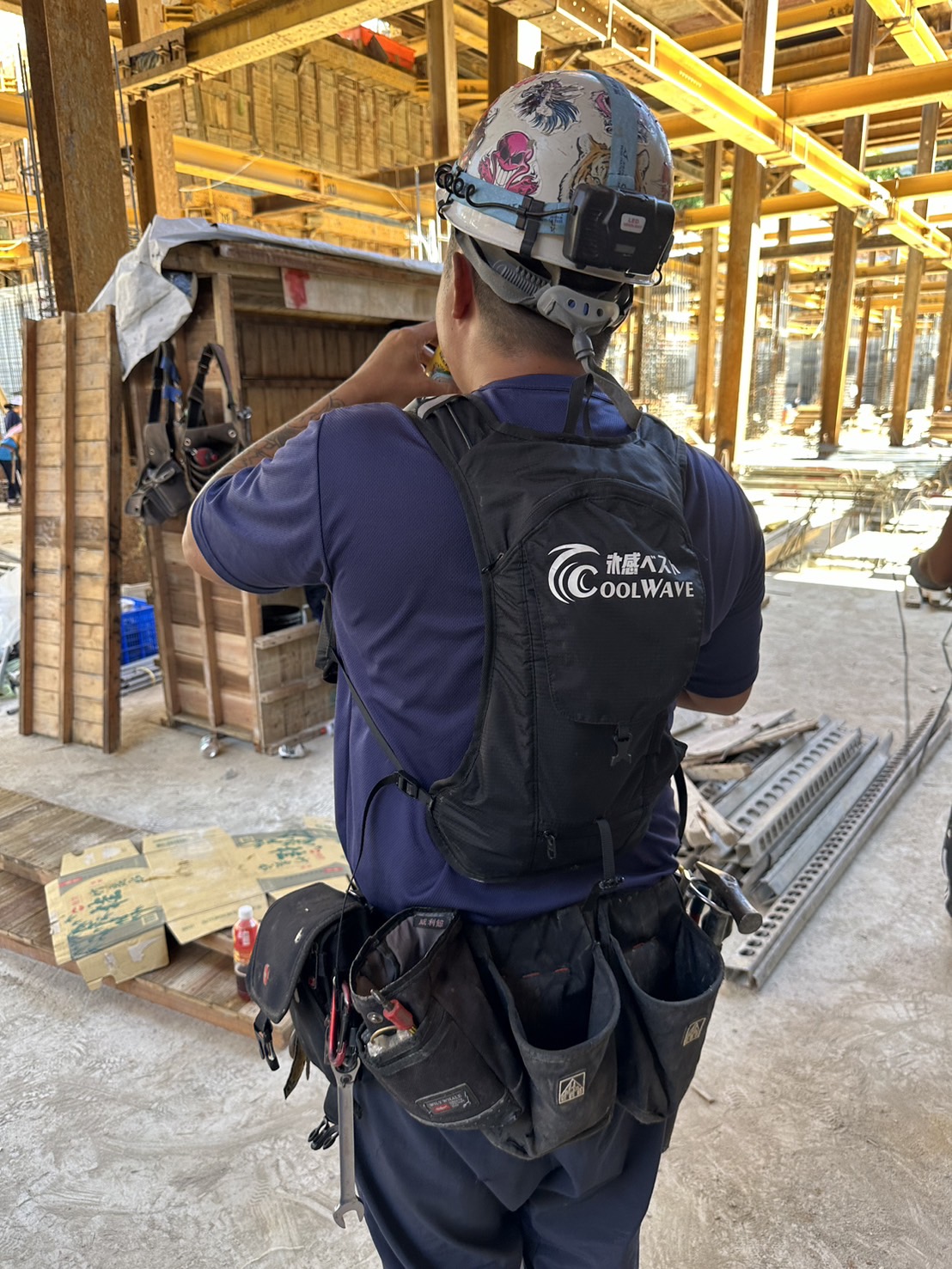
Construction is the most frequently documented environment for this product. A documented Taiwan case deployed 100 units across construction sites, outdoor work, metal sheet factories and street vendors, and reported effective body cooling, heatstroke prevention, improved work efficiency and worker comfort. Construction combines direct sun with physical work and continuous abrasion against scaffolding, formwork and rebar, which is why the 600D polyester shoulder strap matters here more than in any other application. Heatstroke prevention gear for extreme heat is judged on whether it is still worn at the end of the day, and that depends on fit, weight (within 2 kg) and how easily the unit can be re-cooled on site.
Traffic control
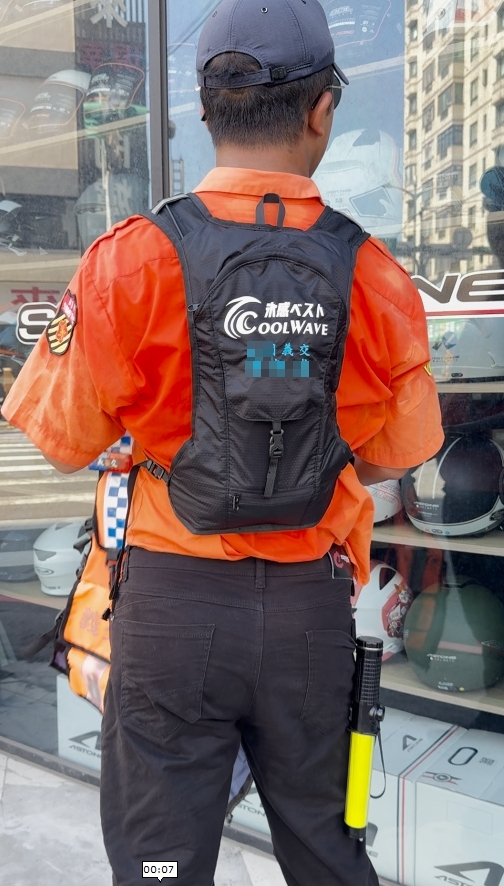
Traffic controllers are listed as a documented applicable industry. The defining characteristic of this position is that the worker cannot step into shade or stop to manage equipment mid-posting. That makes the 3–4 hour documented duration the natural unit of scheduling: postings and vest rotations can be planned on the same clock, so that the changeover happens at the same moment for both the person and the equipment.
Night market and street vending
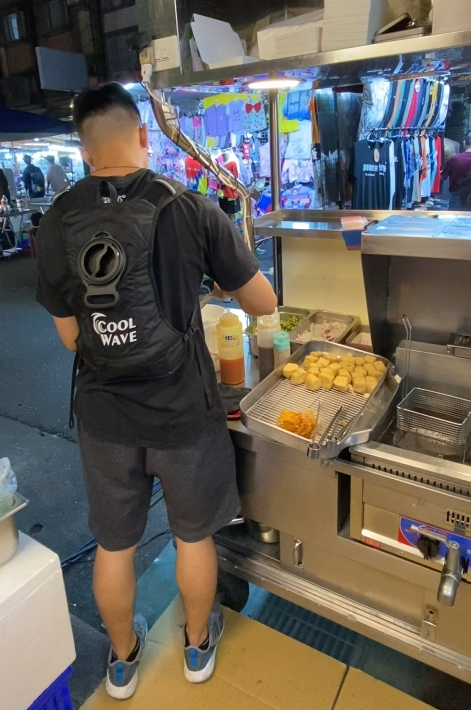
Food stall operators and street vendors appear both in the documented applicable industries and in the Taiwan deployment record. This environment adds cooking heat to ambient summer temperature and, critically, removes the option of leaving the stall. The documented deployment record for this product highlights passive ice pack cooling with no power requirement, lightweight portability and an adjustable one-size-fits-all design — the combination that suits a vendor who cannot stop to manage equipment mid-shift. For this group, a portable cooling vest that can be put on and forgotten is worth more than a higher-capacity system that needs attention every hour.
Outdoor work with prolonged sun exposure
Outdoor workers are named in the documented applicable industries, and the deployment record also covers outdoor work in high-temperature environments. The distinguishing feature of prolonged sun exposure is that heat accumulates over a full working day rather than in a single peak, so cooling gear for prolonged sun exposure has to be scheduled rather than simply issued. Mapping the 3–4 hour documented duration against the working day, and pre-positioning replacement ice packs, is what makes the equipment effective across the full shift.
Application Comparison Table: Matching Site, Heat Pattern and Deployment Focus
| Work environment | Heat pattern | Deployment focus | Basis |
|---|---|---|---|
| Metal sheet / metal-roof factory | Radiant heat plus retained heat from metal roofing; long standing stations | Continuous coverage with low carry weight; rotation planned for the second half of the shift | Documented applicable industry and case site type |
| Construction site | Direct sun combined with physical work and abrasion | 600D polyester shoulder strap; adjustable one-size-fits-all sizing for shared crews | Documented specification and Taiwan deployment of 100 units |
| Traffic control | Continuous sun exposure with very limited movement | Rotation pool aligned to the 3–4 hour documented cooling duration | Documented applicable industry (traffic controllers) |
| Night market / street vending | Prolonged cooking heat plus summer ambient temperature | Lightweight, portable configuration with passive ice pack cooling and no power requirement | Documented applicable industry and case highlight |
| Outdoor work, prolonged sun exposure | Heat accumulation across a full working day | Scheduled rotation against the documented 3–4 hour duration; pre-positioned spare ice packs | Documented cooling duration and applicable industry |
Reading the table: the right deployment for a site is decided by the heat pattern, not by the size of the workforce. Two crews of the same size on the same site can require different rotation pools if one works in shade and the other in direct sun. Buyers who cannot source an equivalent figure for a specific site should size conservatively and verify with a pilot rather than assume.
Frequently Asked Questions
1. Does the COOLWAVE dual cooling water cooling vest carry documented certification?
Yes. Two records are published. The first is a Taiwan patent certificate for a water-cooled vest, certificate number I886033, issued 2025-06-01 by the Intellectual Property Office, Ministry of Economic Affairs (ROC) and valid to 2044-08-27, covering water-cooled vest structure and cooling system under the Patent Act of the Republic of China. The second is the Disaster Prevention Product and Service Certification Award issued to the COOLWAVE water-cooled vest by the Taiwan Disaster Prevention Industry Association. Separately, cooling systems in this category commonly reference ISO 9001:2015 for quality management, with CE or UL marks often expected for electrical components — and the vest uses a 5 V / 150 mA (max) pump. Buyers should request the documentation set required for their own market before specification.
2. What production capability stands behind the cooling vest line?
Shokunin is the professional e-commerce brand of Feng Shang Precision Co., Ltd., founded in 2009, operating a 1,000 m² factory with 30 employees, 5 R&D engineers and an annual output of 10,000 units; approximately 50% of output is exported, with the USA and ROC as the main markets. For the cooling vest line specifically, the published capability data lists ODM production, a monthly capacity of 3,000 units and global export markets. Buyers with requirements that fall outside a published capability set should confirm scope with the supplier during sampling rather than assume it is covered.
3. What drives the cost of a cooling vest deployment?
No list price for the COOLWAVE Water-Circulation Cooling Vest is published in the available data, so any figure has to come from a quotation rather than an estimate. The cost drivers that do matter are structural: the number of units required per crew, the size of the rotation pool determined by the 3–4 hour documented cooling duration, spare ice packs beyond the two supplied with each unit, and the power source if a powered configuration is specified. Buyers comparing quotations should compare them on units plus rotation consumables plus warranty, not on unit price alone.
4. How can a buyer validate the vest before a full rollout?
The minimum order quantity is 10 units, which is enough to equip a pilot crew on the hottest position on a site. The documented reference case — a Taiwan deployment of 100 units for cooling in high-temperature environments — reported effective body cooling, heatstroke prevention, improved work efficiency and worker comfort, and covered construction sites, outdoor work, metal sheet factories and street vendors. A pilot should be measured against the same criteria: whether cooling is still felt at the end of the documented 3–4 hour window and whether workers keep wearing the vest through the shift.
5. What is the lead time, and how does a program start?
The published lead time for the cooling vest line is 7–14 days, against a monthly capacity of 3,000 units and a minimum order quantity of 10 units, with a 6-month warranty on the water-cooled vest. To start, request a sample or quotation from Shokunin at fsmarketing@fstool.com.tw, or on WhatsApp at +86 18858260055, specifying headcount, shift pattern and heat profile per position. Sample units are the fastest way to fix the rotation plan before volume is committed.
Conclusion: Deployment, Not Just Purchase
A dual cooling water cooling vest is a 3–4 hour cooling device with a 2 kg carry weight, an ice-pack layer, a pump-driven water loop, a published patent record and a documented industrial deployment behind it. Those facts do not automatically produce heat protection on a site; the deployment plan around them does. Profiling heat by position, sizing a rotation pool against the documented duration, running a 10-unit pilot, and owning consumable resupply are the four actions that convert a specification into measurable heatstroke prevention.
For buyers at the evaluation stage, the practical next step is to test the vest on the hardest position on the site rather than the easiest, and to compare quotations on total deployed cost — units, rotation consumables, power source and warranty — rather than on unit price.
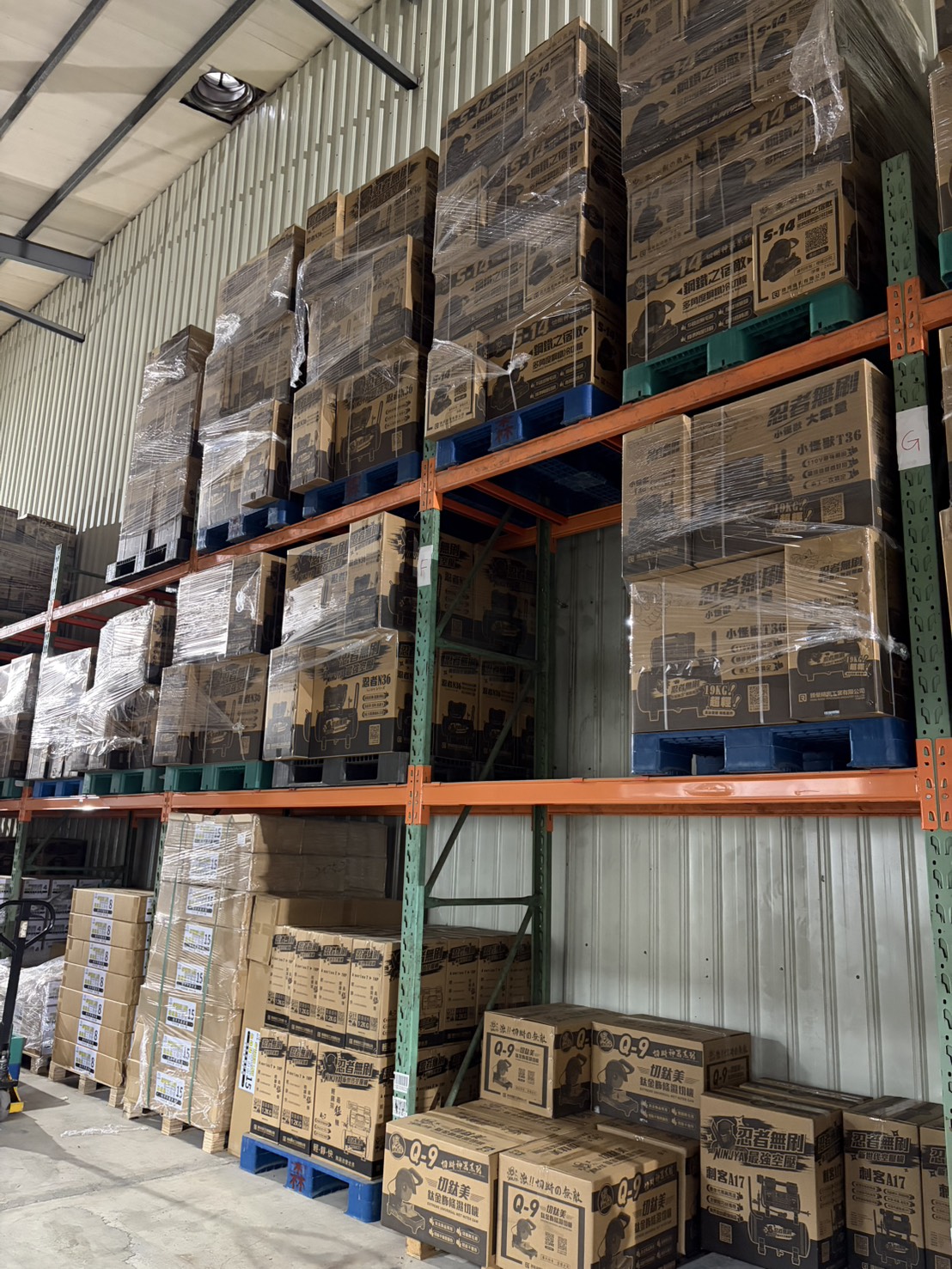
Request a Sample or Quotation
Shokunin is the professional tool brand of Feng Shang Precision Co., Ltd., Taoyuan, Taiwan. Cooling vest sample orders start from 10 units, with a published lead time of 7–14 days and a 6-month warranty on the water-cooled vest.
Email: fsmarketing@fstool.com.tw
WhatsApp: +86 18858260055
Phone: +886 3-312-6606 (Monday to Friday 8:30 AM – 5:40 PM)
Website: www.fstool.com.tw
Address: No. 155-17, Sec. 2, Nanzhu Rd., Luzhu Dist., Taoyuan City 338454, Taiwan
Download the product brochure: Shokunin COOLWAVE product catalogue (PDF)