
Dual Cooling Water Cooling Vest: Construction, Traffic Control & Sheet Metal Application Guide
Dual Cooling Water Cooling Vest Application Guide: Construction, Traffic Control & Sheet Metal Use
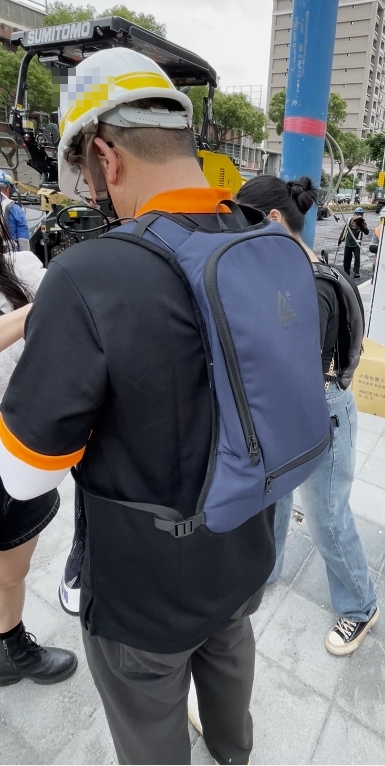
Quick answer: The COOLWAVE Water-Circulation Cooling Vest cools by water circulation. Each unit consists of a water-cooled vest backpack and two ice packs, delivers a cooling duration of 3–4 hours, weighs within 2 kg net, and runs a 5V/150mA pump at a maximum flow rate of 320–370 ml/min. It is intended for construction, outdoor work, traffic control, sheet metal factories, street vending, and food stall operations. Because each of those settings loads the body differently, the same vest is planned differently at each worksite — and that planning is what this guide covers.
Why a Dual Cooling Vest Is Specified by Application, Not by Category
Most buyers begin with a category question — which cooling vest cools best — and end up with a more useful one: which cooling method matches the way the crew actually works. A dual cooling water cooling vest is an ice water circulation cooling vest: cold is carried in a water loop that moves across the torso rather than sitting in a single fixed panel. That difference matters most where workers cannot relocate to shade, cannot leave a fixed post, and cannot wait for a cooling break that the job does not allow.
The vest covered in this guide is the COOLWAVE Water-Circulation Cooling Vest, an industrial cooling apparel product classified under Personal Protective Equipment (PPE). It is designed for use in construction and outdoor work scenarios, and it is intended for construction workers, outdoor workers, food stall operators, street vendors, traffic controllers, and sheet metal factory workers. It is available as a Basic Model and as a Professional Model in Black, Gray, and Blue.
The core specification is consistent across those designations: a water-circulation cooling system built around a water-cooled vest backpack and two ice packs, a cooling duration of 3 to 4 hours, a listed suitable temperature below 10°C, and a net weight within 2 kg. Those four numbers are what site planners use to decide how many units to hold, how many ice-pack sets to freeze, and how a shift should be split.
Problem Definition: Why Heat Stress Concentrates in Fixed-Post Work
Heat illness on industrial and outdoor sites is rarely caused by temperature alone. It is caused by the combination of heat, airflow, workload, and the worker’s ability to step away. The five settings in this guide share that combination in different proportions.
- Radiant heat that does not show up in the air temperature. In sheet metal factories, workers stand beside surfaces that hold and re-radiate heat. Roof panels and metal stock raise the effective heat load well beyond what a shaded thermometer reads.
- Low airflow. Covered outdoor pitches, semi-enclosed factory bays, and food stall back-areas trap warm air. A portable cooling vest that moves coolant across the body does not depend on the surrounding airflow to function.
- Fixed posts. Traffic controllers and street vendors work where the customers and vehicles are, not where shade is. Their cooling must be carried on the body.
- Compounding PPE. Existing workwear, high-visibility garments, and safety equipment already add layers. A lightweight cooling vest under 2 kg avoids adding a second heat problem while solving the first.
- Cold-chain dependence. Purely passive, ice-pack-only approaches depend on freezing capacity being available between shifts. Where no freezer or cold store is nearby, recharge planning becomes the limiting factor rather than cooling performance itself.
The practical problem, then, is not “does cooling work” but “can cooling be resupplied on the schedule this site actually runs.” Any deployment plan has to answer that before it orders a single unit.
Industry Background: Where Industrial Cooling Apparel Sits Today
Industrial heat protection has moved from a niche accessory category into a measurable market. The specific global cooling vest market was valued at approximately USD 215 million in 2024 and is projected to grow to USD 385 million by 2033, according to Dataintelo. Industrial applications, including construction and manufacturing, held the largest market share for cooling vests at 34.5% in 2025, again per Dataintelo — which is consistent with the settings covered in this guide.
Two further data points help buyers judge direction rather than size. First, Asia Pacific is the fastest-growing region for cooling vests, driven by rapid industrialization and high outdoor work populations, according to Spherical Insights. Second, Phase Change Material (PCM) cooling vests captured 28.7% of market share in 2025 and represent the fastest-growing technology segment, per Dataintelo — while active circulatory mechanisms such as ice water circulation are increasingly deployed in industrial sectors to mitigate occupational heat stress, according to Strategic Market Research.
On the standards side, cooling systems must comply with ISO 9001:2015 for quality management and often require CE or UL marks for electrical components, per the International Organization for Standardization and UL. That applies to the pump in a water-circulation vest as much as to any other powered workwear component.
On market-size figures: published estimates differ because the categories differ. Market Research Future puts the broader global personal cooling device market at USD 25.16 billion in 2024, projected to reach USD 94.85 billion by 2035 — a figure that includes handheld fans and personal air conditioners, not cooling vests alone. Dataintelo’s USD 215 million 2024 figure covers the cooling vest niche specifically. Both are usable, but they should not be quoted as if they measured the same thing.
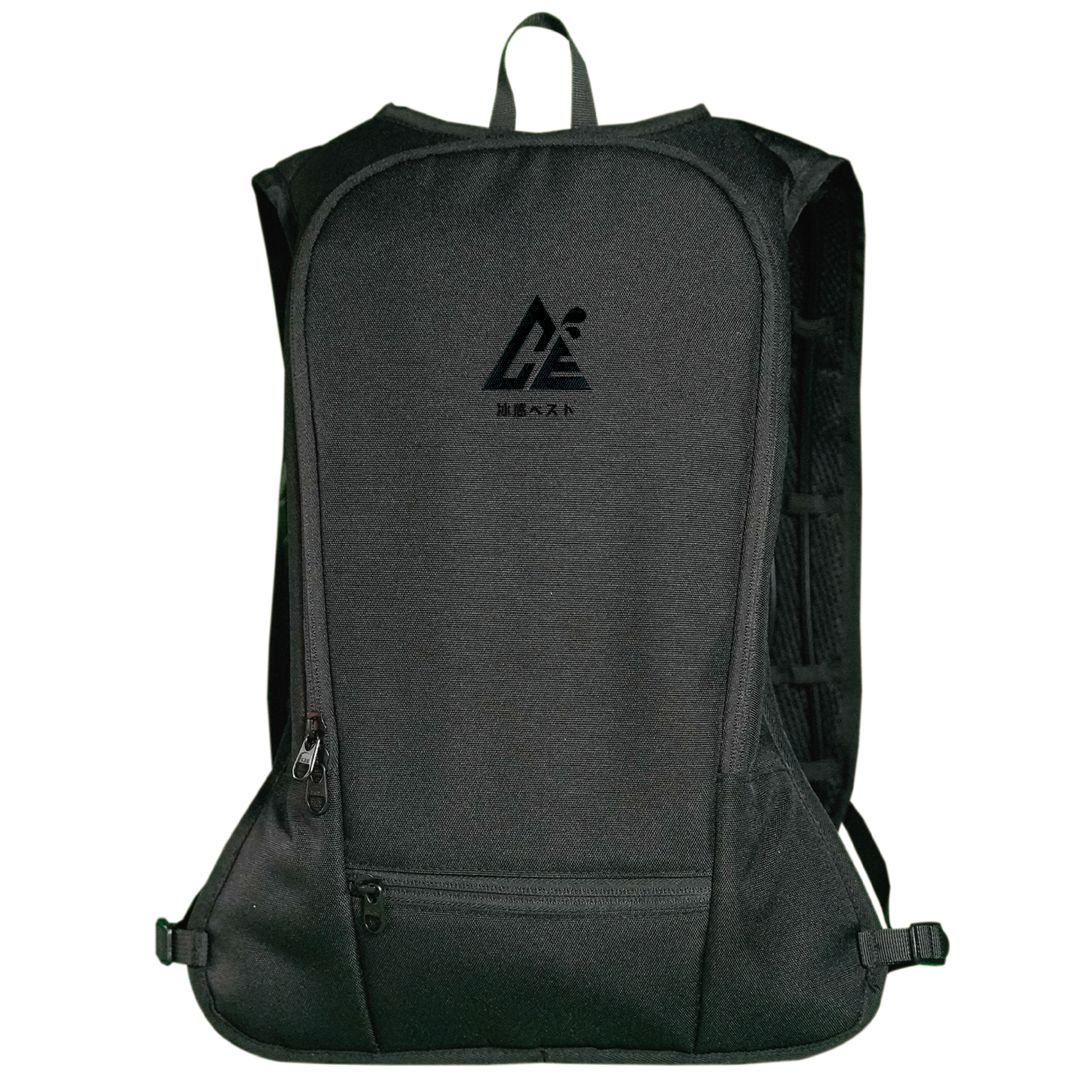
The Solution: What the COOLWAVE Dual Cooling System Actually Contains
The cooling system operates on water circulation. A pump moves chilled water through a cooling tube that runs against the body, and the vest is carried as a backpack rather than as a heavy garment panel. Each unit ships with a water-cooled vest backpack and two ice packs, so one ice-pack set can be cooling while the second is being refrozen.
| Specification | Value | Why it matters on site |
|---|---|---|
| Cooling method | Water-circulation cooling | Coolant moves across the torso instead of sitting in one fixed panel |
| Cooling duration | 3–4 hours | Sets the practical length of one cooling cycle before an ice-pack change |
| Suitable temperature | Below 10°C (listed cooling parameter) | The rated operating figure to check against your site conditions |
| Net weight | Within 2 kg | Stays within lightweight cooling vest territory for a full shift |
| Pump output | 5V, 150mA (max) | The electrical specification to confirm against your site power plan |
| Flow rate | Max 320–370 ml/min | Indicates how quickly coolant is circulated through the loop |
| Contents | Water-cooled vest backpack ×1, ice packs ×2 | Two packs per unit support a swap cycle rather than a single charge |
| Water bag material | TPU | Flexible reservoir that withstands repeated filling and draining |
| Water bag cap | Polypropylene | Sealing point checked during end-of-shift maintenance |
| Cooling tube | Sand rubber (black) | Route for circulated coolant; kinks here reduce flow |
| Shoulder strap | 600D polyester | Load-bearing strap for the backpack configuration |
| Outer material | PEVA | Wipe-clean surface suitable for dusty sites |
The vest was specified against four site requirements: lightweight, waterproof, breathable, and one-size-fits-all. Those four words describe how it is meant to be worn in practice — over existing workwear, adjusted by strap rather than by size run, and wiped down rather than dry-cleaned between shifts.
Step-by-Step: Deploying the Vest on a Mixed Worksite
A cooling vest deployment fails for logistics reasons far more often than for product reasons. The six steps below are the sequence that keeps a multi-role site supplied.
- Profile the heat on each post. Walk the site and list every role by heat source and mobility: fixed-post or mobile, radiant or ambient, shaded or exposed. Construction, traffic control, sheet metal, and vending roles will land in different groups, even on the same property.
- Match the cooling window to the shift pattern. A single charge covers 3–4 hours. Where the working period runs longer than that, the plan must include a scheduled mid-period ice-pack change, not an improvised one.
- Stage ice packs before the shift starts. Two ice packs ship with every vest. Sites running long shifts should stage a second set so each vest can be recharged without the worker waiting.
- Fit the vest and load the backpack. The one-size-fits-all design is adjusted through the 600D polyester shoulder straps. The backpack format keeps the assembly off the torso front, which matters where workers lean, carry, or reach repeatedly.
- Start the loop and verify flow. Confirm the pump is running at its 5V/150mA rating and that coolant is circulating at the specified 320–370 ml/min range. Check the sand rubber cooling tube for kinks and confirm the polypropylene cap on the TPU water bag is fully sealed.
- Run end-of-shift care and rotation. Drain and dry the water bag, wipe the cap and tube, refreeze the packs, and rotate units between workers so no single vest carries all the wear.
Use Cases: How Each Setting Adapts the Same Vest
Construction Sites
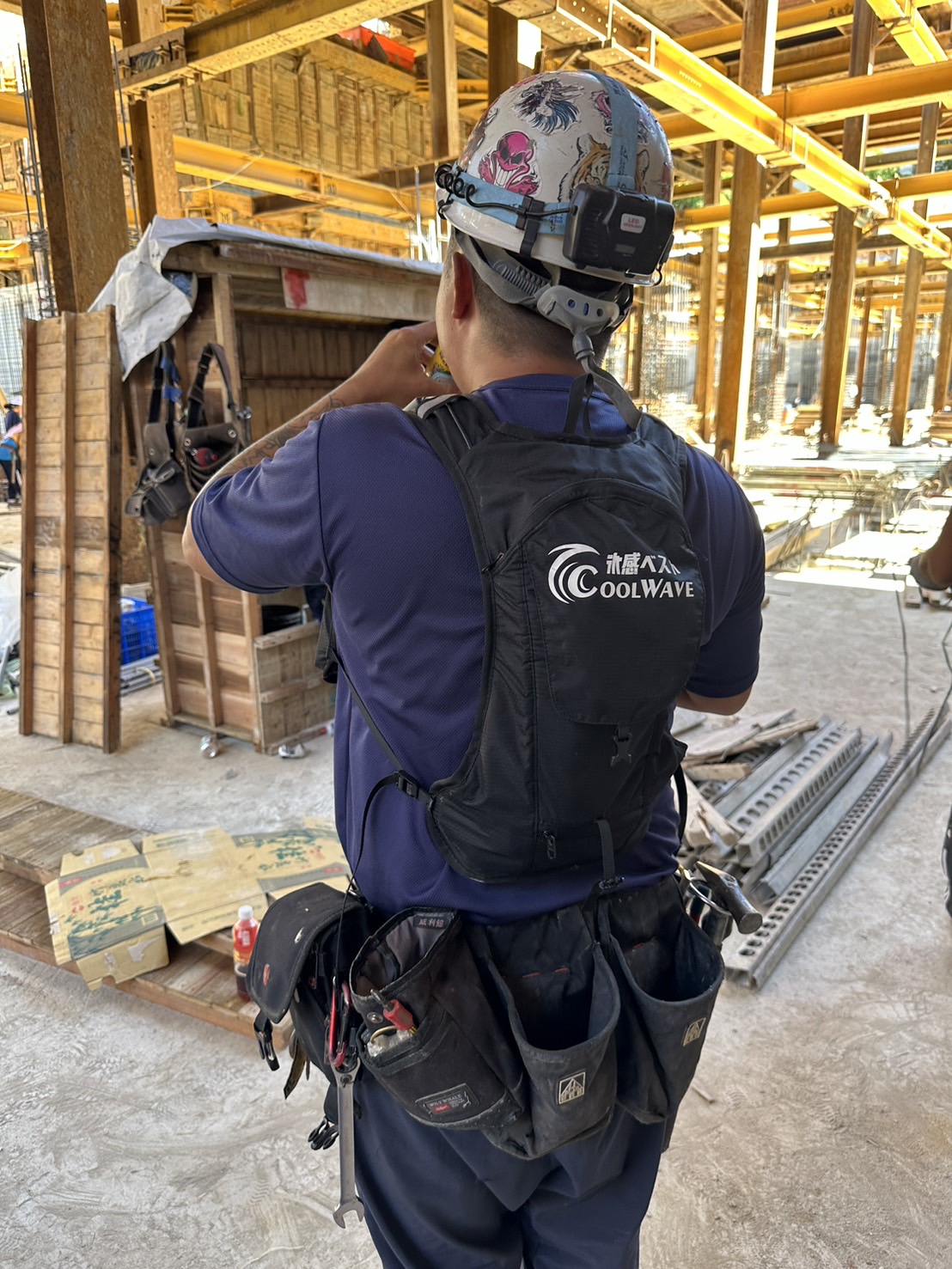
Construction work combines radiant heat from unfinished structures with enforced PPE. The vest is worn over existing workwear and adjusted at the strap, and the backpack format leaves the front of the torso free for harnesses and tool belts. The planning question on a construction site is where the ice packs live: a shaded site container with power, or a cooler box at the work face. Without an answer to that, the 3–4 hour cooling window cannot be repeated across a shift.
Traffic Control
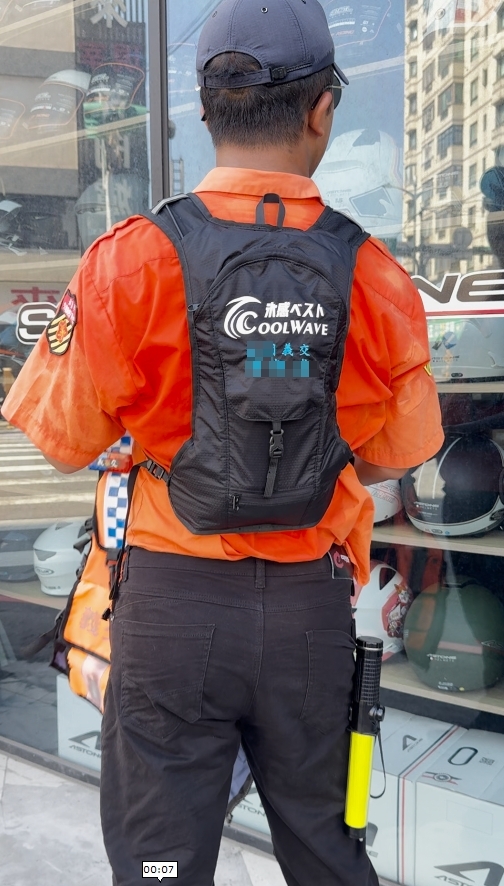
Traffic controllers are the clearest fixed-post case: prolonged sun exposure on asphalt, no shade option, and no ability to leave position while traffic is moving. Cooling here has to be carried, hands-free, and quiet enough to work in. Because the vest is a backpack-mounted water-circulation unit rather than a garment with rigid inserts, it can be worn under or over a high-visibility layer depending on local practice, and the coolant loop continues working regardless of whether the controller is walking or standing still.
Sheet Metal Factories
Sheet metal environments present a different profile: the ambient air may be manageable while nearby metal surfaces radiate heat directly onto the operator. This is the setting where a lightweight cooling vest earns its place inside a workplace rather than outdoors, and where the PEVA outer material and wipe-clean TPU water bag suit a dusty indoor bay better than a fabric-only vest would. As with the outdoor cases, the limiting factor is where the ice packs are refrozen between shifts.
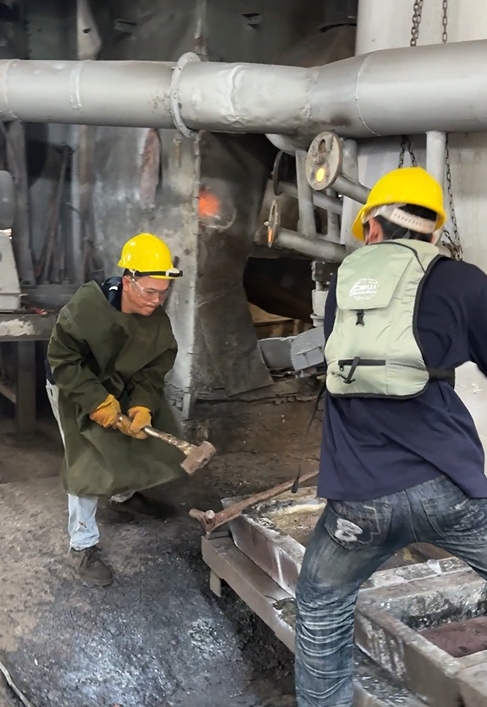
Street Vending and Food Stalls
Street vendors and food stall operators work in one of the hardest cooling environments to plan for: a small pitch, a heat source directly in front of them, and no employer-managed break structure. The vest fits this setting because it does not require a fixed cooling point. Vendors can wear it through the peak lunch and evening trade, take it off for serving tasks, and place it back on without reconfiguring anything. The 3–4 hour window typically covers one full trading block, provided a second ice-pack set is kept on ice nearby.
Taiwan Deployment Case: 100 Units Across Three Work Environments
The clearest picture of the dual cooling water cooling vest in mixed use comes from a Taiwan deployment of 100 units. The units were issued across construction work, traffic control, and metal sheet factory environments — three settings with different heat sources but the same constraint: work continues through the hottest hours of the day and cannot be paused for cooling. The deployment tracked four outcomes: effective body cooling, heatstroke prevention, work efficiency, and worker comfort.
What makes the case useful for other buyers is not the unit count but the combination of settings. A programme that has to work in a construction site, a traffic post, and an indoor metal bay at the same time cannot be built around any single cooling behaviour. It has to be built around one wearable unit, one recharge routine, and one ice-pack logistics plan — which is exactly how the vest is specified: one backpack, two ice packs, and a 3–4 hour cooling cycle.
Comparison Table: Matching the Vest to Each Work Setting
| Work setting | Dominant heat load | How the vest is applied | Duration fit | Planning note |
|---|---|---|---|---|
| Construction sites | Radiant heat from structures, plus direct sun on exposed areas | Worn over existing workwear; adjusted through the 600D polyester shoulder straps; torso front left clear | 3–4 hours per charge | Decide where ice packs are refrozen before ordering |
| Traffic control | Prolonged direct sun on asphalt, fixed post, no shade | Carried hands-free as a water-cooled vest backpack; coolant loop runs while standing | 3–4 hours per charge | Plan a mid-shift pack change for posts held longer than one cycle |
| Sheet metal factories | Radiant heat from metal surfaces, indoor airflow limits | Worn inside the bay; PEVA surface and TPU water bag suit dusty indoor conditions | 3–4 hours per charge | Confirm the 5V/150mA pump against the site power routine |
| Street vending | Direct sun, heat from cooking equipment, no shaded pitch | Worn through the trading block; removable for serving tasks without reconfiguration | Typically one trading block | Keep a second ice-pack set on site per vendor |
| Food stall operations | Sustained ambient heat plus radiant heat at the cooking line | Worn at the stall; lightweight enough to keep on while moving between tasks | Typically one trading block | Rotation matters more than unit count in single-stall operations |
Frequently Asked Questions
Is the COOLWAVE Water-Circulation Cooling Vest classified as PPE, and what standards apply?
Yes. The COOLWAVE Water-Circulation Cooling Vest belongs to the category of Industrial Cooling Apparel / Personal Protective Equipment (PPE). On the standards side, cooling systems must comply with ISO 9001:2015 for quality management and often require CE or UL marks for electrical components, per the International Organization for Standardization and UL; the vest’s powered component is a 5V/150mA pump. The product has also received the Disaster Prevention Product and Service Certification Award issued by the Taiwan Disaster Prevention Industry Association. Buyers should confirm which marks their own market requires before ordering, since electrical component marking requirements vary by region.
How long does the cooling last, and how much does the vest weigh?
The cooling duration is 3 to 4 hours per cycle, with a listed suitable temperature of below 10°C. The net weight of the vest is within 2 kg, which keeps it in the lightweight cooling vest range for a full working period. Coolant is circulated by a pump rated at 5V and 150mA (max) with a flow rate of up to 320–370 ml/min. Each unit includes a water-cooled vest backpack and two ice packs, so a second ice-pack set can be prepared while the first is in use.
What should a buyer plan for when equipping a site crew?
The main planning variables are cycle length and ice-pack logistics, not the vest itself. Because one charge covers 3–4 hours, any site running longer working periods needs a scheduled pack change and a second pack set per vest in rotation. The vest is designed to be lightweight, waterproof, breathable, and one-size-fits-all, which simplifies fitting across a mixed crew; the shoulder strap is 600D polyester, the water bag is TPU, the cap is polypropylene, the cooling tube is sand rubber, and the outer material is PEVA. For multi-role sites such as the Taiwan deployment of 100 units across construction, traffic control, and metal sheet factory work, the same unit can be issued across settings with one shared recharge routine.
Can we request a sample before committing to a bulk order?
Yes. Sample and evaluation requests for the COOLWAVE Water-Circulation Cooling Vest can be sent to FENG SHANG PRECISION CO., LTD. by email at fsmarketing@fstool.com.tw or by phone at +886 3-312-6606 during business hours, Monday to Friday, 8:30 AM to 5:40 PM. The company is based at No. 155-17, Sec. 2, Nanzhu Rd., Luzhu Dist., Taoyuan City 338454, Taiwan, and the website is https://www.fstool.com.tw/. A sample review is the most direct way to check fit, weight, and the cooling cycle against your own site conditions before a full rollout.
What information is needed to confirm lead time and a quotation?
Lead time and pricing are confirmed against your specific order configuration, so the useful starting information is the model designation, the colour, the quantity per site, and the delivery destination. The available designations are the COOLWAVE Water-Circulation Cooling Vest (Basic Model) and the Professional Model in Black, Gray, and Blue. Send those details to fsmarketing@fstool.com.tw, or reach the team on WhatsApp at +86 18858260055, and you will receive a quotation and a delivery schedule based on current production. The product brochure can be downloaded directly from the link at the end of this guide.
Next Step: Test the Vest Against Your Own Heat Profile
Every worksite covered in this guide — construction, traffic control, sheet metal factories, street vending, and food stalls — differs in where the ice packs get refrozen and how long a shift actually runs. Those two answers determine how many units and how many spare ice-pack sets a site needs.
To move from reading to testing: email fsmarketing@fstool.com.tw, call +886 3-312-6606, or message WhatsApp +86 18858260055 to request a sample or a quotation. You can also review the full specification in the product brochure: download the COOLWAVE product brochure (PDF).
Have Questions or Need More Details?
Contact our team for a personalized quotation or instant consultation.
Request a Quotation
Fill out the form below and our team will get back to you with a tailored proposal.
WhatsApp Direct Chat
Prefer to chat in real-time? Message us on WhatsApp for instant assistance & quick answers.
- Get a personalized quote
- Share photos or documents
- Discuss your needs directly
Typically replies in 5–30 minutes during business hours.