
Dual Cooling Water Cooling Vest: Heat Problems, Solved
A metal-roof factory keeps the heat from the afternoon and gives it back all evening. A traffic post offers no shade at any hour. A night-market stall cannot close for a cool-down break. A construction deck keeps moving because the schedule says it keeps moving. These are not comfort problems — they are structural ones. They are also why industrial applications, including construction and manufacturing, held the largest share of the cooling-vest market at 34.5% in 2025, according to Dataintelo.
The dual cooling water cooling vest is Shokunin’s answer to that specific list. Shokunin is the professional tool brand of Feng Shang Precision Co., Ltd., a manufacturer founded in Taiwan in 2009 whose product range covers air compressors, cut-off machines and the COOLWAVE water-cooled vest line. This vest is supplied as the COOLWAVE Water-Circulation Cooling Vest (Basic Model).
In short: the vest runs two cooling paths at the same time — two ice packs acting as the cold reservoir, plus a circulating water loop that carries chilled water through a sand-rubber cooling tube. The published specification lists a 3–4 hour cooling duration, a total weight within 2 kg, a pump output of 5 V 150 mA (max) and a maximum flow rate of 320–370 ml/min. It is specified for construction workers, outdoor workers, food stall operators, street vendors, traffic controllers and metal sheet factories.
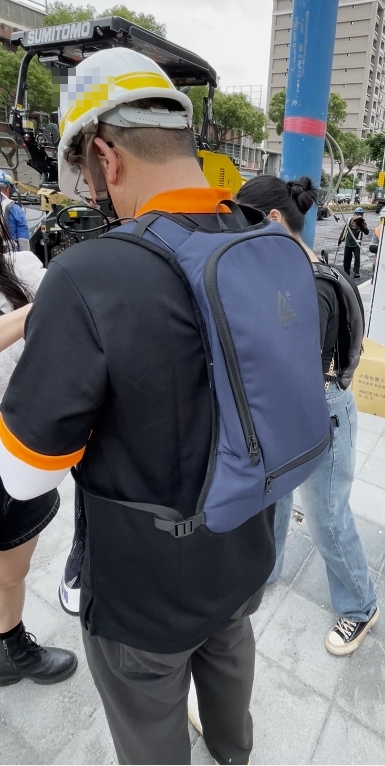
The Problem: Heat a Worker Cannot Walk Away From
Heat exposure at work is rarely a single event. It is a repeating set of conditions, and each type demands something different from the equipment:
- Radiant heat from metal roofs and machinery. In a metal-roof or sheet-metal factory, the roof stores heat through the day and releases it downward onto the work position. Shade does not solve this, because the heat source is above and beside the worker rather than in front of them.
- Fixed posts. Traffic control and gate duty hold a worker in direct sun for the whole shift. There is no cooler room to step into and no rotation that removes the exposure.
- Non-stop stalls. Street vendors and food stall operators work beside griddles, fryers and open heat, with no option to leave the stall unattended.
- Shift length. Outdoor and industrial work is organised around multi-hour blocks. Any cooling method that expires inside the first hour creates a gap the worker has to cover without help.
The consequences compound: continuous sweat loss, rising body heat, falling concentration and, at the extreme, heatstroke risk. That chain is also the exact set of outcomes a Taiwan deployment of this product set out to change.
Industry Background: Buyers Are Now Shopping for Duration
The cooling vest category has moved from a novelty purchase to a budget line. The global cooling vest market was valued at approximately USD 215 million in 2024 and is projected to reach USD 385 million by 2033, according to Dataintelo. The wider personal cooling device category — which includes handheld and other devices, not only garments — was valued at USD 25.16 billion in 2024 and is projected to reach USD 94.85 billion by 2035, according to Market Research Future. The two figures describe different scopes and should not be substituted for each other.
Growth is not evenly spread. Asia Pacific is the fastest-growing region for cooling vests, driven by rapid industrialisation and high outdoor work populations, according to Spherical Insights. Technology preferences are shifting at the same time: phase change material (PCM) vests captured 28.7% of market share in 2025 and represented the fastest-growing technology segment, per Dataintelo, while active circulatory mechanisms such as ice water circulation are increasingly deployed in industrial sectors to mitigate occupational heat stress, according to Strategic Market Research.
The supplier field reflects that mix. Published category coverage lists Techniche International, Glacier Tek, Polar Products Inc. and Ergodyne among the key participants in the cooling vest market (Spherical Insights). Shokunin works the same problem from a Taiwan manufacturing base, with a registered structure patent covering the water-cooled vest and its cooling system.
For a buyer in the Evaluation stage, the useful conclusion is that technology names do not settle a purchase. Four operational questions do: how long the cooling lasts, how much the system weighs on the worker, what the cold medium costs to maintain across a season, and what documentation the safety file can reference. The rest of this page answers those four.
The Solution: What the Dual Cooling System Delivers
Two cooling paths, one garment
Dual cooling on this vest means two cooling paths working together rather than one path carrying the whole load. The first is a pair of ice packs that act as the cold reservoir. The second is a circulation loop: chilled water is drawn from a TPU water bag and pushed by a 5 V 150 mA (max) pump through a sand-rubber cooling tube at a maximum flow rate of 320–370 ml/min. Circulation moves chilled water through the loop instead of holding the cold in one static position, and the published cooling duration for the assembly is 3–4 hours.
Published specification
| Parameter | Specification |
|---|---|
| Cooling duration | 3–4 hours |
| Weight | Within 2 kg |
| Suitable temperature | Below 10°C |
| Flow rate | Max 320–370 ml/min |
| Pump output | 5 V 150 mA (max) |
| Shoulder strap material | 600D polyester |
| Body material | PEVA |
| Water bag material | TPU |
| Water bag cap | Polypropylene |
| Cooling tube | Sand rubber (black) |
| Kit contents | Water-cooled vest backpack ×1, ice packs ×2 |
| Specified users | Construction workers, outdoor workers, food stall operators, street vendors, traffic controllers, metal sheet factories |
Certification and documentation
Two documents support the heat-safety positioning. The water-cooled vest structure and cooling system are covered by patent I886033, granted by the Intellectual Property Office, Ministry of Economic Affairs (ROC) on 1 June 2025 and recorded as valid to 27 August 2044 under the Patent Act of the Republic of China. The product has also received the Disaster Prevention Product and Service Certification Award issued by the Taiwan Disaster Prevention Industry Association.
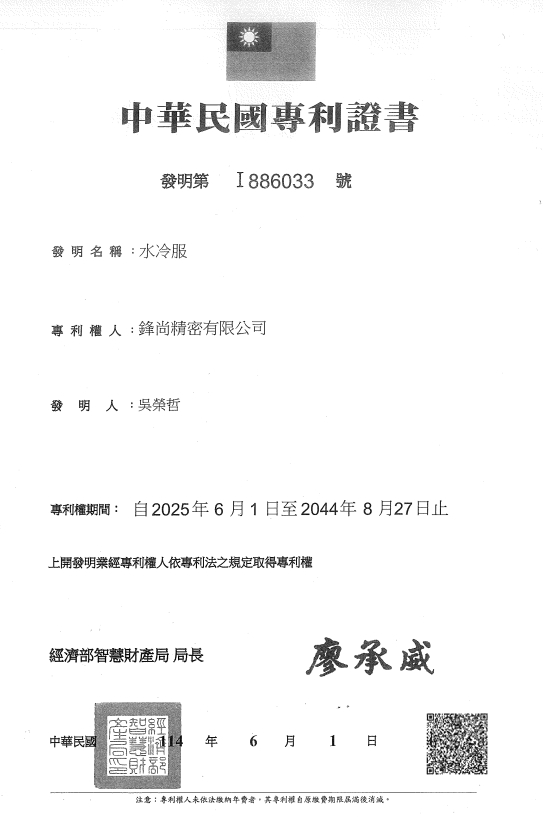
Compliance note: cooling systems are generally expected to comply with ISO 9001:2015 for quality management, and electrical components often require CE or UL marks. Buyers should confirm which marks apply in their own market and application.
Pain Point to Design Answer: A Step-by-Step Breakdown
Read as a sequence, the vest is easier to evaluate. Each step below pairs a real site problem with the specific part of the product that answers it.
- Pain: the gear has to be ready before the shift, not during it. The kit ships as a water-cooled vest backpack ×1 plus ice packs ×2. Preparation — freezing the two ice packs and filling the TPU water bag — happens before the worker puts the vest on.
- Pain: added weight slows the job down. The system weighs within 2 kg and is carried as a backpack, with the shoulder strap made from 600D polyester. The load stays a worn item rather than something the worker has to hold or reposition between tasks.
- Pain: cold that sits in one spot stops helping. The pump pushes chilled water from the TPU water bag through the sand-rubber cooling tube at a maximum flow rate of 320–370 ml/min. The water bag cap is polypropylene and the body material is PEVA.
- Pain: the shift outlasts the cooling. With a 3–4 hour cooling duration, the supervisor plans one change point inside a standard shift instead of improvising one. That number is what the rotation should be built around.
- Pain: one size does not fit a mixed crew. The deployment record for this product notes an adjustable one-size-fits-all design, which removes the sizing step from multi-worker rollout planning.
- Pain: safety officers need paperwork, not adjectives. Patent I886033 covers the structure and cooling system; the Disaster Prevention Product and Service Certification Award from the Taiwan Disaster Prevention Industry Association covers the product’s disaster-prevention positioning. Both are referenceable in a heat-safety file.
Use Cases: Where It Fits, Scenario by Scenario
Six work environments are named in the product specification and the deployment record. They share one trait: the worker cannot remove themselves from the heat source.
Construction sites and outdoor work
Multi-hour exposure combined with physical exertion. The relevant figure is the 3–4 hour cooling duration matched against the length of the work block, with the ice-pack change scheduled rather than reactive. This is also the largest single worked example in the product’s field record.
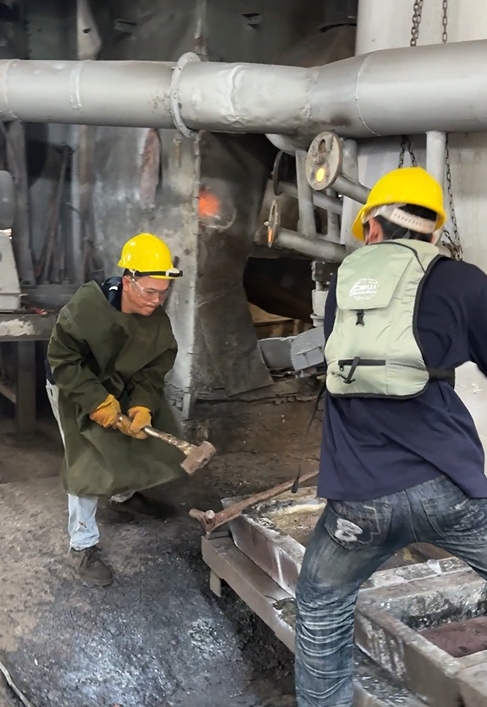
Metal sheet and metal-roof factories
Radiant heat from above and from machinery, in a building that stores warmth through the day. A backpack-format vest keeps both hands free for the work station, and the 2 kg weight limit keeps the garment usable across a full block. The same reasoning applies to what buyers often describe as cooling solutions for metal-roof factories.
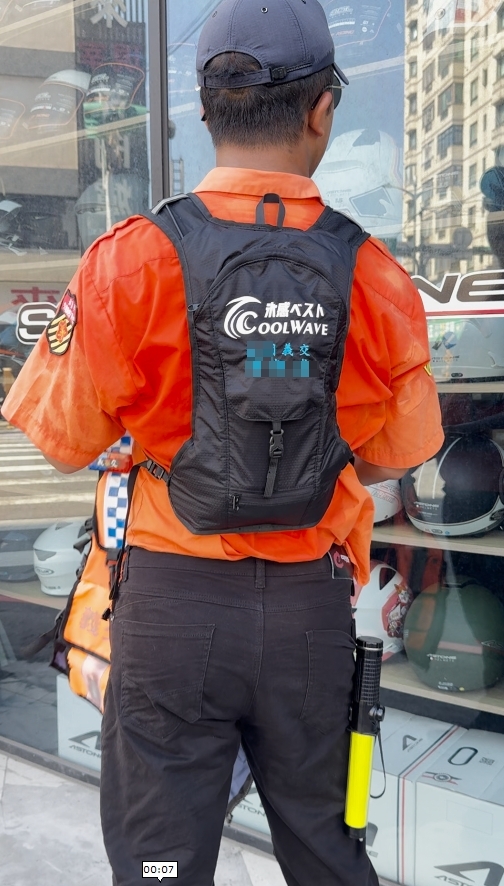
Traffic control and prolonged sun exposure
A fixed post in direct sun for a full shift is one of the clearest cases for a wearable rather than a fixed cooling installation. There is nowhere to place a fan, and the worker cannot leave the post to cool down.
Street vendors, food stalls and night markets
Vendors work beside heat sources for the length of a trading session, often through the hottest part of the day and into the evening. The value here is portability: the vest travels with the worker and does not depend on a stall connection.
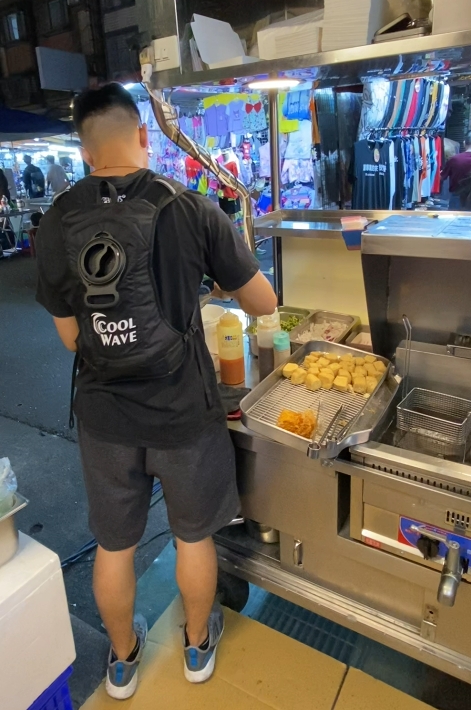
Field evidence: the Taiwan 100-unit deployment
A Taiwan case deployed 100 units of this product for workers in high-temperature environments. The record covers construction sites, outdoor work, metal sheet factories and street vendors, with a reported usage span of 10 years in high-temperature applications. The reported outcomes were effective body cooling, heatstroke prevention, improved work efficiency and improved worker comfort. The deployment’s own highlight list names lightweight portability, an adjustable one-size-fits-all design, ice-pack cooling and certified disaster-prevention product status.
Comparison: How the Options Line Up
Only verifiable, attributable information is used below. Where published evidence does not exist for a given attribute, the cell says so rather than filling the gap with an estimate.
| Cooling approach | What the available evidence states | Working conditions it suits |
|---|---|---|
| Shokunin COOLWAVE Water-Circulation Cooling Vest (Basic Model) — dual cooling water cooling vest | Two ice packs plus a circulating water loop; 3–4 hour cooling duration; weight within 2 kg; maximum flow rate 320–370 ml/min; pump output 5 V 150 mA (max); Taiwan patent I886033 covering structure and cooling system; Disaster Prevention Product and Service Certification Award | Multi-hour fixed or mobile hot work: construction, metal sheet factories, traffic control, street vendors, outdoor and food-stall work |
| PCM (phase change material) vests | 28.7% of cooling-vest market share in 2025; the fastest-growing technology segment (Dataintelo). Duration, weight and flow figures are not stated in the available evidence. | Buyers who specifically want a phase-change material technology; specification comparison requires the supplier’s own data sheet |
| Personal cooling devices (broader category) | Category valued at USD 25.16 billion in 2024, projected to reach USD 94.85 billion by 2035 (Market Research Future) | Category-level planning and budgeting context only — not a substitute for garment-level specifications |
This comparison is deliberately limited to published facts. It does not rank suppliers, and it does not assign performance values to products for which no verified figures are available.
Frequently Asked Questions
Is the Shokunin dual cooling water cooling vest certified?
The water-cooled vest structure and cooling system are covered by patent I886033, granted by the Intellectual Property Office, Ministry of Economic Affairs (ROC) on 1 June 2025 and recorded as valid to 27 August 2044 under the Patent Act of the Republic of China. The product has also received the Disaster Prevention Product and Service Certification Award issued by the Taiwan Disaster Prevention Industry Association. Where a market requires additional marks, cooling systems are generally expected to comply with ISO 9001:2015 quality management, and electrical components often require CE or UL marks — buyers should confirm which marks apply to their own jurisdiction and application.
What does the dual cooling system actually deliver in numbers?
Published figures are a 3–4 hour cooling duration, a weight within 2 kg, a maximum flow rate of 320–370 ml/min, a pump output of 5 V 150 mA (max), and a suitable temperature listed as below 10°C. The kit contains one water-cooled vest backpack and two ice packs. Materials are 600D polyester for the shoulder strap, PEVA for the body, TPU for the water bag, polypropylene for the water bag cap and sand rubber for the cooling tube. Production runs on an ODM basis with a monthly capacity of 3,000 units.
What drives the cost of a deployment?
Budget planning starts from the published commercial parameters rather than a list price: a minimum order quantity of 10 units, a monthly production capacity of 3,000 units, a 7–14 day lead time and a 6-month warranty on the water-cooled vest. The recurring requirement is ice and water handling, since the two ice packs are part of the shipped kit. Quantity, configuration and delivery terms therefore determine the commercial outcome more than any single component.
Can we validate the product before a full rollout?
The minimum order quantity is 10 units, which is the smallest quantity the published commercial terms allow. A Taiwan deployment record exists for this product covering 100 units across construction sites, outdoor work, metal sheet factories and street vendors, with reported results of effective body cooling, heatstroke prevention, improved work efficiency and improved worker comfort. That record is a useful reference point when planning a validation run on a live site.
What is the lead time and delivery capacity?
Lead time is 7–14 days, supported by a monthly capacity of 3,000 units, with export markets listed as global. The water-cooled vest carries a 6-month warranty. To review the full specification and arrange a sample or a quote, download the Shokunin product brochure or contact the team at fsmarketing@fstool.com.tw or WhatsApp +86 18858260055.
Conclusion
The dual cooling water cooling vest is not a general-purpose product. It is aimed at a defined set of conditions: metal-roof and metal sheet factories, fixed traffic posts, non-stop stalls, and construction blocks that run longer than a single cooling cycle. Against those conditions, the published specification gives buyers something concrete to plan around — 3–4 hours of cooling at a weight within 2 kg, a maximum flow rate of 320–370 ml/min, a documented patent and a disaster-prevention certification. The Taiwan deployment record of 100 units, covering construction sites, outdoor work, metal sheet factories and street vendors with reported improvements in body cooling, heatstroke prevention, work efficiency and worker comfort, is the field reference that sits behind those numbers.
For a buyer in the Evaluation stage, the practical test is simple: compare the 3–4 hour cooling window against your longest unbroken work block, then confirm the documentation your safety file requires. If both line up, the next step is a small validation run at the published minimum order quantity.
Next Step: Specification, Sample or Quote
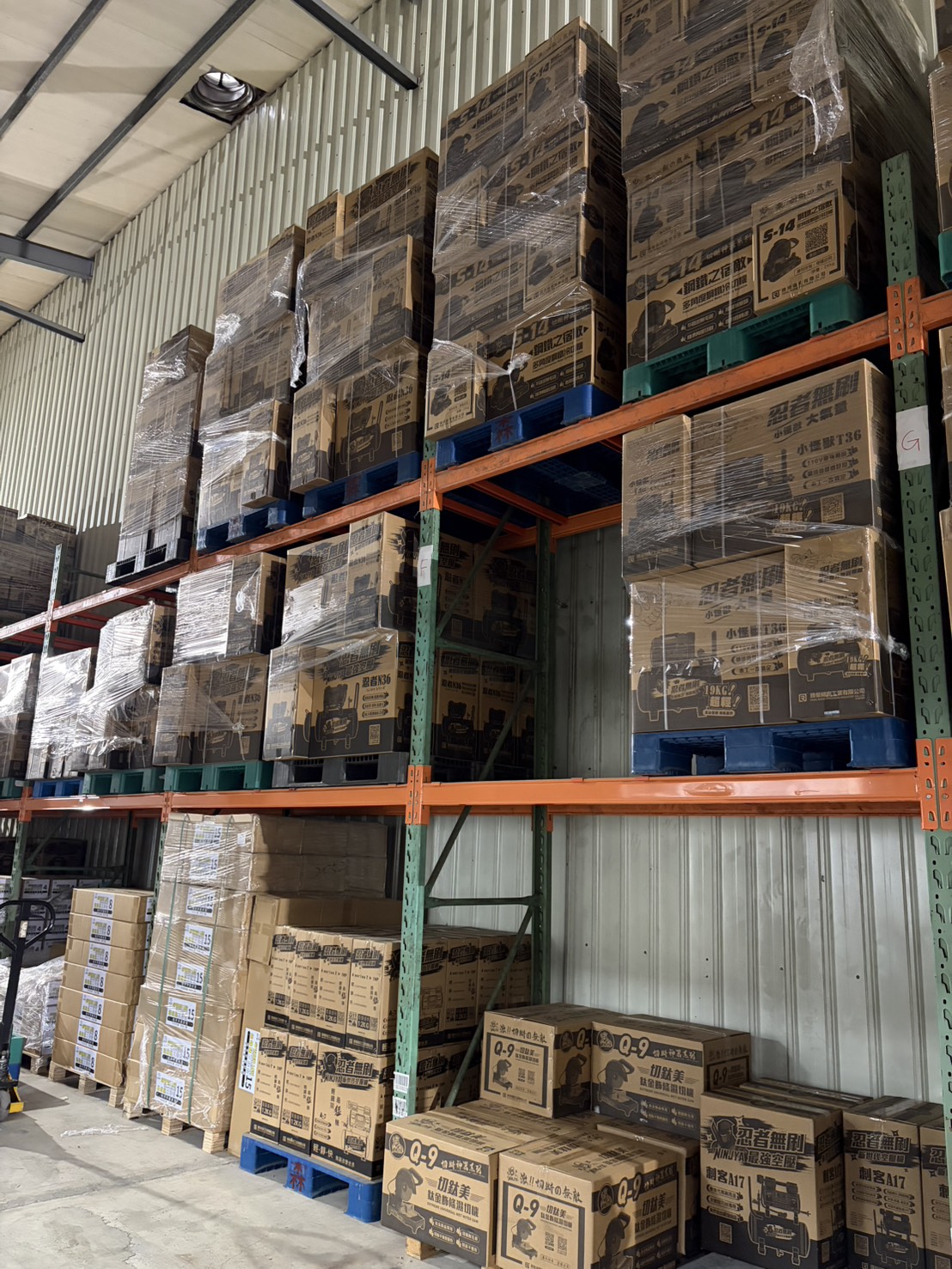
Shokunin supplies the COOLWAVE Water-Circulation Cooling Vest (Basic Model) with a 3,000-unit monthly capacity and a 7–14 day lead time.
- Product brochure (PDF): Download the Shokunin catalog
- Website: www.fstool.com.tw
- Email: fsmarketing@fstool.com.tw
- WhatsApp: +86 18858260055
- Phone: +886 3-312-6606 (Monday to Friday, 8:30 AM – 5:40 PM)
- Address: No. 155-17, Sec. 2, Nanzhu Rd., Luzhu Dist., Taoyuan City 338454, Taiwan
Manufactured by Feng Shang Precision Co., Ltd. — minimum order quantity 10 units; 6-month warranty on the water-cooled vest.
Have Questions or Need More Details?
Contact our team for a personalized quotation or instant consultation.
Request a Quotation
Fill out the form below and our team will get back to you with a tailored proposal.
WhatsApp Direct Chat
Prefer to chat in real-time? Message us on WhatsApp for instant assistance & quick answers.
- Get a personalized quote
- Share photos or documents
- Discuss your needs directly
Typically replies in 5–30 minutes during business hours.