
Dual Cooling Water Cooling Vest: Loop Design & Duty Limits
Dual Cooling Water Cooling Vest: Loop Design & Duty Limits
A dual cooling water cooling vest moves chilled water around the wearer with a small electric pump and refreshes the circuit with two reusable ice packs. The COOLWAVE Water-Circulation Cooling Vest, sold under the Shokunin brand by FENG SHANG PRECISION CO., LTD. in Taoyuan City, Taiwan, is specified at 3–4 hours of cooling per cycle, a net weight within 2 kg, a 5 V / 150 mA (max) pump, and a maximum flow rate of 320–370 ml per minute.
This technical guide reads those values as specification limits rather than comfort claims. It explains what the pump and flow figures define, what each listed material is doing in the assembly, how the four model designations differ, and how a buyer should convert the datasheet into a site decision for construction, traffic control, sheet metal, street vending and other outdoor work.
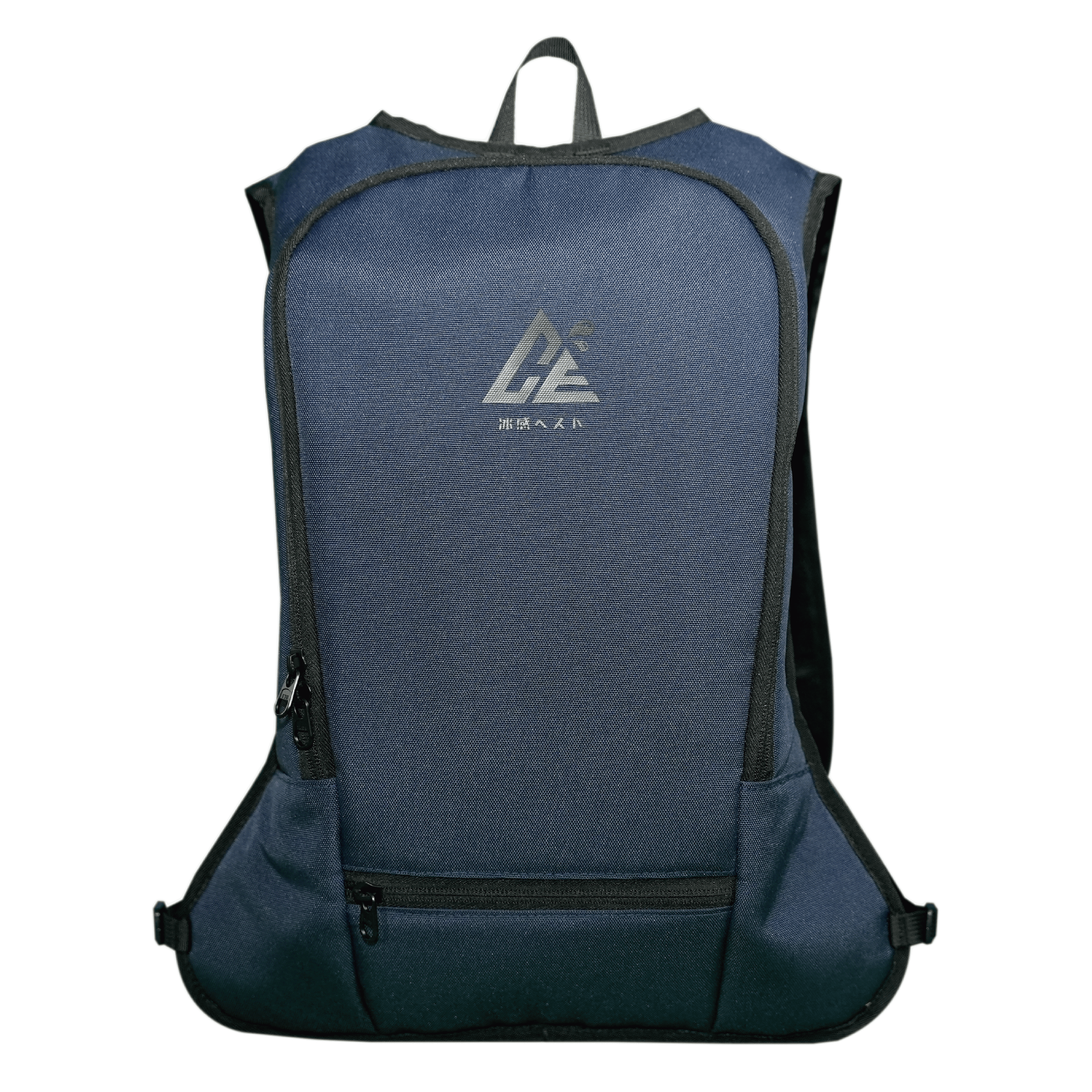
COOLWAVE Water-Circulation Cooling Vest, Professional Model (Blue) — the pump-driven loop design covered in this guide.
Problem Definition: Heat Exposure Is a Duty-Cycle Problem
The industries that buy a water-circulation cooling vest share one working condition: the job does not pause when the temperature rises. The COOLWAVE Water-Circulation Cooling Vest is intended for construction workers, outdoor workers, food stall operators, street vendors, traffic controllers and sheet metal factory workers, and it is designed for use in construction, outdoor work, food stall operations, street vending, traffic control and sheet metal factories.
Each of those groups creates a different duty cycle, and the datasheet only becomes useful when it is read against one. Three questions decide whether the garment fits the work: how many hours does the wearer stay in heat, how much additional load can that wearer carry, and what portable power source is available on site. The connected values — 3–4 hours of cooling, a net weight within 2 kg, and a 5 V / 150 mA (max) pump — answer those questions only after the site conditions have been written down.
Scale reinforces the point. Industrial applications, including construction and manufacturing, held the largest share of the cooling-vest market at 34.5% in 2025 (Dataintelo). That is a buyer profile that behaves differently from a consumer buyer: products arrive in batches, are checked against documentation, and are issued as equipment rather than bought as accessories.
Product classification confirms the same logic. This vest sits in the Industrial Cooling Apparel / Personal Protective Equipment (PPE) category, which places it inside the safety review a site already runs for other protective gear. Where that review ends, the specification begins: heat-stress protection is only as reliable as the duty envelope the equipment can actually hold.
Industry Background: Where the Cooling-Vest Category Stands in 2026
Cooling-equipment market figures have to be read with their definitions attached. Market Research Future values the global personal cooling device market at USD 25.16 billion in 2024, with a projection of USD 94.85 billion by 2035. Dataintelo values the narrower cooling vest market at approximately USD 215 million in 2024, projected to reach USD 385 million by 2033. The two figures are not contradictory — they describe different scopes, and a supplier quoting market growth should be asked which definition is being used.
Regional and application data are more consistent. Asia Pacific is the fastest-growing region for cooling vests, driven by rapid industrialization and large outdoor work populations (Spherical Insights), and industrial applications held the largest share of the category at 34.5% in 2025 (Dataintelo).
Technology direction separates the category into two families. Phase change material (PCM) cooling vests captured 28.7% of market share in 2025 and represent the fastest-growing technology segment (Dataintelo), while active circulatory mechanisms such as ice water circulation are increasingly deployed in industrial sectors to mitigate occupational heat stress (Strategic Market Research). The COOLWAVE system belongs to the second family: chilled water is moved through the garment by a pump instead of being held against the body in a passive material.
The supplier landscape is already populated. Established names in the cooling vest market include Techniche International, Glacier Tek, Polar Products Inc. and Ergodyne (Spherical Insights). Shokunin, the brand under which this vest is sold, comes out of a tool-manufacturing base: FENG SHANG PRECISION CO., LTD. was established in 2009, operates a 1,000 m² facility in Taoyuan City, Taiwan, employs approximately 30 staff, and maintains a five-engineer R&D team, with an annual production capacity of 10,000 units across a line that includes air compressors, cut-off machines, water-cooled vests, lithium batteries, diamond saws, nail guns, spider stands and screwdriver bits. Export business accounts for 50% of total sales, with the USA and Taiwan (ROC) as major markets. The cooling vest has received the Disaster Prevention Product and Service Certification Award issued by the Taiwan Disaster Prevention Industry Association.
Detailed Solution: The COOLWAVE Specification, Parameter by Parameter
The vest operates on water-circulation cooling. It is supplied as a water-cooled vest backpack with two ice packs. Cooling duration is 3 to 4 hours, net weight is within 2 kg, the suitable ambient temperature is listed as below 10°C, the pump is rated at 5 V and 150 mA (max), and the maximum flow rate is 320 to 370 ml per minute. Those are the values the rest of this section explains.
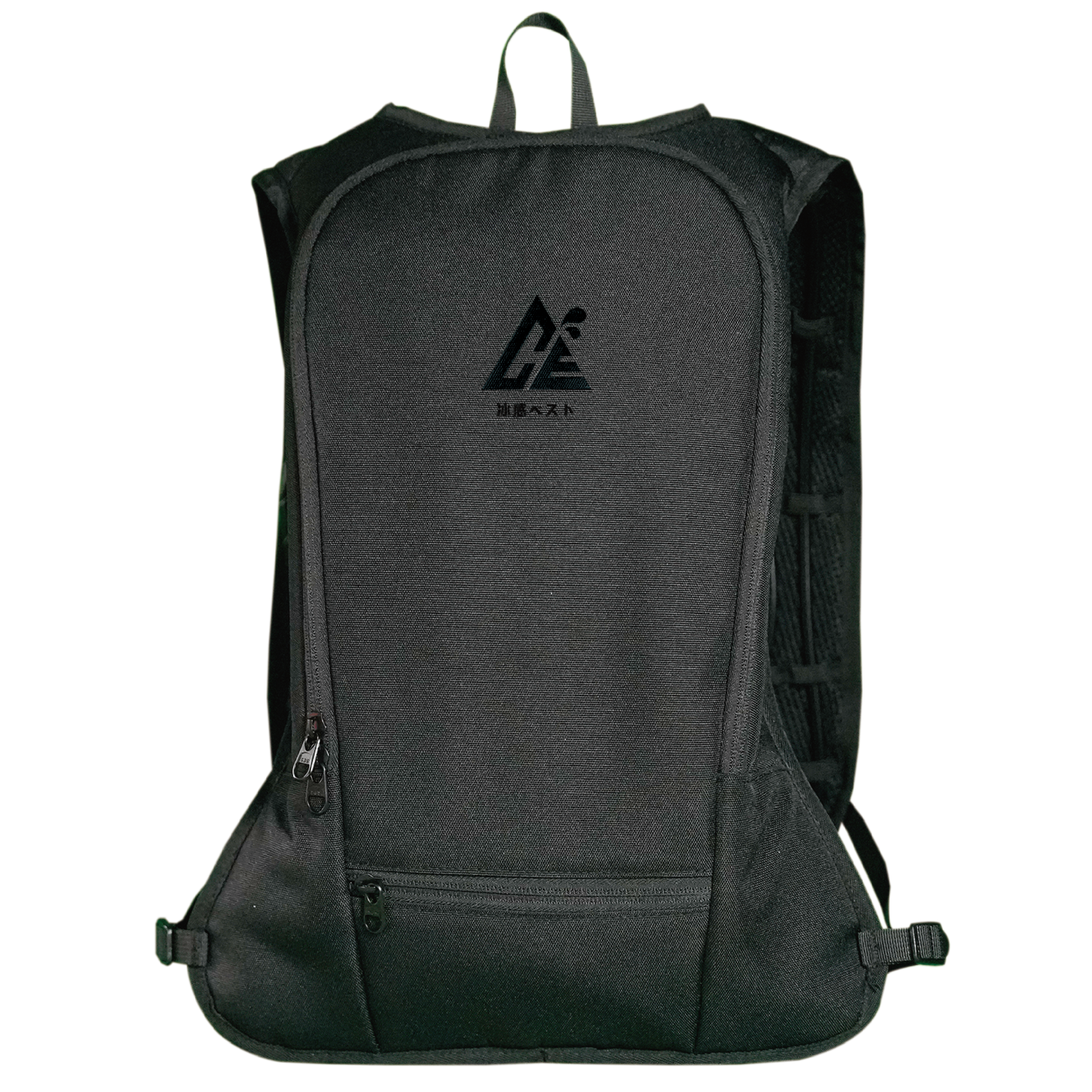
Professional Model (Black): the same loop specification as the other designations, in a different colour.
What the pump rating and flow rate actually define
The pump rating and the flow rate describe two different things, and buyers often merge them into one vague idea of “cooling power.” The 5 V / 150 mA (max) rating is the electrical requirement of the pump — the parameter an engineer needs when deciding which portable power source can be paired with the garment. The 320–370 ml/min maximum flow rate is the hydraulic parameter — how much chilled water the loop can move through the cooling tube per minute.
Both numbers explain what separates this design from a passive ice cooling vest, which cools through direct contact alone. In the COOLWAVE product the two supplied ice packs and the pump-driven water circuit are the two cooling elements of the system, which is where the term dual cooling water cooling vest comes from.
Materials: what the datasheet lists, and why it matters
Materials are specified individually: shoulder strap in 600D polyester, vest material in PEVA, water bag in TPU (thermoplastic polyurethane), water bag cap in polypropylene, and cooling tube in sand rubber (black). For an industrial buyer these are not decorative details. They are the part of the sheet that answers fluid-handling and wearer-interface questions during sample evaluation, and named materials make two suppliers comparable without falling back on descriptions such as “durable” or “industrial grade.”
Functionally, the water bag and its polypropylene cap form the fluid containment part of the system, the sand rubber cooling tube carries the chilled water, and the 600D polyester shoulder strap is the load-bearing interface between the wearer and the backpack assembly.
Contents, weight and wearability
Each unit is supplied as a water-cooled vest backpack plus two ice packs, and the net weight of the vest is within 2 kg. The backpack format keeps both hands free, which is the reason the vest is listed for traffic controllers, street vendors and construction crews rather than for stationary work only. The contents line is also the spare-parts line: because two ice packs are included, a shift plan can be built around rotating and re-using the two reusable packs.
Model designations
Four designations are available: COOLWAVE Water-Circulation Cooling Vest (Basic Model) and the Professional Model in Black, Gray and Blue. The supplied product data lists the same cooling duration, weight, suitable temperature, materials and contents for each designation, so the practical difference between them is the designation and the colour rather than the loop specification.
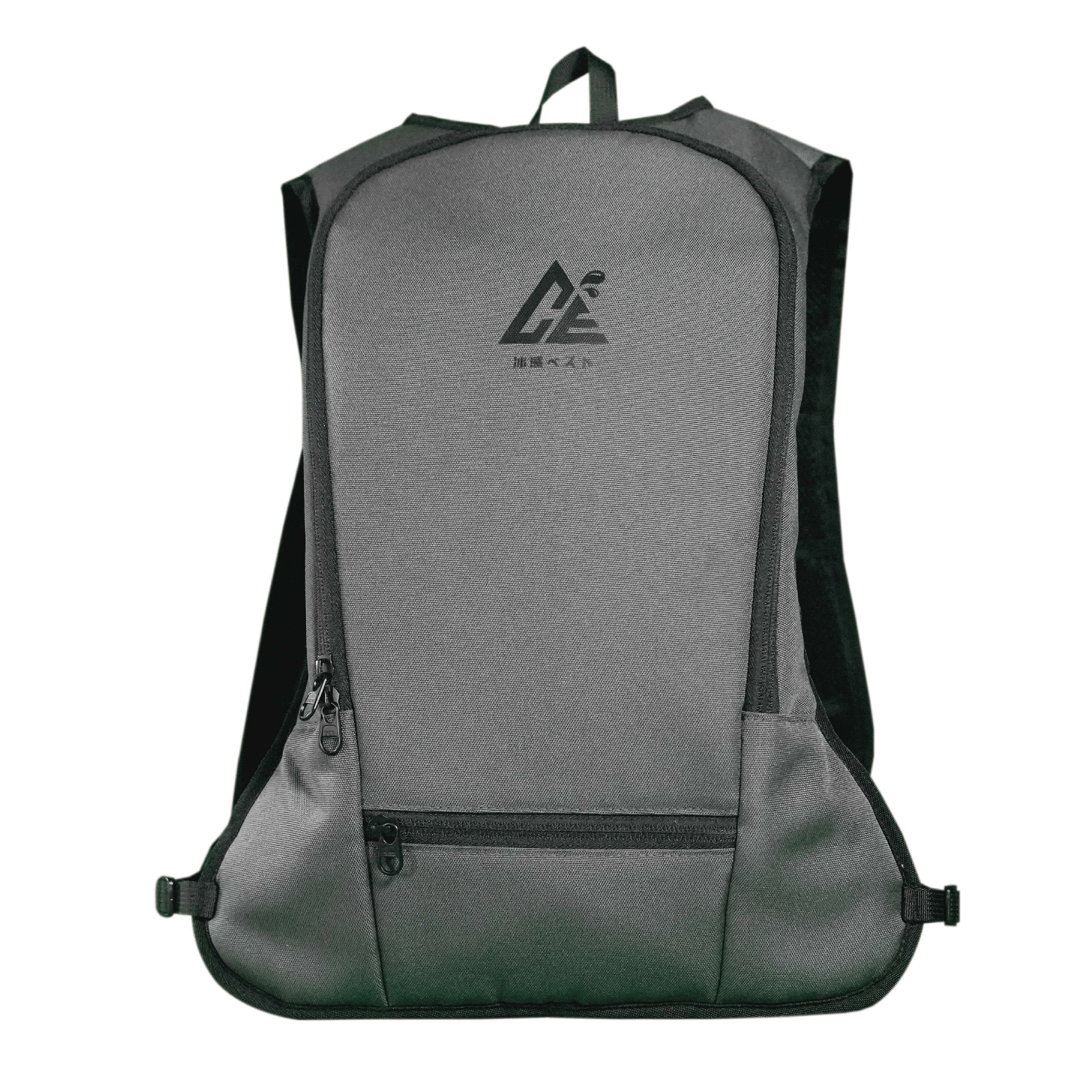
Professional Model (Gray). Variants share the same technical values; selection is by designation and colour.
Compliance position
Two compliance layers apply to this product. First, it is classified as Industrial Cooling Apparel / Personal Protective Equipment (PPE), so it enters a site through the safety channel. Second, because the loop uses an electrically driven pump, the electrical component is the element that usually triggers review: cooling systems must comply with ISO 9001:2015 for quality management and often require CE or UL marks for electrical components. The first-party certification attached to this product line is the Disaster Prevention Product and Service Certification Award issued by the Taiwan Disaster Prevention Industry Association.
Step-by-Step Breakdown: Specifying the Vest for a Site
The sequence below converts the datasheet into a site specification, in the order that heat-safety programmes usually fail: duty first, then weight, then power, then documentation.
- Write the duty cycle before choosing a model. Record the shift length and the number of hours each wearer stays in direct heat, then compare it with the 3–4 hour cooling duration. Where exposure exceeds one cycle, build the plan around the two ice packs supplied with the unit.
- Set a weight budget. The vest has a net weight within 2 kg. Add the wearer’s other PPE and tools, and test the total load rather than the vest in isolation.
- Match the power source to the pump rating. The pump is rated at 5 V and 150 mA (max). This is the step that buyers researching a power bank cooling vest are really working on: the 5 V figure is the electrical requirement to match, and the power source should be confirmed with the supplier before the site trial.
- Confirm the flow expectation. The loop delivers a maximum flow rate of 320–370 ml per minute. Treat this as the hydraulic baseline when comparing a water-circulation design against a passive alternative.
- Check the wearer interface and materials. The shoulder strap is 600D polyester, the vest material is PEVA, and adjustable vest straps are part of the portable backpack design. Confirm the materials listed on the datasheet against the materials declared for your programme.
- Assemble the compliance file. Route the purchase through PPE classification, and request ISO 9001:2015 quality-management documentation plus CE or UL documentation for the electrical component if your market requires it. Record the Taiwan Disaster Prevention Industry Association certification as first-party evidence for this line.
- Fix the variant, contents and supply plan. Confirm the designation (Basic Model, or Professional Model in Black, Gray or Blue), confirm that each unit ships as a water-cooled vest backpack with two ice packs, and check the manufacturer’s stated capacity of 10,000 units per year, a 1,000 m² facility and a five-engineer R&D team against your annual volume.
Use Cases: Matching the Loop to Real Work Sites
Every environment below is a listed application environment for the COOLWAVE Water-Circulation Cooling Vest. The loop design does not change between them; what changes is how the duty cycle is planned.
Construction sites
Construction crews work under prolonged sun exposure with limited shade, which makes the cooling duration rather than the peak cooling effect the deciding number. For a crew working beyond 3–4 hours in heat, the two supplied ice packs define the rotation rhythm of the shift.
Traffic control
Traffic controllers combine sun exposure with a need for free hands and visible movement, which is where the backpack format and the sub-2 kg net weight matter most. This is a case where the weight parameter should be tested on the actual wearer before batch procurement.
Sheet metal and metal-roof factories
Sheet metal factories appear in the listed application industries, and the same logic applies to production halls under metal roofing, where radiant heat is continuous rather than intermittent. A cooling solution for metal-roof factories has to keep running across a full production cycle, which means the loop rating and the power source plan are reviewed together.
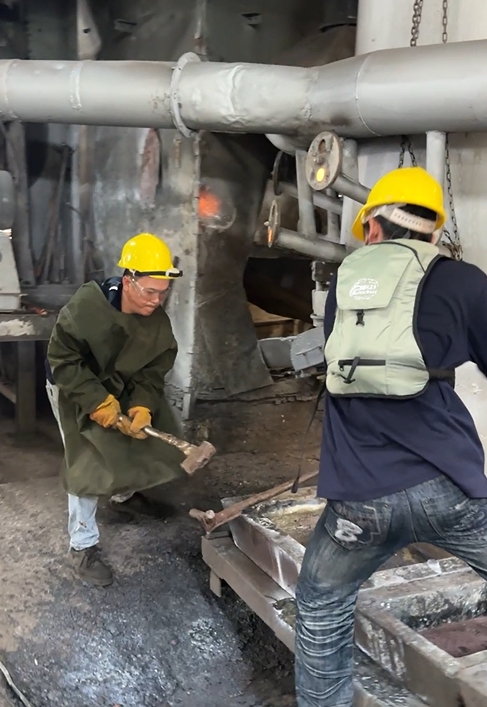
Metal sheet factory: one of the listed application environments for the water-circulation vest.
Street vending and food stalls
Food stall operators and street vendors work in mixed heat sources — ambient temperature plus cooking equipment — and they change position frequently. Portability and low weight dominate the selection here, which is why the backpack configuration suits this group.
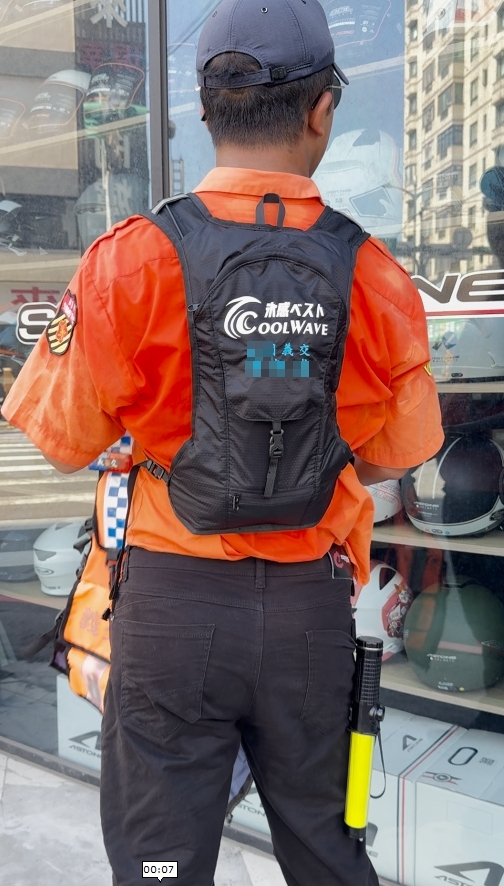
Traffic control: hands-free wearability and weight are the parameters that decide fit.
Long-duration outdoor work
For general outdoor work, the binding constraint is usually the gap between the 3–4 hour cycle and the length of the working day. Planning the ice-pack rotation is more effective than expecting one fill to cover an entire shift.
Comparison Table: Variants, Parameters and Site Decisions
The first table compares the four available designations. The second maps each specified value to the question it settles on site.
| Model designation | Type / category | Contents | Cooling duration | Net weight | Suitable ambient temperature |
|---|---|---|---|---|---|
| COOLWAVE Water-Circulation Cooling Vest (Basic Model) | Industrial Cooling Apparel / PPE | Water-cooled vest backpack ×1, ice packs ×2 | 3–4 hours | Within 2 kg | Below 10°C |
| Professional Model – Black | Industrial Cooling Apparel / PPE | Water-cooled vest backpack ×1, ice packs ×2 | 3–4 hours | Within 2 kg | Below 10°C |
| Professional Model – Gray | Industrial Cooling Apparel / PPE | Water-cooled vest backpack ×1, ice packs ×2 | 3–4 hours | Within 2 kg | Below 10°C |
| Professional Model – Blue | Industrial Cooling Apparel / PPE | Water-cooled vest backpack ×1, ice packs ×2 | 3–4 hours | Within 2 kg | Below 10°C |
| Specified parameter | Value in the product data | Site question it settles |
|---|---|---|
| Cooling duration | 3–4 hours | How many ice-pack rotations a full shift needs |
| Net weight | Within 2 kg | Total carried load when combined with other PPE |
| Pump output | 5 V, 150 mA (max) | Which portable power source the loop can run on |
| Flow rate | Max 320–370 ml/min | Circulation baseline versus a passive cooling vest |
| Suitable ambient temperature | Below 10°C | Rated datasheet value to confirm against site conditions with the supplier |
| Water bag / cap | TPU / polypropylene | Fluid-containment material declaration |
| Cooling tube | Sand rubber (black) | Water-path material to declare in the specification |
| Shoulder strap | 600D polyester | Load-bearing interface on the wearer |
| Contents | Backpack ×1, ice packs ×2 | Rotation and spare-part planning |
| Model designations | Basic; Professional Black / Gray / Blue | Variant selection for a programme or a uniform standard |
FAQ
1. What compliance requirements apply to a dual cooling water cooling vest on an industrial site?
The COOLWAVE Water-Circulation Cooling Vest is classified as Industrial Cooling Apparel / Personal Protective Equipment (PPE), so it is reviewed through the safety and procurement channel rather than as a consumer accessory. Because the loop is driven by an electric pump, the electrical part usually triggers the review: cooling systems must comply with ISO 9001:2015 for quality management and often require CE or UL marks for electrical components. The cooling vest line has also received the Disaster Prevention Product and Service Certification Award issued by the Taiwan Disaster Prevention Industry Association.
2. How long does the vest cool, and how heavy is it?
The product data lists a cooling duration of 3 to 4 hours per cycle and a net weight within 2 kg. Each unit is supplied as a water-cooled vest backpack with two reusable ice packs, so a crew working longer than the cooling window can plan a rotation between the two packs instead of relying on one fill to cover a full shift. The datasheet also lists a suitable ambient temperature below 10°C, which is the rated value to confirm against actual site conditions.
3. What power source does the pump need, and what flow rate does the loop deliver?
The pump has a rated output of 5 V and 150 mA (max), and the loop delivers a maximum flow rate of 320 to 370 ml per minute. Buyers specifying a power bank cooling vest arrangement should treat the 5 V rating as the electrical requirement to match, and should confirm the chosen power source before the site trial rather than after it. Flow rate is the separate hydraulic value to compare when judging a pump-driven design against a passive ice cooling vest.
4. How much supply volume can the manufacturer support?
The vest is sold under the Shokunin brand by FENG SHANG PRECISION CO., LTD., a manufacturer established in 2009 and located in Taoyuan City, Taiwan. The facility covers 1,000 m², employs approximately 30 staff and reports an annual production capacity of 10,000 units, supported by a five-engineer R&D team. Export business accounts for 50% of total sales, with the USA and Taiwan (ROC) as the major markets.
5. How should a buyer start a sample evaluation?
Begin with the designation and the three governing parameters. The vest is available as COOLWAVE Water-Circulation Cooling Vest (Basic Model) and as Professional Model in Black, Gray and Blue, and each unit ships as a water-cooled vest backpack with two ice packs. Write the intended shift length against the 3–4 hour cooling duration, weigh the total worn load against the sub-2 kg net weight, and match the power source to the 5 V / 150 mA (max) pump. Sample and quotation requests can be sent through the Shokunin website at https://www.fstool.com.tw/, by phone at +886 3-312-6606, or by email at fsmarketing@fstool.com.tw.
Conclusion: Match the Loop to the Shift
Three values decide most evaluations of a dual cooling water cooling vest: 3–4 hours of cooling per cycle, a net weight within 2 kg, and a 5 V / 150 mA (max) pump with a maximum flow rate of 320–370 ml per minute. Everything else on the datasheet — the TPU water bag, the polypropylene cap, the sand rubber cooling tube, the 600D polyester shoulder strap, and the backpack-plus-two-ice-packs contents list — either supports those limits or describes the wearer interface around them.
The industrial context makes this a specification exercise rather than a comfort purchase. Industrial applications held the largest share of the cooling-vest market at 34.5% in 2025 (Dataintelo), and Asia Pacific is the fastest-growing region for the category (Spherical Insights), which means procurement teams will keep comparing pump-driven circulation designs with passive alternatives. Comparing them on duty cycle, weight and power source is more reliable than comparing them on adjectives.
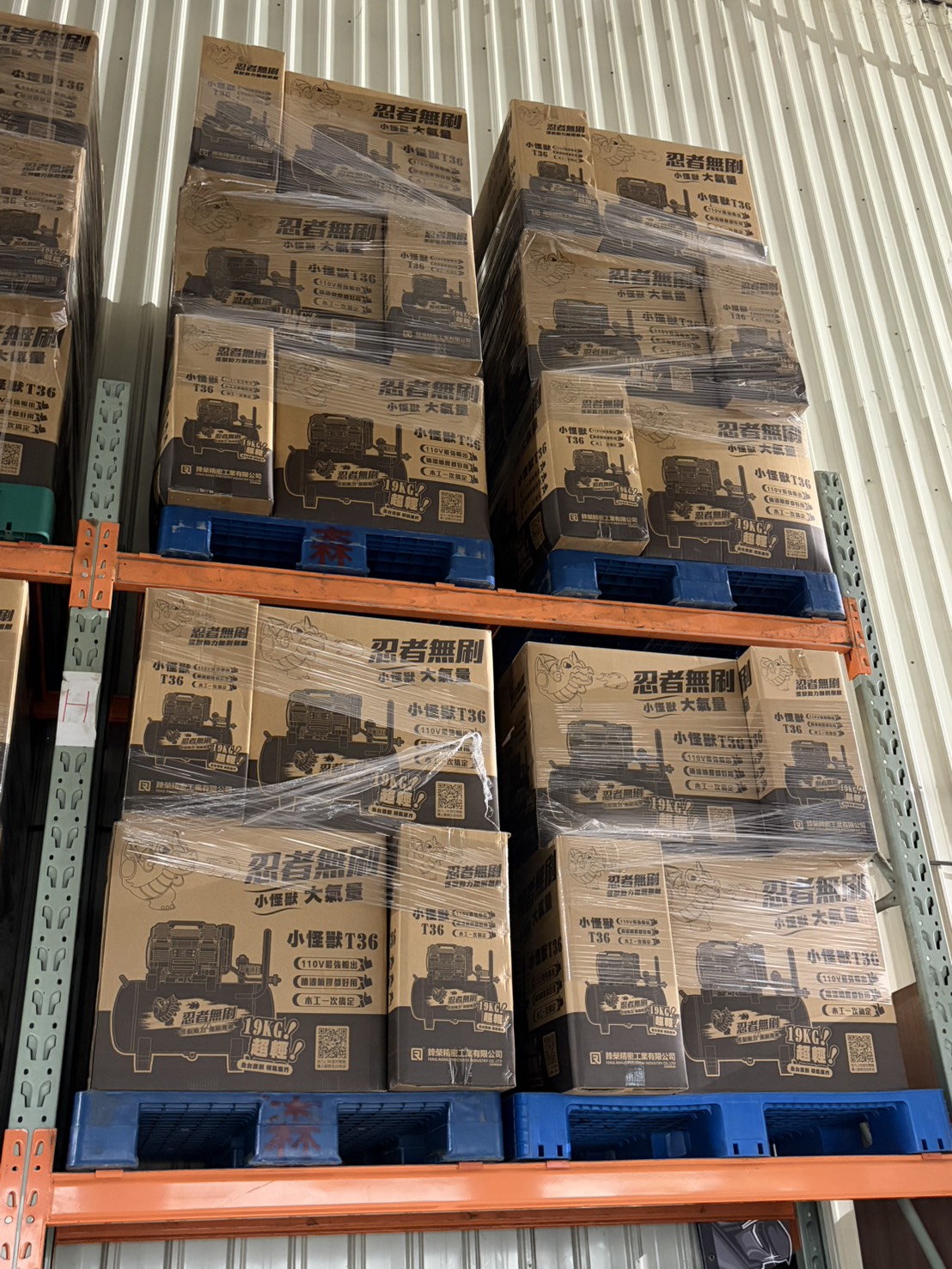
Warehouse and stock area at FENG SHANG PRECISION CO., LTD., Taoyuan City, Taiwan.
Next step: sample or quotation. Compare the Basic Model against the Professional Model in Black, Gray and Blue, and check the 3–4 hour cooling duration, the sub-2 kg net weight and the 5 V / 150 mA (max) pump against your site conditions.
Download the product brochure: COOLWAVE product brochure (PDF)
Website: https://www.fstool.com.tw/ | Email: fsmarketing@fstool.com.tw | Phone: +886 3-312-6606
FENG SHANG PRECISION CO., LTD. (Shokunin), No. 155-17, Sec. 2, Nanzhu Rd., Luzhu Dist., Taoyuan City 338454, Taiwan.