
Dual Cooling Water Cooling Vest: Repeat-Order Acceptance FAQ
For a repeat buyer, the COOLWAVE dual cooling water cooling vest stops being a product decision and becomes a purchasing-system decision. The manufacturer behind the Shokunin brand, Feng Shang Precision Co., Ltd., states a minimum order quantity of 10 units, a typical production lead time of 7–14 days, monthly production capacity of 3,000 units, and a 6-month manufacturer warranty on the vest line. Those numbers answer the obvious questions. They do not, by themselves, protect the second, third or tenth order.
This FAQ is written for the people who already know the vest works on site and now have to buy it repeatedly without renegotiating quality every time: procurement staff renewing a purchase order, safety managers keeping a fleet in service, and distributors restocking a line. It concentrates on the mechanics of repetition — what the stated terms actually commit, how to convert a pre-shipment test into an acceptance record both sides can point to, how a 6-month warranty is administered across a working fleet, and where ODM support genuinely reduces long-term supply risk rather than just sounding reassuring.
Why repeat orders drift away from the first delivery
The first order usually goes well because it is a project. There is a sample, a named contact, a round of questions, and a delivery everyone is watching. The fifth order goes through a purchase order and one email. Three things quietly disappear in that transition, and all three belong to the buyer as much as to the supplier.
The first is the specification baseline. A cooling vest is not one object; it is a vest plus an ice-pack set plus a pump, a water bag, tubing, connectors and a power-bank requirement. Supplier listings for this line show more than one variant — for example the CW-PRO and CW-01 designations — so a reorder that says only the same as last time is not an auditable instruction. The second is the acceptance record. The stated acceptance criterion for this line is a pre-shipment test. That phrase names a checkpoint, not a document, and a checkpoint without a record cannot settle a dispute three months later. The third is warranty administration. A warranty period is easy to quote and easy to lose, because nobody wrote down when it starts, who holds it in a distribution chain, or what evidence a claim requires.
There is a technical reason this matters more in cooling vests than in most PPE. The categories that fail at goods-in — a pump that will not prime from the nominated power bank, an ice pack that weeps at the seam, a water bag that leaks under a full reservoir — are exactly the categories the manufacturer already treats as controlled risks. Reinforced ice-pack material and a pre-shipment quality check before shipment are the stated controls for ice-pack leakage. A repeat buyer who does not verify those controls at receipt is relying on the first order's luck rather than on a system.
What the category looks like from a purchasing desk
Personal cooling is a recognised occupational category, not a lifestyle accessory. The National Institute for Occupational Safety and Health (NIOSH) groups water-cooled garments, air-cooled garments, cooling vests and wetted overgarments together as auxiliary or personal cooling systems for heat exposure. That classification matters commercially because it places a powered water-circulation vest in the same procurement conversation as other heat-exposure controls, with the same expectation of documented performance.
The money follows the same logic. Dataintelo's cooling-vest market report, published in May 2026, put the global cooling-vest market at USD 342 million in 2025 and attributed 34.5% of revenue to industrial applications. Industrial buyers are therefore the commercial base of the category, which is why suppliers publish capacity, MOQ and lead-time figures at all. It is also why those figures deserve scrutiny: a category whose main customers are industrial tends to mature faster in its paperwork than in its published test data.
That gap is visible in this product line. The COOLWAVE vest is described by the manufacturer as providing 3–4 hours of cooling per charge or ice-pack cycle, and its published pump specification is 5 V, 150 mA maximum, with a flow rate of 320–370 ml/min. Neither figure is published with the ambient temperature, humidity, workload or clothing conditions used to obtain it. That does not make the numbers wrong. It makes them unusable as acceptance criteria until the buyer fixes the test conditions, which is the subject of the protocol below.
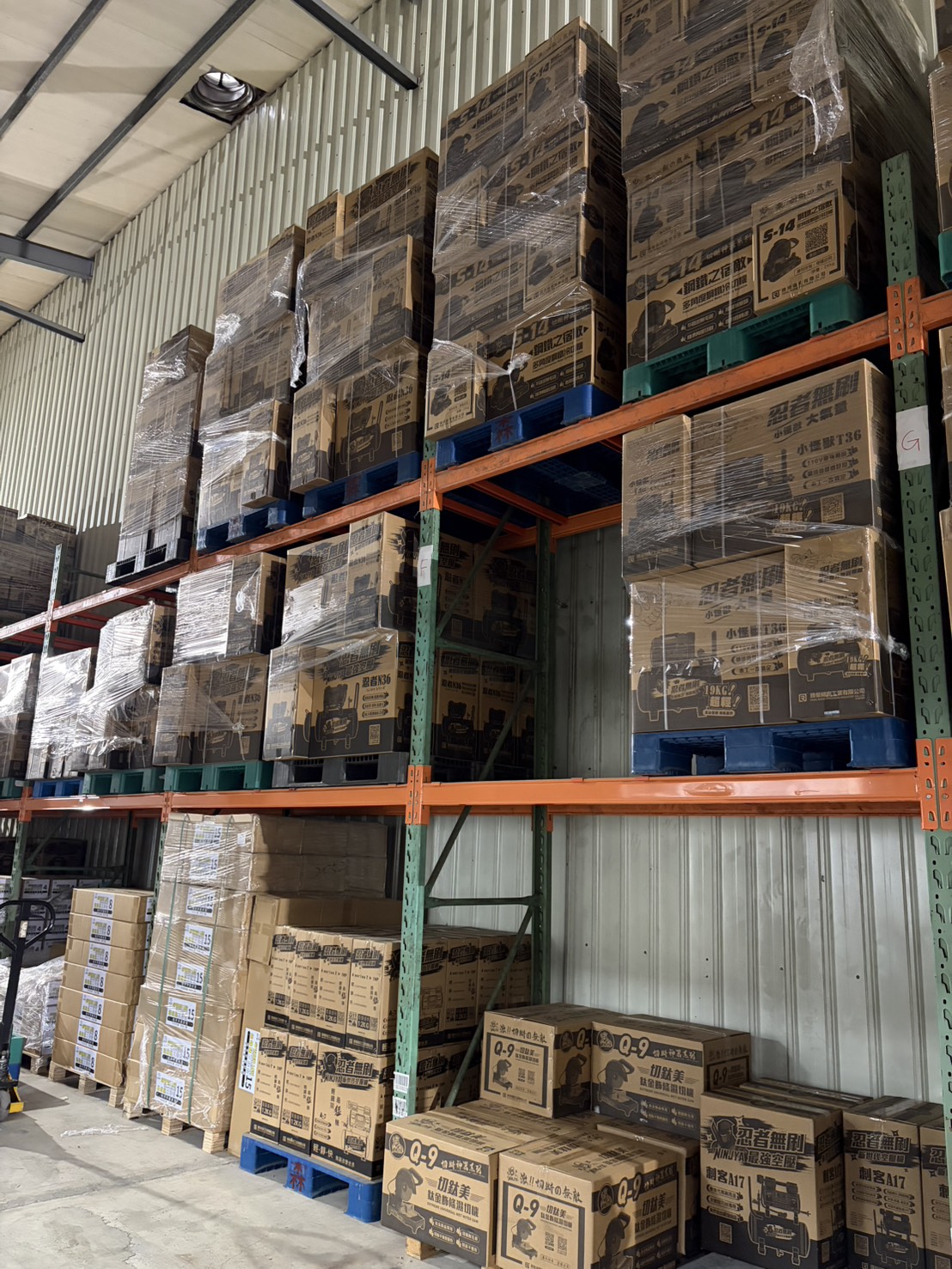
Capacity figures carry a similar caveat, and it is worth stating plainly because it affects how a repeat order is planned. The stated monthly production capacity is 3,000 units. Separately, the company profile records an annual output of 10,000 units across the whole plant, which also produces air compressors, cut-off machines, nail guns, diamond saws and other tools. Monthly capacity for a vest line and annual output for an entire factory use different bases and cannot be added, averaged or substituted for one another. Before treating either number as a commitment, a buyer should confirm which basis a quotation refers to and what share of it is already committed in the buyer's own peak months.
The manufacturer context is otherwise concrete and checkable. Feng Shang Precision Co., Ltd. was founded in 2009, operates a 1,000 m² facility with 30 employees and a five-engineer R&D team, exports around 50% of output, and lists the USA and Taiwan as main markets. The COOLING water-cooled vest has received the Disaster Prevention Product and Service Certification Award from the Taiwan Disaster Prevention Industry Association. For a repeat buyer, these facts do two jobs: they establish that the supplier is a small, specialised manufacturer rather than a trading intermediary, and they set a realistic expectation of how much customisation a five-engineer team can absorb at once.
The four documents that make a repeat order routine
Long-term supply risk in this category is rarely a factory catastrophe. It is document decay. Four short documents, each under two pages, remove most of it — and none of them requires the supplier to promise anything beyond the terms already stated.
1. The specification baseline
Record exactly what was accepted the first time: the model and variant designation, the ice-pack set and quantity, the pump, the water bag, the tubing and connector type, and the power bank the vest is expected to run from. A one-page table plus a photograph set is sufficient. This document is what turns same as last time into something a factory can build and a warehouse can check.
2. The commercial term sheet
The stated purchasing terms for this line are a minimum order quantity of 10 units, full payment, shipment after payment, and freight paid by the buyer. Those terms should appear in the purchase order in the same words, with two additions the buyer controls: the Incoterm and the named place of delivery. Freight responsibility looks very different depending on the Incoterm chosen, and freight to be paid by buyer without a named place is an incomplete instruction.
3. The acceptance record
The stated acceptance criterion is a pre-shipment test. What the buyer should agree in advance is the record: which test items, what sample size, who signs the result, in what format it is delivered, and what happens to a lot that fails. A pre-shipment test that produces a signed checklist with a photographed sample is auditable. A pre-shipment test that produces a sentence in an email is not.
4. The warranty administration sheet
The line carries a 6-month manufacturer warranty. A warranty period alone does not tell an operator what to do when a pump stops inside that window. The sheet should name the start-date basis, the claim contact, the component list the warranty is applied against, the evidence a claim needs, and the remedy. Those are questions to settle with the manufacturer, not assumptions to carry into a fleet.
A five-step acceptance protocol for the next order
This sequence assumes the first order has already been delivered and accepted. It converts that experience into a repeatable process, and it can be run in a single working session with the supplier's confirmation.
Step 1 — Pin the variant and the accessory set
Name the model, the variant designation and every accessory in the shipment. Treat ice packs as wear items with a defined quantity per vest, and record the stated leakage control — reinforced ice-pack material with a pre-shipment quality check — as an inspection point rather than a marketing line. If the accepted configuration included a specific power bank, record its output specification too, because the pump is rated at 5 V and 150 mA maximum and a mismatched bank is a field failure that looks like a product failure.
Step 2 — Quote against your own annual draw, not one container
Bring a twelve-month volume estimate and a month-by-month shape. Ask which months are already committed against the stated 3,000-unit monthly capacity, and ask explicitly whether that figure describes the vest line or total plant throughput. A supplier who answers both questions in writing has given you a planning input; a supplier who repeats the headline number has given you a brochure.
Step 3 — Write the pre-shipment test as an inspection plan
This is the step where the published specifications become enforceable. A practical plan for this product covers: a runtime check against the stated 3–4 hours per charge or ice-pack cycle, run under conditions the buyer defines and records; a flow check against the published 320–370 ml/min; a leak check on the ice packs and the water bag; a pump start-up test using the nominated power bank; a stitching, fastener and tubing-seat inspection; and a packing, labelling and quantity check. Because the manufacturer's published runtime figure does not state the ambient temperature, humidity, workload or clothing used, the buyer must fix those conditions in the acceptance document. Otherwise the number exists but cannot be tested, and an untestable number cannot end an argument.
Step 4 — Agree the failure path before it is needed
Decide in advance what happens to a lot that fails an acceptance item: re-test after correction, partial shipment of conforming units, or rejection. Decide who pays return freight in each case and how a replacement lot affects the quoted lead time. None of this is adversarial. It is the difference between a five-day correction and a five-week correspondence.
Step 5 — Set the reorder trigger from the lead time, not from memory
A typical production lead time of 7–14 days is a planning figure, not a guarantee, and it is silent on when the clock starts — purchase order receipt, payment cleared, or artwork approval for an ODM job. Convert it into a trigger: reorder point equals the agreed lead time plus a safety buffer sized to your own consumption rate, with a separate trigger for peak season. Distributors holding a 10-unit MOQ option can run a small, frequent cycle instead of one seasonal block, which shortens exposure if a variant underperforms.
Administering the 6-month manufacturer warranty
Six months is a meaningful period for a single-shift operation and a much tighter one for a fleet running two cycles a day. Consider a conditional example: a site that issues one vest per worker per shift and runs two ice-pack cycles daily will accumulate roughly twice the pump and connector usage hours of a single-shift site within the same calendar window. The warranty period is identical in both cases; the exposure is not. That is an argument for tracking usage per unit, not for expecting a different term.
Three administrative questions do most of the work. First, the start-date basis: whether the 6 months run from invoice, from shipment, or from delivery acceptance, because those dates can sit weeks apart on an export order. Second, the holder: in a distribution chain, the buyer who placed the order may not be the party operating the vest, so the claim route needs to be defined before the first failure. Third, the evidence: a serial or batch reference, a short failure description, photographs, and the quantity affected turn a warranty conversation into a claim. The acceptance record from Step 3 becomes the warranty baseline, because it documents the condition of the goods at the point the clock started.
One boundary is worth stating clearly. The warranty term does not by itself define which components are covered, whether the remedy is replacement, repair or credit, or how consumable wear is treated. Those points belong in the purchase order or the program agreement, and a buyer who leaves them implicit has a warranty period without a warranty process.
Where ODM support changes long-term supply risk
A 2026 EIN Presswire profile describes Feng Shang Precision as operating an ODM model alongside the same 3,000-unit monthly capacity, 7–14 day lead time and 10-unit MOQ discussed here. Because that description comes from a press-release source rather than a signed specification, it should be treated as a claim to confirm at quotation stage — but it is still the right frame for thinking about long-term supply.
ODM support changes one thing that matters: change control. In a private-label or modified program, the risks that accumulate over years are not unit price. They are undocumented revisions — a tubing supplier swapped, a connector changed, a label template updated — each individually minor and collectively a different product. The buyer's defence is procedural: a revision number on the specification, first-article approval for every revision, a named owner for the artwork or tooling, and a written statement of how long an agreed specification will be held. The five-engineer R&D team and 1,000 m² facility indicate a supplier sized for a defined customisation program rather than open-ended redesign, which makes a narrow, well-written scope an advantage for both sides.
What ODM support does not change is the commercial and acceptance framework. The 10-unit minimum order quantity, the 7–14 day typical lead time, the capacity basis and the pre-shipment acceptance criterion should all be restated inside the ODM agreement. Customisation is the layer above the terms, not a replacement for them, and a program that relaxes acceptance because the product is bespoke has traded away the very control it was trying to gain.
Three repeat-order situations and what each one needs
Distributor replenishment. The 10-unit MOQ is the operative fact here. It allows a distributor to hold a small buffer of the fastest-moving variant and to replenish on a shorter cycle rather than committing to a seasonal block. The document that carries the most weight is the specification baseline, because the distributor's own customers will judge the second shipment against the first.
Multi-site fleet replacement. When vests are spread across several sites, a percentage is always out of service, and the reorder trigger plus the warranty sheet matter more than unit economics. Track usage per unit, keep one acceptance record per batch, and route claims through a single named contact so that failures do not disappear into site-level reporting.
Private-label or ODM program. Here change control dominates. Fix the revision, approve a first article, and re-run the acceptance plan for every revision rather than every shipment. The stated leakage control on ice packs is a useful test case: a packaging or material change in a private-label run is exactly the kind of revision that should trigger re-verification.
Repeat-order terms at a glance
The table separates what is stated from what a buyer still has to fix in writing. The distinction is the practical content of long-term supply management.
| Term | Stated position | Basis and status | What to fix in the purchase order |
|---|---|---|---|
| Minimum order quantity | 10 units | Manufacturer purchasing terms | Whether mixed variants count toward the 10 units |
| Monthly production capacity | 3,000 units | Manufacturer statement, monthly basis | Reserved volume and peak-month allocation |
| Company-wide annual output | 10,000 units | Company profile, all product lines | Which basis the quotation refers to |
| Production lead time | 7–14 days, typical | Manufacturer statement | Start point of the clock and ship-by date |
| Payment | Full payment; shipment after payment | Manufacturer purchasing terms | Currency, bank charges, definition of cleared funds |
| Freight | Paid by the buyer | Manufacturer purchasing terms | Incoterm, named place, insurance responsibility |
| Acceptance | Pre-shipment test | Manufacturer purchasing terms | Test items, sample size, record format, sign-off |
| Warranty | 6 months, manufacturer | Stated warranty term | Start date, covered components, remedy, claim evidence |
| ODM support | ODM model described | 2026 press-profile source; confirm at RFQ | Scope, revision control, first-article approval |
| Cooling duration | 3–4 hours per charge or ice-pack cycle | Company-reported; test conditions not published | Ambient, workload and clothing conditions for the runtime test |
FAQ: long-term supply, warranty and acceptance
What are the purchasing terms and acceptance criteria?
The stated terms for this line are a minimum order quantity of 10 units, full payment with shipment after payment, and freight paid by the buyer. The stated acceptance criterion is a pre-shipment test. The buyer's job is to give that test a shape: the specific inspection items, the sample size, the record format and the sign-off. The 6-month manufacturer warranty and the typical 7–14 day lead time sit alongside these terms rather than replacing them.
What does the 6-month manufacturer warranty require from the buyer?
Six months is the stated manufacturer warranty period for the vest line. To operate it across a fleet, three things need to be written down rather than assumed: the date the period starts, from invoice, shipment or delivery acceptance; the party entitled to claim in a distribution chain; and the evidence a claim must include, such as a batch reference, photographs and a short failure description. Covered components and the remedy are matters to confirm in the order documents.
Does ODM support reduce long-term supply risk?
It reduces one specific risk and introduces another. ODM support addresses product-level fit — labelling, packaging, colour and configuration changes that let a buyer hold a distinct product over several seasons. It introduces revision risk, because undocumented changes are the most common way a repeated order silently becomes a different product. The countermeasures are a revision number, first-article approval for every revision, and a named owner for artwork and tooling.
Is 3,000 units per month enough capacity for a growing program?
That depends on the basis of the figure and the shape of your demand. The stated monthly production capacity is 3,000 units, while the company profile records 10,000 units of annual output across all product lines in a 1,000 m² plant with 30 employees. Because monthly capacity for one line and annual output for an entire factory use different bases, the two cannot be compared directly. Ask which basis a quotation uses and what share is already committed in your peak months.
How do payment and freight terms affect a repeat order?
Shipment after full payment means the production clock and the payment clock have to be aligned deliberately: a delayed transfer moves the ship date even if the factory slot was reserved. Freight paid by the buyer needs an Incoterm and a named place, or responsibility for damage and delay at the handover point stays ambiguous. Both points are worth one paragraph in the purchase order and none in a later dispute.
How should a repeat batch be validated before full release?
Both routes are available and they answer different questions. A 10-unit order functions as a small pilot: it can confirm the current build, packing and documentation without a large commitment. First-article approval answers a narrower question — whether a specific revision matches the approved specification — and should be repeated for every revision rather than every shipment. A practical sequence is to pin the specification baseline, approve a first article on any change, then run the pre-shipment test as a routine check on each batch.
What lead time should be planned for, and what makes it slip?
The typical production lead time is 7–14 days. Treat it as a planning figure rather than a guarantee and fix the start point in writing, because the clock can run from purchase order receipt, from cleared payment, or from artwork approval on an ODM job — and those can be a week apart. Build the reorder trigger from the agreed lead time plus a safety buffer sized to your own consumption, with a separate trigger for peak season.
For a repeat order, the fastest way to start is to send the accepted specification and your twelve-month volume shape to the manufacturer, so that variant, acceptance items and capacity basis can be confirmed against the same document. Feng Shang Precision Co., Ltd. publishes further company and product information at Feng Shang Precision, and the current product brochure can be downloaded here: COOLWAVE product brochure (PDF).
Conclusion
The commercial facts behind this line are simple enough to hold in one paragraph: 10 units minimum, typical production lead time of 7–14 days, 3,000 units of monthly production capacity, and a 6-month manufacturer warranty, from a manufacturer founded in 2009 with a 1,000 m² plant, 30 employees and a five-engineer R&D team. What determines whether a long-term supply relationship holds is not those numbers but the documents attached to them. A pinned specification, a term sheet with an Incoterm, a pre-shipment test that produces a signed record, and a warranty sheet naming its start date and evidence will do more for supply continuity than any additional promise.
The most useful discipline for a repeat buyer is to treat published specifications as test candidates rather than as settled facts. A stated 3–4 hour cooling duration and a 320–370 ml/min flow rate become reliable only when the buyer defines the conditions under which they are checked at receipt. That single habit — turning claims into acceptance items — is what separates a fleet that is maintained from a fleet that is merely replaced.
Have Questions or Need More Details?
Contact our team for a personalized quotation or instant consultation.
Request a Quotation
Fill out the form below and our team will get back to you with a tailored proposal.
WhatsApp Direct Chat
Prefer to chat in real-time? Message us on WhatsApp for instant assistance & quick answers.
- Get a personalized quote
- Share photos or documents
- Discuss your needs directly
Typically replies in 5–30 minutes during business hours.