
Dual Cooling Water Cooling Vest: TPU, Sand Rubber, and 600D Polyester Guide
A dual cooling water cooling vest should be judged first by its wetted path and harness, not only by a headline cooling time. The specification points to confirm are the TPU water bag, polypropylene cap, sand-rubber cooling tube, and 600D polyester shoulder strap. Each one changes what a procurement team must inspect in a sample and what an ODM discussion must define in writing. Published specifications for the Shokunin COOLWAVE Water-Circulation Cooling Vest give a practical reference set: a 5V, 150mA (max) pump, 320–370 ml/min flow, net weight under 2 kg, and a 3–4 hour cooling duration. Those figures are verification targets, not proof that every material choice will perform the same way.
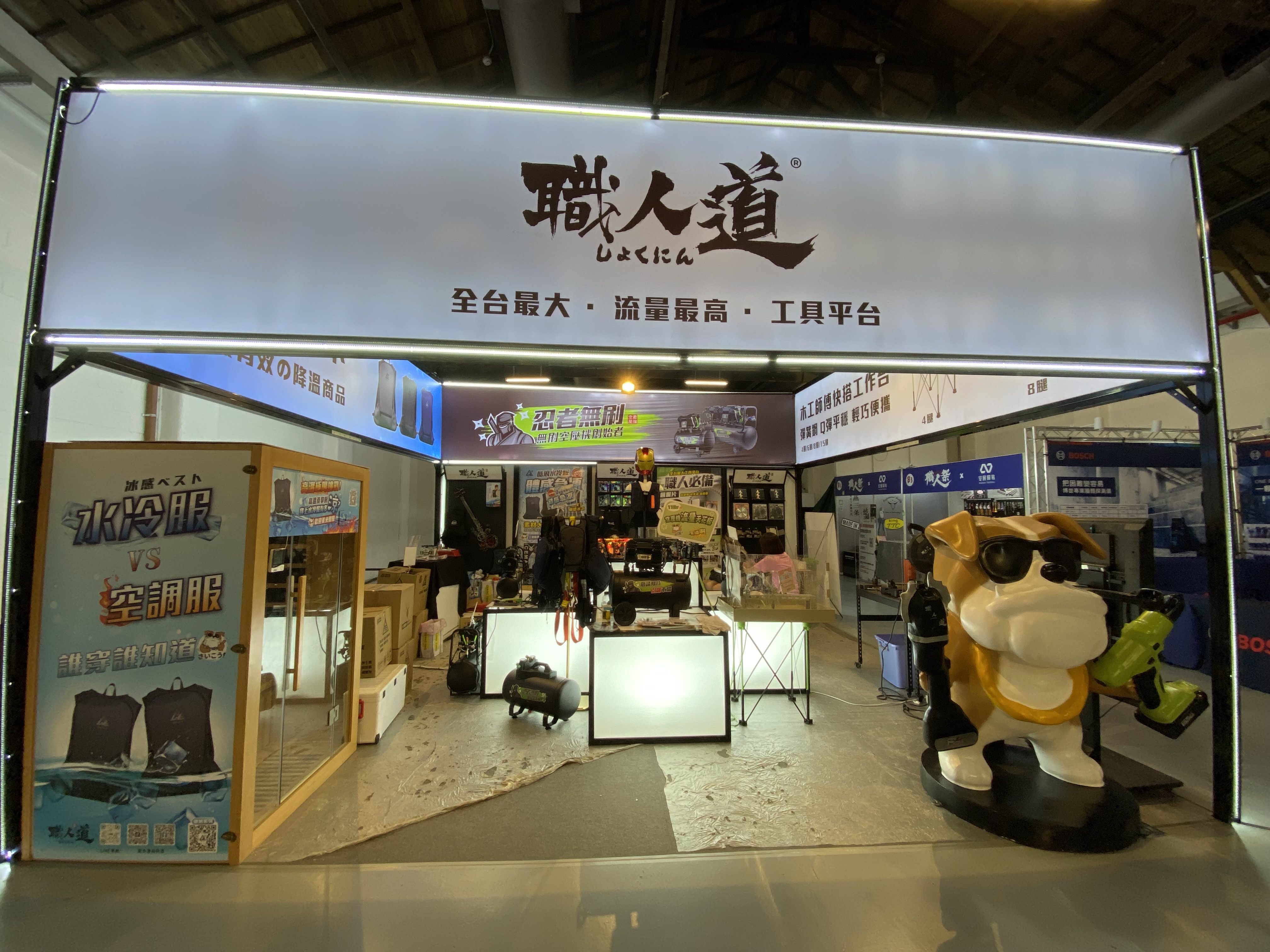
Shokunin is a professional e-commerce brand launched by Feng Shang Precision Co., Ltd. The company lists water-cooled vests among its products and states ODM production services. That makes the brand relevant to a material-first review, but the review still has to separate published product specifications from the sample evidence a buyer can actually inspect.
Why material-first selection matters
The wetted path of a dual cooling water cooling vest includes the water bag, cap, cooling tube, pump, and connectors. The harness includes the shoulder strap, adjusters, stitching, and edge finish. If the wetted path leaks or restricts flow, the published cooling duration is difficult to reproduce. If the harness is poorly finished or hard to adjust, workers may wear the vest incorrectly, which is a fit and usability problem before it is a cooling problem.
For security and protection buyers, this matters because the purchase decision is not only a comfort purchase. NIOSH describes water-cooled garments as examples of personal cooling systems for heat exposure. A material review therefore supports a more defensible procurement file: it records what was specified, what was sampled, what was tested, and what remains a supplier claim.
The evidence supplied for this guide does not establish a product-specific PPE standard, electrical-safety certification, battery conformity marking, or a standardized thermal test for the vest. Buyers should not infer those outcomes from a material name, a patent, or a disaster-prevention award. They should ask for the exact documentation required for the destination market and the actual use environment.
What the dual cooling system includes
Published descriptions of the Shokunin COOLWAVE system describe a combination of reusable ice packs and pump-driven water circulation. The electrical side is listed as a 5V, 150mA (max) pump. The hydraulic side is listed at 320–370 ml/min. The wearable side is listed as under 2 kg net weight with a 3–4 hour cooling duration.
Those four areas are connected. A water bag with a weak seam, a cap that does not seal, a tube that kinks, or a connector that restricts the line can all interfere with the pump and flow claim. A shoulder strap that slips or a stitch line that fails can change how the vest sits on the body. The material review should therefore follow the water and the load, not only the label.
The wetted path: TPU water bag, polypropylene cap, sand-rubber tube
TPU water bag
When a specification names a TPU water bag, the buyer should treat TPU as a material family, not a finished acceptance criterion. The useful specification identifies the TPU grade, wall thickness, bag dimensions, seam construction, port design, and the method used to join the bag to the cap and tube. A sample review should fill the bag, close it, invert it, and run the pump long enough to observe the seams and ports under normal handling.
The procurement question is not whether the word TPU appears. It is whether the supplied bag can survive filling, capping, pump operation, and repeated handling without seam creep, port movement, or leakage. Ask whether the water bag is a replaceable service part, how it is removed, and whether replacement requires a new cap or tube set. Those details belong in the ODM discussion because a material substitution can change the fit between the bag, cap, and connector.
Polypropylene cap
A polypropylene cap is a rigid closure on the wetted path. The sample check should confirm thread engagement, gasket or seal condition, cap-to-bag fit, and whether the cap can be opened and closed with wet hands or work gloves. A cap that seals on the bench may still seep when the bag is inverted or when the pump is running.
Buyers should ask for the cap material, seal material, and replacement part number. If the cap is tethered, check the tether separately. If it is not tethered, confirm whether a spare cap is available. The ODM review should also define whether the cap is a standard part or a custom part, because a custom closure usually requires its own fit and leak validation.
Sand-rubber cooling tube
Sand rubber is not a self-defining engineering specification in the supplied evidence. A buyer should not accept the name alone. Ask the supplier to define the compound identity, hardness, internal diameter, outer diameter, wall thickness, bend radius, connector type, and water-contact suitability. These are the details that determine whether the tube can be routed around the body without collapsing or pulling loose.
The sample review should flex the tube, bend it through the expected route, inspect the connectors, and run the pump through the assembled path. A tube that kinks sharply can affect flow even if the pump is rated correctly. A connector that is loose can draw air or leak. If the tube is a replaceable part, confirm the replacement length and connector standard so the buyer is not locked into an undocumented assembly.
How the wetted path connects to 320–370 ml/min flow
The published flow figure is 320–370 ml/min. That number should be read with the pump rating and the assembled water path, not as a property of the tube alone. The buyer should ask for the flow test method: tube length, lift or head, reservoir level, connector bore, water temperature, and whether the measurement was taken at the pump outlet or at the vest return.
A supplier may report a nominal flow that is not directly comparable with another supplier measurement. The correct procurement response is to request a written test setup and, where possible, to repeat the check on the sample using the same setup. The purpose is not to create a laboratory dispute. It is to confirm that the water bag, cap, tube, and connectors do not introduce an obvious restriction before the vest is accepted.
The harness: 600D polyester shoulder strap
A 600D polyester specification identifies a yarn or fabric weight class, not a finished strap standard. The buyer still needs the webbing construction, width, stitching pattern, bartack placement, adjuster hardware, and edge finish. The shoulder strap carries the vest and controls fit, so the sample check should include a loaded fit with the water bag filled and the pump in its normal position.
Inspect the stitch line at the shoulder, the adjuster entry and exit, and the point where the strap meets the vest body. Check whether the adjuster holds under load and whether the edge finish can rub against the neck or shoulder. A 600D polyester strap with weak stitching is not equivalent to a well-finished strap with the same fabric label. The ODM discussion should define the webbing source, stitch density, adjuster type, and any color or label change.
Connecting material choices to pump, flow, weight, and runtime
The 5V, 150mA pump, 320–370 ml/min flow, under-2 kg net weight, and 3–4 hour cooling duration should be treated as linked specifications. The pump rating sets the electrical input the buyer must match to the power source. The flow figure sets a hydraulic target. The weight figure sets a wearability target. The cooling duration sets a shift-planning target. None of those targets is proven by a material name alone.
For example, a TPU water bag and sand-rubber tube may be chosen for a particular handling or routing reason, but the buyer should still verify that the assembled path delivers the stated flow. A 600D polyester strap may be chosen for durability, but the buyer should still check loaded fit and adjuster behavior. A vest can meet a material checklist and still fail a sample check if the assembly is poorly joined or the tube is routed badly.
The runtime claim needs its own protocol. The supplied evidence lists 3–4 hours but does not define ambient temperature, humidity, workload, clothing layer, ice-pack starting condition, water volume, or pump duty cycle. Buyers should define those conditions for their own evaluation and compare suppliers only under the same conditions. This is especially important for construction sites, outdoor work, metal sheet factories, and street vendor operations, where heat exposure and movement patterns differ.
Step-by-step sample verification
- Freeze the material specification. Record the TPU grade, bag wall thickness, seam and port construction, polypropylene cap and gasket specification, sand-rubber tube dimensions and compound, 600D polyester strap construction, adjuster type, and pump rating. Require written approval before any substitution.
- Compare the sample to the written specification. Do not rely on the product name or a visual match. Check labels, part numbers, dimensions, and connector types against the approved list.
- Fill, cap, and leak-check the wetted path. Close the cap, invert the bag, and inspect the cap, seams, tube connectors, and pump inlet and outlet. Then run the pump and repeat the inspection under normal handling.
- Check flow on the assembled vest. Ask for the supplier flow method and compare the sample against the published 320–370 ml/min target under a recorded setup. Note any kinks, air pockets, or connector movement.
- Confirm the electrical match. Verify the 5V, 150mA (max) pump rating, connector polarity, and power-bank compatibility claimed for the product. Do not assume that any power bank is suitable without a written match.
- Weigh and fit the vest. Confirm net weight under 2 kg and check the 600D polyester shoulder strap under load. Adjust the strap through its full range and inspect stitching, bartacks, and edge finish.
- Define the runtime test. Agree on ambient conditions, workload, ice-pack preparation, water volume, and pump operation before comparing the 3–4 hour claim. Record the result as a sample test, not as a universal field guarantee.
- Close the ODM points in writing. Confirm which materials, colors, labels, connectors, and packaging can change; who approves each change; what validation is required; and how pre-shipment acceptance will be performed.
Use cases and application checks
The documented use contexts for this cooling-vest line include construction sites, outdoor work, metal sheet factories, and street vendor operations. A case record describes a Taiwan deployment of 100 units for high-temperature environments. These contexts put different demands on the harness and tube routing: construction and outdoor work involve movement and repeated adjustment, while fixed or semi-fixed vendor work may place more emphasis on easy refilling and stable fit.
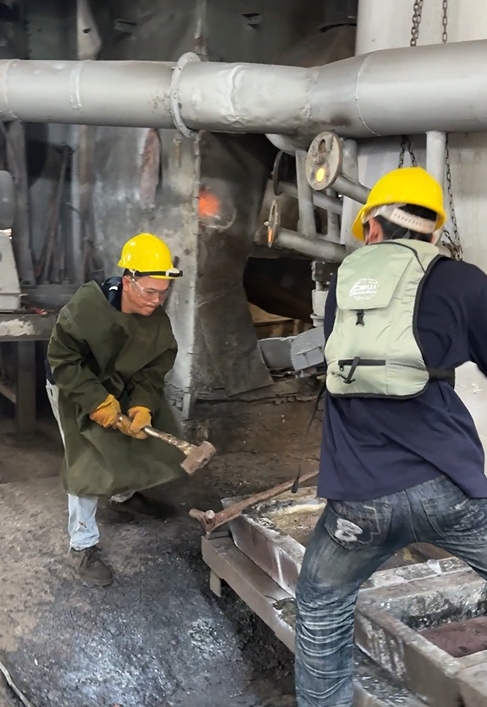
For procurement, the application check should match the sample to the actual work routine. Ask how the wearer will put on the vest, adjust the shoulder strap, route the tube, carry the power source, and remove the vest for breaks. A material that looks suitable on a bench may be awkward when worn with other protective clothing. That is why the loaded fit and tube route should be part of the sample review, not a later afterthought.
Material and specification comparison
| Component | Specification to request | Sample check | Procurement reason |
|---|---|---|---|
| TPU water bag | TPU grade, wall thickness, seam and port construction, replacement part | Fill, cap, invert, run pump; inspect seams and ports | Leaks and pump starvation usually begin in the wetted path |
| Polypropylene cap | Cap and gasket material, thread, seal, replacement part | Open and close with wet gloves; invert; check seepage | The cap is a handling and sealing point |
| Sand-rubber cooling tube | Compound, hardness, internal and outer diameter, bend radius, connectors | Flex, kink, route, and run at pump; inspect connectors | Kinks or loose connections can affect flow |
| 600D polyester shoulder strap | Webbing, width, stitching, bartacks, adjusters, edge finish | Loaded fit; adjust through range; inspect stitching | The harness controls fit and wear |
| Pump and flow | 5V, 150mA (max); 320–370 ml/min published target; test method | Confirm rating and repeat flow check on assembled path | Flow must be tested as an assembly, not as a pump alone |
| Weight and runtime | Under 2 kg net weight; 3–4 hour published cooling duration | Weigh the vest; define runtime conditions before testing | Published figures need conditions to be comparable |
Compliance and procurement documentation
The supplied certification record lists a water-cooled vest patent certificate, number I886033, issued by the Intellectual Property Office, Ministry of Economic Affairs, market ROC. The stated scope is water-cooled vest structure and cooling system, with an issue date of 2025-06-01 and an expiry date of 2044-08-27. The company profile also states that the COOLING water-cooled vest received a Disaster Prevention Product and Service Certification Award from the Taiwan Disaster Prevention Industry Association.
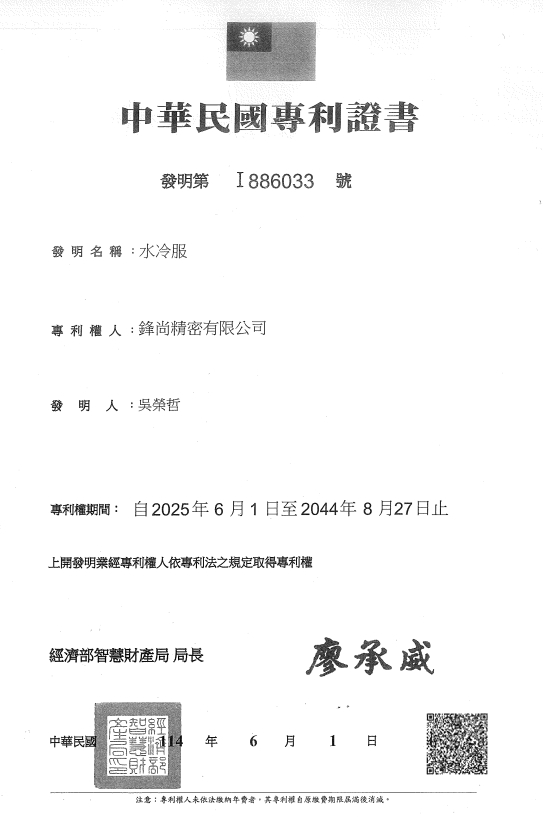
These documents support a review file, but they do not replace product-specific market conformity documents. A patent is not an electrical-safety certificate. A disaster-prevention award is not a PPE type-examination certificate. Security and protection buyers should request the exact standard, test report, declaration, and marking required for the destination market, and should confirm whether the power bank or battery is supplied, recommended, or excluded from the product scope. The supplied material does not establish CE, UKCA, ANSI, EN, ISO, or electrical-safety certification for this vest, so the buyer should verify rather than assume.
ODM discussion points
The manufacturer states that it provides ODM production services. The commercial record lists a minimum order quantity of 10 units, a typical production lead time of 7–14 days, and monthly production capacity of 3,000 units. A separate company background lists annual output of 10,000 units. Those figures use different time bases, so buyers should not convert or combine them without a written definition of installed, practical, and available capacity.
An ODM discussion should fix the material scope before tooling or labels are approved. Confirm whether the TPU water bag, polypropylene cap, sand-rubber tube, and 600D polyester shoulder strap are fixed standard parts or open to change. If they are open to change, define the sample approval process, validation testing, change-control procedure, and pre-shipment acceptance criteria. The purchasing record lists pre-shipment test as the acceptance criterion, shipment after payment, freight paid by the buyer, and full payment terms. Those commercial terms should be read together with the 6-month warranty listed for the water-cooled vest.
The important ODM discipline is not to assume that a material name implies a customization right. Ask which changes are inside the ODM scope, which require new tooling, which require a new sample, and which are outside the supplier offer. A clear material and validation matrix is more useful than a broad customization statement.
FAQ
What compliance documents should a security and protection buyer request?
Request the exact product-specific documents required for the destination market, including the applicable PPE, electrical, battery, and textile test reports or declarations. The patent certificate I886033 covers water-cooled vest structure and cooling system, and the Taiwan disaster-prevention award is a company-stated recognition. Neither document should be treated as a substitute for market-specific conformity assessment. Ask the supplier to identify the standard, issuing body, report number, product model, and validity date for every document supplied.
What should be verified in a sample before an ODM order?
Verify the TPU water bag grade and seam construction, the polypropylene cap and gasket seal, the sand-rubber tube dimensions and connector fit, and the 600D polyester shoulder strap stitching and adjusters. Fill and invert the wetted path, run the pump, check for leaks and kinks, and compare flow against the published 320–370 ml/min target under a recorded setup. Confirm the 5V, 150mA pump rating, net weight under 2 kg, and a defined runtime test for the 3–4 hour cooling claim. Record every deviation before approving the order.
How should buyers interpret the 3–4 hour cooling duration and 320–370 ml/min flow?
Treat both as published specifications that require a test method. The supplied evidence does not define ambient temperature, humidity, workload, clothing layer, ice-pack starting condition, water volume, tube length, or pump head for those figures. Buyers should ask for the supplier test setup and compare samples under the same conditions. A material change to the water bag, cap, tube, or connectors can affect the assembly, so the flow and runtime checks should be repeated after any approved substitution.
What ODM and commercial terms should be confirmed in writing?
Confirm the ODM scope, material change-control process, sample approval steps, tooling responsibility, packaging and label approval, and pre-shipment acceptance test. The commercial record lists MOQ 10 units, typical lead time 7–14 days, monthly capacity 3,000 units, shipment after payment, freight paid by the buyer, full payment terms, and a 6-month warranty for the water-cooled vest. Because the company background also lists annual output of 10,000 units, ask for a written capacity definition instead of combining the monthly and annual figures.
What is a practical starting point for a pilot order?
Start with a written material specification, a sample that matches it, and a recorded leak, flow, electrical, weight, fit, and runtime check. Use the published MOQ of 10 units and 7–14 day typical lead time as planning inputs, not as guaranteed delivery commitments, and confirm the pre-shipment acceptance test before payment. Buyers can review the Shokunin product brochure and contact Shokunin for a sample and ODM discussion tied to the verified material list.
Conclusion
A dual cooling water cooling vest is only as reliable as its wetted path and harness. The TPU water bag, polypropylene cap, sand-rubber cooling tube, and 600D polyester shoulder strap should be specified as inspectable parts, not as decorative material claims. Connect them to the 5V, 150mA pump, 320–370 ml/min flow, under-2 kg net weight, and 3–4 hour cooling duration through a sample test and a written ODM scope. That approach gives procurement and security teams a defensible record of what was approved, what was tested, and what still requires market-specific verification.
Next step: Build the sample request around the four material checks in this guide: water bag, cap, tube, and shoulder strap. Ask for the flow and runtime test method, the market-specific compliance file, and the ODM change-control terms before approving a pilot order.
Have Questions or Need More Details?
Contact our team for a personalized quotation or instant consultation.
Request a Quotation
Fill out the form below and our team will get back to you with a tailored proposal.
WhatsApp Direct Chat
Prefer to chat in real-time? Message us on WhatsApp for instant assistance & quick answers.
- Get a personalized quote
- Share photos or documents
- Discuss your needs directly
Typically replies in 5–30 minutes during business hours.