
Dual Cooling Water Cooling Vest: Traffic Control Shift Guide
Traffic control duty concentrates heat exposure into a fixed post. The controller cannot step into shade, cannot shorten the shift, and must stay visible while wearing a high-visibility layer over everything else. This application guide explains how a traffic control team can deploy the COOLWAVE Water-Circulation Cooling Vest — a dual cooling system that pairs two reusable ice packs with a pump-driven water loop — starting with pre-shift preparation of the included water-cooled vest backpack and two ice packs, and ending with a rotation plan built around the stated 3–4 hour cooling duration.
Deployment parameters at a glance
- Stated cooling duration: 3–4 hours per ice-pack cycle
- Pump output: 5 V, 150 mA (max); flow rate: max 320–370 ml/min
- Weight: within 2 kg; water bag: TPU; shoulder strap: 600D polyester
- Included in the kit: water-cooled vest backpack ×1, ice packs ×2
- Procurement: MOQ 10 units, 7–14 day lead time, 6-month warranty, ODM production model
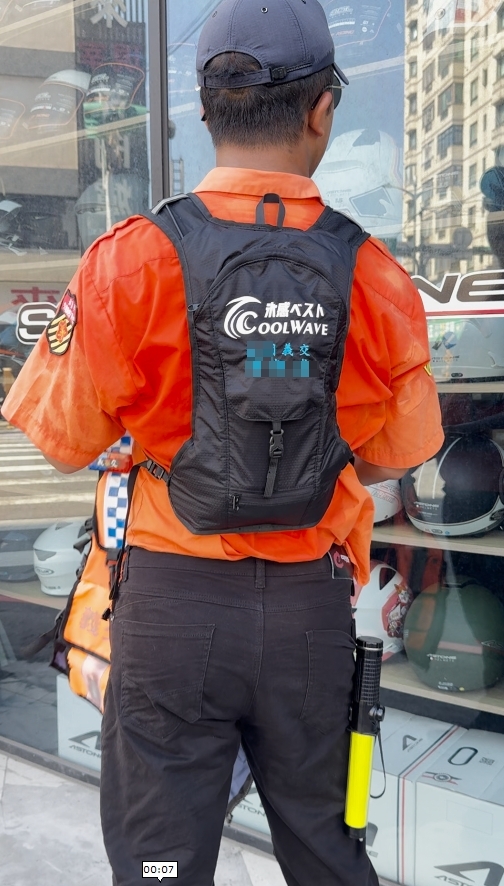
Problem Definition: The Shift Clock and the Cooling Clock Do Not Match
The operational problem at a traffic post is a mismatch between two clocks. The shift clock runs for the full duty period. The cooling clock on a portable vest runs for a shorter, defined window. The COOLWAVE water-circulation vest states a cooling duration of 3–4 hours per cycle. Any deployment plan that ignores that number will find controllers working the last hours of a shift with a vest that has already stopped cooling.
Four constraints shape the problem:
- Fixed position. A controller directing traffic cannot walk to a cooler, and swapping equipment mid-cycle has to happen without leaving the post unmanaged.
- Layered clothing. High-visibility outerwear, a uniform shirt and the vest itself reduce airflow over the torso, which makes heat removal harder than it is for a worker in a single layer.
- Standing load. A backpack-style cooling unit is worn for hours at a time, so weight and strap stability are performance issues, not comfort extras.
- Procurement proof. Traffic control is often bought by a public or contracted fleet buyer, so the equipment has to arrive with documentation, a defined minimum order and a warranty path — not just a product description.
The question a crew leader therefore has to answer is not whether cooling works. It is how to keep cooling running from the first hour to the last, with equipment that can be written into a purchase order and maintained week after week.
Industry Background: Cooling Has Moved Into the Equipment Category
Occupational safety guidance separates wearable cooling from general workwear. CDC/NIOSH describes water-cooled garments, air-cooled garments, cooling vests and wetted overgarments as auxiliary or personal cooling systems used against heat exposure — a classification that places a water-circulation vest inside a recognised equipment category rather than a comfort-accessory category.
Market data points the same way. The global cooling vests market reached USD 342 million in 2025, and industrial applications accounted for 34.5% of revenue share in that year (Dataintelo, 2026). A category where roughly a third of revenue comes from industrial use is a category where buyers ask for duration, flow rate, materials, minimum order quantity and warranty before they ask about colour.
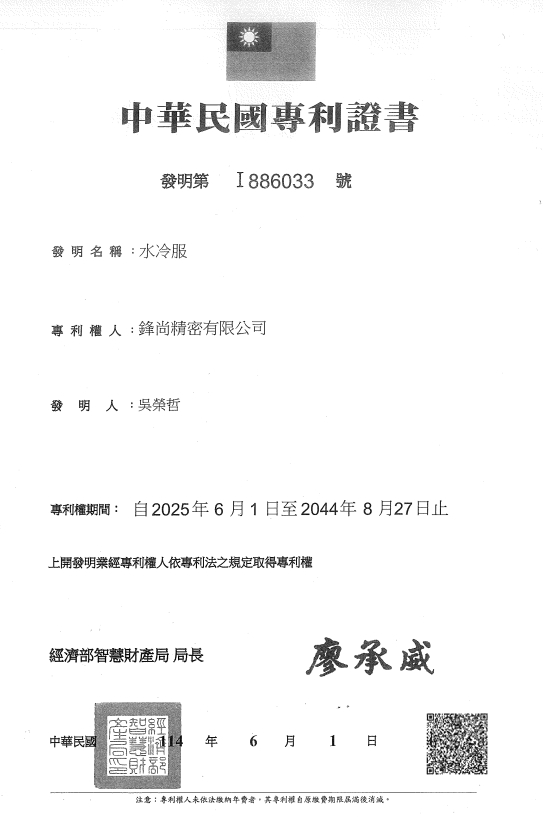
Documentation follows the same pattern. In Taiwan, the COOLING water-cooled vest received the Disaster Prevention Product and Service Certification Award from the Taiwan Disaster Prevention Industry Association, and the COOLWAVE water-circulation cooling vest (Basic Model) is protected by Patent No. I886033, issued by the Intellectual Property Office, Ministry of Economic Affairs under the Patent Act of the Republic of China, covering the water-cooled vest structure and cooling system in the ROC market. For a traffic control procurement file, those two items show that the structure and the cooling system have been reviewed and registered — the part of an evaluation that a specification sheet cannot answer on its own.
The Solution: What the COOLWAVE Water-Circulation Cooling Vest Provides
The COOLWAVE Water-Circulation Cooling Vest is a wearable cooling system manufactured by FENG SHANG PRECISION CO., LTD. and sold under the Shokunin brand. It is listed in Professional Model variants (blue, gray, black) and a Basic Model, and the manufacturer lists traffic controllers among its applicable user groups, alongside construction workers, outdoor workers, food stall operators, street vendors and sheet metal factories.
Dual cooling means two stages working together. The first stage is the cold source: two reusable ice packs. The second stage is an active loop: a pump rated at 5 V, 150 mA (max) circulates chilled water from a TPU water bag through a sand rubber cooling tube at a maximum flow rate of 320–370 ml/min. The pack is carried in a backpack, the shell material is PEVA, and the load-bearing shoulder strap is 600D polyester. The listed product weight is within 2 kg, which matters when the vest is worn on top of high-visibility layers for a full duty period.
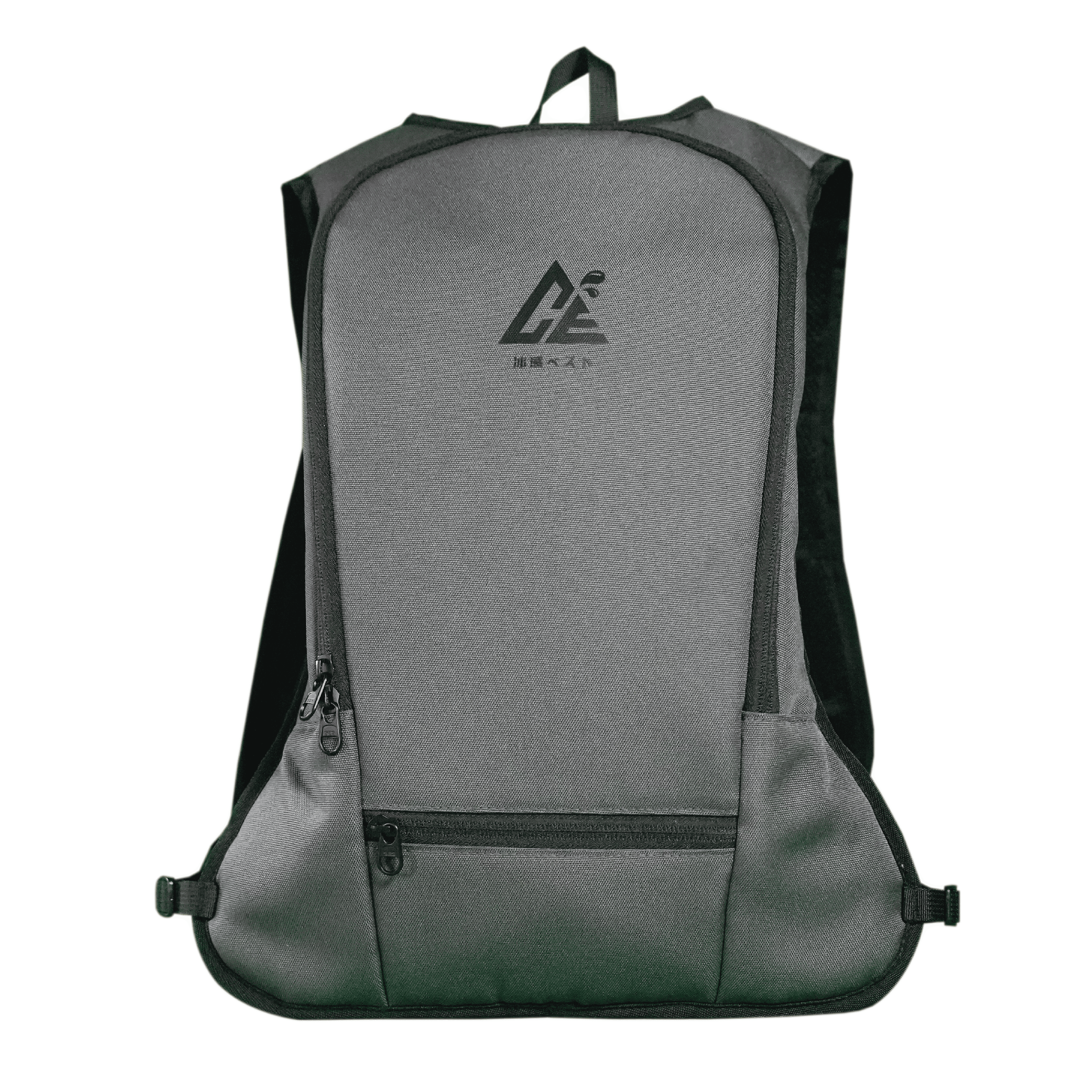
| Stated parameter | Value | What it means for a traffic control deployment |
|---|---|---|
| Cooling duration | 3–4 hours | Sets the swap window. Plan the changeover at the 3-hour mark so the vest never runs dry mid-cycle. |
| Pump output | 5 V, 150 mA (max) | Defines the power source required. Confirm the 5 V supply and its runtime with the supplier before the first shift. |
| Flow rate | Max 320–370 ml/min | Circulation parameter for RFQ comparison. Ask for the test condition behind the figure. |
| Weight | Within 2 kg | Wearable load for a standing post. Weigh one assembled, filled kit during the trial. |
| Water bag / cap | TPU / polypropylene | Wet-side parts to include in the cleaning and spare-parts plan. |
| Cooling tube | Sand rubber (black) | Check routing at fitting; a kinked tube reduces circulation. |
| Shoulder strap | 600D polyester | Load-bearing strap worn over a hi-vis layer; must not restrict arm signals. |
| Shell material | PEVA | Outer layer; confirm compatibility with the department hi-vis policy. |
| Kit contents | Backpack ×1, ice packs ×2 | Two packs equal one spare set, which is one extra cycle. |
| Stated suitable temperature | Below 10 °C | The reference condition is not defined in the source data; confirm whether it refers to ambient air or chilled water. |
One point in that table deserves restating because it affects planning more than any other: the kit contents list a backpack and two ice packs, and a 5 V power source is not listed among the included items. The pump is specified at 5 V, 150 mA (max), so the supply has to be defined, tested and written into the deployment procedure rather than assumed at the depot door.
Pre-Shift Preparation: The Backpack, the Two Ice Packs and the Pump
Preparation is short, but each step has a failure mode that only appears an hour into the shift. The sequence below is written for a depot check performed before the crew leaves for post.
- Freeze both ice packs. The two packs are the cold source for the whole cycle. Treat both as part of the daily routine and freeze them before every shift, not only the first one.
- Fill the TPU water bag and seat the polypropylene cap. Fill to the intended level rather than to the brim, and check the cap seating by hand — a loose cap shows up as a wet back within the first hour.
- Load the bag into the water-cooled vest backpack. Keep the tube exit at the top so the line runs to the vest without a trap.
- Route the sand rubber cooling tube and check for kinks. Run the tube under the outer layer, clear of the shoulder strap path, and bend it once by hand at the fitting point to confirm it does not collapse.
- Prime and test the pump. Rated 5 V, 150 mA (max) with a maximum flow of 320–370 ml/min. Confirm the power source, switch on, and watch for steady circulation before the crew leaves. Because a power source is not listed among the included items, this step is also where the supply is verified.
- Weigh one assembled unit. The listed product weight is within 2 kg; a filled water bag adds mass on top of that figure. Weigh one complete kit once during the trial and record the number as the fleet reference.
- Fit the 600D polyester shoulder straps. Set the straps so the backpack sits high and stable over the hi-vis layer, then test arm movement: the controller must be able to raise both arms to signal without the pack shifting.
- Log the start time on the vest. A start time on a tag converts the 3–4 hour duration from a specification into a schedule the relief controller can act on.
A one-page depot checklist carrying these eight steps, plus a column for the start time and the assigned post, is enough to make the routine auditable. It also creates the record a safety officer needs when reviewing whether the rotation was actually followed.
The Rotation Plan: Aligning Crews With 3–4 Hours of Stated Cooling
Because the stated cooling duration is 3–4 hours per cycle, the rotation plan follows from one number and two rules.
Rule one: schedule the swap before the window closes. If a cycle is stated at 3–4 hours, plan the changeover at the 3-hour mark. The remaining hour of the stated window becomes buffer for a late relief, a traffic incident or a controller who cannot leave the post on time.
Rule two: plan by cycle count, not by headcount. Each controller needs one vest and one set of fresh ice packs per cycle. A shift longer than four hours needs a second cycle; a shift longer than eight hours needs a third. Ice packs, not vests, determine how many cycles a crew can actually run.
An illustrative schedule for a single post, using the stated duration as the planning input rather than as a tested performance claim:
| Time | Action | Reason |
|---|---|---|
| 05:30 | Depot check: freeze status, water bag fill, pump test, kit weight | Catches preparation faults before the crew reaches the post |
| 06:00 | Cycle 1 begins; start time logged on the vest tag | Creates an auditable cycle start |
| 09:00 | Swap window opens at the 3-hour mark | Leaves one hour of the stated 3–4 hour window as buffer |
| 09:00–09:15 | Staggered swap: fresh ice packs, tube and pump recheck, new log entry | Keeps the post manned while equipment changes |
| 12:30 | Cycle 2 swap window opens | Same logic applied to the second cycle |
| Shift end | Drain the water bag, air-dry the vest and tube, log condition | Protects the TPU bag and the tube between shifts |
Staggering is not a detail. At a traffic post the controller cannot hand over to nobody, so swaps within a crew should be offset by 10–15 minutes rather than performed simultaneously. On a two-person post, one controller holds the position while the other changes packs, then the roles alternate.
Step-by-Step: Deploying the Vest to a Traffic Control Team
The deployment sequence below moves from post assessment to full rollout, and each step produces something the next step depends on.
- Map the posts. Record shift length, sun exposure, number of controllers per post and whether relief is available. Shift length is the input that determines cycle count.
- Calculate the fleet. One vest per controller plus spares for damaged units; ice packs per cycle, not per person. A crew running three cycles needs three sets of packs for the same number of vests.
- Choose the model and colour. The Professional Model is listed in blue, gray and black; a Basic Model is also available. Colour choice should follow the department visibility policy and the colour of the existing hi-vis layer.
- Assemble the compliance file. Patent No. I886033 for the water-cooled vest structure and cooling system (ROC market) and the Taiwan Disaster Prevention Product and Service Certification Award belong in the procurement file. Check destination-market requirements separately.
- Request a quotation at the published terms. The minimum order quantity is 10 units and the lead time is 7–14 days, so a pilot can be ordered without committing to a full fleet.
- Run a one-post trial for one week. Measure swap time, kit weight when filled, strap stability during signals and how controllers actually use the pump. Keep the trial data; it becomes the basis for the fleet decision.
- Confirm the support path. The water-cooled vest carries a 6-month warranty. Confirm how ice packs, water bags and tubes are replaced, because those are the parts that wear first.
- Roll out with the checklist and the rotation table. Larger orders should be planned against the published monthly capacity of 3,000 units.
Use Cases: Where the Same Configuration Transfers
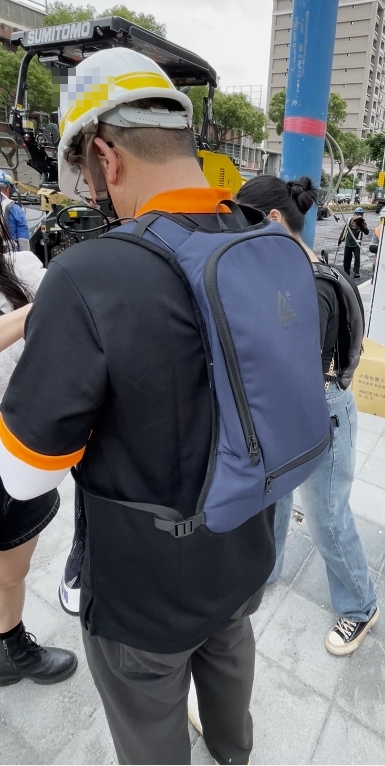
Traffic control is the primary case in this guide: intersection and school-zone direction, construction site traffic management, and event or parking control. In each of those settings the same logic holds — a fixed post, a shift longer than one cooling cycle, and a controller who must keep both arms free.
The manufacturer also lists construction workers, outdoor workers, food stall operators, street vendors and sheet metal factories as applicable industries, and a documented case reference records 100-unit deployments in Taiwan across construction sites, outdoor work, sheet metal factories and street-vendor operations, with reported outcomes of effective body cooling, heatstroke prevention and improved worker comfort and efficiency. The configuration does not change between those settings; only the cycle count and the number of spare ice packs change.
Procurement Terms: MOQ, Lead Time, Warranty and ODM
The commercial terms below are the figures a traffic control buyer needs before raising a purchase order.
| Term | Published value |
|---|---|
| Minimum order quantity | 10 units |
| Lead time | 7–14 days |
| Monthly capacity | 3,000 units |
| Company annual output | 10,000 units (company-wide, all product lines) |
| Warranty | 6 months for the water-cooled vest |
| Production mode | ODM |
| Export ratio / main markets | 50% / USA, ROC |
The capacity figures use different bases and should not be read as a single number. A monthly capacity of 3,000 units and a company-wide annual output of 10,000 units across all product lines are not directly comparable, and buyers planning a rollout larger than a pilot should ask the supplier to state which basis applies to their order window.
ODM is the published production model, which means product customisation for traffic-control-specific requirements can be discussed as part of the order rather than treated as a separate product line. The published terms confirm the ODM model; they do not enumerate which customisations are available, so the scope — colourway matched to a department hi-vis scheme, labelling, packaging — should be written into the RFQ. Where customisation is confirmed, it will also affect the lead time, which is why the requirement should be stated before the 7–14 day window is quoted.
Compliance and Documentation: What Goes in the File
For a public or contracted fleet buyer, the equipment file usually has to answer four questions.
- Is the structure registered? Patent No. I886033 was issued by the Intellectual Property Office, Ministry of Economic Affairs on 2025-06-01, expires on 2044-08-27, and covers the water-cooled vest structure and cooling system under the Patent Act of the Republic of China for the ROC market.
- Has the product been recognised under a disaster-prevention scheme? The COOLING water-cooled vest received the Disaster Prevention Product and Service Certification Award from the Taiwan Disaster Prevention Industry Association.
- Does the category match occupational-safety language? CDC/NIOSH classifies water-cooled garments among auxiliary or personal cooling systems used against heat exposure, which is the category a cooling vest is normally filed under.
- What about the destination market? The available documentation does not establish product-specific requirements for electrical safety, power-source compatibility, textile testing or conformity marking outside the ROC market. Those should be confirmed with the supplier and, where required, with a conformity-assessment body before a cross-border fleet order.
FAQ: Traffic Control Deployment Questions
Is the COOLWAVE water-circulation cooling vest certified for traffic control duty?
The vest carries two Taiwan documents. The COOLING water-cooled vest received the Disaster Prevention Product and Service Certification Award from the Taiwan Disaster Prevention Industry Association, and the COOLWAVE water-circulation cooling vest (Basic Model) is protected by Patent No. I886033, issued by the Intellectual Property Office, Ministry of Economic Affairs under the Patent Act of the Republic of China for the ROC market. The patent covers the water-cooled vest structure and cooling system; the award recognises the product under a disaster-prevention certification scheme. Neither document replaces destination-market requirements, so a buyer outside Taiwan should confirm local electrical-safety, textile and conformity requirements separately.
Can one vest cover a full traffic control shift?
One ice-pack cycle is stated at 3–4 hours, so a single cycle covers a short duty period but not a full eight-hour shift. A shift longer than four hours needs a second cycle, and a shift longer than eight hours needs a third, with fresh ice packs for each. The vest is listed within 2 kg and the pump runs at 5 V, 150 mA (max) with a maximum flow rate of 320–370 ml/min, so the limiting factor is the ice packs, not the garment. Plan packs by cycle count and confirm the 5 V power source and its runtime before the first shift.
What drives the unit cost of a traffic control order?
This guide does not publish a price band, because the available documentation does not include unit pricing, Incoterms or tooling charges. Cost is driven by the number of vests, the number of ice-pack sets per cycle, spare water bags and tubes, the power source supplied or specified, and freight. The minimum order quantity of 10 units sets the entry point for a pilot, and ODM customisation, if requested, is a separate scope item to be quoted. A written quotation against your cycle count is the reliable way to compare options.
How should a team validate the vest before a fleet order?
Run a one-post trial for one week using the eight-step depot checklist and the rotation table in this guide. Measure swap time at the 3-hour mark, weigh one assembled and filled kit, check strap stability while signalling, and confirm how the pump behaves with the intended power source. A minimum order of 10 units is enough to equip a pilot post with spares, and the 7–14 day lead time means the trial can start quickly enough to inform the same budget cycle.
What are the lead time, capacity and warranty terms?
Published terms are a 7–14 day lead time, a monthly capacity of 3,000 units, and a 6-month warranty for the water-cooled vest. Buyers planning an order above pilot scale should confirm which capacity basis applies to their order window, because the company-wide annual output figure of 10,000 units is stated on a different basis and covers all product lines. To start a traffic control order, request a quotation and the product documentation from Shokunin through fstool.com.tw.
Conclusion: Build the Schedule Around the Cycle, Then Buy the Kit
The COOLWAVE Water-Circulation Cooling Vest is a workable answer to heat exposure at a traffic post because it is wearable, self-contained and specified in numbers a buyer can write into a purchase order: 3–4 hours of stated cooling per cycle, a 5 V / 150 mA (max) pump, a maximum flow rate of 320–370 ml/min, a listed weight within 2 kg, a TPU water bag and a 600D polyester shoulder strap.
What determines whether a deployment works is not the specification sheet but the schedule built around it. Freeze both ice packs before every shift, prime and test the pump at the depot, log the start time on the vest, and open the swap window at the 3-hour mark. Plan ice packs by cycle count, stagger the changes so the post is never unmanned, and keep the patent and certification documents in the procurement file.
On the commercial side, the entry point is low: MOQ 10 units, 7–14 day lead time, a 6-month warranty and an ODM production model for traffic-control-specific requirements. That combination supports a pilot post before a fleet decision, which is the sequence most traffic control teams should follow.
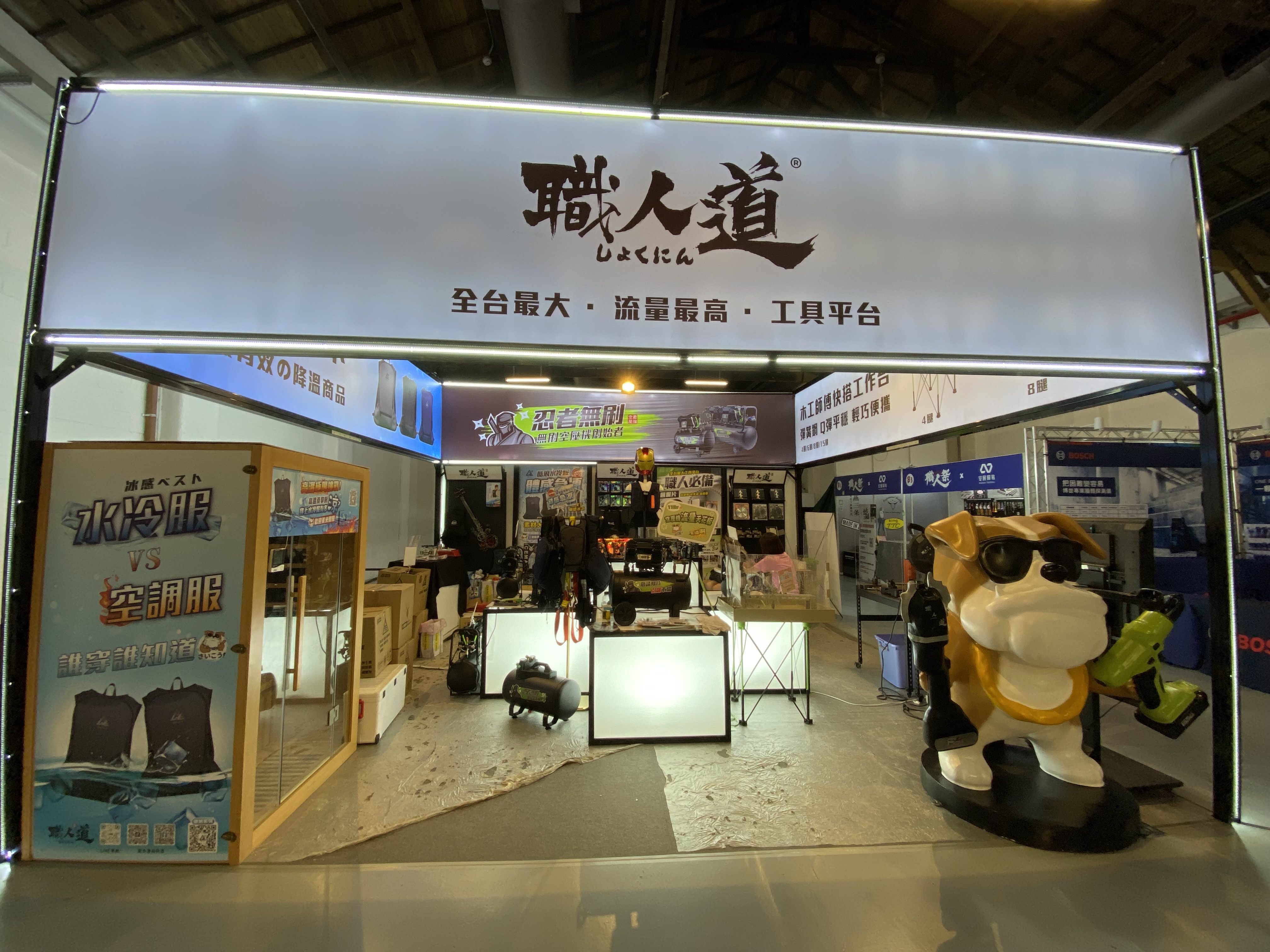
Next step: sample, quotation or full specification pack
Shokunin is the professional tools brand of FENG SHANG PRECISION CO., LTD., based in Taoyuan, Taiwan. For a traffic control deployment, request a quotation against your cycle count, ask for the sample and specification pack, or download the product brochure.
Download the Shokunin product brochure (PDF)
Website: www.fstool.com.tw | Email: fsmarketing@fstool.com.tw | Phone: +886 3-312-6606 | Business hours: Monday to Friday, 8:30 AM – 5:40 PM
Have Questions or Need More Details?
Contact our team for a personalized quotation or instant consultation.
Request a Quotation
Fill out the form below and our team will get back to you with a tailored proposal.
WhatsApp Direct Chat
Prefer to chat in real-time? Message us on WhatsApp for instant assistance & quick answers.
- Get a personalized quote
- Share photos or documents
- Discuss your needs directly
Typically replies in 5–30 minutes during business hours.