
Dual Cooling Water Cooling Vest: What Dual Cooling Means
A dual cooling water cooling vest is a wearable cooling garment that carries its own cold source and then moves that cold across the body: reusable ice packs chill a water bag, and a small electric pump circulates the chilled water through tubes held against the torso. The product is used mainly as industrial cooling apparel and personal protective equipment (PPE) for people who cannot leave a hot environment, including construction crews, metal sheet factory operators, traffic controllers, other outdoor workers and street vendors.
The word “dual” is often read as a marketing label. In this category it is a mechanism description. It separates the product from the two categories most often confused with it: passive ice-pack vests, which store cold but never move it, and full ice-water circulation systems, which move cold but depend on an external chiller or a fixed chilled-water supply. A dual cooling vest brings both halves — cold storage and cold distribution — onto the wearer.
This explainer covers the category from the ground up: what it is and what it is not, why the category has grown, how each part of the loop works, which published specifications decide real-world performance, which compliance and proof markers exist, and what a buyer should check before shortlisting a supplier.
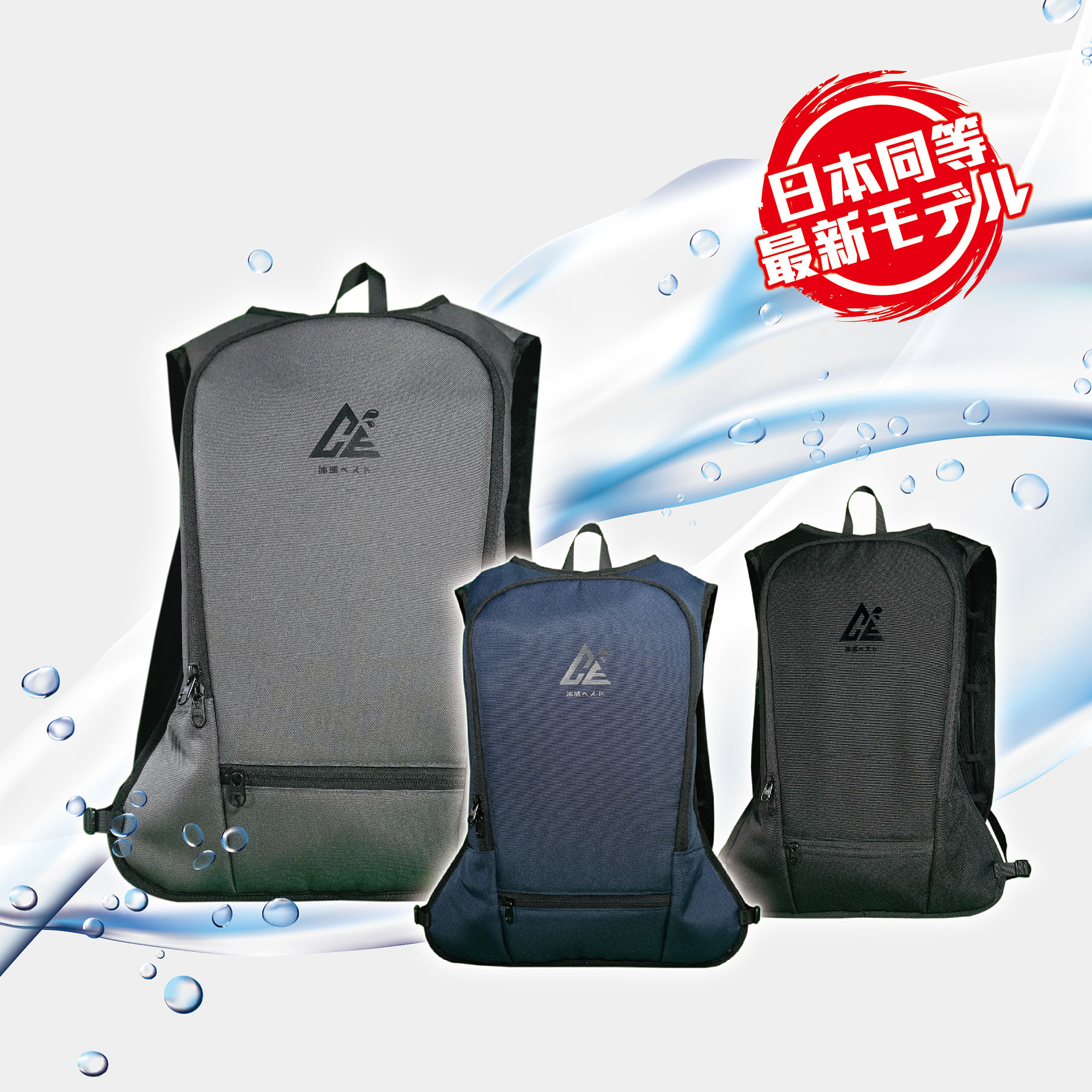
COOLWAVE Water-Circulation Cooling Vest (Basic Model): ice packs charge the water bag, and the pump circulates chilled water through the vest.
Quick Definition and Category Boundaries
A dual cooling water cooling vest is an industrial cooling garment in which a chilled water reservoir is carried on the body and circulated through the vest by a small pump. Cooling reaches the wearer through direct contact with water-cooled surfaces inside the garment, not through airflow, misting or evaporative fabric. Each word in the category name marks a design decision: water cooling means the cold is carried in liquid, circulation means that liquid is moved rather than static, and dual means two cooling paths are combined in one garment.
The properties that define membership in this category are consistent across suppliers:
- Classification: industrial cooling apparel / personal protective equipment (PPE).
- Cold source carried on the wearer: a water bag charged by reusable ice packs.
- Active circulation: a pump driving chilled water through tubing built into the vest.
- Cooling duration per charge: a finite, published window rather than an open-ended one.
- Portable, backpack-based format so both hands stay free.
- Adjustable, one-size-fits-all strap design.
Four adjacent categories are frequently mistaken for it. An ice cooling vest uses packs alone, with no loop. A PCM vest stores cold in a phase-change material. A fan or air vest moves ambient air and does not carry a cold reservoir. A chiller-based circulation suit uses the same liquid loop principle but tethers the wearer to external refrigeration. A dual cooling water cooling vest is the portable middle case: it stores its own cold and distributes it without being plugged into anything fixed.
Why “Dual Cooling” Is a Mechanism, Not a Slogan
Path 1 — stored cold
The first path is thermal storage. Ice packs and the water inside the water bag form the reservoir that holds the cold charge. The capacity of that reservoir sets the ceiling on how long the vest can cool, which is why cooling duration is quoted as a range rather than as a fixed figure: it is a function of the charge, the ambient load and the wearer’s activity level. For the COOLWAVE Water-Circulation Cooling Vest, the published cooling duration is 3–4 hours, and the product ships with two ice packs.
Path 2 — distributed cold
The second path is circulation. A pump rated at 5V 150 mA (max) pushes chilled water through the loop at a published maximum flow rate of 320–370 ml/min, so the cold is spread across the torso instead of concentrating wherever a pack happens to sit. Flow rate is the number that separates a circulating vest from a pack-only vest in practice: it determines how quickly the stored cold is delivered to the skin surface, and how evenly that delivery is maintained across a shift.
Why the two paths have to work together
A cold reservoir without circulation produces uneven cooling: the surface nearest the pack chills first, while other areas stay warm, and the pack warms through locally. A circulation loop without a cold reservoir simply moves water that has already equalised with body temperature. Combined, the reservoir supplies a stable temperature difference and the loop keeps renewing the water film against the skin, which is why the two-path design is described as dual cooling rather than as a vest with a pump attached.
What each material is doing
Material choices in a water cooling vest are functional, not cosmetic. In the COOLWAVE specification:
- Water bag: TPU, the flexible reservoir that holds the chilled water charge.
- Vest body: PEVA, the layer that carries the cold surface against the wearer.
- Shoulder strap: 600D polyester, the load-bearing element of a garment worn for hours.
- Water bag cap: polypropylene, the closure that must hold a pressurised loop without leaking.
- Cooling tube: sand rubber (black), the flexible channel that carries chilled water around the torso.
Industry Background: Why This Category Grew
Occupational heat stress is an operational problem rather than a comfort preference in construction, metal sheet production, traffic control and street vending. Work in those settings continues regardless of ambient temperature, and the workforce cannot simply relocate indoors. That constraint is the reason a category of wearable cooling equipment exists at all, and the reason the technology has moved from ice packs alone toward active circulatory mechanisms, which are increasingly deployed in industrial sectors to mitigate occupational heat stress (Strategic Market Research, 2025).
| Market metric | Value | Year | Source |
|---|---|---|---|
| Personal cooling device market | USD 25.16 billion, projected USD 94.85 billion by 2035 | 2024 | Market Research Future |
| Cooling vest market (narrower scope) | Approx. USD 215 million, projected USD 385 million by 2033 | 2024 | Dataintelo |
| Industrial applications share of cooling vest demand | 34.5% | 2025 | Dataintelo |
| PCM vests share of the cooling vest market | 28.7% | 2025 | Dataintelo |
| Fastest-growing region for cooling vests | Asia Pacific | 2024 | Spherical Insights |
Two market-size estimates circulate for this space, and the gap between them is a scope difference rather than a contradiction. Market Research Future measures the broader personal cooling device market, which includes hand-held and other device types, while Dataintelo measures the narrower cooling vest segment. Buyers comparing category reports should check which scope a figure uses before treating it as the size of the vest market. On either scope, the direction is the same: growth, led by industrial demand, with Asia Pacific the fastest-growing region because of rapid industrialisation and large outdoor work populations.
Named participants in the global cooling vest market include Techniche International, Glacier Tek, Polar Products Inc. and Ergodyne (Spherical Insights, 2024). What separates products inside that market is not brand familiarity but the cooling technology in use, because technology determines how long a vest cools, how it is recharged and how it is maintained over a service life.
Inside the COOLWAVE Water-Circulation Cooling Vest
Shokunin is the professional tool brand of FENG SHANG PRECISION CO., LTD., a Taiwan-based manufacturer founded in 2009 with a 1,000 m² facility, 30 employees, five engineers and a stated annual output of 10,000 units. Around 50% of production is exported, with the USA and ROC listed as main markets. Alongside cooling apparel, the company produces air compressors, cut-off machines, lithium batteries, diamond saws, nail guns, spider stands and screwdriver bits.
The cooling product is the COOLWAVE Water-Circulation Cooling Vest, offered as a Basic Model and as Professional Models in Blue, Gray and Black. All configurations share the same published specification, which is the clearest way to understand how a dual cooling vest is actually assembled:
| Parameter | Listed specification |
|---|---|
| Type | Industrial cooling apparel / personal protective equipment (PPE) |
| Cooling duration | 3–4 hours |
| Weight | Within 2 kg |
| Suitable temperature | Below 10°C |
| Pump output | 5V 150 mA (max) |
| Flow rate | Max 320–370 ml/min |
| Water bag material | TPU |
| Vest material | PEVA |
| Shoulder strap material | 600D polyester |
| Water bag cap | Polypropylene |
| Cooling tube | Sand rubber (black) |
| In the box | Water-cooled vest backpack × 1, ice packs × 2 |
| Listed application industries | Construction workers, outdoor workers, food stall operators, street vendors, traffic controllers, metal sheet factories |
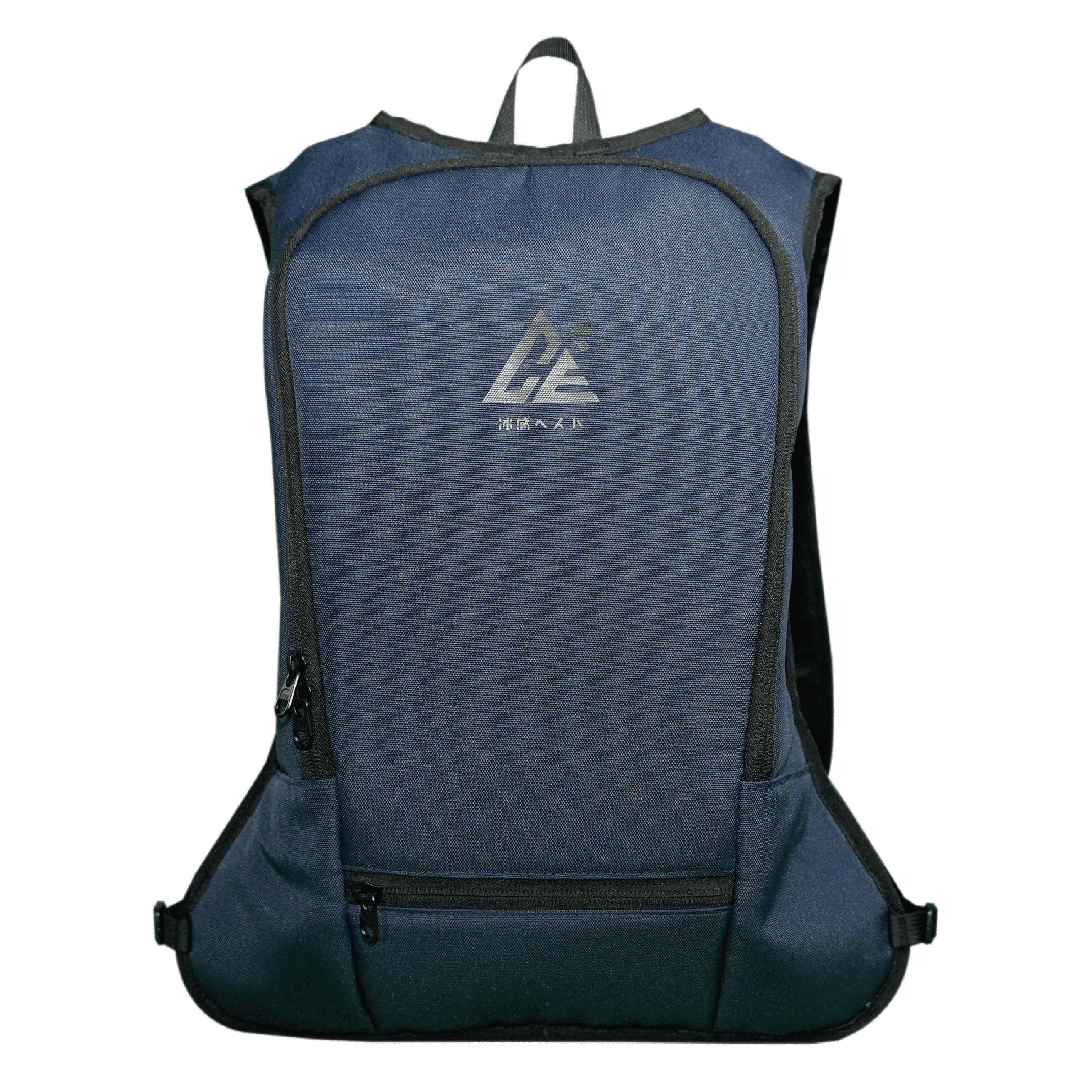
COOLWAVE Water-Circulation Cooling Vest, Professional Model in Blue. The backpack carries the water bag and pump; the vest carries the cooling loop.
Step by Step: Running a Dual Cooling Vest Through a Shift
- Charge the reservoir. Fill the TPU water bag and load the two ice packs. The charge is what sets the working window; a partially charged reservoir shortens the 3–4 hour published cooling duration.
- Check the loop before wearing it. Inspect the sand rubber cooling tube, the polypropylene cap and the pump connection. A loose cap or a kinked tube is the most common cause of weak cooling on site, and it is easier to find before the vest goes on than after.
- Fit the vest and backpack. The design is adjustable and one-size-fits-all, with a backpack format that keeps the load off the hands. Straps should sit close enough that the cooling surfaces stay in contact with the torso.
- Start the pump. Pump output is published at 5V 150 mA (max), which is the voltage class used by common USB power banks. Confirm the exact power source and connector for your configuration with the supplier before deploying at scale, and check that the flow rate reads at the expected level.
- Work the cycle, not the clock. Because the cooling duration is 3–4 hours, plan the shift around a recharge point rather than assuming the vest lasts as long as the shift does.
- Rotate or recharge between shifts. Two ice packs per unit allow a rotation pattern where one set is recharging while the other is in use, which matters more on multi-shift sites than on single-shift ones.
- Record performance. Note how long each charge lasts in your specific environment. Published duration ranges assume typical load; a metal sheet factory floor and a shaded outdoor post are not the same thermal environment, and your own figures become the basis for ordering quantities.
Where a Dual Cooling Water Cooling Vest Fits
The category is defined by work that cannot pause for heat. The COOLWAVE vest lists construction workers, outdoor workers, food stall operators, street vendors, traffic controllers and metal sheet factories as its application industries, and a recorded deployment of 100 units in Taiwan covers cooling use in high-temperature environments with reported results of effective body cooling, heatstroke prevention, and improved work efficiency and worker comfort.
Typical fits include:
- Construction sites. Rebar, formwork and concrete work under direct sun, where workers move between shaded and unshaded zones and cannot remove a cooling system each time they shift position.
- Metal sheet and metal-roof factories. Indoor environments with radiant heat and limited air movement are often harder on the body than outdoor work with breeze, and a wearable loop remains effective where fans only move hot air.
- Traffic control. Prolonged standing in an exposed position with no route to shade is a classic use case for a portable, backpack-based cooling system.
- Street vendors and food stalls. Long shifts beside heat-generating equipment, where the vest has to stay unobtrusive because the operator is also serving customers.
- Other outdoor work. Fishing and similar extended outdoor occupations in hot conditions fall inside the same “outdoor workers” definition.
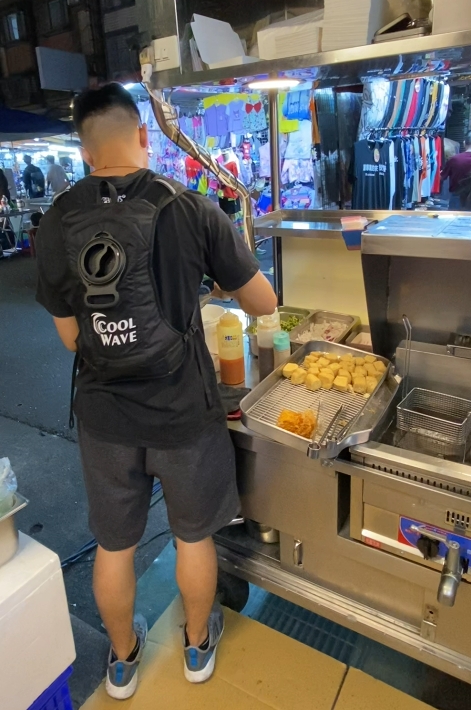
Street vendors and food stall operators are listed among the application industries for the COOLWAVE vest.
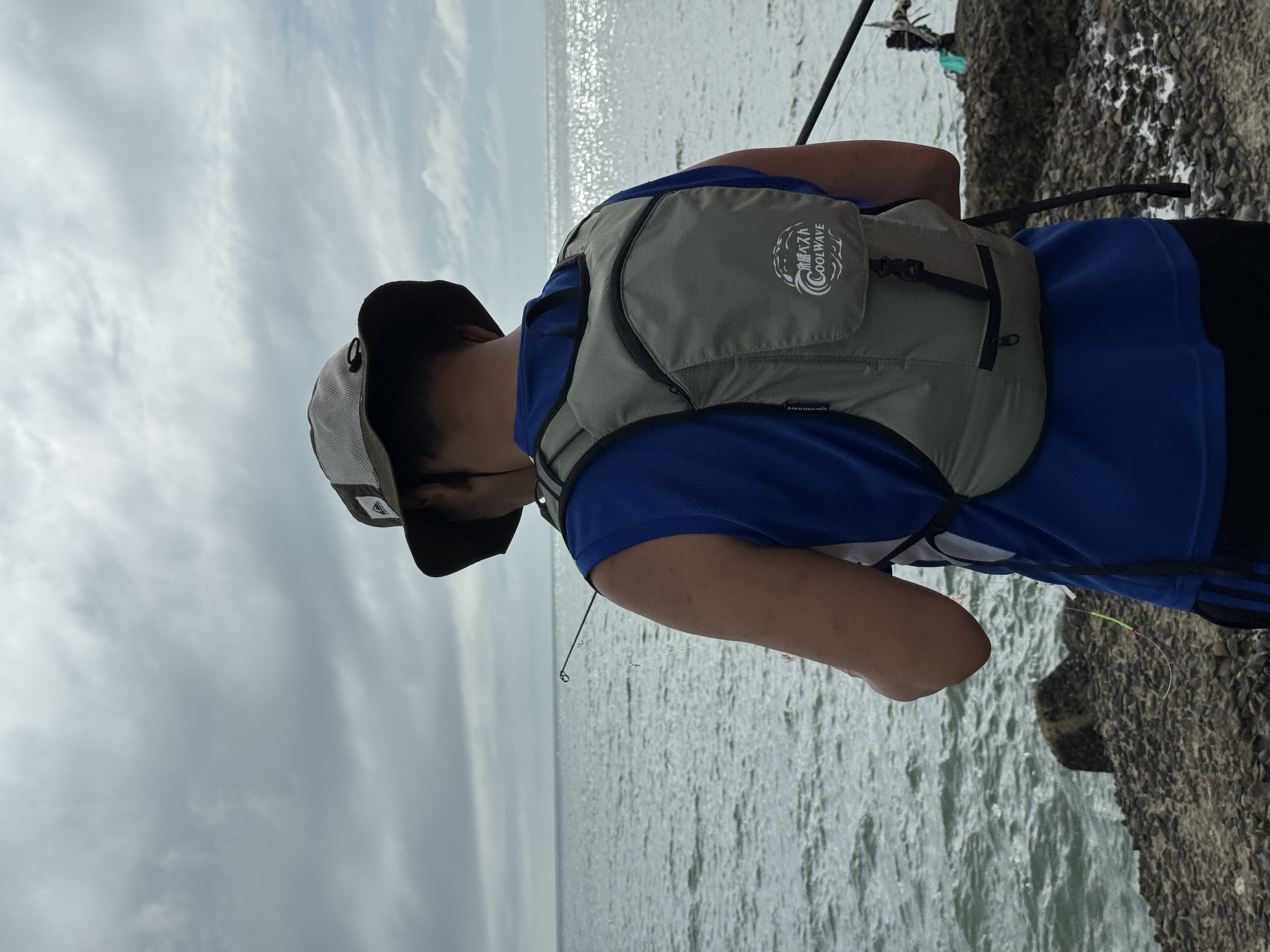
Outdoor occupations with prolonged sun exposure are covered by the same portable cooling format.
Cooling Approaches Side by Side
The table below compares the three main approaches a buyer will encounter when researching this category. Market-share figures are third-party figures for 2025; the trade-off column describes design characteristics of each approach rather than a judgement about any specific brand.
| Approach | How cooling is delivered | Verified market signal | Practical trade-off |
|---|---|---|---|
| Passive ice-pack vest | Cold stored in packs placed in garment pockets; no circulation | No separate share figure published in the verified data set | Cooling is local to the pack position and fades as the packs warm; no pump or power source to manage |
| PCM vest | Cold stored in phase-change material that releases it at a set temperature | 28.7% of cooling vest market share in 2025; fastest-growing technology segment (Dataintelo) | Recharging typically requires freezer capacity between shifts; no liquid loop to maintain |
| Active water circulation (dual cooling) | Ice packs chill a water reservoir; a pump circulates chilled water through tubing | Active circulatory mechanisms are increasingly deployed in industrial sectors to mitigate occupational heat stress (Strategic Market Research, 2025) | Requires a power source for the pump and adds tubing and a reservoir to clean, store and inspect |
Industrial applications, including construction and manufacturing, held the largest market share for cooling vests at 34.5% in 2025 (Dataintelo), which is consistent with the way the three approaches above divide: where a fixed power source or a freezer is available, passive and PCM systems are workable, and where workers move and shifts are long, a portable circulating system has the clearer fit.
Compliance, Patent and Proof Markers
Cooling apparel sits inside the PPE and disaster-prevention conversation, so documentation matters as much as the specification sheet. Three markers are relevant when researching this category.
- Structural patent. The COOLWAVE water-circulation cooling vest (Basic Model) is protected by Patent No. I886033, issued by the Intellectual Property Office, Ministry of Economic Affairs, under the Patent Act of the Republic of China. The patent covers water-cooled vest structure and cooling system, was issued on 1 June 2025 and runs to 27 August 2044, and applies to the ROC market.
- Disaster-prevention recognition. The COOLING water-cooled vest manufactured by FENG SHANG PRECISION CO., LTD. received the Disaster Prevention Product and Service Certification Award from the Taiwan Disaster Prevention Industry Association, which applies to the Taiwan market.
- General standards context. Cooling systems are expected to comply with ISO 9001:2015 for quality management and often require CE or UL marks for electrical components, since the pump is an electrical part of the assembly.
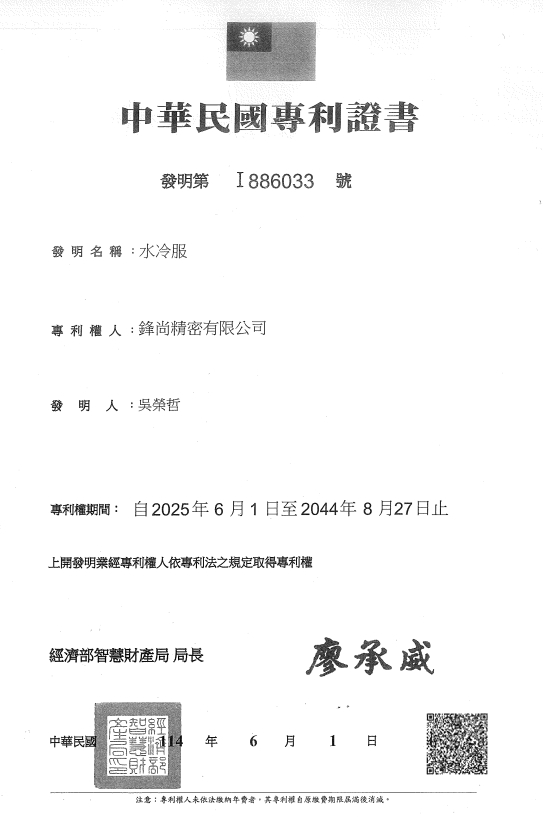
Water-cooled vest patent certificate — Patent No. I886033, Intellectual Property Office, Ministry of Economic Affairs (ROC market).
Market scope should be read carefully here. The patent and the disaster-prevention award apply to the ROC and Taiwan markets respectively. Buyers sourcing for other regions should confirm which marks their own market requires for PPE and for the electrical pump component, rather than assuming that a certification valid in one market transfers to another.
What to Check Before Shortlisting
- Cooling duration against shift length. A published 3–4 hour window is a working figure, not a full-shift figure. Plan rotation or recharge before you plan headcount.
- Flow rate. The maximum flow rate is the specification that indicates how much cold the loop actually moves. Ask for the number, not for a description of cooling power.
- Weight and carry format. For garments worn for hours, the loaded weight matters. The COOLWAVE vest is specified within 2 kg, carried as a backpack.
- Material list. TPU water bag, PEVA vest, 600D polyester straps, polypropylene cap and sand rubber tubing describe how the unit is built and how it will hold up to repeated charging cycles.
- Power source. Pump output is listed at 5V 150 mA (max). Confirm the power source, connector and spare-part availability for your configuration.
- Documentation by market. Match the patent and certification scope to the region you are buying for.
- Commercial terms. Minimum order quantity, lead time, production capacity and warranty terms should be confirmed before a pilot is scheduled.
FAQ
Is a dual cooling water cooling vest certified?
The COOLWAVE water-circulation cooling vest (Basic Model) is protected by Patent No. I886033, issued by the Intellectual Property Office, Ministry of Economic Affairs under the Patent Act of the Republic of China, covering water-cooled vest structure and cooling system for the ROC market, issued 1 June 2025 and valid to 27 August 2044. The COOLING water-cooled vest also received the Disaster Prevention Product and Service Certification Award from the Taiwan Disaster Prevention Industry Association, which applies to the Taiwan market. More broadly, cooling systems are expected to comply with ISO 9001:2015 for quality management and often require CE or UL marks for electrical components. Because patent and certification scope is market-specific, confirm which marks your own region requires.
How long does a dual cooling vest stay cool, and what sets that limit?
The published cooling duration for the COOLWAVE water-circulation cooling vest is 3–4 hours per charge, with a pump output of 5V 150 mA (max) and a maximum flow rate of 320–370 ml/min. The limit is set by the cold reservoir — the water bag plus the two ice packs supplied with the unit — and by how heavily the wearer is working in the surrounding heat. The specification lists the suitable temperature as below 10°C. Duration is not the same as total wear time: the vest can stay on while the reservoir is recharged, and having a second set of ice packs in rotation is the usual way to cover a longer shift.
What drives the cost of a dual cooling water cooling vest?
In this category, cost is driven by configuration rather than by brand tier. The variables that matter are which model is specified (Basic Model or a Professional Model in Blue, Gray or Black), the pump and power configuration, whether the unit uses the full published material set (TPU water bag, PEVA vest body, 600D polyester shoulder straps, polypropylene cap, sand rubber cooling tube), the ice pack count, and the order volume. The COOLWAVE line lists a minimum order quantity of 10 units, and the manufacturer’s monthly capacity is 3,000 units. For project-specific pricing, request a written quotation that states the model, the configuration and the delivery terms.
Can I validate the vest before ordering in volume?
Sample validation is standard practice in this category because cooling performance is environment-specific: a vest that performs well on a shaded outdoor post may behave differently on a metal sheet factory floor. Rather than assuming sample terms, raise the request directly at the inquiry stage and specify what you intend to measure — for example how long a charge lasts under your working conditions, how the fit performs across your crew, and how the loop holds up after repeated charging. The manufacturer also lists ODM as its production mode, so any customization requirement should be confirmed in the same conversation before a project plan is finalised.
What are the minimum order quantity, lead time and warranty?
For the water-cooled vest line, the listed minimum order quantity is 10 units, the listed lead time is 7–14 days, monthly production capacity is 3,000 units, and the water-cooled vest carries a 6-month warranty. Export markets are listed as global. These figures are the starting point for planning rather than a quote, since lead time depends on configuration and order size. To move from research to evaluation, send your required model, quantity and destination market through the contact channel below and request a written quotation and the current product catalog.
Conclusion: What the Category Comes Down To
A dual cooling water cooling vest is not a fan vest and not a pack-only vest. It is a portable system in which reusable ice packs hold a cold charge in a water reservoir and a small pump distributes that cold through tubing worn against the torso. The specification that decides whether it works for a given site is a small set of numbers: cooling duration of 3–4 hours, maximum flow rate of 320–370 ml/min, pump output of 5V 150 mA (max), and a loaded weight within 2 kg. Everything else — materials, certifications, order terms — is about how reliably those numbers repeat across a workforce and a season.
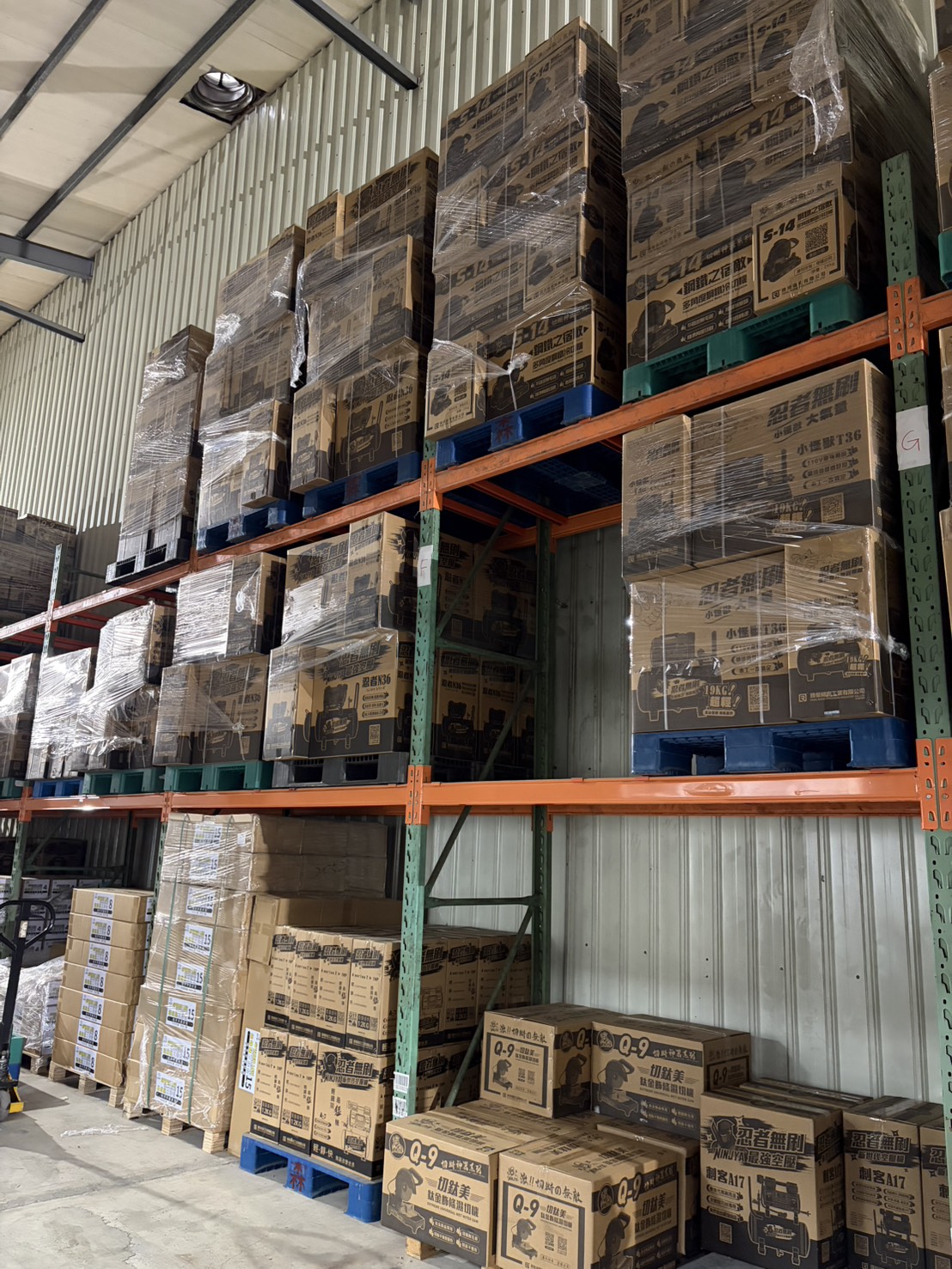
Next step: request the catalog, a sample or a quotation
Download the product brochure: Shokunin product brochure (PDF)
Company website: www.fstool.com.tw
WhatsApp: Start an inquiry on WhatsApp
Email: fsmarketing@fstool.com.tw
Shokunin is the professional tool brand of FENG SHANG PRECISION CO., LTD., No. 155-17, Sec. 2, Nanzhu Rd., Luzhu Dist., Taoyuan City 338454, Taiwan. Business hours are Monday to Friday, 8:30 AM – 5:40 PM. Phone: +886 3-312-6606.
When you make contact, state the model (Basic Model, or Professional Model in Blue, Gray or Black), the quantity and the destination market, so the reply can include configuration and delivery terms rather than general information.
Have Questions or Need More Details?
Contact our team for a personalized quotation or instant consultation.
Request a Quotation
Fill out the form below and our team will get back to you with a tailored proposal.
WhatsApp Direct Chat
Prefer to chat in real-time? Message us on WhatsApp for instant assistance & quick answers.
- Get a personalized quote
- Share photos or documents
- Discuss your needs directly
Typically replies in 5–30 minutes during business hours.