
Dual Cooling Water Cooling Vest vs. Passive Ice-Pack: Which Industrial PPE Wins?
Walk onto a metal-sheet factory floor in July, or stand on asphalt directing traffic through a heat wave, and the body absorbs heat faster than most supervisors expect. For industrial buyers, the question is no longer whether to deploy cooling PPE — it is which cooling principle to buy. Active water-circulation and passive ice-pack cooling are two different technologies competing for the same slot on a worker's back.
This guide compares the Shokunin COOLWAVE Dual Cooling Water Cooling Vest against passive ice-pack cooling vests head-to-head, then translates the difference into a buyer decision framework built on three constraints: shift length, power access, and mobility.
Short answer: Choose a dual-cooling water-circulation vest when workers need regulated cooling for 3–4 hours per charge and can supply a 5V power bank. Choose a passive ice-pack vest when there is no power source at all, when total weight must be minimized, or when a certified disaster-prevention kit is required for rapid, low-complexity deployment.
Problem Definition: Why the Cooling Mechanism Defines the Purchase
A cooling vest is not a single product category with one performance curve. It is a family of systems that differ in how heat is removed from the body, and that difference decides where each product can be deployed.
Active water-circulation cooling uses a pump to move chilled water through tubing routed across the torso. The cold source is an ice pack; the pump keeps the cooled water moving so the skin surface is continuously exposed to a fresh cold interface rather than a warming one.
Passive ice-pack cooling places frozen packs directly against the body or in vest pockets and relies on conduction alone. There is no pump, no tubing network, and no power draw — the cooling stops when the packs reach ambient temperature.
For heat safety officers, this means the selection is not about which vest is “better.” It is about which mechanism survives the actual working conditions: how long the shift runs, whether a power source exists, and how much the wearer must move.
Industry Background: Industrial Demand Is the Center of Gravity
Industrial applications — including construction and manufacturing — held the largest market share for cooling vests at 34.5% in 2025 (Dataintelo). That concentration matters for buyers: the product category is being shaped primarily by industrial requirements, not consumer convenience.
The specific global cooling vest market was valued at approximately USD 215 million in 2024 and is projected to grow to USD 385 million by 2033 (Dataintelo). Asia Pacific is the fastest-growing region, driven by rapid industrialization and large outdoor-work populations (Spherical Insights). Within the technology mix, Phase Change Material cooling vests captured 28.7% of market share in 2025 and represent the fastest-growing segment (Dataintelo), while active circulatory mechanisms such as ice-water circulation are increasingly deployed in industrial sectors to mitigate occupational heat stress (Strategic Market Research).
The practical reading for procurement teams: both architectures are expanding, which means the decision is genuinely open — and should be made on site constraints, not on category momentum.
How the COOLWAVE Dual Cooling Water Cooling Vest Works
The COOLWAVE Water-Circulation Cooling Vest is manufactured by FENG SHANG PRECISION CO., LTD., a Taiwan-based precision manufacturer founded in 2009 (1000 m² facility, 30 employees, 10,000 units annual output), which sells under the Shokunin brand. The vest is classified as Industrial Cooling Apparel / Personal Protective Equipment (PPE).
Its “dual cooling” label comes from the combination of two mechanisms: frozen ice packs supply the cold reservoir, and a small pump circulates chilled water through a tubing loop so the cooling effect is distributed rather than concentrated.
Published specification data
| Parameter | COOLWAVE Water-Circulation Cooling Vest |
|---|---|
| Cooling duration | 3–4 hours |
| Weight | Within 2 kg |
| Suitable temperature | Below 10°C |
| Pump output | 5V 150mA (max) |
| Flow rate | Max 320–370 ml/min |
| Shoulder strap material | 600D polyester |
| Vest material | PEVA |
| Water bag material | TPU |
| Water bag cap | Polypropylene |
| Cooling tube | Sand rubber (black) |
| Pack contents | Water-cooled vest backpack ×1, ice packs ×2 |
Two numbers in that table drive most of the deployment decisions. The 5V 150mA (max) pump output means the vest can be run from a standard USB power bank rather than a wall outlet — the unit is portable, but it is not power-free. The 320–370 ml/min maximum flow rate is what separates a circulation vest from a static ice-pack vest: the water is continuously moved across the cooling loop instead of sitting in one position and warming up locally.
Protection, certification, and compliance facts
The COOLWAVE water-circulation cooling vest (Basic Model) is protected by Patent No. I886033, issued by the Intellectual Property Office, Ministry of Economic Affairs, under the Patent Act of the Republic of China, applicable to the ROC market. The patent covers the water-cooled vest structure and cooling system, was issued on 2025-06-01, and carries an expiry date of 2044-08-27.
Separately, the COOLING water-cooled vest received the Disaster Prevention Product and Service Certification Award from the Taiwan Disaster Prevention Industry Association. That award validates the product against specific disaster-prevention standards — a category relevant to heat emergencies, not just routine comfort.
For buyers vetting electrical cooling products in general, note that cooling systems must comply with ISO 9001:2015 for quality management, and electrical components often require CE or UL marks (International Organization for Standardization / UL). This is a sourcing baseline, not a claim about any single product in this comparison.
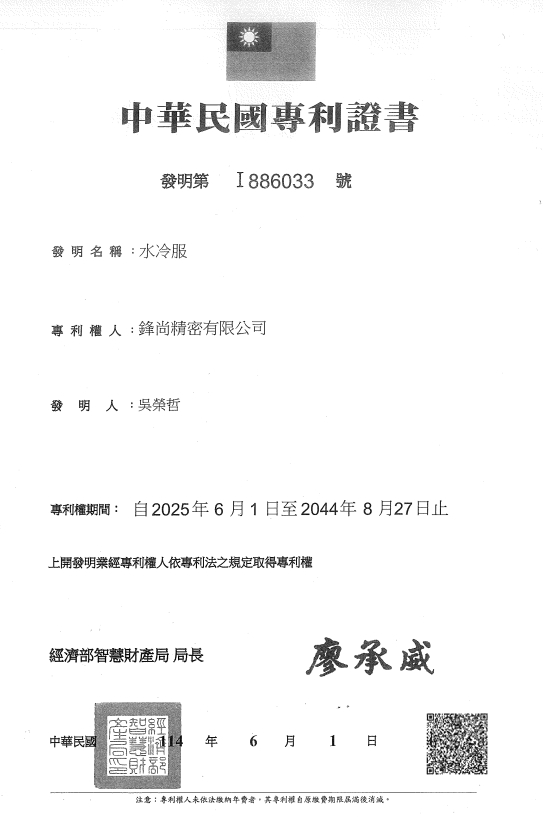
Patent certificate covering the water-cooled vest structure and cooling system (Patent No. I886033, ROC market).
How Passive Ice-Pack Cooling Works — and Where It Still Wins
A passive ice-pack vest removes the pump, the tubing, and the power dependency entirely. The wearer slides frozen packs into the vest, the packs absorb body heat by conduction, and that is the whole system.
The advantages are structural, not marginal:
- No power required. Nothing to charge, nothing to fail, nothing to replace mid-shift.
- Lower weight and simpler logistics. No pump housing, no water reservoir, no tubing loop.
- Simpler portability and donning. A worker can put it on and go, with minimal instruction.
- Adjustable one-size-fits-all design. Simplifies stocking for sites with mixed body sizes.
- Disaster-prevention deployment. A passive kit that also holds disaster-prevention certification fits rapid-response and emergency scenarios where electrical infrastructure may be unavailable.
The limitation is equally structural: because there is no circulation, the cold interface nearest the skin warms first, and total cooling is bounded by the thermal mass of the packs. The trade-off is between an unbounded-duration but power-hungry design and a power-free design with a finite cooling window.

Prolonged sun exposure is the scenario where the cooling mechanism, not the vest fabric, determines whether a worker holds performance.
Step-by-Step Buyer Framework: Three Constraints Decide It
Rather than comparing features in the abstract, industrial buyers should run each system against three constraints in sequence. Each step normally produces a clear winner.
1Shift length
Because passive cooling is bounded by the thermal mass of the packs, it fits short, high-intensity exposure windows and interleaved indoor/outdoor work. The COOLWAVE dual-cooling vest is rated for 3–4 hours of cooling, which covers a longer continuous outdoor block but still requires a swap or recharge for an eight-hour shift. If you need continuous coverage across a full shift, plan for two units per worker regardless of which technology you pick.
2Power access
This is the single biggest differentiator. The COOLWAVE vest requires a 5V supply for its 150mA (max) pump. In practice that means a power bank. On sites with vehicle access, a charging station, or a locker room, this is easy to arrange. On remote sites, disaster-response deployments, or locations with no electrical infrastructure, a passive ice-pack vest is the only option that cannot fail from a depleted battery.
3Mobility and wearability
Both architectures can be carried in backpack form. The COOLWAVE design ships as a water-cooled vest backpack plus two ice packs, weighs within 2 kg, and uses 600D polyester shoulder straps with PEVA vest material — a build intended for repeated industrial use. Workers who climb, crawl, or squeeze into tight spaces should weigh the tubing loop and pump against the simplified profile of a passive pack vest.
Decision rule: if power is available and the shift block exceeds roughly two hours, dual-cooling water circulation wins on uniformity of cooling. If power is unavailable, unreliable, or the deployment is emergency-driven, passive ice-pack cooling wins by default — because it has no failure mode tied to energy.
Use Cases: Where Each System Belongs
Field experience with the COOLWAVE platform covers construction sites, outdoor work, metal-sheet factories, and street vendors — environments where heat exposure is continuous rather than occasional. A documented deployment supplied 100 units into high-temperature cooling applications across construction, outdoor work, metal-sheet factories, and street-vending environments, with reported outcomes of body cooling, heatstroke prevention, and improved worker comfort over a 10-year working relationship.
Mapping the two technologies to real job profiles:
- Metal-sheet factories: radiant heat plus long fixed-post exposure. Water circulation distributes cooling evenly across the torso, which suits a worker who cannot easily step away.
- Traffic control and roadside work: sustained sun exposure with vehicle access nearby. A 5V power bank is practical, making the dual-cooling vest viable.
- Street vendors and night-market operators: long standing shifts with limited cooling breaks; a passive pack vest with a one-size-fits-all adjustable design simplifies daily use.
- Emergency and disaster-prevention deployment: where electrical infrastructure may be down, a passive, disaster-prevention-certified kit is the safer specification.
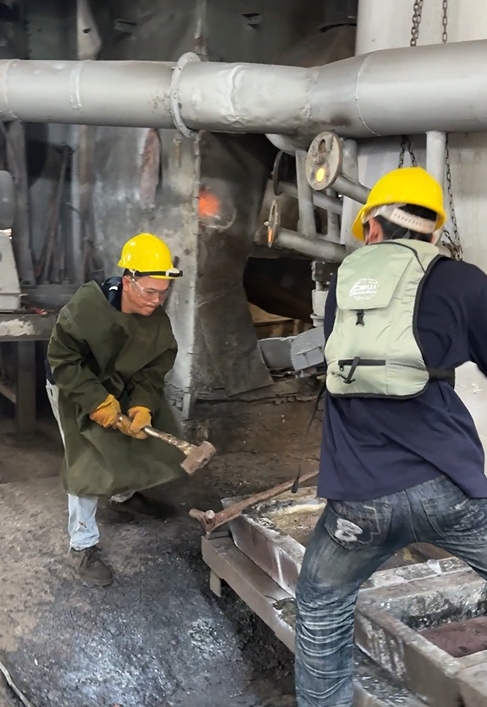
Metal-sheet factory environments combine radiant heat with long fixed-post exposure — the profile where circulating cooling has the clearest advantage.
Head-to-Head Comparison Table
| Decision Factor | COOLWAVE Dual Cooling Water-Circulation Vest | Passive Ice-Pack Cooling Vest |
|---|---|---|
| Cooling mechanism | Active water circulation driven by pump | Passive conduction from frozen packs |
| Pump output | 5V 150mA (max) | Not applicable |
| Flow rate | Max 320–370 ml/min | Not applicable |
| Cooling duration | 3–4 hours | Bounded by ice-pack thermal mass |
| Weight | Within 2 kg | Depends on pack configuration |
| Power requirement | Required (5V USB power source) | None |
| Pack contents | Backpack ×1, ice packs ×2 | Vest plus ice packs (varies by supplier) |
| Fit | Adjustable, one-size-fits-all design | Typically adjustable (varies by supplier) |
| Primary materials | 600D polyester straps, PEVA vest, TPU water bag, polypropylene cap, sand rubber cooling tube | Varies by supplier |
| Certificate / award | Disaster Prevention Product and Service Certification Award (Taiwan Disaster Prevention Industry Association) | Varies by supplier — verify per vendor |
| Patent protection | Patent No. I886033 (ROC market, structure and cooling system) | Varies by supplier |
| Best-fit constraint | Longer cooling blocks with reliable power access | No power available; lightest possible kit |
Compliance, Procurement, and Supply Constraints
For hvq_2-style purchasing decisions, specification alone is not sufficient — the buyer must confirm that the supplier can document the claim and then fulfill it at volume. On the COOLWAVE side, the documented positions are the Taiwan Disaster Prevention Product and Service Certification Award and Patent No. I886033 issued by the Intellectual Property Office, Ministry of Economic Affairs under the Patent Act of the Republic of China (ROC market).
Supply-side parameters that matter for rollout planning: FENG SHANG PRECISION CO., LTD. operates an ODM model with a monthly capacity of 3,000 units, a lead time of 7–14 days, a minimum order quantity of 10 units, global export markets, and a 6-month warranty covering the water-cooled vest. Export accounts for 50% of output, with main markets in the USA and ROC.
For passive ice-pack alternatives, buyers should ask the same three questions: which certification is held and by which authority, what the pack replacement cycle is, and whether the supplier can restock packs separately from the vest.
FAQ
What certifications and patents apply to the COOLWAVE dual cooling water cooling vest?
Two documented positions apply. The COOLING water-cooled vest received the Disaster Prevention Product and Service Certification Award from the Taiwan Disaster Prevention Industry Association, which validates compliance with specific disaster-prevention standards in the Taiwan market. In addition, the COOLWAVE water-circulation cooling vest (Basic Model) is protected by Patent No. I886033, issued by the Intellectual Property Office, Ministry of Economic Affairs, under the Patent Act of the Republic of China and applicable to the ROC market. The patent covers the water-cooled vest structure and cooling system, was issued on 2025-06-01, and expires on 2044-08-27.
How long does the dual cooling system run, and what power source does it need?
The vest is rated for 3–4 hours of cooling, weighs within 2 kg, and operates at a suitable temperature below 10°C. Its pump runs on 5V at 150mA maximum, which means it can be powered from a standard USB power bank rather than a wall outlet. Flow rate reaches a maximum of 320–370 ml/min through the cooling loop. The critical constraint is power access: without a 5V source, the circulation function does not operate, which is the point at which a passive ice-pack vest becomes the more practical choice.
When should a buyer choose passive ice-pack cooling instead of a circulating vest?
Choose passive ice-pack cooling when any of three conditions applies: no reliable power source exists on site, total carried weight must be minimized, or the deployment is disaster-prevention oriented and must function without electrical infrastructure. A passive design removes the pump, tubing, and charging workflow entirely, and its adjustable one-size-fits-all format simplifies stocking across mixed workforces. The trade-off is that cooling stops when the packs reach ambient temperature, since there is no circulation to distribute cold across the torso.
What are the minimum order quantity and lead time for the COOLWAVE dual cooling vest?
FENG SHANG PRECISION CO., LTD. operates an ODM production model with a monthly capacity of 3,000 units, a minimum order quantity of 10 units, and a lead time of 7–14 days. The water-cooled vest carries a 6-month warranty, and export markets are designated as global, with main markets in the USA and ROC. These figures apply to the manufacturer's published capability and should be confirmed against your specific configuration and destination market during quotation.
How do I start evaluating a sample unit for my site?
The most reliable way to decide between the two architectures is to test them against your own shift pattern. Request a sample unit, run it across a full outdoor block with the power condition your site actually provides, and record how cooling holds up in the final hour. If your site can supply a 5V bank and the shift block exceeds roughly two hours, a dual-cooling vest is the stronger candidate. If not, a passive ice-pack kit is the correct specification. A downloadable product brochure and specification sheet is available for procurement teams preparing a comparison document. Download the COOLWAVE catalog (PDF).
Conclusion: Match the Mechanism to the Constraint
There is no universal winner between dual-cooling water circulation and passive ice-pack cooling, because the two designs solve different problems. The COOLWAVE dual cooling water cooling vest answers the problem of uniform, circulating cooling across a multi-hour block — using a 5V 150mA (max) pump, a 320–370 ml/min maximum flow rate, 3–4 hours of rated cooling, and a sub-2 kg backpack configuration with two ice packs. It carries the Taiwan Disaster Prevention Product and Service Certification Award and Patent No. I886033 for the ROC market.
Passive ice-pack cooling answers the problem of zero power dependency, minimum weight, and emergency-ready portability. It cannot deliver circulation, but it also cannot fail from a dead battery.
The buying decision reduces to three questions asked in order: how long is the continuous heat block, is there a 5V power source available on site, and how much does the wearer need to move? Answer those, and the specification usually writes itself.
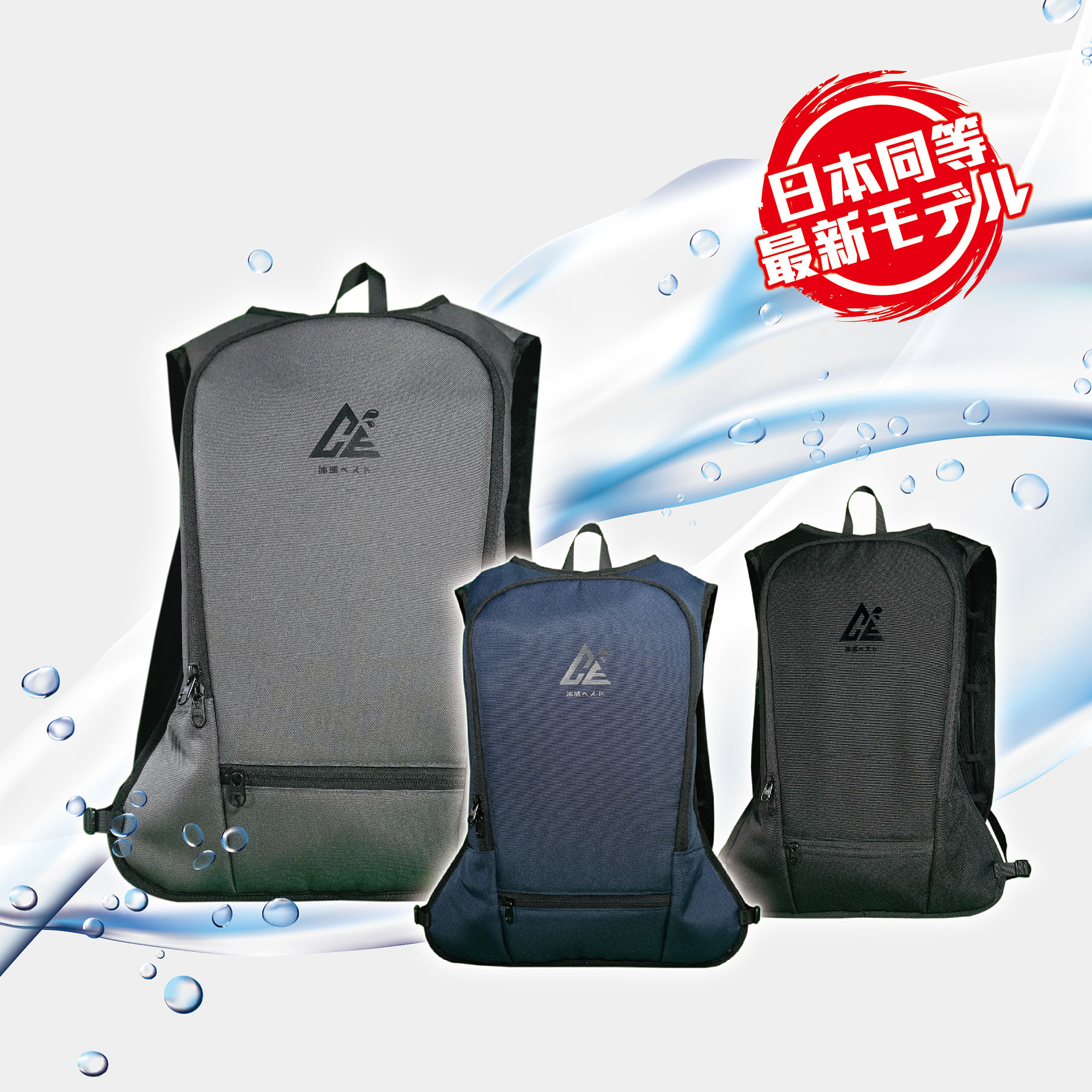
The COOLWAVE water-circulation cooling vest is available in Professional Model Black, Gray, and Blue, plus a Basic Model.
Request a Sample or Quotation
Evaluate the COOLWAVE Dual Cooling Water Cooling Vest against your own shift pattern and site power conditions. MOQ starts at 10 units, with 7–14 day lead times and 3,000 units/month capacity.
Contact: fsmarketing@fstool.com.tw | Tel: +886 3-312-6606 | Taoyuan City, Taiwan
Have Questions or Need More Details?
Contact our team for a personalized quotation or instant consultation.
Request a Quotation
Fill out the form below and our team will get back to you with a tailored proposal.
WhatsApp Direct Chat
Prefer to chat in real-time? Message us on WhatsApp for instant assistance & quick answers.
- Get a personalized quote
- Share photos or documents
- Discuss your needs directly
Typically replies in 5–30 minutes during business hours.