
Dual Cooling Water Cooling Vest: Certification & Compliance Checklist for 2026 Industrial Buyers
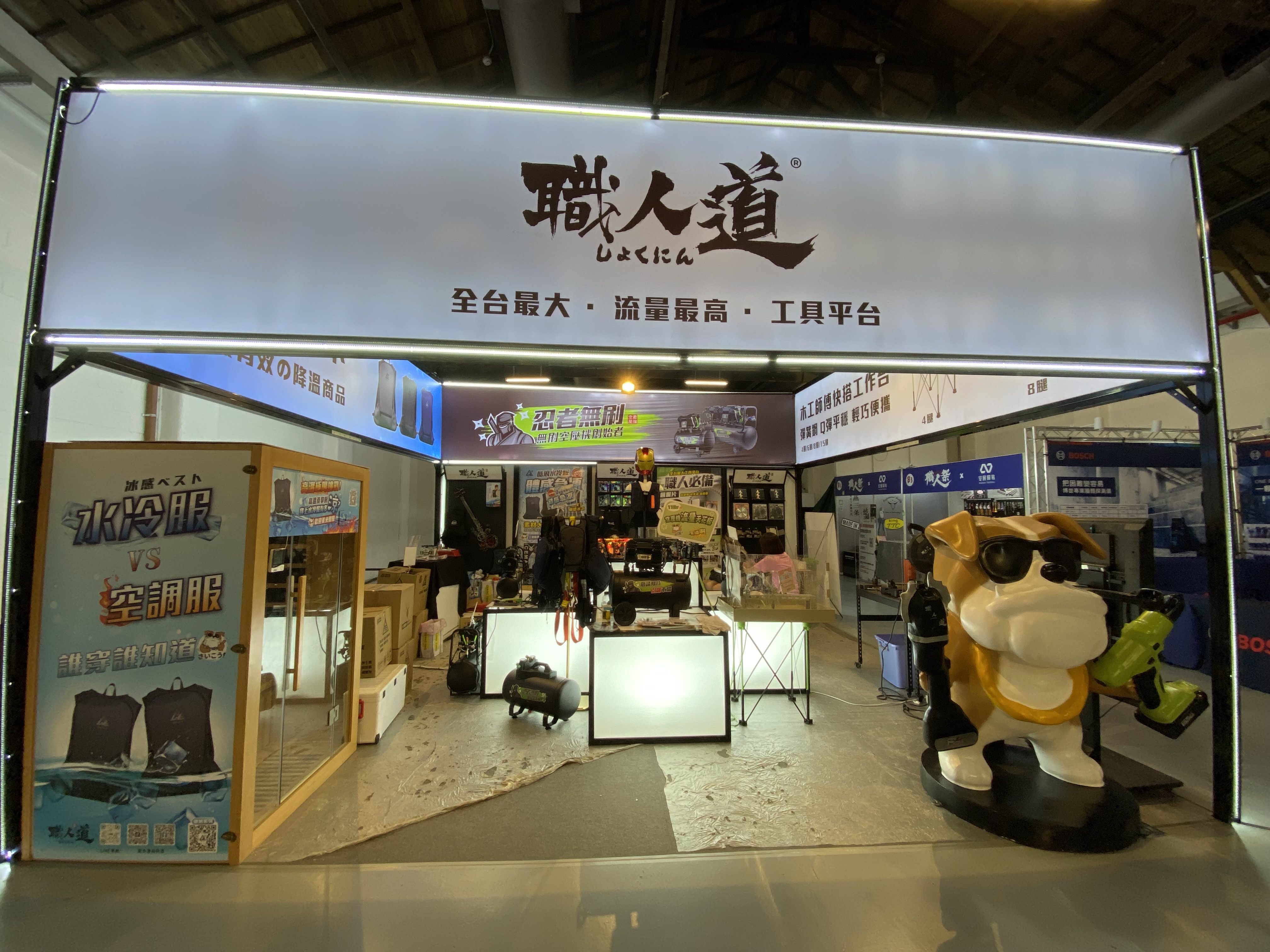
When you are sourcing a dual cooling water cooling vest for an industrial team, the first question should not be price — it should be “What proof does the manufacturer provide?” Whether you are buying for a construction site, a metal-roof factory, or a municipal traffic crew, the practical value of an ice water circulation cooling vest depends on verifiable specifications, documented certification, and an understanding of how the cooling system behaves in real working conditions.
This guide covers what a dual cooling water cooling vest is, how it compares to other industrial cooling options, and exactly what to verify before you commit to a purchase order.
What Is a Dual Cooling Water Cooling Vest?
A dual cooling water cooling vest is a wearable personal cooling system that combines a water-circulation vest with supplemental ice packs to maintain skin-contact cooling for extended periods. The design typically includes a water-circulation backpack, a vest with cooling tubes, reusable ice packs, and a small electric pump.
Unlike fans or evaporative cooling garments, the dual cooling mechanism does not rely on air humidity or constant airflow. Instead, chilled water or ice-water mixture circulates through tubes on the body, providing a more stable and predictable cooling effect in hot and humid industrial settings.
Why Certification and Verification Matter in This Category
The cooling vest market is growing quickly. The global cooling vest market was valued at approximately USD 215 million in 2024 and is projected to grow to USD 385 million by 2033. Meanwhile, the broader personal cooling device market reached USD 25.16 billion in 2024, with projections of USD 94.85 billion by 2035. A large market inevitably attracts new entrants with varying levels of quality control.
For procurement teams, the key issue is that a cooling vest is not a simple commodity. It contains water bags, a pump, electrical components, straps, and cold-chain materials. Each element affects safety, durability, and worker compliance.
Certification and documented verification are therefore not just administrative requirements — they are the most objective evidence that a product has been reviewed against defined standards.
What Is the Shokunin COOLWAVE Dual Cooling Water Cooling Vest?
The Shokunin COOLWAVE Water-Circulation Cooling Vest is a professional industrial cooling vest manufactured by Feng Shang Precision Co., Ltd. (brand: Shokunin), a Taiwan-based manufacturer founded in 2009. The product is designed for construction workers, outdoor workers, food stall operators, street vendors, traffic controllers, and workers in metal sheet factories.
It is available in a Basic Model and Professional Models in Blue, Gray, and Black. The professional variants share the same core specifications as the basic model, while offering different color options for fleets that require consistent site identification.
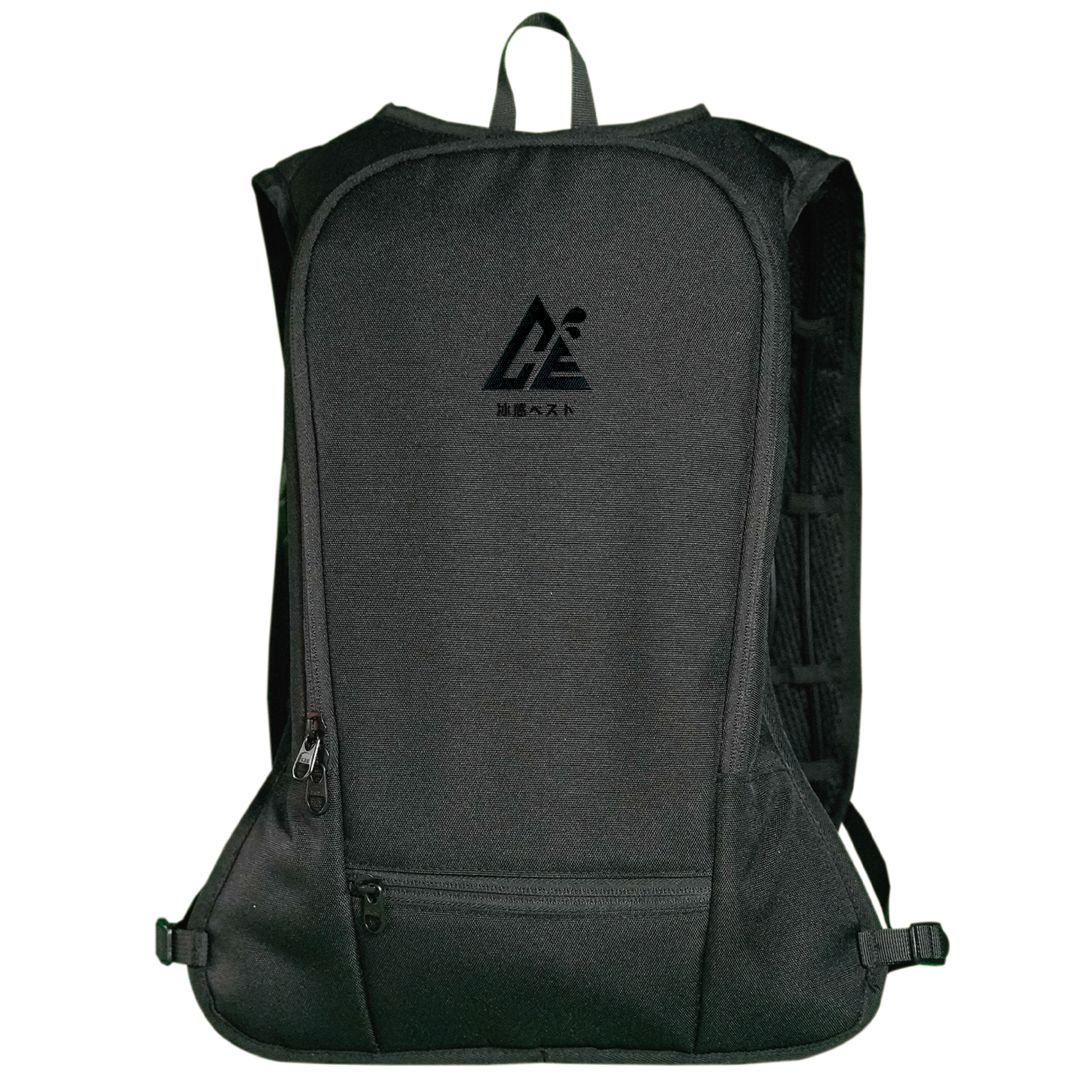
Shokunin COOLWAVE Technical Specifications at a Glance
| Parameter | COOLWAVE Specification |
|---|---|
| Cooling duration | 3–4 hours |
| Weight | Within 2 kg |
| Suitable ambient temperature | Below 10°C (water/ice mixture operating condition) |
| Shoulder strap material | 600D polyester |
| Vest material | PEVA |
| Water bag material | TPU |
| Water bag cap | Polypropylene |
| Cooling tube | Sand rubber (black) |
| Pump output | 5V 150mA (max) |
| Flow rate | Max 320–370 ml/min |
| Package contents | Water-cooled vest backpack ×1, ice packs ×2 |
| Applicable industries | Construction, outdoor work, food stalls, street vending, traffic control, metal sheet factories |
Dual Cooling Explained: Ice Pack + Water Circulation
Most cooling vests fall into one of three categories: passive phase-change material (PCM) vests, evaporative vests, and active circulation vests. The Shokunin COOLWAVE uses an active circulatory mechanism: ice water is circulated through tubes to draw heat away from the body.
The reason this matters for industrial buyers is simple. Active circulation moves coolant continuously across a larger skin-contact area, avoiding the localized hot spots that often appear in passive vests. The inclusion of reusable ice packs extends the cooling reserve, while the small pump maintains a consistent flow.
This design aligns with the broader industrial technology trend noted in market research: active circulatory mechanisms using ice water circulation are increasingly deployed in industrial sectors to mitigate occupational heat stress.
Patent Protection: Why It Matters
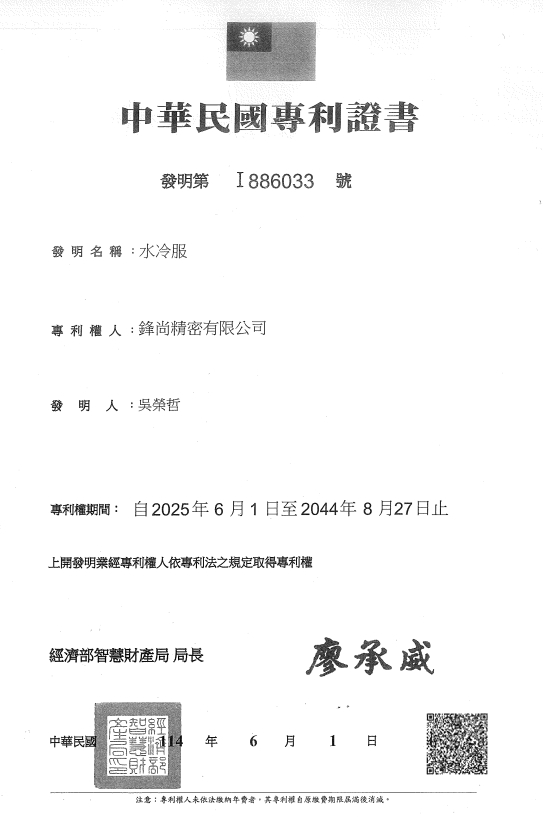
The COOLWAVE Water-Circulation Cooling Vest (Basic Model) is protected by Patent No. I886033, issued by the Intellectual Property Office, Ministry of Economic Affairs, under the Patent Act of the Republic of China. This patent is applicable to the ROC market.
For buyers, patent evidence should not be dismissed as a marketing detail. A granted patent means the manufacturer has formally claimed a specific vest structure and cooling system design. It also provides a degree of supply-chain assurance: the product is not an anonymous white-label item, but a specific design that is documented at the intellectual property level.
Certification: Documented Recognition
The Shokunin COOLING water-cooled vest received the Disaster Prevention Product and Service Certification Award from the Taiwan Disaster Prevention Industry Association. This certification validates the product’s compliance with disaster-prevention-oriented product requirements.
Is a Taiwan association award relevant to an overseas buyer? In many cases, yes. It shows that the product has passed an independent third-party review for safety and suitability in high-risk environments. However, if you are buying in the US or Europe, you should also ask the supplier whether the product or its electrical components carry CE or UL marks, especially if the vest includes a pump or battery components.
Verification Checklist Before You Buy a Dual Cooling Water Cooling Vest
Use this checklist when evaluating a dual cooling water cooling vest for an industrial team.
- Confirm the cooling duration requirement. The COOLWAVE is rated for 3–4 hours. If your shift exceeds this, plan for ice pack replacement or additional units.
- Check total weight. The COOLWAVE vest is within 2 kg. Weight comfort is a major factor for worker acceptance in prolonged outdoor exposure.
- Verify the pump rating. Look for documented voltage/current (e.g., 5V 150mA max) and flow rate (e.g., 320–370 ml/min).
- Review the pump and battery safety certification. If the system uses electrical components, request CE/UL or equivalent documentation.
- Confirm the vest material. PEVA, TPU, 600D polyester and similar materials should be clearly identified by the manufacturer.
- Check the ice pack design. How many ice packs are included? Is the cap sealed properly? Are replacement parts available?
- Ask about warranty. For Shokunin, the water-cooled vest carries a 6-month warranty — confirm the warranty scope in writing.
- Request patent or certification documentation. A supplier that cannot produce documentation is a red flag in this category.
- Inspect sample units. A high quality sample review is the fastest way to verify strap quality, tube flexibility, water resistance, and worker comfort.
How the COOLWAVE Performs in Real Industrial Conditions
Shokunin’s application data covers several working conditions that reflect the industrial realities of heat exposure:
- Construction sites: Workers in direct sun benefit from lightweight, portable body cooling.
- Metal sheet factories: Radiant heat from metal surfaces requires reliable, continuous cooling rather than spot ventilation.
- Traffic control: Prolonged sun exposure during long shifts demands an adjustable, one-size-fits-all design.
- Street vendors / night markets: Passive ice pack cooling with no continuous power requirement helps mobile workers who cannot stay near an outlet.
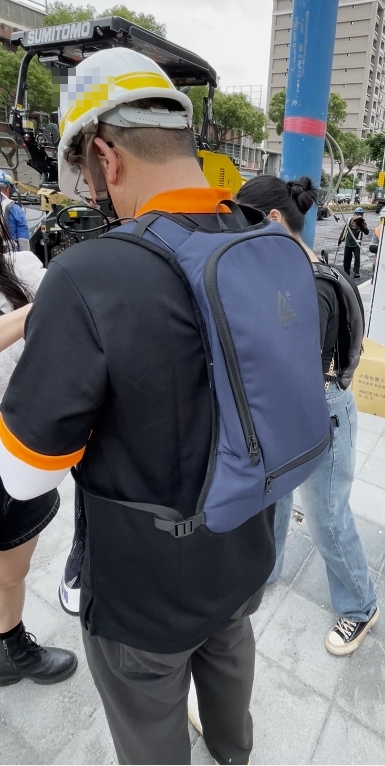
In the field, the value of the COOLWAVE is best summarized by its user-reported function: effective body cooling, heatstroke prevention, and improved work efficiency and worker comfort. The cooling system operates passively from the user’s perspective—ice packs are activated and water circulates—so it does not require access to mains power during operation.
Market Comparison: How Does the COOLWAVE Fit Among Established Cooling Vest Brands?
Independent market reports identify several established global players in the cooling vest segment, including Techniche International, Glacier Tek, Polar Products Inc., and Ergodyne. These brands are widely referenced in procurement discussions, but direct parameter-level comparisons are difficult without verified product documents from each brand.
The table below describes how procurement teams should think about the Shokunin COOLWAVE in relation to these brands, based on market research context rather than claimed benchmark testing.
| Comparison Dimension | Shokunin COOLWAVE (documented) | Global Industrial Cooling Vest Brands (market position) |
|---|---|---|
| Technology type | Ice water circulation with pump (active circulatory) | Mixed: PCM, evaporative, and active cooling technologies depending on brand |
| Cooling duration | 3–4 hours | Performance varies by model and environmental condition |
| IP documentation | Taiwan Patent I886033 | Brand-specific patents may exist but require verification |
| Certification | Taiwan Disaster Prevention Product and Service Certification Award | Market-specific certifications vary (CE, UL, ANSI, etc.) |
| Manufacturing base | Feng Shang Precision Co., Ltd., Taiwan | Global manufacturing, largely US-based brand presence |
| Procurement fit | Suitable for teams seeking documented Taiwan-made cooling vests with OEM/ODM supply options | Suitable for organizations requiring US/global brand acceptance |
Decision logic for buyers: If your organization requires a globally recognized cooling vest brand for corporate policy reasons, a top-tier US brand may be the safer internal choice. If your priority is verified specifications, documented Taiwan IP protection, and direct manufacturer engagement with OEM support, the Shokunin COOLWAVE is a relevant alternative to evaluate.
Dual Cooling Vest vs. PCM Cooling Vest: Which Should You Choose?
Market research shows that Phase Change Material (PCM) cooling vests captured 28.7% of the global cooling vest market in 2025, making them the fastest-growing technology segment. However, a high market share is not the same as the right fit for every site.
| Criterion | Ice Water Circulation Vest (e.g., Shokunin COOLWAVE) | PCM Cooling Vest |
|---|---|---|
| Cooling mechanism | Circulating ice water through tubes | Phase-change material packs absorb heat while melting |
| Active components | Small pump (5V 150mA max) | No pump required |
| Cooling duration | 3–4 hours (documented) | Depends on melting point and number of PCM packs |
| Ideal environment | Hot, humid, and high-activity environments where body heat must be continuously carried away | Where low-maintenance, no-power design is preferred |
| Key decision factor | Do you need continuous circulation to maintain consistent skin cooling? | Do you need a simpler vest with zero electrical components? |
There is no single “best” cooling vest for every industrial site. The right decision depends on shift length, access to power, worker activity level, humidity, and the purchasing organization’s maintenance capacity.
Cost and Lead Time Considerations
Feng Shang Precision Co., Ltd. offers an ODM production mode for buyers who need a customized cooling vest pathway. The documented capacity parameters for this line are:
- Monthly capacity: 3,000 units
- Lead time: 7–14 days
- MOQ: 10 units
- After-sales: 6-month warranty for the water-cooled vest
- Export markets: Global
These figures matter in two ways. First, the low MOQ (10 units) allows mid-size industrial teams or distributors to test the product without committing to a massive initial order. Second, the 7–14 day lead time can support seasonal demand planning. However, large corporate fleets should always request a written lead-time commitment that includes peak-season conditions.
Best Practices for a Heat Stress Prevention Program
A dual cooling water cooling vest is only one layer of a heat stress prevention protocol. Use this framework when introducing cooling vests to an industrial workforce.
- Identify high-risk roles. Focus on workers in metal-roof factories, direct-sun construction zones, traffic control, and outdoor food operations.
- Match the cooling duration to the shift pattern. A 3–4 hour cooling window covers typical half-shift segments, but not full shifts without ice replacement.
- Train workers on ice pack preparation. The COOLWAVE uses reusable ice packs; proper freezing maximizes duration.
- Inspect the vest pump and water bag. Check for leaks, pump output, and strap condition before each use.
- Combine with hydration and rest schedules. Cooling vests reduce heat strain; they do not replace established heat illness prevention practices.
- Measure worker acceptance. If a vest is uncomfortable, workers will leave it in the locker. Weight (within 2 kg) and one-size-fit-adjustment are therefore not minor specification points.
Frequently Asked Questions
Does the Shokunin COOLWAVE meet compliance requirements for industrial use?
The Shokunin COOLING water-cooled vest received the Disaster Prevention Product and Service Certification Award from the Taiwan Disaster Prevention Industry Association. The COOLWAVE Basic Model is also covered by Taiwan Patent No. I886033. Buyers exporting to other countries should confirm local electrical certification requirements (such as CE or UL) with the supplier, especially for the 5V pump system.
How long does the dual cooling effect actually last?
The COOLWAVE water-circulation cooling vest provides 3–4 hours of cooling duration. This is achieved with the included water-cooled vest backpack and two reusable ice packs. The pump output is 5V 150mA max, with a flow rate of 320–370 ml/min.
Can I order a custom version for my company?
Yes. Feng Shang Precision Co., Ltd. (Shokunin) supports ODM production for the cooling vest line. The documented options include a monthly capacity of 3,000 units, a lead time of 7–14 days, an MOQ of 10 units, and export to global markets. A 6-month warranty applies to the water-cooled vest.
What should a sample evaluation include?
A sample evaluation should verify the 3–4 hour cooling duration, total weight (within 2 kg), pump flow rate (320–370 ml/min), fit adjustment, strap durability, water bag sealing, and overall worker comfort. Also confirm that the package includes the water-cooled vest backpack and two ice packs as specified.
What is the typical lead time for a COOLWAVE order?
The documented production lead time is 7–14 days for ODM orders, with a monthly capacity of 3,000 units and a minimum order quantity of 10 units. For planning purposes, request a written lead-time confirmation before placing your order. To discuss a sample or quote, contact the Shokunin team by email at fsmarketing@fstool.com.tw or WhatsApp at +86 18858260055.
Need a documented cooling vest solution for your next heat-safety season?
Bottom Line
Buying a dual cooling water cooling vest in 2026 requires more than comparing pictures. Practical procurement factors — cooling duration, pump performance, weight, material, patent and certification documentation, and supplier capacity — are the details that determine whether a heat stress prevention investment pays off.
The Shokunin COOLWAVE offers a documented example of what a serious industrial cooling vest should include: a 3–4 hour cooling window, a lightweight design under 2 kg, a 5V circulation pump, TPU water bag construction, a Taiwan patent, and an independent disaster prevention product certification. For buyers who need supply flexibility, the ODM option with a low 10-unit MOQ makes it possible to test and scale without over-committing.
Request a sample, compare the pump and material specifications against your work environment, and require the same level of documentation from every supplier you evaluate.
Verification note: Specifications, patent number I886033, certification facts, company background, and ODM capacity data are based on manufacturer-provided corpus and verified documentation. Market size and competitor mentions are from third-party sources cited in the article (Market Research Future, Dataintelo, Spherical Insights, Strategic Market Research).
Have Questions or Need More Details?
Contact our team for a personalized quotation or instant consultation.
Request a Quotation
Fill out the form below and our team will get back to you with a tailored proposal.
WhatsApp Direct Chat
Prefer to chat in real-time? Message us on WhatsApp for instant assistance & quick answers.
- Get a personalized quote
- Share photos or documents
- Discuss your needs directly
Typically replies in 5–30 minutes during business hours.