
Dual Cooling Water Cooling Vest: How to Match the Right Model to Your Work Site and Heat Exposure
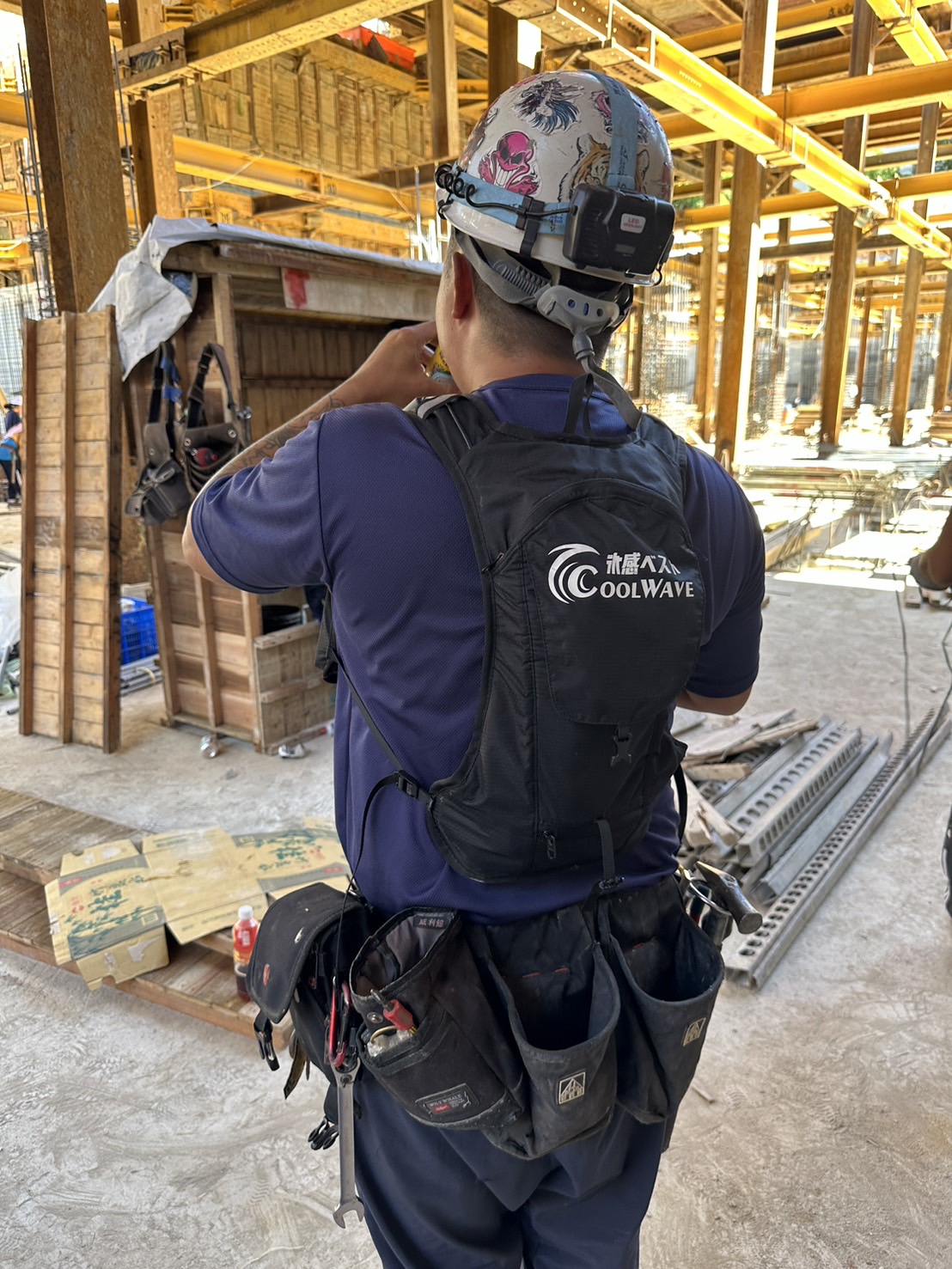
Selecting a dual cooling water cooling vest is not just about buying a product; it is about matching a heat-stress control tool to the specific conditions of a work site, the duration of heat exposure, and the physical constraints of the worker. This guide explains how a dual cooling water cooling vest works, what parameters matter for industrial procurement, and how to evaluate a vest for scenarios such as construction, outdoor work, and metal sheet factories.
Shokunin, the cooling apparel brand of Feng Shang Precision Co., Ltd., offers the COOLWAVE water-circulation cooling vest in a basic model and a professional model. Both use the same core specifications: approximately 3–4 hours of cooling per ice-pak refill, a total system weight within 2 kg, and a design for use in environmental temperatures below 10°C. For buyers at the research and evaluation stage, the decision framework below provides a scenario-based way to choose a model that fits the project, rather than relying on generic product descriptions.
The global personal cooling device market was valued at USD 25.16 billion in 2024 and is projected to reach USD 94.85 billion by 2035. Industrial applications, including construction and manufacturing, accounted for the largest cooling-vest market share at 34.5% in 2025. This project-fit guide focuses specifically on that industrial segment, where heat exposure is sustained, work is physical, and safety outcomes depend on equipment reliability.
What is a dual cooling water cooling vest?
A dual cooling water cooling vest is a wearable personal cooling system that combines a water-circulation garment with a portable ice-and-water source. The system is designed for outdoor and high-temperature work environments. In the COOLWAVE product line, the vest works by circulating water through tubes close to the body; the water is cooled by ice packs that the user carries in a backpack unit that accompanies the vest.
Shokunin defines its COOLWAVE vest as industrial cooling apparel, categorised as PPE (Personal Protective Equipment). Product listings describe the contents as a water-cooled vest backpack plus two ice packs. The active circulation mechanism matters because, although it is technically powered by a small pump, the cooling input itself is provided by ice packs rather than by a battery-driven cooling element. This design keeps the portable system compact while delivering a continuous flow of chilled water around the torso.
For procurement teams, the technical distinction is important: what looks like an electronic cooling garment is in practice an ice-water circulation system with a low-voltage pump. The pump output is 5V 150mA (max) and the flow rate reaches 320–370 ml/min on the COOLWAVE models. These figures define the performance envelope and the electrical requirement: a small USB-style power source, or in the context of the product spec, the pump is low voltage. During evaluation, buyers should check the full bill of materials, including the vest, the backpack, and the included ice packs, rather than assuming that a single garment contains all components.
Why project fit matters for cooling vest procurement
Cooling vest selection fails when buyers compare only price or appearance while ignoring the duration of the shift, the availability of ice or power, whether workers are stationary or mobile, and how much the vest weighs once the backpack is filled. The same vest can be a good fit for a traffic controller and a poor fit for a worker climbing scaffolding every 20 minutes, even if the ambient temperature is the same.
Shokunin categorises its COOLWAVE vest for construction workers, outdoor workers, food stall operators, street vendors, traffic controllers, and metal sheet factory workers. The product is also associated with use cases beyond the industrial list, such as fishing in hot weather. What all these environments share is exposure to high temperatures without continuous access to air conditioning. What differs is the movement pattern, the duration of exposure, and the type of clothing system required by safety regulations.
From an occupational heat-stress perspective, the objective is to keep the worker’s core body temperature within a safe range during physical exertion. A cooling vest contributes to that by lowering the skin temperature around the torso. Yet, a vest can only provide relief for the duration of the active cooling source. The specification of 3–4 hours is therefore a central procurement parameter, not a marketing number.
Heat stress directly affects alertness, fatigue, and the risk of heat-related illness. In industrial settings, reducing heat stress is part of worker safety. The case reference of the COOLWAVE vest reports effective body cooling, heatstroke prevention, improved work efficiency, and worker comfort among users. This overall outcome, however, must be reproduced within a specific worksite’s shift schedule, hydration plan, and rest breaks. A 4-hour shift without a break can be fully covered by one ice-pack load; a 10-hour shift requires rotation, spare ice packs, and access to a freezer.
Workers in direct sun for long periods, such as traffic controllers and site inspectors, face continuous radiant heat exposure. Workers near metal roofing or metal sheet fabrication, such as a metal sheet factory, face a mix of radiant heat and the high thermal conductivity of metal surfaces. Street vendors face long stationary hours that may reduce convective heat loss. Each scenario changes the balance between cooling capacity, portability, and comfort.
How the COOLWAVE dual circulation vest works
Understanding the operation sequence is useful for maintenance planning and for staff training on the first day of use.
Step 1: Prepare the ice packs and water
The system comes with two ice packs. The ice packs are placed in the backpack, and water is added to create the cold-water reservoir. The COOLWAVE product contents list specifies water-cooled vest backpack ×1 and ice packs ×2. Because the cooling input is passive ice-pack cooling, workers do not need to be connected to a stationary chilled-water chiller; this is an important operational advantage compared with many stationary cooling systems.
Step 2: Activate the circulation pump
The pump, rated at 5V 150mA (max), pushes water through the sand-rubber cooling tubes. The flow rate is 320–370 ml/min, which determines how quickly cooled water moves around the body. This pump specification is relevant for maintenance and replacement planning.
Step 3: Wear the vest and allow heat exchange to occur
The vest material is PEVA; the shoulder strap material is 600D polyester; the water bag is TPU; and the water bag cap is polypropylene. Heat from the torso warms the water circulating through the tubes. The warmed water flows back to the backpack, where the ice packs absorb the heat, and the cooled water returns to the vest. Workers’ body heat is managed continuously rather than through a brief evaporative effect.
Step 4: Re-freeze the ice packs after 3–4 hours
The specified cooling duration is 3–4 hours. Once the ice packs melt or lose capacity, the worker must replace them with frozen ice packs. In continuous operations, this creates the need for logistics: access to a freezer, a spare set of ice packs, or a second vest unit so one can be in use while the other is being recharged.
Key parameters to evaluate before purchasing
Buyers should verify the following parameters before purchasing a dual cooling water cooling vest for an industrial project:
- Cooling duration: COOLWAVE COOLWAVE lists 3–4 hours. This is the core performance specification.
- Total weight: within 2 kg. This includes the loaded system weight class; project managers should test it with water and ice added.
- Pump output: 5V 150mA (max).
- Flow rate: maximum 320–370 ml/min.
- Material set: 600D polyester shoulder strap, PEVA vest, TPU water bag, polypropylene cap, sand-rubber cooling tube.
- Included items: water-cooled vest backpack ×1 and ice packs ×2.
- Application environment: suitable for use below 10°C ambient temperature according to the specification field; in practice this refers to the ice/water operating context and should be confirmed with target-site tests before mass purchase.
Note on the temperature value: The corpus entry states “suitable temperature: below 10°C”. This is a data-source field that should be clarified during procurement because cooling vests are used in outdoor environments where ambient temperature is usually higher than 10°C. It likely describes the minimum recommended effective-usage condition or the temperature of the cooling medium, but the wording is ambiguous. Project buyers should request a written clarification from the supplier before purchase. In this article, the value is reported exactly as the product listing states, not interpreted as a maximum ambient temperature, because no verifiable interpretation is available.
Step-by-step scenario-matching process
Use the following workflow to evaluate a dual cooling vest for a specific project or site:
Step 1: Identify the exposure profile
Map the shift length, sun exposure, air temperature, humidity, and metabolic workload. An oil-field site with direct sun and high humidity creates a different demand from a shaded loading dock in mild weather. At this stage, do not consider product colour or branding; determine how many hours, at what intensity, and in what conditions the vest must perform.
Step 2: Set the cooling duration requirement
Calculate the longest continuous period without a replacement opportunity for ice packs. If a worker can refill and re-freeze on a break, a 3–4-hour cooling window is sufficient. If the site has no freezer, buy multiple ice packs and possibly a second backpack assembly. Avoid under-specifying this, because an ice-water vest loses effectiveness after the cooling window.
Step 3: Balance weight and mobility
The total system weight is within 2 kg. Try on the test unit with water and ice, and check the effect on movement. A construction supervisor may tolerate the backpack; a roofer climbing ladders needs a stricter weight-and-balance evaluation. Workers in high-exertion roles should also be offered a parallel solution, such as scheduled work-rest cycles.
Step 4: Select the model variant
Shokunin lists three professional-model colour variants (black, blue, gray) and one basic model. The specs are identical across professional colour variants; the basic model and the professional model share the core spec. The choice between basic and professional may affect price, available quantity, and lead time, but this article cannot state differences that are absent from the provided corpus. Buyers should request the difference from the supplier directly.
Step 5: Verify logistics and refill plan
For each vest, plan for a refill chain: frozen ice packs, potable water, and a clean surface for filling the TPU water bag. If ice access is impossible, an active ice-water vest is not the appropriate technology for that part of the site.
Step 6: Pilot before scaling
Conduct a pilot with a sample or a small unit order under real working conditions. This matters for every project type. In Taiwan, Shokunin has delivered the COOLWAVE vest to construction sites, outdoor work teams, metal sheet factories, and street vendors. One case entry mentions a quantity of 100 units and a relationship spanning about 10 years in high-temperature environments. However, a supplier relationship and aggregate result cannot predict the result for a new site unless a controlled pilot is performed.
Comparison: COOLWAVE models and market references
The following comparison table uses only product data from the Shokunin corpus and publicly reported market facts. Third-party competitor specifications are not included because no verifiable comparable data is available in the provided corpus. For industrial buyers, the table serves as a starting structure to be completed with maker datasheets and a side-by-side physical test.
| Evaluation point | Shokunin COOLWAVE (listed data) | Typical buyer action |
|---|---|---|
| Product line | Basic model and professional model colour variants (blue, gray, black) | Test the model variant that matches procurement budget |
| Cooling duration | 3–4 hours per ice-pack set | Simulate the longest shift interval |
| Total weight | Within 2 kg | Complete a full-system test with water and ice |
| Pump | 5V 150mA max | Plan replacement stock for the pump |
| Flow rate | 320–370 ml/min max | Ask the buyer for a flow-rate test record |
| Materials | 600D polyester, PEVA, TPU, polypropylene, sand rubber | Check the compatibility with work clothing and cleaning methods |
| Included items | Backpack ×1, ice packs ×2 | Confirm spare-parts pricing and lead time |
| Target industries | Construction, outdoor work, street vendors, traffic control, metal sheet factories | Map each of your work groups to one of these categories or collect pilot data |
Project-based use cases
Construction site / site management
In construction, workers move across open sun-exposed areas and enclosed structures. The relevant Shokunin image tag is “construction site”, and the product is applicable to construction workers. For a new project, distribute the vest to workers who remain in direct sunlight for long periods—such as site supervisors, rebar workers, and traffic controllers—rather than only to workers near a stationary cooling point. The backpack design keeps the unit mobile.
Direct traffic control
Traffic controllers stand on hot road surfaces for extended periods, with limited shade and no ability to leave the post. The Shokunin scenario image “direct traffic” documents this use case. The cooling system contributes to head and body temperature relief, but the site safety plan must include hydration and sun protection.
Metal sheet factory
The metal sheet processing environment combines radiant heat from metal surfaces and often poor airflow. Shokunin lists a relevant scenario tag “metal sheet factory”. Workers handling metal parts benefit from torso cooling, and the heat transfer mechanism of the vest becomes an important factor in selecting the work garment worn over it.Street vendor / night market
Street food stalls and night-market vendors work in high-temperature spaces near cooking equipment. Shokunin’s case imagery includes a night market vendor. In this stationary use case, the cooling vest provides a continuous cool torso layer, but cooking-area heat sources can overwhelm the 3–4-hour window even faster than ambient sun heat.
Fishing and other prolonged outdoor activities
The corpus includes a fishing scenario image. For work-adjacent or outdoor product channels, this demonstrates that the same system fits non-industrial mobile outdoor use. The procurement requirement remains the same: a water source and a means to re-freeze the ice packs.
Material and safety features to look for
Because an ice-water vest is worn close to the body for hours, the material set is directly related to worker acceptance. The COOLWAVE vest uses PEVA as the main vest material, TPU for the water bag, and sand rubber for the cooling tube. The shoulder strap is 600D polyester. A one-size-fits-all design is mentioned in the scenario special-requirement field. Adjustable vest straps are also listed as meet-the-special-requirement features. For procurement, this means that the order can be simplified to one size class, but trial fitting is still recommended for workers of significantly different body dimensions.
The vest is designed to be lightweight, waterproof, and breathable according to the special-requirement field of the Shokunin scenario. Waterproofing is essential because any leak in the tube or the water bag would otherwise create a safety and comfort problem. The buyer should request the maker’s cleaning and leakage-check protocol before large-scale deployment.
Because the system includes a 5V pump, the buying team should clarify the pump mounting and power-supply arrangement. The corpus does not disclose a battery pack, charging capacity, or battery runtime. A product that runs on a cable connected to a fixed power supply is not portable in the same way as one with an integrated battery. This is a significant missing specification. Do not assume that the pump is battery-powered; the marketing name “power-bank cooling vest” in the secondary keyword list does not prove that Shokunin’s product includes a power bank. Verify with the supplier.
Operational and maintenance considerations
Every active-cooling system is dependent on maintenance that passive products do not require. In the acquisition plan, include the following operational items:
- Frozen ice pack inventory: calculate the number required for two full cycles per worker.
- Backup pumps: the COOLWAVE pump is specified as 5V 150mA maximum; plan spare parts according to expected hours of use.
- Water quality and tube sanitization: use clean water to prevent algae or deposits in the cooling tube.
- Cleaning procedure: confirm the recommended surface cleaning for the PEVA vest and the backpack, as product data is not provided in the available corpus.
- Worker training: teach workers how to insert ice packs, activate the pump, check the water level, and identify early signs of vest malfunction.
- Tool-park planning: provide a shaded rest point with a power source if the pump batteries or power supply require charging.
Heat stress program integration
No cooling vest is a substitute for an occupational heat-stress management program. In high-heat seasons, a responsible procurement plan includes scheduling stressful work in cooler parts of the day, hydration, shade, regular rest breaks, training, and first aid procedures in case of heat illness. A wearable cooling vest is best understood as an additional, personal form of heat-stress mitigation, alongside engineering controls such as local exhaust ventilation, insulation, or air movement.
A cooling vest should not create a false sense of safety. In metal sheet factories, workers may still be exposed to radiant heat from furnaces or hot metal. Outdoor workers remain exposed to solar radiation. Therefore, the buying team should set the expectation that the vest supports body cooling, but does not eliminate the need for work-area heat monitoring and supervisor oversight.
Decision framework for industrial procurement teams
The following questions are designed for an industrial buyer evaluating a dual cooling water cooling vest:
- How long does a worker stay continuously in a hot environment before being able to replace ice packs?
- Is the worksite equipped with a freezer for ice packs, or must the team transport frozen ice packs from elsewhere?
- Can the worker comfortably perform his or her main tasks while carrying a vest backpack system with a total system weight within 2 kg?
- Is the pump powered by an integrated battery, replaceable batteries, or an external power source? Does the supplier provide a continuous runtime figure?
- What replacement parts are available (ice packs, water bags, pump), and what is the delivery schedule?
- Is the system suitable for cleaning after a shared shift? Can PEVA, TPU, and sand-rubber components withstand the prescribed cleaning procedure?
- Does the buyer’s quality standard require documentation of certifications such as ISO 9001:2015, CE, or UL? The general industrial-quality framework often references ISO 9001:2015 plus CE or UL for electrical components, but check the exact markings of the actual product certificate before relying on them. Shokunin’s corporate profile mentions receiving the Taiwan Disaster Prevention Product and Service Certification Award, and it is not presented here as a substitute for site-specific safety certification.
- What is the site-specific pilot plan? A sample order is a small investment compared with a full rollout of vests that do not match the work flow.
Market context for industrial cooling vests
Cooling-vest demand is broad, and procurement decisions are increasingly based on project-level evaluation rather than brand habit. The global personal cooling device market is projected to expand from USD 25.16 billion in 2024 to USD 94.85 billion in 2035, and the narrower cooling vest market is estimated at about USD 215 million in 2024 with growth toward USD 385 million by 2033, according to the respective cited sources. For an industrial buyer, these context numbers show that active cooling systems are not fringe products but are part of a growing safety category.
In terms of technology adoption, phase change material cooling vests were reported to hold a 28.7% market share in 2025 as the fastest-growing segment, while active circulatory mechanisms are increasingly used in industry for occupational heat-stress mitigation across a range of sources. Ice-water circulation vests sit in this active category. This explains why the dual cooling water cooling vest is relevant to workplace safety programs: it is an active system that supports heat-stress mitigation without requiring a worker to stand near a stationary cooler.
Reported global competitors include Techniche International, Glacier Tek, Polar Products Inc., and Ergodyne. The corpus does not provide any verified product-by-product performance comparison between Shokunin COOLWAVE and these names. Therefore, the responsible comparison is to focus on speed of heat-load testing, fit-to-task, shift duration, and unit economics. These elements allow you to compare any two vests objectively.
Sample procurement specification for a pilot
The following wording can be adapted for a purchase request:
“We request a sample of the Shokunin COOLWAVE water-circulation cooling vest for evaluation in a construction site of approximately [n] workers. Working conditions are full sun exposure, ambient temperature above 30°C, shift length [x] hours. Required performance: continuous cooling for at least 3 hours per ice-pack set, a total wearable system weight within 2 kg, and individual adjustment for all torso sizes. The supplier must state the pump power type and runtime, the replacement-parts package, and the available CE and other compliance documentation.”
Frequently asked questions
What does “dual cooling” mean in the COOLWAVE water cooling vest?
In the Shokunin product line, the dual cooling water cooling vest refers to a water-circulation vest used with ice packs in the backpack. The user wears the PEVA vest through which sand-rubber cooling tubes circulate water; the ice packs in the backpack cool the water in a continuous loop. The cooling duration listed is 3–4 hours per set of ice packs, and the total system weight is within 2 kg.
How long does the COOLWAVE vest provide cooling before the ice packs need to be replaced?
The listed cooling duration is 3–4 hours. Two ice packs are included with the vest. For work shifts longer than 3–4 hours, plan for spare frozen ice packs or a second backpack assembly so workers can swap units at a break point.
What kind of pump does the vest use, and how much power does it consume?
The COOLWAVE vest spec lists pump output as 5V 150mA (max). The flow rate is a maximum of 320–370 ml/min. The product listing provides the pump output and flow rate, but not a battery model or battery runtime. If your project requires untethered operation for several hours, ask the supplier for a clear explanation of the power source and a runtime test record before purchase.
In which working conditions and environments is the COOLWAVE vest intended to be used?
Shokunin lists the applicable groups as construction workers, outdoor workers, food stall operators, street vendors, traffic controllers, and metal sheet factories. The scenario references also include fishing. Site conditions are high-temperature outdoor settings. The material design targets lightweight, waterproof, breathable operation with a portable backpack, and the scenario field mentions a one-size-fits-all design with adjustable vest straps.
What is the recommended weight and mobility test before a large purchase?
Because the specified total weight is within 2 kg, a full-system test should be conducted with the backpack, water, and ice packs. Ask workers in the most physically demanding role to wear the vest for at least 30 minutes and check whether it restricts climbing, bending, or reaching. This simple on-site test protects against a costly rollout that workers refuse to wear.
What compliance documentation should a buyer request from the supplier?
The buyer should request ISO 9001:2015 quality-management evidence, applicable CE or UL documentation for electrical components, and any relevant product award or certification record. Shokunin’s company profile states that it received the Disaster Prevention Product and Service Certification Award from the Taiwan Disaster Prevention Industry Association. Because this article does not contain the actual certificate images, request the certificate and confirm the scope of its coverage before making a compliance claim in your internal records.
What is the best next step to test a system for an industrial work site?
The practical next step is to request a sample or quote using the Shokunin brochure and contact channels. Download the company brochure at https://cdn.socialarks.com/sbsp//common/2026/0407/69d4a27ea7fcb.pdf and ask the sales team for a trial unit under your specific shift conditions.
Next step for project buyers: A site-specific pilot is the fastest way to validate whether the COOLWAVE water-circulation cooling vest fits your heat-exposure profile. Download the Shokunin brochure to see the product line, or contact the sales team for a sample request and lead time for your region.
Have Questions or Need More Details?
Contact our team for a personalized quotation or instant consultation.
Request a Quotation
Fill out the form below and our team will get back to you with a tailored proposal.
WhatsApp Direct Chat
Prefer to chat in real-time? Message us on WhatsApp for instant assistance & quick answers.
- Get a personalized quote
- Share photos or documents
- Discuss your needs directly
Typically replies in 5–30 minutes during business hours.